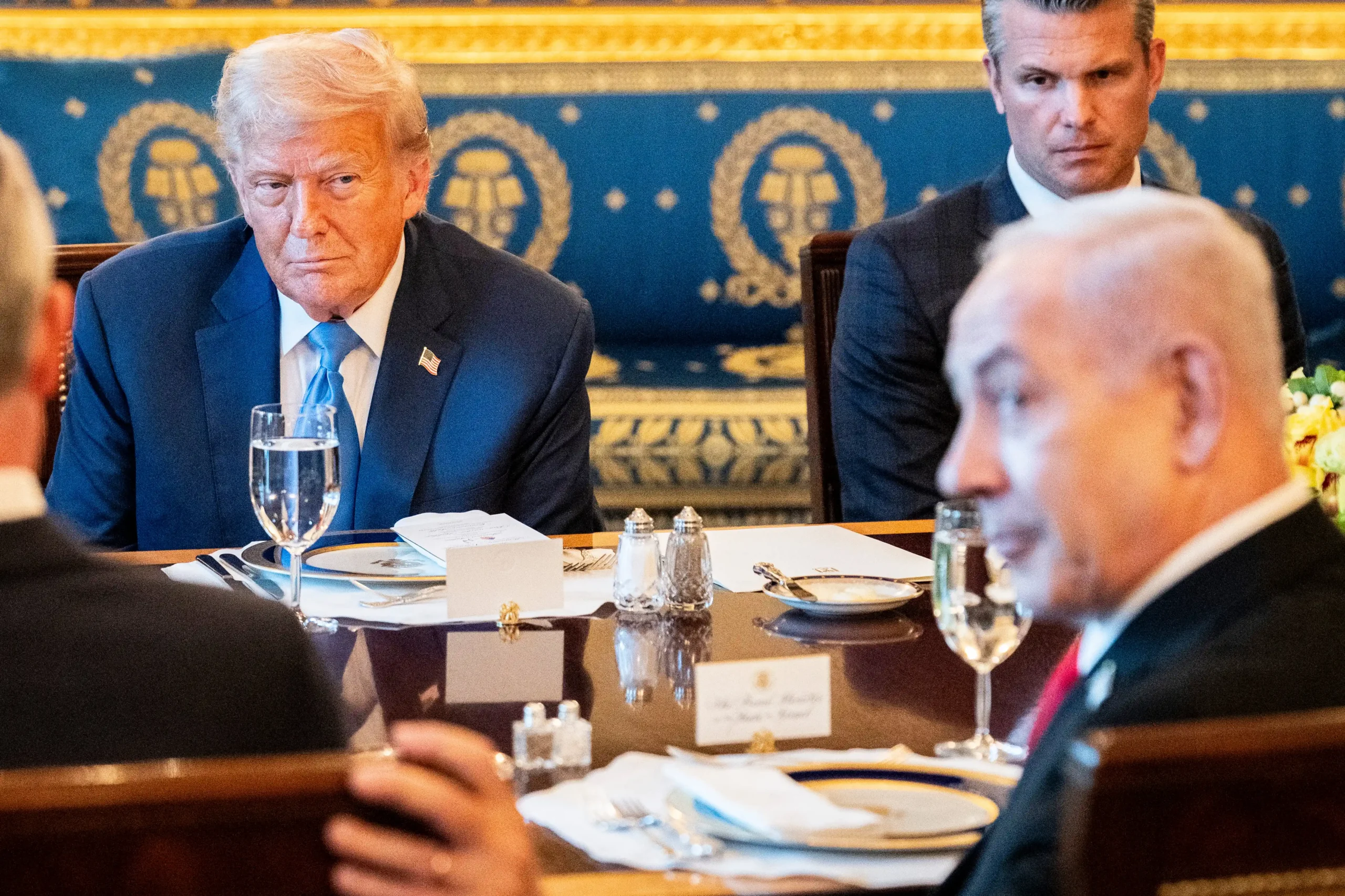
United States President JD Vance shared on Saturday that Tehran told Washington it will allow maximum oil flow through the Strait of Hormuz, though he added that the US will not trust Iran until it proves otherwise. “We’re obviously not at the beginning. We’re in the middle of the game, and we’re applying a whole host of tools, diplomatic, economic, military tools, to ensure that we get the best outcome for the American people,” Vance told Fox News, adding that Iranians are “hurting in a big way,” and they want “this thing to be over.” Moreover, the vice president also shared that Iran notified the US administration that it has no intention of imposing fees in the Strait of Hormuz. He also touched on the ongoing negotiations between Iran and Oman regarding the management of the strait, adding that the biggest concern at the moment is demining of the vital shipping route. NN: BULLSHIT!
Iran’s FM: No talks with US until it abides by MoU
Iranian Foreign Minister Abbas Araghchi stressed on Sunday that Tehran will not engage in negotiations with the United States until it continues to violate the memorandum of understanding (MoU) reached on June 12.
“We are not currently negotiating with the US. The exchange of messages is taking place through intermediaries, but this process is not called negotiation,” the minister said.
Araghchi also addressed talks with Oman on the Strait of Hormuz, emphasizing that they are not aimed at reopening the waterway, but at establishing the route to be used if the strait is reopened.
Iran and Oman have indeed reached the framework of a deal on the status of the Strait of Hormuz, MS NOW reported Thursday night, citing two Middle Eastern diplomats. But does the deal mean that the Strait of Hormuz is now “open,” as it was before the war in Iran began? That does not appear to be the case. The framework between Iran and Oman, per the MS NOW report, matches what has been reported in recent days: That new shipping routes will be established, with Iran controlling incoming shipping traffic and Oman controlling outgoing traffic. Tolls will not be collected. Also, it is a “temporary” agreement, to be followed by later talks between Washington and Tehran, aimed at resuming discussions on the status of Iran’s nuclear program and settling other disputed matters from the war. There has been no official announcement of a deal yet, but when it comes, an Iranian official told MS NOW, the United Nations International Maritime Organization and the U.S. will both participate. A Washington Post report on Thursday stated that while Iran and Oman are close to an agreement on Strait of Hormuz traffic, officials from Iran are “warning that the deal will not fully reopen the crucial waterway.” “This understanding does not mean the complete opening of the Strait of Hormuz, but rather a new and different model,” Iran’s Deputy Foreign Minister Kazem Gharibabadi said this week, as reported by Iran’s state-run Islamic Republic News Agency. The deputy foreign minister also said that Iran and Oman had discussed establishing a “joint coordination center” to direct ship traffic. The Post characterized this as Iran “using its hold to extract further concessions.” Tehran’s comments, the Post said, caused oil prices to jump on Thursday, with Brent Crude rising 4 percent to $82 per barrel. It had risen to $83 as of Friday morning. The deal may hinge on the semantic question of whether or not the Strait of Hormuz is “open.” But that distinction certainly mattered in June, when vague wording in the “Memorandum of Understanding” deal imposing a ceasefire led the sides to have different understandings of exactly what they had agreed to. “Any temporary routes will be without any impediments — meaning no approvals or permissions and no tolls or charges,” a U.S. official told the press. “The Strait of Hormuz is an international waterway, and no party controls the lanes or the ability to transit through them.”
The president, speaking to reporters in the Oval Office on Thursday, said the Strait is “sort of open right now.” He also told reporters that he had been “personally” involved in the talks.( HAHAHAHA The Straights are not open to the free flow of traffic)
Trump had more to say in an interview with Punchbowl News, which was published on Friday. “They want to make a deal. Look, it’s obvious. They don’t want to be hit. Ok? They want to make a deal. So we will see,” Trump told the news outlet. Meanwhile, as reported by Fox News, the president came in for some mockery this week from Iranian Parliament Speaker Mohammad Bagher Ghalibaf, who took to X to mock Trump’s recent negotiating posture.
“Massive attack coming… wait, never mind, they want to negotiate,” Ghalibaf wrote on the social media platform, going on to rip the U.S. president for engaging in “theater diplomacy on loop.” Trump had indeed threatened to launch the largest military attack since World War II, before backing down,and announcing, last weekend, that a deal was close to reopening the Strait of Hormuz. It’s a deal that, nearly a week later, remains close. The speaker is certainly not the first person to direct that charge at Trump. Even the usually Trump-friendly New York Post, earlier this week, noted that Trump had given Iran a “last chance” at least 13 times since the start of the war, often threatening to launch a specific attack or bomb a specific location, before backing down. “Using bullying + broken promises + fake news as leverage is a failed strategy,” Speaker Ghalibaf added in the social media message. “Acknowledge the facts and fulfill your commitments. We don’t need more theater.”
NN: Their is a little problem with launching the biggest attack since WWII on Iran. The US LACKS THE BOMBS ESPECIALLY THE SMART ONES AND THE WILL TO LAND 100,000 TROUPS ON THE GROUND.
The biggest attack in WWII was the Normandy invasion. It involved 15,000 bombs dropped by air. The rocket attack and conventual artillery bombardment involved 250,000 projectiles. Troops were 160,000 boots on the ground and 45,000 killed and wounded. To put it mildly the US ain’t the man it use to be. And Iran damn well knows it.
US President Donald Trump emphasized on Thursday that even if his nation has an “unlimited supply” of ammunition, “we can never have too many” when asked about Ukrainian President Volodymyr Zelensky’s plea that his country desperately needs Patriot missile batteries and long-range missiles. “Well, I mean, we want missiles, too. You know, when Biden gave him so much, Biden gave $300 billion worth of ammunition,” Trump elaborated. “We need more ammunition all the time.” Earlier, Trump refuted claims that the US was experiencing a munitions shortage and threatened in a Truth Social post to seek “long-term jail sentences” for those suspected of leaking information.
NN: The sad truth is the fact the recent massive attack on Iran was called off because of lack of smart weapons. And Iran knows it. They have no lack of drones and misssles hidden deep underground
United States President Donald Trump welcomed on Wednesday the news that progressive Democrat Abdul El-Sayed won the nomination for the US Senate in yesterday’s Michigan primary. Trump said his victory is “great news for the Republican Party,” calling El-Sayed a “Communist loser who hates Jews and Israel.” Trump also claimed that the Democrats’ “crazy policies will only get worse” following the primary. The president already endorsed former Republican Representative Mike Rogers for the election to replace Michigan Senator Gary Peters, which will take place during the midterm elections in November.
NN: Are Americans smart enough to see through the Socialist commie lie. And the fact Islam is ur mortal enemy? Or are they all going to buy into the free lunch for all commie bullshit. We shall see Comrade
Progressive (liberal lefty commie terrorists’ supporter Jew hater} Egyptian like Assar Arafat Democrat Abdul El-Sayed has won his party’s nomination for the 2026 midterms, NBC News projected on Wednesday. He edged out Representative Haley Stevens in the Michigan Democratic primary for the United States Senate. El-Sayed will go on to face former Republican Representative Mike Rogers, who has been endorsed by US President Donald Trump, to succeed Democratic Senator Gary Peters. The 41-year-old epidemiologist ( who never had a job in the public sector) previously ran for Michigan governor in 2018, losing to Gretchen Whitmer, and later served as the director of the Department of Health, Human, and Veterans Services in Wayne County, Michigan.
NN: This is your enemy. He is part of radical Islamism that are snaking their way into political power. Their goal is to end democracy, shut down the free enterprise system and turn America into a Islamic hell hole ruled under Sherie Law. You are on notice and have been warned
US Secretary of State Marco Rubio shared an update on negotiations with Iran on Tuesday, confirming that the question of Hormuz remains open. “There has been progress in these talks, but not finality yet. We hope that will happen very shortly,” Rubio told reporters at a presser in Paraguay. US Treasury Secretary Scott Bessent stated that Washington and Tehran may reach a deal on reopening the Strait as soon as today or tomorrow.
WTI dips 6% on reports of Hormuz demining
Crude oil prices continued their downward trajectory on Tuesday following rumors that Iran was thinking of permitting European countries to remove mines from the Strait of Hormuz as part of an agreement to normalize commerce in the vital waterway. Iran has “softened its stance” in private meetings regarding allowing foreign countries to take part in demining operations, Bloomberg reported on Tuesday, citing diplomats familiar with the matter. West Texas Intermediate (WTI) for deliveries in September tumbled 6.01% to go for $75.47 per barrel at 12:02 pm ET. A minute later, Brent for settlements in November plummeted 4.37%, selling for $77.55 per barrel.
NN: That’s a lot of blue sky. 18 times a deal announcement. Even if their is one it wont stick, 7 times attack was cancelled!
US President Donald Trump is pushing Iran to reach a deal with Oman on the Strait of Hormuz as soon as Tuesday, or face devastating air strikes. “I want to give them every last chance before decapitation,” Trump told reporters on Monday. “You’ll find out today or tomorrow. I mean, they’re going to go quickly, one way or the other. It’s not very complex.”
This is a “last chance” for Iran to come to an agreement, the president said, after he called off what he described as a major attack on the Islamic Republic over the weekend that would have likely involved Israel.
A diplomatic resolution appears to hinge on talks between Oman and Iran to get more ships sailing through the strait. There’s little sign of progress in those negotiations and Iran continues to take a hard line on the waterway. It insists it has the right to manage maritime traffic and attack vessels that try to sail through the chokepoint without seeking its permission. President Donald Trump said his latest offer of talks is a “last chance” for Iran after he called off an attack on the Islamic Republic. Bloomberg’s Stuart Livingstone-Wallace breaks down the latest developments. Iran’s stance underscores the difficulty Trump has faced in wrapping up a war he started in late February and that’s sent energy prices soaring, hurting the US leader and his Republican Party ahead of midterm elections in November. The chokepoint, a vital conduit for supplies of oil, liquefied natural gas and other commodities such as fertilizers, remains all but shut. Hardly any ships are sailing through, at least with their transponders turned on. Most that do are going on a northern route close to Iran’s shores with Iranian permission, or on a southern one nearby Omani territory. Trump said “there’s not going to be charging” for access to the strait, something Tehran has set as a key condition of any deal.
Bob McNally, founder and president of Rapidan Energy Group, warns oil prices could move sharply higher if the conflict around the Strait of Hormuz expands to the Red Sea, warning that the market has largely exhausted the buffers that helped contain the initial shock. McNally says China is beginning to increase crude imports again, the available reserve-release buffer is largely spent and refiners are running at precariously high utilization rates. Responding to President Trump’s assertion that the US does not need the Strait of Hormuz, McNally says that may be true in a physical sense but not in a price sense, because disruptions anywhere in the global oil market raise prices everywhere.
Fitch Group analysts at BMI, a unit of Fitch Solutions, outlined that they continue to believe a broader diplomatic understanding between the U.S. and Iran remains achievable during this quarter, which they said “would involve the opening of the Strait of Hormuz”.
The analysts warned in the report, however, that the outlook remains “highly fragile”.
“Diplomatic progress is likely to be punctuated by periodic military flare ups, while miscalculation by either side could trigger a renewed escalation,” they said.
“We therefore maintain a higher probability of a shift to a more severe conflict scenario than earlier in July, with escalation risks remaining significant despite the current pause in hostilities,” they added.
The BMI analysts noted in the report that the key issue to watch is the future governance of Hormuz. “Ongoing Iran-Oman discussions … suggest diplomatic efforts are underway to establish a post-conflict shipping framework,” they said. Although the analysts highlighted in the report that their base case remains that a preliminary deal will be reached in the third quarter, they revealed that they have now further increased the probability of their escalation scenario from 25 percent to 35 percent “amid growing military, diplomatic, and economic indicators of rising U.S.-Iran tensions”.
Sparta Commodities Aaron Kildow, that Brent futures “saw a nearly $32 per barrel range in the month of July”, which he pointed out was “the second largest monthly range since the war kicked off in March”. Kildow warned in this commentary that “the noose continues to slowly tighten as global demand exceeds supply” and said “tension is slowly building within some key exporting countries as their own inventories are becoming dangerously low”.
GivTrade Technical analyst Waleed noted that Brent and WTI recovered after a sharp sell-off “as doubts grew over whether Iran talks were making real progress”. “A credible deal could crush the geopolitical premium, but failed negotiations or fresh disruption in the Strait of Hormuz could send prices surging again,” he said.
Saxo Bank posted on its website, that October Brent bounced from Monday’s “steep sell-off” as U.S. President Donald Trump “called his latest offer on terms to Iran the country’s ‘last chance’. Saxo noted in this quick take that the September WTI front-month contract was less volatile, “bouncing slightly”.
Goldman Sachs team on Tuesday, Goldman Sachs analyssaid they estimate the fair value of Brent spot prices at around $80 per barrel based on their OECD commercial stocks counter, current OECD demand estimates, estimates of the long-term Brent anchor, and the historical relationship between stocks and spot prices (vs. long-dated prices). “This suggests that the market prices only a moderate risk premium despite still very high uncertainty about Mideast supply,” the analysts noted. The analysts revealed in the report that they assume Brent will stay in a $80-90 per barrel range “until either a confirmation of a new U.S.-Iran deal or a significant escalation in attacks and targets”.
They warned, however, that the physical oil market is tightening, and pointed out that their global visible stocks counter had reduced by 6.3 million barrels per day over the last two weeks.
This was likely driven by three key factors, according to the analysts – “lower flows from the Persian Gulf and the Red Sea, lower Russian oil exports, and stronger Asian imports, including to China”.
NN: I am telling you disaster looms. Iran is not goimg to give up its ace in the hole.
In this next story Aramco warns:
Inventory renewal would take 18 months
Saudi Aramco CEO Amin Nasser said on Tuesday that replenishing the company’s oil inventories at a rate of 2.1 million barrels per day (bpd) would take 18 months, even if the Strait of Hormuz reopened immediately. Speaking to investors after Aramco’s quarterly earnings release, he said that the Middle East conflict continues to “aggravate the biggest supply shock in history.” Nasser stressed that Aramco continues to reroute oil via the East-West pipeline and optimize its flexibility. He added that the company is also increasing its refining capabilities in western Saudi Arabia by around 2 million bpd.
US President Donald Trump declared on Monday that newly planned talks with Iran were their final opportunity to sign an agreement, calling it their “last chance” to get a good deal and avoid US retaliation.”The leaders of many Gulf nations … they all wanted to give this a last chance. This is a last chance … This is a last chance for them to sign a good document,” Trump said while speaking to reporters in the Oval Office. He added that he expects negotiations about Iran’s nuclear program to begin “in the next day or two.”Earlier, Trump delayed planned military strikes against Iran to pursue a potential agreement, centering on the reopening of the Strait of Hormuz and constraints on Iran’s nuclear program, though Tehran has publicly denied holding direct negotiations with the United States.
NN: Lucky 7. Seven TACOES. Trump soya this is Iran’s last chance to make a deal. We shall see what we shall see what they do. And see if Trump Tacos again. The steaks are enormous. We are talking nothing short of a world wide energy crises induced depression. I am ready on all fronds to guide you in this crises. It could be our biggest and greatest trade ever.