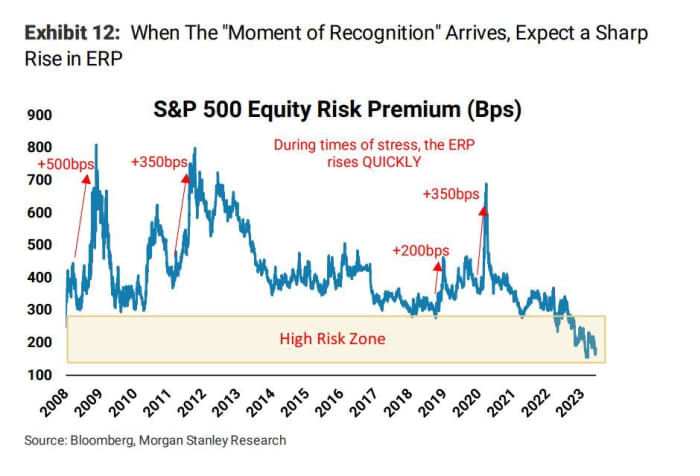
Hunting for optimists the Monday after an explosive jobs and debt-ceiling fueled relief rally that sent the S&P 500 SPX, 0.34% to the edge of a bull market, is proving a little tough. That said, there’s nothing horrible in the setup, with tech just a little softer as oil is up after Saudi Arabia pledged another production cut. “This is an unloved rally for sure – SPX above 4,200 and out of the [4,000-4,200] range just as the VIX VIX, 2.26% drops to its lowest since Feb 2020,” notes Neil Wilson, chief market analyst at Finalto. What Friday did show us is that Big Tech’s rally can spread itself around when it wants to, so more days like that and some Wall Street sourpusses may change their tune. For now, though it seems those who didn’t sell in May are being told to prune in June. Morgan Stanley’s “Worried” Mike Wilson, who still expects “a meaningful earnings recession this year (-16% year-over-year decline) that has yet to be priced in,” by stock markets. While his S&P 500 base case remains unchanged at 3,900, the lower end of Street forecasts, the strategist says investors are stuck in the middle of several ‘hotter but shorter’ earnings cycles in the context of a broader secular bull market — boom, bust, boom, the strategist said in a Sunday note. Wilson says the bank’s expectations for a bigger stock drop have been kept at bay by the outperformance of AI players and some big tech names, Fed pivot fever and hopes we’ve been through the worst of an earnings recession. But, a major repricing has hit lower quality, cyclical and small-cap stocks, he adds. The strategist offers some guidance on when the market will finally start pricing in that earnings rout, focusing on the equity risk premium (ERP) portion of the price/earnings (PE) ratio. The ERP is defined as the difference between the expected earnings yield and the yield on safe Treasurys, with a higher number meaning investors are being compensated more for putting money in stocks. He said more than 100% of the reset on PE last year was due to higher 10-year Treasury yields. “Historically, that ‘moment of recognition’ for the market typically occurs when the forward NTM [next 12 months] EPS forecast for the S&P 500 goes negative on a y/y [year over year] basis.” The expected liquidity drain from the debt ceiling passage may help push this process along, he said.
So if an investor is buying what Wilson is selling they will take his advice to stick to defensive characteristics, operational efficiency and earnings stability. But to avoid leaving things on a totally crummy note, Wilson does add a light at the end of the tunnel. Morgan Stanley expect a 23% bounce in EPS growth in 2024 and 10% in 2025, as Fed policy turns more accommodative in 2024 (not 2023).ion re-emerge
U.S. regulators are planning fresh rules that will force bigger banks to lift their capital requirements by an average 20%, The Wall Street Journal reported.