- Some say Israel now has scope to attack Iran’s nuclear program
- Others say Hezbollah’s strength is threatened by ongoing militia fighting
For years, Israelis were told that in the next war with Hezbollah, the Lebanese militia would fire thousands of rockets and missiles a day, overwhelming their air defenses, causing blackouts, death and destruction. Yet three months after Israel turned its military to the north, Hezbollah is firing barely 100 on the most intense days and appears vastly degraded as a military threat, driving it to accept US-brokered negotiations for a cease-fire unrelated to the war in Gaza. Along with the dismantling of the Palestinian militant group Hamas and two air strikes on Iran, Israel’s campaigns have shifted domestic perceptions of its position from one of acute vulnerability after the devastating attack from Gaza a year ago to one of decisive strength. “Israel is now on the verge of a strategic turning point, in a position where it has restored its military superiority over Iran and its proxies,” Professor Eitan Shamir of the Begin-Sadat Center for Strategic Studies at Bar-Ilan University wrote in a research paper last month.
NB: Don’t screw with the Jew bastards because they will screw you to the Wall. Every war the Islamic savages have started in the past 70 years they have lost. And claimed human rights violations and looked for the UN to bail them out
For much of the world, Israel’s war on Hamas is about the unfathomable destruction of Gaza and the widespread killing of civilians there and in Lebanon. For Israel, it’s about reversing the feeling of weakness caused by the Hamas-perpetrated massacre in October 2023 and overcoming the Tehran-sponsored militias that surround it. Those militias, especially Hezbollah, are a main reason Israel long exercised caution in confronting Iran. The belief was that Iran had armed Hezbollah precisely so that, if Israel went after Iran, the Lebanese group would unleash its estimated 150,000 rockets and missiles on Israel in a weeks-long storm of destruction. “The fact that Israel hadn’t attacked Iran’s nuclear facilities was always connected to concerns about Hezbollah,” said Danny Citrinowicz, who used to oversee research on Iran inside the country’s military intelligence branch. Israel also worried about Iran’s capacity to fight back, but its October assault there with more than 100 warplanes appears to have stripped the Islamic Republic of a significant number of air defenses. That means Israel is far less afraid of Hezbollah’s missiles or of Iran’s capacity to defend itself, fundamentally altering its perception of the regional strategic picture and raising the possibility of a pre-emptive assault on Iran’s nuclear program. At a military ceremony last month, Prime Minister Benjamin Netanyahu remarked that his ultimate goal is to prevent Iran from building a nuclear weapon, adding that now, “we can reach any place in Iran we need to.”
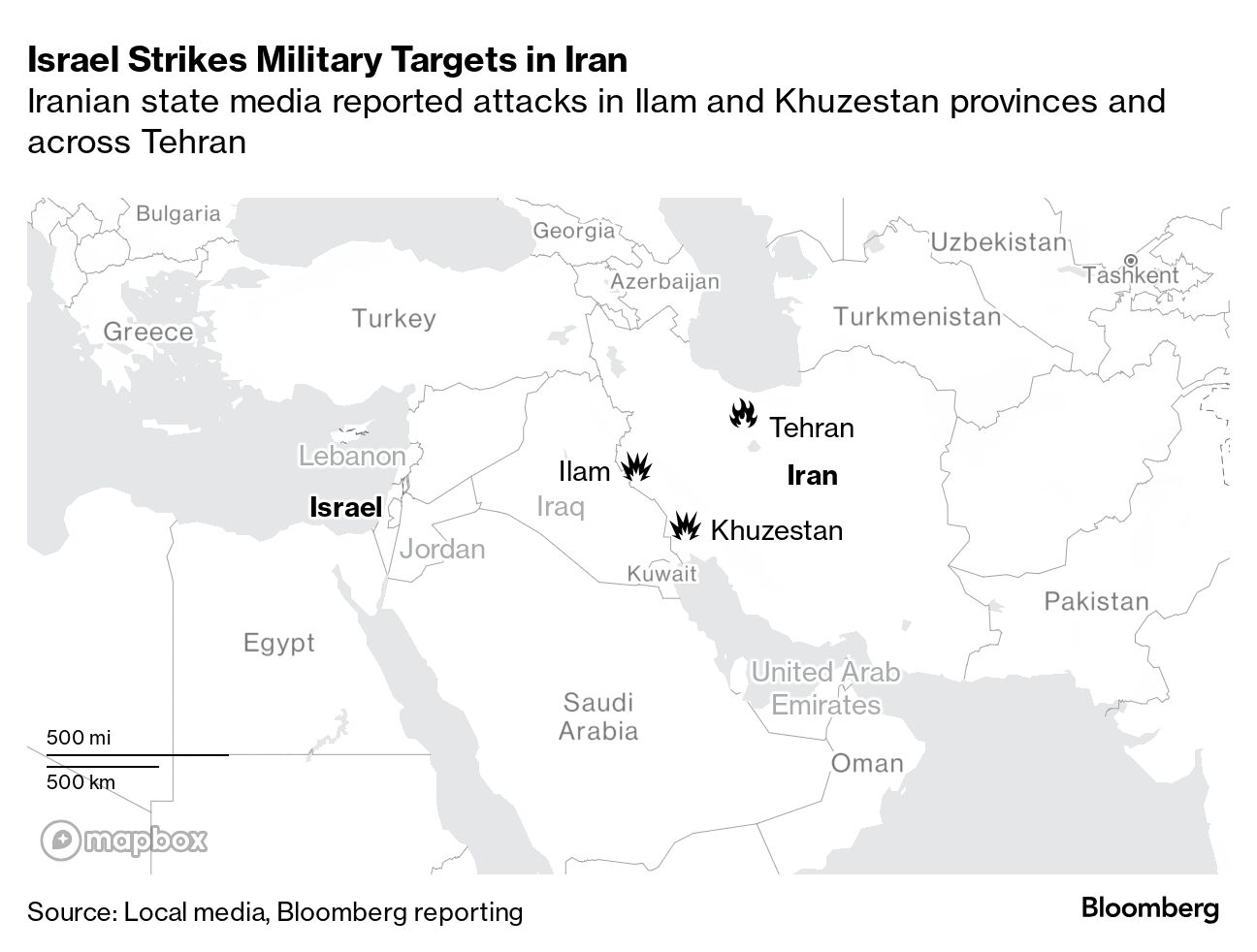
In a speech to Parliament this month, he said Israel had damaged “a specific component” of Iran’s nuclear program. In part, he’s warning Iran not to attack Israel again, as it has done twice this year. But his comments are also part of a public — and bipartisan — debate over whether Israel should seize the moment as Donald Trump enters the White House to impair Iran’s nuclear program, setting back any weapons ambitions. Israel’s ability to carry out an effective attack without the massive bombs and fighter planes deployed by the US is a matter of debate. So is the question of how the US would react if Israel acted alone. The discussion is influenced by the success of its assault on Hezbollah in recent months, one in which almost the entire senior leadership was killed, pagers and walkie talkies exploded in the pockets of thousands of operatives, and repeated bombings took out missile storage facilities and launchers. The attacks have devastated swathes of southern Lebanon and the south Beirut suburbs, pummeling parts of villages into rubble and displacing 1.2 million residents. “Hezbollah has been seriously degraded and now they badly need the cessation of hostilities to save what is left,” said Sami Nader, head of Beirut’s Levant Institute for Strategic Affairs. “The balance of power has seriously tilted in favor of Israel.” To appreciate how surprising and sudden the reduction of the Hezbollah threat has been, it helps to know what the expectations were. Ever since the 2006 war between Israel and Hezbollah, Israeli security experts have been warning about the growing missile arsenal funded by Iran.
A report from Reichman University’s International Institute for Counter-Terrorism last year, parts of which remain classified, is typical. The product of three years of work by 100 specialists, it asserts that if war broke out, Hezbollah could fire 2,500 to 3,000 rockets a day for three weeks. NB: WRONG….. WRONG…. SO WRONG1!
US-sponsored efforts at a cease-fire that would get Hezbollah away from the border, along with a strengthened multinational force and beefed up Lebanese military are under way. US envoy Amos Hochstein, who is in the region, says a deal is “within grasp,” although obstacles remain. There are also attempts to revive peace talks with Hamas, aimed at securing the return of the Israeli hostages still held in Gaza,
peace through strength
nn audio file:the storm before thhe storm

