By Nick Guarino |
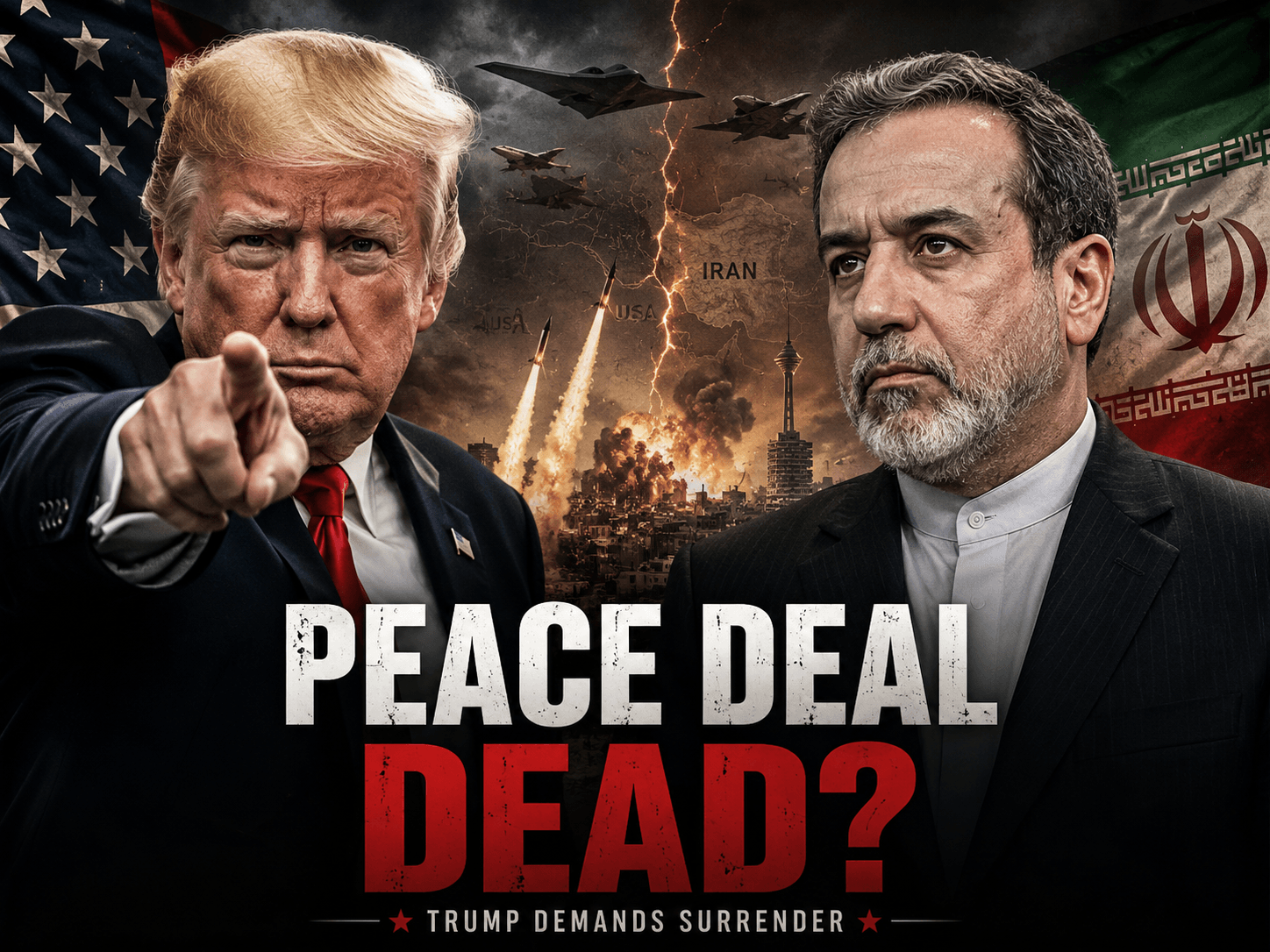
The Trump administration informed its allies in the Persian Gulf to prepare for “short, intense” attacks on Iran as soon as November 4, a day after the midterm elections in the United States, MS NOW reported on Friday, citing three senior Gulf Arab officials.
1.The Race Is On
Iran’s leaders, in my assessment, have reached a dangerous conclusion: their best hope of surviving an American attack is to acquire and demonstrate a nuclear weapon before Washington and Jerusalem can stop them. That is the race now unfolding—and I believe the timetable is measured in hours and days not weeks, months or years.
I have received from confidential sources information, which I cannot reveal, revealing that Tehran is devoting extraordinary resources to an accelerated nuclear-weapons development effort. Its a strategic calculation by a desperate Iran that deserves urgent attention: Iran sees nuclear deterrence as the ultimate guarantee against regime change. Its a matter of the Ayatollahs survive and their continuing control of Iran.
2.The North Korea Lesson
Look at North Korea. Its nuclear arsenal has preserved Kim You Num Chucks hold on power and lowered the risks and costs of military intervention against the regime. Pyongyang remains sanctioned and threatened, but the existence of nuclear weapons has changed the calculus. Where at one time their very survival was in doubt. Their Nukes guarantee they remain in power with a nuclear bargaining chip. Iran is watching closely the lessons and benefits of being a nuclear power. If Tehran can survive long enough to demonstrate a nuclear weapon, its leaders believe they can survive and compel fear and respect from its adversaries. To them they have to get nukes before its to late. The worlds only clued in leaders Trump and Bebe of Israel understand the grave dangers of a Iran with nuclear weapons. And the fact they are getting very very close to nuclear breakout.
President Donald Trump and Prime Minister Benjamin (Bsbe) Netanyahu have repeatedly identified Iran’s nuclear capabilities as a central security concern. My reading is that they are a narrowing the window in which to act. Both leader understand Iran has accelerated it nuclear development program. The time to act is now.
3.Two Political Clocks
The American midterm elections are November 3. Even if the balance of Congress changes, the new members do not take office until January 3, 2027. That creates a political interval during which Trump continues to work with the current Congress. It does not suspend congressional oversight, the War Powers Resolution, or constitutional limits on presidential action. But reality is Trump still has the veto power which means its game on.
In Israel, Netanyahu remains prime minister during coalition negotiations following the October 27 election. The early tallies reported by Bloomberg and Reuters showed his bloc is ahead of its principal rival but as usual in Israeli elections short of the 61 seats needed to form a government. My expectation is that Netanyahu will retain power and ultimately assemble a coalition. Israel’s coalition process automatically grants a caretaker prime minister full authority. Like Trump he has at least a 3 month window to act.
4.Not Another Limited Strike
My forecast is that, when not if war resumes, the United States and Israel will undertake a lighting fast shock and awh air campaign on a scale far beyond the previous exchanges—potentially among the largest since World War II. For a fact the first military strikes will take out Iran’s missile and drone infrastructure, their numerous hardened underground facilities, command networks. Then will come waves of attacks on Iran’s electric grid, water distribution system, damns, bridges, roads and the strategically important oil fields, pipelines and oil-export assets, including Kharg Island. Such an operation will also target civilian infrastructure like bridges, roads, dams and power systems where they are used for military purposes.
Their are numerous credible reports many verified of massive U.S. attack aircraft movements, cargo planes full of bombs and military supplies, regional missile-defense deployments including Patriot missile systems for Israel. Arsenals of bunker buster bombs and a carrier strike group are heading toward the region. It is obvious the US and Israel are gearing up for a massive attack on Iran.
5.The Gulf States Will Not Be Spared
Iran’s response as threatened will not be confined to Israel or American bases. Tehran will hit civilian targets with drones and rockets in the gulf states and Israel, disrupt commercial shipping and strike oil fields, pipelines, refineries, and loading terminals across the Persian Gulf. The Strait of Hormuz will be the focal point of Iran’s attacks resulting in a energy shock like never seen before. Even just the threat of sustained disruption has send freight, insurance, crude oil, and refined-product prices sharply higher. A all out attack on oil ships will shoot oil prices to the moon.
Our oil-price forecast is stark: Brent could reach $150 a barrel, with $200 possible in a severe, prolonged disruption. The magnitude and duration would depend on how much supply is actually lost, the ability to reroute exports, emergency stock releases, and the length of the fighting. This war has been going on for close to two years. Emergency stockpiles are just about exhausted.
6.Big Oil’s Windfall
As consumers confront expensive gasoline, diesel, and transportation, major integrated oil companies are reaping extraordinary refining margins and trading gains. Bloomberg’s October 30 reporting on ExxonMobil described record oil-refining profits amid war-driven fuel-price spikes. The contrast is unmistakable: a global energy emergency can be financially devastating for households and businesses while generating exceptional profits for parts of the petroleum industry. Refinery crack spread margins (the price they pay for a barrels of oil and the amount of profits after refining) are the highest ever. That does not mean every oil company profits equally, But the more refined products a oil company can produce the more profits. For some refiners every $100 barrel oil its process it making $250 a barrel in refined products. A profit of $150 per barrel.
7.The End Is Near
This is the confrontation I believe is approaching and soon: Iran is racing to establish a nuclear deterrent by building a nuclear arsenal.; Trump and Netanyahu are weighing how to prevent them from going nuke; against the Gulf’s energy systems exposed to a devastating retaliation. Iran may calculate that it needs only to endure one more assault. Washington and Jerusalem may calculate that allowing Tehran any more time would make the next confrontation far more dangerous. Worst case like N. Korea one fine day the world could soon wake up to a nuclear Iran as they do a product demonstration. With a bright flash like a 1000 suns, a tremor the size of a earthquake and a mushroom cloud soaring 40,000 feet in the air.
The race is on. In my assessment, the decisive period begins after the American midterms. If the shooting starts as I believe it will, the consequences will not stop at Iran’s borders. They will be felt in oil markets, at gasoline pumps, in factories, and in household budgets around the world.
8.Source Material and Reporting Notes
Bloomberg, October 28, 2026: Israeli election reporting supplied for the related Netanyahu editorial; early bloc projections and coalition uncertainty.
Reuters, October 28, 2026: Israeli election coverage supplied in the conversation; Netanyahu’s caretaker status and Iran remarks.
Bloomberg, October 29–30, 2026: oil-market coverage referenced in the editorial research.
Bloomberg, October 30, 2026: “Exxon Reaps Record Oil-Refining Profits on War-Driven Gasoline, Diesel Spikes.” https://www.bloomberg.com/news/articles/2026-10-30/exxon-reaps-record-oil-refining-profits-on-war-driven-gasoline-diesel-spikes
Wall Street Journal, October 2026: reporting discussed in the research on potential renewed U.S. military action against Iran; exact operational details are not independently verified here.
Author’s confidential-sources account and forecasts, October 30, 2026: unverified intelligence claims, anticipated campaign scale, timing, retaliation, and $150–$200 oil-price scenario.