Israeli Strike Killing Key Hezbollah Figure Risks Escalation……. Hezbollah hits Israeli Northern Command HQ with drone

Tensions are escalating on the Israeli border with Lebanon after an Israeli strike on Monday that resulted in the death of a senior Hezbollah commander and another Hezbollah fighter in southern Lebanon.  Monday’s attack follows the assassination in Lebanon last week of deputy Hamas leader Saleh Al Arouri in another Israeli strike.  Unnamed sources confirmed for Reuters that Israel was behind Monday’s attack, which killed the deputy leader of Hezbollah’s elite Radwan force, Wissam Al Tawil. The Israeli strike targeted the car Al Tawil was driving in along with another Hezbollah fighter.  A source told Reuters that Monday’s assassination would see the situation “flare up now”, suggesting the Israel-Gaza conflict may have definitively moved into Lebanon.  Israeli Prime Minister Benjamin Netanyahu on Monday vowed to “do everything necessary to restore security to the north”, the BBC reported.  The past three months have seen dozens killed, including Hezbollah fighters, Israeli soldiers and civilians, though Hezbollah has been holding back in order to prevent an escalation into all-out war with Israel.  Observers are now concerned that two key assassinations in a row, and most significantly, Monday’s attack on a prominent Hezbollah figure could push the Iran-backed group over the edge. Oil prices on Monday did not respond to these dangerous developments on the Israel-Lebanon front, instead shedding over 4% on Monday afternoon in response to demand concerns triggered by Saudi Arabia’s move to cut the official selling prices (OSPs) for its crude loading in February to all regions. Cuts for Asian importers were the biggest, at $2 per barrel for all Saudi export grades, making the biggest cut in 13 months. Last week’s oil inventory build in the United States as well as a survey showing increased OPEC production in December have also put downward pressure on oil prices.

Hezbollah hits Israeli Northern Command HQ with drone
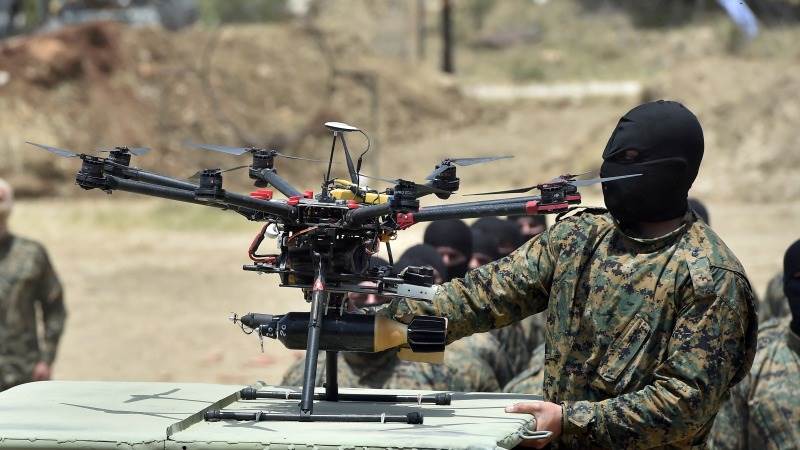
Hezbollah said on Tuesday that it hit the Israeli Northern Command HQ with a drone, which was later confirmed by Israeli media. The drone exploded on impact, causing minor damage and no casualties, according to reports.

Hezbollah said the attack came in retaliation for the killing of senior Hamas official Saleh al-Arouri in Beirut last week and Hezbollah commander Wissam al-Tawil in southern Lebanon yesterday. The IDF has not commented on the attack so far.


 

Goldman: Oil Prices Could Double if (when) Houthi Attacks

  • Houthi rebels have attacked commercial shipping more than 20 times since November, using various methods.
  • Major shipping companies like Maersk and Hapag Lloyd are avoiding Red Sea and Suez Canal routes due to security concerns.
    •  Operation Prosperity Guardian was initiated by the U.S. to protect commercial traffic, with support from other countries like the UK, Australia, and Canada. Houthi rebel disruptions reaching the Straits of Hormuz could double oil prices, Goldman Sachs has warned. In an interview given to American television station CNBC yesterday, head of the company’s oil research division Daan Struyven said: “the Red Sea is a transit route and a prolonged disruption there, oil can be three or four dollars higher.“However if you have a disruption in the Strait of Hormuz for a month, [oil] prices would rise by 20 per cent and could even eventually double if the disruption there lasted for longer,” he said.Despite caveating that the situation was “highly unlikely”, Struyven’s comments join a collective of voices from across international business and politics decrying the situation in recent days. Yesterday, former prime minister now foreign secretary David Cameron said in an interview to Sky News that the attacks “have to stop”. “The clear message, and over ten countries have signed a letter to the Houthis saying that these attacks are illegal and have got to stop and if they don’t, action will be taken.” Since November, the rebels have attacked commercial shipping in the Red Sea more than 20 times using missiles, drones, fast boats and helicopters.  In response, the U.S. in December announced Operation Prosperity Guardian to step up patrols of the Red Sea and Gulf of Aden to protect commercial traffic – ships from the UK, Australia and Canada are among the other countries also involved. Early-mid December saw the occasional minor oil price spike as a result of the actions, but the volatility has remained largely subdued as the wider market remains soft. More significantly however has been the reaction of major shippers to the protective responses such as Prosperity Guardian. Maersk and Hapag Lloyd, two of Europe’s largest shipping companies, have refused to use the Red Sea and Suez Canal routes, the former having had a vessel come under attack from rebels last weekend. What began as seemingly isolated disruptions to Western commercial activities are now being seen by many to constitute targeted action in support of the Hamas cause as Israel continues to ramp up its attacks on Palestine.Should they continue, they are likely to throw the already-chaotic state of global shipping in that area into further strife. BlackMask Pod Cast.
         The Hooties Are The Game Changers

Oil prices extend losses, WTI down more than 3%

Prices of oil futures extended their losses on Monday, with the West Texas Intermediate (WTI) plunging more than 3%. Earlier, petroleum and natural gas company Saudi Aramco announced that it decided to reduce crude prices for all regions due to lower global crude oil prices and increased production in non-OPEC countries. WTI for deliveries in February fell by 3.09% at 7:12 am ET and went for $71.53 per barrel. A minute later, Brent for settlements in March lost 2.55% to sell for $76.53 per barrel. NN: This is simply a price adjust. Reflecting the power price band. The markets knee jerk reaction is overkill. Nothing to see here.

Maersk says to avoid Red Sea for foreseeable future

Shipping giant Maersk said Friday that it would divert all vessels around Africa instead of using the Red Sea and Suez Canal for the “foreseeable future” after Yemeni rebels attacked its merchant ships. The Danish company cited the highly volatile situation and noted that the security risk remains high.

“We have therefore decided that all Maersk vessels due to transit the Red Sea/Gulf of Aden will be diverted south around the Cape of Good Hope for the foreseeable future,” it said in a statement.

On Tuesday, the shipping giant said it would not resume passage on the route “until further notice” after putting it on hold over following an attack on the Singapore-flagged Maersk Hangzhou.

On Sunday, the Denmark-owned and operated container vessel, which was travelling from Singapore to Port Suez in Egypt, reported being struck by a missile while transiting the Bab al-Mandab Strait. It was then attacked by four ships operated by Yemen’s Iran-backed Huthi rebels, which “engaged fire in an expected attempt to board the vessel”, the Danish shipping company said. The US military said navy helicopters sank three of the ships while the fourth fled. Since November 18, 25 commercial vessels operating in the southern Red Sea and Gulf of Aden have been attacked. On Wednesday, 12 nations — led by the United States — jointly urged Yemen’s Huthi rebels for an “immediate end of these illegal attacks and release of unlawfully detained vessels and crews,” while warning of “consequences”. With 12 percent of world trade passing through it, according to the International Chamber of Shipping (ICS), the Red Sea is a “crucial waterway” linking the Mediterranean to the Indian Ocean, and hence Europe to Asia. Some 20,000 ships pass through the Suez Canal every year, the gateway for ships entering and leaving the zone. This is the second time that Maersk has suspended shipping through the strait. In mid-December, like other global shipping giants, the Danish company halted passage of its ships through the route, following attacks by the Huthi rebels in Yemen. It announced it would resume shipping on December 24, only to suspend traffic again on December 31, one week later.  The Huthis have repeatedly targeted vessels in the vital Red Sea shipping lane. They say the strikes are in solidarity with Palestinians in war-ravaged Gaza, which Israel has bombarded relentlessly for three months, in what it says is a campaign to destroy militant group Hamas

US, Allies Warn Houthi Rebels Of “Consequences” If Ship Attacks Continue

he United States and 12 allies issued a final warning  (ha ha ha) on Wednesday, asking them to cease their attacks on vessels in the Red Sea or face targeted military action, as reported by news agency AP. The Houthi rebels have carried out at least 23 attacks in response to the Israel-Hamas war in Gaza since December 19. According to AP, a senior official of the Joe Biden administration declined to give details pertaining to the rules of possible engagement in case the attacks continue. The official, however, highlighted that the Iranian-backed Houthis should “not anticipate another warning” from the U.S. and its allies. The official, who spoke to AP on the condition of anonymity under ground rules set by the White House, spoke soon after the countries issued a joint statement earlier on Wednesday condemning the attacks and underscoring that international patience was strained. The joint statement was signed by the United States, Australia, Bahrain, Belgium, Canada, Denmark, Germany, Italy, Japan, the Netherlands, New Zealand, Singapore, and the United Kingdom. Separately, the U.S. called on the United Nations Security Council on Wednesday to take action against the Houthis, as reported by AP. In the statement, the countries also warned Iran that it has a choice to make about continuing to provide support to the rebels. “Let our message now be clear: we call for the immediate end of these illegal attacks and the release of unlawfully detained vessels and crews,” the countries said, as quoted by AP.

“The Houthis will bear the responsibility of the consequences should they continue to threaten lives, the global economy, and the free flow of commerce in the region’s critical waterways,” they further stated.

For weeks, the Houthis have claimed attacks on ships in the Red Sea that they say are either linked to Israel or heading to Israeli ports.  The attacks by rebels aimed to end the Israeli air-and-ground offensive in the Gaza Strip that was triggered by the Palestinian militant group Hamas’ October 7 attack in southern Israel. However, the links to the ships targeted in the Houthis  assaults have grown more tenuous as the attacks continue. NN: For some reason this final warning from the toothless tigers is not working. It will take a serious escalation to stop the increasing stranglehold of one of worlds most important shipping lanes for cargo and OIL

Iran’s Raisi says Hamas action in Gaza to lead to Israel’s end

Iranian President Ebrahim Raisi said on Friday that the end of Hamas’ operation in Gaza will mean the end of Israel. Addressing the people participating at the funeral of a terrorist attack in the city of Kerman carried out by the Islamic State on January 3, Raisi claimed that “the Palestinian people and the resistance front are the victors, and the Zionist regime has been defeated.” Regarding the attack in Kerman, the president said that Iran will take revenge, stressing that “the Iranian Armed Forces will determine the place and time to take action.” NN: sounds like a continuing escalation to me

Hamas says senior official killed in Israeli attack in Lebanon

Hamas Deputy Chief Saleh al-Arouri was killed in Beirut, Lebanon’s capital, in an attack by Israeli forces, the militant group’s security officials said Tuesday. Earlier, local Lebanese media reported the attack that rocked the streets of the Dahyeh district in southern Beirut and a well-known Hezbollah stronghold. Saleh al-Arouri, a founding member of Hamas’ military wing and head of operations in the West Bank, has been a significant figure in the organization’s activities. His death in an Israeli airstrike represents a significant blow to Hamas and a substantial escalation in regional conflicts with Israel.

Before the recent conflict that began on October 7, Israeli Prime Minister Benjamin Netanyahu had already expressed his intention to target al-Arouri. Israel has not yet commented on the events, nor have the Lebanese authorities.

Oil rise over 2.5% after Iran sends ship to Red Sea

Oil futures prices experienced an increase of 2.5% on Tuesday following the entry of the Iran Alborz warship into the Red Sea waters on Monday. The action, believed to be a show of support for the Houthi rebels, has escalated tensions in the Middle East. Worries about the supply of the commodity seem to have intensified after the United States Naval Force’s helicopters repelled a Houthi assault on a Maersk merchant vessel in the area. West Texas Intermediate (WTI) for deliveries in February 2024 jumped 2.51% at 5:54 am ET and went for $73.46 per barrel. At the same time, Brent for March 2024 settlements surged 2.56% to sell for $78.98 per barrel. NN: It looks to me Iran is being dragged into a direct conformation  with the US by the  hooks in their Jaw we talked about.

Israel moving closer by the day to all out war with Hezbollah

ALINA SELYUKH, HOST:

Israeli military officials say they are stepping up their offensive in Gaza as tens of thousands of displaced Palestinians continue to flee into the southernmost corner of the enclave. United Nations officials are warning about the humanitarian situation, especially in southern Gaza, where overcrowding, food shortages and spreading disease have reached critical levels. Cross-border artillery exchanges between Lebanon and Israel have also increased in recent days, with Israel issuing stern warnings to Hezbollah militants. NPR’s Carrie Kahn joins us now from Tel Aviv. Good morning, Carrie.

CARRIE KAHN, BYLINE: Hello.

SELYUKH: So what can you tell us about the stepped-up offensive deep into Gaza by Israel’s military?

KAHN: Fighting has intensified, with Israel stepping up air, land and sea bombardments in recent days. Both Hamas and Israel’s military have reported intense combat in central Gaza and around the second-largest city, Khan Younis, and even in southern Gaza, where Israel has told most Gazans to go for their safety. The U.N. says 100,000 more Palestinians have fled in recent days to the south. According to Gaza’s health ministry, more than 21,000 Palestinians have been killed since the start of the war now. The U.N. secretary-general yesterday again called for a humanitarian cease-fire and release of all hostages that Hamas is still holding captive from the October 7 attack on Israel. Antonio Guterres said he is concerned about further spillover of the conflict throughout the region.

SELYUKH: And what is the situation along the Lebanese-Israeli border in the north?

KAHN: Cross-border artillery and rocket fire have been a daily occurrence there all week, with many already happening today. We’ve heard some – warning sirens have been constant in northern Israeli towns. Israel says it’s carried out extensive strikes on Hezbollah targets in Lebanon near the Israeli border just in the last couple days. Israeli military officials this week issued some very stern warnings to Hezbollah fighters in Lebanon. One member of the Israeli war cabinet was quoted earlier this week warning the militants that Israel could do in Beirut what it has done in Gaza if Hezbollah continues its attacks into northern Israel.

SELYUKH: And what’s the latest on any proposals for a cease-fire or an exchange of hostages?

KAHN: Earlier in the week, there was an Egyptian proposal, and now another attempt by Qatar is being discussed, but neither appears to be moving forward. The proposals call for withdrawal of Israeli troops from Gaza and a political resolution to the conflict. But Israel still wants to press ahead with its military goal of crushing Hamas. Meanwhile, last night, an interview of one of the released hostages, Mia Schem, is getting much play on major news outlets here in Israel. Here’s a small excerpt from Channel 13.

SELYUKH: That’s NPR’s Carrie Kahn in Tel Aviv. Thank you for sharing all this.

KAHN: Thank you for having me.

Iranian warship enters Red Sea….. US aircraft carrier Ford withdrawn from Med

Iran’s Alborz warship has reportedly entered the Red Sea, emerging at a time of heightened tensions in the key shipping route amid ongoing attacks on vessels in response to the Israel-Hamas war.  Iran’s semi-official Tasnim news agency reported Monday that the vessel had entered the Red Sea through the Bab al-Mandab Strait, though it was unclear precisely when. Tasnim did not give details of the Alborz’s mission but said Iranian warships had been operating in open waters to secure shipping routes, combat piracy, and carry out other tasks since 2009. The Alvand class destroyer had been a part of the Iranian navy’s 34th fleet, and patrolled the Gulf of Aden, the north of the Indian Ocean and the Bab Al-Mandab Strait as far back as 2015, according to Iran’s Press TV.  The news comes as the USS Gerald R. Ford aircraft carrier strike group – which was moved to the Eastern Mediterranean Sea following Hamas’ deadly Oct. 7 invasion of Israel – is heading back to its home in Norfolk, Va. NN: Iran rushes in as the US rushes out. Runs away might be a better way to put it. Bottom line this is  clearly another major step closer to a major confrontation. US deploying World War II tactics will end in a major defeat. The days of naval escorts for protecting ships at sea in the era of smart rockets and drones will not work.

US aircraft carrier to return from deployment to Mediterranean

The United States aircraft carrier USS Gerald R. Ford, deployed to the eastern Mediterranean following the attack on Israel by Hamas on October 7, is set to return to its home port in the coming days, according to a statement from the US Navy. The carrier was sent to contribute to regional deterrence and defense posture and its return is part of scheduled preparations for future deployments. The new-generation aircraft carrier is a 100,000-ton nuclear-powered ship equipped with advanced technologies. NN: This is the biggest in the world. The pentagon did not want to risk the humiliation of a very good chance their latest toy suffered a direct hit from Iran.