Credit Suisse said Tuesday that it had taken a $4.7 billion hit from its links to troubled hedge fund Archegos Capital Management, cut dividends and announced the departure of two senior executives. The Swiss bank and Japan’s Nomura warned last month that they could face significant losses due to their exposure to a US hedge fund forced to liquidate its holdings.
“The significant loss in our Prime Services business relating to the failure of a US-based hedge fund is unacceptable,” CEO Thomas Gottstein said in statement.
Bloomberg News has reported that the fund was little-known Archegos Capital Management, which sold more than $20 billion in stocks from US media and Chinese companies as it sought to cover its obligations to its lenders. Credit Suisse said Tuesday its pre-tax loss of 900 million Swiss francs in the first three months of the year includes 4.4 billion Swiss francs ($4.7 billion, 3.9 billion euros) related to “the failure by a US-based hedge fund to meet its margin commitments as we announced on March 29”. Trading on margin is the practice of using borrowed funds to invest in financial assets such as stocks. It can be very profitable for borrowers as they are often only required to put down a small percentage in cash while the stocks serve as collateral for the lender. But large shifts in share prices can force borrowers to put up more money, that is meet its margin commitments, or sell the shares and potentially lose more than their investment. Credit Suisse also announced the departure of head of its investment bank and chief risk and compliance officer, pulled bonuses for senior executives and chopped its dividend. The bank’s board of directors also announced investigation into the matter. Credit Suisse also announced a separate probe into its supply chain finance funds, a reference to its exposure to the collapse of British finance firm Greensill, which specialised in providing short-term financings to companies. AvaTrade analyst Naeem Aslam said “the Archegos fallout … has become a significant nightmare for Credit Suisse, and the bank has to take the right steps for its survival as losses are just too big to digest.”Nick Note: Nothing stupider then a banker… Well i guess their is …… its a hybrid idiot called an investment banker.
NEW YORK (Reuters) – The S&P 500 and the Dow were on track to notch new all-time closing highs on Monday as surprisingly robust economic data stoked investor risk appetite, while cryptocurrency market cap breached the $2 trillion hurdle. Friday’s employment report, which showed 916,000 jobs added in March and the unemployment rate falling to 6%, driven by vaccine deployment and stimulus, marked the beginning of what could be the strongest yearly economic performance in decades. “Today’s action was set by Friday’s employment report,” said Paul Nolte, portfolio manager at Kingsview Asset Management in Chicago. Enthusiasm over the jobs report was boosted on Monday by the Institute for Supply Management’s non-manufacturing PMI reading hit an all-time high, showing the pandemic-battered services sector expanded at a record pace in March, and providing further evidence that the economic recovery was gaining momentum.Still, economically sensitive cyclicals and small caps are lagging. “Its been a strange market over the past week or so,” Nolte added. “Witallyh better economic data you’d expect economically sensitive stocks would be outperforming.” The rising stimulus tide is lifting all boats, Nolte suggests. “If you look at recent history, we’ve had everything rally because of the flow of money come into financial markets,” he said. Nick Note: All of our techies are doing well. This rally has legs. Still plenty of money coming into this market yo fuel this rocket…
Business Activity Index at 69.4%; New Orders Index at 67.2%;Employment Index at 57.2%;Supplier Deliveries Index at 61.0%
TEMPE, Ariz., April 5, 2021 /PRNewswire/ — Economic activity in the services sector grew in March for the 10th month in a row, say the nation’s purchasing and supply executives in the latest Services ISM® Report On Business®. The report was issued today by Anthony Nieves, CPSM, C.P.M., A.P.P., CFPM, Chair of the Institute for Supply Management® (ISM®) Services Business Survey Committee: “The Services PMI® registered an all-time high of 63.7 percent, 8.4 percentage points higher than the February reading of 55.3 percent. The previous high was in October 2018, when the Services PMI® registered 60.9 percent. The March reading indicates the 10th straight month of growth for the services sector, which has expanded for all but two of the last 134 months.” “The Supplier Deliveries Index registered 61 percent, up 0.2 percentage point from February’s reading of 60.8 percent. (Supplier Deliveries is the only ISM®Report On Business® index that is inversed; a reading of above 50 percent indicates slower deliveries, which is typical as the economy improves and customer demand increases.) “The Prices Index figure of 74 percent is 2.2 percentage points higher than the February reading of 71.8 percent, indicating that prices increased in March, and at a faster rate. According to the Services PMI®, all 18 services industries reported growth. The composite index indicated growth for the 10th consecutive month after a two-month contraction in April and May. There was a substantial increase in the rate of growth in the services sector in March. Respondents’ comments indicate that the lifting of coronavirus (COVID-19) pandemic-related restrictions has released pent-up demand for many of their respective companies’ services. Production-capacity constraints, material shortages, weather and challenges in logistics and human resources continue to cause supply chain disruption,” says Nieves.
All of the 18 services industries reporting growth in March — listed in order — are: Arts, Entertainment & Recreation; Wholesale Trade; Mining; Management of Companies & Support Services; Construction; Agriculture, Forestry, Fishing & Hunting; Accommodation & Food Services; Real Estate, Rental & Leasing; Transportation & Warehousing; Public Administration; Finance & Insurance; Utilities; Health Care & Social Assistance; Professional, Scientific & Technical Services; Information; Retail Trade; Educational Services; and Other Services.
“Logistics delays and uncertainty are creating significant problems with suppliers and inventories. Also, [there are] cost concerns regarding inflated pricing due to logistics and shortages.” (Accommodation & Food Services)
“Our four Southern California locations are finally open after being closed for 12 months. We are currently experiencing severe supply chain and distribution disruptions related to multiple factors. Reopening of the California and New York movie theater markets [is] creating a surge in demand; also, manufacturers and a distributor partner are dealing with labor shortages.” (Arts, Entertainment & Recreation)
“Residential new home construction demand continues to outpace supply. Building material delays, discontinuations and shortages are beginning to develop. Shipping delays at the L.A. and Long Beach ports have contributed to longer lead times. Cold weather in Texas has hurt several component manufacturers for building materials. We have encountered the ‘perfect storm’ for building material shortages and price increases.” (Construction)
“There is optimism in higher education that Fall 2021 will be near normal with vaccinated students, employees and staff returning to their roles on campus.” (Educational Services)
“Local and national outlook remains positive, despite return-to-work concerns [and] work-from-home-related issues/purchases.” (Finance & Insurance)
“Vaccination rates are rising, and coronavirus [COVID-19] infections are falling in the region, leading to optimistic outlooks and forecasts for increased business activity. Patient census numbers are trending upward, mainly due to a better ratio of patients seeking elective procedures versus COVID-19 hospitalizations. However, revenues are still soft, indicating that a full rebound in business activity has not yet been realized.” (Health Care & Social Assistance)
“Resin/oil price increases are beginning to filter down to products that we procure. In addition to price increases, we are also seeing longer lead times as supply chains pivot to find cheaper supply options.” (Information)
“Lack of chemicals and the recent freeze in Texas has delayed some orders and is creating a micro [price] increases for certain products. Suppliers are using the short-term shortage to their advantage to raise rates.” (Mining)
“Higher levels of demand related to additional business reopening, and increased activity related to vaccination distribution.” (Professional, Scientific & Technical Services)
“Business is picking up as mandated restrictions seem to be easing and spring is right around the corner.” (Real Estate, Rental & Leasing)
“Outlook remains cautiously optimistic for the second half of the year as businesses continue to open up and projects come online.” (Retail Trade)
“Overall, there are still delays in import shipments of goods, though [the situation has] slightly improved. The market forecast on ocean shipments and logistics is still the same for next quarter; improvements might be seen in Q3. COVID-19 issues continue to impact demand and supply across the globe, and the new stimulus aid is expected to help the economy and lead to an increase in retail spending over the next few months.” Nick Note: as the economy opens up these bottle necks will open up ans drive the market even higher… We have the best of all worlds…. When all the skeptics are convinced we will let them have our longs as we cash in on stupid… BlackJack
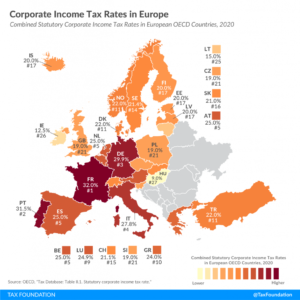
Janet Yellen will use her first major address as Treasury secretary to argue for a global minimum corporate tax rate, Axios has learned, as she makes the case for President Biden’s plan to raise U.S. corporate taxes to fund his $2 trillion+ infrastructure plan. Convincing other countries to impose a global minimum tax would reduce the likelihood of companies relocating offshore, as Biden seeks to increase the corporate rate from 21% to 28%. “Competitiveness is about more than how U.S.-headquartered companies fare against other companies in global merger and acquisition bids,” Yellen will say today in a speech to the Chicago Council on Global Affairs, according to an excerpt of her prepared remarks obtained by Axios. “It is about making sure that governments have stable tax systems that raise sufficient revenue to invest in essential public goods and respond to crises, and that all citizens fairly share the burden of financing government.” “We are working with G20 nations to agree to a global minimum corporate tax rate that can stop the race to the bottom.” President Trump lowered the U.S. rate from 35% to 21%, arguing that U.S. companies were at a global disadvantage and were being incentivized to relocate offshore. The average corporate rate in the G7 is 24%, with some nine countries recently lowering their corporate rate, according to the Tax Foundation, a conservative tax group. Biden’s plan would also raise the international minimum rate for foreign profits from U.S. companies from 10.5% to 21%, which would still be lower than the 28% domestic corporate rate. Biden has tapped five Cabinet secretaries to explain — and sell — his plan to the American public, including Transportation Secretary Pete Buttigieg, Energy Secretary Jennifer Granholm, Housing and Urban Development Secretary Marcia Fudge, Labor Secretary Marty Walsh and Commerce Secretary Gina Raimondo. Yellen’s task is to make the international case. Her speech also is designed to set the tone for the annual spring International Monetary Fund and World Bank meetings in Washington, which will begin virtually this week. Biden has been relying on Yellen to convince the business community and reassure Wall Street that his $2 trillion+ infrastructure proposal, on top of his $1.9 trillion stimulus package, won’t lead to inflation. Now he’s deploying her to convince international finance ministers and central bankers that the world’s biggest economies need to act in concert on corporate rates to avoid a race to the bottom. Yellen will also challenge the world’s economic powers to focus on climate change and on ways to improve vaccine access for the world’s poorest countries. She will call for $650 billion in new “Special Drawing Rights” — essentially lines of credit at the IMF that can help developing countries access more U.S. dollars. The Trump administration was skeptical of new SDR allocations and many congressional Republicans are still opposed. By trying to convince other countries to impose a global minimum tax, Yellen is acknowledging the risks to the American economy if it acts alone in raising corporate rates. “Together we can use a global minimum tax to make sure the global economy thrives based on a more level playing field in the taxation of multinational corporations, and spurs innovation, growth, and prosperity,” she will say.Nick Note: Hard for Americans to understand. Since the US is such a vast market most American businesses do not know how to market internationally. Never minds ship, advertises nor bank or incorporate. I guarantee EVERY major business in the world is “offshore” Its not a crime. Take Intel, Apple, Google and the rest. They use strategies and tax centers to lower their exposure. Its not Illegal…. in fact its the law. Management is OBLIGATED to get the best tax structure to enhance something the commies who are hell bent on destroying the capitalist system and profits. You want to build you economy on unions…. England tried. They ended up with a Maypole and the vast majority of their industries going ….”offshore”. Every major factory in China, Vietnam, Mexico and India by way of example is the direct result of G2 countries tax structures and employment rules. Trump lowering the corporate tax rate and capital gains resulting in the biggest hiring boom in modern American history. Government forcing unions, minimum wags hikes and tax increase will devastate the US economy over time. So their solution…. Force every other country to raise their tax rates. Its called tax rate price fixing. I can tell you price fixing never works. Look at the wild swings in the oil price as each round of attempted production cuts fail. What country would not drool to be the offshore LEGAL tax domicile for America biggest companies. Its not like a 500 year old red wood tree that comes from California. Meaning internet business exist in the air. And reality is they have a lot of ways of establishing offshore presence. In fact Google is delivering their services on servers in Iceland (20% corporate tax rate) and billing through Ireland (12.5% corporate tax rate) then they get the lower Irish tax rates. Look at the chart below as you can see Yellon is smoking some powerful shit. The G20 is not going to raise the corporate tax rate. For that matter world is not going to raise their tax rates because she says so,,,,,,, This is bullshit for the idiot American media. Commie Russia corporate tax rate is 20%.
The strongest job gains since last August, as well as a coronavirus vaccine rollout that is reaching 4 million Americans a day, has U.S. stock futures on the move Monday.
https://youtu.be/P8UEkAzF8z0
Global stocks build on April gains following last week’s blowout jobs report that could mark a turning point in the U.S. pandemic recovery.
Employers added 916,000 new jobs in March, a much higher-than-expected total that tips the headline unemployment rate to 6%.
Benchmark 10-year note yields rise to 1.718% following last week’s jobs report, with Fed Funds now pricing in a 15% chance of a December rate hike.
Oil prices slide as OPEC leaders agree to a gradual increase in production levels by the end of May, with Saudi Arabia phasing out its voluntary cuts by the end of July.
CDC data shows 61.5 million Americans have now been fully vaccinated against the coronavirus, with more than 165 million doses administered as of Sunday.
U.S. equity futures suggest a firmer open on Wall Street heading into a muted week of economic and corporate releases, with focus soon shifting to second quarter earnings from the banking sector on April 14.
U.S. equity futures moved higher Monday, while bond traders began pricing in a Federal Reserve rate hike by the end of the year, following a blowout March jobs report last week that looks to mark a turning point in the economy’s pandemic recovery. Employers added a much more-than-expected 916,000 jobs last month, the Labor Department said in a rare Good Friday release, tipping the headline unemployment rate to 6%. An upward revision of the February tally, which was finalized at 468,000, added to evidence that state re-openings – aided by an accelerating vaccine rollout – will likely boost hiring in the months ahead. However, with the economy rolling into a full-fledge spring hiring boom, and consumers fueled by the recent $1.9 trillion American Rescue Act, fixed income markets are growing increasingly concern over the near-term chances of faster inflation, even as average hourly earnings slowed in last month’s jobs report. Benchmark 2-year Treasury note yields jumped to 0.19% in overnight trading, the highest in 18 months, while the CME Group’s FedWatch tool suggested a 16% chance of a Federal Reserve rate hike before the end of the year, up from around 4% at the beginning of last month. That hasn’t dented U.S. equity futures as yet, with contracts tied to the Dow Jones Industrial Average indicating a 205-point opening bell gain and those linked to the S&P 500, which closed above the 4,000-point mark for the first time last week, priced for a 20-point advance. Rate moves did, however, hold back Nasdaq Composite futures, which are priced for a modest 55-point bump as benchmark 10-year note yields edged higher, to 1.718%, in holiday-thinned overnight trading. Tesla shares look set to pace premarket gainers after posting forecast-beating first quarter delivery numbers Friday thanks to China demand for its Model 3 sedan, with traders pricing in a 7.7% advance to $712.88 per share. Oil prices were on the back foot, with WTI crude sliding back towards the $60 mark, after OPEC leaders, as well as non-member allies such as Russia, agreed to gradually increase their collective output by the end of May, a move that will add around 350,000 barrels of oil to the market each day. Saudi Arabia also agreed to phase it out own voluntary cuts, which are taking 1 million barrels from the market each day, by the end of July. WTI futures contracts for May delivery fell $1.30 overnight to $60.19 per barrel while Brent futures contracts for June, the global benchmark, were last seen $1.41 lower at $63.45 per barrel. Easter Monday holiday kept most markets in Europe closed for the session, with many in Asia also shut for the traditional Christian observance. Japan’s Nikkei 225 ended the session 0.79% higher at 30,089.25 points as the yen weakened to a near one-year low of 110.61 against the greenback, while the region-wide MSCI ex-Japan benchmark was little changed from Friday’s close heading into the final hours of trading.
WASHINGTON: The United States has administered 157,606,463 doses of COVID-19 vaccines in the country as of Friday (Apr 2) morning and distributed 204,719,335 doses, the US Centers for Disease Control and Prevention said. The tally is for Moderna, Pfizer-BioNTech, and Johnson & Johnson’s vaccines as of 6:00am ET on Friday, the agency said. The agency said 101,804,762 people had received at least one dose while 57,984,785 people are fully vaccinated as of Friday. A total of 7,735,342 vaccine doses have been administered in long-term care facilities, the agency said. More than 100 MILLION Americans – one third of the adults – have received at least one dose of COVID-19 vaccine The US has officially vaccinated 100 million Americans with one or more dose of COVID-19 shots That means about a third of American adults have or will soon have some degree of protection against COVID-19 About 17.5% of Americans are now fully vaccinated against the disease CDC said Friday fully vaccinated Americans can safely travel domestically or internationally without testing or before departure or quarantining upon arrival. Nick Note: See i am not in the history business…… The past means nothing to me as far as trading. I am not in the NOW business that to me is a skip, hop and a jump to the past. See i live in the world of tomorrow… the FUTURE. And it helps in my line of work if one sees the future. And its even better for me is when the vast majority of people can not see the future. Now as i started life seeing the future when people could barely comprehend the past and seeing the now through filters was a issue. it made me a freak and as i began public life it subjected me to ridicule and prosecution. I have learned in life i walk a lonely road BUT a lucrative one. I am no longer a public figure thank GOD and have gone as dark as possible… working with a select group of people. With the future view in mind the MAJOR market driving force to come in the FUTURE is a NOW event. And that key event is the modern miracle the mRNA vaccine. And weather or not its priced into market valuations. Which it is not. My back of the cocktail napkin analysis is the following. The vaccine rollout far exceeded expectations in terms of how fast vulnerable populations are getting vaccinated. AND the vaccines effectiveness is being under estimated. Especially in stoping the spread and protecting from deadlier mutations. Couple the fact that the US will open up far faster then the NOW people perceptions and we have opportunity. We are about to set the captives free with happy checks in hand. With eyes on the horizon its easy to see the fact that massive stimulus is in the hands of the public. And we are in for one hell of a stock market rally. And the money does not necessarily have to go directly into the stock market. if the money goes through a restaurant cash register or a airline ticket it will still end up on Wall Strret.
COVID could mutate into a new super variant which could beat vaccines, make people sicker and reinfect victims in a devastating new outbreak, leading experts have warned.
COVID could mutate into a new super variant which could beat vaccines, make people sicker and reinfect victims in a devastating new outbreak, leading experts have warned. Scientists told The Sun Online about the need to vaccinate as many people as possible and stick to the lockdown rules as it is feared the rapidly changing virus could overwhelm our current arsenal of vaccines. The experts hammered home the need to rob Covid of the rapid person-to-person transmission which helps it develop mutations. And they warned possible new variants in the future could make people sicker and re-infect people who had already developed antibodies in a “very, very scary” new outbreak. It comes as Prime Minister Boris Johnson pleaded with Brits to stick to the rules as we go into the long weekend for Easter so the UK can keep to its plan to unlock totally by June. Hot weather earlier this week already saw thronging parks and beaches amid fears it could trigger a new wave despite months of lockdown pain finally leading to plunge cases. Covid variants and mutations have been popping up around the world – with various tweaks appearing to make it more transmissible. Fears have loomed for months that a mutant Covid variant could become significantly more deadly. Meanwhile, scientists in India claimed they have identified a new variant that carries two mutations. And variants first identified in South Africa and Brazil contain the E484K mutation, which is thought to be make the bug evade vaccines.
Studies so far have shown the Pfizer and AstraZeneca jabs do work against current known variants. It comes amid fears the E484K mutation could make them slightly less effective. The latest results from Pfizer show the vaccine does protect against the South African strain, raising hopes the same will be true for the Brazil variant.
The best ways to avoid this are to vaccinate as many as we can – and reduce transmission – and to stay in lockdown until as many as we can are vaccinated
Dr Tony Lockett
Dr Tony Lockett, from King’s College London’s Institute of Pharmaceutical Science, told The Sun Online about the prospect of a devastating new mutation – and urged Brits to stick to the rules. He said: “The effect – well it could be devastating – much worse than the original as younger people could become sicker and those who have had the virus get reinfected with the new strain “Its really very scary.” It comes as it was warned coronavirus mutations could render vaccines redundant in less than one year, according to a survey of epidemiologists by The People’s Vaccine Alliance. Dr Lockett explained some mutations arise when the virus infects people who cannot beat it with their immune system. The expert added: “Uncontrolled proliferation leads to the virus replicating more actively and hence mutation is more likely. “Patients with poor immune systems are therefore are a possible source of mutations.” He went on: “The causes of mutations are therefore allowing vulnerable subjects to get exposed. “The best ways to avoid this are to vaccinate as many as we can – and reduce transmission – and to stay in lockdown until as many as we can are vaccinated. “As Chris Whitty has indicated speeding the lockdown release will lead to more transmission and so more likely mutants – or existing mutants spreading – so the mutations are fed by meeting up and not getting vaccinated.”
[Mutations] are already on the way to becoming immune to our current vaccines.
Professor Ravi GuptaCambridge Institute for Therapeutic Immunology and Infectious Disease
Harvard Professor Dr William Hannage explained it is key to stop the new variants before they can get a foothold as it stops the spread which fuels the mutations. He told The Sun Online: “At the moment there is a lot of concern around E484K, a mutation in the spike protein which is thought to help the virus sidestep immunity from prior infection and is found in several of the variants. “While it looks like vaccines should still offer protection, at least from severe disease, this is one to watch. “It is why the government has been so keen to stop B.1.351 (the South African variant) from getting a toehold in the UK, because one of the mutations characterizing that variant is E484K. “There are a few others as well which make antibody treatments less effective.” Scientists are already working on tweaked vaccines to help deal with new mutations in future, much like the flu vaccine which is altered every year. Ravi Gupta, a professor of Clinical Microbiology at the Cambridge Institute for Therapeutic Immunology and Infectious Disease said: “(Mutations) are already on the way to becoming immune to our current vaccines. “For example, the AstraZeneca study did not do well against the South African strain. “The virus is already on its way to becoming resistant to what we have at the moment. There’s evidence the same mutations are cropping up again and again. “For example, the Brazil and South African variants have this E484K mutation that really makes it hard for our antibodies to neutralise and stop the virus from causing infection.” There has been growing concern over the spread of South African and Brazilian variants of coronavirus in Europe as a third wave of Covid-19 sweeps across the continent. A string of countries have gone back into lockdown or tightened up measures again in response to spiking infection rates. Speaking in a video on social media this morning, the Mr Johnson isued a warning to anyone planning to see loved ones for the first time in months over Easter. He said the country is “not yet” at the stage where families and friends can meet inside, even if they have been vaccinated. Mr Johnson added: “We’re very much in a world where you can meet friends and family outdoors under the rule of six or two households. “And even though friends and family members may be vaccinated, the vaccines are not giving 100 per cent protection and that’s why we just need to be cautious. “We don’t think they entirely reduce or remove the risk of transmission.” Nick Note: Speaking as your librarian, my research indicates if you have had both doses of your mRNA vaccine you should have great immunity. We have set up a vaccinated bubble here. Anyone in the compound has had to completed the vaccines and not been around non vaccinated people. Its good to share meals again and not viewing people through plexiglass, . My daughters have gone to see mom for spring break who they have not been with for a year during the lockdowns. Since they are flying when they come back its 15 day quarantine and test every 5 days. Our greatest threat is flying and non vaccinated people. SO far the vaccine seems to offer significant protection from lnown variants. I am sure we will get a mutated variants. This will come from and circulate among the barbarian unvaccinated hordes. The trick here is to WAIT for the mutations to arrive and the coming booster shots. This is our new reality. Do not let your guard down. Please continue to follow your protection regime including the vitamins and supplements. We have developed and ordered and paid for our super vitamin. This is being manufactured in a USDA certified facility in the US. The CoronaVit was supposed to be delivered in January……. Welcome to the new reality. The global economy is still climbing out of shutdowns. Our vitamins ingredients never combined before are still in independent lab verification. I will advise when they are ready and we will ship you a supply to try.
Nonfarm payrolls handily topped Wall Street estimates, rising 916K in March, the Labor Department reports, compared with economist forecasts for a rise of around 650K.
The jobless rate dipped to 6% from 6.2%, in line with forecasts.
The report will be welcome news to those on Wall Street hoping for economic data to start to show concrete results of a strong recovery after the success of the recovery trade in Q1.
It’s the biggest number of jobs created since August.
Revisions to the previous two months also added 156K jobs.
Private sector jobs rose by 780K vs. expectations of 643K.
Leisure and hospitality added 280K jobs, with 176K coming from food services and drinking places. Arts, entertainment and recreation added 64K jobs.
Labor force participation was a bit of a concern, edging up barely to 61.5%.
That’s “suggesting that labor supply may soon become the constraint on this recovery,” Julia Pollack, labor economist at ZipRecruiter, tweets.
Average hours earnings fell unexpectedly by 0.1% for the month, compared with an expected rise of 0.1%. That could be driven by workers in more lower wage sectors being hired as areas continue to open up.
Wage inflation still looks a long way off.
The average hourly work week rose 0.3 hour to 34.9 hours, suggesting there employers are still pushing current workers for more. But that could bode well for job gains in future months as that hits a plateau.
The numbers bode well for cyclical stocks to continue to outperform, but technology dominated this past week.
(Bloomberg) — U.S. employers added the most jobs in seven months with improvement across most industries in March, as more vaccinations and fewer business restrictions supercharged the labor market recovery. Nonfarm payrolls increased by 916,000 last month and February employment was revised up to a 468,000 gain, according to a Labor Department report Friday. The median estimate in a Bloomberg survey of economists was for a 660,000 rise. The unemployment rate fell to 6%.
Rising Covid-19 infections had severely restrained the labor market for months, but now more than two million Americans are getting vaccinated daily and economic activity is picking up. This also helps explain why the workforce participation rate edged up in March. What’s more, businesses have a clearer view of potential demand as a wave of stimulus-supported consumer spending is poised to wash over the nation’s service providers. Local and state government education employment increased by about 126,000, reflecting the return of more in-person learning at schools. “The end of the pandemic appears to be in sight as vaccine distribution accelerates, and the economic recovery looks like it’s champing at the bit,” Daniel Zhao, senior economist at Glassdoor, said in a note. “We may be looking at a bright summer with monthly gains of over a million jobs, getting us much closer to pre-pandemic employment.” While stronger sales and daily progress in the fight against the coronavirus will help bring the labor market closer to its pre-pandemic employment levels, a full recovery will take time. U.S. Treasury yields received a bump higher following the report, with the 10-year rate climbing as high as 1.69%, although it remained within around 2 basis points of its prior day close. U.S. stocks are closed Friday for a holiday.
The payroll figures showed broad-based gains across industries, led by a 280,000 surge in leisure and hospitality. Construction payrolls jumped 110,000 after dipping in February amid severe winter weather. Education employment also climbed as more schools reopened. Manufacturing employment increased by 53,000 last month, the biggest advance since September.
The $1.9 trillion stimulus package signed last month by President Joe Biden should give an additional shot of adrenaline to hiring amid renewed support for businesses and individuals. Labor Department Secretary Marty Walsh called the jobs report “very encouraging,” in an interview on Bloomberg Television. But he said, “we still have a long way to go.” In addition, the sweeping infrastructure plan that Biden unveiled Wednesday will help to “reinvigorate labor” and the economy in the future, Walsh said. A report Thursday from the National Federation of Independent Business showed a record share of small-business owners in March said they had unfilled positions. That indicates employment will remain strong in coming months. Further, Federal Reserve Chair Jerome Powell has pledged the central bank will continue to support the economy with accommodative monetary policy, despite the recent uptrend in economic and employment data. Even with the sharp advance in March, payrolls remained 8.4 million below the pre-pandemic peak of about 152.5 million. “The recovery is far from complete,” Powell said at the House Financial Services Committee hearing on March 23. “As we have emphasized throughout the pandemic, the path of the economy continues to depend on the course of the virus.” The U-6 rate, also known as the underemployment rate, declined to 10.7% from 11.1%. It is often thought of as a more inclusive measure of unemployment than the headline figure because it also accounts for those who stopped looking for a job because they were discouraged about their prospects and those working part-time but desiring a full workweek. The participation rate, which is the share of the population that is either working or actively looking for work, improved to 61.5% last month from 61.4%. The so-called prime-age participation rate, or the participation rate among those ages 25-54, climbed as more women returned to the workforce. The report also showed the average workweek increased by 18 minutes to 34.9 hours, partly reflecting a bounce back from severe winter weather a month earlier. Unemployment rate declined for all races except Asian-AmericansJobless rate for Asian-Americans rose to 6% from 5.1%, reflecting both an increase in the number of people entering the labor force and more unemployed. Black unemployment rate fell to 9.6%, still the highest among races. Jobless rate among Hispanics fell to 7.9%; unemployment rate for Whites dropped to 5.4%. Nick Note: A very strong report that confirms the other reports i am seeing. This is a great big juicy reflation..
(Bloomberg) — Asian stocks and U.S. equity futures posted modest gains Friday after U.S. shares reached a record on optimism over a stimulus-fueled economic rebound. Trading volumes were below average due to holidays. Chip-makers bolstered South Korean equities following a report that the U.S. plans to meet with semiconductor and auto companies to discuss the global microprocessor shortage. A gauge of Asia-Pacific shares rose for a second day. U.S. equity futures edged up after the S&P 500 closed above 4,000 for the first time. Tech shares outperformed and value stocks rallied as traders weighed President Joe Biden’s $2.25 trillion spending plan and signs of faster growth. Treasuries rebounded after the worst quarter in decades with 10-year yields falling back below 1.7%. The dollar retreated. Oil climbed after the OPEC+ alliance agreed to boost output gradually. In Asia, markets including Australia, Hong Kong, Singapore and India are shut for holidays, as are many worldwide.
Investors are cheering increasing signs of strength in the U.S. economy. Manufacturing growth roared ahead in March, and government job-market data due Friday are expected to show the first in a series of outsized monthly increases.
Biden’s plan to rebuild infrastructure strengthens the outlook, though questions remain about how much of it can actually be delivered. Investors for now are looking past worsening virus trends, such as Chile’s move to close its borders for April and a lockdown in France. They remain focused on inflation risk amid the economic rebound.
“Before you worry about inflation, there’s reflation and I think that’s the main theme in the market,” said Ed Campbell, fund manager and managing director at QMA.
Traders are braced for the U.S. jobs report, which could roil the bond market in a holiday-shortened trading session. Very strong data may push benchmark yields back toward a recent one-year peak of 1.77%.
The last thing this week before Easter is the U.S. employment report for March on Friday. Good Friday starts the Easter weekend (most markets closed) in countries including the U.S., U.K., France, Germany, Australia and Canada.
April 1 (Reuters) – The S&P 500 on Thursday crossed the 4,000 mark for the first time, as technology shares, led by chipmakers, gained following an upbeat earnings outlook by Micron, while optimism about the U.S. economic growth lifted sentiment. Seven of the 11 S&P sectors rose, with technology and communication services gaining more than 1.5%. Increased vaccinations and massive fiscal stimulus are powering a recovery in the labor market, which helped investors shrug off latest data that showed a rise in the number of Americans filing new claims for jobless benefits last week. The closely-watched monthly jobs report on Friday could show U.S. economy added 647,000 jobs last month after February’s 379,000 rise. “The data continues to give confidence that the earnings are going to be revised higher,” said Larry Adam, chief investment officer at Raymond James. “April is usually a pretty good month for the market historically and I would expect that momentum to continue especially as we see the economy strengthen.” Micron Technology Inc advanced 4.8% after the chipmaker forecast fiscal third-quarter revenue above Wall Street estimates due to higher demand for memory chips, thanks to 5G smartphones and artificial intelligence software. U.S.-listed shares of rival Taiwan Semiconductor rose 3.8% on its plan to invest $100 billion over the next three years to meet the rising chip demand. The technology-heavy Nasdaq jumped 1.5% as “high flying” stocks including Amazon.com Inc, Apple Inc, Alphabet Inc, Microsoft Corp and Facebook Inc added between 1.1% and 2.3% after underperforming last month on concerns over elevated valuations. The S&P 500 had hit an intraday high on Wednesday as President Joe Biden unveiled a $2 trillion-plus plan to rebuild the world’s largest economy. Biden’s “American Jobs Plan” would put corporate America on the hook for the tab as the government creates millions of jobs building infrastructure, such as roads, tackles climate change and boosts human services like care for the elderly. Advancing issues outnumbered decliners by a 2.89-to-1 ratio on the NYSE and a 3.20-to-1 ratio on the Nasdaq. The S&P index recorded 10 new 52-week highs and no new low, while the Nasdaq recorded 33 new highs and three new lows. Nick Note: No human has been any clearer. In spits of a great disinformation campaign, record margin calls and economic bullshit campaign and threats against us. This is going to be the greatest TECH led stock market SHORT TERM Bull run in history. We traded it through the fastest 10% correction the NASDAQ has ever seen in the CFD account and booked close to a half a million in profits to show you how to do it. Now as you are seeing the wounds the investment banks inflicted on you are healing VERY quickly. As I have proven throughout my career. Just because they have trillion of dollars these guys are not omnipotent. In fact they are down right stupid. Mike Tyson in his prime was a monster. Like OJ Simpson supermen. SO! Neither one of them could do a simple equation. Could they preform life saving surgery? Run into a burning building and save children? Make land produce food. Design and engineer living spaces. Cure disease or make people rich? Grow a business from nothing and provide jobs? Even care for the sick or raise someone else’s children. The contributions from the Gorillas were beating people up including girlfriends, rape, murder and massive drug use. Not capable of figuring the area of a cylinder. And ask them to write simple computer code for a laugh.. No more then guerrilla’s in a three piece suit. The people who populate the investment banks of the world are animals. Sneaky manipulative back stabbing criminals. Destroying wealth. Looting retirement funds, overvaluing shit companies and wiping out good ones with debt they will never pay back. And as you will see in time they will destroy the global financial system creating a global depression with starvation and oppression the likes of which the world has never seen before. Mankind.. Womankind and LGBTkind for that matter will be reduced to savages eating their children to survive. Wall Street especially the investment banks are little more then street hoodlums in pin stripes. A different kind of Animal then the gorilla….. A combination of a demon, changeling and snake in the grass comes to mind. You have been warned. Now lets precede to Phase II and organize ourselves as a group to do good and make money. I think I have proven to you that I know how to take them on and can engage them successfully. And I know how to do good. The time has come both market wise and structure wise to begin our greatest endeavor ever together. Check your email and mail box. We will be in touch. And ring my phone 24/7. No waiting, no receptionist, no bullshit. Maybe a little raw at times but you will find the real thing at the end of the line. I defy you to show me anyone in finance qualified or not accessible to you DIRECTLY. SHIT!! call your broker and after a 20 minute wait you will be lucky to get a desk clerk who cannot even tell you the margin rate…….. I thnkyou for being with me