Stock futures pointed to a higher open Wednesday morning, with each of the three major indexes on track to recover some losses from Tuesday. Contracts on the Dow gained more than 100 points, or 0.4%, as shares of component Intel (INTC) rallied after the company announced a $20 billion investment into building out its in-house chip manufacturing operations to catch up with competitors. The Nasdaq looked to open higher by more than 100 points as well, and the S&P 500 gained 0.5%. A day earlier, the Dow dropped by more than 300 points, or about 1%, for its worst session in nearly three weeks. The S&P 500 also dipped, and the Nasdaq shed more than 1% as technology stocks added to recent declines. Many of the cyclical stocks that had led markets higher for much of the last three months underperformed, and the industrials, energy and financials sectors lagged. Treasury yields steadied, and the benchmark 10-year yield retreated to about 1.62% from last week’s high of more than 1.75%. “I think what we’ve seen over the past couple days is some end-of-quarter positioning,” Tom Essaye, Sevens Report Research founder, told Yahoo Finance. “The best performers quarter-to-date are getting sold right now, some of the worst performers are rallying. That’s typical as we end a quarter.” “But then also, the outlook on COVID has dimmed a bit – not so much here in the United States, but definitely in Europe, where they seem to be experiencing a third wave,” he added. Overseas, Germany extended its stringent lockdown measures for another month, and the European Union was reportedly contemplating imposing temporary export restrictions of its COVID-19 vaccines. “The vaccine rollout there is not going so well as we know, and now you’re seeing increased lockdowns.” Investors have also been digesting remarks from a parade of Federal Reserve speakers this week. Much of the commentary has served to reinforce the central bank’s stance that any inflation appearing this year will be transitory, and not significant enough to warrant a shift in their monetary policy positioning. Last week, the Federal Reserve’s updated projection material showed the median forecast among Federal Open Market Committee participants was still to keep benchmark interest rates near zero through at least 2023. Federal Reserve Chair Jerome Powell told the U.S. House Committee on Financial Services on Tuesday that he expects a temporary increase in inflation in the coming months compared to the same period last year, but that the forthcoming rises will be short-lived since so many Americans will still be out of work as the economy recovers from the pandemic. Other members of the Federal Open Market Committee echoed similar sentiments. Federal Reserve Governor Lael Brainard said during a virtual event Tuesday that “it will take some time to achieve substantial further progress” on the Fed’s goals of achieving maximum employment and sustainable 2% inflation. She advocated “a patient approach based on outcomes rather than a preemptive approach based on the outlook” as a more efficient means of achieving the central bank’s goals, suggesting the Fed would stay the course even as prospects of spiking inflation spook some market participants. Nick Note: You are missing a bet here. Its time to get aggressive. The mother load of all rallies is coming……. Then its wipeout city
UK private sector returns to growth in March, led by fastest increase in service activity since August 2020
Business activity across the UK private sector increased in March and the rate of expansion was the fastest for seven months, according to the latest PMI® data compiled by IHS Markit and CIPS. This was fuelled by a rise in new orders for the first time since September 2020, which survey respondents attributed to a rebound in sales ahead of easing lockdown measures, alongside stronger consumer confidence and a surge in demand for residential property services.
The headline seasonally adjusted IHS Markit / CIPS Flash UK Composite Output Index registered 56.6 in March, up sharpl y from 49.6 in February and above the crucial 50.0 no-change mark for the first time in three months. The latest reading signalled a strong rate of private sector output growth and the speed of recovery was the fastest since August 2020. For the first time since the start of the pandemic, service sector activity (index at 56.8) outpaced manufacturing production growth (55.6).
Higher levels of business activity were often linked to the prospect of looser restrictions on trade due to the coronavirus disease 2019 (COVID-19) pandemic. Moreover, the government roadmap for fewer stringency measures in the coming months contributed to the strongest rise in total new work since August 2020. Service providers noted forward bookings from domestic consumers, while some manufacturers cited advanced orders from hospitality businesses and high-street retailers. Export sales remained relatively subdued, however, with total new orders from abroad falling for the third month running.
A strong degree of pent-up domestic demand led to a renewed increase in unfinished work in March. Although only modest, the rate of backlog accumulation was the fastest since June 2018. Comment Manufacturers typically cited capacity constraints due to supply chain difficulties, while service providers commented on staff shortages and better-than-expected sales volumes. There were also reports that a surge in residential property transactions continued to lead to rising levels of unfinished work in this area of the service economy.
Efforts to rebuild business capacity and respond to rising customer demand contributed to an increase in private sector employment during March. This represented the first upturn in staffing numbers since February 2020 and the rate of job creation was the fastest for nearly two years.
The return to net employment growth was supported by higher levels of optimism towards the business outlook. Latest data indicated that expectations for the year ahead picked up for the third month running and were the strongest since this index began in July 2012.
Positive trends for output, new work and staff hiring were accompanied by another round of steep input cost inflation during March. The latest increase in average cost burdens was the sharpest since February 2017. Private sector companies continued to pass on greater operating expenses to clients, as signalled by an acceleration in the rate of output charge inflation to its highest for over three years in March.
IHS Markit / CIPS Flash UK Manufacturing PMI®
March data indicated that the recovery in UK manufacturing output regained momentum, with production growth reaching its strongest since the end of 2020. New orders also increased at the fastest pace for three months, despite another relatively subdued rise in export sales. Hopes of a sustained rebound in customer demand contributed to robust job creation and the highest level of business optimism about the year ahead outlook since April 2014.
At 57.9 in March, the seasonally adjusted IHS Markit/CIPS Flash UK Manufacturing Purchasing Managers’ Index® (PMI®) – a composite single-figure indicator of manufacturing performance – was up from 55.1 in February and the highest since November 2017.
The stronger PMI reading was supported by the fastest rise in employment for just over three years. Meanwhile, capacity pressures and supply shortages contributed to the quickest rise in backlogs of work across the manufacturing sector since May 2010. Longer wait times for supplier deliveries were overwhelmingly attributed to a lack of global shipping availability and customs delays. An imbalance of demand and supply pushed up raw material costs, with subsequent efforts to protect margins leading to the steepest increase in factory gate charges since January 2017.
IHS Markit / CIPS Flash UK Services PMI®
The seasonally adjusted IHS Markit/CIPS Flash UK Services PMI® Business Activity Index posted 56.8 in March, up from 49.5 in February and above the crucial 50.0 no-change mark for the first time in five months. Moreover, the rate of business activity expansion was the strongest seen since August 2020. March data also signalled a return to growth for new orders and employment across the service economy. Service providers widely commented on improving consumer confidence and signs of pent-up demand.
Expectations of rising sales after the national lockdown, and a boost to sentiment from the successful UK vaccine rollout, contributed to an increase in business optimism to its highest since January 2004.
Chris Williamson, Chief Business Economist at IHS Markit, said: “The UK economy rebounded from two months of decline in March, with business activity growing at its fastest rate since last August as children returned to schools, businesses prepared for the reopening of the economy and the vaccine roll-out boosted confidence. Companies reported an influx of new orders on a scale exceeded only once in almost four years, and business expectations for growth in the year ahead surged to the highest since comparable data were first available in 2012. Employment consequently rose for the first time since the pandemic struck as firms expanded capacity in response to the new inflows of work and brighter outlook.
“The surge in business activity is far stronger than any economists expected, according to Reuters polls, and hints at only a modest contraction of GDP during the first quarter, adding to evidence that the economy has shown far greater resilience in the third lockdown compared to the first. The encouraging readings on future expectations, job creation and new order inflows meanwhile all point to robust economic growth in the second quarter, especially if virus restrictions are lifted further.
“Worries persist though, especially in relation to near-record supply chain delays, a continued fall in exports and sharply rising prices, all of which are making life difficult for many companies. Many consumer facing companies meanwhile remain constrained by COVID-19 restrictions, which are likely to curb the overall pace of economic growth for some time to come, especially if we see a third wave of infections.”
Duncan Brock, Group Director at CIPS, said: “It’s good to see the sectors out of contraction and the economy as a whole returning to growth in March but the fastest pace of cost inflation since February 2017 will be a cause for trepidation. The boost in employment numbers is also encouraging, but the sectors have a lot of catching up to do to meet the demands of the fastest rise in backlogs since June 2018.
“Even with slow supply chains, shipping shortages and new Brexit customs burdens, businesses were buying quickly and buying more, to head off any further disruptions on the horizon. The fastest rise in new manufacturing orders in three months led to the highest levels of optimism since 2014, though EU businesses were still reluctant to commit to business, as export growth remained disappointingly weak.
“The services sector was even more hopeful with business future expectations rising to levels last seen in 2004. Dormant businesses were able to plan again with the imminent lifting of UK restrictions and consumers were securing their place in restaurants and holiday venues. Though international travel is still restricted, as long as the fastest rise in consumer costs for three years and the threat of new lockdowns doesn’t halt further progress, we can see more opportunities opening up in the coming months.”
Bostic doesn’t see Fed raising rates before 2023
(Bloomberg) — A strong recovery from the Covid-19 recession is likely to prompt Federal Reserve Chair Jerome Powell and his colleagues to lift interest rates in 2023, but that isn’t going to show up in their forecasts this week, a survey showed. Economists surveyed by Bloomberg News see two quarter-point hikes in 2023. But they also expect the U.S. central bank’s own forecast, released at the same time as its policy statement at 2 p.m. in Washington on Wednesday, will show the median Fed official projecting rates staying on hold near zero throughout that year. Such a result would match the Fed’s December projections, even though U.S. lawmakers have backed almost $3 trillion in fiscal stimulus since then, including $1.9 trillion that President Joe Biden signed into law on Thursday, which — together with accelerating vaccinations — is boosting the economic outlook. “The Fed is now probing the unknown as a powerful trio of massive fiscal stimulus, monetary support and pent-up demand impact an economy released by the widespread dissemination of vaccines,” economist Lynn Reaser of Point Loma Nazarene University said in a survey response The Federal Open Market Committee is almost certain to keep rates near zero and pledge to continue its asset purchases at the current $120 billion monthly pace at its second meeting of the year. Powell has repeatedly stressed that the U.S. labor market remains far from the Fed’s goal of full employment, making it too soon to discuss winding down Fed support as the world marks the one-year anniversary of the pandemic. Even so, three-quarters of the economists forecast the central bank will have to raise rates by the end of 2023, where the median respondent has estimated about 50 basis points of tightening. By contrast, the median in Bloomberg’s December survey had no change in rates until 2024 or later. “While the economic projections will change, we do not expect rate expectations to move much at all. In fact, while a few dots may drift higher on the dot plot, we expect the center of the Committee to hold the line in terms of not acknowledging any change in the exit timeline.” The committee, making its first quarterly economic forecasts of the year, will raise its estimates of 2021 growth and edge up the inflation call, while not bringing forward a winding down of asset purchases or interest-rate hikes, in the view of the 41 economists, who were surveyed March 5-10. The Fed’s closely watched forecasts are likely to show gross domestic product increasing 5.8% in 2021, the survey found, up from 4.2% in the Fed’s December projections. Inflation is seen slightly higher than three months ago, with the unemployment rate falling to 5.0% at year’s end, the same as in the December projections. The FOMC is likely to continue to forecast near-zero rates through 2023, though it’s a close call, with a third of economists surveyed looking for a median Fed projection of higher rates by then. In December, one official penciled in a quarter-point increase during 2022, with five seeing hikes in 2023. “Having a forecast of rising rates seems very unlikely when we are just beginning to discuss how much inflation will move up, for how long, how much the unemployment rate will drop,” said Nathaniel Karp, BBVA chief U.S. economist. “The Fed has to see it, feel it, not just dream about it.” A sharp rise in U.S. Treasury yields in the past month as economic-growth forecasts picked up has caught the eye of the central bank. Powell and others have attributed the increases to improving prospects and said they don’t appear to be troubling. The FOMC is unlikely to highlight the risk of tightening financial conditions in its statement or strengthen its forward guidance on interest rates or bond buying, the survey found. The committee has pledged to continue the current pace of asset purchases until there’s “substantial further progress” on employment and its 2% inflation goal. “The FOMC will remain in wait-and-see mode for the time being, with no major change in the statement, rate-hike timing, or inflation projections expected at this meeting,” said Scott Anderson, Bank of the West chief economist, in a survey response. Powell has said the economy isn’t close to achieving the necessary progress to trigger a shift in bond buying and that he will signal any tapering well in advance. That isn’t seen happening until 2022 in the view of a narrow majority of economists. Most of the surveyed economists also don’t expect any near-term change, such as a shift to buying long-term Treasuries. Even less likely would be altering the mix of Treasury and mortgage-backed securities, or placing a numerical target on Treasury yields, known as yield-curve control, they said. Powell’s current term as chair is scheduled to end next February. His highly accommodative policies could win him a second stint, according to the economists. About three-quarters expect him to continue in the job, which is about the same finding in the prior survey. The central bank has occasionally made a technical change to its interest rate on excess reserves, which would not affect monetary policy. Most economists are not looking for a change in March, however. Nick Note: Hear me well. THEIR IS NO INFLATION ITS A REFLATION as the world comes out of lockdown. Credit the vaccine. Our job is to get their first…. Hedge funds especially ones in technology companies, currencies and bond funds have been getting killed. They are desperately trying to hold the stock market hostage. as you are seeing they have failed since the begging of the month. The lid will soon blow off our favorite market. Do not be confused by the blizzard of bullshit they are blowing… The Fed will keep a lid on rates for at lease 3 years into the future.
Pension funds have to buy bonds to rebalance portfolios
- Bond yields could head lower into next week, as pensions and other big investors buy bonds to rebalance their portfolios for the end of the quarter.
- Big investors would also have to shave down stock positions, to bring their asset allocations in line, after the nearly 5% first quarter gain in the S&P 500.
- Stocks normally might be under pressure from the selling, but strategists say their performance lately has been tied to bond yields, and falling yields could draw in buyers, especially to growth stocks.
Pension funds and other major investors should be big buyers of bonds during the next week or so, as they rebalance their holdings to make up for the bond market’s first quarter sell-off. Wells Fargo’s Michael Schumacher estimates corporate pension funds will have to make up a gap in bond holdings of about $125 billion, the biggest shortfall in about a decade. Schumacher, director of rates at Wells, said not all of that activity will come before quarter end, but he expects to see about $25 billion in buying to make up for that gap by March 31. What happens to stocks is less clear. Normally, stocks would be under selling pressure as big investors rebalance by also reducing holdings because of the stock market’s positive performance. The S&P 500 is up 4.9% so far this quarter, and the same investors would be trimming holdings in equities, as they add to bonds. But the stock market has been held hostage recently by rising interest rates, and whenever the yields have stabilized, stocks have done better. As yields slipped Monday, stocks rallied, especially the Nasdaq which has been hurt most by rising yields. “That’s the tug of war that’s going on. On the one hand, you know there’s stock to sell because of the rebalance, but on the other hand the market has been very, very sensitive to yields that are stable to lower,” said Julian Emanuel, head of equity and derivatives strategy at BTIG. “That could be one of the catalysts that break stocks out of the trading range.”
The bond market sell-off has been swift. The 10-year Treasury yield started the year at 0.93% and reached a high of 1.75% last week. On Monday, the yield slipped to 1.68%. That move lower was positive for stocks. The S&P 500 was up 0.7% to 3,940, while the Nasdaq jumped 1.2% to 13,377.
The FANG names – Facebook, Amazon, Netflix and Google parent Alphabet – were all higher Monday, as was Apple, another tech stock punished as interest rates rose. Emanuel has said the selling in FANG has been overdone, and he expects growth stocks to benefit from the quarter end decline in rates. “We are firmly in the camp that despite the fact we think value over growth works in the long term, in the near term, upside is definitely going to be led by a moderation in the decline in bond yields spurring outperformance in large cap tech, specifically FANG,” he said. Emanuel said the stock market could actually be at an inflection point. “Between now and the beginning of April, we think the market is going to make its intentions known,” he said. “Whether it’s broad upside led by the laggards with financials participating or this whole idea of even if bond yields behave that the bloom is off the near term rose for the cyclical value trade,” he said. “…It could be a substantial movement on the order of 10% one way or the other.” Schumacher said the activity should drive yields lower, at least temporarily. “We should have yields coming down and a little bit of stabilization for a few weeks, and then I would suspect they’ll be back to their old tricks and start climbing again,” he said.. Nick Note: let me make it simple for you. The Fed like central banks the world over are buying debt by the truck load to keep rates low. In fact just like is happening the world over they will ALL drive rates negative. As far as your grandchildren inheriting debt… FUCK THEM… they can go to low debt countries where their is no running water, no sewage, no lights, no roads and no military never mind internet infrastructure…. The $50,000 in debt they will inherit over a lifetime is nothing for the military, hospital system, police protection, supply system, ports, airports, pipelines, college education system and endless safe food supply…… all lumped together i call it the greatest infrastructure the world has ever known we will leave them.
Pfizer CEO reveals plans to become leader in mRNA
(Reuters) -Pfizer Inc plans to tap the mRNA technology to make new vaccines for other viruses following the success of its COVID-19 shot, which was developed jointly with German partner BioNTech SE, the Wall Street Journal reported on Tuesday. The drugmaker said it was ready to pursue mRNA on its own following its experience in the past year working on the COVID-19 vaccine, the WSJ reported, citing an interview with Pfizer Chief Executive Officer Albert Bourla. It did not, however, disclose any details about the viruses it was targeting.
The success of the technology is prompting drug developers to consider its use in other areas of medicine beyond vaccines, attracting billions of dollars in investment.
Pfizer and BioNTech did not immediately respond to Reuters requests for comment. Pfizer/BioNTech and Moderna’s COVID-19 vaccines, authorized for emergency use in the United States, use mRNA technology. Nick Note: A star is born and not some actor liar, music whore, clown, ball playing neanderthal gorilla… But the real heroes are people vewith brains curing disease, making global communications systems, engineering food systems,,,,, and providing energy for the world. Unfortunately like the birds they are attracted to some fool singing a song… some ape-man with big mussels or a bad boy criminal who makes their nipples hard. While geniuses are called nerds and shunned. So when they come back to you broke and with a couple kids remember its their bad decisions that put them in the sorry ass life they really deser..
US economy set to significantly outpace both the euro area and Japan in 2021 – Danske Bank
Economists at Danske Bank continue to see April as the overall turning point in terms of overcoming the COVID-19 shock, avoiding new restrictions in the fall despite the challenges in rolling out vaccines in many countries. Given its robust growth, the US will reach its pre-corona GDP trend line in Q3 this year (like China did already last year), while it will take substantially longer in the euro area and Japan (not before 2023). “We continue to see a risk of further resurgence in Europe in March as the more contagious British variant has taken over and the season is not yet helpful. However, we look for a turning point during April when warmer spring weather arrives as this normally reduces spread of contagious diseases such as the flu. With most people vaccinated when the autumn season arrives, we believe new restrictions will not be necessary at that point in the US and Europe and the economies can stay open.” Nick Note: Their back! this is not over until its not over… again.The masses got to go to their fuck fests, concerts, disco, pools, theaters and sporting events. And do not forget my favorite sitting on a beach doing nothing,,,, creating skin cancer and getting sand up your ass with about a thousand drunks druggies screaming and jumping up and down idiots all around you….Its time to get vaccinated…. and NOT FLY and only hang out with sensible people who are still cautious after they got their 2nd mRNA vaccine.
“The US economy is set to significantly outpace both the euro area and Japan in 2021 due to a more forceful policy support and a faster roll-out of COVID-19 vaccinations, allowing a faster normalisation of economic activity. We have raised our growth expectations for the US economy to 7.5% in 2021 (from 3.3% in December).”
“Although the euro area GDP growth will benefit from the higher US growth (by 0.1-0.2 pp), we have revised down our 2021 GDP forecast to 4.4% (4.9% previously), reflecting more stringent containment measures in H1 21 than previously anticipated, which are delaying the upswing (however, not derailing it).”
“In Japan, we have revised our GDP forecast higher looking at 2020-22 as a whole, as the economy seems to have struggled less than expected with the soft lockdown imposed by the government. A new record budget for the fiscal year 2021 and the large fiscal package in the US are also key. The recent surge in USD/JPY gives exporters good conditions for benefitting from US stimulus.”
“We expect the Fed will allow inflation to move higher without offsetting by tightening monetary policy prematurely (expecting tapering only to begin in early 2022) and forecast PCE core inflation will move close to 2% by year-end 2022. In contrast, in the euro area, after peaking at 1.6% in Q4 21, we see core inflation drop back and fluctuate around 1.0% in 2022.”
Biden’s infrastructure bill to amount to $3T- report
Economic advisers in the Biden administration are reportedly preparing a $3 trillion spending plan, charting an ambitious path forward on infrastructure and child care programs that will test the White House’s ability to garner GOP support. The New York Times and The Washington Post on Monday reported that Biden’s advisers are expected to present the proposal this week. The plan reportedly recommends spreading out the president’s economic agenda across multiple bills instead of one massive legislative package. The plan will begin with an infrastructure measure that may be funded through increased taxes for the wealthy and corporations, the Times reported, adding that the $3 trillion spending plan does not include the cost of extending new tax cuts to fight poverty that could cost hundreds of billions of dollars. The administration, fresh off the passage of a $1.9 trillion economic relief measure, has signaled for weeks that it planned to tackle infrastructure next. The issue has generally received bipartisan support, and President Biden has hosted bipartisan groups at the White House to discuss how to move forward with a bill. But there remains daylight between the two parties on how to pay for such a package. Democrats are likely to push for tax increases on wealthier Americans to fund the legislation, a move that Republicans have generally balked at. The infrastructure piece would reportedly focus on investments in clean energy, 5G telecommunications and rural broadband, among other areas. A second piece of legislation would focus on funding for child care and pre-K programs and assistance for community college students. Nick Note: pork and lefty liberal grennie winnievill here we come……….
Nasdaq 100 Climbs 2% as Yield Dip Boosts Stocks
 © Bloomberg U.S. firms with dicey balance sheets eye best quarter versus those with strong ones
The dollar was little changed and oil fluctuated in the wake of its worst week since October. Small-cap shares underperformed. Last week’s Treasury selloff served as a stark reminder that investors remain concerned that a stronger economic recovery could fuel inflation, despite reassuring comments from policy makers. At the same time, traders are betting that growth will swell corporate profits as vaccines work to curb the global pandemic. “The rise in long-term yields has kind of affected every move we’ve seen in equity markets, from the big selloff in the higher growth stuff to the rotation into the more economically sensitive sectors,” said Ross Mayfield, investment strategy analyst at Baird. “Any time there is some rate stabilization, it’s kind of the spark for tech to capture a little bit of gains.” There’s no sign yet that faster economic growth will deliver unwanted inflation or a need to adjust monetary policy, Federal Reserve Bank of Richmond President Thomas Barkin said Monday. For unwanted inflation to take hold, expectations for price increases would have to really move and begin to get factored into business decisions and wage bargaining, he added. In European markets Monday, gains in tech were offset by declines in travel firms on the Stoxx 600 Index. Banks exposed to Turkey fell after President Recep Tayyip Erdogan moved to replace the country’s third central bank chief in less than two years, sparking a decline of 7% in the lira. Asian shares slipped.
These are some key events to watch this week:
Fed Chairman Jerome Powell and Treasury Secretary Janet Yellen are expected to make their first joint appearance before the U.S. House Financial Services committee to testify on Fed and Treasury pandemic policies Tuesday.The U.S. Treasury holds auctions of two-, five- and seven-year debt.EIA crude oil inventory report on Wednesday.On Friday, February U.S. personal income and spending data arrives.These are some of the main moves in financial markets:
Stocks
The S&P 500 Index increased 0.8% as of 12:56 p.m. New York time.The Stoxx Europe 600 Index rose 0.2%.The MSCI Asia Pacific Index fell 0.2%.The MSCI Emerging Market Index was little changed.
Currencies
The Bloomberg Dollar Spot Index slipped 0.1%.The euro strengthened 0.2% to $1.1932.The British pound fell 0.1% to $1.3859.The Japanese yen strengthened 0.2% to 108.72 per dollar.
Bonds
The yield on 10-year Treasuries fell four basis points to 1.68%.Germany’s 10-year yield declined two basis points to -0.31%.Britain’s 10-year yield decreased two basis points to 0.81%.
Commodities
West Texas Intermediate crude slipped 0.4% to $61.20 a barrel.Gold weakened 0.4% to $1,738.09 an ounce.
Exclusive: U.S. senators press Biden to set end date for gas-powered car sales
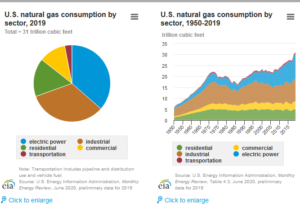
WASHINGTON (Reuters) – California’s two U.S. senators are urging President Joe Biden to set a firm date to phase-out gas-powered passenger vehicles as the White House grapples with how to rewrite vehicle emissions rules slashed under President Donald Trump. In an unreported letter going to Biden Monday, Democratic Senators Alex Padilla and Dianne Feinstein called on Biden “to follow California’s lead and set a date by which all new cars and passenger trucks sold be zero-emission vehicles.” They also urged Biden to restore California’s authority to set clean car standards. In September, California Governor Gavin Newsom signed an executive order directing the state’s air resources agency to require all new cars and passenger trucks sold in California to be zero-emission by 2035. Biden’s campaign in 2020 declined to endorse a specific date to end gas-powered vehicle sales, but he has vowed to dramatically boost electric vehicles and charging stations. In January, Biden said the administration would replace the federal government’s fleet of 650,000 vehicles “with clean electric vehicles made right here in America made by American workers.” The senators also say Biden should use a compromise deal that California struck with automakers including Ford Motor Co, Honda Motor, BMW AG and Volkswagen AG that falls between the Trump administration and Obama-era requirements. “We believe the national baseline should, at an absolute minimum, be built around the technical lead set by companies that voluntarily advanced their agreements with California,” Padilla, who replaced Vice President Kamala Harris in the Senate, and Feinstein wrote in the letter seen by Reuters. “California and other states need a strong federal partner.” Shortly after taking office, Biden ordered U.S. agencies to revisit fuel efficiency standards by July. The Trump administration in March 2020 finalized a rollback of fuel economy standards to require 1.5% annual increases in efficiency through 2026, well below the 5% yearly boosts in Obama-administration rules it discarded. Then President Donald Trump repeatedly targeted California, a Democratic bastion that tangled with Trump on multiple fronts during his tenure. The Center for Biological Diversity estimates the California deal improves fuel economy 3.7% year over year between 2022-2026. Biden also directed the Environmental Protection Agency and the National Highway Traffic Safety Administration by April to reconsider Trump’s 2019 decision to revoke California’s authority to set its own auto tailpipe emissions standards and require rising numbers of zero-emission vehicles. A White House spokesman declined to comment Sunday on the timing of any announcement on California’s vehicle authority. California’s vehicle emissions standards are followed by 13 other states and the District of Columbia accounting for more than 40% of the U.S. population. In January, General Motors said it aspires to end all gasoline passenger car and truck sales by 2035. Volvo, a unit of Zhejiang Geely Holding Group, said its entire car line-up will be fully electric by 2030 and Ford’s European lineup will also be fully electric by 2030. The Alliance for Automotive Innovation, a trade group representing major automakers, declined comment Sunday but last month backed nationwide rules to achieve vehicle emissions reductions roughly midway between the Trump and Obama standards. Nick Note: Dream dream dream. IF America went to the electric car. Generation capacity would have to be increased by 3 times. Now the next problem is the grid distribution system. As it exists now it cannot provide that kind of power to the charge stations. It get worse. Most US houses are wired for single phase 50 amps. In recent year they are wiring still singe phase but upped the service (to accommodate heat pumps and aircon) to only 100 amps. Reality is US households have more then one car,,,,, which the studies conveniently forget to calculate) So that means 2 cars charging. If you do the math that would take 200 amp 3 phase service. So tell me who is going to pay the trillions it will take to fulfill this wet dream? Here is the reality.. 50% of the houses in America are plumbed for natural gas. And nearly all cities. The US has a vast surplus of natural gas it is the largest contributor to US energy needs. And sufficient supplies and infrastructure to meet demand for the next 100 years thanks to frack gas.. Natural gas cars pollute less then 10% of gasoline powered engines. And it take a $2000 modification. So why is America not going to a natural gas solitude that could be done for a few billion. Answer the grennis winnies are going to force a unworkable solution.
BioNTech founders Özlem Türeci und Uğur Şahin honored with Axel Springer Award
“It was very clear that there could be no better choice for the Axel Springer Award 2021 than the two founders of BioNTech,” said Mathias Döpfner, CEO of Axel Springer SE, at the start of the awards ceremony in the new Axel Springer building. Within just eleven months, Özlem Türeci and Uğur Şahin developed the world’s first vaccine against COVID-19 – giving millions of people back the hope of a free life. On Thursday evening, they were honored with the Axel Springer Award for their groundbreaking research, innovative strength and social responsibility. In her acceptance speech, Özlem Türeci said: “This award is a true honor for us, and it is a recognition of our work. However, it is also a recognition for all those who followed this call to action and made the impossible possible – to develop a COVID-19 vaccine in less than a year. (…) However, this award is not only about people. It also illustrates that science and the scientific community can truly make a difference. It also illustrates that joining forces is a tool, in particular if executed on every possible level with a sense of joint commitment and with a sense of urgency.”
In an interview with Mathias Döpfner on stage, the two award winners, who see themselves as “innovators and problem solvers”, spoke about what drives them – and how they read about the cases in Wuhan at their breakfast table in January 2020 and decided to help. When asked how they stay so grounded despite of all their success, Uğur Şahin replied: “We focus on our work. We really love science. We really love working with scientists and trying to find out the truth and coming up with solutions.” In his laudatory speech the Austrian chancellor Sebastian Kurz described what makes BioNTech so special: “A committed team with world-leading know-how, and two founders who have put their whole heart in this effort and stayed humble in spite of all the success. In a world full of noise and speculation such an attitude is refreshing. And combined with the world-changing results it is extremely impressive.” Surprise guest Hans Hengartner, Professor at the Medical Faculty of the University of Zurich and in the Department of Biology at ETH Zurich, who has been a long-time companion of the two laureates, said: “Having an impact on patient’s lives and public health is at the end the greatest gain and holy grail of science. Your dedication and your curiosity combined with the highest ethical standards, your modesty and gratitude make you outstanding scientific leaders.” There were congratulatory messages to the award winners from many parts of the world: Nick Note: how come the worlds great people are obscure. And Lady GAHGAH and other disgusting people are the heroes to our youths. Pretty boys and pretty girls besides fucking a lot usually accomplish little in life. Notice how this couple have no children.. And billy bob and the trailer trash and the hood dwelers have many children who have never met their father……. We are breeding savages with low IQ’s. And the genies are not replacing themselves.