Ukraine, European Allies Reject Key Parts of US-Russia Plan

Kyiv’s biggest European allies lined up with President Volodymyr Zelenskiy to reject key elements of a US-Russian plan to end the war in Ukraine as Washington threatened to halt military support to force acceptance of the deal. German Chancellor Friedrich Merz, France’s Emmanuel Macron and Keir Starmer of the UK agreed on a call with Zelenskiy on Friday that Ukraine’s armed forces must remain capable of defending its sovereignty and that the current line of contact should be the starting point for any peace talks, according to a statement from the German government.

The US has threatened to stop intelligence-sharing and weapons supplies to Ukraine and to pull out of all processes unless Kyiv agrees to the peace plan, according to people familiar with the matter. The White House didn’t immediately respond to a request for comment. Reuters was first to report the threat.

Merz convened the call to formulate a response to a 28-point list of demands and proposals that Zelenskiy received from the US that would mean sweeping concessions to Vladimir Putin. The Ukrainian regions of Crimea, Luhansk and Donetsk would be “recognized as de facto Russian, including by the United States,” according to the plan, a copy of which was seen by Bloomberg News. Ukraine would also be required to hold elections in 100 days, give up any hope of NATO membership and slash the size of its armed forces. “We are working on the document prepared by the American side. This must be a plan that ensures a real and dignified peace,” Zelenskiy posted on X after the call. “We are coordinating closely to make sure that the principled stances are taken into account.” While the US and Russia have largely sidelined European countries in their push to end the war, Europe’s response to their proposal is critical in shaping Ukraine’s next move. The European Union has been struggling to agree on a mechanism that would unlock about €140 billion ($160 billion) to sustain the Ukrainian war effort as the US dials back its support for Kyiv. European leaders will now meet on the sidelines of the Group of 20 conference in South Africa on Saturday to map out the next steps, according to a person familiar with matter. Finnish President Alexander Stubb, who’s earned the reputation of having the ear of Donald Trump, is also expected to join, according to a person briefed on the plans, who asked not to named because the talks are private. There are doubts among European leaders about the status and legitimacy of the plan that would force Kyiv to cede large chunks of territory taken by Russia, cap the size of its military and lift sanctions on Moscow over time, one official said. They also characterized it as tantamount to a capitulation by Ukraine with Russia getting what it wants, the official added, requesting anonymity to talk freely on the matter. The plan appears to maximise the potential for future Russian hybrid and false-flag operations that would see Moscow claim Ukraine breached the terms and then re-invade, a senior European official said. The official added that it very closely resembled Russia’s demands at previous talks and was completely unacceptable to Europe and Ukraine.

Many details of the plan are proposals that have been vehemently rejected by Ukraine and its allies in the past. NATO member states may also object, given that the plan would curtail the defense alliance’s ability to admit new applicants as it sees fit. Such a move would need the buy-in of all 32 of its members.

The plan entails Ukraine receiving a US security guarantee — albeit one that Washington would be compensated for. The US would also get 50% of profits to rebuild and invest in Ukraine, and enter an economic partnership with Russia once sanctions are lifted.

While White House officials said the plan had Trump’s backing, one person familiar with the matter, who asked not to be identified discussing private deliberations, said conversations remain fluid. A delegation of top US military officials, led by Army Secretary Dan Driscoll, was in Kyiv this week discussing avenues for progress, and options include ramping up military support, the person said.

But the scale of the concessions to Moscow — as well as the US — is massive, and would need buy-in from other countries not involved in the latest discussions. Ukraine would not only have to promise not to join NATO, but would have to enshrine such a vow in its constitution. Russia would be brought back into the Group of Eight nations, a symbolic move that would end its international isolation and is opposed by other members of the group.
NN: That  video Russia and Epstein took must be full of little boys, little girls and fury things. Unfortunately they don’t have enough videos of the other players to get this dead deal across the finish line

Oil down over 1% on Ukraine peace deal hopes. Their is no hope and no peace deal

Crude oil prices declined on Friday after signals that a peace deal between Russia and Ukraine could be reached, which would boost global market supply. The day before, Ukrainian President Volodymyr Zelensky received a peace plan drafted by the US administration, described by the White House as “good” for both Kiev and Moscow. Zelensky ensured that Ukraine and the US would jointly work on the peace plan provisions. Additionally, media reports signaled that the US President Donald Trump’s administration offered Ukraine a security guarantee similar to NATO’s Article 5.WTI for deliveries in January dropped by 1.33% at 2:48 am ET to $57.84 per barrel. Meanwhile, Brent for the same month’s settlements fell by 1.11% at 2:49 am ET, going for $62.28 per barrel.

NN: This peace deal is a sick joke and going no where fast

Cryptos sink further, Bitcoin dips 4%

The price of major cryptocurrencies continued its downward trend on Thursday, with Bitcoin falling 4% to seven-month lows as investors continued to sell off riskier assets due to persistent worries about high tech valuations and mounting uncertainty about the Federal Reserve’s rate-cutting path.

Bitcoin sank to a low near  $80,000, while Ethereum slunk to $2,849 at the same time.

NN: The START of the tulip/bitcoin mania crash  has just begun.

Cryptos sink further, Bitcoin dips 4%

The price of major cryptocurrencies continued its downward trend on Thursday, with Bitcoin falling 4% to seven-month lows as investors continued to sell off riskier assets due to persistent worries about high tech valuations and mounting uncertainty about the Federal Reserve’s rate-cutting path.Bitcoin sank 4.06% at 11:57 am ET, selling for $87,753, while Ethereum slumped by 5.68% and went for $2,849 at the same time.

NN: The tulips are wilting

Iran ends IAEA nuclear deal after agency’s resolution

Iranian Foreign Minister Abbas Araghchi stated on Thursday that Tehran was no longer part of the nuclear cooperation deal, known as the Cairo Agreement, signed in that city in September. The statement comes hours after the International Atomic Energy Agency (IAEA) adopted a resolution calling on Iran to provide “full and prompt cooperation,” information, and access to its nuclear sites. The move was backed by 19 of the IAEA’s 35 board members. “Although after the illegal move by the three European countries at the United Nations Security Council to reinstate previously lifted resolutions, the Cairo Agreement had effectively lost its basis in Iran-IAEA safeguards relations, today a formal letter was sent to the IAEA Director General stating that the agreement is no longer valid and is considered terminated,” Araghchi said.

NN: I wonder who will be the first to glow in the dark?

Kallas: EU to work on sanctions on Russian shadow fleet

European Union High Representative for Foreign Affairs and Security Policy Kaja Kallas said on Thursday that the bloc will work on additional sanctions regarding the Russian shadow fleet. “Today we had the head of European intelligence in our meeting, giving concrete examples and numbers on how the sanctions against the shadow fleet are really affecting Russian revenues to fund this war,” Kallas stated at a press conference following the EU foreign ministers’ meeting. She also shared that Europe has a two-point plan: pressuring Russia and supporting Ukraine. Additionally, the high representative announced that the bloc adopted restrictive measures earlier today against Abdelrahim Hamdan Dagalo, the second in command of the Rapid Support Forces in Sudan. “This sends a signal that the international community will come after those who are responsible,” Kallas said and urged all parties on behalf of the EU to resume ceasefire negotiations.

NN: Sanctions on Russian oil are coming.

Verizon said to begin laying off over 13,000 employees…… Challenger: Job cuts soar 183% in October

Verizon Communications Inc. will start notifying employees on Thursday that their positions are affected in the company’s largest-ever round of layoffs, The Wall Street Journal reported, quoting an email that CEO Dan Schulman sent to staff. The company intends to cut more than 13,000 jobs as part of Schulman’s plan to reduce Verizon’s cost base, according to the report. “Our current cost structure limits our ability to invest significantly in our customer value proposition,” the CEO said in the email, adding that the company must be reoriented “around delivering for and delighting our customers.”

Challenger: Job cuts soar 183% in October

Job cuts in the United States jumped 183% in October compared to the previous month, according to a Challenger, Gray & Christmas Inc. report published on Thursday. There were 153,074 cuts last month, compared to 54,064 in September, the highest October total since 2003. Annually, job cuts surged 175%. The tech sector was the biggest contributor at 33,281 job cuts, followed by retail at 2,431 and services at 1,990. In the year through October, employers announced 488,077 planned hires, 45% less than a year ago and the lowest number since 2011. “Some industries are correcting after the hiring boom of the pandemic, but this comes as AI adoption, softening consumer and corporate spending, and rising costs drive belt-tightening and hiring freezes. Those laid off now are finding it harder to quickly secure new roles, which could further loosen the labor market,” Challenger, Gray & Christmas Chief Revenue Officer Andy Challenger said.

NN: This is the start of the ugly times

Hamas, Hezbollah said to prepare escalation

Hamas and Hezbollah are rebuilding their infrastructure in coordination with Iran to revive the so-called axis of resistance, the Jerusalem Post reported on Thursday, citing Israeli security officials. According to the report, Hamas has been rebuilding its forces in Gaza since the ceasefire took effect, recruiting and training new operatives, gathering intelligence and preparing for escalation. The sources added that the militant group is working on plans to launch a surprise attack on Israeli military troops in the Palestinian territories. Meanwhile, Hezbollah is trying to restore infrastructure, recruiting new fighters, and smuggling weapons in southern Lebanon, in order to prepare for a new round of fighting with Israel, the sources claimed. Senior Israeli military commanders advocate an “aggressive” response to these violations of ceasefire agreements, but still remain cautious due to pressure from the United States, according to the report.

NN:  Peace is a joke. Their is no peace with savages,

Abu Dhabi Fund Tripled Bitcoin Bet in Months Before Crypto Crash

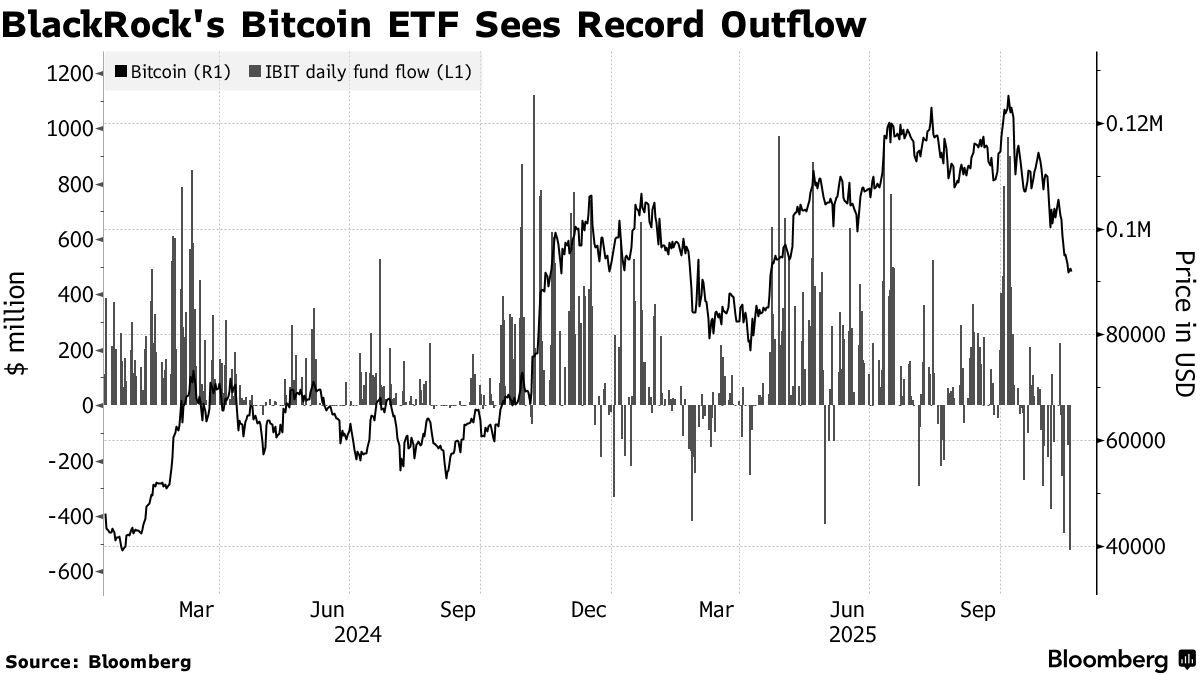
The Abu Dhabi Investment Council more than tripled the size of its position in a Bitcoin exchange-traded fund during the third quarter, shortly before the bull market in cryptocurrencies gave way to a brutal selloff. The firm, an independently-run unit of sovereign wealth fund Mubadala Investment Co., increased its holding in BlackRock Inc.’s iShares Bitcoin Trust ETF to almost 8 million shares as of Sept. 30, according to a regulatory filing. The position, disclosed by a subsidiary of ADIC, was worth about $518 million at the time. It held 2.4 million shares three months earlier. Bitcoin rallied to a record $126,251 in early October, driven partly by massive inflows into exchange-traded funds like the iShares Bitcoin Trust ETF, which is by far the world’s largest crypto ETF with more than $70 billion in assets. Then came a market crash sparked by liquidations of billions of dollars in leveraged bets that sent Bitcoin tumbling below $92,000. The disclosures offer a rare detailed look into the strategy being pursued by ADIC, which invests mostly in private assets in areas like buyouts, infrastructure and real estate. A representative for ADIC said it’s building a small allocation to Bitcoin as part of a long-term diversification strategy.

Mubadala separately disclosed that it owned 8.7 million shares valued at $567 million in the same Bitcoin ETF, known by its ticker symbol IBIT, at the end of the third quarter. That’s unchanged from its holding three months earlier. Details on the purchase prices weren’t immediately available. IBIT — which tracks the value of Bitcoin — has lost about a fifth of its value since Sept. 30, after advancing 6.2% in the third quarter. It traded at a volume-weighted average price of $64.52 during the third quarter, Bloomberg data show. ADIC wasn’t alone in adding to its position last quarter, with Harvard Management Co. also boosting its holdings in IBIT during that period.But investors have pulled back overall as markets turned. So far in November, about $3.1 billion has been yanked from a group of 12 spot US Bitcoin ETFs including IBIT, data compiled by Bloomberg show. IBIT suffered a record $523 million in outflows on Tuesday, after Bitcoin dipped below a key price point that meant the average investor in US ETFs tracking the token was sitting on losses.

Abu Dhabi’s moves into the sector hold particular significance given its vast financial resources. The city’s wealth funds oversee more than $1.7 trillion, and Mubadala has already been a key driver of the emirate’s emergence as a global crypto hub in recent years. Earlier this year, a technology investment firm jointly established by the $330 billion wealth fund bought a $2 billion stake in crypto exchange Binance. The fund, called MGX, did that deal using a so-called stablecoin issued by a company affiliated with the family of US President Donald Trump. ADIC adopts an endowment investment model, and focuses predominantly on private assets and, geographically, on North America. Its latest move indicates that global institutions — and even governments — are continuing to pile into crypto assets despite the sector’s notorious volatility. El Salvador President Nayib Bukele, an early crypto advocate, made Bitcoin legal tender in 2021. The country added more than $100 million to its Bitcoin holdings this week. The Czech central bank last week announced its first-ever purchase of cryptocurrencies, as officials seek to determine if digital assets have a role to play in diversifying reserves. The $1 million investment will be kept separate from the central bank’s official foreign reserves, it said. And earlier in November, Kazakh central bank governor Timur Suleimenov told Bloomberg News that the country is building a national cryptocurrency reserve fund of as much as $1 billion, in part by using assets seized and repatriated from abroad.

NN: Private credit. AI implosion and massive Bitcoin losses are sucking the oxygen out  of the room

WTI tumbles 3% on oversupply concerns……. Global Oil Demand Surged in September

Crude oil prices fell on Wednesday, with the West Texas Intermediate (WTI) tumbling by more than 3%, after private data from the American Petroleum Institute (API) reportedly showed yesterday that the oil inventories in the United States advanced by 4.4 million barrels in the week that ended November 14, bolstering investors’ fears of oversupply. Russian Deputy Prime Minister Alexander Novak also stated earlier today that his country’s oil output is expected to accelerate within the next few months. Traders also digested the latest sector review by the investment bank Jefferies Group LLC, which projected that three European oil companies, Galp, Repsol, and Eni, will deliver their upcoming earnings reports above the consensus. WTI for deliveries in December fell by 3.1% at 8:12 am ET to $58.85 per barrel. Meanwhile, Brent for January’s settlements dropped by 2.87% at 8:14 am ET, going for $62.88 per barrel.

NN: The fear of a oil glut is bogus. In fact we see critical shortages by mid January
Global Oil Demand Surged in September

The world’s oil demand jumped in September by 1.4 million barrel per day (bpd) compared to August and by 1.8 million bpd from a year earlier, driven by higher consumption in the United States and Indonesia, the monthly report by the Joint Organizations Data Initiative (JODI) showed on Wednesday.  At the same time, global crude oil exports rose by 1.3 million bpd in September from August and by 1.5 million bpd compared to September last year, according to the most recent data self-reported by 44 countries to JODI and shared by the Riyadh-based International Energy Forum (IEF). Global oil supply is rising this year after the OPEC+ group started unwinding in April a large part of its production cuts, while non-OPEC+ supply from the Americas is surging, too, thanks to increased output and exports from the United States, Brazil, Guyana, and Canada.  Global crude and product inventories went up in September from August, the JODI data showed, confirming estimates and other figures that global stocks are rising.   Crude inventories in the JODI reporting countries increased by 6.4 million barrels in September from a month earlier, while product inventories jumped by 23 million barrels, the data showed.  The inventory buildup, including in the United States in recent weeks, is weighing on oil prices which dipped by about 2.5% early on Wednesday, with the U.S. benchmark WTI trading at $59 a barrel and Brent at $63 per barrel.  The market can’t seem to shake off the fear of glut and prices have dropped in recent days even as the U.S. sanctions against Russia’s top producers and exporters, Rosneft and Lukoil, come into effect on Friday.