U.S. oil production could decline this year by 2 million bpd-3 million bpd, due to limited storage capacity and low oil prices, Russia’s Deputy Energy Minister Pavel Sorokin told local media on Wednesday. “We see that the production drop in the United States may range from 2 to 3 mln barrels daily this year either on account of storage capacities filling or merely because it is not possible for certain companies to work in the conditions of the price being $30-35 [per barrel], to say nothing of $20 [per barrel],” Sorokin said in an interview with the Roscongress Foundation carried by TASS. Apart from large production cuts in the United States, curtailments in Canada could top 800,000 bpd, so those two North American producers could provide between 2.8 million bpd and 4 million bpd of cuts from producers that are not part of the OPEC+ pact, Sorokin said. For the United States, Rystad Energy expected in mid-April that oil production would drop by 1.5 million bpd by the end of 2020. Around that time, Wood Mackenzie expected U.S. Lower 48 supply to be 2.6 million bpd below its pre-price collapse forecasts for end 2021. The 2.6-million-bpd drop through 2021 assumes that in response to the lower oil price, operators would cut more than 100 rigs from the Permian basin by the end of May 2020 and over 200 rigs, or 25 percent, across all plays by the end of June. In total, low oil prices could force 4 million bpd of non-OPEC supply out of the market, WoodMac’s Global Oil Supply team has estimated. According to Russia’s deputy energy minister Sorokin, global commercial oil inventories could start declining in the third quarter this year if countries begin to ease the lockdowns. The OPEC+ pact participants are motivated to cut production because the “penalty” in the absence of actions is a new market collapse, and no one is interested in that, Sorokin said. Referring to Russia’s uneasy task to cut 2 million bpd as part of the OPEC+ deal, he said that Moscow expects to achieve “the maximum reduction level as soon as practicable.” Nick Note: Run the numbers US oil production will drop by t least 3 MBPD permanently. Non OPEC producers will be forced to cut 6MBPD and OPEC+ has agreed to cut 20MBPD. This conservative estimate mean global oil product will drop by 30 MBPD. At worst case oil demand is down 30% temporarily and is roaring back as we speak. gentleman start your engines and suck up the excess oil. That mans a permanent deficit of 20MBPD. I predict the next oil crises about a year will be not enough oil AND as a side benefit the US for the next 10 years will need to import at least 3 MBPD. In other words OPEC and the coronavirus has wiped out the US shale oil business.
US oil inventories climb by 4.6M barrels – EIA
Oil inventories in the United States went up by 4.6 million barrels from the previous week to reach 532.2 million barrels in the week ending May 1, the US Energy Information Administration (EIA) said in its weekly report on Wednesday. The growth in crude stockpile sis lower compared to market expectations.
Crude oil refinery inputs averaged 13 million barrels per day in the same week, up by 216,000 barrels per day more from the previous week’s average. Meanwhile, refineries operated at 70.5% of their capacity last week. The United States crude oil imports rose by 410,000 barrels per day on a weekly basis to an average of 5.7 million barrels per day in the seven-day period ending May 1. Gasoline production dropped last week, averaging 6.7 million barrels per day, while distillate fuel output increased to an average of 5.1 million barrels per day. Nick Note: reality is in these extraordinary times data bases are useless. they do not reflect the fact that its a temporary slow down. which will be reversed very very quickely
Dow surges over 400 points as coronavirus fears ease
Nick Bit: I do not want to say I told you so but i told u so. And f your not making money that is on you. So get off your ass and trade this!Markets in the United States extended gains on Tuesday with the Dow Jones soaring over 400 points as the country started gradually reopening and lifting coronavirus lockdowns. Investords also digested earnings reports from Regeneron and DuPont and awaited results from Disney and Pinterest. The Dow Jones rallied 1.72% at 11:46 am ET. The best performer was Chevr, whose stock rose 4.02% at 11:36 am ET. The Nasdaq 100 jumped 1.80% at 11:47 am ET with Splunk, up 7.66%, leading the gains. The S&P 500 climbed 1.81% at 11:48 am ET.
Brent crude climbs over $30 pb amid output cuts
Crude futures extended gains on Tuesday with Brent rising over $30 per barrel ofr the first time since mid-April. Oil prices were boosted by the implementation of OPEC+ production cuts, as well as the gradual easing of coronavirus restrictions across the world as the virus spread slowed. Brent for settlements in July surged 11.51% to sell for $30.33 per barrel, at 10:25 am ET, hitting a 20 day high. Meanwhile, West Texas Intermediate (WTI) for June delivery rallied 18.15% to go for $24.09 per barrel at 10:26 am ET. Nick Note: you ain’t seen nothing yet! the fun part is coming soon
Fever-reading drones just first of a wave of privacy challenges, civil liberties advocates say
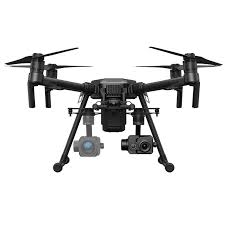
MIAMI — Last month, police departments in Daytona Beach, Fla., and Connecticut unveiled what was initially touted as a potential new tool against a pandemic: drones capable of taking a person’s temperature from 300 feet in the air. Both agencies quickly backtracked on using the machines to track the novel coronavirus after backlash from civil liberty groups warning about the implications of a “Big Doctor” in the sky singling out people simply for running a fever, when it might be nothing more than a more common and less deadly flu. They raised other concerns as well: Are cops supposed to be monitoring health information that is private under federal law? Are drone readings, even with sophisticated infrared sensors, a trustworthy way to protect public health without violating individual rights? “It collects data and information on everybody without guaranteeing it’s accurate,” said Kara Gross, legislative director of the American Civil Liberties Union of Florida. “Not only that, the other people around the person may have COVID. So the information could be bad and inaccurate.”
The drones are just one example of what some civil rights advocates fear could be a looming wave of intrusive technology and constitutionally questionable measures pushed by governments — from local to state to federal — under the mission of protecting a fearful community.
Already, they point out, thermal cameras have been installed at the criminal courthouse in Miami; governors in Massachusetts and Alabama have signed executive orders telling local health agencies to give first responders the addresses of anyone who has tested positive for COVID-19. Google and Apple are working on cellphone applications that could inform someone on the other end of a call that they’re speaking with a virus carrier. Authoritarian countries like China, already with poor human rights records, have tightened the screws further: Chinese who don’t agree to constant surveillance are forced to lock down in their homes, or face arrest. But Gross, for one, pointed to 2001, when less than two months after terrorists struck New York City and Washington, D.C., Congress enacted the Patriot Act, which greatly expanded the nation’s surveillance laws, while reducing checks and balances like judicial oversight — despite a litany of concerns raised about an erosion of civil rights. “We need to be very careful given our past history,” Gross said. The initial pandemic protections from government, for the most part, have been rolled out as temporary measures — like stay-home and social distancing orders — under guidance from public health authorities. Many of them, polls show, have broad public support, particularly in cities that have become virus hot zones — though there has been pushback in some places, most notably Michigan, where protesters, some armed with high-powered rifles, swarmed the Capitol in opposition of a statewide shutdown. And constitutional experts say, courts have historically sided with governments in the early stages of emergencies and health crises, and have been receptive to arguments that there is a compelling interest for governments to quash some privacy laws for the betterment of society. Over time, they say, the compelling interest will fade. But in the first months, the closing down of businesses and curfews and stay-at-home orders are likely to remain in place without much pushback from the courts. But in March, governors in Massachusetts and Alabama pushed the privacy boundaries further, endorsing measures demanding that local boards of health release the addresses of contagion cases to first responders. During the first week of April, Daytona Beach Police invited the media to the unveiling of a quartet of drones purchased through a combination of confiscated and federal money. One of those drones, Sgt Tim Ehrenfauker told the Daytona Beach News-Journal, had the ability to fly within a few hundred feet of someone in a crowd and detect that person’s temperature. “If I zoom in on a crowd of people and somebody in there had a … everybody was 98.6 degrees, or whatever the new normal is 97, and somebody has a 102 fever, he would be red in a crowd of orange people,” Ehrenfauker told the paper.
“Your department’s use of drones to conduct mass surveillance of people’s temperatures with the express purpose of discerning whether they may have a virus is plainly unconstitutional,” Kruckenberg and fellow attorney Mark Chenoweth said. “NCLA therefore urges the department to immediately suspend use of such drones.” “Any new surveillance measure that isn’t being advocated for by public health professionals and restricted solely for public health use should be promptly rejected, and we are naturally skeptical of towns announcing these kinds of partnerships without information about who is operating the drones, what data they will collect, or how, or if that data will be stored, shared, or sold,” David McGuire, executive director of the ACLU of Connecticut, told the Courant. “It not only invades someone’s privacy. We have no idea how that information will be used,” she said. “The answer is not to just throw drones up in the sky and collect information on everyone. We need to be extremely careful that any efforts to expand the government’s authority and the checks and balances are not an over-reach.” Nick Note: this is the first drone that scanned me and the other people in my “vision” before my arrest for torture and execution in my China dream
Italy Reports Lowest Toll Since First Day of Coronavirus Lockdown But Confusion Abounds
Cellphone monitoring is spreading with the coronavirus. So is an uneasy tolerance of surveillance.
Oil Tanker Rates Plunge More Than 50% As OPEC+ Cuts Start
The daily rate for chartering an oil tanker from Saudi Arabia to China has plunged by over 50 percent in one week to $100,000 as OPEC+ begins on Friday the collective cut to remove 9.7 million bpd from the oversupplied market, Bloomberg reports , citing the Baltic Exchange. Although tanker owners and operators will see reduced volumes of oil to transport from oil producers to oil-importing countries, the oil shipping industry expects its business to be supported through the end of the year by the most sought-after ‘commodity’ these days—storage space. Floating storage around the world is at an all-time high as traders have been booking tankers to use as floating storage to take advantage of the contango market structure and sell the crude oil at a later date when prices are higher. According to shipping sources who spoke to Reuters , there were a record 160 million barrels of oil stashed on floating storage in mid-April, double the volume of oil stored on ships at the start of the month. Supertanker owners were the early winners in the Saudi price war, the demand destruction, and the following record-high global oil glut. Shipping companies had a field day with Saudi Aramco booking tankers en masse to flood the market with oil, and with traders scrambling to charter tankers for floating storage to sell at higher prices later. The OPEC+ deal to cut production by 9.7 million bpd in May and June, and then ease those cuts to a total of 7.7 million bpd until December 2020, is set to lower demand for crude oil transportation until the end of the year, according to Lloyd’s List . The frantic hunt for storage is currently supporting tanker rates, but “the oil tanker demand outlook from second half of this year until 2022 has deteriorated significantly from lowered oil supply and an upcoming destocking cycle,” Joakim Hannisdahl, analyst at Norwegian investment bank Cleaves Securities, said, as quoted by Lloyd’s. Nick Note: Do not put to much stock in the oil tanker storage myth. Rates are dropping period because the bid for oil tankers leaves the markets. We track tankers and they just did a u turn. Tankers from Saudi to America have been diverted……. And oil loading both from Saudi and Russia have come to a screeching halt……. SO do not let them make a asshole out of you!
Wells Fargo Sets Up Team To Handle Flood Of Oil Bankruptcies
(Reuters) – Wells Fargo & Co (WFC.N) has revived its special group for bad energy loans in recent weeks as the bank braces for more pain from the sharp downturn in oil prices, people familiar with the matter told Reuters. Sitting inside the credit-resolution group, where Wells Fargo handles struggling borrowers, the team includes many bankers who previously worked with the same oil and gas producers in its investment bank. They work alongside bankruptcy specialists who have been reassigned to focus exclusively on energy to help Wells Fargo wade through the expected flood of restructurings.
“It’s a bloodbath,” said one person with knowledge of the bank’s oil and gas portfolio, who was not authorized to speak publicly.
Wells Fargo spokeswoman Michelle Palomino said Wells Fargo maintains a strong energy and power group within its corporate and investment bank. The bank is committed to helping borrowers in the energy industry during this challenging time, she added. Global energy markets are awash with crude oil because of a price war between Saudi Arabia and Russia that boosted supply while demand was cratering due to the global coronavirus outbreak. The U.S. benchmark oil price briefly traded negatively last week for the first time in history. The U.S. energy industry was already struggling with high debt levels and profitability problems before this maelstrom. Bankruptcies have begun, with an April 7 survey of producers by the Federal Reserve Bank of Kansas City forecasting 40% would be insolvent within a year if oil prices were $30 per barrel. That is nearly double the current value. [O/R] Banks have worried for months about their loans to U.S. oil and gas producers, which could not tap other avenues to raise money. Lenders have been trying to pare back exposure by, for instance, ascribing less value to the collateral behind reserve-based loans (RBLs), the energy industry’s main source of cash.
Wells Fargo and JPMorgan Chase & Co (JPM.N) are considered to be the two largest lenders to U.S. energy companies. Citigroup Inc (C.N) had the largest energy loan book of any U.S. bank at the end of 2019 because of its international business.
As of the end of March, Wells Fargo had $14.3 billion of oil and gas loans outstanding, according to filings. Nick Note: For the record Wells Far Goes your Money is a dead broke piece of shit! For the record the fracking industry is no more. That party is over over i tell you. US oil production of 10 million Barrels per day is over. The US will never again be oil energy independent again. That ship has sailed. US production will drop to UNDER 5 million barrels per day. And you will see prices for crude oil, gasoline and diesel fuel rise very quickly once they let my people go to shop! The Fed and Treasury will let all the small players go under. Its cheaper to bail out the oil price then throw good money after bad on loans bailouts that are now bail outs of the bail outs.. Its the excuse they need to let the frackers go under. Reality is because fracked well lose up to 90% of their production in the first year the numbers do not work unless you have $60 WTI Crude. Those days are over. Fracking crews have been let go. The subcontractors that provide water, mud and gravel delivery are out of business. Fracking equipment like high pressure pumps and slurry blenders are being sold for scrap…. This ship has sailed.
US FDA approves Roche’s coronavirus antibody test
Roche Holding AG received emergency-use authorization from the U.S. Food and Drug Administration for its new Covid-19 antibody test, according to a company statement. Governments are trying to learn how many people have been exposed to Covid-19 as they reopen economies and end social-distancing measures. The restrictions have resulted in millions of lost jobs, closed schools and businesses and sent the financial markets through the most turbulent period since the 2008 financial crisis. With no vaccine available yet for the novel coronavirus, more than 100 different programs have been launched to develop and test treatments. These include everything from antiviral drugs and antibody-containing plasma from recovered patients, to traditional Chinese herbal medicine. Gilead Sciences Inc.’s antiviral drug remdesivir was cleared by U.S. regulators on May 1 for emergency use in Covid-19 patients, becoming the first medication backed by early clinical data to be made available to fight the disease. The Elecsys Anti-SARS-CoV-2 test is designed to determine if a patient has been exposed to the coronavirus and has developed antibodies against it, Roche said on Sunday. Ni.ck Note: This is a very important test for us. Do not be fooled by the tests kits sold over the internet. They are useless! This Roach Elecsys test is the real McCoy. I expect it to be in wide distribution very soon.