Farmer Carl Grooms has been planning harvests for decades but now he is getting ready to plow under his nearly ripe peppers and beans because there is no market to buy them—and he doesn’t want to watch them rot. As the coronavirus pandemic disrupts supply chains, American farmers are dumping milk, throwing out eggs and plowing under healthy crops. Produce suppliers are especially vulnerable to surpluses because fruits and vegetables are perishable and can’t be stored. “We’re not just going to let [the food] die, we’ll go in and destroy it,” said Mr. Grooms, the 74-year-old owner of Fancy Farms in Plant City, Fla. “It’s a mental thing, you don’t want to see your crop rot and suffer.” Mr. Grooms said that a few weeks ago, berry orders evaporated nearly overnight and the strawberry harvest collapsed, with much of it remaining in the fields rather than being picked and shipped. It left a stench of rotting berries hanging over his farm. Right now, he has the labor to pick ripe squash, but he has to sell it for a fraction of typical prices, just enough to cover his workers’ pay and the cost of boxes to ship the vegetables, he said. Lettuce producer Mark Borba, in Huron, Calif., said he has had to plow under 230 of 680 acres of recently harvested lettuce since the pandemic swept the country a month ago. He said demand fell off so sharply from restaurants, schools and other large customers that his crews had to unpack 9,000 cartons of lettuce from a warehouse where they had awaited shipment and dump them back in the fields to be plowed under. “The demand [from the large customers] just went to zero,” said Mr. Borba, who manages 10,000 acres under his Borba Farms. “And not only did we lose restaurants and schools, but people were going to the grocery store buying nonperishable stuff to put in the pantry. They were not buying leafy greens.” On Friday, President Trump announced a $19 billion relief program for the agriculture sector. The effort, called the Coronavirus Food Assistance Program, will include $16 billion in direct payments to farmers and ranchers and $3 billion in mass purchases of dairy, meat and produce that will be distributed through food banks. Nick Note: this is a deflation era phenomenon. No buyers. no money to buy with. Crops plowed under. The last time this occurred was in the last great depression.
Graham says he’d be ‘shocked’ if Kim Jong Un isn’t ‘dead or incapacitated’
Sen. Lindsey Graham (R-S.C.) said Saturday that he’d be “shocked” if Kim Jong Un isn’t “dead or incapacitated” amid rumors regarding the North Korean leader’s health. The South Carolina senator told Fox News’s “Justice with Judge Jeanine” that he believes the government in Pyongyang would have fought the rumors head-on if they were not true. “I’ll be shocked if he’s not dead or in some incapacitated state because you don’t let rumors like this go forever or go unanswered in a closed society, which is really a cult, not a country, called North Korea,” Graham said. “So I pretty well believe he is dead or incapacitated, and I hope that the long-suffering North Korean people will get some relief if he is dead,” he added. Graham also said that if Kim is dead, he hopes the next leader will work with President Trump to “make North Korea a better place for everyone.” Kim last appeared in public on April 11. He later missed the celebration of his late grandfather’s birthday, sparking speculation about his health. Daily NK, a South Korea-based website, reported last week that the North Korean leader was recovering from a cardiovascular operation earlier this month. South Korean and Chinese officials have discounted rumors that he was seriously ill after the surgery. China sent a team of delegates, including medical experts, to advise on Kim’s condition, Reuters reported Friday. Trump has indicated his willingness to negotiate with North Korea, although attempts to reach agreements between Trump and Kim have been unsuccessful. Nick Note: sources say he is drooling on himself after a “botched” triple by bypass surgery. His sister who may have stepped on his oxygen tube is the next in line. And she is a brutal ugly piece of work. And hates Trump
Coronavirus detected on particles of air pollution
Oil Majors Are Forced To Cut Output Under OPEC Deal
A British Petroleum-led project in Azerbaijan will have to cut production in May for the first time as Azerbaijan will need to take drastic measures to meet its new quota under the OPEC production cut deal, three sources told Reuters on Thursday. This is rare for Big Oil, who is typically exempt from such production restrictions because countries need these big oil players in their backyards to develop oil resources. Big Oil has never seen a mandatory production cut in Azerbaijan. But these are unprecedented times, and we are seeing a lot of firsts, including this week the first time that WTI oil futures went deep into negative territory. The most recent production cuts that are set to go into effect on May 1 call for some significant cuts—and Azerbaijan can’t cut enough without enlisting the help of BP and its partners in the project, which include Equinor, Chevron, and ExxonMobil, too. Azerbaijan’s state-run oil company, SOCAR, is also a partner in the project. The project in question is the Azeri-Chirag-Gunashli (ACG) project, which is a $38 billion project that lies 120km off the coast of Azerbaijan. It is thought to hold 5.4 billion barrels of recoverable oil, and was put into production in 1997. It is the largest oilfield in the Azerbaijan part of the Caspian Basin, according to BP’s website. In 2019, the block in question produced an average of 542,000 bpd, according to BP. Under the deal forged with OPEC+ to cut project, Azerbaijan is required to cut its total production by 164,000 bpd—about 75,000 to 80,000 of which would need to come from the ACG project. Azerbaijan’s current average production is 718,000 bpd, according to Reuters. Nick Note: Screw OPEC prices at these lare forcing massive production cuts!
Honduras has ‘incredible’ results with hydroxychloroquine – Trump
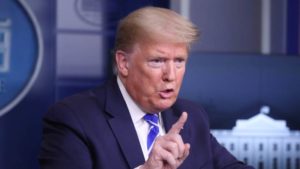
United States President Donald Trump stated on Friday the president of Honduras told him the country had “incredible” results in treating COVID-19 with hydroxychloroquine. The president claimed he saw both positive and negative studies about the usage of the drug, stating, however, tests should be conducted to determine whether hydroxychloroquine should be used. In addition, Trump denied pressuring anyone to promote the use of the malaria drug, which the country’s Food and Drugs Administration warned shouldn’t be used for the treatment of COVID-19 outside of a controlled environment. Nick Note: through our contacts with the presidents son a doctor not practicing in Honduras and our connections in the exterior department we bought them the “cure” months ago. And helped arrange delivers of badly needed medicines. Despite the hysterics we are seeing amazing results when the protocols are properly administer by a doctor. For the record through the various doctors we supply research to (little more) i have discussed close to 100 patient outcomes. Most of these people were very sick and on ventilators. ALL AS IN ALL have survived. I am following 10 patients over the weekend and will report back. The protocols we share calls for constant monitoring of the heart with EKG. I have shared some new information about the coronavirus causing hemoglobin problems and suggested wider red cell and iron panels when blood tests are taken.
Trump signs $484 billion coronavirus relief package
Load Comments (3,168)
Controversial idea to speed coronavirus vaccine gains ground
An idea that might seem outlandish at first is gaining some ground as a way to speed development of a coronavirus vaccine: intentionally infecting people with the virus as part of a trial. The idea, known as a “challenge trial,” would deliberately infect a few hundred young, healthy volunteers, who were first given either the potential vaccine or a placebo. Those picked would be well informed about the risks. That would allow the effectiveness of a vaccine to be determined faster than a traditional clinical trial, which would require that researchers wait for some of the participants to become infected in the course of their daily lives. Supporters say the challenge trial could save several months in the search for a vaccine, which is widely seen as critical for people to feel confident again with social gatherings. A group of 35 House lawmakers, led by Reps. Bill Foster (D-Ill.) and Donna Shalala (D-Fla.), a former secretary of Health and Human Services, wrote to the Food and Drug Administration this week lending their support to the idea. “Our situation in this pandemic is analogous to war, in which there is a long tradition of volunteers risking their health and lives on dangerous missions for which they understand the risks and are willing to do so in order to help save the lives of others,” they wrote in the letter. Stanley Plotkin, a renowned vaccinologist who helped invent the rubella vaccine, also endorsed the idea in an article in the journal Vaccine, along with Arthur Caplan, a bioethicist at New York University. They wrote that the vaccine trial process “normally takes months to years, during which [coronavirus] will infect and possibly kill millions. Acceleration of that standard process is necessary.” Older people have been among the biggest casualties of the coronavirus globally, while younger people have generally shown a higher chance of recovery. Still, the idea of purposefully infecting people with a potentially deadly virus raises some obvious ethical objections. In a statement to The Hill on Thursday, FDA spokesman Michael Felberbaum said the agency is “exploring all possible options” to advance a coronavirus vaccine, but also raised a note of skepticism about human challenge trials, pointing to testing in animals as a possible alternative. “The FDA is exploring all possible options to most efficiently advance the development of safe and effective vaccines that will prevent COVID-19,” Felberbaum said, while adding that “human challenge studies used to develop a COVID-19 vaccine may present ethical and feasibility issues that can be avoided with the use of animal models.” Jeffrey Kahn, director of the Johns Hopkins Berman Institute of Bioethics, said he did not see how an institutional review board that oversees research would approve a human challenge trial for the coronavirus. “Consent can only do so much work,” he said, raising the hypothetical of whether it would be ethical to take out someone’s heart and replace it with an experimental device simply because the person consented. Challenge trials have been conducted in the past, but they are usually done to test vaccines for diseases that can be cured, like malaria. It would be a sharp break from precedent to do a challenge trial for a virus with no known cure that is as deadly as the coronavirus. Even if the volunteers were all young and healthy, that would not entirely reduce the risk of serious illness. Despite the risks, experts in support of the idea said they had already heard from people willing to volunteer. Nick Note: Whats next infecting and testing prisoners? Or recruiting identical twins? Dr. Menegela just entered the room?
CDC chief warns 2nd COVID-19 wave may be worse, arriving with flu season
April 21 (Reuters) – A second wave of the coronavirus is expected to hit the United States next winter and could strike much harder than the first because it would likely arrive at the start of influenza season, the director of the Centers for Disease Control and Prevention warned on Tuesday. “There’s a possibility that the assault of the virus on our nation next winter will actually be even more difficult than the one we just went through,” CDC Director Robert Redfield told the Washington Post in an interview. As the current outbreak continues to taper off, as shown by a recent decline in hospitalization rates and other indicators, authorities need to prepare for a probable resurgence in the months ahead. “We’re going to have the flu epidemic and the coronavirus epidemic at the same time,” he said, and the combination would put even greater strain on the nation’s healthcare system than the first outbreak. The virus, which causes a highly contagious and potentially fatal respiratory illness dubbed COVID-19, emerged late last year in central China. The first known U.S. infection, a travel-related case, was diagnosed on Jan. 20 in Washington state near Seattle. Since then, nearly 810,000 people have tested positive in the United States, and more than 45,000 have died from the disease. Redfield and other public health authorities credit drastic stay-at-home orders and widespread business and school closings across the country for slowing the spread of infections. But the restrictions have also stifled American commerce while throwing at least 22 million people out of work over the past four weeks. Even as the lockdown is gradually eased, Redfield stressed the importance of individuals continuing to practice social distancing among one another. At the same time, he said, public health authorities must vastly ramp up a testing system to identify those who are infected and to locate their close personal interactions through contact tracing. Asked about the recent flurry of street protests of stay-at-home orders and calls for states to be “liberated” from such restrictions – as President Donald Trump has advocated on Twitter – Redfield told the Post: “It’s not helpful.” Building a nationwide contact tracing network, key to preventing newly diagnosed cases from growing into large outbreaks, poses a major challenge because it is so labor intensive, requiring a workforce that by some estimates would require as many as 300,000 personnel. Redfield said the CDC is discussing with state officials the possibility of enlisting and training workers from the U.S. Census Bureau, and volunteers from Peace Corps and AmeriCorps, to create a new contact tracing workforce.
Gilead disputes report that its drug flopped in coronavirus trial
Gilead disputes report that its drug flopped in coronavirus trial
(Reuters) – A closely-watched Gilead Sciences Inc (GILD.O) experimental antiviral drug failed to help patients with severe COVID-19 in a clinical trial conducted in China, but the drugmaker said the study’s results were inconclusive because it was terminated early. Gilead shares fell more than 4% after the data was inadvertently released and first reported by the Financial Times. It comes days after another report detailed rapid recovery in fever and respiratory symptoms in some patients with COVID-19 – the sometimes deadly respiratory illness caused by the coronavirus – who were treated with remdesivir at the University of Chicago Medicine hospital. Interest in Gilead’s remdesivir has been high as there are currently no approved treatments or preventive vaccines for COVID-19, and doctors are desperate for anything that might alter the course of the disease that attacks the lungs and can shut down other organs in extremely severe cases. In the Chinese trial remdesivir, given by intravenous infusion, failed to improve patients’ condition or reduce the pathogen’s presence in the bloodstream, according to draft documents published accidentally by the World Health Organization (WHO). But details were thin and suggested limitations in interpreting the data that has not yet been fully reviewed. A screenshot of the WHO posting, captured by the medical news website STAT before it was taken down, said the trial enrolled 237 patients with 158 receiving remdesivir compared with 79 who got a placebo. The rate of death was similar at 13.9% for remdesivir versus 12.8% in the control group. “It’s still not that large of a study and therefore the statistics coming out of the trial aren’t exactly robust,” Mizuho analyst Salim Syed said in a research note. Gilead in a statement said the WHO posting included inappropriate characterizations of the study, which was terminated early due to low enrollment and, as a result, cannot be used to make statistically meaningful conclusions. “The study results are inconclusive, though trends in the data suggest a potential benefit for remdesivir, particularly among patients treated early in disease,” the company said without providing details to back up that assertion. Other analysts drew some conclusions anyway. “This Chinese controlled dataset will drive the prevailing view of remdesivir, which is that it likely isn’t working in severe patients,” said Raymond James analyst Steven Seedhouse. Doctors have speculated that an antiviral drug like remdesivir would likely be most effective when administered as early as possible in the course of the disease as it is designed to help keep the virus from replicating in the blood. “Once the horse is out of the barn, it is really hard to bring in,” said Dr. Kevin Grimes, an infectious disease specialist at Houston Methodist Hospital who was not involved in the study. “If you can catch it before it has left the barnyard it is a lot easier to deal with.” The WHO said the draft manuscript is undergoing peer review before it will be officially released. Gilead is testing remdesivir, which previously failed as an Ebola treatment, in multiple trials, with results from a study involving 400 patients hospitalized with severe COVID-19 expected later this month. Expectations for that trial may now be dampened somewhat by the leaked data from the Chinese study. A separate trial in China testing the drug in patients with more moderate symptoms last week was also suspended due to a lack of eligible patients.
Oil rallies on acceleration of output cuts from OPEC nations
NEW YORK (Reuters) – Oil soared on Thursday, extending its rebound after major oil-producing nations said they would accelerate planned production cuts to combat the dramatic slump in demand due to the COVID-19 pandemic. Crude prices have had one of their most tumultuous weeks ever. U.S. West Texas Intermediate crude futures (WTI) CLc1 closed at negative $37.63 on Monday, in the worst sell-off for that contract in history. Global benchmark Brent crude LCOc1 was slammed on Tuesday, hitting a two-decade low before rebounding. Since the start of the year both benchmarks have lost more than two-thirds of their value. Fuel demand is down about 30% worldwide in April and supply will outstrip demand for months to come due to the pandemic. Brent rose $1.19, or 5.8%, to $21.56 a barrel by 1:52 p.m. EDT (1752 GMT), while WTI jumped $3.01, or 22%, to $16.78. The Organization of the Petroleum Exporting Countries and other oil producing nations, a grouping known as OPEC+, agreed this month to cut output by a record 9.7 million barrels per day, around 10% of global supply, to support oil prices, but prices continued to decline.
Kuwait said on Thursday it had begun cutting oil supply to the international market, ahead of the May 1 date when the deal was supposed to take effect.
Whether that will be sufficient to offset weak demand is unclear. Rystad Energy cut its forecast for oil demand in 2020 to 89.2 million bpd, a 10% decline from 2019. Last week, the energy consultant projected demand would fall to 90.3 million bpd in 2020. Russia is looking for options to cut its production and may go as far as burning its own oil, sources said. Its production has not changed much from March until now. The market was also higher after U.S. President Donald Trump said he had instructed the U.S. Navy to fire on any Iranian ships that harass it in the Gulf, although he added later he was not changing the military’s rules of engagement. The head of Iran’s Revolutionary Guards said Tehran will destroy U.S. warships if its security is threatened in the Gulf. “This ratchets up tensions once again between the U.S. and Iran. However, given the glut we have in the oil market, it is difficult to see this offering lasting support to the market, unless the situation does escalate further,” ING’s head of commodities strategy Warren Patterson said.