Equities on the United States markets traded with losses at the closing bell on Thursday with all eyes on coronavirus outbreak. After quarantining Shenzhen and Wuhan, China decided to impose a lockdown on the city of Guangzhou in an attempt to curb the spreading of the infection that killed 638 people so far. As the coronavirus threat looms over economies worldwide, United States White House Adviser Larry Kudlow claimed it may lower the US GDP by 0.2 percentage points. Meanwhile, the Federal Reserve Bank asserted that the virus-related disruptions to businesses in China may “spill over to the rest of global economies.” The Dow Jones sank 0.94% as the session closed with Caterpillar sliding nearly 3%. Meanwhile, the Nasdaq 100 dropped 0.47% as Take-Two Interactive plunged almost 12% while the S&P 500 decreased by 0.54% at the same time with Fleetcor Technologies slipping nearly 7%. The euro lost 0.29% against the dollar to go for 1.09470 at 3:59 pm ET.
Oil drops as Russia needs time to mull more OPEC+ supply cuts
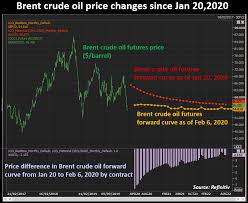
NEW YORK — Oil prices dropped on Friday as Russia said it would need more time before committing to output cuts sought by other large producers as the coronavirus outbreak fans worries about global crude demand. Oil is on track for its fifth consecutive weekly decline, as speculators have backed away due to weaker consumption figures and expectations that the virus, which has killed more than 600 people, will remain a drag on demand. A panel advising the Organization of the Petroleum Exporting Countries and allies led by Russia, known as OPEC+, suggested this week provisionally cutting output by 600,000 barrels per day (bpd). On Friday, Russia Energy Minister Alexander Novak said Moscow needed more time to assess the situation, stopping short of giving a clear Russian position on the proposal. “Russia’s lack of commitment thus far to such a deal is providing one additional bearish element that is currently precluding the complex from sustaining price advances,” Jim Ritterbusch, president of Ritterbusch and Associates, said in a note. Prices have fallen about a fifth since the outbreak of the virus in the city of Wuhan in China. The country is the world’s biggest importer of crude, taking in roughly 10 million bpd in 2019. Novak predicted global oil demand may fall by 150,000 to 200,000 barrels per day (bpd) in 2020 in part because of the virus. The OPEC+ group this year deepened existing cuts to roughly 1.7 million bpd, nearly 2% of global demand, yet prices have remained in a narrow band. Producers in OPEC+ are scheduled to meet in Vienna on March 5-6, although the meeting could be brought forward because of concerns surrounding the virus. Forecaster Eurasia Group said it estimates a contraction in oil demand in China of as much 3 million bpd in the first quarter from 2019 levels. Sources have told Reuters that Chinese policymakers are preparing measures, including more fiscal spending and interest rate cuts, amid expectations the outbreak will have a devastating impact on first-quarter growth. Nick Note: I keep hearing that if the China pandemic continues their will be an additional 1 million BPD cut in OPEC+ output…. We shall see what we shall see
Fed Report: Possible Spillovers From Coronavirus Pose New Risk to Economic Outlook
WASHINGTON—The Federal Reserve said Friday that risks of weaker-than-expected U.S. growth had declined late last year but that the possible spillovers from the effects of the new coronavirus in China present a new risk to the outlook. In its semiannual report to Congress, the central bank said the U.S. economy remains on a solid footing after more than 10 years of expansion, with labor markets providing more than enough jobs to absorb new entrants to the workforce. Fed officials at their meeting last week left their benchmark federal-funds rate steady in a range between 1.5% and 1.75% and signaled little reason to change course for now. Officials cut rates three times last year amid worries about a sharper-than-anticipated slowdown in global growth and business investment. “Recent indicators provide tentative signs of stabilization. The global slowdown in manufacturing and trade appears to be nearing an end, and consumer spending and services activity around the world continue to hold up,” the report said.
But it said the recent emergence of the coronavirus, which has led to quarantines in China and a halt to travel in and out of the country, “could lead to disruptions in China that spill over to the rest of the global economy.”
Fed Chairman Jerome Powell is scheduled to deliver the report and testify on Capitol Hill Tuesday and Wednesday as part of hearings mandated by law. Financial markets had been ebullient last month due to a trade truce between the U.S. and China and glimmers of firmer global manufacturing activity. But fears about China’s coronavirus outbreak reignited global growth worries last week, sending the benchmark 10-year Treasury yield below 1.6%, its lowest level since October. Nick Note: They are scratching their asses and slowly starting to figure it out!
Death of Chinese coronavirus doctor sparks online anger at government
BEIJING/SHANGHAI (Reuters) – A Chinese doctor reprimanded for warning against a “SARS-like” coronavirus before it was officially recognised died of the illness on Friday, triggering online expressions of anger at the government and fuelling suspicions of censorship. The death of Li Wenliang, 34, came as Chinese President Xi Jinping told the United States that China was doing all it could to contain the virus after earlier assuring the World Health Organization (WHO) of full openness and transparency. The death toll in mainland China reached 637 on Friday, with a total of 31,211 cases, WHO chief Tedros Adhanom Ghebreyesus said in Geneva, warning of a worldwide shortage of gowns, masks and other protective equipment. “For the last two days there had been fewer reported infections in China, which is good news, but we caution against reading too much into that,” he told the WHO Executive Board. U.S. President Donald Trump, after speaking to Xi by phone, said China was showing “great discipline” in tackling the virus. “Nothing is easy, but he will be successful, especially as the weather starts to warm & the virus hopefully becomes weaker, and then gone,” Trump said on Twitter. “…We are working closely with China to help!”
Ophthalmologist Li was among eight people reprimanded by police in the city of Wuhan, the epicentre of the flu-like contagion in central Hubei province, for spreading “illegal and false” information.
Li’s social media warnings of a new “SARS-like” coronavirus – a reference to Severe Acute Respiratory Syndrome, which killed almost 800 people around the world in 2002-2003 after originating in China – angered police. China was accused of trying to cover up SARS. Li was forced to sign a letter on Jan. 3, saying he had “severely disrupted social order” and was threatened with charges. A selfie of him lying on a hospital bed this week wearing an oxygen respirator and holding up his Chinese identification card was shared widely online. “We deeply mourn the death of Wuhan doctor Li Wenliang … After all-effort rescue, Li passed away,” the ruling Communist Party’s People’s Daily said on Twitter. Social media users called Li a hero, accusing authorities of incompetence.“Wuhan indeed owes Li Wenliang an apology,” Hu Xijin, editor of the government-backed Global Times tabloid, said on social media. “Wuhan and Hubei officials also owe a solemn apology to the people of Hubei and this country.”
Li’s death was a “tragic reminder” of how China’s preoccupation with maintaining stability drives it to suppress vital information, Nicholas Bequelin, Southeast Asia regional director for Amnesty International said.
“China must learn the lesson from Li’s case and adopt a rights-respecting approach to combating the epidemic,” he said.
Some media described Li as a hero “willing to speak the truth” but there were signs that discussion of his death was being censored. The topics “the Wuhan government owes doctor Li Wenliang an apology” and “we want free speech” briefly trended on Weibo late on Thursday, but yielded no search results on Friday. The virus has spread around the world, with 320 cases in 27 countries and regions outside mainland China, a Reuters tally of official statements shows. Mike Ryan, WHO’s top emergency expert, told the Executive Board in Geneva he was worried about stigma being attached to the virus amid reports of Asians being shunned in the West. “The unnecessary, unhelpful profiling of individuals based on ethnicity is utterly and completely unacceptable and it needs to stop,” he said. The outbreak could have spread from bats to humans through the illegal traffic of pangolins, the world’s only scaly mammals, Chinese researchers said, sparking some scepticism. “This is not scientific evidence,” said James Wood, head of the University of Cambridge’s veterinary medicine department. Two deaths have been reported outside mainland China, in Hong Kong and the Philippines, but how deadly and contagious the virus is remains unclear, prompting countries to quarantine hundreds of people and cut travel links with China. There were 41 new cases among about 3,700 people quarantined in a cruise ship moored off Japan, taking the total on board to 61. Chinese-ruled Hong Kong quarantined for a third day a cruise ship with 3,600 on board after three people who had been on the vessel proved infected. Singapore reported three more coronavirus cases not linked to previous infections or travel to China, prompting it to raise its alert to orange, the level reached during the SARS outbreak in 2003. China has sealed off cities, cancelled flights and closed factories, cutting supply lines to global businesses, so that Beijing resembles a ghost town. Virus concerns swiped world markets on Friday but failed to stand in the way of the best week for stocks since June and the strongest for the dollar since August. As Trump praised China’s discipline, the head of the Beijing Municipal Bureau of Justice, Li Fuying, told reporters that people deliberately concealing contacts or refusing to go into isolation could be punished with death.
US firms see coronavirus revenue impact
American companies in China said they are likely to see a direct impact of the coronavirus in their 2020 revenues figures, the American Chamber of Commerce (AmCham) in Shanghai announced on Friday. In a survey conducted among 127 companies, 87% of the respondents said their revenues will be impacted while as many as 24% stated that they now foresee a drop of 16% or more in revenues as a result of the outbreak.
Additionally, almost one third stated corporate headquarters aren’t taking potential economic consequences of the virus enough into account.
Furthermore, 16% of the poll participants stated that they expect Chinese gross domestic product (GDP) to fall by 2% or more because of the disease. Earlier, reports said companies across China are extending work from home or holiday periods. Meanwhile, work at a number of companies, including Fiat Chrysler, Foxconn, Hyundai, Kia and Apple, has been impacted by the coronavirus.
‘We’re basically at a pandemic now’: Mayo Clinic physician on coronavirus
Dr. Gregory Poland, professor of medicine and infectious diseases and the director of the Vaccine Research Group at Mayo Clinic, and Dr. Scott Gottlieb, Pfizer board member and former FDA Commissioner, join “Squawk Box” to discuss the spread of misinformation on the coronavirus. WHO Director-General Tedros Adhanom Ghebreyesus warned on Monday that the world may be “dangerously” unprepared for the next pandemic as the flu-like coronavirus that emerged from China about a month ago spreads rapidly to new countries. At an executive board meeting in Geneva, Tedros urged the World Health Organization’s 196 member countries to “invest in preparedness,” not “panic.” He added that funding for outbreak preparedness in surrounding countries “has remained grossly inadequate” in the past. “For too long, the world has operated on a cycle of panic and neglect,” Tedros said, according to a transcript of his remarks. “We throw money at an outbreak, and when it’s over, we forget about it and do nothing to prevent the next one.” “If we fail to prepare, we are preparing to fail,” he added. Tedros said more than $1 billion has been spent trying to stop the Ebola outbreak in the Democratic Republic of the Congo. By comparison, he added, just $18 million was spent on preparedness in Congo’s neighbor Uganda before the virus crossed the border. “This must be a lesson for the rest of the world,” he said. The plea from WHO’s top official comes as the deadly coronavirus has now killed at least 362 people and sickened more than 17,400 worldwide, including patients in the U.S. and Europe. The respiratory illness, which is capable of spreading through human-to-human contact, is not yet considered a pandemic. A pandemic is “an epidemic occurring worldwide, or over a very wide area, crossing international boundaries and usually affecting a large number of people,” according to WHO. While the new virus has spread to almost two dozen countries, the majority of the cases remain in mainland China. Nevertheless, many global health experts expect the virus will become a pandemic. Since emerging about a month ago in Wuhan, China, the coronavirus has infected more people than the 2003 SARS epidemic, which sickened roughly 8,100 people across the globe over nine months. As of Monday, there are nearly 200 cases in at least 23 countries, outside of China, a handful of which have been transmitted from human contact within those countries. On Thursday, WHO declared the virus a global health emergency after declining to do so at two previous meetings. Tedros said the “continued increase in cases and the evidence of human-to-human transmission outside of China” were “most deeply disturbing.” Nick Note: Its coming to you. Prepare yourself now now now!!!! And when it hits Latin America and Africa. Katy bar the door. You have been warned…. choose wisely. MAKE THE FREEGING TRADES… AND DOC I do not care what your poor clueless broker tells you.. he is a NO DICK ASSHOLE!
China to Round up Infected in “Mass Quarantine Camps”
“During these wartime conditions, there must be no deserters, or they will be nailed to the pillar of historical shame forever.”
A senior official in the Chinese government has instructed authorities in Wuhan, the city where the ongoing coronavirus outbreak originated, to round up the sick and quarantine them in isolated hospitals and shelters.The vice premier leading the government’s response to the 2019-nCoV epidemic, Sun Chunlan, has instructed Wuhan officials to go door to door, according to The New York Times. She told them to check residents’ temperatures and investigate anyone who came in contact with known patients.
“Set up a 24-hour duty system,” Sun said, according to the NYT. “During these wartime conditions, there must be no deserters, or they will be nailed to the pillar of historical shame forever.”
It’s an extreme, authoritarian move: rounding up and isolating thousands of residents in makeshift shelters that are being hastily assembled per the government’s order. Some of the shelters, which are being assembled in sports arenas and other large facilities, opened up on Thursday. Social media posts are already showing grim, cramped situations, the NYT reports. Doctors and medical supplies are reportedly in short supply. It’s difficult to be optimistic that this roundup will improve conditions within the city, which has been under lockdown for weeks. Nick Note: WAKE WAKE UP! this is a pandemic and its going global. Cancel ALL travel as in all. Hunker down. Shelter in place stock up on food and medical supplies now. AND TRADE THE SHIT OUT OF THIS!
Wuhan Rounds Up the Infected as Death Toll in China Jumps Health officials are focusing on faster diagnoses of the coronavirus. A Chinese doctor who warned of the outbreak has died.
Health officials are focusing on faster diagnoses of the coronavirus. A Chinese doctor who warned of the outbreak has died.
- Death toll in China surpasses 600.
- Health officials focus on faster diagnoses.
- Wuhan is told to round up infected residents for mass quarantine camps.
- Chinese doctor who warned of outbreak has died.
- Refunds for U.S.-China air travel increase 500 percent.
Nick Note: The news keeps getting worse and worser by the day. Pat attention here!
Trump says Xi assured him China will curb coronavirus
United States President Donald Trump wrote on Twitter on Friday that “strong and sharp” President of China Xi Jinping assured him China’s efforts to fight the outbreak of coronavirus will be successful and expressed hope the disease will be “gone” in spring. “Just had a long and very good conversation by phone with President Xi of China. He is strong, sharp and powerfully focused on leading the counterattack on the Coronavirus. He feels they are doing very well, even building hospitals in a matter of only days. Nothing is easy, but he will be successful, especially as the weather starts to warm & the virus hopefully becomes weaker, and then gone. Great discipline is taking place in China, as President Xi strongly leads what will be a very successful operation. We are working closely with China to help!” tweets from the US president said. Meanwhile, the coronavirus death toll is nearing the one from SARS 17 years ago, when 774 people died over the course of eight months. As of Friday, there have been 635.deaths and at least 31,400 infections. Nick Note: The two biggest liars in the world are Fucking you. You have to be brain dead to listen to ANYTHING these two psychopaths have to say about anything. II want to be cleared then a window with no glass. This is a BIG shit and and and the assholes that are your HA HA HA HA HA HA leaders are stuffing you full of shit like a Thanksgiving turkey. This will shut down the world economy and global stock markets will crash and we will make a killing. So put that in your pipe and smoke it……..
L’Oreal sees China virus weighing on sales in Asia
Maybelline maker L’Oreal forecast on Thursday that China’s coronavirus health crisis would have a short-term hit on its Asian business, its biggest sales driver, though the group said it still expected to outperform cosmetics rivals in 2020. Thriving appetite from Chinese consumers for luxury creams such as L’Oreal’s Lancome range has fueled sales growth at the French firm, which exceeded expectations in the fourth quarter. Its rival Estee Lauder) has also benefited from this trend and performed strongly in the last three months of 2019, though the Clinique-owner trimmed its profit forecast for 2020 on Thursday, citing the virus impact. The outbreak has killed over 500 people in China so far, and is leading to travel restrictions that could affect beauty sales in airport duty free lounges. L’Oreal’s Chief Executive Jean-Paul Agon said the health scare would have “a temporary impact on the beauty market in the region and therefore on our business in China and travel retail in Asia, even if it is too early to assess it.”
Asia Pacific accounts for nearly 35% of L’Oreal’s revenue.
The group had 12,000 direct employees in China, Agon said in an interview with France’s Les Echos interview on Thursday, and another 12,000 worked selling its brands in shops. Its Chinese sites that were closed during extended Lunar New Year holidays were due to reopen on Monday, Agon said, though he did not specify what these were and whether they included factories. L’Oreal will hold a news conference on Friday. Concern over the virus overshadowed a strong set of results, as L’Oreal made progress in the fourth quarter even in its most sluggish division, home to mass market products sold in supermarkets like Garnier shampoo. Business across Asia picked up pace in the period despite street protests in Hong Kong that forced some retailers to close and caused some luxury goods firms’ revenues there to plummet. It reported a bit of a blip, however, in the United States where demand for make-up has dropped off, and its North American sales fell 2% from a year earlier on a like-for-like basis, which strips out acquisitions and currency swings. L’Oreal said total fourth-quarter revenue rose 11.4% to 7.9 billion euros ($8.67 billion), up 9.6% like-for-like. That was up from like-for-like growth of 7.8% in the previous quarter. For the whole of 2019, L’Oreal’s net profit rose 9.3% to 3.98 billion euros, and its operating margin increased to 18.6%, from 18.3% a year earlier. Agon said L’Oreal was confident of outperforming the broader beauty market in 2020. It grew around 5.5% in 2019, according to L’Oreal estimates.