IEA: There Won’t Be A Low-Sulfur Fuel Oil Crisis

WHAT CRISES? Tanker

Supply of shipping fuels compliant with the stricter, low-sulfur, regulations are growing at a fast pace and are at adequate levels at the key hubs around the world, the International Energy Agency (IEA) said on Thursday. According to the new rules by the International Maritime Organization (IMO), only 0.5-percent or lower sulfur fuel oil should be used on ships beginning January 1, 2020, unless said ships have installed the so-called scrubbers—systems that remove sulfur from exhaust gas emitted by bunkers—so they can continue to use high-sulfur fuel oil (HSFO). In previous months, refiners, traders, and buyers have been bracing for what was expected to be “the single largest oil market disruptor” and there were concerns that supply of low-sulfur fuels, especially very-low sulfur fuel oil (VLSFO), could not be enough. The IEA allayed those concerns today, saying that early data shows that supply is rising fast. “We are starting to see the first data on the transition and, it appears that deliveries of the new VLSFO bunkers are increasing fast,” the IEA said in its monthly Oil Market Report, as carried by Reuters. “Although there are initial local difficulties as might be expected from such a complex global change, ship operators, products suppliers and ports have so far coped well,” the Paris-based agency said in its report. “As the new IMO rules are introduced, cracks for compliant VLSFO made large gains and HSFO in Singapore drew some support on demand from ships fitted with scrubbers,” the IEA noted. Due to the new IMO rules, demand for heavy and sweet crude grades is high, as those are the most suited for processing into low-sulfur fuel for ships. Strong demand for heavy-sweet crude grades has resulted in a recent spot tender in which a crude from Australia sold for close to US$100 a barrel, making it what traders said was probably the most expensive crude in the world.

BlackRock’s Assets Blow Past $7 Trillion in Milestone for Investment Giant

Quarterly net profits for them rose 40% to $1.3 billion their clients well that is a much different story
Laurence Fink, chief executive of BlackRock, which reported quarterly results Wednesday. Photo: Alex Kraus/Bloomberg News

BlackRock Inc.’s BLK 0.81% assets surpassed $7 trillion for the first time as the investment giant reported record-setting flows in 2019. The world’s largest money manager logged net inflows of $428.7 billion for the year. BlackRock’s quarterly net profits rose 40% to $1.3 billion. The company’s fourth-quarter earnings exceeded Wall Street forecasts. A flood of investor money into the firm’s fixed-income products and rising equity markets helped lift BlackRock’s assets to $7.43 trillion by the end of 2019, an increase from $5.98 trillion at 2018’s close. The passing of the $7 trillion mark follows a decade of dramatic growth fueled by the rise of funds that trade on exchanges and mirror markets. BlackRock today reaches millions of people with funds that are part of retirement savings; financial software that Wall Street banks and wealth managers rely on to monitor risks; and shareholder votes it casts on behalf of fund investors. The firm’s success brings BlackRock new scrutiny on everything from responsibilities as a shareholder on behalf of investors to its reach across markets. Chief Executive Laurence Fink said in an interview that BlackRock’s $7 trillion milestone hasn’t changed the sense of responsibility he felt toward clients when the firm was starting out. “If we become overinflated about the numbers we’re managing, we’re going to forget our responsibilities and moral objectives,” he said.

BlackRock announced this week that it would take a tougher stance on companies that aren’t providing a full accounting of environmental risks in line with industry standards. The firm is rolling out efforts to address the investment risks of climate change.

Mr. Fink said that public companies across the corporate world are now being held to higher standards. “Society is putting more demands on public companies,” Mr. Fink said. “Purposeful companies have to show their social purpose to clients and to their employees.” To capture the broadest group of investors, BlackRock is continuing its push to diversify its business lines and find new touch points into institutions and individuals.

The movement of money into the firm reflected crosscurrents of investor behavior this year. Investors added $263.6 billion, or 78.5% of the net flows into the firm’s asset-management products last year, to BlackRock’s bond offerings. Investors have increasingly flocked to bond ETFs as a way to hedge their risks or bet on credit markets. BlackRock sees more room to grow in the bond ETF space. BlackRock attracted $24.8 billion into alternatives to stocks and bonds, a growing priority for the firm as it looks to capture more of the world’s money shifting from public securities into private markets. In past quarters, an influx of new money hasn’t always translated to higher profits or an increase in revenue, especially when the firm’s mix of assets shifted into cheaper products. Intense competition in the asset-management industry has pushed fees of the most commonly offered funds near zero. The firm has no channel of its own to directly sell funds to everyday investors. But being a provider of technology gives BlackRock a way to get new visibility and influence into the ecosystem of wealth managers and advisers that oversee the money of individuals. Nick Note: This is a monster that is making very very little  NET money for its clients… By way of example

BlackRock North American (Ordinary Share) NAV 6.68%

WOW where do i sign up?

Trump’s Impeachment Trial Kicks Off With GOP Moderates Under Pressure

Trump’s Impeachment Trial Kicks Off With GOP Moderates Under Pressure

(Bloomberg) — Donald Trump’s impeachment moves to the GOP-controlled Senate where the president and Democrats will battle over a small group of Republicans whose votes will determine the course of a trial on whether he should be removed from office. The Senate proceedings will begin formally on Thursday with a show of pageantry that includes the reading of two impeachment articles and U.S. Chief Justice John Roberts swearing in 100 senators as jurors. Yet one of the most pressing and contentious issues — whether to meet Democratic demands for witnesses — will remain unresolved for more than a week. The seven House Democrats chosen by Speaker Nancy Pelosi on Wednesday to argue the impeachment case will have their best shot when the trial fully gets under way early next week to persuade at least four Republicans that new witnesses must be heard and new evidence presented. Despite Trump’s conflicting statements about wanting witnesses to defend him during the Senate trial, White House officials said Wednesday the president’s team is seeking a short trial and that no additional testimony is needed. The trial is almost certain to end with Trump’s acquittal on charges of abuse of power and obstruction of Congress; 67 votes are required to convict and no Republican senator has said the articles laid out by House merit his removal from office. But the entire proceeding will hang over his bid for re-election as well as his legacy. Before the trial fully gets under way on Tuesday, the Senate must summon the president to respond to the charges and make other procedural moves, including adopting a resolution setting the rules. McConnell has said they would parallel those set out for the 1999 impeachment trial of then-President Bill Clinton. Assuming that resolution is adopted by 51 senators without changes, the impeachment managers will have several days to be present their case, followed by the defense, questions from senators and then either votes to extend the trial or wrap it up and declare Trump guilty or not guilty. Once the House managers and Trump’s counsel begin presenting their cases, senators will find themselves in an unusual setting. They’ve been told they must stay seated at their desks for the proceedings with only reading material related to the case and have been admonished to avoid even talking to neighboring senators. Their telephones and other electronic devices will be kept in special cubbies in the cloakrooms, and access to the Senate side of the Capitol will be unusually limited for both reporters and staff. The trial may go on for six days a week. The managers can file certain preliminary motions under the rules of impeachment, and also file a trial brief stating its overall case. Nadler said one focus of House legal arguments from the start will be to argue for the allowing of evidence not considered or available in the House’s impeachment investigation. The attempt to sway Collins, Romney and the other GOP senators had begun well before the first arguments are made on the Senate floor. “Above all, a fair trial must include additional documents and relevant witnesses,” Nadler said. Among the additional evidence, Nadler cited the materials turned over by Lev Parnas, a former associate of Trump’s personal lawyer, Rudy Giuliani, who was central to the attempt to pressure Ukraine A lawyer for Parnas, who is under indictment on campaign finance-related charges, turned over to House investigators a trove of notes, emails and text messages that Democrats said “further corroborates the findings and evidence related to the president’s scheme, which was laid out in the Trump-Ukraine Impeachment Inquiry Report.” The material includes a May 2019 letter from Giuliani to Ukrainian President Volodymyr Zelenskiy requesting a meeting “in my capacity as personal counsel to President Trump and with his knowledge and consent.” Schiff said the materials from Parnas showed that Giuliani’s back-channel effort to influence Ukraine was directed by Trump. “There is no fobbing this off on others,” he said. “The president was the architect of this scheme.” He said the documents are only a “small sample” of the kinds of material that were withheld by the White House during the House investigation. “Those documents should be demanded by the senators,” Schiff said. Republican Senator John Cornyn of Texas said an impeachment trial is a “unique process” that is unlike a regular court proceeding. “They call us a jury but we’re hardly disinterested,” Cornyn said. “So the analogies we are all trying to make” to judicial trials “have their limitations.” Nick Note: Well the circus is about to begin. I immensely dislike Donald Trump…. BUT this impeachment  saddens me. I know he wlil never be convicted. And their is a good chance he will be reelected by the stupid majority. The great threat to democracy is when the masses figure out they can vote for themselves largesse from the treasury. Want to destroy a man. Pay him not to work. He will become stupid, lazy and he will end up looking for something to fuck, something to fuck up and something to get fucked up on. In other words you created a Fuck Up.

China, U.S. sign initial trade pact but doubts and tariffs linger

BEIJING/WASHINGTON (Reuters) – China will boost purchases of U.S. goods and services by $200 billion over two years in exchange for the rolling back of some tariffs under an initial trade deal signed by the world’s two largest economies, defusing an 18-month row that has hit global growth.

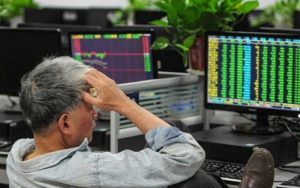
Key world stock market indexes climbed to record highs after the deal was signed on Wednesday in Washington, but later stalled on concerns it may not ease trade tensions for long, with numerous thorny issues still unresolved. While acknowledging the need for further negotiations with China to solve a host of other problems, President Donald Trump hailed the agreement as a win for the U.S. economy and his administration’s trade policies. “Together, we are righting the wrongs of the past and delivering a future of economic justice and security for American workers, farmers and families,” Trump said in rambling remarks at the White House alongside U.S. and Chinese officials on Wednesday. Chinese Vice Premier Liu He read a letter from President Xi Jinping in which the Chinese leader praised the deal as a sign the two countries could resolve their differences with dialogue.

The centerpiece of the deal is a pledge by China to purchase at least an additional $200 billion worth of U.S. farm products and other goods and services over two years, above a baseline of $186 billion in purchases in 2017, the White House said.

Commitments include $54 billion in additional energy purchases, $78 billion in additional manufacturing purchases, $32 billion more in farm products, and $38 billion in services, according to deal documents released by the White House and China’s Finance Ministry. Liu said Chinese companies would buy $40 billion in U.S. agricultural products annually over the next two years “based on market conditions” which may dictate timing of purchases in any given year. Chinese companies will import U.S. agricultural goods according to consumers’ need, and demand and supply in the market, Liu told reporters, according to CCTV. Although the deal could be a boost to U.S. farmers, automakers and heavy equipment manufacturers, some analysts question China’s ability to replace imports from other trading partners with more shipments from the United States.

The deal does not end retaliatory tariffs on American farm exports, makes farmers “increasingly reliant” on Chinese state-controlled purchases, and does not address “big structural changes,” Michelle Erickson-Jones, a wheat farmer and spokeswoman for Farmers for Free Trade, said in a statement.

Oil prices rose, helped by expectations of more Chinese purchases of U.S. oil and gas. Trump, who has embraced an “America First” policy aimed at rebalancing global trade in favor of U.S. companies and workers, said China had pledged action to confront the problem of pirated or counterfeited goods and said the deal included strong protection of intellectual property rights. Washington’s insistence on enforcement mechanisms “with real teeth” could tear the deal apart if any tariffs are re-imposed for non-compliance. The deal touted new wins for U.S. companies looking to access China’s $40 trillion financial sector, but many of the changes were already in the works with Beijing stepping up the pace of opening up in the past year.

TARIFFS TO STAY

The Phase 1 deal canceled planned U.S. tariffs on Chinese-made cellphones, toys and laptop computers and halved the tariff rate to 7.5% on about $120 billion worth of other Chinese goods, including flat-panel televisions, Bluetooth headphones and footwear.

But it will leave in place 25% tariffs on a $250-billion array of Chinese industrial goods and components used by U.S. manufacturers, and China’s retaliatory tariffs on over $100 billion in U.S. goods.

Trump, who has been touting the Phase 1 deal as a pillar of his 2020 re-election campaign, said he would agree to remove the remaining tariffs once the two sides had negotiated a “Phase 2” agreement. “We’ve already begun discussions on a Phase 2 deal,” Vice President Mike Pence said in a Fox Business Network interview. Nick Note: Talk about a nothing burger! What bullshit what crap… People are buying into this bullshit hook line and big titted blonds………  for me and you this will be a GREAT pay day.  in essence short the shit out of this joke trade deal,,,,….,,,.. I’ll show you how.

Iraq oil supplies vulnerable as Mideast tensions flare, IEA says

LONDON (Bloomberg) – Oil supplies from Iraq, the Middle East’s second-biggest producer, are “potentially vulnerable” amid rising political risks in the country and the broader region, the International Energy Agency warned. Crude prices briefly soared to a three-month high above $70 a barrel last week as tensions between the U.S. and Iran erupted in neighboring Iraq, where America assassinated an Iranian general and Tehran struck U.S. military bases in response. Though hostilities faded, the threat of escalation still menaces Iraq, which was already grappling with domestic protests that spread to its oil-rich southern region. Iraq’s oil exports have doubled during the last decade to reach 4 million barrels a day, with half these volumes flowing to China and India, the two major centers of global demand growth, the Paris-based IEA said in its latest monthly report. The country relies heavily on shipping crude through the Strait of Hormuz, which Iran has periodically threatened to close. Still, the clash between Washington and Tehran hasn’t yet caused any supply disruption, and protests inside Iraq have had only minimal impact on oil operations, the agency said. Global oil markets have a “solid base” of ample inventories and swelling U.S. shale-oil output to weather any shocks, it said. Iraq’s fragile security situation may limit its plans to expand oil-production capacity in the medium-term, making it difficult for the global industry to meet rising demand in the second half of the decade, the IEA warned. The agency advises most major economies on energy policy. Ironically, Baghdad is obligated to reduce output in the coming months as part of its agreement with fellow OPEC nations to keep world markets in balance. It pumped 4.59 million barrels day last month, and will need to reduce by 130,000 barrels a day to comply with the accord.

Saudi Arabia, the biggest member of the Organization of Petroleum Exporting Countries, already delivered all of the additional curbs promised before they formally took effect, pumping 9.68 million barrels a day in December.

Even if OPEC and its allies fully implement the deeper cutbacks announced last month, world markets will still face a surplus of about 800,000 barrels a day in the first half of the year, the IEA predicted.  The agency kept forecasts for global oil supply and demand mostly unchanged. Nick Note: I do not like how oil is trading at all.   It has bear trap written all over it. I am out of the market for now. I smell a big screwing coming. To much bearish information……. Best to wait them out!!