NSO Group Technologies (NSO standing for Niv, Shalev and Omri, the names of the company’s founders) is an Israeli technology firm whose spyware called Pegasus enables the remote surveillance of smartphones.[2] It was founded in 2010 by Niv Carmi, Omri Lavie, and Shalev Hulio.[3][4][5] It employed almost 500 people as of 2017, and is based in Herzliya, near Tel Aviv, Israel.[1][6][7]
NSO Group is a subsidiary of the Q Cyber Technologies group of companies.[8] Q Cyber Technologies is the name the NSO Group uses in Israel, OSY Technologies in Luxembourg, and in North American it has a subsidiary named Westbridge. It has operated through other companies around the world.[9]
According to several reports, software created by NSO Group was used in targeted attacks against human rights activists and journalists in various countries,[10][11][12] was used in state espionage against Pakistan,[13] and played a role in the murder of Saudi dissident Jamal Kashoggi by agents of the Saudi government.[14] In October 2019, instant messaging company WhatsApp and its parent company Facebook sued NSO and Q Cyber Technologies under the US Computer Fraud and Abuse Act (CFAA). NSO claims that it provides authorized governments with technology that helps them combat terror and crime.[15][8]
The Pegasus spyware is classified as a weapon by Israel and any export of the technology must be approved by the government.[16]
Nick Bit: Only to governments is the technology controlled. And that is out of Israel. They have offices all over the world! Sales to individuals and companies is easy its all a matter of money
Annual revenues were around US$40 million in 2013 and $150 million in 2015.[3][17] In June 2017, the company was put up for sale for $1 billion by Francisco Partners.[6] Founders Lavie and Hulio, partnering with European private equity fund Novalpina Capital, purchased a majority stake in NSO in February 2019.[18]
In 2012, the government of Mexico announced the signing of a $20 million contract with NSO.[3] It was later revealed by a New York Times investigation that NSO’s product was used to target journalists and human right activists in the country.[20] In 2015, the company sold surveillance technology to the government of Panama. The contract became the subject of a Panamanian anti-corruption investigation following its disclosure in a leak of confidential information from Italian firm Hacking Team.[21]
In 2014, the American private equity firmFrancisco Partners bought the company for $130 million.[22] In 2015 Francisco was seeking to sell the company for up to $1 billion.[17] The company was officially put up for sale for more than $1 billion in June 2017, roughly ten times what Francisco originally paid in 2014.[6] At that time, NSO had almost 500 employees, up from around 50 in 2014.[6]
On August 1, 2018, the Human Rights Group Amnesty International accused NSO Group of helping Saudi Arabia spy on a member of the organization’s staff.[23]
Citizen Lab researchers reported in October 2018 that they were being targeted by undercover operatives connected to NSO. In response to an Associated Press report, NSO denied any involvement.[24][25]
Nick Note: I was not at liberity (because of a ten year NDA i signed with Asher that just expired) to tell you about this. But if you recalled I provided you with PGP, silent circle, a black phone and two part authorization. And i will soon have a update to our phone system you will love
It was the first time a so-called ‘zero-click’ exploit had been caught and analyzed
Researchers identified exploit and quickly notified Apple, which released a patch on Monday to fix the flaw
The flaw is a new exploit from the world’s most infamous hacker-for-hire firm, NSO Group, which was used to directly infect the iPhone of a Saudi activist
Experts say the average person should not worry about the exploit
Apple released an emergency software patch on Monday to fix a security vulnerability that researchers said could allow hackers to directly infect iPhones and other Apple devices without any user action. The exploit was captured by spyware researchers at the University of Toronto’s Citizen Lab who said the flaw is a new exploit from the world’s most infamous hacker-for-hire firm, NSO Group, which was used to directly infect the iPhone of a Saudi activist. The flaw affected all Apple´s operating systems, the researchers said. It was the first time a so-called ‘zero-click’ exploit had been caught and analyzed, said the researchers, who found the malicious code on September 7 and immediately alerted Apple.
Citizen Lab called the iMessage exploit FORCEDENTRY and said it was effective against Apple iOS, MacOS and WatchOS devices.
That process name was used in an attack with NSO Group’s Pegasus spyware on an Al Jazeera journalist in July 2020. Apple released an emergency software patch on Monday to fix a security vulnerability that researchers said could allow hackers to directly infect iPhones and other Apple devices without any user action They said they had high confidence the Israeli company NSO Group was behind the attack, adding that the targeted activist asked to remain anonymous. ‘We’re not necessarily attributing this attack to the Saudi government,’ said researcher Bill Marczak. In a software update, Apple issued a patch aimed at the Pegasus exploit but did not mention NSO Group. Apple instead described the exploit as ‘Processing maliciously crafted web content may lead to arbitrary code execution. Apple is aware of a report that this issue may have been actively exploited.’ The exploit was captured by spyware researchers at the University of Toronto’s Citizen Lab who said the flaw is a new exploit from the world’s most infamous hacker-for-hire firm, NSO Group, which was used to directly infect the iPhone of a Saudi activist Although Citizen Lab previously found evidence of zero-click exploits being used to hack into the phones of al-Jazeera journalists and other targets, ‘this is the first one where the exploit has been captured so we can find out how it works,’ said Marczak. Security experts have previously stated that the average iPhone, iPad and Mac user should not worry about this attack, as they tend to be highly targeted, the discovery is still alarming to security professionals. Malicious image files were transmitted to the activist’s phone via the iMessage instant-messaging app before it was hacked with NSO´s Pegasus spyware, which opens a phone to eavesdropping and remote data theft, Marczak said. It was discovered during a second examination of the phone, which forensics showed had been infected in March. He said the malicious file causes devices to crash. NSO Group did not immediately respond to an email seeking comment. In a blog post, Apple said it was issuing a security update for iPhones and iPads because a ‘maliciously crafted’ PDF file could lead to them being hacked. The tech giant said it was aware that the issue may have been exploited and cited Citizen Lab. Apple didn´t immediately respond to questions regarding whether this was the first time it had patched a zero-click. Researcher John Scott-Railton said the news highlights the importance of securing popular messaging apps against such attacks. ‘Chat apps are increasingly becoming a major way that nation-states and mercenary hackers are gaining access to phones,’ he said. ‘And it´s why it´s so important that companies focus on making sure that they are as locked down as possible.’ The researchers said it also exposes – again – that NSO´s business model involves selling spyware to governments that will abuse it, not just to law enforcement officials chasing cyber criminals and terrorists, as NSO claims.
It was the first time a so-called ‘zero-click’ exploit had been caught and analyzed, said the researchers, who found the malicious code on September 7 and immediately alerted Apple ‘If Pegasus was only being used against criminals and terrorists, we never would have found this stuff,’ said Marczak. Facebook´s WhatsApp was also allegedly targeted by an NSO zero-click exploit In October 2019, Facebook sued NSO in U.S. federal court for allegedly targeting some 1,400 users of the encrypted messaging service with spyware. In July, a global media consortium published a damning report on how clients of NSO Group have been spying for years on journalists, human rights activists, political dissidents – and people close to them, with the hacker-for-hire group directly involved in the targeting.
Amnesty International said it confirmed 37 successful Pegasus infections based on a leaked targeting list whose origin was not disclosed. One involved the fiancée of Washington Post journalist Jamal Khashoggi, just four days after he was killed in the Saudi Consulate in Istanbul in 2018. The CIA attributed the murder to the Saudi government.
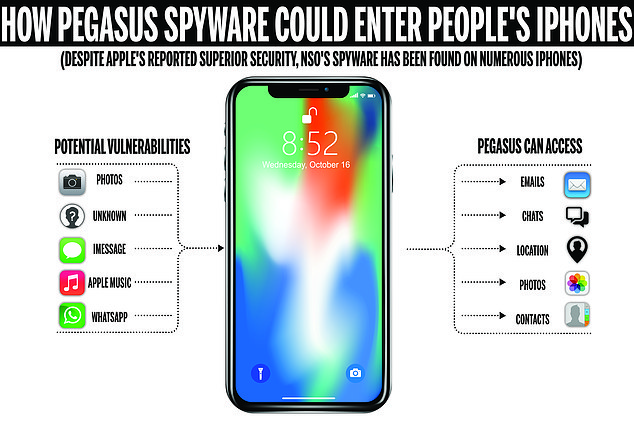
The recent revelations also prompted calls for an investigation into whether Hungary’s right-wing government used Pegasus to secretly monitor critical journalists, lawyers and business figures. India’s parliament also erupted in protests as opposition lawmakers accused Prime Minister Narendra Modi´s government of using NSO Groups´ product to spy on political opponents and others. France is also trying to get to the bottom of allegations that President Emmanuel Macron and members of his government may have been targeted in 2019 by an unidentified Moroccan security service using Pegasus. Morocco, a key French ally, denied those reports and is taking legal action to counter allegations implicating the North African kingdom in the spyware scandal. Pegasus is a powerful piece of ‘malware’ – malicious computer software – developed by private Israeli security firm NSO Group. This particular form of malware is known as ‘spyware’, meaning it is designed to gather data from an infected device without the owner’s knowledge and forward it on to a third party. While most spyware is limited in scope – harvesting data only from specific parts of an infected system – Pegasus appears much more powerful, allowing its controller near-unlimited access to and control over an infected device. This includes accessing contact lists, emails, and text messages, along with stored photos, videos and audio files. Pegasus can also be used to take control of the phone’s camera or microphone to record video and audio, and can access GPS data to check where the phone’s owner has been. And it can also be used to record any new incoming or outgoing phone calls. Early versions of the virus infected phones using crude ‘phishing’ attacks in which users are conned into downloading the virus on to their own phones by clicking on a malicious link sent via text or email. But researchers say the software has become much more sophisticated, exploiting vulnerabilities in common phone apps to launch so-called ‘zero-click’ attacks which can infect devices without the user doing anything. For example, in 2019 WhatsApp revealed that 1,400 people had been infected by NSO Group software using a so-called ‘zero day’ fault – a previously unknown error – in the call function of the app. Users were infected when a call was placed via WhatsApp to their phones, whether they answered the call or not. More recently NSO has begun exploiting vulnerabilities in Apple’s iMessage software, giving it backdoor access to hundreds of millions of iPhones. Apple says it is continually updating its software to prevent such attacks, though human rights group Amnesty says it has uncovered successful attacks on even the most up-to-date iOS systems – carried out this month. NSO Group says that Pegasus can also be installed on devices using wireless transceivers located near the target, or can be booted directly on to the device if it is stolen first. Nick Note: A number of years ago a big time investor friend of mine asked me to meet with him In Antwerp Belgium at a Susi Restaurant. He then told me he needed for me to go with him for a meeting in Israel of a company called Pegasuses. I was picked up by his private jet and whisked off to Herzliya Israel to meet with a startup looking for money. As I meet with the principals i got a message on my iPhone.. It was strange because the message was empty. As we went into the meeting their was a big flat screen TV in the conference room. And it was displaying the camera and microphone on the speakers ON MY IPHONE. they had hacked into the phone and took control of my camera and microphone. SHIT! they were able to display my location, messages and emails. They explained to me they could target any IOS device anywhere in the world if they had a phone number. The way they hack in is by SMS message, email or simply being in the proximity of the phone. My associate Asher was interested in their proposition and told them he would get back to them. I never wanted to know what he did but i was having no part of it. I was visible shaken on the flight back to Spain where my yacht was birthed. Asher asked me about the technology and I told them is was a pretty easy to exploit any of a dozen holes in the Apple operating system. And then he asked me it was a viable proposition. And i told him their was a fortune to be made until you got killed, Taken over by a government or got exposed and faced jail time. I told him walk away unless you want to become a cold blooded murderer. I can tell you for a FACT people have been Killed, tortured and kidnapped. Enemies of the state, especially of nasty regimes have suffered. Many innocent men have been imprisoned and tortured to death. I don’t deal in drugs, arms, assassinations and the other evils of our time no matter how much money is involved….. This was in 2010. Ever since i have used a black phone and my cameras and microphone on my phone is mechanically blocked. I do not use emails and SMS messages. I have no social media accounts and can tell you i only use our highly encrypted systems. Including firewalls double VPN tunnels. Documents are PGP encrypted and i use the strongest two part authorization. I always new this day would come!
Top Biden Covid-19 officials are increasingly clashing with the Centers for Disease Control and Prevention as the administration pushes to begin distributing booster shots widely by Sept. 20. In meetings and conversations over the past month, senior officials from the White House Covid-19 task force and the Food and Drug Administration have repeatedly accused CDC of withholding critical data needed to develop the booster shot plan — delaying work on the next step of President Joe Biden’s vaccination campaign and making it more difficult to set clear expectations for the public. One particularly frustrating episode occurred last month, two officials said, when the agency appeared to publicly reject the administration’s plan to offer boosters to all adults. CDC Director Rochelle Walensky had joined other top Biden health officials in signing a high-profile statement on Aug. 18 endorsing the approach. But less than two weeks later, when it came time for CDC to make the case for boosters to an influential advisory panel, senior agency officials argued that priority should be given to nursing-home residents and frontline health workers before expanding access to other groups based on their vulnerability. The new approach blindsided senior health officials across the federal government, further straining the tenuous relationship between the White House and the CDC. Seven senior administration officials working on the federal pandemic response, and three other people familiar with the matter, described the growing tension in interviews with POLITICO. All spoke on the condition of anonymity to discuss the sensitive matter more openly. The infighting comes as the administration seeks new approaches to quash the Delta variant and win back Americans’ trust after two months of setbacks and missteps. And it raises questions about the administration’s ability to make clear policy recommendations to safeguard Americans as the pandemic rolls on. Doing so will require close collaboration between health agencies and the White House to distill fast-moving and unpredictable discoveries about the virus’ behavior and vaccines’ performance into practical guidance. “We’ve made so much progress during the past seven months of this pandemic,” Biden said during a speech on Thursday laying out sweeping new policies to fight the virus. “Now we just have to finish the job with truth, with science, with confidence, and together as one nation.” Neither the White House nor the CDC responded to a request for comment. At the agency, which is still recovering from the crushing workloads and political pressure it experienced during the last year of the Trump administration, the booster back-and-forth has further lowered morale. Walensky has fiercely defended the CDC throughout the last several weeks, telling White House officials who have pledged for months to follow the science that the late September booster target was likely too ambitious, and that her agency had not yet completed studies that would help provide the rationale for the shots. The CDC and FDA also were still waiting for booster data from vaccine-makers Moderna and Johnson & Johnson. Other CDC officials working on the pandemic response are equally exasperated by the situation and what they see as unrealistic expectations from the White House as it tries to shore up public opinion. “Science takes time,” a CDC official said. “I don’t know how many times we have to say this.” One senior administration official said the Biden administration’s public pledge to let science lead was faltering behind the scenes. “The CDC is getting out what it can when it can,” the official said. But a second senior administration health official pushed back against the idea that the Sept. 20 booster target was foisted on Walensky. The person said that the federal government’s top health leaders agreed to the language and September date before the White House announced the plan in August. The time frame was established based on the FDA’s projections of when it could review specific company data as well as data from manufacturers, that official said. Some at CDC say the agency needs to change its approach, by working quickly with the White House Covid team to develop policy recommendations during what they describe as one of the most chaotic and critical periods of the pandemic. In addition to the planned booster rollout, the CDC and FDA are poised to consider the use of Covid-19 vaccines for children under 12, a group that has seen more infection and death as the nation has returned to in-person schooling. But it is the nascent booster plan that has generated the most friction of late. Three senior officials said they were surprised by the White House’s September deadline, arguing that it set the CDC and FDA on a tight timeline to crunch data, publish vaccine efficacy studies and approve or authorize the shots. White House officials and Anthony Fauci, the president’s chief medical adviser, were eager to begin doling out boosters later this month, citing data from Israel and other countries that suggested vaccines’ efficacy was waning and that breakthrough infections were on the rise. These officials pushed the CDC to share publicly the data from its ongoing studies of vaccine performance and breakthrough cases.Walensky and other senior CDC officials, who agreed vaccine efficacy was declining and that Americans would eventually need booster shots, noted in their conversations with the broader Biden Covid team that the CDC did not yet have enough data from its studies on the matter. Its analyses, which looked at infection rates among frontline health workers and residents of specific cities such as New York and Los Angeles, would take weeks to complete. The White House, and FDA and CDC leaders, are “trying to align” the two agencies more, one official said, particularly amid the departure of two top FDA vaccine regulators, Marion Gruber and Philip Krause. The pair announced their retirements this month, in a move that one former official attributed to frustrations with CDC’s role in the booster plan. FDA’s frustrations with CDC are longstanding and predate the pandemic. The agencies have clashed on data around perennial problems like foodborne illnesses and issues related to other disease outbreaks and emerging conditions, such as the lung injury called EVALI that has been linked to e-cigarette use. FDA has long argued that CDC moves too slowly, two former officials said. That the Biden White House “is starting to exert a little more pressure [on CDC] is long overdue,” said a former Trump health official. “[President Donald] Trump’s mistake was not understanding that the way to fix it wasn’t to publicly berate them … but to actually lead and reform.” The FDA said in a statement that its “longstanding collaboration with CDC continues to have a positive impact on our nation’s public health.” It added: “Particularly for vaccines, our agencies have always had, and continue to have, shared responsibilities where FDA makes regulatory decisions and CDC’s immunization advisory committee provides clinical recommendations.” No matter the motivation, the CDC advisory committee episode in late August only reinforced perceptions in the White House that the agency represents the weakest link in a Covid-19 response predicated on close collaboration and extreme competence. In the aftermath, some officials outside the CDC working on the Covid-19 response have placed blame for turmoil around boosters squarely on Walensky, who they argue has struggled to instill a sense of urgency in the agency’s top scientists. Others have taken a more sympathetic view, chalking the issues up to institutional problems within the CDC that Walensky is trying to iron out. In a sign that even the CDC director herself recognizes the agency has repeatedly fallen short on messaging, multiple people with knowledge of the matter said Walensky has recently weighed bringing on new communications staff. The agency’s main spokespeople are career employees who predate Walensky’s arrival in January. She has also has tried to streamline CDC’s pandemic response team, tapping respected agency veteran Henry Walke to lead the way. Three former health officials applauded Walensky’s restructuring earlier this year, arguing that it could break down some of these issues even though many felt the move sidelined CDC veteran Nancy Messonnier, who resigned earlier this year after decades at the agency working on respiratory illnesses. The reorganization started in the spring, before the Delta variant became the dominant Covid strain in the United States, causing massive upticks in cases and hospitalizations. With Delta’s rise, officials on the CDC pandemic team told POLITICO, they have grown increasingly overwhelmed. Within the last two weeks, Walensky has moved to yet again build back up that team. Since the Biden administration began in January, the CDC chief has worked to address inefficiencies within the agency, streamlining its Covid-19 response and ensuring her office coordinates more closely with the White House, two senior CDC officials said. One of her main goals, those officials said, has been to put the agency back on the map after the Trump administration sidelined its scientists throughout 2020. Biden, too, promised to let science, and science agencies, lead the policy conversations around Covid. Senior administration officials working on the pandemic response have grown frustrated with the CDC’s messaging on Covid policies, including masks, over the last several months — and what they see as a sluggish response to crises such as the emergence of the Delta variant. Much of the criticism pointed at the CDC focuses on its data collection and analysis, officials said. The agency has for years struggled with obtaining accurate disease data from state health departments, and the pandemic strained the country’s public health infrastructure, causing massive delaysin reporting and case investigation. That has made it difficult for CDC to gather information on breakthrough infections to inform the administration’s policies around boosters. The CDC also often publishes its studies in medical journals, but that approach can delay the release of critical information to the public. Walensky has recently taken steps to address the issue, telling CNN this month that the CDC worked with the New England Journal of Medicine to release data about pregnant women and vaccines on its website before it published the findings in the journal. Nick Note: Some sick shit. The bureaucrats got their felling hurt so people are dying. Their is solid scientific evidence that a 3rd booster show is needed NOW! And we need to vaccinate the kiddies……..
18 leading scientists, including 2 outgoing FDA officials, say COVID-19 booster shots lack evidence and shouldn’t yet be given to the general public
Eighteen top scientists from across the world have warned against giving COVID-19 booster shots to most fully vaccinated people. In an review published in the Lancet on Monday, the experts said that the idea of boosting immunity to reduce COVID-19 cases was “appealing.” But current evidence didn’t support “widespread use of booster vaccination” in the general population, they said, citing 93 references. “Careful and public scrutiny of the evolving data will be needed to assure that decisions about boosting are informed by reliable science more than by politics,” the review authors said. The group included Philip Krause and Marion Gruber, the two Food and Drug Administration officials who resigned over the Biden administration’s booster shot plan earlier in September. The US is expected to start rolling out booster shots from September 20 to shore up immunity against the Delta variant, which has mutations that can help it avoid the immune response. Immunocompromized Americans can already get an extra shot. Insider’s Hilary Brueck has reported on other experts’ concerns about the lack of booster data. The group, which included scientists from the US, UK, Mexico, Jamaica, France, Portugal, South Africa, and Colombia, said that there could be a significant risk of side effects if boosters were “widely introduced too soon, or too frequently.” This was especially the case for vaccines with “immune-mediated side-effects,” such as a type of heart inflammation, called myocarditis, that has been reported in very rare cases after the second dose of Pfizer or Moderna’s vaccines. The researchers warned that if lots of people got side effects with the extra doses, this could reduce vaccine acceptance. Dr. Ana-Maria Henao-Restrepo, the lead author of the review and a scientist at the World Health Organization, said in a statement that “even if some gain can ultimately be obtained from boosting,” the world should focus on getting shots to unvaccinated people. The WHO has urged countries with good vaccine coverage to hold off boosters until every country has fully vaccinated at least 10% of its population. The group said that current vaccine supplies could “save more lives” if they weren’t used for boosters. “Unvaccinated people are still the major drivers of transmission and are themselves at highest risk of serious disease,” they said. Existing COVID-19 vacccines were holding up against newer variants like Delta, the review authors said. The antibody response for vaccination can decrease over time, but this is just one aspect of the immune response. Other parts of the immune system, such as memory cells and T cells, are often longer-lived, and can also provide protection, they said. The scientists said that an increasing numbers of breakthrough infections were “inevitable” as more people become fully vaccinated and people’s behavior changed. The study authors did not rule out boosters entirely. Boosters tailored to the variants most likely to evolve could “ultimately be needed.” “Now is the opportunity to study, before there is a widespread need,” they said. Nick Note: I am not sure what they are playing at here. We have had a lot of people tested AND we are seeing after 5 to 6 months a drastic drop in antibodies. If you are not sure get tested for antibodies and if they are low your choice is obvious… Talk to your Doctor!
Florida authorities released dash camera footage Thursday of a deputy-involved shooting that ended with a dead suspect — a man who was out on bond for drug trafficking and had multiple convictions for violent offenses, officials said Thursday.
Brevard County Sheriff’s deputies Brian Potters and Tyler Thoman were conducting a traffic stop on Aug. 30 in Melbourne, 70 miles southeast of Orlando, when they were ambushed and fired upon, Sheriff Wayne Ivey said in a video detailing the encounter.
“The attack and ambush [were] perpetrated by a violent, career criminal, with a history of 40 charges for crimes including drug trafficking, aggravated assault while discharging a firearm, battery on a law enforcement officer, and attempted first-degree felony murder,” he said. Deputy Thoman is seen talking to a woman outside her vehicle about the 2-month-old baby and dog in the backseat while another vehicle occupant is leaning against the rear of the car. The suspected shooter, whose identity has not been not released, is sitting in the back seat. When Potters asks him to exit the car, the suspect opens fire and takes cover at the front of the vehicle, putting the baby seated inside at risk, Ivey said. Potters is heard saying he was struck by gunfire around the same time the suspect appears to be wounded by return fire. As the deputies move to the side of a police cruiser, the suspect attacks Potters from behind after his rifle jams, striking him in the head with the butt of the weapon before they both fall to the ground, Ivey said. Thoman then fired multiple shots at the suspect, who was killed. Potters was shot in the leg and sustained head lacerations, tissue damage and bone fractures, the sheriff said. Ivey said the two occupants standing outside had nothing to do with the ambush attack. In total, 61 rounds were fired, he said. “Let there be no doubt, this individual got exactly what he deserved,” the sheriff said. “And to those out there that might be foolish enough to ask why we shot him so many times, the answer is simple: evil can never be dead enough.” Ivey ended his breakdown of the incident by lambasting the criminal justice system for allowing the suspect to be free despite his long criminal history. “This case is a perfect example of what is wrong with our criminal justice system, he said. “When a registered career criminal with 23 felony charges, 17 misdemeanor charges, multiple convictions for violent offenses and two active and pending drug trafficking cases is out on our streets where he can attempt to kill our deputies and put other lives at risk, something is wrong with our system.” Nick Note: As you know i rarely report these kind of stories. But will all the law enforcement bashing especially of white officers when stopping blacks i though this incident deserve proper airing. As you can see for yourself the Blacks were being treated with dignity and respect by the police. Until the monster attacked everyone in sight. Their are a lot of unanswered questions that the police chose to ignore. Like do you really believe the male driver and the female seated in the back seat with the animal did not know he was carrying fully Loaded AR15. THE UNTOLD STORY IS THE THUGS ARE WINNING HIDING UNDER ATTACKS ON POLICE PRETENDING THEY ARE THE VICTIMIES. THE COURTS AND CRIMINAL JUSTICE SYSTEM RESPONDING TO THE NEGATIVE LAW ENFORCEMENT BIAS ESPECIALLY WHEN IT COMES TO BLACKS ARE LETTING THE ANIMALS PREY ON SOCIETY…
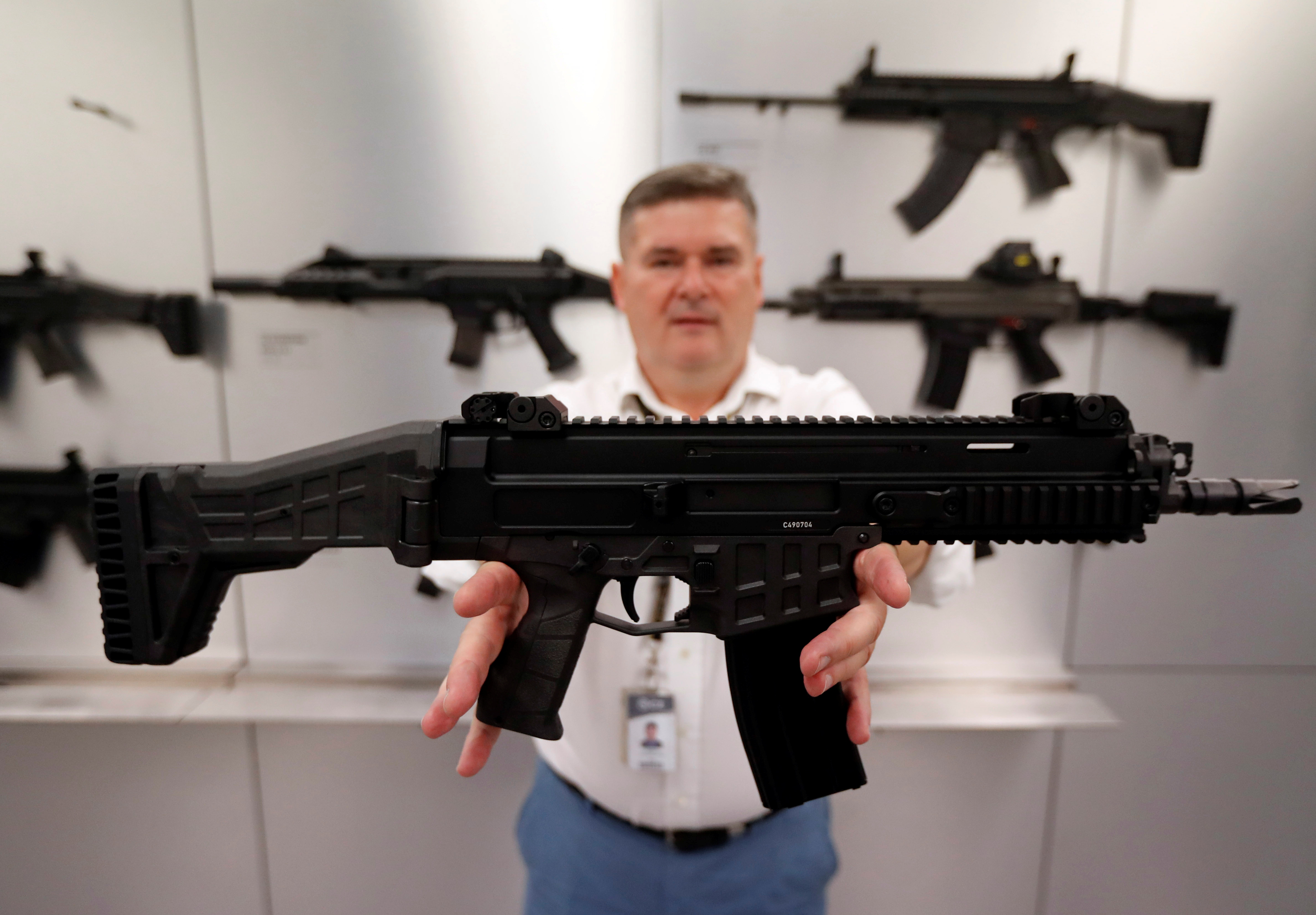
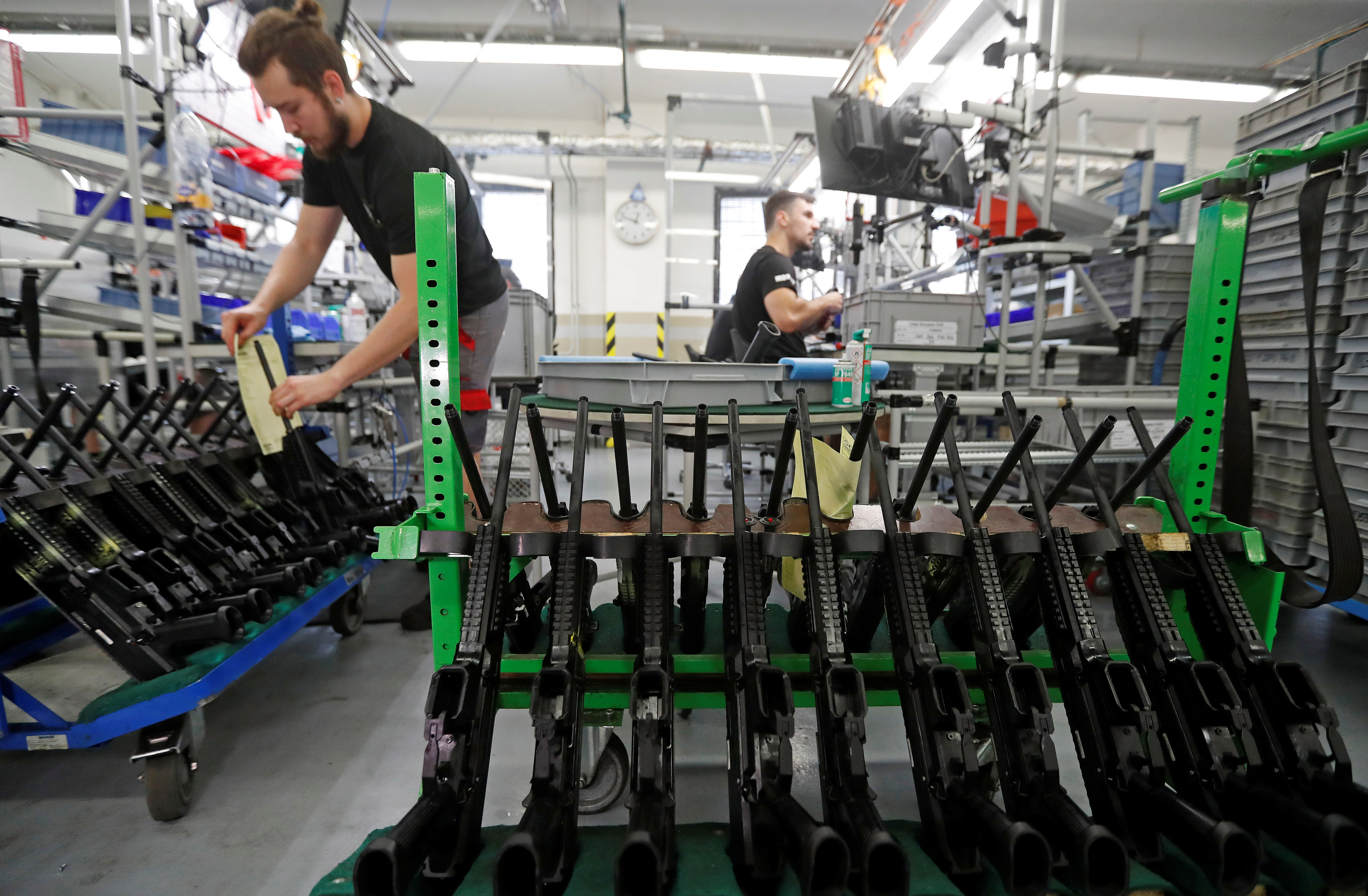
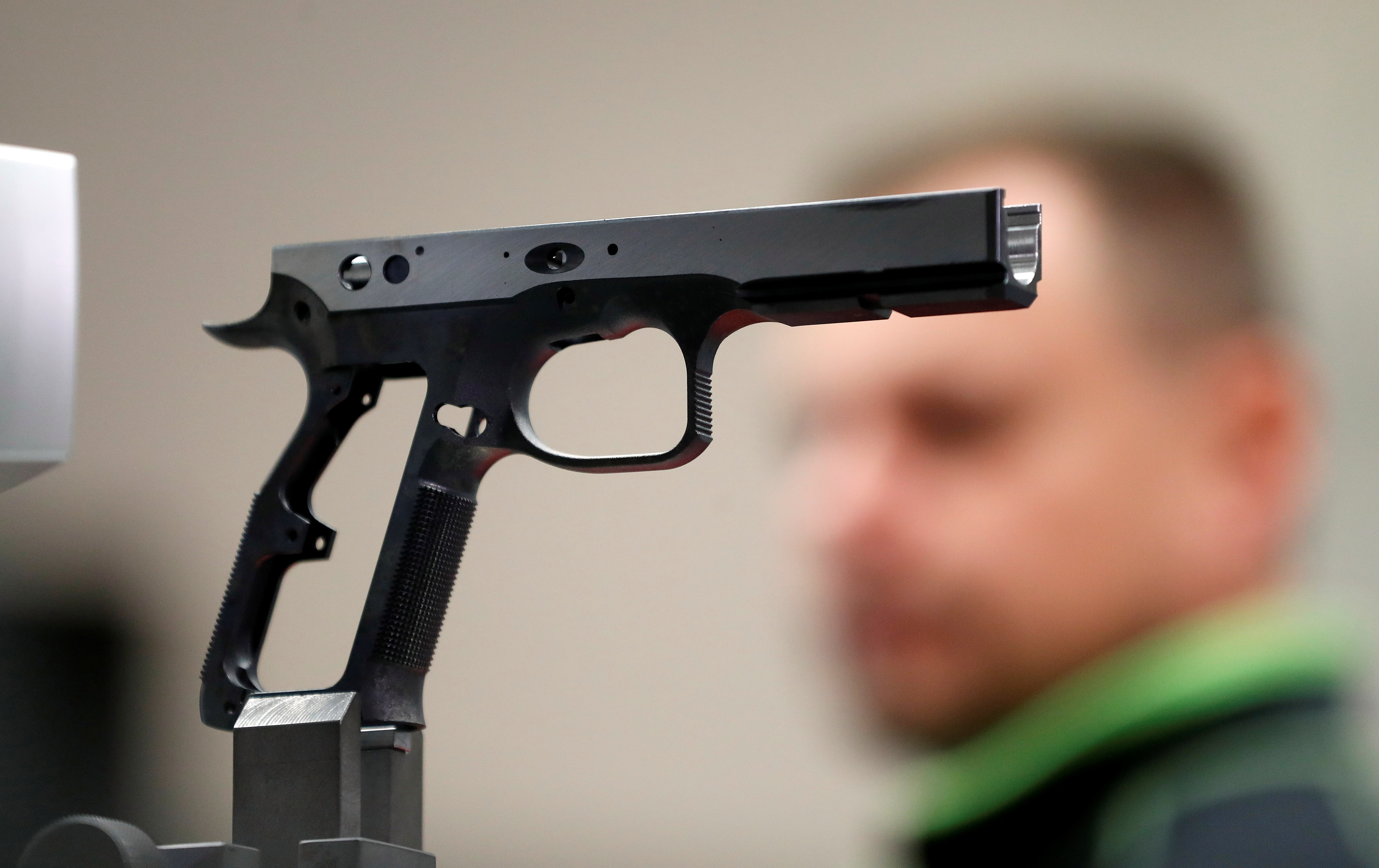
PRAGUE, Sept 13 (Reuters) – For Czech gun maker CZG-Ceska Zbrojovka Group (CZG.PR), its recent acquisition of the Colt brand carries both the potential to become a major player in the global firearms market and the challenge of reviving the fortunes of a fabled U.S. name. Shares of CZG, which listed on the stock market last October, have surged 60% in Prague this year as investors welcomed solid revenue growth and the company’s $222 million purchase of privately-held Colt Holding Company – a deal finalised in May that will make CZG a competitor for U.S. leaders such as Smith & Wesson (SWBI.O) and Sturm, Ruger & Company (RGR.N). Colt, with plants in the United States and Canada, will give CZG the capacity to expand production beyond its main factory in the Czech Republic and allow it to compete in U.S. military contracts because it will fulfil “Buy America” regulations requiring U.S. production. CZG says it aims to almost double CZG and Colt’s pro-forma combined revenue of around $570 million last year within a few years – putting it on a par with Smith & Wesson’s annual net sales of $1.1 billion in the last fiscal year.
In 2020, the United States accounted for 66% of the Czech gunmaker’s annual revenue, mainly sales to individuals and police departments of guns under its CZ (Ceska Zbrojovka), Dan Wesson and Brno Rifles brands.
“Colt is an important step in realising our vision of getting to 1 billion (euros) in revenue by the end of 2025,” CZG’s Chairman Jan Drahota told Reuters in an interview at the company’s Prague headquarters. “We … will be thinking how to make sure the brand is even bigger than it is now and introduce it to wider (markets). “It is a privilege, but it is also pressure on us,” he said. Some of the pressure could come from investors. The revenue target looks ambitious to some analysts and will require investment by CZG, whose roots stretch back to before World War II. “It is definitely an ambitious goal,” said Pavel Ryska, analyst at J&T Banka in Prague. “In my view, it could be met on two conditions. First, the U.S. civilian demand remains robust and keeps rising, and second, CZG adds further production capacity either through its own capex or through additional acquisitions that are well executed.” Founded by Samuel Colt, the U.S. company produced one of the first revolvers and its single-action revolver known as “The Peacemaker” was synonymous with lawmen and outlaws in the Wild West in the 19th century. By 2015, however, the company was filing for bankruptcy protection following a series of missteps and the loss of a key contract with the U.S. Army. Those issues allowed rivals to steal a march on Colt, although it emerged from bankruptcy in 2016 and revenue rose by a quarter last year.
CZG, which used IPO proceeds and issued bonds to help finance the Colt deal, will outline investment plans later this year. They will include possibly introducing new products and investing in upgrades at Colt’s main factory in West Hartford, Connecticut, Drahota said. Upgrades will also mean “essentially an enlargement of capacity because of underinvestment in the past,” he said. CZG is also considering whether to produce some CZG products in the United States, he said, adding there is little overlap with Colt products. “We have to consider from a group level what … the production split will be at each location,” he said. “One plus one is more than two. We believe we can leverage on each other’s success.” About half of Colt’s revenues in 2020 came from the massive U.S. military and law enforcement (M&LE) segment and Drahota said he saw “huge room” to grow the brand in global civilian and M&LE markets. Analysts at Czech-based Fio Banka estimate the military and law enforcement portion of CZG’s North American sales will climb to 50% from 10% with the Colt acquisition, boosting the company’s revenue as M&LE firearms fall into higher price categories. Global demand for small firearms is expected to rise from around 1.09 billion units in 2019 to 1.26 billion units in 2023, CZG said in its annual report, citing the BIS Small Arms Market Report, with the civilian market now accounting for 62% of sales and military and law enforcement 38%. The market’s good growth prospects have helped drive shares of Smith & Wesson and Sturm, Ruger & Co. up 21% and 16% respectively this year. The market’s good growth prospects have helped drive shares of Smith & Wesson and Sturm, Ruger & Co. up 21% and 16% respectively this year. CZG, whose operating profit rose 12% last year, has until now mainly competed with European groups like FN Herstal of Belgium, Beretta of Italy and Glock Gesellschaft of Austria and struck deals last year with the Czech Army and law enforcement bodies in Brazil and Kenya, as well as contracts to help rearm Hungary’s army. Buying Colt will also give it exposure to the UK and Canadian militaries, among others, and Drahota said the market will continue to shift to more advanced weapons as demanded by military customers. CZG, which last year took a minority stake in Spuhr i Dalby AB, a Swedish maker of optical mounting solutions for weapons, would also look at further acquisitions, especially in areas like optics or optoelectronics. “We want to grow by acquisitions but we will be disciplined,” Drahota said. Nick Note: I was shocked when the US military gave up the Colt 45 for the Glock pea shooter ray gun…….. Now this…… what is the world coming to……..
Shortages of metals, plastics, wood and even liquor bottles are now the norm. The upshot is a world where buyers must wait for delivery of items that were once plentiful, if they can get them at all. Along with the shortages come hefty price increases, which has fueled fears of a wave of sustained inflation. There’s growing tension among Federal Reserve policymakers over how to gauge the long-term impact on prices. Some Fed policymakers are more convinced than others that price pressures will recede after some of the supply chain disruptions are resolved. How this debate evolves could influence how quickly the Fed moves to reduce the pace of asset purchases launched at the start of the pandemic, and how soon it lifts the policy interest rate from its current level near zero.
Rash and other local producers were part of a wide ranging forum recently with Richmond Fed president Tom Barkin that focused on the challenges to the U.S. recovery posed by supply chain issues that are not getting resolved as fast as policymakers had hoped. Shortages are hitting everything from bulldozers to bourbon. Heavy-equipment maker Caterpillar Inc (CAT.N) warned in July that its profits would suffer in the current quarter in part because of rising prices on hard-to-get components. The company said, among other things, it is looking for ways to get supplies from non-traditional sources to deal with shortages of plastic resin and semiconductors. Lawson Whiting, chief executive of spirits producer Brown-Forman Corp (BFb.N) , told investors earlier this month that shortages of “key packaging materials, most notably glass” continue to create problems for the maker of brands such as Jack Daniel’s and Woodford Reserve. New challenges continue to arise, including hurricane disruptions to U.S. oil refineries which is again threatening supplies of plastics and other basic materials. Some industries are rushing to build new factories, including semiconductor producers under pressure to feed a growing appetite for chips needed in cars and electronics. But not all producers are eager to build new plants. The bike industry, for instance, is heavily concentrated in Asia and producers there worry that the current surge in demand is only temporary. “The Asian factories have seen this time and time again,” said Brent Graves, CEO of Cane Creek Cycling Components, another small manufacturer in Fletcher, N.C., which relies heavily on Asian suppliers for bike parts. “They say, ‘Well, we will run some extra overtime.’ But in terms of raw investment in facilities, on the whole they are reluctant to do it.” Compounding the current problem are clogged supply lines. With so many manufacturers rushing to build supplies at the same time, the containers, ships, and trucks needed to move the goods often aren’t available, and have soared in cost when they are. That has disrupted some of the mechanisms that normally help keep supplies, and prices, in check. David Reilly, president of United Solutions, a plastics maker in Leominster, Mass., said soaring resin prices – he estimates they’re up 100% for some types in the past year – is his biggest challenge. Normally he would have his buyers scouring overseas markets, including China, for cheaper resins. “But we can’t do that,” he said, because shipping prices have risen so much that they wipe out any price advantage. “Right now, producers in North America don’t have the stiff competition that they would if container prices came back down. Nick Note: This will not resolve itself anytime soon.
SEOUL (Reuters) -North Korea carried out successful tests of a new long-range cruise missile over the weekend, state media said on Monday, seen by analysts as possibly the country’s first such weapon with a nuclear capability. The missiles are “a strategic weapon of great significance” and flew 1,500 km (930 miles) before hitting their targets and falling into the country’s territorial waters during the tests on Saturday and Sunday, KCNA said. The latest test highlighted steady progress in Pyongyang’s weapons program amid a gridlock over talks aimed at dismantling the North’s nuclear and ballistic missile programs in return for U.S. sanctions relief. The talks have stalled since 2019. North Korea’s cruise missiles usually generate less interest than ballistic missiles because they are not explicitly banned under U.N. Nations Security Council Resolutions. “This would be the first cruise missile in North Korea to be explicitly designated a ‘strategic’ role,” said Ankit Panda, a senior fellow at the U.S.-based Carnegie Endowment for International Peace. “This is a common euphemism for nuclear-capable system.” It is unclear whether North Korea has mastered the technology needed to build warheads small enough to be carried on a cruise missile, but leader Kim Jong Un said earlier this year that developing smaller bombs is a top goal. The two Koreas have been locked in an accelerating arms race that analysts fear will leave the region littered with powerful new missiles. South Korea’s military did not disclose whether it had detected the North’s latest tests, but said on Monday it was conducting a detailed analysis in cooperation with the United States. The U.S. military’s Indo-Pacific Command (INDOPACOM) said it was aware of the reports and was coordinating with its allies and partners. “This activity highlights (North Korea’s) continuing focus on developing its military program and the threats that poses to its neighbours and the international community,” INDOPACOM said in a statement Rodong Sinmun, the ruling Workers’ Party’s official newspaper, ran photos of the new cruise missile flying and being fired from a transporter-erector-launcher. The test provides “strategic significance of possessing another effective deterrence means for more reliably guaranteeing the security of our state and strongly containing the military manoeuvres of the hostile forces,” KCNA said. It was seen as the North’s first missile launch after it tested a new tactical short-range ballistic missile in March. North Korea also conducted a cruise missile test just hours after U.S. President Joe Biden took office in late January. Jeffrey Lewis, a missile researcher at the James Martin Center for Nonproliferation Studies, said intermediate-range land-attack cruise missiles were no less a threat than ballistic missiles and were a pretty serious capability for North Korea. “This is another system that is designed to fly under missile defence radars or around them,” Lewis said on Twitter.
Cruise missiles and short-range ballistic missiles that can be armed with either conventional or nuclear bombs are particularly destabilising in the event of conflict as it can be unclear which kind of warhead they are carrying, analysts said.
Kim Jong Un did not appear to have attended the test, with KCNA saying Pak Jong Chon, a member of the Workers’ Party’s powerful politburo and a secretary of its central committee, oversaw it. The reclusive North has long accused the United States and South Korea of “hostile policy” toward Pyongyang. The unveiling of the test came just a day before chief nuclear negotiators from the United States, South Korea and Japan meet in Tokyo to explore ways to break the standoff with North Korea. China’s foreign minister, Wang Yi, is also scheduled to visit Seoul on Tuesday for talks with his counterpart, Chung Eui-yong. Biden’s administration has said it is open to diplomacy to achieve North Korea’s denuclearisation, but has shown no willingness to ease sanctions. Sung Kim, the U.S. envoy for North Korea, said in August in Seoul that he was ready to meet with North Korean officials “anywhere, at any time.” A reactivation of inter-Korean hotlines in July raised hopes for a restart of the negotiations, but the North stopped answering calls as annual South Korea-U.S. military exercises began last month, which Pyongyang had warned could trigger a security crisis. In recent weeks South Korea became the first non-nuclear state to develop and test a submarine-launched ballistic missile. Nick Note: The world will deeply regret not engaging Kim Yon Num Chucks will the price is still small. He has become the nuclear tipped rocket man and is rapidly becoming a formidable foe…… STUPID!
While Covid infections continue to rise and weigh on economic data, the markets seem to be seeing a receding in the impact on the horizon. Some might point to the weakness in U.S. stocks last week to refute the point, but that selling was likely exacerbated by investors realizing capital gains in advance of the likely increase in the capital gains tax rate. Since late July, the U.S. economic surprise index has been below zero, with readings below zero indicating that economic releases have been weaker than expected. In contrast, positive readings indicate better than expected economic releases. Despite the continued weakness in the U.S. economic surprise readings, the 10-year Treasury yield has begun to move higher. This weakness in the economic surprise data combined with rising yields is not just a domestic phenomenon. While the Citi global economic surprise readings have been trending lower since mid-June and are currently negative, the percentage of debt currently with a negative yield has also been trending lower since late August. A rise in the amount of negatively yielding debt has typically been associated with weaker expected economic growth. The move higher in global bond yields corresponds with the U.S. 10-year Treasury yields rising While Covid infections are continuing to rise in the U.S. and many other countries, perhaps the decline in the rate of change is some indication that things are already beginning to improve. The momentum of U.K. infections seems to have peaked for now, and the U.S. appears to be following suit. The speed of increase in U.S. Covid cases finally declined after 11 straight increases in week-over-week cases. Interestingly, Japan adds another data point to this narrative since Japan has had significant Covid issues, and the Japanese economy is very dependent on the global economy. The economic surprise data in Japan has been weakening since late May, while the pace of infections began to rise sharply in July. While the weekly growth of infections remains high, the peak momentum was in late August. Japanese stocks hit their recent bottom at roughly the same time as the pace of infections peaked and have outperformed the S&P 500 by almost eleven percentage points since that time. The TOPIX just made a 30-year high by exceeding the level set back in March 1991 The Senate returns from recess on September 13, so the whirlwind of legislative activity from Congress is beginning. While much of the tax and spending bills will likely take until the fourth quarter to be completed, the contemplated actions are likely to add noise and volatility to markets. In addition, the effective date of any proposed increase in the capital gains tax might be on September 15, when the Senate has set the deadline for committees to submit their reconciliation bills. Tuesday’s August consumer inflation readings should still reflect pricing pressures, with the year-over-year rate expected to be at 5.3%. Supply chain issues remain to haunt the data along with demand, but the year-over-year rate should have peaked in July. The August retail sales report should continue the streak of weaker U.S. economic readings. Spending on services had been keeping the retail sales levels near peak levels with goods spending softening. The increase in Delta variant infections likely negatively impacted services spending on the margin. In addition, supply chain issues will put a lid on auto-related sales. Keep an eye on the continued reaction to the weaker economic activity to see if markets look past the current challenges and continue to think the global economy will “break on through to the other side.” Nick Note: I see this market as topping with a few fake outs along the way. I DO NOT WANT TO CHASE THE TOP!
LONDON, Sept 12 (Reuters) – British Prime Minister Boris Johnson will this week set out his plans to manage the COVID-19 pandemic in the winter months, announcing a decision to scrap the introduction of vaccine passports and steps to end some emergency powers.
Johnson, under fire from some in his governing Conservative Party for raising taxes to fix a health and social care crisis, looks set to try to soothe those critics by ditching plans to introduce passports despite an increasing number of coronavirus cases.
Speaking to broadcasters, Health Minister Sajid Javid said he did not anticipate more lockdowns and that the vaccine passports would not be introduced in England, as the government depends instead on vaccines and testing to defend the public. “Now that we’re entering autumn and winter … the prime minister this week will be setting out our plans to manage COVID over the coming few months and in that we will be making it clear that our vaccine program is working,” Sajid Javid told Sky News.
He told the BBC he was not “anticipating any more lockdowns” but would not take the measure off the table, that the government would not go ahead with vaccine passports to allow people to attend mass events and he wanted to “get rid of” PCR tests for travelers as soon as possible.
Javid added the government would remain “cautious,” but “the vaccine program, our testing program, our surveillance program, the new treatments … this is all our wall of defense and whilst there’s a lot of virus around, it is working.”
Britain, which has one of the highest official COVID-19 death tolls in the world, has seen the number of cases climb over the last few months after easing restrictions in July, when the government first bet on vaccines to protect the public.
The government was handed sweeping emergency powers in March 2020 with the introduction of the Coronavirus Act, which included measures to allow the authorities to bar protests, shut down businesses and restrict travel. The main opposition Labour Party said it agreed it was a “reasonable” approach to take some measures off the statute book but that lawmakers would study the detail of the proposals. “Obviously we will want to study the detail when it comes to parliament, because there have been huge concerns about the way in which the Coronavirus Act has been misused by the authorities,” Labour’s health policy chief Jonathan Ashworth said. Nick Note: Its gotten political….. Politicians know how to steal money, fuck whores and fuck things up. We are seeing them try to convince us they are scientists. All they are doing is avoiding the hard decisions and making things worse. A great example is the FACT England now has its highest record breaking Covid19 death rate. And the politicians are opening things up even further… Same in the US with opening up the schools . Every school hose in America is a super spreader event in the making. The SCIENTIFIC evidence proves mask or no masks the kiddies and their teachers are getting infected and sickkkkkkkk… What the fuck are we doing?