BERLIN, Sept 1 (Reuters) – German retail sales fell by far more than expected in July after two months of sharp increases, data showed on Wednesday, in a first sign that a consumer-driven recovery in Europe’s largest economy might be losing steam in the third quarter. The Federal Statistics Office said retail sales dropped 5.1% on the month in real terms after a revised jump of 4.5% in June and an increase of 4.6% in May. The July reading missed a Reuters forecast for a fall of 0.9%. The monthly comparison was distorted heavily by the lifting of COVID-19 restrictions on shopping in most parts of the country in June, the statistics office said. Retail sales – a volatile indicator often subject to revisions – edged down by 0.3% in real terms year on year, it added. Compared with February 2020, the month before the coronavirus crisis hit Germany, retail sales were up 3.8%. T he German economy returned to growth in the second quarter but bounced back less strongly than other euro zone countries as supply chain bottlenecks slowed industrial output. Supply problems with raw materials and intermediate goods, coupled with rising COVID-19 cases because of the more contagious Delta variant, are driving companies to take a dimmer view of the coming months. Bankhaus Lampe analyst Alexander Krueger believes that retail sales are likely to recover in the comings months, with the labour market strong and more companies scaling back short-time work schemes introduced during the pandemic. However, overall support for the economy from household spending could be less strong in the third quarter than many had hoped for, he added. Nick Note: kicking and screaming the whole way…. the global economy and supply chains will shut down for another round of corona mutation fun bypassing the 2 shot vaccine,.
China’s factory activity contracts for first time since April 2020
https://youtu.be/7qhhJxESoEo
BEIJING (Reuters) – China’s factory activity slipped into contraction in August for the first time in nearly 1-1/2 years as COVID-19 containment measures, supply bottlenecks and high raw material prices weighed on output in a blow to the economy. The slowdown in the manufacturing sector underscores the fragility of the ongoing economic recovery and the impact of strict coronavirus curbs in the country, backing expectations Beijing will roll out more support measures to revitalise growth. Two separate official surveys released on Tuesday showed China’s factory activity grew at a slower pace, while the services sector slumped into contraction. The Caixin/Markit Manufacturing Purchasing Managers’ Index (PMI) fell to 49.2 last month, from 50.3 in July, breaching the 50-mark that separates growth from contraction. The result was well below expectations by analysts polled by Reuters, who had forecast the index at 50.2. New export orders tumbled into contraction for the first time since February, while factories laid off more workers than they hired. The strict lockdown measures of China’s “zero-cases” approach to COVID-19 controls successfully squashed an outbreak of the more infectious Delta variant across several provinces in August, but also hit economic activity.
“The latest COVID-19 resurgence has posed a severe challenge to the economic normalization that began in the second quarter of last year,” said Wang Zhe, senior economist at Caixin Insight Group, in comments released alongside the data.
Many analysts expect the central bank to deliver a further cut to the amount of cash banks must hold as reserves later this year to lift growth, on top of July’s cut which released around 1 trillion yuan ($6.47 trillion) in long-term liquidity into the economy. A sub-index for production fell to 47.7, the slowest pace of expansion since February last year at the height of the pandemic, while another sub-index for new orders slipped to 48.0. Companies reported COVID-19 restrictions had dampened demand and led to sourcing difficulties. A shortage of chips has also been crimping manufacturing. “Due to the lack of chips this year, the demand for auto parts has decreased,” said an auto parts exporter in eastern China’s Suzhou surnamed Huang. “Our factory has been continuously reducing production, and in July and August, I heard that some factories stopped production. At the moment it looks like chips will continue to be in short supply,” he said.
An index of confidence in the year ahead stood steady. Input and output prices continued to rise and at a faster pace.
“Authorities need to take a holistic view and balance containing COVID-19, stabilizing the job market, and maintaining stability in supply and prices,” Caixin’s Wang said. Nick Note: I am watching the slow down and inflation circle the globe…
US consumer confidence lowest since February
Factbox: Latest on the origin of the coronavirus
Exclusive to the WSI and Pandemic Informer. Nick Note: I want to be clear here. Its a fact that the covid19 virus originated in bats. The bat species Rhinolophus macrotis (horseshoe Bat) is not in Wuhan but from Yunnan province.
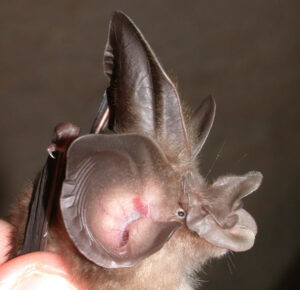
A very rare species. It was never sold in the Wuhan Market. It is also a fact that the Chines bat lady Dr Lee was in the caves in Yunnan province and captured the big-eared horseshoe bats….

because they carried 71% antibodies of what you know as covid19 virus, the most of any bat species. They collected live specimens from the remote secret cave where this particular species was found and brought them to the Wuhan lab for experimentation IE genetic engineering.. In fact Zhengli Shi confirmed the finding:

In 2004, deep in the wilderness of China’s Yunnan province, a group of scientists from the Wuhan Institute of Virology discovered a cave full of wild bats carrying hundreds of SARS-related viruses. Their work was published in a draft paper in 2005,
i obtained a copy of that study tittle: Bats are natural reservoirs of SAR like coronaviruses…. link below
This paper unearthed the link between SARS (severe acute respiratory syndrome) and bats for the first time. The virologist who led that study, Shi Zhengli, one of the strains found in that cave — the exact location of which is a closely guarded secret — is almost identical to the 2019-nCoV coronavirus which has so far killed million of people and infected hundreds of million worldwide. Costing the global economy trillions of dollars in losses
And it is a established fact that Dr Zhengli Shi was doing Genetic experimentation on said bats in the Wuhan bio level 4 labs. And it is a fact that 3 lab workers became infected and died, Please note by some amazing coincidence ALL the worlds recent SARS and Corona Viruses epidemics have originated out of China.
like corona viruses
Severe acute respiratory syndrome (SARS) emerged in 2002 to 2003 in southern China. The origin of its etiological agent, the SARS coronavirus (SARS-CoV), remains elusive. Here we report that species of bats are a natural host of coronaviruses closely related to those responsible for the SARS outbreak. These viruses, termed SARS-like coronaviruses (SL-CoVs), display greater genetic variation than SARS-CoV isolated from humans or from civets. The human and civet isolates of SARS-CoV nestle phylogenetically within the spectrum of SL-CoVs, indicating that the virus responsible for the SARS outbreak was a member of this coronavirus group. SEE LINK BELOW
China Report SARS and Corona Virus from 2005
Bats are natural reservoirs of SARS and corona virus from PUB REPORT 2017
Yet another piece of the pandemic puzzle has fallen into place – after being hidden in plain sight until it was wiped from the Wuhan Institute of Virology’s (WIV) website. Unearthed by The National Pulse’s Natalie Winters, a Nov. 2017 report titled): “Bats in China carry all the ingredients to make a new SARS virus,” describes how researchers at the Wuhan Institute of Virology had identified ‘all the genes to make a SARS coronavirus similar to the epidemic strain,’ among 11 new strains of viruses collected in horseshoe bats. Report published in 2017. SEE LINK BELOW
Discovery of gene pool SARS-related corona viruses in Bats
Delta variant likely to hurt U.S. restaurant recovery -report
NEW YORK, Aug 31 (Reuters) – The spread of the Delta variant of COVID-19 threatens the fragile recovery of U.S. restaurants, according to a report on Tuesday from the National Restaurant Association.
Nearly one in five adults surveyed online from August 13-15 said they stopped going to restaurants as Delta cases rose, the report said.
Total annual sales at U.S. restaurants are expected to rise 19.7% from 2020 to $789 billion in 2021. But that will still be 8.7% lower than 2019’s $864.3 billion total sales, the report said. “There has been some back-off as the Delta variant has taken hold,” Hudson Riehle, a National Restaurant Association executive, said of consumer behavior. Average daily U.S. COVID cases rose to 466 people per million people as of Aug. 29 on a seven-day rolling average, versus fewer than 40 in mid-June, according to Our World in Data. The rise and continuing uncertainty have forced the cancellation of major events and could hamper tourism. U.S. restaurants – hurt last year by occupancy limits and public fear about dining out – stand to lose more business if tourism wanes. For example, sales at American steakhouses soared over the summer. But because they rely heavily on tourists and private business bookings, the Delta spread threatens their comeback. Some U.S. fast-food restaurants – including McDonald’s Corp (MCD.N), Yum Brand Inc’s (YUM.N) Taco Bell and KFC – are closing indoor seating areas or limiting hours of operation because of the Delta variant. Restaurant sales dropped in August from July, according to Black Box Intelligence data. July’s sales were 8.1% higher than in 2019, but sales in August through Aug. 22 were up only 6.3% over 2019. Three in five respondents to the association’s survey said they changed the way they spend money and eat at restaurants because of the Delta variant, such as by ordering takeout and delivery instead of eating on site, sitting outside rather than indoors or cancelling plans to dine out. Nick Note: I am so done with restaurants. At the most the millennial’s bring carry out. Definitely not worth the price.
Afghanistan spoils of war GUNS, GIRLS and SEX slaves see the video
AND ITS NOT JUST GUNS… GIRLS TOO!
https://youtu.be/ZkrNxzUkeB8
Taliban seizes Blackhawk helicopter, US assault rifles – WATCH
As videos emerged of Taliban fighters carrying US-made M4 and M18 assault rifles and M24 sniper weapons, the US conceded it does not have the “complete picture” while adding that “a fair amount of it has fallen into the hands of the Taliban”. “Obviously, we don’t have a sense that they are going to readily hand it over to us,” Jake Sullivan, White House National Security Advisor said. Taliban fighters were seen reportedly climbing on American Black Hawk helicopters as the Afghan troops were pushed back from major areas in Afghanistan.
#Taliban seized Blackhawks on #Kandahar airport pic.twitter.com/Uv9iIo1HDu
— C4H10FO2P (@markito0171) August 14, 2021
×
There were also reports of the Taliban having taken control of US Humvees which were used extensively by the American troops during the Afghanistan operations.
1/ Material Implications of Kabul
That my friends, is the Taliban flying a US
MH-60 stealth helicopter.
We supplied the ANA special aviation and spec forces units with our top of the line gear (not second hand gear we pass to most allies), then left it all behind. pic.twitter.com/Cm30kn9rVc
— T (@T_Ascendent) August 17, 2021
×
Republican national chair Ronna McDaniel hit out against the Biden administration over Taliban seizing US equipment saying: “Thanks to Biden’s botched withdrawal, the Taliban is better equipped today than they ever have been.”
2 Mi-17’s captured by #Taliban from #Shindand Air Base in #Herat Province pic.twitter.com/BPS3tYVTk4
— Lone Wolf (@Lone_wolf110) August 13, 2021
×
According to official data, the US had supplied the Afghan army with over 7,000 machine guns, 4,700 Humvees and 20,000 grenades in recent years. It is still unclear how much equipment was seized by the Taliban.
Taliban forces captured four Mi-8/17 helicopters today, two of which in operational condition while the other two were undergoing maintenance at the time of capture. pic.twitter.com/rhn4qdeRCk
— Oryx (@oryxspioenkop) August 13, 2021
×
S&P 500 to hit the 5,000 level by the end of next year – UBS
US equities have now hit 50 all-time highs in 2021, ending last week up 20% year-to-date. Economists at UBS think strong earnings and supportive policy will push the S&P 500 higher, led by cyclical sectors like energy and financials. “The S&P’s rally has been underpinned by robust earnings growth, and this run of strength should continue. We expect revenues to be supported by robust consumer and business spending. Consumer balance sheets are the strongest in decades after households amassed significant savings over the last year. Meanwhile, businesses are struggling to keep up with demand, suggesting a long pipeline of investment projects and a need to rebuild inventories, both of which are supportive for the growth outlook.” “Top Federal Reserve officials at last week’s Jackson Hole symposium restated that policy will remain supportive, even after bond purchases are scaled back. The Fed’s gradual approach aligns with our view that policymakers are eager to avoid a repeat of the 2013 taper tantrum. Our base case is that the Fed will reduce its asset purchases, currently running at $120bn per month, by $15bn each month starting in December.” “Progress toward economic normalization – though uneven – continues. Globally, the pace of vaccinations accelerated last week to around 38 million daily, below the peak in June of 43 million, but up from around 20 million in May, according to Our World in Data. Meanwhile, studies continued to show that vaccinations are weakening the link between infections, hospitalizations, and deaths.”
“Our S&P 500 targets are 4,800 for June 2022 and 5,000 for end-2022.
At a sector level we prefer financials, which should be well-supported by rising 10-year Treasury yields, and energy, which we expect to benefit from a further rise in oil prices in the second half of the year. We like Japanese stocks as their revenues are highly exposed to the global recovery.” Nick Note: we expect at first a 5% correction and then a 20% to 35% correction or more between September 2021 to March 2022. Yes we could see a further rally. That is why we have stood aside as hard as it is to do… Its called trading discipline. And when we do move (soon come) into the markets we will scale in slowly. The markets are as overvalued as i have ever seen. With the forward looking price to earnings ratio on the NASDAQ 100 over 30…. Holy shit bat man. Add to the overvaluations the set the captives free GDP growth spur is over. And when you consider the MASSIVE embedded inflation and the fact it will force the Feds hand (taper and interest rate rises) their is nothing good coming down the pike. Now add the fact that covid19 mutations are defeating the 2 dose vaccine, you can easily see disaster comming. Airlines, resorts and restaurants are starting to suck shut again. AND the third booster shot you must have will not be deployed fast enough to save the unvaccinated and undervaccinated. Unvaccinated kids forced to go to schools which are modern day disease camps will spread the deadley mutionas to most every household. The fact vaccines roll out to significant numbers of the population will not come in time to help. And you can see why i see a disaster of biblical proportions. After all the plague has not been called off. Want proof.. The US has record numbers of infections, hospitalizations and now deaths. I guess people are back in lala denial land.
Israel Data Unvaccinated 10 times more likely to be hospitalized….Amoung people who have gotten 2 shots (Preprint)
A study from Vietnam shows 251x more delta virus load in the nostrils of the vaccinated healthcare workers (2021), compared to the old variants from 2020. In Israel, are there are more vaccinated 60+ individuals hospitalized than the unvaccinated? Nick Note: But that is a factor of the fact their are more vaccinated then unvaccinated.
when you adjust the numbers for the vaccinated populations you find that 19.9 People per 100,000 vaccinated are hospitalized and 265 people per unvaccinated are hospitalized.
And this study does not take into account the people who have had their 3rd vaccine. And get this so far no one who has had their 3rd vaccine has been hospitalized.
McDonald’s, others consider closing indoor seating amid Delta surge in U.S
NEW YORK, Aug 30 (Reuters) – Some U.S. fast-food restaurants are closing indoor seating areas or limiting hours of operation because of the spread of the Delta variant of COVID-19, according to franchisees. McDonald’s Corp (MCD.N) had temporarily closed indoor dining at nearly all U.S. locations in early 2020, but it reopened 70% by last month. The global burger chain said on July 28 that it was on track to open nearly 100% by Labor Day – barring any COVID-19 resurgence. But last week, McDonald’s instructed its franchisees on steps they should take to re-close their dining rooms in areas where the Delta variant is rapidly spreading, according to internal company materials seen by Reuters. “We have a much deeper sense of what actions make a difference for the safety of our restaurant teams and crew,” McDonald’s USA President Joe Erlinger said during a Wednesday meeting, according to the materials. In Wednesday’s conference call, McDonald’s executives recommended franchisees consider closing indoor seating in counties where COVID cases exceed 250 per 100,000 people on a rolling three-week average.The materials did not specify how many locations have shut indoor seating or could soon do so. One McDonald’s franchisee who operates multiple locations told Reuters it had to bar indoor seating at several restaurants. But expected closures are fewer than the number that shuttered in spring of 2020, when the pandemic first hit the United States. “We’re monitoring the impact of the Delta variant closely and recently convened together with our franchisees to underscore existing safety protocols, reinforce our people first approach and provide updates on the rise in cases in the country,” McDonald’s Corp said in a statement on Friday. Nick Note: This is the start of the next round of lock downs….. Enjoy!