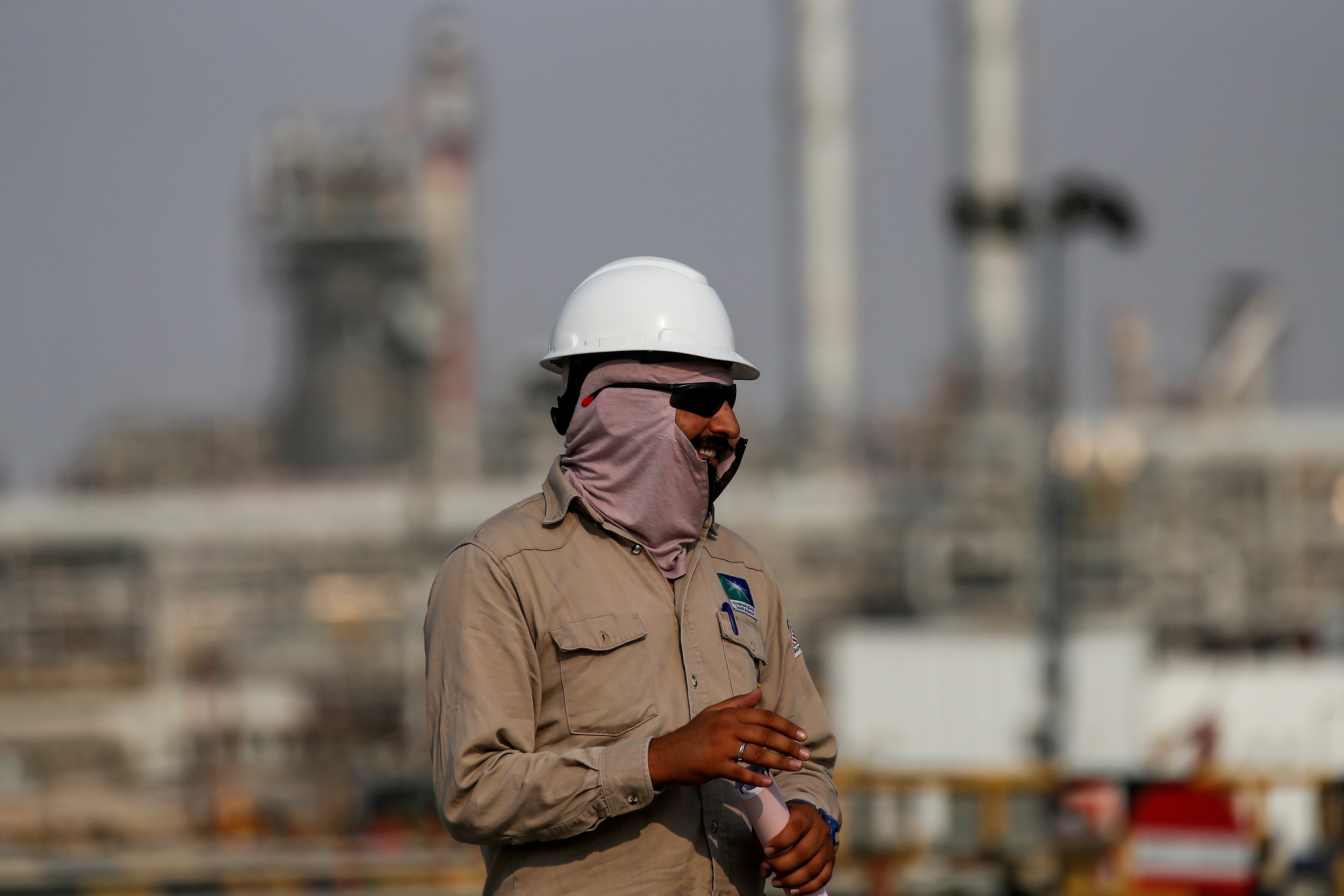
Global COVID-19 cases surpass 200 million as Delta variant spreads

Aug 4 (Reuters) – Coronavirus cases worldwide surpassed 200 million on Wednesday, according to a Reuters tally, as the more-infectious Delta variant threatens areas with low vaccination rates and strains healthcare systems. The global surge in cases is highlighting the widening gap in inoculation rates between wealthy and poor nations. Cases are rising in about one-third of the world’s countries, many of which have not even given half their population a first dose. The World Health Organization (WHO) on Wednesday called for a moratorium on COVID-19 vaccine boosters until at least 10% of the population in every country was vaccinated.  “We need an urgent reversal, from the majority of vaccines going to high-income countries, to the majority going to low-income countries,” WHO Director-General Tedros Adhanom Ghebreyesus said. The Delta variant is upending all assumptions about the virus and roiling economies, with disease experts scrambling to find whether the latest version of coronavirus is making people, especially unvaccinated individuals, sicker than before. At least 2.6% of the world’s population has been infected since the pandemic started, with the true figure likely higher due to limited testing in many places. If the number of infected people were a country, it would be eighth most populous in the world, behind Nigeria, according to a Reuters analysis It took over a year for COVID-19 cases to hit 100 million mark, while the next 100 million were reported in just over six months, according to the analysis. The pandemic has left close to 4.4 million people dead.

The countries reporting the most cases on a seven-day average – the United States, Brazil, Indonesia, India and Iran – represent about 38% of all global cases reported each day.

The United States accounts for one in every seven infections reported worldwide. U.S. states with low vaccination rates such as Florida and Louisiana are seeing record numbers of COVID patients hospitalized, despite the nation giving 70% of adults at least one vaccine shot. The head of one Louisiana hospital warned of the “darkest days” yet. Unvaccinated people represent nearly 97% of severe cases, according to the White House COVID-19 Response Team. Countries in Southeast Asia are also reporting rising cases. With just 8% of the world’s population, the region is reporting almost 15% of all global cases each day, according to a Reuters analysis. Indonesia, which faced an exponential surge in COVID-19 cases in July, is reporting the most deaths on average and surpassed 100,000 total deaths on Wednesday. The country accounts for one in every five deaths reported worldwide each day. The Southeast Asian nation aims to gradually reopen its economy in September, Health Minister Budi Gunadi Sadikin said on Monday, citing that the wave of infections had passed its peak, with daily confirmed cases on the decline.  After suffering its worst outbreak in April-May, India is once again seeing a rising trend of cases. Last Friday, the country reported 44,230 new COVID-19 cases, the most in three weeks, fuelling worries of a third wave of infections that has forced one state to lockdown. China’s Wuhan city, where the virus first emerged in late 2019, will test its 12 million residents for the coronavirus after confirming its first domestic cases of the Delta variant. The city had reported no local cases since mid-May last year.  The variant, first detected in India, is as contagious as chickenpox and spreads far more easily than the common cold or flu, the CDC said in an internal document.  A key issue, said Dr. Gregory Poland, a vaccine scientist at the Mayo Clinic, is that the current vaccines block disease, but they do not block infection by keeping the virus from replicating in the nose.

As a result, he said, “the vaccines we have currently are not going to be the be-all, end-all,” he said. “We are now in a scenario of our own making, where this is going to be years to decades to now defeat. … And we’re going to chase our tail with variants until we get a type of vaccine that offers infection and disease-blocking capabilities.”

Israeli airline El Al to carry out mid-flight COVID test trial

JERUSALEM, Aug 4 (Reuters) – Passengers on an El Al flight from New York to Tel Aviv will be tested for the coronavirus on the plane itself or before boarding on Thursday to speed up procedures upon arrival in Israel, where infections are on the rise. The Israeli airline announced the plan a day after Israel said travellers from the United States, like those from many other countries, would have to self-isolate for at least a week after landing at Tel Aviv’s Ben-Gurion airport.

Israel hopes the new restriction will slow the spread of COVID-19 and discourage Israelis – foreign tourism to Israel is still largely banned – from flying abroad and risking higher exposure to the Delta variant that is fueling a surge of infections worldwide.

The PCR tests for the El Al passengers will be conducted in coordination with Israel’s Health Ministry and the Femi and Xpres Check companies that have testing labs at New York’s John F. Kennedy airport and at Ben-Gurion, the airline said. Representatives of the companies, rather than the carrier’s crew, will administer the tests on the flight. El Al noted the tests, a pilot programme, were not a substitute for those required for passengers from the United States and other countries up to 72 hours before a flight.Arriving passengers at Ben-Gurion must also take a PCR test at the airport before leaving the terminal. The El Al passengers tested in-flight or before boarding on Thursday would be able to skip that step. Israel closed its borders to tourists at the outset of the pandemic and has only allowed in a small number of foreigners in recent months. El Al — which changed owners and management last year — and other Israeli airlines were hit hard, shutting most routes for 2020, while the local tourism sector has suffered. Israel has banned travel to and from 14 countries, including India, Britain, Russia, Spain and Mexico. El Al Chief Executive Avigal Sorek said it was clear the virus was here to stay in one form or another. “We must not stop our lives,” he said, adding steps were needed to live alongside the virus. He said El Al would work on creative solutions to help open Israel up to foreign tourism in the future. “We ask the decision makers in Israel to examine these measures and adopt similar solutions so that we can maintain a routine,” Sorek said. Nick Note: The line of demarcation was the vaccine. Now that vaccinated people are super spreaders and are getting infected and ending up dead the game has changed. We are down to testing everyone and often. No longer is a vaccines certificate and a temperature check sufficient. Its test test test…… And thank GOD we have rapid home test kits…

Japan warns of unprecedented COVID spread as Tokyo cases hit new record

  • Japan’s pandemic entering ‘new phase’ – health minister
  • Tokyo COVID cases at record
  • Ruling party calls for roll-back of new hospital policy
  • Controversy is another setback to PM Suga ahead of elections
  • Top medical adviser warns of broadening COVID clusters

TOKYO, Aug 4 (Reuters) – Japan warned on Wednesday that coronavirus infections were surging at an unprecedented pace as new cases hit a record high in Tokyo, overshadowing the Olympics and adding to doubts over the government’s handling of the pandemic. The Delta variant was leading to a spread of infections “unseen in the past”, Health Minister Norihisa Tamura said as he defended a new policy of asking patients with milder symptoms to isolate at home rather than going to hospital. “The pandemic has entered a new phase … Unless we have enough beds, we can’t bring people to hospital. We’re acting pre-emptively on this front,” Tamura told parliament. But he signalled the chance of rolling back the policy, as the decision to ask some sick people to stay at home has drawn criticism from medical experts as putting lives at risk. “If things don’t turn out as we expect, we can roll back the policy,” Tamura said, adding the policy shift was a move to deal with the unexpectedly fast spread of the new variant. Japan has seen a sharp increase in coronavirus cases. Tokyo reported a record 4,166 new cases on Wednesday. Nationwide, newly reported cases totalled a new record of over 14,200, according to public broadcaster NHK. Prime Minister Yoshihide Suga said on Monday only COVID-19 patients who were seriously ill and those at risk of becoming so would be hospitalised, while others should isolate at home, a shift in policy some fear may lead to an increase in deaths. Officials in the ruling Liberal Democratic Party have agreed to seek to withdraw of the policy, the Jiji news agency reported on Wednesday, joining similar calls made by opposition lawmakers. In response to criticism, Suga told reporters on Wednesday that the new hospitalisation policy was aimed at regions with a surge in COVID-19 cases, such as Tokyo, and not uniform throughout the country. “We’ll thoroughly explain our policy and seek public understanding,” he said. The outcry is another setback for Suga, who has seen support plunge over his handling of the pandemic ahead of general elections to be held this year. Polls have shown many Japanese people opposed to holding the Olympics while the country lagged in efforts to contain the pandemic and vaccinate the population. Suga and Olympics organisers have said there is no link between the July 23-Aug. 8 Games and the spike in cases. But senior medical adviser Shigeru Omi told parliament that hosting the Games may have affected public sentiment and eroded the impact of government requests for people to stay home. Imposing a nationwide state of emergency could be an option to deal with the pandemic, he said. States of emergency are already in place in several prefectures, as well as in Tokyo. NHK reported that the government would expand quasi emergency steps to cover more regions of the country. “Political leaders are sending out messages to the public in earnest but probably not as strongly and consistently as hoped,” Omi said. “We’re seeing COVID-19 clusters emerge more broadly including at schools and offices.” Nick Note: Record cases and hospitalizations and record infections at the Olympics… But 100,000 in town for the Olympics many infected are not related…. Yea Right! Maybe we can get a home lobotomy kit to make the pain of stupid people go away….

Citi cuts U.S. stocks to “neutral” on bearish Treasury view

LONDON, Aug 4 (Reuters) – U.S. inflation-adjusted “real” yields will rise around 70 basis points from current record lows around -1.2% by year-end, Citi said on Wednesday, citing this as a reason to cut its recommendation on U.S. stocks to “neutral” . “We factor this bearish bond view into our global equity strategy. Amongst regions, we downgrade the Tech-heavy US to Neutral. We upgrade Japan to Overweight, where valuations and cyclical exposure should be supportive,” Citi told clients. It said the real yield forecast of -0.5% was consistent with the MSCI world index trading around 18 times forward EPS, compared to 19 times at present while MSCI’s World Growth index could derate towards 25 times from the current 29 times. Nick  Note: As inflation considers to soar and the inflation rates considers to soar the FED is fucked. Because the economy will be devastated by supply shortages and lock downs…… They will be nailed to the iron cross. So of the devils they face they will be forced to raise rates. We will buy back over beloved zeroess at MUCH higher rate. When they kill of whats left of the economy then they will panic and lower rates to double digit negative,,,,,,, enjoy the freak show…. They really fucked up this time…..

China to tighten traveling rules as COVID cases rise

Every province has advised residents not to leave as flights are cancelled and Beijing suspends more than a dozen rail line


The latest outbreak has so far infected more than 400 people in 25 cities, including the capital city Beijing, and in Wuhan for the first time since it contained the first Covid-19 outbreak last year. Cases have been reported in 17 of the 31 provinces. A further 71 locally transmitted cases were confirmed on Tuesday, the national health commission said Wednesday – the highest daily count since January. Nearly half were in Jiangsu, the site of the airport cluster to which most cases have been linked, and 15 in Hunan. The governments of all 31 provinces have advised residents to avoid leaving their regions unless necessary, and to stay away from the four high risk – and more than 120 medium risk – regions across China, in a bid to curb further transmission of the highly infectious Delta variant. In addition to various lockdown measures, Nanjing and Yangzhou have since cancelled all domestic flights, while Beijing has suspended 13 rail lines and halted inbound long-distance ticket sales from 23 stations, according to state-run news agency Xinhua. Yangzhou, Wuhan, and the flood-hit city of Zhengzhou have launched citywide testing and Zhengzhou now requires all people to show a negative test result in order to leave the city. Residential areas, including those home to more than 10,000 people in Beijing, have been sealed off for mass testing. Authorities have also begun testing all 11 million residents of Wuhan. China’s top infectious diseases expert, Zhong Nanshan, said most Delta patients had shown mild symptoms and preliminary studies indicated China’s vaccines were effective in reducing the severity of the variant, Xinhua said.

While it has seen several outbreaks since mid-2020, Chinese authorities have contained them through ambitious mass testing drives of entire cities, strict localised lockdowns, and targeted travel restrictions.

However, the high transmissibility of the Delta variant has seen the number of cases rise rapidly and spread far. Most cases have been linked to Nanjing and Lukou airport staff who cleaned an incoming plane from Russia, as well as domestic planes. China has reportedly introduced lockdowns in more than 7,000 villages in order to stop the spread of the COVID-19 Delta variant, while 144 localities in the country have been designated as at-risk areas. A cluster of infections among tourists who went to a concert in Zhangjiajie, Hunan, travelling through Lukou has also spread to multiple provinces. “Zhangjiajie has now become the new ground zero for China’s epidemic spread,” Zhong said earlier this week. In an editorial on Sunday, state tabloid the Global Times said China could not afford to make errors like those identified in Nanjing, given the high rates of infections around the world. “The challenge for China is to open controllable windows between our closed anti-epidemic system and the turbulent outside world, which can not only guarantee the openness of Chinese society, but also maintain China’s capability of dynamically clearing Covid-19 cases,” it said. There are also two other Delta outbreaks linked to Myanmar, including the border province Yunnan, and Zhengzhou which received air passengers from Myanmar. Nick Note: Our governments will not do what it needs to  do. The US is reporting close to 70,000 new infections per day. In China with less then 500 cases reported they have put on lockdown 11 million people restricted travel and are testing million of people. No wonder the US has the highest infection rates in the world. You need to up your game and test everyone that comes in contact with you. Its a proven strategy that works. To see our latest in test kit offerings click this link: https://www.wallstreetunderground.com/covidtest.htm

To order now call Jim at: 866-924-0607

To Order on line click here:  http://salvavida.net

Automakers mandate masks at all U.S. plants but not requiring vaccines

WASHINGTON (Reuters) – Detroit’s Big Three automakers and the United Auto Workers (UAW) union said on Tuesday they will reinstate requirements to wear masks at all U.S. plants, offices and warehouses beginning on Wednesday, but are not requiring workers to be vaccinated. The move is in response to the Center for Disease Control and Prevention’s (CDC) change in COVID-19 guidance for masks for fully vaccinated people related to the Delta variant, General Motors Co, Ford Motor Co and Chrysler parent Stellantis NV said in a joint statement with the union. Toyota Motor Corp said effective Wednesday it will reinstate mask requirements at nearly all U.S. facilities, with the exception of two Michigan facilities that are in counties with moderate transmission rates. Nissan Motor Co also said Tuesday it was reinstating its mask requirements for all U.S. employees. Volkswagen AG said it was requiring masks at U.S. facilities in COVID-19 hot spots, while Daimler AG’s Mercedes-Benz U.S. unit said it had reinstated mask requirements at U.S. plants late last week. The UAW does not support requiring all workers to be vaccinated for COVID-19 and U.S. automakers have not mandated vaccines. The union and automakers are strongly encouraging workers to get vaccinated. “We are urging all UAW members and their families to get vaccinated. The science is telling us very clearly that the only way to get back to normal is to reach a heightened level of immunity,” UAW President Ray Curry told members in a letter Tuesday. “However, we also know that for some, there are religious and health reasons for not getting vaccinated.”

The CDC said last week fully vaccinated people should wear masks indoors in public spaces in places with substantial or high COVID-19 community transmission rates. The CDC said on Monday that almost 80% of U.S. counties are now at those levels.

In June, the U.S. automakers and UAW announced that fully vaccinated workers at their U.S. factories would not have to wear masks on the job beginning on July 12. Numerous automakers operating in the United States had already begun lifting pandemic mask mandates as cases declined. Other companies as well as federal, state and local governments are putting more pressure on individuals to get vaccinated. New York City on Tuesday said it will require proof of vaccination for people engaged in indoor activities such as dining, working out in a gym, or seeing a show. Meat packer Tyson Foods said it will require workers to get COVID vaccinations, joining companies including Walt Disney Co and Walmart Inc in instituting such a requirement for some parts of their workforces. U.S. President Joe Biden has ordered workers at federal agencies to get vaccinated or submit to regular testing. Nick Note: Stupid is everywhere  Lockdowns are coming….. Mark my words. Add home testing to your survival protocals

A hawkish Bullard sees more volatile economic “regime” emerging in U.S.

WASHINGTON, Aug 3 (Reuters) – The coronavirus pandemic may have pushed the United States into a volatile era of stronger growth and better productivity, but higher interest rates and faster inflation as well, St. Louis Federal Reserve president James Bullard said, elaborating on why he thinks the U.S. central bank should end its crisis-era policies. Bullard, who five years ago said he viewed the United States as mired in an epoch of low growth, low productivity and low inflation, said he is beginning to think a new “regime” may have arrived where the Fed will have to cope with faster change and more frequent shocks. For more than a decade before the pandemic “economic growth was slow and not very volatile and inflation in tandem was slow and not very volatile,” Bullard said in an interview with Reuters on Monday. “This environment is a very different one where you have upset the global equilibrium…The reverberations will continue, and you will have a lot more volatility than you are used to.” On the plus side that could mean a run of productivity- enhancing developments that keep U.S. growth and wages rising fast; the risk is higher inflation that could upend the Fed’s current expectation that price pressures will ease on their own and allow for continued loose monetary policy. “We will have long, lingering effects as the rest of the world recovers. You have shortages and bottlenecks everywhere. You have Europe likely to grow more quickly in coming quarters,” Bullard said. “You have industries still adjusting to the post-pandemic world – many things happening, and at a pace we are not used to.” In that setting “monetary policy needs to be more nimble.” His comments come with a specific policy recommendation: that the Fed begin trimming its $120 billion in monthly asset purchases soon, cut them to zero by early next year, and be ready to raise interest rates if inflation does threaten to remain too high for too long. After missing its 2% target during a decade of weak inflation, the Fed wanted to encourage a period of faster price increases, but now may be at risk of getting too much of what it asked. But his views speak to a deeper prospect: That the economy may have changed in fundamental ways over the past 18 months, leaving the Fed looking at a different landscape than when it established a new framework just about one year ago. That framework envisions giving more weight to job growth, and allowing inflation to run above 2% for a time to let employment expand. With the economy growing faster and inflation running higher than expected, outside analysts have noted that the approach involves navigating tricky terrain – allowing unemployment to dip below what’s considered a sustainable rate before it rises back to its “natural” level. “Cooling an overheated labor market has rarely ended without recession,” JPMorgan economist Michael Feroli wrote in mid-July, concluding that while the Fed’s new framework wasn’t destined to fail, it did in his view increase the likelihood of a “hard landing” when the central bank does have to raise interest rates. The policy rate is currently near zero, and Fed officials at the median don’t see it changing until some time in 2023. Bullard said his call for faster action on ending bond purchases is to lower that likelihood, making smaller, earlier steps rather than risking the need to “scramble” later on. It’s possible the United States and world economies may not have changed all that much. While a productivity model Bullard watches does show improvement, it did so also after the end of the last recession before fading. Yet current inflation is well over the Fed’s target, and at levels which prior Fed chairs like Alan Greenspan “would have…immediately tried to quash,” Bullard said. “We are not being that preemptive. Our models say this will settle down, but in the meantime it will be pretty volatile…What I want to be prepared for and get the committee prepared for is the risk that this is an unpredictable situation.” Nick Note: The FED is in a classic debt trap. Whatever they do it will be wrong.

U.S. company profits even bigger than Wall Street’s lofty targets

NEW YORK, Aug 3 (Reuters) – Much stronger-than-expected profit reports from U.S. companies in recent weeks have ratcheted up already high Wall Street forecasts on how second-quarter earnings growth will look versus last year.

Earnings are now expected to have climbed about 90% in the second quarter versus analysts’ forecasts of 65.4% at the start of July, according to IBES data from Refinitiv, with results in so far from roughly 300 of the S&P 500 companies as of Monday morning.

Nearly 89% of the reports are beating analysts’ second-quarter profit estimates – the highest percentage on record, based on Refinitiv data going back to 1994. The  gangbuster second quarter is expected to mark a peak for recent U.S. earnings growth as companies recover from the depths of last year’s pandemic-induced profit collapse. “Except for a few disappointments here and there, everybody has had solid earnings. It has been a tremendous earnings season, but it was supposed to be,” said Jake Dollarhide, chief executive officer of Longbow Asset Management in Tulsa, Oklahoma. “It will be interesting when you start getting deeper into third and fourth quarters. The market might be anticipating a bit of a trip-up.” Third-quarter earnings are estimated to climb 29.6% from a year-ago quarter. Fourth-quarter earnings are seen gaining 21.2%, based on Refinitiv data. In aggregate, companies are reporting earnings 16.6% above expectations, compared with an average of 20.1% for the prior four quarters and an average of 3.9% going back to 1994, based on Refinitiv data. Companies that have contributed the most to the big gains in profit growth include Apple (AAPL.O), Wells Fargo (WFC.N), Exxon Mobil (XOM.N) and JPMorgan Chase (JPM.N). Financial companies make up half of the top 10 contributors to growth so far this season, Refinitiv data shows. “Surprises have been positive, large and broad-based across sectors and industry groups,” but “returns on results” have been mixed, UBS strategists including Keith Parker wrote in a note Monday. The S&P 500 (.SPX) is roughly flat since the unofficial start of the earnings season on July 13. Among companies left to report on the quarter are many of the big U.S. retailers including Walmart (WMT.N). Nick Note: the comparisons were easy. Since last year their was a complete lock down. Come the the 4th quarter earnings will plunge, because thats when i expect the US to be in lock down………

UK to Offer Vaccine Booster for 32 Million Next Month… Sweden plans to offer majority COVID booster shots in 2022

https://youtu.be/1TYZizyBQz0

Aug 1 (Reuters) – Britain will offer COVID-19 booster vaccines to 32 million Britons starting early next month with up to 2,000 pharmacies set to deliver the programme, The Telegraph reported on Sunday. The campaign could start as soon as Sept. 6, which would see the rollout completed by early December if it goes to plan, the report added.

Sweden plans to offer majority COVID booster shots

STOCKHOLM (Reuters) – The majority of Swedes will be offered a booster shot against COVID in 2022, while high risk groups could get a third shot during autumn of this year, the country’s health authority said on Tuesday. The authority did not give an exact figure for how many people would get a third shot next year, but said that a large part of the population would be offered another jab. Groups seen as high-risk, such as the elderly or people with underlying health conditions, will continue to be prioritised as booster vaccines are rolled-out, the authority added. “The assessment is that it is not possible to eradicate the virus and therefore vaccination work should be long-term and focused on reducing serious illness and death,” state epidemiologist Anders Tegnell said in a statement. The authority said it expected Sweden’s entire adult population will have received two shots of the vaccine by autumn, and that there will be a good supply of vaccine over the coming years. Nick Note: In 6 to 12 months immunity drops dramatically  like the YEARLT flue vaccine. The covid vaccine drop to 30% effectiveness IN 6 TO 12 MONTHS…. INTERESTING ENOUGH ITS THE SAME RATE OF DECAY AS THE FLUE YEARLY JAB. You strategy is simple……. Get the 3rd booster shot as soon as you can and next year we will have a vaccine targeting the 3 circulating mutation especially the dominant  Delta variant….. In the mean time mask up, vitamin up, and test up…… Testing i mean massive testing and severe isolation is what saved Chine…..

Oil prices slip, rebound runs out of steam on demand worries

  • U.S. oil prices reverse course after early rebound
  • Coronavirus curbs, slowing factory activity weigh

SINGAPORE, Aug 3 (Reuters) – Crude oil prices reversed course after an early bounce on Tuesday, as concerns over coronavirus curbs combined with slowing factory activity in key markets weighed on sentiment. Brent crude oil futures shed 26 cents, or 0.4%, to $72.63 a barrel, as of 0645 GMT. U.S. West Texas Intermediate (WTI) crude was down 16 cents, or 0.2%, at $71.10 a barrel. Both markets dropped more than 3% on Monday.ANZ analysts in a note highlighted resurgent economic risks to major oil consumer China from the coronavirus pandemic. “Cases of the highly contagious Delta variant have emerged in 14 of 32 provinces. This could see further mobility restrictions introduced,” ANZ analysts wrote. They also flagged slowing manufacturing activity as a key concern, to both China and the United States. “China’s economic activity continued to ease in July, with the official Manufacturing Purchasing Managers Index falling to 50.4 from 50.9 in June,” ANZ said. “Manufacturing activity also slowed in the U.S., with the ISM index falling to 59.5” – the lowest reading since January – from 60.6 in June.  Nick Note: the Delta mutation will soon end this little party…..

Asian stocks were mostly negative on Tuesday as the Delta coronavirus variant spread in key markets and Chinese officials took aim at video game producers, once more rattling investor confidence in the mainland’s markets.

Meanwhile, Iran will respond promptly to any threat against its security, the foreign ministry said on Monday, after the United States, Israel and Britain blamed Tehran for an attack on an Israeli-managed tanker off the coast of Oman. L1N2P90M5

Elsewhere, U.S. crude and product inventories likely declined last week with both distillates and gasoline stockpiles predicted to have fallen for a third straight week, a preliminary Reuters poll showed on Monday.

Reporting by Naveen Thukral; Editing by Kenneth Maxwell and Jacqueline Wong

Our Standards: The Thomson Reuters Trust Principles.

More from Reuters
Read Next
  • EnergyAnalysis: Riding the oil price rebound: Gulf states to accelerate asset sales12:01 PM EEST