LONDON, Feb 2 (Reuters) – The Pfizer-BioNTech COVID-19 vaccine may be less able to protect against infection with a South African variant of the virus that has a worrying mutation, according to results of a British study released on Tuesday. The preliminary data, which have yet to be peer-reviewed and involve a small number of patients, also suggest a significant proportion of people aged over 80 may not be sufficiently protected against new variants of the virus until they have had two doses of the vaccine, researchers leading the study said. “Of particular concern … is the emergence of the E484K mutation (found in the South African variant), which so far has only been seen in a relatively small number of individuals,” said Ravi Gupta, a professor at Cambridge University’s Institute of Therapeutic Immunology & Infectious Disease, who co-led the study.
“Our work suggests the vaccine is likely to be less effective when dealing with this mutation.”
Britain and many other countries have begun rolling out the Pfizer-BioNTech vaccine to try to stem the spread of the pandemic disease. While the highly effective vaccine is designed to be given in two doses around three weeks apart, Britain’s government has opted to extend that time gap to up to 12 weeks to try to swiftly reach as many people as possible with a first dose. The study released on Tuesday used blood samples from 26 people who had received their first dose of the Pfizer vaccine three weeks previously to test whether the shot would protect against two variants of the SARS-CoV-2 virus – the UK variant, known as B1.1.7., and the South African variant, which has the E484K mutation. When testing the blood serum samples, all but seven of the participants had levels of antibodies sufficiently high to neutralise the virus – that is, to protect against infection, the researchers said.
When the scientists added all the key mutations found in B1.1.7 variant, however, they found the efficacy of the vaccine was affected, with, on average, two-fold higher concentrations of antibody required to neutralise the virus.
When the E484K mutation was added, even greater levels of antibody were required for the virus to be neutralised – with an average of a 10-fold increase needed, the researchers said. Dami Collier, who co-led the work, said the findings suggest “a significant proportion of people aged over 80 may not have developed protective neutralising antibodies against infection three weeks after their first dose of the vaccine.” Clinical trial data released last week on two other COVID-19 vaccines – from Novavax and Johnson & Johnson – also found the South African coronavirus reduced their ability to protect against the disease. (Reporting by Kate Kelland, editing by Timothy Heritage)
Despite a good start to Monday trading for both the broader market and recently booming meme stocks, shares of GameStop took a steep turn for the worst before the close after new data revealed the number of investors shorting the stock has fallen.
After posting their worst weekly performances since late October last week, the Dow Jones industrial average ended the day up 229 points, or 0.8%, while the S&P 500 and tech-heavy Nasdaq jumped about 1.6% and 2.6%, respectively.
Meanwhile, shares of leading meme stock GameStop, which surged 400% last week, plunged 31% after market data firm S3 Partners said shorted shares of the stock fell by about 57% since Friday, with Managing Partner Ihor Dusaniwsky noting that short-sellers “have found opportunities and price exit points to trim their positions.” Other meme stocks also lost momentum: AMC Entertainment ticked up just 0.3% after skyrocketing about 275% last week as online brokerage Robinhood relaxed its trading restrictions on Reddit-fueled stocks. The softer gains come as Reddit traders turned attention to silver on Monday, pushing the commodity’s price up 11% to an eight-year high in an attempt to once again squeeze money out of Wall Street firms, but many on the discussion board warned the effort would only divert attention away from meme stocks. Heading up gains in the S&P, shares of International Flavors & Fragrances surged 14% after the firm announced it is set to complete its previously announced merger with DuPont’s nutrition and biosciences business, creating a combined company with annual revenues of more than $11 billion Global stocks also largely pushed higher after a lukewarm end to last week, with Japan’s Nikkei 225 closing up 1.6% Monday, while the United Kingdom’s FTSE 100 climbed 0.9% and Germany’s DAX index 1.4%.
Washington, DC – House Speaker Nancy Pelosi and Senate Majority Leader Chuck Schumer today announced they have filed a joint budget resolution for Fiscal Year 2021 that gives Congress an additional legislative tool to pass the urgently-needed bipartisan COVID relief legislation that enacts President Biden’s comprehensive American Rescue Plan which helps defeat the virus and provide workers and families the resources they need to survive the pandemic while the vaccine is distributed to every American.
Introduction of a joint budget resolution is the first step to potentially enacting a Budget Reconciliation bill, one legislative tool available to Congress to quickly pass bipartisan COVID relief legislation. The Resolution outlines the “reconciliation instructions” for each House and Senate committee, or how much funding can be spent in their jurisdiction. If both the House and Senate pass identical Budget Resolutions (which do not require a Presidential signature), both chambers can begin work on the Reconciliation bill that is signed by the President. According to an analysis of research from the Congressional Research Service, reconciliation bills has been passed by the Senate on a bipartisan basis 17 times in recent years, including to pass the bipartisan Children’s Health Insurance Program (CHIP) in 1997.
“Congress has a responsibility to quickly deliver immediate comprehensive relief to the American people hurting from COVID-19,” said Speaker Pelosi and Leader Schumer. “The cost of inaction is high and growing, and the time for decisive action is now. With this budget resolution, the Democratic Congress is paving the way for the landmark Biden-Harris coronavirus package that will crush the virus and deliver real relief to families and communities in need. We are hopeful that Republicans will work in a bipartisan manner to support assistance for their communities, but the American people cannot afford any more delays and the Congress must act to prevent more needless suffering.”
***
Specifically, the Joint Budget Resolution Speaker Pelosi and Leader Schumer filed offers instructions to the relevant Congressional Committees to provide relief including but not limited to:
Immediate relief for individuals and families throughout 2021 including $1,400 per-person and per-child direct payments, an extension of Unemployment Insurance programs through September 2021 with a $400/week federal enhancement and $350 billion in critical state, local, Tribal and territorial fiscal relief. The resolution will also provide funds to greatly increase health care coverage to Americans that have lost it through no fault of their own during the pandemic.
Funding to help defeat the coronavirus including through support for vaccines, testing and public health programs. It also includes funding to help K-12 schools safely re-open and provides crucial support for the child care system.
Relief funds for the millions of Americans struggling to make rent and mortgage payments, as well as those experiencing homelessness. The resolution also includes funding for transit agencies deeply impacted by the pandemic and support for the use of the Defense Production Act to expand domestic production of supplies critical to beating the coronavirus.
Additional relief for our nation’s small businesses and hard-hit industries through increased funding for EIDL Advance grants, the creation of a dedicated grant relief program for restaurants, expanded PPP assistance for nonprofits and digital media services, more funds for Save Our Stages grants to independent live venues, independent movie theaters and cultural institutions and new community navigator technical assistance to help connect underserved communities with critical resources.
Funding for crucial investments in broadband and distance learning and relief for Amtrak and the aviation sector struggling with declining revenues and volumes due to COVID-19.
Funding for the FEMA Disaster Relief Fund to ramp up the President’s national vaccination program and provide flexible, targeted assistance to state, local, Tribal, territorial and the District of Columbia governments, as well as those individuals hit hardest by the pandemic.
Support for hungry families through programs like SNAP, WIC and Pandemic-EBT. This also includes critical funding for the food supply chain and the Agriculture Department’s lending and financial assistance programs to support farmers across the country.
Health care and other support to meet the needs of veterans during the coronavirus pandemic. These funds will support vaccine distribution, expanded mental health care, enhanced telehealth capabilities, extended support for veterans who are homeless or in danger of becoming homeless, PPE and supplies for clinical employees, and improved supply chain management.
Critical funding for the Indian Health Service, Administration for Native Americans, Bureau of Indian Affairs, Bureau of Indian Education and Native American housing programs to maintain essential health, education and social services and mitigate the negative impact of the COVID-19 pandemic on Native communities.
Funding to the Economic Development Administration and environmental justice grants to help low-income, minority communities who have been hardest hit by COVID.
Funding for critical programs to aid in the global response to and recovery from the pandemic. These instructions include significant funding for humanitarian assistance and Global Health programs.
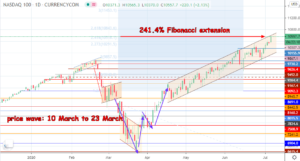
Shares on the major stock market indexes in the United States extended gains on Monday with Nasdaq 100 rising more than 340 points led mostly by strong performances of tech behemoths Apple Inc. and Microsoft Corporation. All eyes were still on the COVID-19 relief package talks scheduled between US President Joe Biden and the Republican senators, as White House Press Secretary Jen Psaki expressed optimism that the stimulus can be both large enough to help the economy exit the crisis, and accepted by both the Democratic party and the GOP. The Nasdaq 100 surged 2.66% or 343 points at 1:09 pm ET, while the Dow Jones Industrial Average concurrently jumped 0.81% or 239 points. A minute later, the S&P 500 soared 1.60%. The euro plunged 0.57% versus the dollar, selling for 1.20661 at 1:12 pm ET.
WASHINGTON — President Joe Biden has agreed to meet a group of 10 Republican senators who have proposed spending about one-third of the $1.9 trillion he is seeking in coronavirus aid, though congressional Democrats are poised to move ahead without Republican support. Sunday’s invitation to the White House came hours after the lawmakers sent Biden a letter urging him to negotiate rather than try to ram through his relief package solely on Democratic votes. The House and Senate are on track to vote as soon as this week on a budget resolution, which would lay the groundwork for passing an aid package under rules requiring only a simple majority vote in the closely divided Senate. The goal is for passage by March, when extra unemployment assistance and other pandemic aid expires. The meeting offered by Biden would amount to the most public involvement for the president in the negotiations for the next round of virus relief. Democratic and Republican lawmakers are far apart in their proposals for assistance. White House press secretary Jen Psaki said Sunday that Biden had spoken with the leader of the group, Sen. Susan Collins, R-Maine. Though Biden is wanting “a full exchange of views,” Psaki reiterated that he remains in favor of moving forward with a far-reaching relief package. A meeting could come in a matter of days. “With the virus posing a grave threat to the country, and economic conditions grim for so many, the need for action is urgent, and the scale of what must be done is large,” Psaki said. In challenging Biden to fulfill his pledge of unity, the group said in its letter that its counterproposal will include $160 billion for vaccines, testing, treatment and personal protective equipment and call for more targeted relief than Biden’s plan to issue $1,400 stimulus checks for most Americans. Winning the support of 10 Republicans would be significant for Biden in the 50-50 Senate where Vice President Kamala Harris is the tie-breaker. If all Democrats were to back an eventual compromise bill, the legislation would reach the 60-vote threshold necessary to overcome potential blocking efforts and pass under regular Senate procedures. “In the spirit of bipartisanship and unity, we have developed a COVID-19 relief framework that builds on prior COVID assistance laws, all of which passed with bipartisan support,” the Republican senators wrote. “Our proposal reflects many of your stated priorities, and with your support, we believe that this plan could be approved quickly by Congress with bipartisan support.” The plea for Biden to give bipartisan negotiations more time comes as the president has shown signs of impatience as the more liberal wing of his party considers passing the relief package through a process known as budget reconciliation. That would allow the bill to advance with only the backing of his Democratic majority. The Republicans did not provide many details of their proposal. One of the signatories, Louisiana Sen. Bill Cassidy, said that it would cost about $600 billion. “If you can’t find bipartisan compromise on COVID-19, I don’t know where you can find it,” said Ohio Sen. Rob Portman, who also signed the letter. But even as Biden extended the invitation to the Republican lawmakers, Psaki said that $1,400 relief checks, substantial funding for reopening schools, aid to small businesses and hurting families, and more “is badly needed.” “As leading economists have said, the danger now is not in doing too much: it is in doing too little,” Psaki said. “Americans of both parties are looking to their leaders to meet the moment.” Biden also spoke on Sunday with House Speaker Nancy Pelosi and Senate Majority Leader Chuck Schumer, who are facing a growing push from the more liberal Democratic members to move forward with Biden’s legislation with or without Republican support. The other GOP senators invited to meet with Biden are Lisa Murkowski of Alaska, Mitt Romney of Utah, Shelley Moore Capito of West Virginia, Todd Young of Indiana, Jerry Moran of Kansas, Mike Rounds of South Dakota, and Thom Tillis of North Carolina. Brian Deese, the top White House economic adviser who is leading the administration’s outreach to Congress, said earlier Sunday that administration officials were reviewing the letter. He did not immediately commit to a Biden meeting with the lawmakers. But Cedric Richmond, a senior Biden adviser, said the president “is very willing to meet with anyone to advance the agenda.” When asked about the senators’ plan, Richmond said, “This is about seriousness of purpose.” Deese indicated the White House could be open to negotiating on further limiting who would receive stimulus checks. Portman suggested the checks should go to individuals who make no more than $50,000 per year and families capped at $100,000 per year. Under the Biden plan, families with incomes up to $300,000 could receive some stimulus money. “That is certainly a place that we’re willing to sit down and think about, are there ways to make the entire package more effective?” Deese said. As a candidate, Biden predicted his decades in the Senate and his eight years as Barack Obama’s vice president gave him credibility as a deal-maker and would help him bring Republicans and Democrats to consensus on the most important matters facing the country. But less than two weeks into his presidency, Biden showed frustration with the pace of negotiations at a time when the economy exhibited further evidence of wear from the pandemic. Last week, 847,000 Americans applied for unemployment benefits, a sign that layoffs remain high as the coronavirus pandemic continues to rage. “I support passing COVID relief with support from Republicans if we can get it. But the COVID relief has to pass — no ifs, ands or buts,” Biden said on Friday In the letter, the Republican lawmakers reminded Biden that in his inaugural address, he proclaimed that the challenges facing the nation require “the most elusive of things in a democracy: Unity.” Cassidy separately criticized the current Biden plan as “chock-full of handouts and payoffs to Democratic constituency groups.” “You want the patina of bipartisanship … so that’s not unity,” Cassidy said. Jared Bernstein, a member of the White House Council of Economic Advisers, said Biden remains willing to negotiate but that officials needed to see more details from Republicans. At the same time, Bernstein pressed the administration’s argument that doing too little to stimulate the economy could have enormous impact on the economy in the near- and long-term. “Look, the American people really couldn’t care less about budget process, whether it’s regular order, bipartisanship, whether it’s filibuster, whether it’s reconciliation,” Bernstein said. “They need relief, and they need it now.” Portman and Deese were on CNN’s “State of the Union,” and Deese also was interviewed on NBC’s “Meet the Press.” Cassidy and Bernstein appeared on “Fox News Sunday” and Richmond was on CBS’ “Face the Nation.”
Popular trading app Robinhood relaxed some of its restrictions on the trading of heavily shorted stocks such as GameStop on Monday, increasing the number of shares users can purchase of these companies. According to the updated rules, users can now buy four shares of GameStop instead of one. Additionally, Robinhood users can also buy up to 75 shares of AMC and 200 shares of Express. The news comes amid a report from the Wall Street Journal which said the broker managed to raise another $2.4 billion from shareholders amid the investing frenzy. Shares of electronics and video game retailer GameStop dropped nearly 30% an hour into Monday’s session amid what appeared to be profit-taking for some investors who have purchased the stock early in the standoff between WallStreetBets and hedge funds last month. On Sunday, it was reported the hedge fund Melvin Capital Management sustained a 53% loss in January amid the GameStop short squeeze. GameStop was as high as $483 now down to $230 per share losing over half its value. Nick Note: See the millennials are all in. They bought in low. But they kept buying and borrowing. Starting to book losses. Now they are getting them to stay in. See the message reprinted from the blogasphere. They will ride big profits into huge losses they always do!!!! And when they get their next happy check they will do it all over again. They just can’t help themselves
Manufacturing activity in the United States improved in January, a report by IHS Markit revealed on Monday. The index measuring the sector activity increased 2.1 points month-on-month to reach 59.2, the highest figure reported by the survey so far.
The upward trend was attributed mostly to strong client demand, and a significant rise in new orders. The report also noted that foreign client demand accelerated, due, in part, to eased coronavirus situation, but warned that supplier delays still posed a hindrance, much like the month prior, although not to the same extent.
“Demand from both domestic and export customers picked up sharply in January, buoyed by several driving forces. Consumer demand has improved while businesses are investing in more equipment and restocking warehouses, preparing for better times ahead as vaccine roll outs allow life to increasingly return to normal over the course of 2021,” IHS’s Chief Business Economist Chris Williamson said.
Greylock Capital Associates, LLC, No. 21-bk-22063 (Bankr. S.D.N.Y.)
Case Title
Greylock Capital Associates, LLC
Case type
Chapter 11 Bankruptcy
Court
U.S. Bankruptcy Court for the Southern District of New York
Index Number(s)
2021bk22063
21-bk-22063
21-22063
Case Opened
January 31, 2021
Search for this case: Greylock Capital Associates, LLC, No. 21-bk-22063 (Bankr. S.D.N.Y.)
Nick Note: In the dead of the night Sunday these FUCKS went belly up. As of this AM the financial media have not picked it up. Our algorithm search was given a priority to look for the hedge funds vulnerable in the Redditt Millennial short squeeze. This puts enormous pressure on the regulators to stop what is a market manipulation by blog. The biggest retirement funds in America are taking huge loses. I am telling you they will NOT NOT NOT let this happen.
Silver prices surged to a five-month high on Monday, silver-mining stocks leapt and coin-selling websites were swamped as small-time investors piled in to the metal, the latest target of a retail-trading frenzy that has set financial markets on edge. Organised in online forums and traded with fee-free brokers, such as Robinhood, the phenomenon has driven a 1500 per cent rally in the shares of videogame retailer GameStop as the crowd targets assets big fund managers had bet against. The move into silver, following thousands of Reddit posts and hundreds of YouTube videos suggesting that a rise in the physical price could hurt large investors with bets on it falling, is a foray in to a much bigger and more liquid market. Spot silver leapt as much as 7.4 per cent in Asia to $28.99 an ounce, taking gains to about 15 per cent since last Wednesday and the price to its highest since mid August. “The Reddit crowd has turned its sights on a bigger whale in terms of trying to catalyse something of a short squeeze in the silver market,” said Kyle Rodda, an analyst at brokerage IG Markets in Melbourne. “This is their big, bold Moby Dick moment,” he said. Volumes in small miners’ stock in Australia were unprecedented and jumps in some exploration firms, which do not actually produce silver, topped 90 per cent. Bullion dealers had brisk trade. “Yeah, we’re seeing buying and it’s been sparked by this subreddit,” said Nicholas Frappell, global general manager at ABC Refinery in Sydney, adding such customers liked to buy kilogram bars or smaller because of the convenience. The Perth Mint said it noticed elevated demand for silver in the United States via online dealers. The popularity of dabbling in stockmarkets has grown during the COVID-19 pandemic as volatility, stimulus cheques and lockdowns have driven account openings and investment. The craze hit fever pitch last week when the GameStop pile-on resulted in a “short squeeze,” which turned price gains stratospheric as hedge funds with bets against the stock desperately bought it at high prices to close their positions. Discussion turned to silver late last week as Reddit posts suggested that higher prices could hurt big banks with large short positions, and said buying easy-to-access exchange-traded silver funds could quickly ramp up the metal’s value. “(The) gain in silver prices is a very solid lift … it certainly does suggest that the impact of messaging in social media is becoming much more significant,” said Michael McCarthy, strategist at broker CMC Markets in Sydney.
Global short interest in silver, or the cumulative value of bets it falls in price, is equivalent to about 900 million ounces – just short of global annual production. Banks and brokers hold most of that, with about 610 million ounces, though it is not clear whether they are net short on the metal or whether their bets offset very big physical holdings.
Nevertheless, the squeeze is moving money. Australia’s ETF Securities’ Physical Silver fund had a daily record A$40 million ($30.6 million) in inflows by Monday afternoon, ETF Securities’ head of product, Evan Metcalf told Reuters. “It’s quite a big day of flows on what was previously around a A$220-odd milion fund,” Metcalf said. “Our product being listed on the ASX kind of gave people a head start timing-wise as well because it’s open before US and European markets.” Those funds can drive silver prices because they end up paying for the physical metal to back the ETF’s units. A silver ETF in Japan surged 11 per cent and the flows could point to more gains for iShares’ US-listed $16.5 billion Silver Trust ETF which rose 5.6 per cent last week.
The broader showdown between small traders and professional short-sellers, besides making paper millionaires of the former, is testing brokers, regulators and other investors’ patience. Robinhood, the online broker used by many new investors has lifted some of the buying restrictions it imposed during wild trade last week, but limits remain on eight companies including GameStop, AMC Entertainment and BlackBerry. US regulators are circling both Robinhood and the Redditers’ forums, while hedge funds nurse their wounds. Melvin Capital, a hedge fund which bet against GameStop, lost 53 per cent in January. In South Korea, where retail traders dubbed “ants” have turbocharged a long equities rally by investing borrowed money are applying pressure to quash a government plan to lift a pandemic-imposed short-selling ban. It is unclear how much longer the Reddit-fuelled rally can run. “I’ll tell you one thing, absolute guarantee this ends in tears, I just don’t know when,” said CMC’s McCarthy. – Reuters. Nick Note: the millennial fucks are cursing for a bruising. I want to SHORT silver so bad i can taste. the dip shits do not understand the intricacies of the game. Holy fuck bat man!
WASHINGTON (Reuters) – Ten moderate Republican U.S. senators urged Democratic President Joe Biden on Sunday to significantly downsize his $1.9 trillion COVID-19 relief package to win bipartisan support as Democrats in Congress prepared to push ahead with his plan this week.
A top White House economic adviser signaled willingness to discuss the ideas raised by Republican senators who floated a $600 billion alternative, but said the president was not willing to compromise on the need for a comprehensive bill to address the public health crisis and economic fallout.
“He is open to ideas, wherever they may come. … What he’s uncompromising about is the need to move with speed on a comprehensive approach here,” Brian Deese, director of the National Economic Council, told NBC’s “Meet the Press” program. “A piecemeal approach … is not a recipe for success.” It was unclear whether the outreach by 10 of the 50 Republicans in the 100-seat chamber would shift plans by congressional Democrats to take up legislation in the coming days. Biden and fellow Democrats are seeking to make use of their control of the House of Representatives and Senate to move quickly on the president’s top goal of addressing the pandemic.
Senate Majority Leader Chuck Schumer has said his chamber would begin work on it as early as this week. House Speaker Nancy Pelosi said Congress would complete a preliminary step before the end of the week.
Congress enacted $4 trillion in COVID-19 relief last year.
Passage of the new relief legislation not only would impact Americans and businesses reeling during a pandemic that has killed about 440,000 people in the United States but also offers an early test of Biden’s promise to work to bridge the partisan divide in Washington. Biden took office on Jan. 20.
Biden’s proposal includes $160 billion for vaccines and testing, $170 billion for schools and universities, and funds to give certain Americans a $1,400 per-person stimulus check, among other provisions. Some Republicans have questioned the overall price tag, while others urged more targeted measures, particularly over the direct payments to individuals. In their letter to Biden, Susan Collins, Lisa Murkowski, Mitt Romney and seven other senators asked Biden for a meeting and said their compromise proposal could be quickly passed with bipartisan support, promising more details on Monday. They said their proposal sought more targeted assistance for families in need and additional funds for small businesses, while echoing Biden’s plan for more funding to boost vaccines and testing as well as support for schools and childcare centers. They also pointed to unspent money from previous COVID-19 relief bills. “Ours is about $600 billion. … We’re targeted to the needs of the American people,” Senator Bill Cassidy, one of the 10 senators, told “Fox News Sunday.” Deese said the White House was reviewing their letter but did not say whether Biden would meet with the group, which also included Republicans Shelley Moore Capito, Todd Young, Jerry Moran, Michael Rounds and Rob Portman. Senator Jon Tester, a Democrat from Montana, told CNN’s “State of the Union” program that the Republicans’ letter was “a positive sign that folks want to work together.” With the Senate split 50-50 and Vice President Kamala Harris wielding the tie-breaking vote, Democrats are considering using a parliamentary tool called “reconciliation” that would allow the chamber to approve the bill with a simple majority. Under Senate rules, legislation usually requires 60 votes for passage. Nick Note: happy checks are coming and soon and the money will be spent on stocks