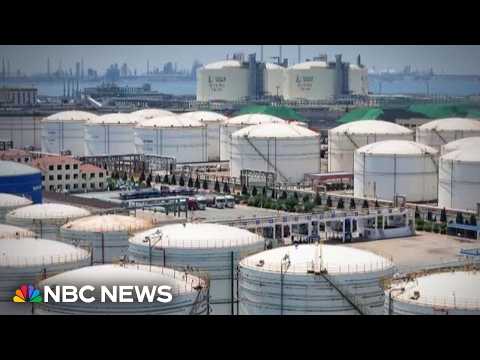
EIA Weekly Petroleum Data

Summary for the week ending June 5, 2026

U.S. commercial crude oil inventories (excluding those in the Strategic Petroleum Reserve) decreased by 7.2 million barrels from the previous week. At 426.5 million barrels, U.S. crude oil inventories are about 5% below the five-year average for this time of year. U.S. crude oil refinery inputs averaged 17.0 million barrels per day during the week ending June 5, 2026, which was 80 thousand barrels per day more than the previous week’s average. Refineries operated at 95.3% of their operable capacity last week. Gasoline production increased last week, averaging 9.7 million barrels per day. Distillate fuel production increased, averaging 5.2 million barrels per day. U.S. crude oil imports averaged 5.9 million barrels per day last week, decreased by 0.5 million barrels per day from the previous week. Over the past four weeks, crude oil imports averaged about 5.9 million barrels per day, 5.8% less than the same four-week period last year. Total motor gasoline imports (including both finished gasoline and gasoline blending components) last week averaged 714 thousand barrels per day, and distillate fuel imports averaged 130 thousand barrels per day.
Total motor gasoline inventories increased by 0.2 million barrels from last week and are 6% below the five-year
average for this time of year. Finished gasoline inventories increased, while blending component
inventories decreased last week. Distillate fuel inventories decreased by 0.2 million barrels last
week and are about 13% below the five-year average for this time of year. Propane/propylene inventories increased by 1.1 million barrels from last week and are 35% above the five-year average for this time of year. Total commercial petroleum inventories decreased by 5.6 million barrels last week. Total products supplied over the last four-week period averaged 20.6 million barrels per day, up by 3.5% from the same period last year. Over the past four weeks, motor gasoline product
supplied averaged 8.8 million barrels per day, down by 0.5% from the same period last year. Distillate fuel product supplied averaged 3.7 million barrels per day over the past four weeks, up by 7.2% from the same period last year. Jet fuel product supplied was down 2.2% compared with the same four-week period last year.

Trump ‘close to’ ordering strikes on Iran’s plants, bridges

United States President Donald Trump told Fox News on Wednesday that he is “close to ” instructing the military to launch new strikes against Iran. Trump said the new targets may include Iran’s power plants and bridges and reiterated that Tehran “took too long” to negotiate a peace agreement with the US. He also vowed to continue taking action against Iran.

More to come…

Disconnected Oil Futures Market Could See Price Spike within Weeks

  • Oil markets remain focused on hopes for a U.S.-Iran deal, but the physical market is facing a severe supply crunch.
  • Global oil inventories are being depleted at a record pace, as governments draw down strategic reserves and stored crude to offset lost supply, while U.S. fuel stocks have fallen to multi-year lows.
  • Analysts and energy executives warn a sharp price spike may be imminent, with Exxon and Chevron suggesting Brent could surge toward $150–$160 per barrel.

For more than three months, oil market participants have hoped that the Middle East conflict would be resolved any day now, while about 13 million barrels per day (bpd) have been wiped off global supply due to the closed Strait of Hormuz. The oil futures market has been mostly guided by sentiment and traders’ hopes of an imminent peace deal – as U.S. President Donald Trump has been touting for weeks – with oil prices increasingly disconnected from the reality on the ground, or more precisely, in storage tanks. The reality is that global oil stocks, including those in the United States, are plummeting as governments draw on strategic reserves to offset part of the massive losses of supply from the Middle East.

Each day that passes without normalized traffic through the Strait of Hormuz is further draining stocks, which top industry officials warn are on track for critically low level within weeks.

Cargoes would still need weeks to reach buyers even if the Strait of Hormuz reopened unconditionally today to free traffic, which isn’t the case with Iran’s demands in the negotiations with the U.S. to have operational control over the Strait. Of course, most oil flows could return if tanker owners and operators are willing to risk venturing into and out of the chokepoint, knowing that any peace deal could quickly unravel with one Israeli strike in Lebanon or one “I’ll blow them up” post about Iran by President Trump.  Many traders appear unfazed in the face of the 13 million bpd supply loss, as they still hope for a quick resolution to the conflict – for over three months now – and bet on a gusher of oil supply when the Strait of Hormuz reopens.

In reality, even if the Strait reopened today, supply would take weeks and even months to reach customers, leaving a large gap in supply at the start of the peak summer demand season.

So far, the oil market has relied on oil on water, de-sanctioned Russian crude (and for a month even unsanctioned Iranian crude, too), and drawing on stocks to fill the gap. The market has also been lucky that China had amassed an estimated more than 1.2 billion barrels of oil in commercial and strategic reserves before the war, and its imports have collapsed with oil prices at $100 a barrel or more. These buffers are being exhausted every day that traffic through the Strait of Hormuz is nearly halted, and we are approaching the tipping point soon, analysts and industry officials warn. In the May monthly report, the International Energy Agency (IEA) said that global oil supply declined by a further 1.8 million bpd in April, taking total losses since February to 12.8 million bpd.

“Mounting supply losses from the Strait of Hormuz are depleting global oil inventories at a record pace,” the IEA said, adding that observed global inventories, including oil on water, were drawn down by 250 million barrels over March and April, or by 4 million bpd.

Inventories are set to reach “rock bottom” within weeks, and the paper market could catch up with the worst supply disruption in history. In the United States, stocks of crude and petroleum products had plunged to 1.53 billion barrels as of May 29, per EIA data, the lowest level in weekly ending stocks since 2004. U.S. gasoline inventories are plummeting, and so are inventories at Cushing, the delivery point for WTI futures.

Many traders choose to ignore warnings from analysts and from the chief executives of both Chevron and Exxon that inventories are so low that oil prices are weeks away from spiking if traffic through Hormuz remains mostly choked.

“We’re approaching unheard of inventory levels. I mean, really, really low levels,” Neil Chapman, Exxon’s Senior Vice President, said at the Bernstein 42nd Annual Strategic Decisions Conference at the end of May.

“I think dated Brent, most people with a model would say dated Brent will shoot up once you get to that really low inventory level, up to $150, $160 — the models would tell you that.”

Chevron’s CEO Mike Wirth said on the same conference, “The buffers and the shock absorbers are being steadily drawn down and the ability for the market to absorb this imbalance is drastically diminished today versus where we started and over the next few weeks, we’re likely to see those pressures flow through more directly to physical prices, and there’s more upward pressure that I would expect as we get into June and certainly into July.”  With inventories depleting at a record pace, demand destruction could soon remain the only shock absorber, insufficient to stop an oil price spike within weeks without at least a partially normal resumption of traffic at Hormuz.

NN:  As i have reported on a daily bases oil inventories are running out. The paper oil market prices are at least $50 a barrel under where actual oil is trading out. In my opinion  If you  can take the pain the biggest spike in oil prices is coming very soon now. It would be a crying shame to give up to soon now!

US strikes said to target Iranian air defense, radar systems……. US said to have launched 2nd wave of strikes in Iran……. Third US strike wave on Iran said to be underway…..Iranian CEO says US hit 2 water reservoirs in south……. Iran says it attacked US Fifth Fleet in Bahrain…… Iran strikes US base in Jordan…….Kuwait says intercepting hostile aerial targets…… Jordan intercepts 5 Iranian missiles

The United States military attacked several Iranian air defense and radar systems around the Strait of Hormuz in Tuesday’s strikes, Axios reporter Barak Ravid said on X, citing an unnamed US official. Iranian media said after the strikes that explosions were heard in Qeshm and the eastern regions of Hormozgan, including in Kohstak, Sirik, and Minab.

US said to have launched 2nd wave of strikes in Iran

The United States launched a second wave of strikes in Iran, Axios reporter Barak Ravid reported, citing a US official. The attacks are aimed at air defense and radar systems, according to the official. Iranian media also reported new explosions near the southern city of Jask. According to the Mehr News Agency, residents in and around Jask heard additional blasts minutes after earlier reports confirmed attacks near Jask port and Koh-e-Mubarak. US Central Command (CENTCOM) earlier said it launched “self-defense” strikes against the country in response to a US Army Apache helicopter being allegedly shot down by Iran near the Strait of Hormuz.

Third US strike wave on Iran said to be underway

A third set of US strikes on Iran is underway, Axios reporter Barak Ravid said, citing an unnamed senior American official. Iran’s semi-official Mehr news agency said explosions have been heard in Qeshm. Meanwhile, the Fars news agency reported that “several loud” blasts were heard in Bandar Abbas. Iranian Foreign Minister Abbas Araghchi warned the US earlier that Tehran wouldn’t leave any “attack or threat unanswered.”

Iranian CEO says US hit 2 water reservoirs in south

Hormozgan Water Company CEO Abdul Hamid Hamzehpour said Washington attacked “critical water distribution infrastructure” in southern Iran’s Sirik County, according to the country’s Mehr news agency. The attack destroyed two water reservoirs that “played a key role in supplying drinking water to the Bemani district and the city of Kohstak,” Hamzehpour said. These reservoirs were made up of a 500-cubic-meter tank and a 2,000-cubic-meter tank, he added. “Currently, the process of water distribution in all villages of Bemani district and the city of Kohtak has been stopped, and the operational and crisis management teams of Abfa are trying to take alternative measures to provide sustainable water,” the statement added.

Iran says it attacked US Fifth Fleet in Bahrain

Iran’s Islamic Revolutionary Guard Corps (IRGC) said it retaliated for Washington’s strikes on the country by targeting the US Fifth Fleet in Bahrain, according to the Fars news agency. The IRGC said it “launched a drone attack on Bahrain’s 5th Naval Fleet at 2:30 am” in response to the US attacks on Jask, Sirik, and Qeshm. These attacks damaged a telecommunication tower in Sirik and destroyed two water reservoirs in the city’s Bemani district, the statement said.

Iran strikes US base in Jordan


Trump: US must respond to Iran’s helicopter strike

President Donald Trump said the US must respond after he blamed Iran for shooting down an American military helicopter off Oman, posing a new threat to the peace deal he’s said for weeks is close.

“I have just been informed by our Great Military that last night the Iranians shot down one of our highly sophisticated Apache Helicopters while patrolling over the Strait of Hormuz,” Trump posted Tuesday on social media. “There were two pilots involved, both are safe and uninjured. Nevertheless, the United States must, of necessity, respond to this attack.”

There was no immediate indication of what action the US is planning and no response from Iran. US stock prices deepened their slide on the news and oil prices pared earlier losses. Trump’s comments came just hours after his latest claim that an agreement to halt the fighting was close, even as a renewed outbreak of fighting between Israel and Iran raised fears the conflict was escalating again. On Monday, the two countries agreed to halt strikes on each other following a flare-up that saw both sides launch waves of ballistic missiles. A ceasefire has been in place for about two months, but sporadic fighting among the US, Iran and Israel has continued, underscoring the risk of a return to full-scale war in the absence of a lasting peace deal. Mediation efforts between the US and Iran to strike a deal remain intense, according to people familiar with the matter. Discussions between the mediators led by Pakistan and the two warring sides are ongoing, one of the people said, asking not to be named discussing private information. Talks between all parties are expected to continue this week, the person said.

Trump Says US Must Respond to Iran’s Attack on Helicopter
 President Donald Trump said, “the United States must, of necessity, respond” against Iran for shooting down a US military helicopter. Tyler Kendall reports.

Trump’s diplomatic tack is troubling Israel, which isn’t part of the negotiations and worries that a deal may leave Iran with the means to pose a threat in the future. “We need to ensure that Iran comes out of this confrontation unable to reconstitute its own capabilities, as well as those of its proxies,“ said Orit Strock, a member of Israel’s security cabinet, referring to groups like Hamas in Gaza and Lebanon’s Hezbollah. Interviewed on Israel’s Army Radio, she voiced hope that Tehran would not secure a windfall in sanctions relief. Israeli Prime Minister Benjamin Netanyahu said in a televised statement on Monday that he would hold fire on Iran for now but would respond should Tehran attack again. Oil prices had slipped before Trump’s comments amid growing signs that some crude is flowing through the Strait of Hormuz despite the US and Iranian blockades. Offering another potential front of escalation, the Iran-backed Houthis in Yemen said they had launched a missile barrage on Israel and would be imposing a “complete and total ban on maritime navigation for the Israeli enemy in the Red Sea,” according to a statement on their Telegram channel on Monday.

NN: I keep warning you this is  not over AND the oil is still not flowing. Stick to your guns!

BofA Warns It’s Time to ‘Take Profits’ as Red Flags Multiply

  • Bank of America Securities advises investors to exercise caution regarding US stocks due to an increasing number of “bear market signposts” pointing to an approaching top.
  • Strategists led by Savita Subramanian say there are “too many red flags” and advise investors to “take profits” as some 70% of bear-market signals have been recently triggered.
  • Subramanian warns that “extreme price action may signal rising instability”, but notes that individual stocks may yet outperform, with her year-end S&P 500 target set at 7,100.

Investors should exercise caution regarding US stocks as an increasing number of “bear market signposts” point to an approaching top, according to Bank of America Securities.

There are “too many red flags,” strategists led by Savita Subramanian wrote in a note dated June 5. “Take profits,” they advise.

Some 70% of those bear-market signals have recently been triggered, in line with the average observed during prior market peaks, the strategists said. The benchmark S&P 500 Index was “statistically expensive on 17 of 20 metrics, and trades rich versus its tech bubble metrics on eight,” Subramanian said. Measures include consumer confidence data, growth expectations, M&A scores, and credit stress as well as tightening conditions indicators, like the Federal Reserve’s Senior Loan Officer Opinion Survey, known as the SLOOS. The latter, released in May, showed consumer demand continued to soften. Additionally, stocks with high price-to-earnings ratios were leading those with low multiples by a wide margin, a “sign of excessive speculation,” according to the strategists.

The S&P 500 Trades Near All-Time Peak

Source: Bloomberg

Within technology, the spread between the best and worst performing quintiles was the widest it’s been since February 2000, Subramanian said. She added that strong performance for the S&P 500 has “masked internal drama,” with the difference between returns for the top and bottom-performing 10ths of index stocks over the last three months jumping to a post-Covid era high. She cited figures from 1986 through May. Some tech-stock fundamentals are healthy, like leverage, valuation and capital intensity. However, most have worsened since a BofA analysis in November. Notably, “cash flow conversion has flat-lined, investment grade and equity supply has increased, buybacks as a percent of market cap have slowed and capex as a percent of operating cash flow for hyperscalers is forecast to reach nearly 100% by year-end, up from 40% in 2023,” Subramanian said. “Extreme price action may signal rising instability,” she warned. Even so, individual stocks may yet outperform.

NN: This party is in its last hurrah. And the building oil crises will kick off the crash As elucidated in yesterdays editorial Titled: Disaster Looms

Iran and Israel say they have halted strikes on each other for now

  • Tehran says it is halting attacks on Israel
  • Israel will also halt attacks on Iran, source says
  • Trump tells both sides to ‘stop shooting’
  • Israel hits a petrochemical plant in Iran
  • Sounds of explosions heard in Tehran
DUBAI/JERUSALEM, June 8 (Reuters) – Iran and Israel said on Monday they had halted attacks on each other ​following an appeal from U.S. President Donald Trump that they immediately “stop ‘shooting'”, though Tehran said it would resume strikes if Israel continued to hit Hezbollah in Lebanon.
The wave of attacks over the ‌past 24 hours marked the most direct confrontation between Iran and Israel since an April ceasefire, threatening to wreck Washington’s efforts to reach an agreement with Tehran to end their more than three-month war.
Oil prices – which had risen by as much as 5% after the flurry of attacks – later pared gains when Iran’s military said its first wave of strikes on Israel was over. The dollar retreated from its highest level in nearly two months. A source briefed on the matter told Reuters that Israel had also decided to halt its ​attacks on Iran. Israel struck Iranian targets after Tehran fired missiles towards Israeli territory late on Sunday. Tehran said its strikes were retaliation for Israeli attacks on strongholds of Iran-backed Hezbollah on the outskirts of ​Beirut. Israel hit a petrochemical plant in southwestern Iran that it said was used to produce ballistic missiles. Iran’s Islamic Revolutionary Guard Corps (IRGC) said it retaliated with a strike ⁠aimed at a similar Israeli plant in the city of Haifa. Iran’s military headquarters said it had “delivered a painful response” against Israel for its attacks on Lebanon, including Sunday’s strikes on the outskirts of Beirut. “Accordingly, the operations ​of the armed forces are hereby declared halted; however, it is emphasized that if the aggressions and acts of mischief continue — including in southern Lebanon — much more severe and crushing actions than before will follow.”
The exchange has complicated ​Trump’s push to end the war, launched by the U.S. and Israel on February 28, and underscores how easily the conflict could widen into a broader regional confrontation. A ceasefire announced on April 8 had paused all-out warfare but flare-ups in the Gulf have continued. Iranian Foreign Ministry spokesperson Esmaeil Baghaei said Tehran was exchanging messages with Washington in an atmosphere of “extreme suspicion”. Israel’s actions in Lebanon, whether carried out with U.S. knowledge and consent or not, were aimed at sabotaging diplomacy, he added. In Tehran, Iranian media reported explosions on Monday, with air defences shooting down a drone over the capital. There were no immediate reports of casualties or major damage. Yemen’s Iran-aligned Houthis pledged in a statement to stop Israel’s maritime navigation in the Red Sea, and said they had also fired missiles at Israel. The Israeli military official said Iran had fired “close to 30 ballistic missiles” at Israel since Sunday evening, and the Houthis a further two missiles. Israel said it struck targets at the Mahshahr petrochemical complex that were used to produce and export raw materials for Iran’s missile programme. A provincial official told ​Iranian media parts of the plant were damaged. Tehran has continued to block most shipping ​through the Strait of Hormuz, which carried a fifth of the world’s crude oil and liquefied natural gas before the war. Washington has imposed its own blockade of Iranian ports.
Trump has said any peace deal must prevent Iran from developing a nuclear weapon. Iran’s demands include the ​lifting of international sanctions, the release of billions of dollars in frozen assets and recognition of its sway over the strait.
NN: Forget Iran’s rockets, forget their drones… even forget their Nukes. The weapon of mass destruction the world is giving them is control of the straights. The world needs to send armies, invade the coast line of Iran and defend the straights. And all of this would be over. Until such time the world has a energy crises.

Oil Rallies as Iran and Israel Exchange Fresh Missile Attacks

Oil jumped after Iran and Israel traded fire, despite US President Donald Trump’s calls for both sides to quit fighting, a fresh escalation in a war that has passed the 100-day mark. Global benchmark Brent added as much as 5.4% to more than $98 a barrel. Israel said it struck military targets in Iran, retaliating against earlier missile attacks by Tehran despite President Trump urging Prime Minister Benjamin Netanyahu to refrain from hitting back. Both countries must immediately stop shooting, Trump reiterated Monday in a post on Truth Social. Yemen’s Houthi rebels said they would impose a complete ban on Israeli vessels in the Red Sea, though a key industry group saw little significant change in the impact on shipping given that many vessels are currently avoiding the waterway anyway. Israel and Iran exchanged missile strikes on Monday despite President Donald Trump’s calls for both sides to halt the fighting and give peace talks a chance to succeed. Trump had earlier urged Tehran to return to talks after the attacks on Israel, Fox News reported. The US president separately told Axios he would press Netanyahu not to retaliate. The Israel Defense Forces see the campaign against Iran lasting several days and are preparing to mobilize reserve soldiers, Army Radio reported. While oil was up sharply on the day, it remained below $100, a sign of how the market has managed to avert the worst impacts of what the International Energy Agency describes as the biggest ever supply disruption. At its peak during the conflict, the global benchmark neared $130 a barrel. Still, with attacks now erupting again, the risk of a return to strikes on energy infrastructure has come back into focus. “Despite repeated optimism from the US administration, a lasting peace agreement appears increasingly elusive,” said Ole Hansen, head of commodities strategy at Saxo Bank A/S. “The continued lack of progress toward restoring normal energy flows from the Middle East is reinforcing expectations of a prolonged period of elevated oil prices.” There’s been a flare-up in hostilities over the past week across the Middle East that’s threatening to derail a truce and complicate negotiations to end the war. The conflict has led to the near-closure of the crucial Strait of Hormuz, choking off most supplies of crude, fuels and natural gas to global customers. At the weekend, US Central Command said it had downed two Iranian attack drones that threatened international maritime traffic in Hormuz, which followed six ballistic missiles fired at Bahrain and Kuwait on Friday. Those were intercepted, while the US struck Iranian coastal surveillance radar sites. The US president told the Financial Times that the Israeli leader would have to accept any deal the US strikes with Iran. “I call the shots. I call all the shots,” he said. Last week, Israel and Lebanon agreed to a truce, which hinged on Hezbollah halting hostilities, but the Iran-backed militia rejected the ceasefire. Fighting between Israeli troops and Hezbollah continued over the weekend. Even if a US-Iran peace deal is agreed, multiple hurdles will impede normal resumption of oil flows. Among them, mines in Hormuz must be removed, shut-in fields may take months to restart, and damage to energy infrastructure from drone and missile strikes needs to be repaired.

NN: What peace?  this war only pauses so Iran can rearm.

IAEA denied access to most of Iran’s facilities

International Atomic Energy Agency (IAEA) Director General Rafael Grossi announced on Friday that Iran denied the agency access to most of its nuclear facilities, except for the Bushehr Nuclear Power Plant. Speaking at a press conference in Vienna, Grossi said that the conflict between the United States and Israel on one side and Iran on the other has put the agency in an “unprecedented situation” concerning the observation of the latter country’s nuclear program. Recently, Grossi stated that the agency believes that Iran’s enriched uranium stockpiles are likely buried by debris at the Isfahan nuclear plant.

NN: I have it on good authority that Iran is throwing everything they have at recovering their nuclear weapons programs

Weekly Petroleum Data….. Inventories at record lows

Summary of Weekly Petroleum Data for the week ending May 29, 2026

U.S. commercial crude oil inventories (excluding those in the Strategic Petroleum Reserve) decreased by 8.0 million barrels from the previous week. At 433.7 million barrels, U.S. crude oil inventories are about 3% below the five-year average for this time of year.  U.S. crude oil refinery inputs averaged 16.9 million barrels per day during the week ending May 29, 2026, which was 90 thousand barrels per day less than the previous week’s average. Refineries operated at 94.7% of their operable capacity last week. Gasoline production decreased last week, averaging 9.4 million barrels per day. Distillate fuel production increased, averaging 5.2 million barrels per day. U.S. crude oil imports averaged 6.4 million barrels per day last week, increased by 1.2 million barrels per day from the previous week. Over the past four weeks, crude oil imports averaged about 5.9 million barrels per day, 4.5% less than the same four-week period last year. Total motor gasoline imports (including both finished gasoline and gasoline blending components) last week averaged 780 thousand barrels per day, and distillate fuel imports averaged 121 thousand barrels per day.  Total motor gasoline inventories increased by 3.4 million barrels from last week and are 5% below the five-year average for this time of year. Both finished gasoline and blending component inventories increased last week. Distillate fuel inventories increased by 1.5 million barrels last week and are
about 3% below the five-year average for this time of year. Propane/propylene inventories increased by 2.1 million barrels from last week and are 39% above the five-year average for this time of year. Total commercial petroleum inventories decreased by 2.6 million barrels last week.
Total products supplied over the last four-week period averaged 20.4 million barrels per day, up by 3.0% from the same period last year. Over the past four weeks, motor gasoline product supplied averaged 8.8 million barrels per day, up by 0.6% from the same period last year. Distillate fuel product supplied averaged 3.6 million barrels per day over the past four weeks, up by 1.2% from the same period last year. Jet fuel product supplied was up 0.4% compared with
the same four-week period last year