Vatican urges AI oversight, warns of ‘shadow of evil’

Pope on evils of AI…. PDF

The Vatican called on governments on Tuesday to carefully monitor the development of artificial intelligence (AI), citing its potential to spread misinformation and disrupt societal trust. The warning came in a new document, Antiqua et Nova, issued by the Dicasteries for the Doctrine of the Faith and Culture and Education. “Yet, as in all areas where humans are called to make decisions, the shadow of evil also looms here,” the document approved by Pope Francis read. At the same time, it emphasizes the ethical challenges of AI, describing its dual capacity for progress and harm.

“Other broader aspects of AI’s impact on the economic-financial sphere must also be carefully examined, particularly concerning the interaction between concrete reality and the digital world,” the document added just a day after world markets crashed amid fears linked to DeepSeek.

Its Worse Then The Sum of All Fears

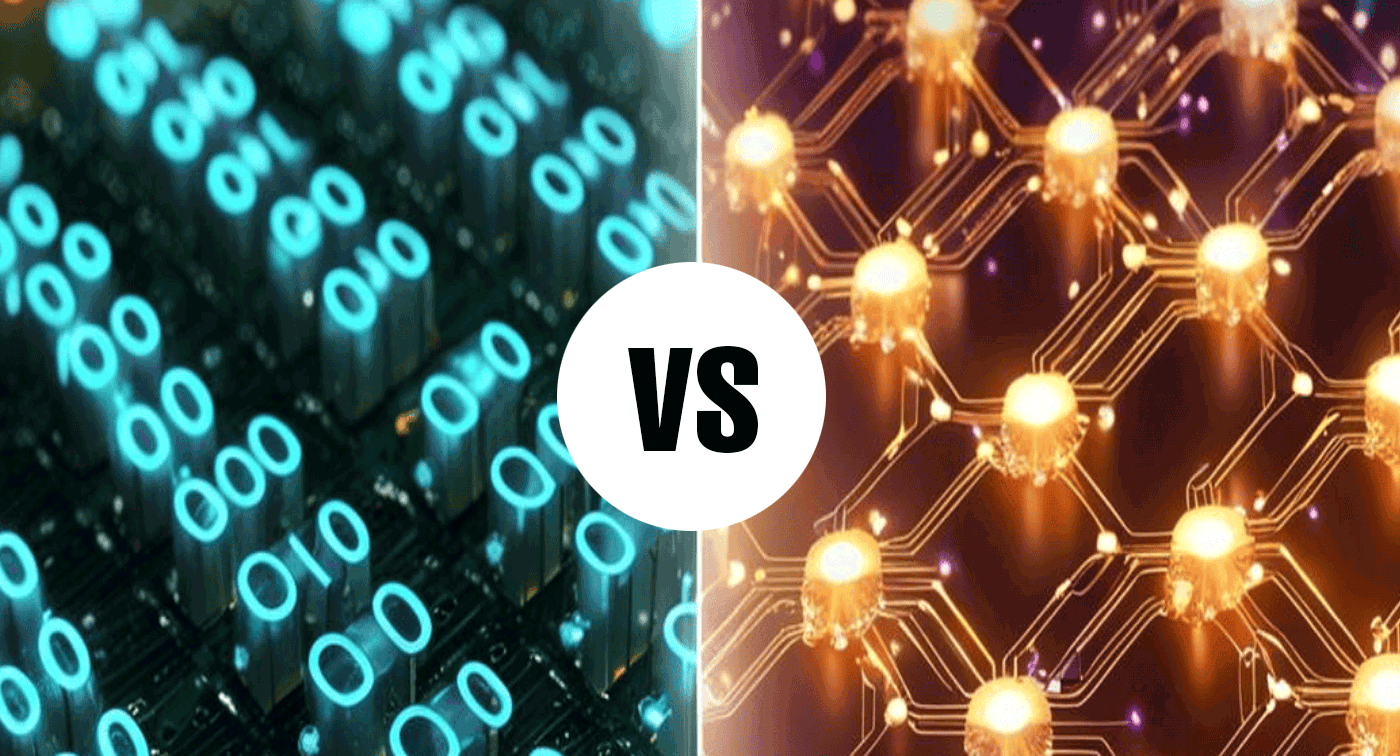
One of the biggest fears is that quantum cryptography could break classical encryption that underpins financial stability and the global economy. Cryptography is something that we all take for granted in everything from messaging apps to online banking. But if quantum lives up to its future promises, we could have the genuine problem of it breaking cryptography within the next decade. For example, Intelligence services equipped with quantum computers, in theory, they would be able to break 2048-bit RSA encryption in under 8 hours. In comparison, the same task would take the world’s fastest supercomputers around 300 trillion years to overcome with traditional brute-force methods. Many are warning of a modern Y2Q the Q-Day moment waiting on the near  horizon that businesses need to prepare for now. With everything from toasters to smart cities connected to the internet, the logistics of transitioning the whole world to new post-quantum algorithms that are resistant to quantum computing cyberattacks is no small feat. As end-to-end systems become more deeply interconnected, businesses must secure and safeguard their entire critical cyberinfrastructure. Unfortunately, traditional threat detection software will be incapable of going toe to toe or even identifying malicious attacks by quantum computers.

 protect yourself

Bitcoin dips below $100K as DeepSeek stirs market

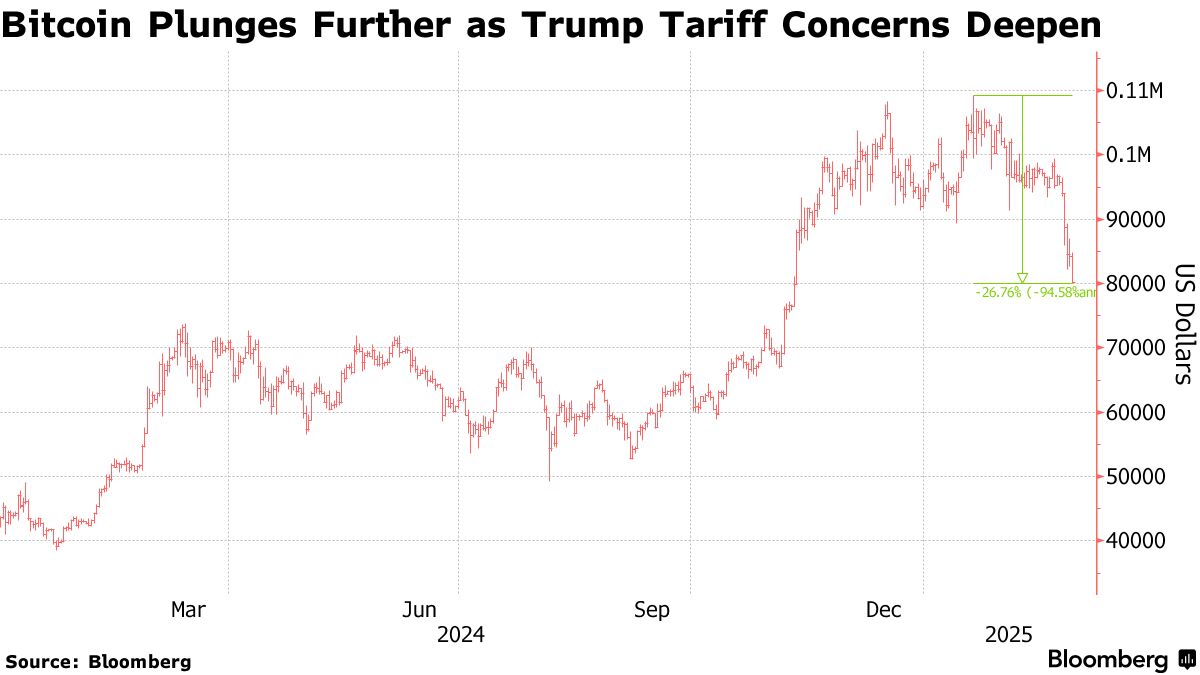
Bitcoin’s price slipped below $100,000 on Monday, down from its all-time high of nearly $110,000 earlier this month, as markets reacted to the rising prominence of Chinese AI app DeepSeek. Earlier, it was known that Chinese AI startup DeepSeek climbed to the top of Apple’s App Store rankings in the US with its flagship R1 model, shaking global tech and financial markets. Released on January 20, R1 challenges Silicon Valley’s dominance by achieving competitive performance with significantly lower costs. At 2:52 am ET, Bitcoin was down 3.26%, going for $99,207.81. At the same time, Ethereum slid 4.74%, selling for $3,078.

NN; The  Chinese Deep Six AI app (most downloaded app for 3 days running)  is an example of what the coming quantum computers can do and how disruptive they will be.  What they’re not telling you is that using some basic quantum computers the Chinese ran through the algorithms of all the other artificial intelligence startups  App’s and captured the top secret algorithms that are used to run these programs. They then built the pirated coding  into their own App Deep Six Ai  for a fraction of other Aps costs and development times. This allowed them to create a artificial intelligence module that they can sell for far less money.  Their development costs  instead of  $1.6  billion like ChatGBT they did it for for 16 million dollars.  It’s the sign of the times and what’s coming.

the gravest threat mankind faces is artificial intelligence and quantum computers

Artificial intelligence  coupled with Quantum Computers has the ability to enslave mankind. It’s a grave danger many have warned about (including Elon Musk) we are facing.  I’m afraid we’re not prepared for the coming dislocations. Our enemies will fund their take over starting with $30 trillion in stolen bitcoin. and  the Russian/Chinese are out spending out engineering everyone else. They realize that whoever possesses the ultimate quantum computer coupled with artificial intelligence and drones and thermal cameras and facial recognition and DNA sampling and laboratories turning bacteria using crisper AI driven gene splicing into plagues will control the world

Trump Trigger a New Oil Price War

  • U.S. President Donald Trump is expected to pressure Saudi Arabia and OPEC to lower oil prices.
  • The longstanding U.S.-Saudi relationship, originally based on oil-for-security, has evolved since the shale boom.
  • Saudi Arabia needs high oil prices to balance its fiscal spending.

One thing will have become extremely clear to Saudi Arabia’s Crown Prince Mohammed bin Salman in the lead-up to Donald Trump beginning his second stint as U.S. President. This is because he wants oil prices lower. He aims to achieve this by dramatically increasing oil exploration and production at home and by pressuring OPEC and its effective leader Saudi Arabia to lower their oil prices too, however they can. Surrounding this are various carrots and sticks that are part of the usual rough and tumble of dealmaking as Trump likes to practice it. These include demands for even more investment from Saudi Arabia into the U.S. than the US$600 billion it has already pledged and Riyadh signing a relationship normalisation deal with Israel. In return, the underlying promise from the U.S. is that it will guarantee the security of Saudi Arabia in the Middle East and beyond and, by extension, the continued reign of the House of Saud across the Kingdom.  Trump has never wanted to see oil above the US$75-80 pb of Brent level. With his plans to dramatically increase U.S. production and to encourage more output from elsewhere, it is clear he wants the oil price even lower than this in his second term as president. Meanwhile, Saudi Arabia’s 2025 budget breakeven oil price is $98 pb of Brent, according to the IMF. So, there is a problem, and the problem looks remarkably like that which caused Saudi Arabia to launch the 2020 Third Oil Price War. This was also done to safeguard its oil market share so that it could ultimately steer oil prices above its budget breakeven level and secure its finances.  U.S. Secretary of State Marco Rubio last week talked with Saudi Arabia’s Crown Prince Mohammed bin Salman about “the strength of the U.S.-Saudi partnership in this time of momentous change”. However, if that change becomes momentous enough that oil prices fall too far below the Kingdom’s budget breakeven level and stay there, the Saudis may feel they have no choice but to embark on another oil price war in the not-too-distant future.

Netanyahu reportedly to meet Trump in WH next week……. Israel’s Cohen: Trump’s Gaza relocation plan ‘makes sense’

Israeli Prime Minister Benjamin Netanyahu is set to travel to Washington next week to meet United States President Donald Trump, Walla News reported on Monday. According to the media outlet’s Israeli and American sources, the meeting primarily depends on Netanyahu’s health. If the visit takes place, the prime minister will be the first foreign leader invited to the White House since Trump’s inauguration. The move comes following a series of developments in US-Israel relations including Trump authorizing the delivery of 900-kilogram bombs to Israel and US Secretary of Defense Pete Hegseth vowing “to stand shoulder to shoulder” with the Levantine nation.

Israel’s Cohen: Trump’s Gaza relocation plan ‘makes sense’

Israeli Energy Minister Eli Cohen supported Monday US President Donald Trump’s proposal to relocate Gaza residents to neighboring countries, saying it “makes sense” as a solution. “Trump’s proposal […] tears the mask of hypocrisy from those claiming to support Palestine but refusing to accept refugees,” Cohen stated on X. Trump suggested moving Gaza’s population to nations like Egypt and Jordan, calling the region a “mess” and describing the plan as potentially temporary or long-term. He noted discussions with Jordan’s King Abdullah II and plans to raise the issue with Egyptian President Abdel Fatah El-Sisi. “We just clean out that whole thing and say, ‘You know it’s, over,'” he said on Sunday. However, the proposal was rejected by Jordan, Palestine and Egypt who warned of severe consequences. Cohen’s remarks come as thousands return to northern Gaza. At least 1.9 million people remain internally displaced in the Palestinian enclave, according to the United Nations.

Trump’s Palestinian refugee idea falls flat with Arab allies and confounds a Republican senator

DORAL, Fla. (AP) — President Donald Trump’s push to have Egypt and Jordan take in large numbers of Palestinian refugees from besieged Gaza fell flat with those countries’ governments and left a key congressional ally in Washington perplexed on Sunday. Fighting that broke out in the territory after ruling Hamas attacked Israel in October 2023 is paused due to a fragile ceasefire, but much of Gaza’s population has been left largely homeless by an Israeli military campaign. Trump told reporters Saturday aboard Air Force One that moving some 1.5 million people away from Gaza might mean that “we just clean out that whole thing.” Trump relayed what he told Jordan’s King Abdullah when the two held a call earlier Saturday: “I said to him, ‘I’d love for you to take on more because I’m looking at the whole Gaza Strip right now, and it’s a mess.’” He said he was making a similar appeal to Egyptian President Abdel Fattah el-Sissi during a conversation they were having while Trump was at his Doral resort in Florida on Sunday. Trump said he would “like Egypt to take people and I’d like Jordan to take people. Egypt and Jordan, along with the Palestinians, worry that Israel would never allow them to return to Gaza once they have left. Both Egypt and Jordan also have perpetually struggling economies and their governments, as well as those of other Arab states, fear massive destabilization of their own countries and the region from any such influx of refugees. Jordan already is home to more than 2 million Palestinian refugees. Egypt has warned of the security implications of transferring large numbers of Palestinians to Egypt’s Sinai Peninsula, bordering Gaza. Trump suggested that resettling most of Gaza’s population of 2.3 million could be temporary or long term. Jordan’s foreign minister, Ayman Safadi, said Sunday that his country’s opposition to what Trump floated was “firm and unwavering.” Some Israel officials had raised the idea early in the war. Egypt’s foreign minister issued a statement saying that the temporary or long-term transfer of Palestinians “risks expanding the conflict in the region.” Trump does have leverage to wield over Jordan, which is a debt-strapped, but strategically important, U.S. ally and is heavily dependent on foreign aid. The U.S. is historically the single-largest provider of that aid, including more than $1.6 billion through the State Department in 2023. Much of that comes as support for Jordan’s security forces and direct budget support. Jordan in return has been a vital regional partner to the U.S. in trying to help keep the region stable. Jordan hosts some 3,000 U.S. troops. Yet, on Friday, new Secretary of State Marco Rubio exempted security assistance to Israel and Egypt but not to Jordan, when he laid out the details of a freeze on foreign assistance that Trump ordered on his first day in office. Meantime, in the United States, even Trump loyalists tried to make sense of his words. “I really don’t know,’’ said Sen. Lindsey Graham, when asked on CNN’s “State of the Union” about what Trump meant by the ”clean out” remark. Graham, who is close to Trump, said the suggestion was not feasible. “The idea that all the Palestinians are going to leave and go somewhere else, I don’t see that to be overly practical,” said Graham, R-S.C. He said Trump should keep talking to Mideast leaders, including Saudi Crown Prince Mohammed bin Salman and officials in the United Arab Emirates. “I don’t know what he’s talking about. But go talk to MBS, go talk to UAE, go talk to Egypt,” Graham said. “What is their plan for the Palestinians? Do they want them all to leave?” Trump, a staunch supporter of Israel, also announced Saturday that he had directed the U.S. to release a supply of 2,000-pound bombs to Israel. Former President Joe Biden had imposed a hold due to concerns about their effects on Gaza’s civilian population. Egypt and Jordan have made peace with Israel but support the creation of a Palestinian state in the occupied West Bank, Gaza and east Jerusalem, territories that Israel captured in the 1967 Mideast War. They fear that the permanent displacement of Gaza’s population could make that impossible. In making his case for such a massive population shift, Trump said Gaza is “literally a demolition site right now.” “I’d rather get involved with some of the Arab nations, and build housing in a different location,” he said of people displaced in Gaza. “Where they can maybe live in peace for a change.”

Nvidia drops 8% as China’s DeepSeek challenges West’s AI dominance

Chinese artificial intelligence startup DeepSeek rocked global technology stocks Monday, raising questions over America’s technological dominance. Buzz grew over the weekend about DeepSeek’s latest AI model being cost-effective while running on less-advanced chips, casting doubt on the validity of the sky-high valuations for companies like Nvidia Corp. Nvidia has led the global AI stock boom as its chips have been seen as essential to the technology. Nasdaq 100 futures tumbled as much as 3.2%, while contracts on the S&P 500 fell 1.9% as of 3:23 a.m. in New York. In Europe, tech stocks led market losses, with shares of chip equipment maker ASML Holding NV down more than 8%. Futures contracts on the Cboe Volatility Index, or VIX, spiked higher. “DeepSeek shows that it is possible to develop powerful AI models that cost less,” said Vey-Sern Ling, managing director at Union Bancaire Privee. “It can potentially derail the investment case for the entire AI supply chain, which is driven by high spending from a small handful of hyperscalers. The AI model from DeepSeek — founded by quant fund chief Liang Wenfeng — is widely seen as competitive with OpenAI and Meta Platforms Inc.’s latest offerings. Lauded by investor Marc Andreessen as “one of the most amazing and impressive breakthroughs,” DeepSeek’s app shows its work and reasoning as it addresses a user’s written query or prompt. Released last week, the product is now at the top of Apple Inc.’s App Store rankings, with users praising its transparency.  Chinese AI-related stocks reacted positively, with mainland-listed Merit Interactive Co. among those surging by their daily limits. Merit is among those with the clearest links to DeepSeek after stating in an earlier filing that it had incorporated the homegrown AI firm’s model into marketing. In Hong Kong, the Hang Seng Tech Index climbed as much as 2% ahead of Lunar New Year holidays this week. AI trades slumped elsewhere as investors rethought assumptions on computing power and energy. Nvidia shares were down over 6% on Germany’s Tradegate. The DeepSeek product “is deeply problematic for the thesis that the significant capital expenditure and operating expenses that Silicon Valley has incurred is the most appropriate way to approach the AI trend,’ said Nirgunan Tiruchelvam, head of consumer and internet at Singapore-based Aletheia Capital. “It calls into question the massive resources that have been dedicated to AI.” Kyle Rodda, senior market analyst at Capital.com, says the updated AI model unveiled by China’s DeepSeek raises concerns about geopolitical risks as well as questions about US tech stock valuations. The decline in Nasdaq futures comes at the start of a big week for earnings from major tech companies including Apple and Microsoft Corp. Profit growth is expected to have slowed while valuations remain inflated, once again causing concern over the large AI-driven rally in the sector. The Nasdaq 100 is trading at 27 times estimated forward earnings, compared with its three-year average of 24 times. Nvidia is at 33 times, though that’s slightly down from its three-year average. The DeepSeek release raises new doubts, challenging the notion that China’s AI technology is years behind US counterparts. Washington’s trade restrictions had kept the most cutting-edge chips out of China’s hands, but DeepSeek’s model was built using open source technology that is easy to access. “While current leaders like Nvidia have a strong foothold, it is a reminder that AI dominance cannot be taken for granted,” said Charu Chanana, chief investment strategist at Saxo Markets. “The emergence of China’s DeepSeek indicates that competition is intensifying, and although it may not pose a significant threat now, future competitors will evolve faster and challenge the established companies more quickly. Earnings this week will be a huge test.” Nvidia shares fell 8% in premarket trading Monday as the rise of Chinese AI startup DeepSeek rattled investor confidence in the sustainability of Western AI dominance.

Bitcoin dips below $100K as DeepSeek stirs market….. Chinese AI app DeepSeek tops App Store charts

Bitcoin’s price slipped below $100,000 on Monday, down from its all-time high of nearly $110,000 earlier this month, as markets reacted to the rising prominence of Chinese AI app DeepSeek.

Earlier, it was known that Chinese AI startup DeepSeek climbed to the top of Apple’s App Store rankings in the US with its flagship R1 model, shaking global tech and financial markets. Released on January 20, R1 challenges Silicon Valley’s dominance by achieving competitive performance with significantly lower costs.

At 2:52 am, Bitcoin was down 3.26%, going for $99,207.81. At the same time, Ethereum slid 4.74%, selling for $3,078.

Chinese AI app DeepSeek tops App Store charts

DeepSeek, a Chinese AI startup, has vaulted to the top of Apple’s App Store chart in the United States, data from the platform showed Monday. The app overtook its main competitors, including OpenAI’s ChatGPT, which has fallen to third place.

Led by Liang Wenfeng, DeepSeek has surprised industry leaders by creating competitive AI models using lower-cost Nvidia H800 chips and a fraction of the capital invested by rivals.

The startup reportedly spent under $6 million on its V3 model, using around 2,000 chips. In contrast, US firms like Meta and OpenAI rely on cutting-edge Nvidia H100 GPUs, which are restricted from export to China due to sanctions.

NIS released encryption algorithms to withstand cyberattacks from quantum computers….

China is spending vast amounts of money on artificial intelligence and quantum computers.  For example just their government quantum computer program is budgeted at $15 billion a year. By way of example the  US government has no organized program. Only budgeting grants to universities and researches a paltry$1 billion dollars a year for quantum computer research. We have reported and we want to document again that China is moving ahead with quantum computing to break as many ciphers as possible….. especially crypto currencies.  Every top secret document, every email , every computer system and every transfer of data the US government uses  all the  encrypted documents China has. Every Pentagon Secret  the Chinese have collected and stored  in vast computers for years waiting for  the day their Quantum Computer will be able to crack the security codes that protects America’s  secrets. They will soon be hacked.

The US government through Commerce’s National Institute of Standards and Technology (NIST) is moving ahead and changing software to a new standard  of encryption that is quantum computer hack proof.  These software  encryption  updates are easy to do on central main frame computers. Your credit card company, your bank and financial institutions that rely upon encryption have already upgraded .

The new NIST ENCRYPTION STANDARDS ARE hack proof meaning quantum computers will not be able to BREAK the encryption code.

NOT Bitcoin

The problem is  Bitcoin blockchain is not running on only one computer. Bitcoin exists on millions of computers that are privately owned and operated on their peer-to-peer network.  In order for the  bitcoin algorithm  to be upgraded and be protected would be for all these millions of the PTP block chain computers to to agree to and install the new encryption upgrades. Once the  changes are agreed to it would take 300 days  basically a year to install the new encryption standard on the blockchain  that the NIST  has released. It needs to be done in hours not months to save the crypto coins.

The news NITS encryption standards are already  installed on key  computers including the Federal Reserve, Money Center Banks, Credit Card Companies and financial institutions the world over. So very quietly without a lot of noise computer systems the world over are being hardened for the  coming Q-day hack. That’s when quantum computers will be able to crack the SHA 256 algorithm that’s the present encryption standard.

The deep dark Forbidden Secret  of Bitcoin is they haven’t agreed upon the new Quantum Computer hack proof standard and they have no way of installing the new encryption standards in time. Which means millions of bitcoins worth trillions of dollars are  sitting on millions of P2P   independent owned and operated computers on the block chain  will soon be hacked.

see nist confidential memo below:

GAITHERSBURG, Md. — The U.S. Department of Commerce’s National Institute of Standards and Technology (NIST) has finalized its principal set of encryption algorithms designed to withstand cyberattacks from a quantum computer.  Researchers around the world are racing to build quantum computers that would operate in radically different ways from ordinary computers and could break the current encryption that provides security and privacy for just about everything we do online. The algorithms announced today are specified in the first completed standards from NIST’s post-quantum cryptography (PQC) standardization project, and are ready for immediate use

 The three new standards are built for the future. Quantum computing technology which is developing rapidly, and some experts predict that a device with the capability to break current encryption methods could appear very soon, threatening the security and privacy of individuals, organizations and entire nations. 

  • NIST has released a final set of encryption tools designed to withstand the attack of a quantum computer.
  • These post-quantum encryption standards secure a wide range of electronic information, from confidential email messages to e-commerce transactions that propel the modern economy.
  • NIST is encouraging computer system administrators to begin transitioning to the new standards as soon as possible.

Israel thanks Trump for ‘crucial defense shipment’

Israeli Foreign Minister Gideon Sa’ar thanked on Sunday United States President Donald Trump for resuming the supply of 900 kg bombs to Israel. He praised Trump’s “display of leadership,” stating that the bombs, whose delivery was halted by the Biden administration, are a “crucial defense shipment.” “The region is safer when Israel has what it needs to defend itself,” Sa’ar added. Former US President Joe Biden paused the supply of the bombs due to concerns over their use in Gaza but Trump said Israel will receive them “because they bought them.”