DO NOT confuse the FedNOW Digital wire transfer system with digital money ITS NOT…… JUST YET!

Confusion abounds.. the fednow payment system is not Not NOT digital money. its a digital money transfer system updating the already in existence SWIFT wire transfer notification system

Hate to break it to you… But you are already in a cashless society. 80% of all transactions in the US are now done by either  digital credit card or wire transfer.  Cash is used to buy groceries, a drink or maybe dinner. They are not Not NOT replacing cash with this  FedNow system. Because while you were sleeping they have already ended cash use in any transaction of significance…..  SO…… A trillion dollars in illegal drug sales occur every year in the US on the user level. And that money is EASILY LAUNDERED INTO THE CASHLESS SYSTEM. I urge you to educate yourself so they don’t make you stupid….. Crypto currency hucksters should be worried,,, no you. See extensive links after the Pod Cast.

BlackMask Pod Cast Title:

They Are Not Replacing Cash with digital money This Month

Organizations that have completed certification in the FedNow Service
Participants
  • 1st Bank Yuma
  • 1st Source Bank
  • Adyen
  • Alloya Corporate Federal Credit Union
  • Atlantic Community Bankers Bank
  • Avidia Bank
  • Bankers’ Bank of the West
  • BNY Mellon
  • Bridge Community Bank
  • Bryant Bank
  • Buffalo Federal Bank
  • Catalyst Corporate Federal Credit Union
  • Community Bankers’ Bank
  • Consumers Cooperative Credit Union
  • Corporate America Credit Union
  • Corporate One Federal Credit Union
  • Eastern Corporate Federal Credit Union
  • First Internet Bank of Indiana
  • Global Innovations Bank
  • HawaiiUSA Federal Credit Union
  • JPMorgan Chase
  • Malaga Bank
  • Mediapolis Savings Bank
  • Michigan Schools & Government Credit Union
  • Millennium Corporate Credit Union
  • Nicolet National Bank
  • North American Banking Company
  • PCBB
  • Peoples Bank
  • Pima Federal Credit Union
  • Quad City Bank & Trust
  • Salem Five Bank
  • Star One Credit Union
  • The Bankers Bank
  • United Bankers’ Bank
  • U.S. Bank
  • U.S. Century Bank
  • U.S. Department of the Treasury’s Bureau of the Fiscal Service
  • Veridian Credit Union
  • Vizo Financial Corporate Credit Union
  • Wells Fargo Bank, N.A.
Service Providers
  • ACI Worldwide Corp.
  • Alacriti
  • Aptys Solutions
  • ECS Fin Inc.
  • Finastra
  • Finzly
  • FIS
  • Fiserv Solutions, LLC
  • FPS GOLD
  • Jack Henry
  • Juniper Payments, a PSCU Company
  • Open Payment Network
  • Pidgin, Inc.
  • Temenos
  • Vertifi Software, LLC

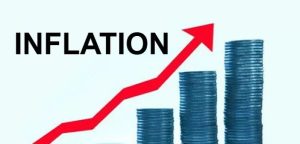
US inflation down to 3% in June But CORE is up to 4.8%

The annual inflation in the United States stood at 3.0% in June, going down from 4.0% registered in May and coming in slightly lower than analysts forecast, the US Bureau of Labor Statistics revealed in its report published on Wednesday. Like in May, this change was the smallest 12-month increase since the period ending March 2021. Month-on-month, the Consumer Price Index (CPI) grew by 0.2%. The index for shelter was once again the largest contributor to the overall rise with over 70%, followed by the index for motor vehicle insurance. The food index advanced by 0.1% compared to the previous month and 5.7% in contrast with June 2022. The energy index increased by 0.6% month-on-month but sank by 16.7% year-on-year.

The closely watched core index for all items less food and energy grew 4.8% on an annual basis and 0.2% on a monthly one.

Russian Oil Prices Jump Ahead Of Export Cut…… Russia’s Urals oil surpasses G7 price cap

The price of Russian ESPO crude, which goes to China, rose to the highest in seven months as Chinese buyers rushed to buy it ahead of an announced 500,000-bpd cut in exports next month. Per Reuters, ESPO is currently trading at a $4 per-barrel discount to Brent crude, which puts it $6 above the G7 price cap. Before the announcement of the export cut, ESPO was trading at a discount of $4 to Brent crude, still above the price cap. ESPO has been trading consistently above the price cap because it is the preferred Russian blend of Chinese refiners. The ESPO blend is lighter and sweeter than the flagship Urals blend, which has normally traded at a more significant discount to Brent crude. This discount only deepened after the imposition of sanctions on Russian crude exports. Yet even the discount of Urals to Brent has narrowed lately, with the blend last trading at over $55 per barrel, compared with close to $76 for Brent at the time of writing.  The trades with ESPO above the price cap suggest that, for months now, Russia has had the tankers and insurance firms to provide coverage and shipping for the ESPO grade, which can reach China from Russia’s Far East in less than a week. Demand is on the rise, too, as Chinese independent refiners get their new import quotas. “The price increase comes as the private refiners have just received new crude imports quotas. They are now out for shopping and Russian oil remains relatively cheap,” an unnamed trader told Reuters. Earlier this week, meanwhile, Russia announced it would further reduce its supply of oil. “As part of the efforts to ensure a balanced market, Russia will voluntarily reduce its oil supply in August by 500,000 barrels per day by cutting its exports to global markets by that quantity,” Russia’s Deputy Prime Minister and top OPEC negotiator Alexander Novak said last week. The announcement came minutes after Saudi Arabia said it would extend its unilateral oil production cut of 1 million bpd into August. Novak went on to say that the cut in exports would also mean a cut in production but Reuters noted in a report earlier this week that Russian oil supply for the international markets would be already lower this month as refineries ramp up after the end of maintenance season. The price of Russian flagship oil, Urals, topped on Wednesday the Group of Seven’s price cap set at $60 for the first time since the measure was implemented. Previous data from May showed that Russia’s exports to China and India reached all-time highs. Moscow announced that it will be slashing its oil output by 500,000 barrels per day in the month of August, in an effort to balance out the market. NN BlackMask Pod Cast

Cheap Russian Oil Party Over

EIA trims US crude oil production forecast for 2023……. OPEC Expects Global Energy Demand To Jump By 23% By 2045

The Energy Information Administration (EIA) revealed on Tuesday that the crude oil production for 2023 is expected to rise 670,000 barrels per day (bpd) to 12.56 million bpd this year, less than a prior projection. As per crude oil prices, the agency sees the Brent spot price at an average of $78 per barrel in July, reaching $80 in 4Q23 and averaging about $84 in 2024. According to the report, the rising prices will occur in tandem with an expected decline in global oil inventories over the next five quarters. Regarding natural gas prices, the EIA said the Henry Hub spot price will increase in the coming months. During the second half of this year, Henry Hub prices are expected to average more than $2.80 per million British thermal units (MMBtu), up from nearly $2.40/MMBtu in the year’s first half.

OPEC Expects Global Energy Demand To Jump By 23% By 2045

Global primary energy demand is expected to surge by 23% by 2045, OPEC’s Secretary General Haitham Al Ghais said on Tuesday, adding that all sources will be needed to meet that growing demand. “Global primary energy demand is forecast to increase by a significant 23% in the period up to 2045, which means we will need all forms of energy,” Al Ghais said at a petroleum conference in Nigeria, as carried by Reuters. Oil will continue to play an important role in the future of the energy mix, OPEC and its secretary general have said in recent months. Meeting oil demand alone would need as much as $12.1 trillion in investments in the industry by 2045, Al Ghais said. But the industry is not on track to reach this level of investments yet, he added.During a speech in Malaysia last month, OPEC’s secretary general said that “In OPEC’s World Oil Outlook (WOO), we see global energy demand increasing by 23% through 2045, and I see no credible way to address this without utilizing all available energy sources, and with energy market stability as a guiding light.”

“Gas, hydro, nuclear, hydrogen and biomass will also expand, BUT, it is clear that oil will remain an integral part of the mix,” Al Ghais added. 

OPEC’s outlook to 2045 sees global oil demand rising to 110 million barrels per day (bpd) by then, and oil would still represent about 29% of the energy mix in 2045. Investments in the oil industry alone need to be $500 billion each year between now and 2045, for a cumulative $12.1 trillion through 2045, Al Ghais noted. “All industry policymakers and stakeholders need to work together to ensure a long-term investment-friendly climate, with sufficient finance available.  One that works for producers and consumers, as well as developed and developing countries,” Al Ghais said at the end of June.  NN: You need to put things in perspective. OPEC+ generates 1 trillion dollars a year in revenue. That is a lot of do-ra-me. And even more clout. Their 5 million barrel a day in productions cuts is a show stopper. The Myth that oil consumption and demand is falling is incredible AI spin.

Fed’s Daly sees more hikes as ‘reasonable’……. Mester: Fed needs to raise rates further

https://youtu.be/aQG7EOElBQg

San Francisco Federal Reserve Bank President Mary Daly stated on Monday that the additional monetary tightening could be “needed” this year, stressing that it is premarture to declare victory on achieving balance between demand and supply. “It’s a very reasonable projection to say that a couple more [rate hikes] will be necessary,” Daly emphasized. The risk of doing too little versus too much on rates is greater, she emphasized, but added that slowing the pace of rate increases could be “appropriate.” “There are longer lags than we assumed,” Daly noted in an event hosted by the Brookings Institution, adding that the Federal Reserve underestimated the “underlying momentum” of the United States economy.

Mester: Fed needs to raise rates further

Cleveland Federal Reserve Bank President Loretta Mester argued Monday that the US Federal Reserve needs to hike interest rates further because inflation is widely expected to be running above the Fed’s target for four years. “In order to ensure that inflation is on a sustainable and timely path back to 2%, my view is that the funds rate will need to move up somewhat further from its current level and then hold there for a while as we accumulate more inflation on how the economy is evolving,” Mester told a gathering at the University of California San Diego. Mester’s views come after the bank kept the official interest rate between 5% and 5.25% at its last meeting in June and ahead of the expected next session at the end of July.

The Fire Breathing Inflation Dragon Will Burn YOU!

This latest Wall Street rally can only  be described in one word DESPERATION. What they know and don’t want you to know is the FACT inflation is not under control. AND the Fed will raise Fed Funds rates to over 7%. Their is plenty of blame to go around. It all started with the pandemic shutdown and ZERO interest rates and massive stimulus injected directly  into the economy. The expected happened, it sparked off MASSIVE inflation. Two key mistakes were made. Wall Street assumed that zero rates were here to stay. And the FED and Treasure did not realize in time that inflation was out of control. The story of this era is their joint declaration that inflation was “TRANSITORY” THEY REALLY BLEW IT. They started fighting inflation way to late. Early on they could have nipped it in the bud. But unfortunately they waited to long, until this day inflation is embedded. As you are seeing  wages are soaring…Their is  full employment. And another Wall Street bubble rally is raging. The FED cancer radiation treatments of higher rates are NOT working. On the other hand a VERY desperate Wall Street wants you to believe its over. No recession they say hardly a ripple on the water.  And get this they want you to believe the FED will soon be lowering rates. Talk about fake news. Reality is they are bullshitting the masses. Truth is the FED has got to get rates above 7% at least to put out this inflationary fire storm. And the untold truth is it very well could take a Fed Funds rate north of 10%. In plane English the debt markets and banks and stock markets are headed for a 100 year event. Another great depression, banking and real estate wipeout. NN BlackMask Pod Cast:

inflation dragon will burn you


Middle East Oil Prices Climb on Chinese Buying

  • The oil futures market has strengthened, suggesting that a market tightening may be on its way.
  • Sparked by cut announcements from both Saudi Arabia and Russia, spreads in oi derivatives markets have started to show strength.
  • In recent days, prompt spreads have strengthened, swaps contracts linked with physical supply have surged, and the premium of bearish puts over bullish calls has narrowed.
  •  Middle Eastern oil costs have surged due to elevated demand from Asian refiners in nations including China and Japan.
  • This spike in demand is driven by high levels of activity on the Middle Eastern crude-trading window, with key industry players such as China’s Unipec, TotalEnergies SE, and Shell Plc showing aggressive bids.
  • Due to the high volume of trades, traders speculate that if physical cargoes become scarce, it may cause a further rise in prices, underlining a striking shift from earlier uncertainties in market direction.

The oil futures market has strengthened this week, signaling that a market tightening could be on the way.    Following the latest announcements of fresh supply cuts from OPEC+ leaders Saudi Arabia and Russia, key spreads in the oil derivatives markets have started to show strength, according to Bloomberg’s estimates.

Prompt spreads in the futures market have returned to backwardation, from contango. 

Contango is the state of the market in which prices for delivery at later dates are higher than front-month prices—a market situation signaling oversupply. The opposite market situation—backwardation—typically occurs at times of market deficit, and in it, prices for front-month contracts are higher than the ones further out in time.  Last week, the six-month spread in Brent flipped to contango for the first time since December 2022, after being in backwardation for months. The U.S. benchmark, WTI Crude, also dropped into contango on June 27, for the first time since March.   But in recent days, prompt spreads have strengthened, swaps contracts linked with physical supply have surged, and in options markets, the premium of bearish puts over bullish calls has narrowed. On Monday, Saudi Arabia and Russia announced nearly at the same time fresh cuts to global oil supply. Saudi Arabia said it would extend its unilateral oil production cut of 1 million bpd into August. Saudi Arabia will be producing around 9 million bpd in both July and August after extending the voluntary cut into next month. “This additional voluntary cut comes to reinforce the precautionary efforts made by OPEC Plus countries with the aim of supporting the stability and balance of oil market,” Saudi Arabia said. Minutes after the Saudi announcement, Russia’s Deputy Prime Minister Alexander Novak said that Russia would cut its crude oil exports by 500,000 bpd in August in a bid to ensure a balanced market. NN BlackMask Pod Cast:

Backwardation is back… Just in time to save our backsides

Crude Inventories Fall Again Down by 4.4M barrels……. Dow drops 400 pts Figuring Out Fed Ain’t Done

Crude oil inventories in the United States decreased this week by 4.382 million barrels, the American Petroleum Institute (API) data showed on Wednesday, after falling by 2.408 million barrels in the week prior as the IEA eyes a supply deficit in this half of the year.

Crude oil production in the United States stayed at 12.2 million bpd for the week ending June 23, according to EIA data, matching the previous low for this year.

The net draw in crude inventories since April is more than 15 million barrels.

Dow drops 400 pts amid Fed tightening worries

Private payrolls in the United States soared by 497,000 in June, according to the ADP National Employment Report published on Thursday. The figure surged past projections pushed up by a rise in employment in the service industry, which added 373,000 jobs, while the goods-producing industry employment rose by 124,000. The manufacturing and information sectors lost the most jobs, at 42,000 and 30,000 respectively. Small establishments gained the most employees at 299,000, followed by medium at 183,000, while large establishments cut 8,000 positions in total. Obviousley the long awated slow down is not happening…… Which means the FED is going to pounce again. The Dow Jones Industrial Average index extended losses on Thursday, falling over 400 points as the June jobs data sparked fears that the United States Federal Reserve will introduce additional interest rate hikes this year and maintain its restrictive monetary policy for longer than anticipated. The Dow Jones was down 1.17% or 400 points, the Nasdaq 100 lost 1.41% and the S&P 500 fell by 1.21% at 10:13 am ET. NN BlackMask Pod Cast:

Reality has a way with caching up with fiction

Fed’s Williams says not content with inflation situation

Federal Reserve Bank of New York President John Williams said on Wednesday that he is not content with the current inflation picture in the United States. Speaking at a Central Bank Research Association-hosted event, he noted that price pressures remain elevated although there is progress on that front as coronavirus-pandemic effects have weakened and inflation expectations are still well-anchored. The impact of monetary tightening could be the highest only after a year or two, according to Williams, who confirmed he supported the Fed’s decision to hold interest rates in June. The housing market has been surprisingly resilient and the demand for labor remained strong, Williams added. NN: The FED is NOT done. And they could not be any clearer. Rates are going higher and far from peeking.

Saudi Energy Minister Salman:  latest cuts in oil show  “strong””  relations between Riyadh and Moscow…. UAE: Latest Output Cuts Are Enough To Balance The Oil Market

Saudi Energy Minister Abdulaziz bin Salman said on Wednesday that the latest cuts in oil production announced by both Riyadh and Moscow demonstrate the two nations’ “strong” relations and collaborative efforts to support the market. “What we have done, with the help of our colleagues in Russia, is also partly aimed at alleviating the skepticism of those who follow what is going on between Saudi Arabia and Russia in this particular regard,” the minister told OPEC International Seminar in Vienna. The minister clarified that Moscow’s decision to slash oil production by an additional 500,000 barrels per day (bpd) in August was “voluntary” and not “imposed on them.”

UAE: Latest Output Cuts Are Enough To Balance The Oil Market

The latest oil production and export cuts announced earlier this week by the OPEC+ leaders – Saudi Arabia and Russia –should be sufficient to bring the oil market back to balance, Suhail Al Mazrouei, the energy minister of the United Arab Emirates (UAE), said on Wednesday. “This is enough to assess the market and look at the market balance,” Al Mazrouei told reporters today, as carried by Reuters.  At the OPEC International Seminar in Vienna today, Saudi Arabia’s Energy Minister Prince Abdulaziz bin Salman said that the OPEC+ alliance would do “whatever necessary” to support the oil market. The announcements from Saudi Arabia and Russia this week showed that cooperation between the two OPEC+ leaders continues to be strong, he added. “Part of what we have done (on Monday) with the help of our colleagues from Russia was also to mitigate the cynical side of the spectators on what is going on between Saudi and Russia on that specific matter,” Prince Abdulaziz bin Salman said.  NN: To me its a settled business. At most its a waiting game.