Trump Hardens Stance on Iran, Clouding Hopes for Hormuz Deal

US President Donald Trump hardened his stance toward Iran as negotiations to reopen the Strait of Hormuz continue, pronouncing that the Islamic Republic must pay reparations for past attacks. Trump made his sweeping new demands on Monday after accusing Tehran of itself seeking compensation for war damages through public statements even though the issue had never been raised in negotiations. “I am likewise demanding compensation from Iran, for all of the people that they have killed and gravely wounded with their roadside bombs and many conflicts,” Trump wrote on social media. “Additionally, compensation should be paid to the families of the hundreds of thousands of innocent protestors that Iran has killed over the last 50 years.”

President Donald Trump says he’s ready to let economic pressure build on Iran. Josh Wingrove reports. The latest twist puts the two countries on a new collision course. The demands, which Trump said will be included “firmly into any, and all, future negotiations,” are almost certain to be rejected by Iran, which is seeking reparations for damage inflicted during the US-Israeli war that began Feb. 28.

Shortly after his post, Trump added that Iran should also be held responsible for deaths and damage from conflicts in Lebanon, Syria, Yemen and Gaza, where Tehran-backed militant groups operate.

The hardening positions on both sides makes it unlikely that Washington or Tehran will be able to agree to any immediate pact on Hormuz, where around a fifth of the world’s oil and liquefied natural gas flowed before the conflict began.

 Oil held a four-day rally as Trump’s comments clouded the outlook for a deal, with global benchmark Brent trading 0.2% higher at $87.87 per barrel at 06:39 a.m. in London, after advancing 5% in the previous session. European diesel futures surged more than 10% as refineries in Saudi Arabia, Libya and Russia also came under attack, further tightening the market for the fuel considered the workhorse of the global economy. Trump and other US officials had recently boosted market optimism by suggesting a deal with Tehran was getting closer, with Iran and Oman in discussions to reopen the waterway to maritime shipping. The US president earlier signaled that he was prepared to let economic pressure on Iran build rather than launch fresh military strikes to force a reopening of Hormuz. That marked a shift from his repeated threats to escalate the bombing campaign against Iran, following several weeks of tit-for-tat strikes and the breakdown of an interim peace deal the countries signed in June. The Islamic Republic’s economy has taken a hammering from the war, with much of its industrial capacity destroyed, crude exports severely curtailed by a US blockade and central bank data showing year-on-year inflation recently reaching 77%. The currency, meanwhile, has fallen more than 10% from its prewar level, adding to the economic pressure on Iranians. A depreciation of the rial sparked violent nationwide protests that peaked early this year, leading to a crackdown by authorities that left thousands dead. There have been no signs of the anti-government demonstrations resuming. Tehran’s demands for a full reopening of Hormuz include the US lifting its naval blockade on Iranian ports, the release of frozen assets and compensation for war damages. It has also called for a permanent end to attacks on groups it backs in Lebanon, Iraq, Yemen and Gaza. The effective closure of Hormuz is taking a toll on the global economy and trade. The cost of hiring a supertanker to carry oil on the benchmark Middle East-to-China route approached $500,000 a day, more than twice the cost before the war. While Trump insisted that compensation for Iran “was never mentioned in any of our negotiations or meetings,” the 14-point memorandum of understanding that Iran and the US agreed to in June details plans for Washington and regional partners to develop a $300 billion fund for the “rehabilitation and economic development” of Iran after the war.

Trump told reporters at the White House on Monday that Hormuz was “open now” and controlled by the US. Asked about military escalation, Trump said the US retained that ability and “if we want to do that, yeah, you’ll find out.”

The Washington Post reported Monday that Trump was secretly flown out of Turkey last month on an alternate military aircraft instead of Air Force One, after the president ordered military strikes on Iran while at a NATO summit. The covert plan, prompted by an Iranian assassination threat, included briefly transporting the president in an airport catering truck from one plane to the next, the Post reported.

NN: Not only are the straights NOT NOT NOT NOT opened. But the president is hiding  from Iran. Oh did i mention oil reserves are about to be all used up!

Trump on Iran: We still have ability to escalate…… Trump says ‘only’ US controls Hormuz Strait

United States President Donald Trump stated on Monday that “we certainly have the ability” for a massive escalation against Iran. Trump made the comment while speaking to journalists at the White House. One reporter asked what would happen if Tehran does not take what Trump said was the last chance for peace. “You’ll find out,” he answered. Trump repeated his earlier claims that it is Iran that should be paying the damages to “many thousands” of people murdered and killed since 1979, and over 50 thousand protesters who were allegedly killed earlier this year.

Trump says ‘only’ US controls Hormuz Strait

United States President Donald Trump stated on Monday that Washington is the only power controlling the crucial Strait of Hormuz, claiming that the entire waterway has been “mineswept.” “We have a blockade that has been infallible; it’s a steel wall. And we let people in that we want in … and they have been coming in and going out. It’s actually open now,” the president said, referring to the strategic waterway. “We do not let them go into Iran,” Trump stressed. Speaking at a White House briefing, the president accused Iran of acting as a “bully” across the Middle East, claiming Tehran had killed “hundreds of thousands of people” and warning that it was now “paying the price.”

NN: I have a question. If the US controls the straights as Trump claims and if the US wants  freedom of navigation for the free flow of oil which is a stated goal. How come their is now oil flowing out of the straight?  So here is my next question. Who is bullshitting who as $70 oil is now approaching $90. Looks like you may be getting a big pay day if you follow my trade reco’s

US oil reserves drop to lowest level since 1983

Oil in the United States Strategic Petroleum Reserve has fallen to its lowest level since 1983, the country’s Department of Energy data showed on Monday. The latest report on the country’s oil inventories showed that stocks decreased by 6.1 million barrels last week to 298.7 million barrels, falling below the 300-million-barrel mark for the first time in more than four decades. In March, US President Donald Trump ordered the release of 172 million barrels of oil from the country’s reserves in an effort to lower energy prices driven higher by the conflict with Iran.

NN: When its gone its gone…. Then What?

European gas jumps 10% amid Hormuz reopening uncertainty….

European natural gas prices climbed by as much as 10% on Monday as investors closely monitored developments around the Strait of Hormuz, with traffic through the crucial waterway remaining subdued over the weekend amid continued uncertainty over the resumption of normal maritime flows. Earlier today, Iran noted that Tehran was still not negotiating with Washington, adding to concerns about further disruptions to liquefied natural gas shipments. For September contracts, UK natural gas futures surged 10.91% to go for 148.37 pence per therm at 3:42 pm CET. Dutch TTF natural gas for September deliveries jumped 8.83% to €60.89 per megawatt hour.

WTI up by over 3.5% as Hormuz deal fears persist

Oil futures prices continued to rise on Monday after Iran said it had reached a deal with Oman on the Strait of Hormuz, including a regulation to impose transit tolls. Moreover, data and analytics company Kpler estimated that traffic through the strait “weakened further” over the weekend. Furthermore, United States President Donald Trump revealed that Washington is “only semi-negotiating” with Tehran. West Texas Intermediate (WTI) for September’s deliveries jumped by 3.54% at 9:59 am ET to $80.88 per barrel. Brent for October’s settlements increased by 2.90% at 10:02 am ET to $86.14 per barrel.

Airlines Scramble for Jet Fuel as Hormuz Disruption Drags On

  • Restricted traffic through the Strait of Hormuz has disrupted a major source of global jet fuel, leaving Europe particularly exposed to shortages.
  • Airlines are responding with alternative sourcing, fuel hedging, schedule adjustments, and unusual logistics as elevated fuel prices squeeze operating costs.
  • U.S. carriers are also taking a major financial hit, with Southwest reporting nearly $900 million in additional quarterly fuel expense and United projecting nearly $6 billion in additional 2026 fuel costs.

The months-long closure of the Strait of Hormuz has led to severe fuel shortages around the globe, as companies battle to continue operations. Airlines have been hit hard as they struggle to obtain enough jet fuel to maintain their regular flight schedules. The U.S.-Israeli war on Iran led to the closure of the Strait of Hormuz – a key trade corridor connecting the Persian Gulf with the Gulf of Oman and the Arabian Sea, via which roughly 20 per cent of the world’s oil is transported when fully operational. Several months of closures have resulted in significant restrictions to energy trade, with many countries now facing severe fuel shortages. In July, several European airlines announced that they were at risk of running out of jet fuel. Europe has turned to the United States and Asia for alternative fuel imports in recent months but continues to feel the strain of the shortages. The United Kingdom, France, and Germany are extremely vulnerable due to their heavy reliance on the Middle East for their fuel supplies.  In recent decades, several countries have reduced their refining activities in favour of a green transition, leaving them more susceptible to supply chain disruptions. Before the war, Europe relied on the Middle East for roughly half of its jet fuel imports. Iran has allowed limited fuel supplies through the Strait of Hormuz, but it is uncertain when normal trade will resume due to the ongoing conflict. On 18th June, the consultancy Energy Aspects forecast a jet fuel supply deficit across Europe of almost 600,000 bpd in the third quarter of the year, compared to surpluses of around 116,000 bpd in the United States and 425,000 bpd in Asia-Pacific. Europe’s inventories totalled around 38 million barrels at the beginning of June, equivalent to roughly 30 days of its fuel demand. The International Energy Agency (IEA) made a similar estimate. EU Energy Commissioner Dan Jorgensen said that the region could face jet fuel shortages near the end of the summer season but that Brussels plans to coordinate releases of national reserves as required. Several European countries have also turned to alternative suppliers to fill the gap. The U.S., Nigeria, Canada, India and South Korea have all stepped in to provide Europe with jet fuel. Meanwhile, in Italy, refiners boosted jet fuel production by around 10 per cent during the first four months of the year, helping to meet national demand. Jet fuel prices have been highly volatile since the closure of Hormuz, rising to a high of $215.32 a barrel at the end of March before falling to just over $130 a barrel. As jet fuel contributes around 20 to 25 per cent of an airline’s operating costs, keeping ticket prices down has been difficult. Some airlines have already Mbeen forced to cut flights. The low-cost Irish airline Ryanair said that 20 per cent of its unhedged fuel was hit hard by price spikes, leading operating costs to increase by 11 per cent. The firm’s jet fuel for 2027 is currently 80 per cent hedged, at $67 per barrel, and 15 per cent hedged for 2028, at $85 per barrel. Ryanair’s CEO Michael O’Leary said the company’s conservative hedging tactics have helped keep it resilient to rising jet fuel prices. Meanwhile, in the United States, Southwest is finding innovative ways to secure its supplies, having shipped jet fuel from Texas to California in the spring. The firm’s Chief Financial Officer, Tom Doxey, explained, “It brought like a week’s supply to the West Coast at a time when supply was most constricted … when it was most at risk.” The ship travelled from Houston to Los Angeles via the Panama Canal, transporting 12.6 million gallons of fuel. California continues to be highly dependent on fuel imports, compared to other parts of the country, meaning that it has been more severely affected by the global shortages. Southwest announced in July that its fuel expenses were almost $900 million higher in the second quarter compared to the same period last year. Several U.S. airlines have moved away from jet fuel price hedging in recent years due to the abundant supply of fuel, as U.S. refining activities have expanded. This means several companies are feeling the effects of extreme price volatility in recent months. In mid-July, United Airlines announced it expects nearly $6 billion in additional fuel expense for the full year 2026 compared to the expectation at the beginning of the year. Airlines are staying afloat by turning to alternative jet fuel suppliers as global supplies remain constrained. This has driven up jet fuel prices in recent months. While this technique has worked so far, it is uncertain how long companies can keep it up. Meanwhile, countries with less refining capacity are expected to be disproportionately affected.


Trump Hints US Will Let Economic Pressure on Iran Do the Work… More T A C O E’ S

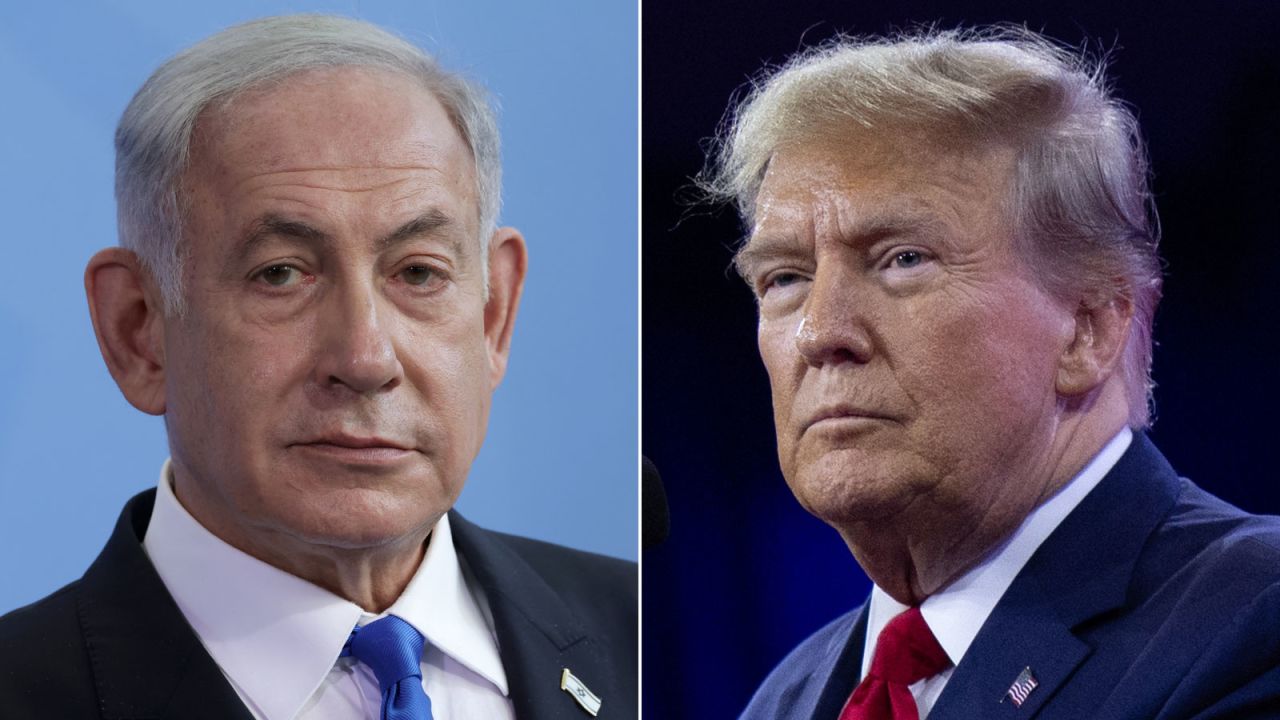
President Donald Trump signaled he’s prepared to let economic pressure  hahahahahah on Iran build rather than launch fresh military strikes, saying the US was only “semi-negotiating” with Tehran on the Strait of Hormuz. Hey Donald your yes men are afraid to tell you they are out of ammo! “We are just watching Iran with its huge inflation and the fact they have no money,” Trump told Axios in an interview on Sunday, saying that a US naval blockade of the country was deepening its financial woes. “We are low keying it.” The president’s comments mark a shift from his repeated threats to escalate the bombing campaign against Iran and come amid lingering talks between the Islamic Republic and Oman to reopen the Strait of Hormuz to maritime shipping. Tehran has said it’s nearing a deal on the waterway while laying out a long list of demands for Washington before shipping can resume, including the lifting of sanctions and an end to attacks on Iran-backed groups across the Middle East.  Tehran on Saturday published a list of demands for Washington as conditions for fully reopening Hormuz, indicating any immediate respite for energy supplies may be limited. It wants the US to lift its naval blockade on Iranian ports, withdraw forces from around Iran, remove sanctions, release frozen assets and pay compensation for war damage.It also demanded a permanent end to attacks on groups it backs in Lebanon, Iraq, Yemen and Gaza. Some of those demands will be difficult for the US to meet alone. In Gaza, a proposal by US-backed mediators to disarm Iran-backed Hamas and push Israeli army out of the Palestinian enclave was rejected by Israel’s Prime Minister Benjamin Netanyahu on Sunday. Netanyahu’s defiance challenges his complex relationship with Trump not just because the president championed the plan but because Israeli withdrawal from Gaza is an Iranian demand before Hormuz can be reopened. Axios quoted a White House official as saying Trump isn’t bothered by the rejection because he understands Netanyahu’s political needs ahead of an October election, in which the right is pressuring him not to yield on his original vow for complete victory over Hamas. The official added that Israel is, meanwhile, restraining its attacks in Gaza, something which has been evident for the past week. In Yemen, Iran-backed Houthi rebels have been escalating fighting with forces supported by neighboring Saudi Arabia, another key American ally. The Houthis claimed they struck Saudi Aramco’s Jazan refinery on Sunday, while Saudi authorities reported a fire that was quickly extinguished, with no inju

NN: Well when you are out of balls, bucks and ammo all that is left is economic pressure which has been tried for 40 years. And it does not work. Besides weapons exports of 10 billion dollars a year in drones and rockets.  Iran has got a LOT of oil and it has a fully operational pipeline  called Kirkuk  to the Turkish port of Ceyhan on the Mediterranean sea . Besides oil smuggled overland to its allies in Iraq!! With a   capacity  to export over 2 million barrels per day. Generating  $80 billion a year. With other smuggling operations including people, drugs and conventual guns at present Iran generates  over $100 billion a year that the US cannot stop.  That’s a lot of Kebabs. 

Vance: Iran says it will allow maximum oil flow in Hormuz…. BULLSHIT! …. Iran says straights remain closed until US withdraws completely

United States President JD Vance shared on Saturday that Tehran told Washington it will allow maximum oil flow through the Strait of Hormuz, though he added that the US will not trust Iran until it proves otherwise. “We’re obviously not at the beginning. We’re in the middle of the game, and we’re applying a whole host of tools, diplomatic, economic, military tools, to ensure that we get the best outcome for the American people,” Vance told Fox News, adding that Iranians are “hurting in a big way,” and they want “this thing to be over.” Moreover, the vice president also shared that Iran notified the US administration that it has no intention of imposing fees in the Strait of Hormuz. He also touched on the ongoing negotiations between Iran and Oman regarding the management of the strait, adding that the biggest concern at the moment is demining of the vital shipping route. NN: BULLSHIT!

Iran’s FM: No talks with US until it abides by MoU

Iranian Foreign Minister Abbas Araghchi stressed on Sunday that Tehran will not engage in negotiations with the United States until it continues to violate the memorandum of understanding (MoU) reached on June 12.

“We are not currently negotiating with the US. The exchange of messages is taking place through intermediaries, but this process is not called negotiation,” the minister said.

Araghchi also addressed talks with Oman on the Strait of Hormuz, emphasizing that they are not aimed at reopening the waterway, but at establishing the route to be used if the strait is reopened.

NN; Settled Business straight are not opened

Trump says the Strait of Hormuz is ‘sort of open right now’… Sounds Like A Booby Prize To Me

Iran and Oman have indeed reached the framework of a deal on the status of the Strait of Hormuz, MS NOW reported Thursday night, citing two Middle Eastern diplomats.  But does the deal mean that the Strait of Hormuz is now “open,” as it was before the war in Iran began? That does not appear to be the case. The framework between Iran and Oman, per the MS NOW report, matches what has been reported in recent days: That new shipping routes will be established, with Iran controlling incoming shipping traffic and Oman controlling outgoing traffic. Tolls will not be collected. Also, it is a “temporary” agreement, to be followed by later talks between Washington and Tehran, aimed at resuming discussions on the status of Iran’s nuclear program and settling other disputed matters from the war.  There has been no official announcement of a deal yet, but when it comes, an Iranian official told MS NOW, the United Nations International Maritime Organization and the U.S. will both participate. A Washington Post report on Thursday stated that while Iran and Oman are close to an agreement on Strait of Hormuz traffic, officials from Iran are “warning that the deal will not fully reopen the crucial waterway.”  “This understanding does not mean the complete opening of the Strait of Hormuz, but rather a new and different model,” Iran’s Deputy Foreign Minister Kazem Gharibabadi said this week, as reported by Iran’s state-run Islamic Republic News Agency. The deputy foreign minister also said that Iran and Oman had discussed establishing a “joint coordination center” to direct ship traffic.  The Post characterized this as Iran “using its hold to extract further concessions.”  Tehran’s comments, the Post said, caused oil prices to jump on Thursday, with Brent Crude rising 4 percent to $82 per barrel. It had risen to $83 as of Friday morning.  The deal may hinge on the semantic question of whether or not the Strait of Hormuz is “open.” But that distinction certainly mattered in June, when vague wording in the “Memorandum of Understanding” deal imposing a ceasefire led the sides to have different understandings of exactly what they had agreed to.  “Any temporary routes will be without any impediments — meaning no approvals or permissions and no tolls or charges,” a U.S. official told the press. “The Strait of Hormuz is an international waterway, and no party controls the lanes or the ability to transit through them.”

The president, speaking to reporters in the Oval Office on Thursday, said the Strait is “sort of open right now.” He also told reporters that he had been “personally” involved in the talks.( HAHAHAHA The Straights are not open to the free flow of traffic)

Trump had more to say in an interview with Punchbowl News, which was published on Friday.  “They want to make a deal. Look, it’s obvious. They don’t want to be hit. Ok? They want to make a deal. So we will see,” Trump told the news outlet. Meanwhile, as reported by Fox News, the president came in for some mockery this week from Iranian Parliament Speaker Mohammad Bagher Ghalibaf, who took to X to mock Trump’s recent negotiating posture. 

“Massive attack coming… wait, never mind, they want to negotiate,” Ghalibaf wrote on the social media platform, going on to rip the U.S. president for engaging in “theater diplomacy on loop.” Trump had indeed threatened to launch the largest military attack since World War II, before backing down, and announcing, last weekend, that a deal was close to reopening the Strait of Hormuz. It’s a deal that, nearly a week later, remains close.  The speaker is certainly not the first person to direct that charge at Trump. Even the usually Trump-friendly New York Post, earlier this week, noted that Trump had given Iran a “last chance” at least 13 times since the start of the war, often threatening to launch a specific attack or bomb a specific location, before backing down.  “Using bullying + broken promises + fake news as leverage is a failed strategy,” Speaker Ghalibaf added in the social media message. “Acknowledge the facts and fulfill your commitments. We don’t need more theater.”

NN:  Their is a little problem with launching the biggest attack since WWII on Iran. The US LACKS THE BOMBS ESPECIALLY THE SMART ONES AND THE WILL TO LAND 100,000 TROUPS ON THE GROUND. 
The biggest attack in WWII  was the Normandy invasion. It involved 15,000 bombs dropped by air. The rocket attack and conventual artillery bombardment involved 250,000 projectiles. Troops were 160,000 boots on the ground and 45,000 killed and wounded. To put it mildly the US ain’t the man it use to be. And Iran damn well knows it.

Trump on Zelensky missile plea: We want missiles too

US President Donald Trump emphasized on Thursday that even if his nation has an “unlimited supply” of ammunition, “we can never have too many” when asked about Ukrainian President Volodymyr Zelensky’s plea that his country desperately needs Patriot missile batteries and long-range missiles. “Well, I mean, we want missiles, too. You know, when Biden gave him so much, Biden gave $300 billion worth of ammunition,” Trump elaborated. “We need more ammunition all the time.” Earlier, Trump refuted claims that the US was experiencing a munitions shortage and threatened in a Truth Social post to seek “long-term jail sentences” for those suspected of leaking information.

NN: The sad truth is the fact the recent massive attack on Iran was called off because of lack of smart weapons. And Iran knows it. They have no lack of drones and misssles hidden deep underground