Macron Travels From Moscow to Kyiv for Talks: Ukraine

KYIV, Ukraine — French President Emmanuel Macron said Tuesday that Russian President Vladimir Putin told him that Moscow would not further escalate the Ukraine crisis. Macron also said it would take time to find a diplomatic solution to the rising tensions, which represent the biggest security crisis between Russia and the West since the Cold War. His remarks on a visit to Kyiv came as the Kremlin denied reports that he and Putin struck a deal on de-escalating the crisis. Kremlin spokesman Dmitry Peskov said that ‘œin the current situation, Moscow and Paris can’t be reaching any deals.’ Macron met with Ukrainian President Volodymyr Zelenskyy amid mounting fears of a Russian invasion. Moscow has massed over 100,000 troops near Ukraine’s borders, but insists it has no plans to attack.

The Kremlin wants guarantees from the West that NATO will not accept Ukraine and other former Soviet nations as members, that it halt weapon deployments there and roll back its forces from Eastern Europe – demands the U.S. and NATO reject as nonstarters.

At a news conference after meeting Zelenskyy, Macron said Putin told him during their more than five-hour session Monday that ‘œhe won’t be initiating an escalation. I think it is important.’ According to the French president, Putin also said there won’t be any Russian ‘œpermanent (military) base’ or ‘œdeployment’ in Belarus, where Russia had sent a large number of troops for war games. Peskov said withdrawing Russian troops from Belarus after the maneuvers was the plan all along. Zelenskyy said he would welcome concrete steps from Putin for de-escalation, adding he didn’t ‘œtrust words in general.’ Macron also sought to temper expectations. Let’s not be naive,’ he said. “Since the beginning of the crisis, France hasn’t been inclined to exaggerate, but at the same time, I don’t believe this crisis can be settled in a few hours, through discussions’ Zelenskyy called his talks with Macron ‘very fruitful.’ We have a common view with President Macron on threats and challenges to the security of Ukraine, of the whole of Europe, of the world in general,’ Zelenskyy said. He said France was giving 1.2 billion euros ($1.3 billion) in financial aid to Ukraine and helping restore infrastructure in the war-ravaged east of the country. Western leaders in recent weeks have engaged in high-level talks, and more are planned against the backdrop of military drills in Russia and Belarus. On Tuesday, the Russian Defense Ministry said that six amphibious landing ships were moving from the Mediterranean to the Black Sea for exercises and two Tu-22M3 long-range nuclear capable bombers flew another patrol over Belarus. Macron said he had not expected Putin to make any ‘gestures’ Monday, saying his objective was to ‘prevent an escalation and open new perspectives. … That objective is met.’ Macron said Putin ‘set a collective trap’ by initiating the exchange of documents with the U.S. Moscow submitted its demands to Washington in the form of draft agreements that were made public, and insisted on a written response, which was then leaked.

In the history of diplomacy, there was never a crisis that has been settled by exchanges of letters which are to be made public afterward,’ he said, NB: You nee to understand the private negotiations are over opening the Nord Stream II pipeline. Think of it as the rope Europe will hang itslf….

adding that’s why he decided to go to Moscow for direct talks. Macron later flew to Berlin, where he briefed Polish President Andrzej Duda and German Chancellor Olaf Scholz, who said their stance was unified, with a joint goal ‘œto prevent a war in Europe.’ Putin said after Monday’s meeting that the U.S. and NATO ignored Moscow’s demands, but signaled readiness to continue talking. He also reiterated a warning that NATO membership for Ukraine could trigger a war between Russia and the alliance should Kyiv try to retake the Crimean Peninsula, which Moscow annexed in 2014. NATO, U.S. and European leaders reject the demands that they say challenge NATO’s core principles, like shutting the door to Ukraine or other countries that might seek membership; but they have offered to discuss other Russian security concerns in Europe.

U.S. President Joe Biden has said any prospect of Ukraine entering NATO ‘in the near term is not very likely,’ but he and other alliance members and NATO itself refuse to rule out Ukraine’s future entry.

Biden met Monday with Scholz, who also will travel to Kyiv and Moscow on Feb. 14-15. They threatened Russia with grave consequences if it invaded, and Biden vowed that the Nord Stream 2 Russia-to-Germany gas pipeline, which has been completed but is not yet operating, will be blocked. Such a move would hurt Russia economically but also cause energy supply problems for Germany. British Prime Minister Boris Johnson, in an article in the Times of London, also urged allies to finalize heavy economic sanctions that would take effect if Russia crosses into Ukraine. He said the U.K. is ready to bolster NATO forces in Latvia and Estonia as he prepared to meet the Lithuanian prime minister in London to show support for the Baltic nations. Johnson said he was considering dispatching RAF Typhoon fighters and Royal Navy warships to southeastern Europe. Britain said Monday it is sending 350 troops to Poland to bolster NATO’s eastern flank. It already has sent anti-tank weapons to Ukraine. More than 100 U.S. military personnel arrived in Romania ahead of a deployment of about 1,000 NATO troops expected in the country in the coming days, Romania’s Defense Minister Vasile Dincu said. U.S. officials have said that about 1,000 alliance troops will be sent from Germany to Romania, a NATO member since 2004. Romania borders Ukraine to the north. About 1,700 U.S. soldiers from the 82nd Airborne are also going to Poland. U.S. officials have portrayed the threat of an invasion of Ukraine as imminent – warnings Moscow has scoffed at, accusing Washington of fueling tensions. Russia and Ukraine have been locked in a bitter conflict since 2014, when Ukraine’s Kremlin-friendly president was ousted, Moscow annexed Crimea and then backed a separatist insurgency in the east of the country. The fighting between Russia-backed rebels and Ukrainian forces has killed over 14,000 people. After meeting Macron, Putin said without elaboration that some of the French president’s proposals could serve as a basis for a settlement of the separatist conflict, adding that they agreed to speak by phone after Macron’s visit to Kyiv. Macron also said the presidential advisers of France, Germany, Russia and Ukraine will meet Thursday in Berlin on the next steps. “It will take time to get results,’ he said. German Foreign Minister Annalena Baerbock, visiting the front line in eastern Ukraine’s Donbas region, said she wanted ‘œto get an impression of what it means that we still have war in the middle of Europe.’ NN: The west is about to cave in to Putin’s demands. I think he needs to give the west one more slap to get their attention. Its like breaking a horse. Someone has got to be the master and someone has got to be the slave….

Russia may use field hit by U.S. sanctions for gas exports to China

MOSCOW — Russian gas giant Gazprom may tap a field https://www.reuters.com/article/usa-russia-sanctions-idUSL1N10I1H120150807 hit by U.S. sanctions off the Pacific island of Sakhalin to provide China with gas under a recently signed deal, sources and analysts said on Tuesday. Russia, already Beijing’s No. 3 gas supplier, has been strengthening ties with China, the world’s biggest energy consumer, reducing its dependence on its traditional European energy customers amid a standoff with the West. This advertisement has not loaded yet, but your article continues below. President Vladimir Putin announced new gas supply deal with China on Friday, which would boost gas exports from Russia’s far east where the pipeline network is not connected to traditional routes of its fuel exports to Europe. Gazprom said it signed a long-term sales and purchase agreement with China National Petroleum Corporation (CNPC) for natural gas to be supplied via a far eastern route. As the project reaches its full capacity, the amount of Russian pipeline gas supplies to China would grow by 10 billion cubic meters (bcm) per year, totalling 48 bcm per year, including supplies via the existing Power of Siberia pipeline. Gazprom has not revealed the source base for the new deal. The company and CNPC have not responded to a request for comment. Two sources said gas may come from the fields off Sakhalin, including the Yuzhno-Kirinskoye, which Washington put under sanctions in 2015 for Moscow’s role in the crisis in Ukraine. The field, part of the Kirinsky block in the Sea of Okhotsk, also contains oil, while sanctions are related to exploration for or production of, oil or gas in Russian deepwaters. The sanctions prevent foreign companies from tapping hydrocarbons at such fields, and the possible gas exports from Yuzhno-Kirinskoye may show that Russia has learned how to get around the sanctions. Moscow-based Sova Capital brokerage said gas for the deal could come from the Kirinskoye field “or more likely the Yuzhno-Kirinskoye field, which should launch in 2023 or 2024.” According to Gazprom’s data, Yuzhno-Kirinskoye’s reserves amount to 711.2 billion cubic meters of natural gas, 111.5 million tonnes of gas condensate and 4.1 million tonnes of oil. Production is seen there at 21 bcm per year. “This will be Yuzhno-Kirinskoye, no doubt about that,” a source said about the gas source for the new deal with China. Gazprom said on its website that “Yuzhno-Kirinskoye is in the process of pre-development, with geological exploration completed within the boundaries of the field.” It has also said the company had been constructing production wells at the field using semi-submersible drilling rigs and it expected to put it on stream gradually in the period from 2023 through 2025. Sakhalin-1 project is expected to begin LNG production in 2028. Gazprom’s own LNG plant on the region, Sakhalin-2, has not enough resources of gas to raise production and set up a third production line. NN: the only resource Russia really has is oil. They supply half the worlds fossel fuels. They lose oil and they lose the empire. Gas piped to the rest of the world ensure their survival. And they know it. Russia also knows the greenwinnie wet dream will not come to fruition for another 100 years.

Biden says If Russia invades Ukraine their will be no Nord Stream II

WASHINGTON — Even as President Biden and German Chancellor Olaf Scholz met at the White House on Monday to reaffirm their joint efforts to dissuade Russia from launching an invasion of Ukraine, questions remained about whether the two leaders are prepared to respond to a military incursion by halting the completion of the Nord Stream 2 natural gas pipeline.

“If Russia invades — that means tanks or troops crossing the border of Ukraine — there will be no longer a Nord Stream 2. We will bring an end to it,” Biden said during a press conference with Scholz following their meeting.

Scholz, by contrast, was much more muted about the pipeline. “As I already said, we are acting together. We are absolutely united, we will not be taking different steps, will do the same steps and they will be very, very hard to Russia,” Scholz told reporters. Pressed on how he would go about halting the construction of the pipeline despite its being located on German soil, Biden did not go into specifics but voiced confidence about his options. “I promise you we’ll be able to do it,” he said. That promise echoed one he made months earlier, about Kabul not falling under Taliban control after U.S. forces withdrew from Afghanistan. The speed with which that promise unraveled in late August led to questions about Biden’s approach to foreign policy. Ukraine is another test for a president who depicted himself during the 2020 campaign as an elder statesman, one whose dealings with world leaders would be far more measured than those of his White House predecessor. Despite massing roughly 100,000 troops along Ukraine’s borders with Russia and Belarus, Russian President Vladimir Putin has said he doesn’t want a military conflict, but he has made little effort to hide his irritation at the expansion of NATO into Eastern Europe. “Russian concerns were basically ignored,” Putin complained at a press conference last week. French President Emmanuel Macron met with Putin on Monday in Moscow in an effort to broker a peaceful solution to the conflict. Biden, meanwhile, has sought to rekindle unity among NATO members following years of fraying relations during Donald Trump’s presidency. Ukraine is not part of the organization and is therefore not subject to its collective defense clause, known as Article 5. Still, any Russian aggression would be seen as a threat to the broader stability of Eastern Europe at a time when nationalism, xenophobia and the coronavirus pandemic are testing a decades-long order. Biden said on Monday that it would be “a gigantic mistake” for Putin to launch a full-scale invasion of Ukraine. “The impact on Europe and the rest of the world would be devastating and he would pay a heavy price,” the president said, promising “swift and severe” sanctions on Russia were such an invasion to take place. There would be consequences for Europe too. Russia accounts for about one-third of all natural gas and one-fourth of all crude oil consumed by the European Union, making it “the bloc’s largest single energy source,” according to the Council on Foreign Relations. Running 800 miles beneath the Baltic Sea and linking Russia to Germany, the Nord Stream 2 pipeline would greatly increase Germany’s supply of natural gas. Upon its completion, it is expected to have an annual capacity of 55 billion cubic meters of natural gas. But because the pipeline would not pass through Ukraine, which does not have access to the Baltic Sea, Kyiv would not collect transit fees from the project. U.S. energy prices could suffer from a Ukrainian invasion too, but not as directly as those in Western Europe. That has made Scholz, in particular, somewhat reticent in confronting the Kremlin directly. Even as he and Biden vowed a unified approach on Monday, his evasion of the Nord Stream 2 conundrum made clear Berlin’s desire to tread carefully.

“We will be united, we will act together,” Scholz said at one point. He said the German economy would also “switch to hydrogen” in the near future, lessening the dependence on Russian energy sources and burning fossil fuels more generally. But such a shift is unlikely to come soon enough to resolve the crisis on the Russia-Ukraine border.

Still, Biden vowed that the ties between Germany and the United States remain strong, disputing the notion that disagreements over how to handle Russia had damaged the relationship. “No need to win back trust,” the president said. Scholz “has the complete trust of the United States.”

Russia's Nord Stream pipeline

NN: Not only has Europe shot itself in the dick(tit)  BUT they have reloaded and shot again. Did you know in Europe their is as much fracking gas to be had as in the US. But fracking is banned… To be sure they become Putin’s bitch they are shutting down their Nukes. Now you would think they would learn… I can tell you Europe is Europe because they never learn right before World War II Europe demilitarized. When the war started they were caught flat footed.It was the US that rearmed them…. This time they will not be so lucky….

Heating Oil And Diesel Stocks Dwindle While Demand Climbs

  • Oil prices have yet another reason to remain elevated as cold winter weather and refiners struggle to keep up with the rising demand for heating oil and diesel.
  • Heating oil hit $2.83 per gallon, its highest price in seven years, as harsh winter storms affected large portions of the country.
  • Demand for heating oil should drop off as winter comes to an end, but if oil prices remain high then fuel prices will still remain elevated.

Supplies of diesel and heating oil in the United States have dwindled as refiners are having trouble replenishing the domestic fuel supply this winter, which may keep oil prices elevated for months.
Heating oil futures reached $2.83 per gallon at the market’s close on Feb. 4, the highest price in seven years. U.S. and global benchmarks for crude-oil futures hit above $90 a barrel, as a harsh winter storm affected large portions of the country, adding to existing supply concerns. The latest national average price for diesel was at $3.78 per gallon, the highest since September 2014. Fuel production in the United States has not kept up with demand for months with East Coast stockpiles at their lowest levels since April 2020. When inventories are low, refiners generally respond by ramping up output, but several key U.S. refineries have been out of action since the start of the pandemic, while others are under maintenance. Many of the operational refineries are currently producing less output to avoid producing too much jet fuel, where demand still lags below 2019 levels. Global refining capacity shrank by more than 2 million barrels per day during the pandemic, while U.S. refining capacity last year fell 4.5 percent to 18.1 million barrels per day (bpd). Demand for diesel, heating oil, and other related products has been running 5 percent higher than pre-pandemic levels, putting inventories at 15 percent less than the five-year moving average, according to data from the U.S. Energy Information Administration.
Stronger than expected demand is a key reason why fuel prices are expected to reach pre-2020 levels by mid-year at the latest. Increased fuel costs may remain an ongoing theme for the time being, as oil companies are finding it difficult to react to tightened supply situations. The weather has boosted demand for natural gas, as fuel stocks are being tested by frigid temperatures throughout much of the United States, which is expected to persist through next week. “The latest upswing was triggered by a cold snap in Texas, which is fueling concerns about production outages in the Permian Basin, the largest U.S. shale play,” said Carsten Fritsch, a commodity analyst at Commerzbank. “A year ago, a period of extreme cold weather had caused massive disruptions to oil production there,” said Fritsch, referring to a crippling storm last year that left 4 million in Texas without power. About 350,000 homes and businesses in states such as Tennessee, Arkansas, and Texas were without power as of Feb. 4, due to a winter storm that brought freezing rain and snow. Some power companies in states facing severe weather are preparing to use more distillate oil to meet demand.
In New England, oil-fired generation is expected to surge temporarily in the coming days, which could raise prices more. Meanwhile, the Organization of the Petroleum Exporting Countries and its allies on Feb. 2, stuck with its plan to boost global production by another 400,000 barrels a day in March. However, OPEC member states have been unable to produce oil at their assigned quota levels, which will not alleviate the global supply-demand deficit. Prices should ease as winter subsidies and demand for heating fuel drops off, allowing inventories to restock, but if the cost of crude oil used to make distillates remains high, fuel prices might remain elevated. Low distillate inventories have pushed the market into backwardation, as current prices have been pushed higher than expected future prices. This has led several major oil traders to see little financial incentive to store extra diesel and many are choosing not to renew their long-term storage contracts. Record-high natural gas prices have led European refiners to reduce production in Europe to save on cost, leading to tightened inventories. European diesel last week was boosted with a six-month spread to its widest backwardation since March 2008. NN: This trade is shping up rather well. The talking heads are all in alignment… As usual the cry or rising demand and falling supplies can be heard from the Wall Street Journal to Bloomberg and CNBC. Buying volume is at record levels and Backwardation is huge. In fact i am so excited i have stopped dreaming about Becky. Reality Putin will push things to the  brink and the US and Europe will cave in and Nord Stream II after the proper waiting period will get the long awaited permit. AND the Ukraine will agree not to welcome NATO. You would think that would make a short seller happy… BUT their is more, yes!! WHO SAYS CHRISTMAS IS ONLY ONCE A YEAR. Now this is the part where i have to tell you about the sucking sound i keep hearing. Yes it started a few weeks back and keeps getting louder every day. Now being a connoisseur of sucking sound i can tell each one is distinct. And i heard this one before when Kerry who is selling the US out to global warming sold the world out to Iran on the nuclear deal. It goes like this Iran got a permit to turn on and run an sell nuclear reactor technology for get this ha ha ha ha Domestic use. Now you might ask why one of the worlds major oil countries needs nuclear reactors for electricity. And the answer is that where you can make nuclear grade fission material. Its like what Kim Num Chucks did with the nuclear reactor Clinton( Kerry’s blood brother) game them. But the sucking sound got worse when Biden and his bunch of merry liberal commie friends in the dead of the night released 250 billion dollars in frozen funds to Iran. Now you got to understand Iran has a problem… Funding global terrorism, a first class rocket program and building nukes are a expensive proposition. SO as Biden sucks up to Iran they are trying in a face saving way lift all Sanctions… The market has gotten a sniff of this today…. Talk about a premature ejaculation….. Anyway shorting operations will soon begin.

Putin can be ‘deterred’ from potential invasion of Ukraine: Frmr. US Ambassador Taylor

CNN)New satellite imagery obtained by CNN shows that a large base which held Russian tanks, artillery and other armor near the Ukrainian border has been largely emptied, with the equipment apparently being moved much closer to the frontier in recent days. The base is at Yelnya, southeast of the city of Smolensk and some 160 miles from the Ukrainian border. Large amounts of weaponry were moved there late in 2021 — including some 700 tanks, infantry fighting vehicles and ballistic missile launchers. Much of that equipment is now gone, according to radar satellite imagery acquired on February 6. Cloud cover had prevented photographic imagery of the site for several days previously. The images show the tracks of departing vehicles. Stephen Wood, senior director at satellite imagery company Maxar, told CNN: “It looks to me like a considerable amount of the vehicles [tanks, self-propelled artillery and other support vehicles] have departed from the northeastern vehicle park; additional armored vehicles departed from the more central vehicle park.” Konrad Muzyka, an expert in tracking military movements with Rochan Consulting, says what has happened at Yelnya is one of several “important changes in Russian force compositions and their locations.”: “We are entering the new stage of the build-up where we are seeing pre-positioned units being manned with additional personnel and that equipment is being moved probably to staging areas.” Social media videos shot in the last few days show some of that equipment on trains and roads much further south in the Bryansk region, which is close to Ukraine. The armor and vehicles are identifiably from the same units that had pre-positioned at Yelnya. “We know that Yelnya hosts elements of the 41st army of the CMD [Russia’s Central Military District] that arrived from Siberia last spring to a training ground near Voronezh and whose vehicles were later moved to Yelnya,” Russian journalist Rusland Leviev of the Conflict Investigation Team (CIT), a Russian open-source intelligence group,  Social media videos around Bryansk show military vehicles with “76” and “87” codes on their number plates which denote the CMD, he pointed out. Leviev added that the CIT believes the vehicles are moving to Bryansk, “because we saw two videos of the same convoy in Smolensk region and then in Bryansk region to the south,” which the group geolocated against crowdsourced dashcam footage and satellite imagery. “We also saw videos of several trains that were posted by social media users from Bryansk region. On the carriages we could read 8-digit identification codes, which, when checked against openly accessible databases, trace the train’s origins to Yelnya.” “This is important because those vehicles previously were several hundred kilometers away from the border, and now [they] are stopping in mere dozens [of kilometers away].”

New satellite images show advanced Russian military deployments in Belarus

Thomas Bullock, an analyst at Janes, wrote: “There are now multiple indicators suggesting troops have begun deploying to forward camps to join up with their prepositioned equipment.” He also added that videos posted on social media indicate that troops from Siberia, whose equipment has already been moved to sites in Smolensk and Bryansk, are in the process of deploying. A US intelligence document dated December 3, 2021 included satellite imagery showing that the site at Yelnya was empty in June — but by November was home to five Battalion Tactical Groups, each of which contains about 1,000 troops and supporting elements. Much of the equipment belongs to the 41st Combined Arms Army, which is normally based in Russia’s CMD and has its headquarters in Novosibirsk in Siberia.
Muzyka says there are substantial Russian movements elsewhere. “We are seeing a massive influx of vehicles and personnel in Kursk,” he tweeted Sunday. Kursk is some 70 miles (100 kilometers) from the border with Ukraine.
Phillip Karber of the Potomac Foundation in Washington, who has also studied Russian troop movements in detail, told CNN: “Russia’s strongest offensive formation — the First Guards Tank Army, which is normally stationed in the Moscow area — has moved south 400 kilometers and is assembling in the optimum area for a rapid armored offensive on the Khursk-Kyiv invasion route.”
A closer view of the vehicle parks at Yelnya on January 19, before the equipment departed.

 On Sunday, US national security adviser Jake Sullivan told ABC News: “We believe that there is a very distinct possibility that Vladimir Putin will order an attack on Ukraine. It could take a number of different forms. It could happen as soon as tomorrow or it could take some weeks yet.”
Separately US officials told CNN at the weekend that Russian President Vladimir Putin has now assembled 70% of the military personnel and weapons on Ukraine’s borders he would need for a full-scale invasion of the country. This includes a growing force in southern Belarus.
The Kremlin has repeatedly denied any plans for a military offensive against Ukraine. NN: I guess they should have turned on Putin’s 10 billion dollar pipeline. Now everybody has got their nickers in a twist… How come i do not see satellite images of a NATO force build up? Putin respects and understands force… He laughs at diplomats……..

France Braces For Blackouts As Gas Stockpiles Dwindle

The Brits aren’t the only European nation to find itself on the verge of a full-blown energy crisis. On Thursday, French natural gas pipeline operator GRTgaz warned that French gas stockpiles are much lower at this point in the year than they have been during years past – and as a result, they run the risk of potentially being depleted before the winter is up, a disaster that could make last year’s deep freeze in Texas look tame if a sudden cold snap sends demand soaring. According to data from Gas Infrastructure Europe, France’s stockpiles were about 34% full as of Feb. 1, which is well below the five-year average of 42%. Inventories are now at the lowest seasonal level since 2018, when a brutal winter cold snap nicknamed “the Beast from the East” left French reserves standing at just 3% when the heating season was over.

“We’ll probably be close to zero toward the end of March, and we remain vigilant on that topic,” GRTgaz chief Thierry Trouve said in a presentation in Paris Thursday.

It’s the most precarious for French gas inventories since they arrived at their lowest seasonal level since 2018. Inventories are now at the lowest seasonal level since 2018, when the country ended the heating season with storage at a record-low of just 3%.And gas prices are much higher today than they were back then.

Fortunately, mild weather is expected to continue across much of Europe this month. But further down the road, limited Russian shipments to Europe and surging demand as economies reopen following the omicron wave could create problems, especially if a late-season cold snap should arise.  France’s energy problems have been exacerbated by the lower-than-usual capacity at the country’s nuclear power plants, some of which have been closed over safety fears as President Emmanuel Macron seeks to modernize France’s nuclear power system. As we have previously reported, this drawdown in nuclear capacity has raised the risk of rolling blackouts in France if struggles to compensate with LNG. France will be able to cope with a “late” cold snap assuming that enough gas continues to arrive from Norway and from other nations via France’s LNG terminals to compensate for the shortage of supplies coming “from the East,” said Trouve. He added that provisional schedules for terminal deliveries remain “well filled”. Even if supply shortages don’t end up leading to rolling blackouts, it’s possible that France’s energy woes could create a serious political problem for President Emmanuel Macron ahead of elections in April. Energy inflation is already creating serious problems in the UK, and if renewable power generation lags, nuclear reactors remain halted for maintenance, and natural gas prices remain elevated, then higher power bills into January and February could create more unpopularity for Macron. NN: IF it were up to the Grennieewinnies we would all live in tents heated by volcanic rocks. You sure is shit can’t burn wood now a days,,,,

Russia To Resume Oil Output To 90% Of Pre-pandemic Level

Russia will be able to resume its oil production to 90% of the levels it was producing prior to the pandemic, Russian Deputy Prime Minister Alexander Novak said in an interview aired on Russian television on Wednesday. Novak attributed Russia’s ability to ramp up its oil production to the decision made by OPEC+ earlier on Wednesday. That decision saw the group agree to ease production cuts by another 400,000 bpd. “For Russia it means that in March it will be able to additionally increase by 100,000 barrels per day again. It will enable us to restore the level of reduced volume by 90%,” Novak said. Russia took 2 million barrels per day offline in May of 2020 as part of the efforts to restore balance to the oil markets that were saturated with inventory, with prices dipping into negative territory.

Novak said that 1.8 million barrels per day of this will be restored as early as in March, adding that Russia’s compliance has been “close” to 100%, even in December.

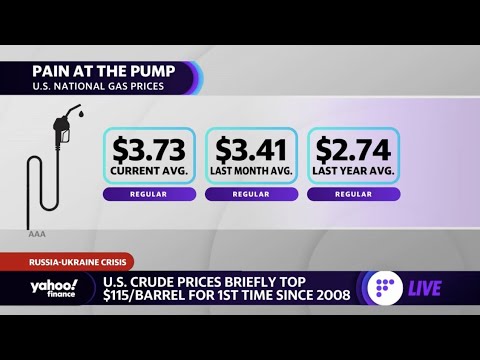
The March output schedule shows that Russia will be able to produce 10.331 million barrels per day on average—equal to Saudi Arabia’s share. OPEC+’s over compliance with the production cut deal has generated skepticism in the market over the group’s future production abilities and accuracy of spare capacity figures. In December, this compliance was at 122%–raising the question in a rather tight market whether OPEC+ can actually rise to meet demand if called upon. The issue of spare capacity is significant for a tight market. Spare capacity figures are what determine the ability of producers to ramp up production in response to market demand. As OPEC+ continues to ramp up production—albeit slowly—it is also using up its ability to respond to future demand increases that are likely to follow the pandemic. NN: Over $80 oil everyone can ramp up production. Including US fracking which is going great guns… I have never ever NOT seen 80 oil ending in under $30…..Gasoline over $3.00 a gallon approaching $4,00 is a pretty good consumption  limiting tool..

Milley says Kyiv could fall in 3 days if Russia invades

Chairman of the Joint Chiefs of Staff Gen. Mark Milley told lawmakers that Kyiv could fall within 72 hours if a full-scale Russian invasion of Ukraine takes place, multiple congressional sources tell Fox News. Milley told lawmakers during closed-door briefings on Feb. 2 and 3 that a full-scale Russian invasion of Ukraine could result in the fall of Kyiv within 72-hours, and could come at a cost of 15,000 Ukrainian troop deaths and 4,000 Russian troop deaths. Several lawmakers expressed concern that the Biden administration did not respond quickly to provide Ukraine with significant military aid, such as anti-aircraft and rocket launcher systems that would defend against an invasion from Russia. ) Biden administration officials at the meetings responded to these concerns by saying that a significant supply of military aid to Ukraine could be used as a reason to invade Ukraine.  While Ukraine is receiving security assistance from the United States through a $200 million allocation made in December, it is also receiving $600 million in assistance from the United Kingdom and Baltic states, which the country is depending heavily upon and includes anti-tank Javelin missiles and older-version Stinger portable anti-aircraft missiles. The United States is also working to make preparations for a significant refugee and migrant crisis, one person familiar with the planning said. European allies are also leading discussions on housing and migrant flows under the assumption that Ukrainian nationals would flee to other portions of Europe. NN:  This is getting very dicey. I do not want to get in front of the Ukraine crises.  If this was settled business i would be starting shorting operations in oil. BUT since i have no seance for the outcome of the Russia troop build up we must stand aside….

Kremlin: Claims about Russia’s invasion dangerous

WASHINGTON, February 5. /TASS/. US’ allegations that Russia is planning a “false flag operation” in Ukraine are part of information war against Russia, Russian Ambassador to the US Anatoly Antonov told Newsweek. His responses were published on the Facebook page of the Russian Embassy in Washington. “These lies are part of information war against Russia. For several months already, Washington has been agitating the entire world with claims that Ukraine is about to fall victim to “Russian aggression.” However, a mishap happened since there is no invasion,” the Russian ambassador said. “Apparently, in order to be more convincing, the use of ‘leaks’ from some intelligence data began with blasphemous and unfounded allegations that you mentioned,” the envoy noted. According to the Russian diplomat, “there is an impression that US spin doctors in an attempt to discredit Russia are acting according to a ‘throw enough mud and some of it will stick’ principle. We know the price of such ‘evidence’ by the US intelligence who deeply disgraced itself at the time by handing a tube with white powder to the US Secretary of State to justify the Iraq invasion,” the ambassador stressed. “I would like to assure Newsweek’s readers without reservation that Russia does not intend to attack anyone. We need good-neighborly relations with the fraternal Ukrainian people,” he emphasized. The dissemination of false claims that Russia is planning a “false flag operation” in Ukraine may serve as a preparation of an alibi for potential actions by Ukraine’s Armed Forces (UAF) against Donbass, Antonov told. “We consider current US actions on pumping Ukraine with weapons to be erroneous and highly dangerous. By doing so, the US panders to a nationalist group in Kiev which is doing everything in order to turn the Russian-speaking population into a persecuted minority in an ethnocratic state,” the envoy said. “We are urging the US not to playact for the gullible. Fantasies on the subject of Russian ‘false flag’ operations, by all appearances, serve to create an alibi for the UAF’s possible operations against Donbass,” he explained. “We are concerned over the US stance on the situation around Ukraine,” the diplomat noted. He reiterated that Russian President Vladimir Putin and his US counterpart Joe Biden at the Geneva summit “agreed that the Minsk Accords are the basis for settling the crisis in this country’s southeast.” “Our common task is to make Kiev fulfill its obligations, sit at the negotiating table with the representatives of the DPR and LPR and peacefully reach an agreement on everything,” he stressed. At a briefing for journalists on Thursday, US State Department Spokesman Ned Price claimed that Russia had prepared a staged video of events in Ukraine yet refused to provide any proof. Kremlin Spokesman Dmitry Peskov stressed that it was not the first time the US published materials on Russia’s plans to ‘invade’ Ukraine yet there was no follow-up. Lately, Ukraine and the West have been increasingly echoing claims of an alleged possible Russian “invasion” of Ukraine ever more frequently. Peskov branded such information as an “empty and groundless” escalation of tensions, emphasizing that Russia does not pose a threat to anyone. That said, he didn’t exclude the possibility of provocations being whipped up in order to justify such claims and warned that attempts to resolve the problem in southeastern Ukraine through the use of force would have the most serious consequences.

Israeli study offers strongest proof yet of vitamin D’s power to fight COVID

Israel scientists say they have gathered the most convincing evidence to date that increased vitamin D levels can help COVID-19 patients reduce the risk of serious illness or death.Researchers from Bar Ilan University and the Galilee Medical Center say  that the vitamin has such a strong impact on disease severity that they can predict how people would fare if infected based on nothing more than their ages and vitamin D levels.

Lacking vitamin D significantly increases danger levels, they concluded in newly peer-reviewed research published Thursday in the journal PLOS One.

The study is based on research conducted during Israel’s first two waves of the virus, before vaccines were widely available, and doctors emphasized that vitamin supplements were not a substitute for vaccines, but rather a way to keep immunity levels from falling. Vitamin D deficiency is endemic across the Middle East, including in Israel, where nearly four in five people are low on the vitamin, according to one study from 2011. By taking supplements before infection, though, the researchers in the new Israeli study found that patients could avoid the worst effects of the disease. “We found it remarkable, and striking, to see the difference in the chances of becoming a severe patient when you are lacking in vitamin D compared to when you’re not,” said Dr. Amiel Dror, a Galilee Medical Center physician and Bar Ilan researcher who was part of the team behind the study. He noted that his study was conducted pre-Omicron, but said that the coronavirus doesn’t change fundamentally enough between variants to negate vitamin D effectiveness. “What we’re seeing when vitamin D helps people with COVID infections is a result of its effectiveness in bolstering the immune systems to deal with viral pathogens that attack the respiratory system,” he told The Times of Israel. “This is equally relevant for Omicron as it was for previous variants.” Health authorities in Israel and several other countries have recommended vitamin D supplements in response to the coronavirus pandemic, though data on its effectiveness has been sparse until now. In June, researchers published preliminary findings showing that 26 percent of coronavirus patients died if they were vitamin D deficient soon before hospitalization, compared to 3% who had normal levels of vitamin D. They also determined that hospitalized patients who were vitamin D deficient were 14 times more likely, on average, to end up in severe or critical condition than others. While the scientific community recognized the importance of the results, questions arose as to whether recent health conditions among the patients might have been skewing the results. The possibility was raised that patients could have been suffering from conditions that both reduce vitamin D levels and increase vulnerability to serious illness from COVID-19, meaning the vitamin deficiency would be a symptom rather than a contributing factor in disease severity. NN: Our booster vitamins contains 5000 IU of vitamin D3 and K2 which aides in D3 absorption. As a point in fact I take 20,000 IU of vitamin D3 on a daily bases. My Doctor told me that their are no toxicity issue for most people with mega doses. Consult with your medical professional before you make any dietary changes  or start taking any supplement. Our immune booster CoronnaVit is available on the link below. Or call Jim for a complimentary supply…… This is not about money!!!!!

Booster Suppliants  Order here