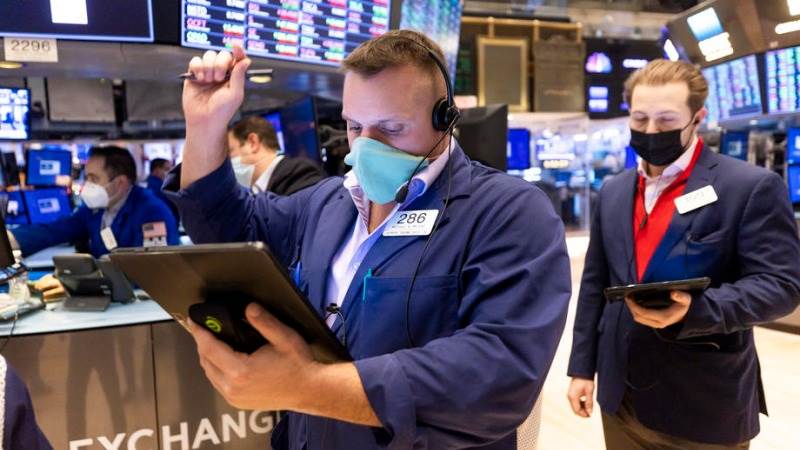
Dr. Michael Osterholm warned that a sharp spike in Covid-19 infections in the coming three to four weeks means “we’re going to have a hard time keeping everyday life operating.” The Director of the Center for Infectious Disease Research and Policy at the University of Minnesota and member of President Joe Biden’s COVID-19 Advisory Board appeared on MSNBC Thursday morning to discuss the sharp rise in coronavirus cases brought about by the Omicron variant and new CDC guidelines that shorten the recommended time to quarantine for asymptomatic individuals following a positive test. CDC Director Dr. Rochelle Wolensky appeared on a number of television shows and was pressed on whether the decision to cut quarantine guidelines from 10 to five days was based on business needs or science. Willie Geist asked his guest “What’s your take on the isolation down from 10 days to five? It’s more of what people can tolerate, according to Dr. Wolensky, and hopefully getting people back to work and school, perhaps to set some people’s minds at ease, but is it based on science in your view?”
“Right now we have a very imperfect situation that’s going to require some very imperfect responses,” Dr. Osterholm replied. “Over the next three to four weeks, we are going to see the number of cases in this country rise so dramatically that we’ll have a hard time keeping everyday life operating.”
“Already we are seeing it in our healthcare settings where we can lose 10 to 20 percent of healthcare workers who are not available to work,” he said. “We are seeing that right now in critical infrastructure areas where people can’t come to work.” New York area transit systems were delayed earlier this week due to staffing shortages caused by Covid-19. “You would like to have more time to allow people to clear the virus and not potentially be transmitting it,” he added. “At the same time, we got to have people who are there every day who are doing the work. How can you provide the safest environment? I support what they are doing. I think it’s not perfect. It won’t be perfect and what we have come before us in the next few weeks is hardly going to allow for a perfect response.” NN: Like i have been warning you they will not do lockdowns… they will not have to because so many people are about to get infected their will be massive shut downs. You need to isolate because we are about to trade this and i need you healthy…..
NEW YORK (Reuters) – Within weeks, the Omicron variant has fueled thousands of new COVID-19 hospitalizations among U.S. children, raising new concerns about how the many unvaccinated Americans under the age of 18 will fare in the new surge. The seven-day-average number of daily hospitalizations for children between Dec. 21 and Dec. 27 is up more than 58% nationwide in the past week to 334, compared to around 19% for all age groups, data from the U.S. Centers for Disease Control and Prevention show. Fewer than 25% of the 74 million Americans under 18 are vaccinated, according to the CDC. Omicron cases are expected to surge even faster across the United States as schools reopen next week after the winter holiday, experts cautioned. Doctors say it is too early to determine whether Omicron causes more severe illness in children than other variants of the coronavirus, but that its extremely high transmissibility is one key factor that is driving up hospitalizations. “It is going to infect more people and it is infecting more people. We’ve seen numbers go up, we’ve seen hospitalizations in kids go up,” said Dr. Jennifer Nayak, an infectious disease expert and pediatrician at the University of Rochester Medical Center. “What we are seeing is that children under five remain unvaccinated so there’s still a relatively large population of children who are naive, so they have no preexisting immunity to this virus,” said Nayak. Even in New York City, which has some of the highest vaccination rates in the United States, only around 40% of 5-to-17-year-olds are fully vaccinated compared with more than 80% of adults, city health data shows. There is no authorized vaccine for U.S. children under the age of 5. Hospitalizations in New York City of people aged 18 and younger increased from 22 the week starting Dec. 5 to 109 between Dec. 19 and Dec. 23. Children under the age of 5 represented almost half of the total cases. Hospitalizations of people 18 and under in the entire state were at 184 from Dec. 19 to Dec. 23, up from 70 from Dec. 5 to Dec. 11. Other parts of the United States are also seeing a spike in cases among children. Ohio has seen a 125% increase in hospitalizations among children 17 and under in the past four weeks, according to data from the Ohio Hospital Association. Florida, New Jersey and Illinois have witnessed an increase of at least double in the seven-day average daily hospitalization of underage patients with the coronavirus over the past week, CDC data shows. Young children have far lower vaccination rates than other age groups, with some families hesitating to introduce a new vaccine to their youngest members. Fewer than 15% of U.S. children aged 5-11 have been fully vaccinated since Pfizer Inc and BioNTech’s COVID-19 shot was authorized for that age group in late October, federal data shows. Doctors said the more severe COVID-19 symptoms they are seeing in hospitalized children this month include difficulty breathing, high fever, and dehydration. “They need help breathing, they need help getting oxygen, they need extra hydration. They are sick enough to end up in the hospital, and that’s scary for doctors, and it’s scary for parents,” said Rebecca Madan, a pediatric infectious disease specialist at New York University’s Langone Health hospital system. The surge in cases occurred as schools closed for the winter holidays. Before the vacation, more than a thousand classrooms have been either fully or partially quarantined due to outbreaks, according to New York City data. The city said it will open schools for about a million children as planned on Jan. 3, following the district’s winter recess. Research has shown that a substantial amount of COVID-19 transmission among children tends to happen outside of schools. But Madan and others expect a new spike in cases among children from holiday gatherings, which could disrupt classroom attendance. “The virus has just been able to outsmart, penetrate beyond, what it is the parents have done to shelter those children,” said William Schaffner, a leading infectious disease expert from the Vanderbilt University School of Medicine. NN: Are we really thinking clearly here. If the kiddies are no vaccinated then they home school. Pretty simple solution.
SHANGHAI, Dec 26 (Reuters) – China Evergrande Group said on Sunday it had made initial progress in resuming construction work with its chairman vowing to deliver 39,000 units of properties in December, compared with fewer than 10,000 in each of the previous three months. Evergrande (3333.HK) is the world’s most indebted property developer, with over $300 billion in liabilities. It is struggling to repay bondholders, banks, suppliers, and deliver homes to buyers, epitomising a bloated industry suffering from the Chinese government’s deleveraging campaign. Company chairman Hui Ka Yan stressed during a meeting on Sunday that no one at Evergrande would be allowed to “lie flat”, urging employees to fight day and night so that sales can be resumed and debts repaid, Evergrande said in a statement. “With the company resuming construction work at full steam, the group plans to deliver 115 projects in December,” Hui said in the statement. “With five days left this month, we must go all out to ensure we meet the goal of delivering 39,000 units this month.” His pledge came a day after China’s top real estate regulator told the official Xinhua News Agency the government would resolutely tackle risks stemming from overdue delivery of residential properties by some top developers. Also on Saturday, China’s central bank said it would safeguard the legal rights of home buyers. The statement said Evergrande had resumed cooperation with more than 80% of decoration companies and long-term suppliers, having signed 6,869 contracts with material suppliers. The Chinese government has in recent months marginally eased property financing to prevent a hard landing of the sector, but has not reversed its property curbs designed to reduce leverage and discourage speculation. Chinese authorities are scrutinising the assets of Evergrande and its wealthy chairman but expect no fire sale for now, two sources with direct knowledge of the matter told Reuters in mid-December. NN: The decision has been made. The Chinese governemnt does not want the bad publicity of a Evergrande failure.
CHICAGO (AP) — More than a year after the vaccine was rolled out, new cases of COVID-19 in the U.S. have soared to their highest level on record at over 265,000 per day on average, a surge driven largely by the highly contagious omicron variant. New cases per day have more than doubled over the past two weeks, eclipsing the old mark of 250,000, set in mid-January, according to data kept by Johns Hopkins University. The fast-spreading mutant version of the virus has cast a pall over Christmas and New Year’s, forcing communities to scale back or call off their festivities just weeks after it seemed as if Americans were about to enjoy an almost normal holiday season. Thousands of flights have been canceled amid staffing shortages blamed on the virus. Dr. Anthony Fauci, the top U.S. infectious-disease expert, said Wednesday that there is no need to cancel small home gatherings among vaccinated and boosted family and friends. But “if your plans are to go to a 40- to 50-person New Year’s Eve party with all the bells and whistles and everybody hugging and kissing and wishing each other a happy new year, I would strongly recommend that this year we not do that,” he said. The threat of omicron and the desire to spend the holidays with friends and loved ones have spurred many Americans to get tested for COVID-19. The picture is grim elsewhere around the world, especially in Europe, with World Health Organization chief Tedros Adhanom Ghebreyesus saying he is worried about omicron combining with the delta variant to produce a “tsunami” of cases.That, he said, will put “immense pressure on exhausted health workers and health systems on the brink of collapse.” The number of Americans now in the hospital with COVID-19 is running at around 60,000, or about half the figure seen in January, the Centers for Disease Control and Prevention reported.While hospitalizations sometimes lag behind cases, the hospital figures may reflect both the protection conferred by the vaccine and the possibility that omicron is not making people as sick as previous versions. COVID-19 deaths in the U.S. have climbed over the past two weeks from an average of 1,200 per day to around 1,500. Public health experts will be closely watching the numbers in the coming week for indications of the vaccines’ effectiveness in preventing serious illness, keeping people out of the hospital and relieving strain on exhausted health care workers, said Bob Bednarczyk, a professor of global health and epidemiology at Emory University. CDC data already suggests that the unvaccinated are hospitalized at much higher rates than those who have gotten inoculated, even if the effectiveness of the shots decreases over time, he said. “If we’re able to weather this surge with hopefully minimal disruptions to the overall health care system, that is a place where vaccines are really showing their worth,” Bednarczyk said. It’s highly unlikely that hospitalization numbers will ever rise to their previous peak, said Amesh Adalja, senior scholar at the Johns Hopkins Center for Health Security at the Bloomberg School Public Health. Vaccines and treatments developed since last year have made it easier to curb the spread of the virus and minimize serious effects among people with breakthrough infections. “Its going to take some time for people to get attuned to the fact that cases don’t matter the same way they did in the past,” Adalja said. “We have a lot of defense against it.” But even with fewer people hospitalized compared with past surges, the virus can wreak havoc on hospitals and health care workers, he added. “In a way, those hospitalizations are worse because they’re all preventable,” he said. Several European countries, including France, Greece, Britain and Spain, also reported record case counts this week, prompting a ban on music at New Year’s celebrations in Greece and a renewed push to encourage vaccination by French authorities. WHO reported that new COVID-19 cases worldwide increased 11% last week from the week before, with nearly 4.99 million recorded Dec. 20-26. But the U.N. health agency also noted a decline in cases in South Africa, where omicron was first detected just over a month ago. NN: This is the most infectious virus we have ever seen. It is devastating the unvaccinated who are the vast majority of the people hospitalized. What makes you think its done mutating?With this many people infected… the most ever you can expect horrific mutations. Be aware things are in a state of flux. Hunker down until we know more.
Dec 29 (Reuters) – The Dow and S&P 500 closed at all-time highs on Wednesday on a boost from retailers including Walgreens and Nike, as investors shrugged off concerns on the spreading Omicron variant. The Dow has now risen six straight trading days, marking the longest streak of gains since a seven-session run from March 5 to March 15 this year. Walgreens Boots Alliance (WBA.O) and Nike Inc rose against the backdrop of recent reports suggesting holiday sales were strong for U.S. retailers. Data on Wednesday showed the U.S. trade deficit in goods mushroomed to the widest ever in November as imports of consumer goods shot to a record, as the coronavirus pandemic has limited spending by Americans on services. Some early studies pointing to a reduced risk of hospitalization in Omicron cases have eased some investors concerns over the travel disruptions and powered the S&P 500 to record highs this week. “The market started to recognize that the Omicron variant was in a strange way good news, because it will burn itself out more rapidly because it’s easily transmissible, but it’s less likely to overwhelm hospitals,” said Jay Hatfield, founder and chief executive of Infrastructure Capital Management in New York. Still, he said Omicron arguably is going to be a headwind for at least the next month. Meanwhile, the S&P 1500 airlines index (.SPCOMAIR)dipped. Delta Air Lines (DAL.N) and Alaska Air Group (ALK.N) canceled hundreds of flights again on Tuesday as the daily tally of infections in the United States surged. Two of the 11 major S&P sector indexes declined, the energy index (.SPNY) and the consumer services sector (.SPLRCL), are in the red. Typically, the final five trading days of the year and the first two of the subsequent year are seasonally strong for U.S. stocks, known as the “Santa Claus Rally.” However, market participants warned against reading too much into daily moves as the holiday season tends to record some of the lowest volume turnovers that can cause exaggerated price action. According to preliminary data, the S&P 500 (.SPX) gained 6.59 points, or 0.14%, to end at 4,792.94 points, while the Nasdaq Composite (.IXIC) lost 16.15 points, or 0.10%, to 15,765.57. The Dow Jones Industrial Average (.DJI) rose 90.95 points, or 0.25%, to 36,491.04. The S&P 500 dipped on Tuesday in the lowest trading volume session of 2021, snapping a four-day winning streak. As 2021 draws to a close, the main U.S. stock indexes are on pace for their third straight year of stunning annual returns, boosted by historic fiscal and monetary stimulus. The S&P 500 is looking at its strongest three-year performance since 1999. The focus next year will shift to the U.S. Federal Reserve’s path of interest rate hikes amid a surge in prices caused by supply chain bottlenecks and a strong economic rebound.
The Walmart Supercenter in Linden has been closed to customers in the wake of the recent spike in COVID-19 cases across the region, the company said. The store, on West Edgar Road, was closed on Tuesday and is expected to reopen Thursday morning. “As you know, several areas across the country have begun seeing a renewed increase in positive COVID-19 cases, and we want to assist health officials working against the pandemic. In support of this effort, we have chosen to temporarily close our Linden store location… as part of an ongoing company-initiated program,” Walmart said in a statement released to NJ Advance Media Wednesday morning. “This will allow extra time for a third-party specialist to further sanitize the store and will also give our associates additional time to restock shelves and prepare the store to once again serve the community,” the company statement added. “We plan to reopen the store to customers at 6 a.m. on Thursday, December 30.” Although Walmart did not indicate whether there have been widespread COVID infections at its Linden store, a report by NBC4 New York said dozens of employees have tested positive for the virus.
Update (2:30 p.m.):A Walmart spokeswoman told NJ Advance Media that the numbers of COVID infections reported by NBC4 are “extremely over-estimated and factually wrong,” but she is unable to provide a specific number because of privacy reasons.
A social media post shows a sign informing customers that the Linden store will be closed until Thursday morning, and the sign says the store’s pharmacy will remain open with alternative pickup options. NN: As i have been warning you the politicians are refusing lockdowns….. Its OK the shutdowns will come on their own. We did a very important Radio Free Wall Street today on what is coming. here is a link to send your friends and loved ones….. Maybe it will wake them up.Radio Free Wallstreet Link on new varient
Omicron threat is still looming over the world but in what looks like a ray of hope, antibodies that neutralise Omicron Covid variant have been identified by the scientists. These antibodies target areas on the structure of the virus that remain unchanged even when the virus mutates. Research on these antibodies has been published in the journal Nature. It may further help to design vaccines and antibody treatments. These may potentially be effective no only against Omicron but other variants that may emerge in the future. “This finding tells us that by focusing on antibodies that target these highly conserved sites on the spike protein, there is a way to overcome the virus’ continual evolution,” said David Veesler, an associate professor at the University of Washington School of Medicine in the US. The Omicron variant has an unusually high number of 37 mutations in the spike protein, which the virus uses to enter and infect the human cells.It is thought that these changes explain in part why the variant has been able to spread so rapidly, to infect people who have been vaccinated and to reinfect those who have previously been infected.
“The main questions we were trying to answer were: how has this constellation of mutations in the spike protein of the Omicron variant affected its ability to bind to cells and to evade the immune system’s antibody responses,” Veesler said. To assess the effect of these mutations, the researchers engineered a disabled, nonreplicating virus, called a pseudovirus, to produce spike proteins on its surface, as coronaviruses do. They then created pseudoviruses that had spike proteins with the Omicron mutations and those found on the earliest variants identified in the pandemic. The researchers first looked to see how well the different versions of the spike protein were able to bind to protein on the surface of cells, that the virus uses to latch onto and enter the cell. This protein is called the angiotensin converting enzyme-2 (ACE2) receptor. They found the Omicron variant spike protein was able to bind 2.4 times better than spike protein found in the virus isolated at the very beginning of the pandemic. “That is not a huge increase but in the SARS outbreak in 2002-2003, mutations in the spike protein that increased affinity were associated with higher transmissibility and infectivity,” Veesler noted.They also found that the Omicron version was able to bind to mouse ACE2 receptors efficiently, suggesting Omicron might be able to “ping-pong” between humans and other mammals. The researchers then looked at how well antibodies against earlier isolates of the virus protected against the Omicron variant. They did this by using antibodies from patients who had previously been infected with earlier versions of the virus, vaccinated against earlier strains of the virus, or had been infected and then vaccinated.The team found that antibodies from people who had been infected by earlier strains and from those who had received one of the six most-used vaccines currently available all had reduced ability to block infection. Antibodies from people who had been infected, recovered, and then had two doses of vaccine also had reduced activity, but the reduction was less, about fivefold, clearly demonstrating that vaccination after infection is useful.Antibodies from people, in this case a group of renal dialysis patients, who had received a booster with a third dose of the mRNA vaccines produced by Moderna and Pfizer showed only a 4-fold reduction in neutralising activity. “This shows that a third dose is really, really helpful against Omicron,” Veesler said. NN: AS we warned about in August (bark Bark BARK) the 35 mutations on the spike protein are what is making the Omicron mutation highly infectious. WHICH MEANS YOUR 3RD BOOSTER SHOT IS ESSENTIAL. Studies are on the way about a 4th booster. I urge you not to fall into the holiday celebration trap. We are going back into self imposed isolation here. At least for the next 2 weeks while the masses experiment on themselves weather they know it or not.
The decision to cut isolation time in half for those with asymptomatic COVID-19 is sparking a backlash among employee representatives and experts who say big business sparked the decision more than science did. A worker shortage of flight attendants calling out sick made Christmas travel a nightmare across the U.S. But other industries such as retail and restaurants could be similarly impacted, leading businesses into temporary yet unintentional shutdowns – a politically unpopular way to curb the spread that President Biden is trying to avoid. Just after the Centers for Disease Control and Prevention announced Monday it would cut isolation time for asymptomatic people infected with COVID-19 from 10 days to five, Anthony Fauci, the president’s top medical adviser told CNN the reason for the change had to do with getting people back to work faster. With cases expected to surge, Fauci said, “One of the things we want to be careful of is we don’t have so many people out.” “If you are asymptomatic and you are infected, we want to get people back to the jobs, especially those with essential jobs,” Fauci said. “They can get back to the workplace, doing things that are important to keep society running smoothly.” The CDC said the change was driven by science showing that the majority of virus transmission occurs early in the course of illness, generally in the first two days prior to onset of symptoms and the two to three days after. But just last week, Delta Airlines CEO Ed Bastian wrote the agency requesting the isolation be reduced to five days, arguing that over 90 percent of the airline’s workforce is fully vaccinated while noting that airline workers wear masks in airports and on planes.
“With the rapid spread of the Omicron variant, the 10-day isolation for those who are fully vaccinated may significantly impact our workforce and operations. Similar to healthcare, police, fire, and public transportation workforces, the Omicron surge may exacerbate shortages and create significant disruptions,” Bastian wrote.
Delta Air Lines said the guidance announced on Monday allows more flexibility for employers to support the busy travel season and its chief health officer Henry Ting called it a “safe, science-based and more practical approach” to omicron. The CDC’s new guidance came in between Christmas and New Year’s during a busy week of travel for many Americans. But the change by the CDC is also getting significant pushback from employee representatives for being too focused on employers and not enough on workers.The flight attendant union called out the CDC over the revised guidelines.
“We said we wanted to hear from medical professionals on the best guidance for quarantine, not from corporate America advocating for a shortened period due to staffing shortages,” said Association of Flight Attendants-CWA International President Sara Nelson. “The CDC gave a medical explanation about why the agency has decided to reduce the quarantine requirements from 10 to five days, but the fact that it aligns with the number of days pushed by corporate America is less than reassuring,”
She warned businesses against pressuring workers to return to work before they feel better, arguing that could create a greater disruption than staffing shortages. The White House referred to the CDC for a response to the pushback. The CDC did not respond to The Hill’s request for comment. The nurses union is also against decreasing the isolation period and last week had called on the CDC to maintain the previous guidance of a ten day isolation period. “The arguments solely focus on maintaining business operations, revenues, and profits, without regard for science or the health of employees and the public,” National Nurses United President Zenei Triunfo-Cortez wrote to the CDC last week. After the CDC’s decision to cut isolation time, Triunfo-Cortez said in a statement, “Let’s be clear: This is about what’s good for business, not what’s good for public health.” The push against the change comes as shortages of nurses working in nursing homes, in particular, have caused several states to call the National Guard to help with work around facilities. Nursing homes’ employment level has dropped 14 percent, which is 221,000 lost jobs, since the start of the pandemic, according to data last month from the American Health Care Association and National Center for Assisted Living. One former Trump administration official who worked on the pandemic response criticized the CDC’s messaging in recent weeks, arguing that the Biden administration has sent mixed messages while cases surge across the country. “It looks bad that this is in response to a business push, not necessarily the science,” the former Trump official said in response to the CDC shortening the required isolation time. “Very Republican of them.” NN: This is the great sell out to the business lobby. You better protect yourself because obviously the sold out politicians and the CDC are not acting in the best interest of public health they are suppose to protect
SYDNEY/ROME (Reuters) – Daily COVID-19 infections have hit record highs in the United States, swathes of Europe and Australia as the new Omicron variant of the virus races out of control, keeping workers at home and overwhelming testing centres. Almost two years after China first reported a cluster of “viral pneumonia” cases in the city of Wuhan, the regularly mutating coronavirus is wreaking havoc in many parts of the world, forcing governments to rethink quarantine and test rules. Although some studies have suggested the Omicron variant is less deadly than some of its predecessors, the huge numbers of people testing positive mean that hospitals in some countries might soon be overwhelmed, while businesses might struggle to carry on operating because of workers having to quarantine. The average number of daily COVID-19 cases in the United States has also hit a record high over the past seven days, according to a Reuters tally. The previous peak was in January of this year. New daily infections in Australia spiked to nearly 18,300, on Wednesday eclipsing the previous pandemic high of around 11,300 hit a day earlier. Australian Prime Minister Scott Morrison said his country needed “a gear change” to manage overburdened laboratories, with long walk-in and drive-in queues reported in a number of areas. Testing bottlenecks have also built in European nations, including Spain where demand for free COVID-19 testing kits provided by Madrid’s regional government far outstripped supply on Tuesday, with long queues forming outside pharmacies. A number of governments were also increasingly worried by the huge numbers of people being forced into self-isolation because they had been in contact with a coronavirus sufferer. “We just can’t have everybody just being taken out of circulation because they just happen to be at a particular place at a particular time,” Australia’s Morrison told reporters. Italy was expected to relax some of its quarantine rules on Wednesday over fears the country will soon grind to a halt given how many people are having to self-isolate protectively, with cases doubling on Tuesday from a day earlier to 78,313. However, China showed no let up in its policy of zero tolerance to outbreaks, keeping 13 million people in the city of Xian under rigid lockdown for a seventh day as new COVID-19 infections persisted, with 151 cases reported on Tuesday. Many countries are still grappling with the earlier Delta variant, including Poland, which reported 794 COVID-related deaths on Wednesday – the highest number in the fourth wave of the pandemic. Deputy Health Minister Waldemar Kraska said more than 75% of those who died were unvaccinated. Early data from Britain, South Africa and Denmark suggests there is a reduced risk of hospitalization for the Omicron compared with the Delta variant, the World Health Organization (WHO) said in its latest epidemiological report released overnight.
However, the report said further data was needed to understand how severity of illness may be impacted by vaccination and, or, prior infection.
The surge in cases is coinciding with the New Year holidays, normally a period of parties and travel. Some countries, such as Italy, have cancelled public celebrations, while authorities in Japan urged residents to keep end-of-year gatherings small. “The highest risk is meeting people without taking adequate measures to prevent infection,” said Norio Ohmagari, director of the Disease Control and Prevention Center and a top health advisor to the Tokyo Metropolitan Government. NN: They are really fucking up this time. The politicians and the CDC are caving in to the lobbyists. Like i told you from the time i started barking in August their is no appetite for lockdowns. But as the sick overwhelm the system i expect massive shutdowns……
Former Surgeon General Jerome Adams advised against following recent COVID-19 guidance from the Centers for Disease Control and Prevention (CDC) asserting that some people infected with the virus could end their quarantine after just five days. “I love the CDC. Grew up wanting to work there and have been one of their most ardent defenders
. I never dreamed the day would come when I would advise people NOT to follow their guidance,” Adams said in a tweet on Tuesday. “They wouldn’t even follow it for their own family.”
I love the CDC. Grew up wanting to work there and have been one of their most ardent defenders. I never dreamed the day would come when I would advise people NOT to follow their guidance. Breaks my ❤️ But ask any of them. They wouldn’t even follow it for their own family. “Regardless of what CDC says, you really should try to obtain an antigen test,” Adams added in another tweet. “There’s not a scientist or doctor I’ve met yet who wouldn’t do this for themselves/ their family.”
The surgeon general’s remarks come after the CDC reduced its recommended isolation period from 10 days to five days for people infected with COVID-19 who are asymptomatic.
The CDC added that people should continue masking around others for five days longer after leaving isolation. The agency said that the decision was rooted in science that indicated the majority of virus transmission occurs earlier in the illness’s course.
But Anthony Fauci, the Biden administration’s chief medical adviser, suggested the decision was for purposes of getting people back to work.
“The reason is that with the sheer volume of new cases that we are having and that we expect to continue with omicron, one of the things we want to be careful of is we don’t have so many people out,” Fauci said on CNN, adding that he thought the decision was a good choice.”If you are asymptotic and you are infected, we want to get people back to the jobs, especially those with essential jobs,” he added.NN: I am sitting here gutted. What a heart break. In essence infected people like hospital staff and airline workers will not quarantine long enough. This is criminal negligence at least. This guarantees the 4th wave will be far worse…