US durable goods orders flat in July

WASHINGTON — New orders for key U.S.-made capital goods were unexpectedly flat in July amid supply constraints and a shift in demand to services, suggesting that business spending on equipment could slow in the second half after robust growth over the past year. Still, business investment in equipment remains strong, with the report from the Commerce Department on Wednesday showing shipments of these capital goods accelerating last month. Orders are 18% above their pre-pandemic levels. Investment in equipment is expected to help offset cooling consumer spending and keep the economy on a solid growth path this quarter. “Overall, the July data point to solid equipment spending growth at the start of third quarter,” said Oren Klachkin, lead U.S. economist at Oxford Economics in New York. “But with producer prices running hot and the recovery tilting in favor of high-contact services, we’re likely to see a gradual moderation in real equipment spending growth in the second half of 2021.”

Last month’s unchanged reading in orders for non-defense capital goods excluding aircraft, a closely watched proxy for business spending plans, followed an upwardly revised 1.0% increase in June. These so-called core capital goods orders were previously reported to have advanced 0.7%.

Economists polled by Reuters had forecast core capital goods orders climbing 0.5%. Shipments of core capital goods rose 1.0% last month after increasing 0.6% in June. Core capital goods shipments are used to calculate equipment spending in the government’s gross domestic product measurement. Stocks on Wall Street were trading higher. The dollar gained versus a basket of currencies. U.S. Treasury prices were lower. Business spending on equipment notched four straight quarters of double-digit growth, helping to power the economy’s recovery from a short and sharp COVID-19 pandemic recession, driven by strong demand for goods, thanks to record-low interest rates and massive fiscal stimulus. July’s slowdown in core capital goods orders likely reflected supply chain bottlenecks as well as the rotation of spending back to services from goods. There were decreases in orders for computers and electronic products. An ongoing global semiconductor shortage has hampered production of these goods. Orders for electrical equipment, appliances and components also fell. But orders for primary metals, machinery and fabricated metal products increased. With inventories extremely lean after they were depleted in the first half of the year, core capital goods orders are likely to pick up in the coming months and underpin manufacturing, which accounts for 11.9% of the economy. Unfilled core capital goods orders increased 0.9% in July after rising 1.2% in June. “As production has not kept up with demand but demand has remained persistently strong, we would expect strong demand to keep production supported well into 2022 as supply issues are eventually resolved,” said Veronica Clark, an economist at Citigroup in New York.

Retail sales fell in July in part because of motor vehicle shortages. Credit card data suggests spending on services like airfares, cruises as well as hotels and motels has been slowing.

Economists at Goldman Sachs last week cut their third-quarter GDP growth estimate to a 5.5% annualized rate from a 9% pace. Bank of America Securities slashed its GDP growth estimate for this quarter to a 4.5% pace from a 7.0% rate. The economy grew at a 6.5% rate in the second quarter, pulling the level of GDP above its peak in the fourth quarter of 2019. Orders for durable goods, items ranging from toasters to aircraft that are meant to last three years or more, dipped 0.1% in July after rising 0.8% in June. They were pulled down by a 2.2% decline in orders for transportation equipment, which followed a 1.4% increase in June.  Orders for civilian aircraft tumbled 48.9%. Boeing reported on its website that it had received 31 aircraft orders last month compared to 219 in June. Orders for motor vehicles and parts rose 5.8% in July after climbing 1.8% in June. Automakers have been adjusting their production schedules, including foregoing annual plant shutdowns for retooling in July, to manage their chip supply. That likely contributed to the jump in motor vehicle orders last month. “Make no mistake, auto-production is still struggling to keep up with demand,” said Tim Quinlan, a senior economist at Wells Fargo in Charlotte, North Carolina. Nick Note: It is obvious their is a slow down and the spending drop on airlines and cruises and hotels is very telling since its vacation season.
US food suppliers are having trouble keeping shelves stocked

If you’ve been to a grocery store lately, you’ve probably noticed that a lot of your favorite items are either missing or low in stock. In some cases, entire stretches of grocery stores are bare. Why are grocery stores having so much trouble stocking their shelves? Unless you’ve taken social distancing to the extreme and have completely shut down the outside world, then you know that the current coronavirus (also known as COVID-19) pandemic is escalating every day. People who are worried about the future have been panic-buying everything from toilet paper to water, either because they’re worried about potentially being quarantined or because they don’t want to face a shortage of goods. Ironically, it’s this panic-buying that is leading to a shortage of goods in the first place. Stores like Walmart are cutting their hours and putting purchase limits on high-demand items, but household staples are still flying off the shelves. This may lead some people to think that food production is slowing down, but that simply isn’t the case. “There is food being produced,” Julie Anna Potts, chief executive of the North American Meat Institute, told The New York Times. “There is food in warehouses. There is plenty of food in the country.” Nick Note: Sure their is. At highway robbery prices… I urge you to restock now!

Hackers cleanout Coinbase customers on line accounts….. we have a solution

An increasing number of users of the highly popular cryptocurrency exchange Coinbase have found their accounts on the platform empty after hackers managed to gain access to them and drain their cryptocurrency wallets. According to a new report from CNBC, the news outlet interviewed Coinbase customers across the US to discover thousands of customer complaints. For instance, one couple logged onto the service to discover that $168k in cryptocurrency had vanished after hackers were able to take over their account. To add insult to injury, the couple was unable to reach Coinbase for support after the incident occurred. While banks now employ live chat as well as email and telephones to provide customers support, the popular cryptocurrency company only responds to customers via email. If money is accidentally transferred out of your bank account to another account, you can easily call your bank to have the transaction reversed. However, the same can’t be said for cryptocurrency as it once it’s transferred off an exchange to a bank, there’s no way to recover the lost funds. While using two-factor authentication (2FA) and a password manager can help secure your crypto accounts, cybercriminals have begun using SIM swapping as a means to take over accounts.  For those unfamiliar, sim swapping involves a cybercriminal taking control of a victim’s phone number and SIM card through their mobile carrier. From here, they can then intercept 2FA codes sent via text message to take over a victim’s other online accounts. These hacked Coinbase accounts are then sold on the Dark Web for anywhere between $100 and $150 according to Etay Maor from Cato Networks who spoke with CNBC. For this reason, if you don’t plan on exchanging your crypto for cash anytime soon, it is recommended that you store your cryptocurrency in a hardware wallet like the Ledger Nano X or the Trezor Model T instead of leaving it on a cryptocurrency exchange. This way, hackers won’t be able to steal your cryptocurrency without first breaking into your home or apartment. Nick Note: Their are a lot of takeaways from this story. You need to have a offline cold storage wallet. We are working on a interrogated solution for you. And SMS 2 part authorization is a sick joke….  a hackers dream. That is why your master card loyalty program offers 256bit  two part authorization with a key card… Its the best protection available… Even if its costs more to implement..

Mission Impossible Inflation vs jobs hole: A tradeoff the Fed still hopes to skirt

WASHINGTON, Aug 25 (Reuters) – The Federal Reserve’s year-old promise to drive U.S. employment to new heights came at a wrenching moment last August, with 12 million jobs still missing due to the pandemic, inflation cratering to half the central bank’s target, and no clear endgame for the worst health crisis in a century. Then came three vaccines, a steady jobs recovery, trillions more dollars in fiscal stimulus, the fastest economic growth in 40 years – and surging prices. A steady shift in Fed rhetoric since inflation jumped in the spring has now triggered debate about how deep the Fed’s new commitment to jobs truly runs, and how long it will tolerate high inflation as it waits for a “broad and inclusive” rebound in employment. No decisions have been made. The Fed is actively talking about when to reduce its $120 billion per month emergency bond purchases, and Fed Chair Jerome Powell may discuss that in Friday remarks to a virtual iteration of its annual Jackson Hole research conference. The more consequential call over when to raise interest rates from near zero remains, in all likelihood, far down the road.

But with each successive report showing inflation above the Fed’s 2% target, the tone has shifted. Fed officials now readily acknowledge inflation may be more persistent than they thought. Moreover, some are lowering expectations of a full rebound to the pre-pandemic level of jobs or labor force participation.

The debate won’t be resolved soon. But the suddenly two-sided nature of the discussion has, to some, cast the value of the Fed’s new approach into doubt.

“I think they have lost their nerve,” said Adam Posen, president of the Peterson Institute for International Economics and a former member of the Bank of England’s Monetary Policy Committee. In recent comments, “they have not reinforced their commitment to broad and inclusive gains” in the labor market. Richard Clarida, the Fed’s influential chair, would disagree. At a recent presentation to the Peterson Institute, he said his outlook is for inflation above 2% for three years running, for unemployment so low by the end of 2022 that gains would be broadly felt and jobs returned to the pre-pandemic level, and a rate increase in 2023 “entirely consistent” with the Fed’s new approach.

Arguably the last few inflation readings, the latest being almost twice the targeted 2% level, would have been confronted more aggressively by previous Feds.

Some feel a tougher approach may be needed now. “It is getting a little old to say that this is a transitory increase in prices,” said Vincent Reinhart, chief economist at Mellon, pointing to surveys showing businesses ready and able to pass through price hikes. “If firms say they are worried about prices paid and they have pricing power then…we don’t have price stability. The wheels are greased for costs to pass through.” Under the new framework, though, the Fed has pledged not to nip job growth in the bud and, to be certain inflation hits the 2% target on average, will allow it to go above that level “moderately…for some time.” When the new strategy was rolled out, however, it carried an even deeper sort of pledge. Policymakers have long seen tension between unemployment and inflation. If inflation gets too high, the Fed can tame it through rate increases, albeit it at the cost of higher unemployment. When inflation is weak or unemployment high, it can cut rates and trade more jobs for higher prices. Over 10 years of economic expansion after the 2007-to-2009 recession, that relationship did not hold. As unemployment fell, inflation remained muted, and Fed officials concluded they could exploit that and take more inflation risk to create the type of “hot” economy and robust job market that helps the less well-off. Equity is not a goal addressed in the Fed’s congressional mandate, but officials have given the issue more attention as the economic costs of inequality have become better appreciated. The quandary arose when the pandemic reanimated what the Fed thought it had escaped: conflict between inflation and jobs. In the thick of the framework debate in 2019 the Fed saw ample jobs and low inflation; now inflation is high, but with 6 million fewer people working than before the pandemic. That has forced an earlier-than-expected reckoning over issues left unresolved in the new strategy. What does “moderately” mean when it comes to an inflation overshoot? How fully can the economy recreate the pre-pandemic conditions where, for instance, unemployment hit record lows for African Americans and the share of adults employed or looking for work was climbing steadily? The “labor force participation rate” hit 63.4% in January 2020. It’s now 61.7%. Black unemployment hit a record low 5.2% in August of 2019, and even then was 1.8 percentage points higher than for whites. As of July it was 8.2%, compared to 4.8% for whites. With inflation gnawing, some Fed officials have begun nipping at what to expect from the jobs recovery. Clarida, rather than seeing a full rebound of the labor force participation rate, says it can return to an unspecified “demographic trend” dragged lower by the aging population. Where Powell has talked about the plight of displaced workers, he also notes the number of additional people, perhaps 2 million or more, who retired during the pandemic – thus lengthening the time to get back to the pre-pandemic level of jobs, and increasing the likelihood the Fed may raise interest rates before that happens. Much depends on inflation. If it proves the product of global supply shocks and reopening, and recedes on its own, the potential tradeoff with the job market eases. If not, then the Fed’s priorities will be tested in ways not envisioned when the new strategy was approved. “They set a very ambitious goal. This is year one…We don’t know if it’s successful for at least a couple of years,” said Edward Al-Hussainy, senior rates and currency analyst for Columbia Threadneedle Investments. “The first priority is still the recovery in the labor market…People are starting to lose focus on that.” Nick Note: When you scrape off the bullshit its really very simple. Inflation is our of control and embedded. Fuck jobs and double fuck the stock market. The Fed will stop all stimulus operations and raise interest rates 200 to 400 bases points. And their will be another historic stock market crash when Wall Street reads the tea leaves… And we will dance a Jig…..

US economic growth slowing…… Its the Delta

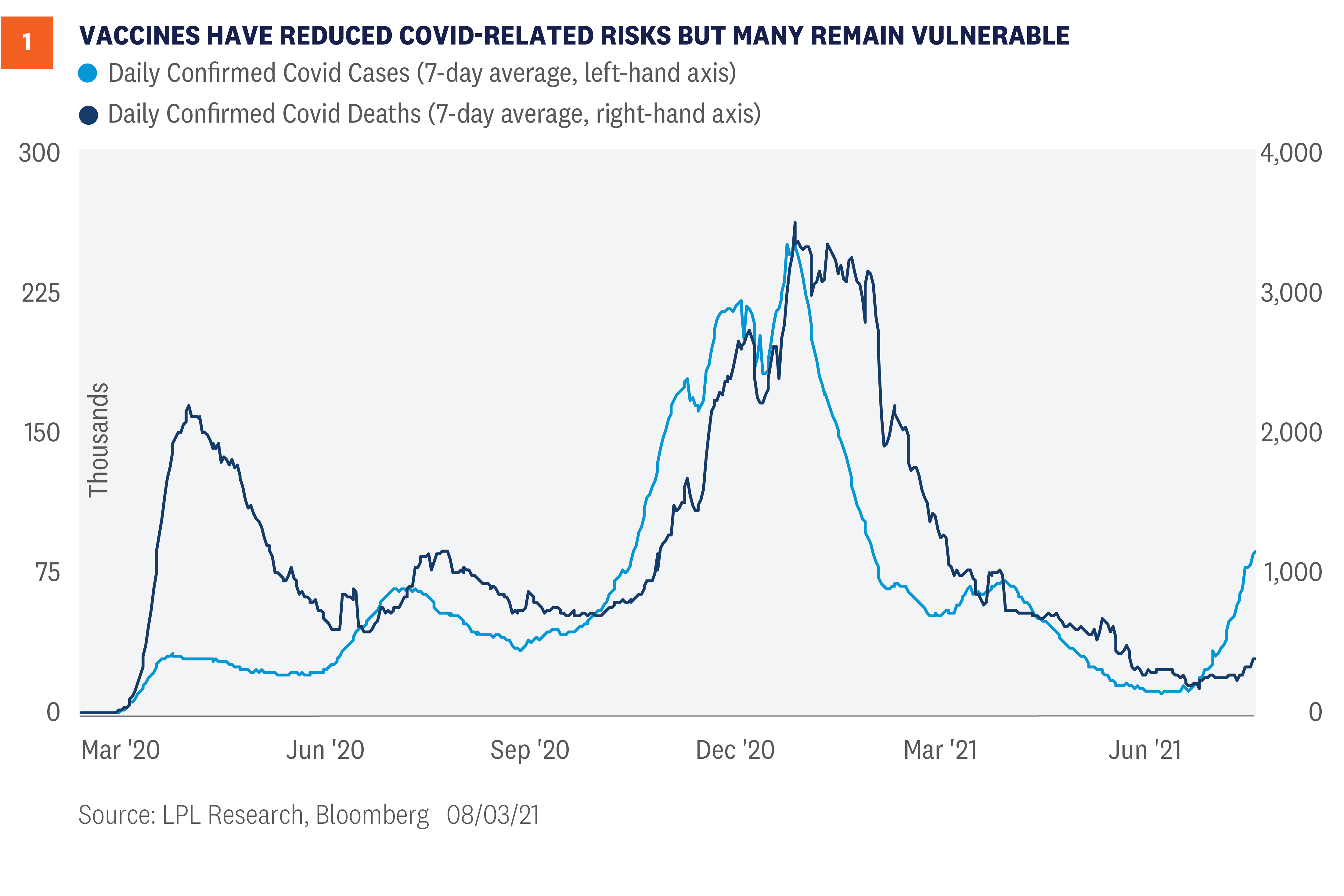
The highly transmissible Delta variant of COVID-19 now makes up an overwhelming majority of the new cases in the U.S., bringing with it a rise in cases and hospitalizations. Widespread vaccine distribution and distancing measures have helped limit the variant’s impact, but we could still see some drag on economic growth as some restrictions are reintroduced and consumers potentially become more cautious. While we may see an increase in market volatility due to the Delta variant, we believe the S&P 500 is still likely to see more gains through the end of the year. Despite the increased transmissibility of Delta and the increased health threat for those who aren’t vaccinated, our understanding of the measures needed to contain COVID-19 is in an entirely different place than it was in 2020. Above all else, we have not just one but several vaccines, which drastically reduces the risk from the variant, although it can’t completely eliminate it. We understand the effectiveness of masks in limiting transmission. Treatments have improved. We also know that the virus is not easily transmitted by touching surfaces—especially with simple good practices around handwashing—limiting the need for certain restrictions. Because of that, deaths from COVID remain near the lowest level of the pandemic despite the pick-up in cases . Much of that is due to the vaccines’ ability to limit serious cases, though health risks remain high for those who aren’t vaccinated. We are also seeing some strain on healthcare systems in regions with low vaccination rates.

Our view has consistently been that governments should, and generally will, impose restrictions only to the degree necessary to protect the most vulnerable and keep our healthcare system from getting overwhelmed. There’s not a clean, scientific answer to exactly what that point is, but there is a solid set of guidelines. If individuals, businesses, and officials use those guidelines as appropriate for their communities, there will still likely be some added drag on economic growth—but we think it will be manageable, with the drag still outweighed by the on-going rebound.We do think third-quarter GDP forecasts could fall a few percentage points, the lost growth being pushed back into late 2021 and early 2022. But even if the impact was so strong that we saw modest economic contraction, which we view as unlikely, we would expect the economy to bounce back quickly. Any drag on economic growth would likely come from a few key sources:  Changes in individual behavior due to safety concerns will probably have a larger impact than government intervention. This will likely be especially true for those with young children who are not eligible for vaccinations and those who choose not to get vaccinated. Behavioral changes may slow the recovery in the job market in particular if the changing environment places additional childcare demands on parents or raises workplace safety concerns.  While the impact from Delta could slow demand growth, it may have a bigger impact on the supply side. Some countries where vaccine availability has been low have already imposed added restrictions, which could limit factory activity, exacerbate shortages, and create added price pressures. The economy has been slowly starting to work its way through supply/demand imbalances, but this may negate some of the progress, putting a temporary cap on growth. While some people may still choose to remain unvaccinated, it’s hard to ignore the extreme risk disparities between those who are vaccinated and those who aren’t as Delta has spread. Delta’s greater transmissibility does mean “herd immunity” will be harder to achieve, but there does seem to be progress.  Europe has been battling Delta longer than the U.S.  it’s clear that the Delta variant could create significant added economic strain if left unchecked,  Equity markets almost universally like stimulus even if there might be potential long-term negative consequences. Delta has already pushed back expectations of the first Federal Reserve rate hike. Market-based expectations had been pulled forward to 2022 as U.S. growth surprised to the upside, but have now been pushed back again to 2023. The Biden administration’s stimulus plans may also receive greater support if the economy stumbles due to Delta, and we could even see some added COVID-oriented measures. Even if the stimulus comes with a long-term cost, it is likely to be viewed as market positive in the near term due to the added safety net it provides. Even with heightened restrictions in place, individuals and businesses will be reluctant to completely lose reopening momentum. Of course, it’s not completely in their control. There is rising concern over the Delta variant, and people will be more cautious on average. Global vaccine distribution has a long way to go. Meanwhile, vaccine availability is high in the U.S. there are still increased risks to growth and we may see market volatility, Nick Note: The market is not understanding how overvalued the stock market really is. The Fed really blew it this time. Far far far to much liquidity has been provided for much longer then needed or wanted. The inflation fire storm will soon be apparent to all. The fed will have to taper in fact they will be forced to soon stop all purchasing of securities. It will soon be apparent to all that the FED backed into a corner will have to raise rates 200 to 400 bases points. The markets will be devastated. And the really ugly part is the waves of covid infections will force the economy to shut down in devastating waves… As always they are underestimating the great peril the markets are in.. So all i can say is rally on. The markets never see the wipe outs… Although they are really good playing lip service to the threats and spinning why his time its different!! Why thing i have learned in 40 years of doing this is its never different….

COVID jab protection wanes within six months – UK researchers

COVID-19 protection from two doses of the Pfizer or AstraZeneca vaccines begins to wane within six months, new research suggests.

In a reasonable “worst-case scenario”, protection could fall to below 50% for the elderly and healthcare workers by winter, analysis from the Zoe COVID study found.

The Pfizer-BioNTech jab was 88% effective at preventing coronavirus infection a month after the second dose.

But the protection decreased to 74% after five to six months – suggesting protection fell 14 percentage points in four months.

Meanwhile, protection from the Oxford-AstraZeneca vaccine fell to 77% just one month after the second dose. It decreased to 67% after four to five months – suggesting protection fell by 10 percentage points over three months. The vast study involved more than 1.2 million test results and participants, though the vaccines were not trialled against the now dominant Delta variant of the virus. Pfizer’s mid-term efficacy trial observed an initial 96.2% risk reduction in infection up to two months after the second dose. There was an 83.7% reduction around four months after the second dose – a 12.5 percentage point increase in risk of infection. COVID vaccines were rolled out across the UK among the older and the most vulnerable in society along with health workers first, before being given to younger age groups. So the majority of people who had their second dose five to six months ago will be older or considered vulnerable due to other health reasons – suggesting they are now likely to be at increased risk of COVID-19 compared to those vaccinated more recently.

Professor Tim Spector, lead scientist on the Zoe COVID Study app, said: “In my opinion, a reasonable worst-case scenario could see protection below 50% for the elderly and healthcare workers by winter.

“If high levels of infection in the UK, driven by loosened social restrictions and a highly transmissible variant, this scenario could mean increased hospitalisations and deaths”. He said that we “urgently need to make plans for vaccine boosters” as well as decide if a strategy to vaccinate children is sensible if the aim is to reduce deaths and hospital admissions. Prof Spector continued: “Waning protection is to be expected and is not a reason to not get vaccinated. “Vaccines still provide high levels of protection for the majority of the population, especially against the Delta variant, so we still need as many people as possible to get fully vaccinated.” The Zoe COVID Study launched an app feature last December to enable logging of coronavirus vaccines and monitor real-world side-effects and effectiveness in its cohort of over a million users. It used data from vaccines which were recorded from 8 December 2020 to 3 July 2021, and from infections that occurred between 26 May this year when the Delta variant became dominant, and 31 July. The study’s results were slightly adjusted to give an average risk of infection reduction across the population. Researchers claim that while protection appears to decrease steadily, the individual risk may vary due to individual variation in antibody duration. Nick Note: Further proof after 6 months its like you are not vaccinated. What we new from the start and told you. Why the US is fiddelfucking around is beyond me.ROLL OUT THE 3RD JAB TO EVERYONE NOW! Its simple like the vaccies when we were kids they required booster shos. After all it is a yearly flue Jab. We are at the start of this plague. For the first 2 years i expect a jab every 6 months and then a yearly joab for us blessed enough to be privaliged… And the teaming masses will EVENTUALLY GET THEIR JAP, We are talking about 5 billion people needing to be vaccunated…..  And yes the anti vaccers can cound on geting the plague….. I am use to people eventually coming around to my point of view. As for the teaming masses the sad truth is millions have died and 100 million more will join them……. And that is not counting the billions that will suffer debilitating  damage from the plague.

Wall St extends rally, pushing S&P 500 to 50th all-time high close this year

NEW YORK (Reuters) – Wall Street ended higher in a late-summer, light volume rally on Tuesday as the FDA’s full approval of a COVID-19 vaccine on Monday and the absence of negative catalysts kept risk appetite alive ahead of the much-anticipated Jackson Hole Symposium. All three major U.S. stock indexes advanced higher, with the S&P 500 and the Nasdaq closing at all-time closing highs. The session marked the S&P 500’s 50th record high close so far this year. Tech and tech-adjacent megacaps were once again doing the heavy lifting, but economically sensitive cyclicals and smallcaps outperformed the broader market. “Investors are looking at the horizon at the big Jackson Hole meeting on the horizon,” Ryan Detrick, senior market strategist at LPL Financial in Charlotte, North Carolina, referring to the Federal Reserve’s annual economic symposium on Friday. “But for now the feel-good from yesterday’s vaccine news is still in the air.”  The Food and Drug Administration’s full approval of the Pfizer-BioNTech COVID-19 vaccine on Monday fueled optimism over economic recovery which spilled into Tuesday’s session. Travel and leisure sectors, associated with economic re-engagement, outperformed the broader market. The S&P 1500 Airline and Hotel/Restaurant/Leisure indexes gained up 3.7% and 1.6%, respectively. “We have energy, retail, travel, leisure, financials, and small caps all doing well today,” Detrick said. “And that’s a sign that the reopening is alive and well.”Recent economic indicators suggest the recovery from the most abrupt recession in U.S. history is headed in the right direction, but not to the extent that is likely to prompt the Fed to tighten its dovish monetary policy. Fed Chair Jerome Powell is due to meet with other world bank leaders when the Jackson Hole Symposium convenes later this week, and his remarks will be closely parsed for any clues regarding the Fed’s tapering of asset purchases and hiking key interest rates. The event will take place virtually and not in person due to the spread of COVID-19 in the county, which has reduced expectations that any major announcement will be made at the event.

“The fact that the Fed is having a virtual (Jackson Hole) meeting tells you that they might be thinking maybe they need to keep supporting the economy,” said Detrick.

The Dow Jones Industrial Average rose 30.55 points, or 0.09%, to 35,366.26, the S&P 500 gained 6.7 points, or 0.15%, to 4,486.23 and the Nasdaq Composite added 77.15 points, or 0.52%, to 15,019.80. Energy was the top gainer among the 11 major sectors in the S&P 500, boosted by the continued rally in crude prices. [O/R] Best Buy Co Inc jumped 8.3% after the electronics retailer beat analyst earnings expectations and raised its full year sales forecast. U.S.-listed shares of China-based e-commerce platform Pinduoduo Inc surged 22.2% after reporting its first ever quarterly profit. JD.com gained 14.4% in the wake of the Chinese online retailer’s remarks on Monday that it does not expect any business impact from a wave of regulations hitting the industry at home. Other shares of Chinese companies listed on U.S. exchanges were bouncing back as well, with the Invesco Golden Dragon ETF jumping 8.0%. Cybersecurity firm Palo Alto Networks Inc advanced 18.6% as brokerages raised their price targets following its full-year forecast beat. Advancing issues outnumbered declining ones on the NYSE by a 2.17-to-1 ratio; on Nasdaq, a 1.82-to-1 ratio favored advancers. The S&P 500 posted 28 new 52-week highs and one new low; the Nasdaq Composite recorded 96 new highs and 37 new lows.  Volume on U.S. exchanges was 8.97 billion shares, compared with the 9.08 billion average over the last 20 trading days. Nick Note: the love fest continues and we got the hole comming. :The  Fed love fest…. Break out the joy jell!

US epidemiologist explains why vaccines alone won’t stop Delta Coronavirus and other mutations

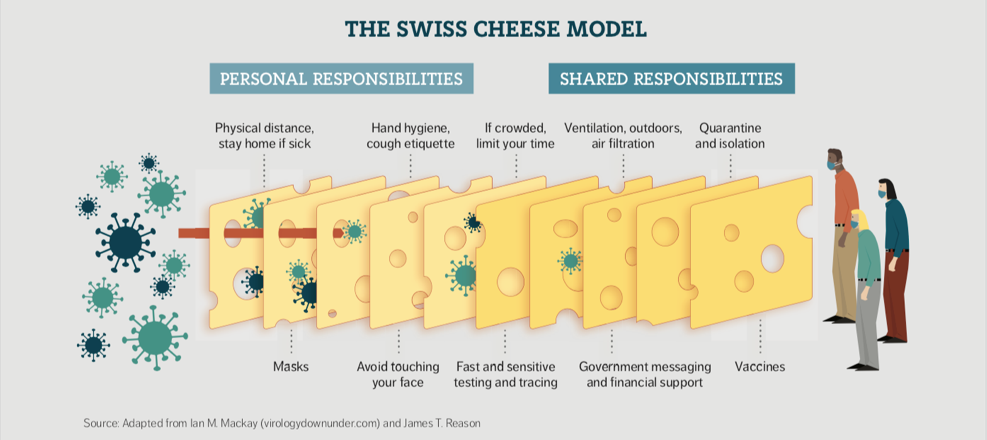
Last week booster shots were approved—and are now available—to people with compromised immune systems, thanks to action taken by the Food and Drug Administration and the Centers for Disease Control and Prevention as evidence mounts that the efficacy of COVID-19 vaccines wane over time. This week, plans are in the works to offer booster shots come October to other higher-risk populations in the United States, including infection preventionists and other health care professionals, residents in nursing homes, and Americans aged 60 or older. In other words, the booster shots will be offered in more or less the same order in which the original vaccines were distributed. But as Sakia V Popescu, PhD, MPH, MA, CIC, a member of Infection Control Today®’s (ICT®’s) Editorial Advisory Board (EAB) wrote in the December 2020 issue of ICT®, effective infection prevention and control should follow the Swiss cheese model championed by virologist Ian Mackay, PhD. Popescu wrote: “In one succinct image, this captures what we do in infection prevention—stress the additive layers that are needed to reduce the spread of infection. From masking to government messaging and vaccines, these layers all work cohesively to reduce the risk of not only COVID-19 infection, but also transmission. Really, this is a concept we have been reinforcing and growing in the field of infection prevention—a wholistic approach to disease prevention.”

figure image

Talk about booster shots over the weekend grabbed headlines. Francis Collins, MD, PhD, the director of the National Institutes of Health, said of the delta virus that “this is going very steeply upward with no signs of having peaked out,” according to the Associated Press (AP). The US saw an average of 129,000 new infections a day over the last seven days, according to the Johns Hopkins Coronavirus Resource Center. That’s a 700% increase from the beginning of July and the number could rise to 200,000, which has not been seen since the January/February surge. Thanks to the vaccines, we will not see the horrendous death rates of those surges.

But as ICT® EAB member Kevin Kavanagh, MD, has argued for over year, mortality isn’t the only metric that needs to be taken into account. For instance, medical experts still don’t know exactly what the long-term effects of COVID-19 are. In a recent interview with ICT®, Kavanagh pointed out that “COVID-19 is not just respiratory, it affects every organ of the body. This is a serious type of infection. And we need to be focusing on trying to keep this virus from spreading, plus protecting our young.”

Anthony Fauci, MD, the director of the National Institute of Allergy and Infectious Diseases and President Biden’s chief medical advisor, said that “if it turns out as the data come in, we see we do need to give an additional dose to people in nursing homes, actually, or people who are elderly, we will be absolutely prepared to do that very quickly. But that won’t be enough, Kavanagh argues in an article scheduled to be printed in an upcoming issue of ICT®. “SARS-CoV-2 has continued to evolve,” Kavanagh writes. “It has now become evident that with each emerging variant, the virus has appeared to progressively become more infective. Variants which increase viral load may also increase transmissibility and the opportunity to mutate, along with overwhelming a host’s immune system and becoming more virulent.” And there seems to be wave after wave of variants.

figure image

But as Sakia V Popescu, PhD, MPH, MA, CIC, a member of Infection Control Today®’s (ICT®’s) Editorial Advisory Board (EAB) wrote in the December 2020 issue of ICT®, effective infection prevention and control should follow the Swiss cheese model championed by virologist Ian Mackay, PhD. Popescu wrote: “In one succinct image, this captures what we do in infection prevention—stress the additive layers that are needed to reduce the spread of infection. From masking to government messaging and vaccines, these layers all work cohesively to reduce the risk of not only COVID-19 infection, but also transmission. Really, this is a concept we have been reinforcing and growing in the field of infection prevention—a wholistic approach to disease prevention.” Talk about booster shots over the weekend grabbed headlines. Francis Collins, MD, PhD, the director of the National Institutes of Health, said of the delta virus that “this is going very steeply upward with no signs of having peaked out,” according to the Associated Press (AP). The US saw an average of 129,000 new infections a day over the last seven days, according to the Johns Hopkins Coronavirus Resource Center. That’s a 700% increase from the beginning of July and the number could rise to 200,000, which has not been seen since the January/February surge. Thanks to the vaccines, we will not see the horrendous death rates of those surges. But as ICT® EAB member Kevin Kavanagh, MD, has argued for over year, mortality isn’t the only metric that needs to be taken into account. For instance, medical experts still don’t know exactly what the long-term effects of COVID-19 are. In a recent interview with ICT®, Kavanagh pointed out that “COVID-19 is not just respiratory, it affects every organ of the body. This is a serious type of infection. And we need to be focusing on trying to keep this virus from spreading, plus protecting our young.” Anthony Fauci, MD, the director of the National Institute of Allergy and Infectious Diseases and President Biden’s chief medical advisor, said that “if it turns out as the data come in, we see we do need to give an additional dose to people in nursing homes, actually, or people who are elderly, we will be absolutely prepared to do that very quickly. But that won’t be enough, Kavanagh argues in an article scheduled to be printed in an upcoming issue of ICT®.

“SARS-CoV-2 has continued to evolve,” Kavanagh writes. “It has now become evident that with each emerging variant, the virus has appeared to progressively become more infective. Variants which increase viral load may also increase transmissibility and the opportunity to mutate, along with overwhelming a host’s immune system and becoming more virulent.” And there seems to be wave after wave of variants.

figure image

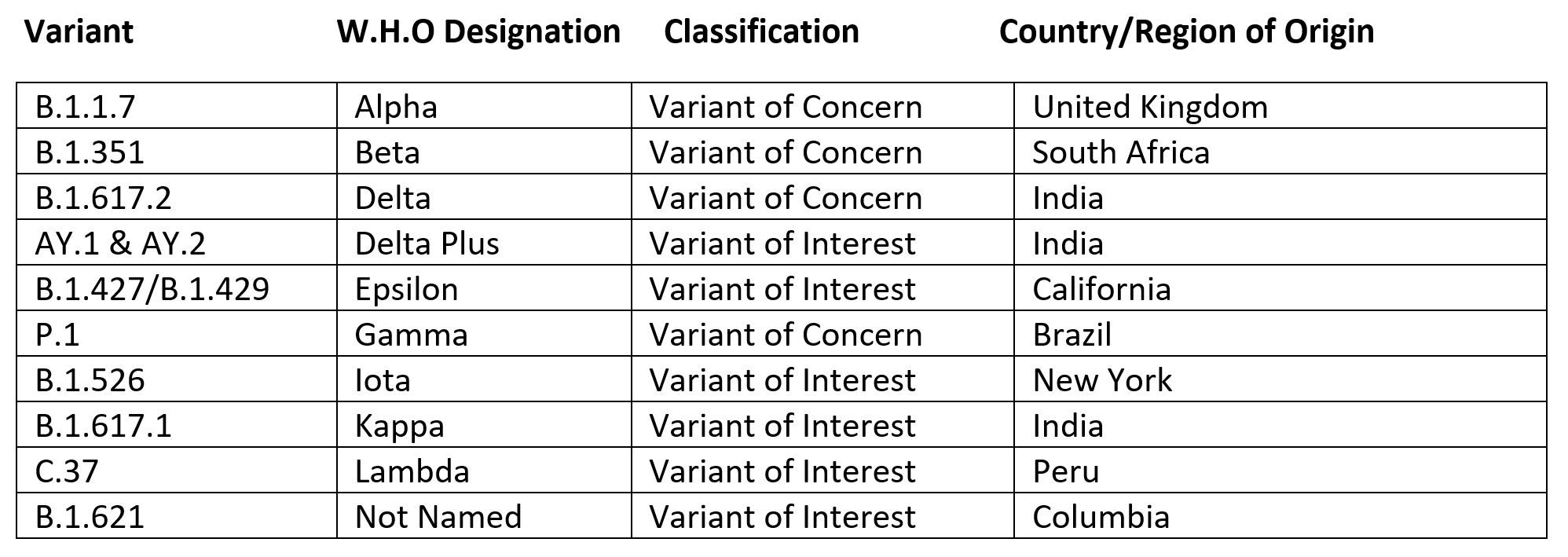
Source: World Health Organization

Kavanagh adds that “to make matters worse, SARS-CoV-2 is infecting a number of animals, including cats, large cats, dogs and gorillas. Most recently, concern has been raised that it may have found an animal host in white tail deer, with SARS-CoV-2 antibodies identified in 40% of surveyed animals.” Peter Hotez, MD, PhD, professor of the departments of pediatrics, molecular virology & microbiology and health policy scholar at Baylor College of Medicine, tells ICT®’s sister publication Contagion that recent data has indeed suggested that COVID-19 vaccine-induced immunity from infection is “not as high as it was.” It remains unclear whether that is due to waning immunity or decreased vaccine effectiveness versus the delta variant—a matter which is difficult to discern because the delta outbreak is occurring well into the post-vaccination phase for most adults in the US. “Right now, the data are showing that the protective efficacy against hospitalization and deaths are holding, but the question is will that start to slip over time as well, and at what point do we pull the trigger?” Hotez said. “And how generalizable do we make it—do we keep it restricted over a certain age, are there other criteria, or do we just open it up the whole population?”

Kavanagh has always said that COVID-19 vaccines alone are not a panacea in stopping the pandemic. And although booster shots are crucially important, one should also not rely on booster shots alone, either. There must be a multi-pronged approach to COVID-19 if we have any hope of returning to our pre-COVID normal lives, Kavanagh writes in his article. That includes:

  • Upgrade recommendations for mask usage and to use N95 or KN95 masks whenever possible.
  • Everyone who can needs to become vaccinated. Similar to Israel, we should fast track approval for mRNA boosters to those who are at higher risk, including those who are immunosuppressed and over the age of 60 and 5 months out from vaccination.
  • Upgrade building ventilation systems to increase air exchanges and air sanitization.
  • Expand testing capabilities to be able to test frontline workers and school children at least twice a week, and other workers at least once a week.
  • Limiting sizes of gatherings, including podding in schools and plans for permanent hybrid instruction to limit class sizes.
  • Businesses, including restaurants, need to offer online ordering along with curbside pickup and when possible, home delivery.
  • Everyone needs to be vaccinated. Mandatory vaccines should be required in many settings, including health care. Vaccine passports or green cards are being implemented in Israel and France and need to be implemented in the United States.

Carnival Cruise Passenger Dies of Covid Amid Uptick in Cases

As the highly contagious Delta variant surges across the world, the health and safety protocols established for cruise ships are being put to the test. Over two weeks in late July and early August, 27 coronavirus infections were identified aboard the Carnival Vista cruise ship sailing out of Galveston, Texas.

One of those infected, a passenger, later died.

It was the highest number of cases aboard a ship reported since June, when cruises restarted in the Caribbean and United States, and the first death. The passenger and 26 crew members were immediately isolated after testing positive for the virus. Contact tracing and further testing was conducted, with no new cases reported by Aug. 11, when the ship arrived at the port of Belize City on the northeastern coast of Central America, Carnival said. Though the ship sailed out of Texas, which bans businesses from requiring vaccinations, more than 96 percent of passengers were vaccinated and all but one crew member was fully vaccinated, according to the Belize tourism board. Most infected crew members were either asymptomatic or experienced mild symptoms of the virus, but Marilyn Tackett, a 77-year-old passenger from Oklahoma, was admitted to the hospital in Belize and put on a ventilator after experiencing respiratory complications. Days later, she was evacuated to a hospital in Tulsa where she received treatment, but on Aug. 14 her condition worsened, and she died, according to a statement issued by her family on a crowdfunding page set up to help pay for her care. Ms. Tackett’s family declined to comment on the incident. “We are very sorry to hear about the death of a guest who sailed on Carnival Vista,” the Carnival Cruise Line said in a statement. The cruise line said that it was highly unlikely Ms. Tackett contracted the coronavirus aboard the ship, which left Galveston on July 31, and that she had received expert medical care onboard before being evacuated. The cruise line did not test vaccinated passengers before they embarked for the cruise.

Last week, the Centers for Disease Control and Prevention issued a new advisory, warning people with increased risk for severe illness from Covid-19 to avoid travel on cruise ships, irrespective of their vaccination status.

Carnival is not the only cruise line to have seen an uptick in cases. Earlier this month, Royal Caribbean had six guests test positive onboard its Adventure of the Seas ship. The companies have responded to the recent increase in cases by introducing pre-departure testing requirements for all passengers. Carnival also added a mask mandate on Aug. 7 for all vaccinated and unvaccinated guests in indoor areas and banned smoking in the casino. “The protocols are designed to flex up and adapt,” said Chris Chiames, the chief communications officer for Carnival Cruise Line, in a telephone interview. “That’s what they’ve done here in the context of their desire to mitigate and minimize the threat of Covid, which is everywhere, unfortunately, and it’s going to remain everywhere for a long time.”

“We never suggested our ships would be Covid free,” he continued. “But we designed our protocols to meet and exceed the guidelines of the C.D.C. and we will continue to be vigilant while continuing to focus on giving our guests a great vacation.”

Michael Bayley, the chief executive officer of Royal Caribbean, said the cruise line was typically seeing one or two positive cases out of more than 1,000 guests a week per ship. More than 90 percent of passengers are vaccinated, he said, and because of preboarding testing requirements two to 10 guests are prevented from boarding ships each week because they test positive. But, Mr. Bayley said in a candid Facebook post addressing the current coronavirus situation, “Testing captures status at a point of time and if the guest is incubating infection, then the test will miss it.” The vaccinated guests who test positive typically are asymptomatic, he said in the post. Some cruise lines say passengers have canceled amid concerns about the risks of the Delta variant, but many sailings are fully booked through the rest of year because of pent-up demand.

Many cruise enthusiasts with upcoming trips believe that cruise ships are one of the safest ways to travel during the pandemic because of the high percentage of vaccinated passengers and crew, added testing requirements and stringent health and safety measures enforced on board.

“It’s very comforting boarding a cruise ship knowing that most people are vaccinated and everyone is tested,” said Aidan Alexander, 62, an avid cruiser from Florida who has eight sailings booked through 2022. “When you get on a plane or stay in a hotel you don’t know anyone’s vaccination or Covid status and that makes it very difficult to relax and unwind.”

John Ioannidis, an epidemiology professor at Stanford University, disputes that notion. In an airport, on a plane or in a hotel, he said, “you only get exposed for a few hours, whereas on a cruise ship you could get exposed for many days and weeks. It’s a kind of cumulative exposure.”

 Ms. Perez said in a telephone interview. “I think it’s getting risker to travel now with the new variants, even on cruises” Nick Note: you have to have a death wish to get on one of those cruise dead man ships. Cruise ships were famaous for the newly wed, over fed, nearly dead and now THE DEAD!  The cruise and airline industry are masters at manipulation of the media. The cruise ship and airlines inspections and deaths are way way under reported…

Saudi Arabia’s June oil exports rise 123% to over $16 billion…. they misfired!

DUBAI — The value of Saudi Arabia’s oil exports in June increased 123% to 61.5 billion riyals ($16.4 billion) from a year earlier while non-oil exports rose by around 41%, official data showed on Tuesday.  Overall exports increased by nearly 92% in June compared to a year earlier when international trade was curbed by lockdowns and travel disruptions related to the coronavirus crisis, said the General Authority for Statistics. Saudi Arabia, the world’s biggest oil exporter, was hit hard last year as oil prices plummeted and measures to contain the COVID-19 pandemic hurt its non-oil economy. But the country’s gross domestic product in the second quarter grew for the first time since the coronavirus crisis, on the back of the easing of restrictions and rebounding oil prices. China remained Saudi Arabia’s main trading partner in June, with exports there amounting to nearly 20% of total exports. Imports from Turkey continued to be low, after an informal blockade by Saudi Arabia. In June they fell to 5.7 million riyals from 21.8 in May, and from 712.4 million riyals in June last year. Nick Note: Like many people the Saudi’s made a strategic mistake. They thought the pandemic was over. Sorry no cookie. They like many people have not calculated in the coming death plunge in the global economy from the coming shut downs due to the covid19 delta and other mutations……