Iran tells Houthis to close Red Sea gateway if US hits power network, sources say

Trump Vows to Intensify Iran Attacks as Oil Climbs

The US launched attacks against Iran for a fifth day after Tehran hit Kuwait with the heaviest wave of strikes in weeks, leaving an interim peace deal in tatters. The European Union Aviation Safety Agency raised its threat level for airlines in the Middle East, cautioning carriers to avoid the region amid a heightened threat of missile and drone strikes. Oil rose for a third day, with Brent jumping near $85 a barrel and taking its gain this week to 13%.

Congested Routes

London flights to Asia and Australia now bypass multiple airspaces, causing congestion and longer routes

Source: Flightradar24

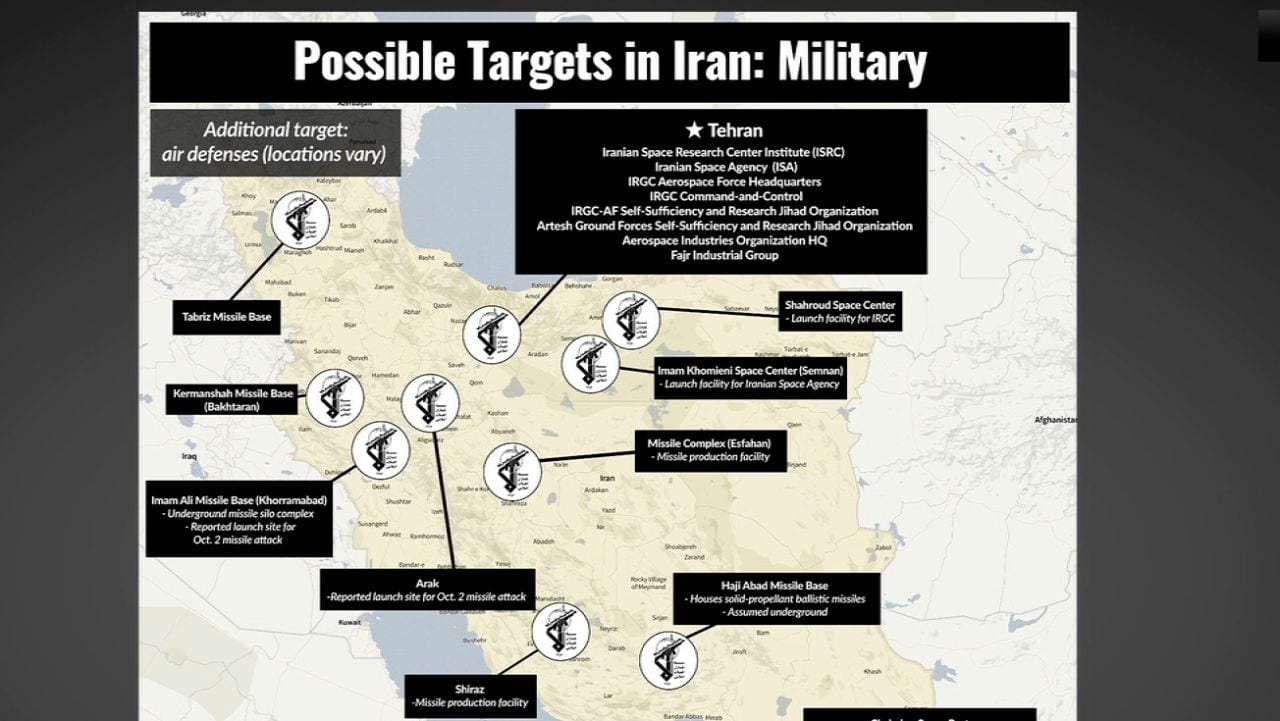
Washington and Tehran are vying over control of the Strait of Hormuz, with Iran attacking vessels it says are crossing the chokepoint without its permission. President Donald Trump has vowed to intensify the US military response after ending a waiver on Iranian oil sanctions and reimposing a naval blockade. So far, the US is mostly keeping to military targets in the south of the Islamic Republic such as radar, missile and drone sites. The bombing campaign remains far less intense than during the height of the war in March and early April, when Tehran and other major cities were under constant fire.

NN: It remains to be seen if Trump TACOS out …..Again

US-Iran Truce Collapses as Attacks Worsen, Blockade Restarts

  • The US and Iran’s interim peace has collapsed after American forces reimposed a naval blockade and launched airstrikes, while Tehran attacked oil tankers sailing through the Strait of Hormuz.
  • The US launched airstrikes at military sites in southern Iranian towns and cities, and Iran targeted US bases in Jordan and Bahrain, and hit two oil tankers from the United Arab Emirates with cruise missiles.
  • US President Donald Trump proposed a 20% reimbursement fee on all cargo shipped through the Strait of Hormuz, which would account for costs of providing safety and security, but the plan’s implementation and legality are uncertain.

The interim peace between the US and Iran effectively collapsed after American forces reimposed a naval blockade and launched another wave of airstrikes, while Tehran attacked more oil tankers sailing through the Strait of Hormuz. US President Donald Trump’s decision to restart a blockade of Iranian ports overnight came after hostilities between the two sides worsened in the past week, with tensions centered on control of the strait.

Traffic through the all-important waterway has dwindled and oil has surged 20% since attacks rekindled, with Brent trading around $86 a barrel.

On Monday night, the US launched airstrikes at military sites in several southern Iranian towns and cities over a five-hour period. Iran targeted US bases in Jordan and Bahrain, and hit two oil tankers from the United Arab Emirates with cruise missiles. The latter attack killed an Indian crew member and wounded about eight others. Iran’s Islamic Revolutionary Guard Corps said the tankers had ignored warnings and that the US had “incited” them to deviate from navigating channels approved by Tehran. The latest incident adds to a spate of shipping attacks by Iran, including on Saudi Arabian and Qatari tankers, since July 7. The US has reacted by firing upon hundreds of Iranian military targets, prompting counterstrikes by Tehran on American allies such as Kuwait, Bahrain, Qatar and Oman. The “shaky peace established by the June deal has ended,” said Eurasia Group analysts including Gregory Brew and Firas Maksad. “Rapid de-escalation appears unlikely, given how both sides have committed to their positions, and an environment of heightened tensions and depressed Hormuz traffic is likely to endure through July.

Brent crude is up almost 20% since early last week

Source: Bloomberg

The escalation in fighting between the US and Iran stems in large part because their preliminary deal from last month — meant to set the stage for talks over Iran’s nuclear program and a permanent end to the war — was ambiguous about the Hormuz strait. Each side claims the other has breached the terms of the so-called memorandum of understanding. The US said the document allowed for free passage of ships through the waterway, while Iran claims it was given the right to manage traffic.

Trump, late on Tuesday, said the strait was “open” HAHAHAHAHAH but added to the chaos for energy companies and shippers by saying he would demand a reimbursement fee of 20% on all cargo shipped through. That would account “for any and all costs necessary to do the job of providing safety and security to this very volatile section of the World,” he said on Truth Social. The number of vessels transiting through the strait fell to the lowest level in a month on Sunday, according to Bloomberg ship-tracking data. Trump’s latest declaration and the increased US strikes underscore his precarious position just over three weeks after signing the MOU. That deal helped lower gasoline prices in the US, raising his Republican Party’s hopes ahead of midterm elections in November. “At least rhetorically, Trump appears to be trying to play the Iranians at their own game,” said Holly Dagres, a senior fellow at the Washington Institute for Near East Policy. “Rest assured, the Iranians won’t be giving up the strait that easily.”

Oil Advances Above $85 on Hormuz Tensions “Neither side will back down from their claims over the strait, yet both currently want to avoid total war,” said Bloomberg Economics analysts including Becca Wasser and Dina Esfandiary. “That points to recurring fighting, and repeat stalls in talks.”
NN: I think we can say their will be no $50 oil $3 gasoline or peace in the gulf! Instead $150 oil $10 gasoline  and a nuclear Iran that will start WWIII that will be a nuclear war!

Jordan downs 3 ballistic missiles from Iran overnight… Kuwait intercepts Iran’s aerial attacks

Jordan’s armed forces said its air defense systems intercepted and destroyed three ballistic missiles that crossed into the country’s airspace from Iran early overnight, the state-run Jordan News Agency (PETRA) reported, citing a senior military source. The military reportedly stressed that Jordan’s airspace is part of the kingdom’s sovereignty and vowed to confront any violation. No casualties or damages were reported.

Kuwait intercepts Iran’s aerial attacks

Kuwait’s Army confirmed that its air defense units are actively dealing with incoming threats following what it called “criminal Iranian aggression” targeting the country. “The General Staff of the Army notes that any explosion sounds heard are the result of air defense systems intercepting the hostile attacks,” the military wrote in a statement. To ensure public protection, it urged residents to “adhere to the security and safety instructions issued by the competent authorities.”

NN: more hooks… Straights are opened… Ignore the bombed ships and attacks on oil facilities because we have a hahahahahahaha A MEMO


US completes another round of Iran strikes…… Trump said to plan expanded Iran strikes

United States Central Command (CENTCOM) in a statement announced it carried out another round of strikes against Iran, which hit “dozens” of military sites near the Strait of Hormuz and along Iran’s coast. CENTCOM said the operation lasted seven hours and involved fighter aircraft, drones and naval forces using precision weapons against missile and drone facilities, naval assets and coastal defenses. “U.S. forces remain vigilant, lethal, and prepared to execute operations directed by the Commander in Chief,” the statement read. The strikes coincided with the resumption of a US naval blockade on vessels traveling to or from Iranian ports.

NN: Thank Trump we have the memo. And he wants  you to know their is no oil crises and the straights are open. All i can say is unhook my dick.
Trump said to plan expanded Iran strikes

United States President Donald Trump met with his top national security team to plan a massive military campaign aimed at forcing Iran to negotiate, Axios reported, citing US officials familiar with the matter. During a Situation Room meeting with Vice President JD Vance, Secretary of State Marco Rubio, Defense Secretary Pete Hegseth and others, the team discussed how recent airstrikes successfully degraded Iran’s ability to attack commercial vessels, allowing 300 ships to safely pass through the blocked waterway over the past week, the officials confirmed. Despite ongoing hostility and retaliatory strikes in the region, the recent naval blockade remains fully active to protect shipping lanes.

Iran and US stage new attacks, battle over control of Strait of Hormuz

Iran fired ballistic missiles at a U.S. ​air base in Jordan on Tuesday and the United States attacked Iranian targets for five hours in a battle for control of the Strait of Hormuz that has pushed up oil prices to ‌four-week highs. U.S. forces launched waves of attacks for the third successive night after Iran said on Saturday it was closing the strait, prompting U.S. President Donald Trump to reinstate a blockade of Iranian shipping and propose charging a 20% fee to guard the vital waterway. The strikes have increased doubts that an interim deal agreed last month will lead to a permanent halt in a more than four-month-old war that has disrupted global energy supplies and raised fears of a rise in inflation across the world. Regional analysts said the hostilities remained ​within controlled boundaries for now, with both sides seeking leverage for an eventual peace deal, but that there was still a risk of fighting spinning out of control. “I doubt the two sides will resume ​a full war, especially as Trump will suffer — though there is also a distinct possibility that the Iranians will overplay their hand. That is true of Trump too, ⁠of course,” said Yezid Sayigh, a senior fellow at the Carnegie Middle East Center.
The war has proved unpopular in the U.S., where gasoline prices have risen since the start of the war, with congressional elections looming in November. Oil prices rose again on Tuesday, with Brent crude futures hitting more than $86 per barrel, but were still well below the peak since the war began. In the latest strikes in the wider war, Iran’s Islamic Revolutionary Guard Corps said a U.S. air base in Jordan had been targeted with ballistic missiles. Jordan’s armed forces said they intercepted ​and shot down four missiles that entered Jordanian airspace from Iranian territory, according to a state news agency report.
The IRGC said in a statement that “not only do we not have any enmity with your country, but we also ​love you,” while calling on Jordan to dismantle American bases in the kingdom. Iranian media reported U.S. strikes on a number of cities and said four people had been wounded and rescue operations were under way. Hostilities have intensified since Iran said late on ‌Saturday it had ⁠closed the Strait of Hormuz after firing a warning shot that struck a vessel travelling on what it said was an unauthorised route.
Trump said on Monday on Truth Social that the strait was open and would remain open, with or without Iran.
“We are reinstating THE IRANIAN BLOCKADE,” Trump said, announcing that the U.S. would charge a 20% fee on all cargo shipped through it. Iran has also sought to establish its control over the strait and a system for collecting fees, warning vessels not to sail without its authorisation.
Iran’s top joint military command said the U.S. had no role in determining the future of the waterway. Iranian Foreign Minister Abbas Araqchi wrote on X that Tehran was the guardian ​of the strait and would remain so “forever”, adding in response ​to Trump: “20% is of course too much. We ⁠will be fair.” Later on Monday, Trump said Iran would be hit “very hard tonight, and we’re going to hit them hard tomorrow. And there’s not a damn thing they can do about it.” Before the conflict began in February, around a fifth of the world’s oil and gas traffic passed through Hormuz daily, delivering more than 15 million barrels of fuel ​to global markets worth at least $1.2 billion. If the U.S. were to impose a 20% fee, it could generate around $240 million a day. The United Arab Emirates Ministry of Defence said on Monday that Iranian cruise missiles struck two Emirati oil tankers while transiting the southern lane of the strait in Omani territorial waters. One Indian crew member was killed and eight others were wounded, the ministry said on Tuesday. The IRGC said two “offending” supertankers had been hit and disabled in the strait after ignoring ⁠repeated warnings and ​turning off navigation systems, Iranian media reported. The IRGC’s statement did not name the vessels or say whether they were the same tankers cited ​by the UAE ministry. But it accused the U.S. of “inciting vessels to use an illegal route” and warned that cooperation with the “aggressor enemy” would result in damage, delays in reopening the waterway and a global energy crisis.
The U.S. Navy-led Joint Maritime Information Center said a blockade of Iran would ​take effect at 2000 GMT on Tuesday and apply to all vessel traffic regardless of flag, covering the entire Iranian coastline including ports and oil terminals.
NN: A winner has not been decided. What has become a unfortunate reality iS the fact the world is short over a billion barrels of oil and  RUNNING OUT

Oil up 3% amid US-Iran strikes, Hormuz tensions

Oil prices rose on Tuesday as renewed strikes between the United States and Iran and growing tensions surrounding the Strait of Hormuz fueled investors’ concerns. US President Donald Trump said Washington’s “very strong” blockade of Iran in the strategic waterway was “more effective” than military strikes. The US military is expected to begin enforcing the blockade on Iranian ports and vessels on July 14 at 3:00 pm ET. Meanwhile, Iran introduced a bill aimed at ensuring the security and “sustainable progress” of the Strait of Hormuz and the Persian Gulf, warning that further measures would follow. West Texas Intermediate (WTI) for deliveries in August rose by 3.07% and went for $80.54 per barrel at 3:57 am ET. Meanwhile, Brent for September settlements increased by 3.36%, going for $86.10 per barrel at the same time.

BP sees upstream output falling in Q2 amid Iran war

BP plc updated its guidance for the second quarter of its fiscal year 2026 on Tuesday, projecting that its upstream production will be between 2,170 and 2,220 thousand barrels of oil equivalent per day (mboe/d), falling from 2,339 mboe/d observed in the previous quarter, due to the disruptions caused by the situation in the Middle East and seasonal maintenance mostly in the Gulf of Mexico. Meanwhile, the company expects gas and low-carbon energy production to reach between 750 mboe/d and 770 mboe/d, and oil production and operations to be between 1,420 mboe/d and 1,450 mboe/d. The oil giant also stated its oil trading result is projected to be slightly higher than in the first quarter of 2026, with stronger realized refining margins in the range of +$1.2 billion to 1.4 billion. It added that it expects to record $1 billion in impairments tied to its gas and low carbon energy segment.

NN: As reserves dwindle down to nothing the big refiners are seeing refined product (like gasoline and diesel)  production sinking. I repeat oil out of the straights despite the bullshit is virtually nothing. And in the latest flareup its less than nothing as the oil infrastructure is destroyed. The world is short over a billion barrels and the deficit will over two billion barrels right before the elections….. Then the real fun begins..

Trump: We’re taking over the Strait of Hormuz

US President Donald Trump remarked on the current state of the war with Iran in an interview with Fox News on Monday, focusing on a seemingly American future he has planned for the critical waterway. “We’re taking over the Strait…they [Iran] have nothing,” the American leader told the reporters. Trump promised that Washington would become the “guardian” of Hormuz and that it would be paid for its efforts. He went on to criticize the Iranian delegation for suggesting changes following an 11-hour meeting with the US delegation, calling them “professional negotiators.”

NN:  Trump has the ability to close down the straights as does Iran. Trump cannot open the straights without Iran’s approval. The only was to change the equation is for the US with allies to Invade Iran with boots on the ground. And no-one in power has the balls to do that right now.

Iran strikes US radars in Bahrain, Oman…… Alarms go off again in Bahrain, Kuwait amid strikes

Iran’s Islamic Revolutionary Guard Corps (IRGC) reported on Monday that it struck the United States Army’s military infrastructure and assets in the region, destroying a FPS long-range aerial radar and a vessel detection radar in Oman. “Your brave sons in the epic IRGC Navy, in addition to targeting the installations and infrastructure of the aggressive US army in Juffair, Bahrain, where its long-range fires are blazing, targeted and destroyed the FPS long-range aerial radar and the vessel detection radar in Oman with devastating missile and drone strikes in the fifth stage of retaliation,” IRGC stated, claiming that the only way to reopen the Strait of Hormuz is for the US military to halt its “aggressive” interventions in the waterway. The Iranian military also previously revealed that it destroyed two US HIMARS (M142 High Mobility Artillery Rocket System) launchers and a US Patriot anti-air defense system and a strategic AN/FPS radar in Kuwait.

Alarms go off again in Bahrain, Kuwait amid strikes

Sirens have been activated for the second time in the last few hours in Bahrain and Kuwait, as Iranian strikes targeted US bases across the Middle East early on Monday morning. Kuwait’s armed forces stated they are “confronting hostile aerial targets” over the nation’s airspace. Iran’s Islamic Revolutionary Guard Corps (IRGC) said earlier it bombed several US military facilities at an air base in Bahrain, while also attacking US assets in Kuwait and Jordan.

NN: I guess you  can wipe your ass with the memo of understanding, The thing these savages understand is power thrugh force.