United States President Donald Trump did not rule out that his country will go to war with Venezuela in a phone interview with NBC News on Thursday, stating that while he is not discussing it currently, it is a possibility. Trump also declined to confirm whether ousting his Venezuelan counterpart, Nicolas Maduro, is his goal, but claimed that the Venezuelan president “knows exactly what I want.”
He also stated that there will be additional seizures of oil tankers.
The US president’s comments follow his order for a “total and complete blockade” of all sanctioned oil tankers that are coming and going from Venezuela, with Trump claiming that the South American country “illegally took” the United States’ oil and energy rights.
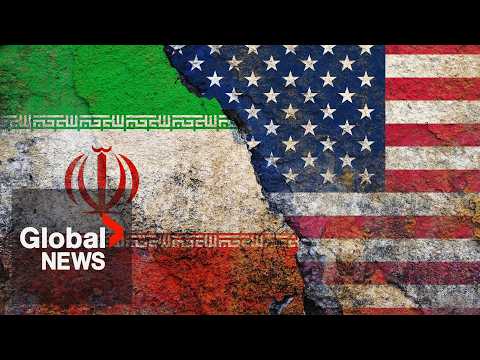
The United States Department of State announced on Thursday that it is adding 29 “shadow fleet vessels” to its sanctions list, over their alleged engagement in the “covert delivery of hundreds of millions of dollars’ worth of Iranian oil and petroleum products.” As per a statement, among the sanctioned entities are companies and vessels operated by Hatem Elsaid Farid Ibrahim Sakr, an Egyptian businessman, alongside other firms operating in the United Arab Emirates, India, the Marshall Islands, and Panama. The US government said that today’s decision will further constrain Tehran’s “ability to export petroleum and petroleum products through obscure and fraudulent mechanisms.”
NN: “FOR IMMEDIATE RELEASE: December 18, 2025
U.S. Department of the Treasury
Treasury Increases Pressure on Iran’s Sanctions-Evading Shadow Fleet
Today, the U.S. Department of the Treasury’s Office of Foreign Assets Control (OFAC) announced sanctions on 29 vessels and their associated management firms involved in the illicit transport of Iranian petroleum products. These vessels have been using deceptive practices to evade sanctions and facilitate the export of Iranian oil. In addition, Egyptian businessman Hatem Elsaid Farid Ibrahim Sakr has been designated for his role in coordinating the activities of multiple sanctioned vessels.
‘Treasury will continue to deprive the Iranian regime of the petroleum revenue it uses to fund its military and weapons programs,’ said Under Secretary John K. Hurley. ‘We remain committed to preventing Iran from acquiring a nuclear weapon and will use all available tools to disrupt these illicit networks.’
This action is part of the broader strategy to limit Iran’s ability to fund destabilizing activities and support for terrorism through its oil revenues. Effective immediately, all U.S. persons are prohibited from engaging in any transactions with the designated entities, and any assets of these entities within U.S. jurisdiction are blocked.”
That’s the official Treasury press release for you. I have included a link below:
Trump’s announcement of a blockade on sanctioned Venezuelan tankers pushed WTI crude up more than 2.4%, reflecting heightened geopolitical risk premiums.
The move could ultimately disrupt a sizable share of Venezuela’s exports, cutting into global supply.
Despite the escalation, broader bearish forces, including weak Chinese demand and optimism surrounding Ukraine peace talks, are likely to limit any rally.
More than 11 million barrels of Venezuelan crude are currently stranded on vessels waiting to leave as traders haggle over terms. Buyers are reportedly using their leverage—bolstered by easy access to cheap Russian and Iranian oil—to force PDVSA to drop its requirement for prepayment in digital currency. Adding to the chaos, PDVSA’s administrative systems were hit by a cyberattack this week, forcing a temporary suspension of deliveries at its terminals. Amid the paralysis, only one operator appears immune: Chevron. LSEG data confirms the Chevron-chartered tanker Ionic Anax set sail for the U.S. on Tuesday without issue, highlighting that the U.S. major remains the sole entity moving crude out of Venezuela without delay. President Donald Trump escalated his pressure campaign against Nicolás Maduro on Thursday, ordering a “total and complete blockade” of all sanctioned oil tankers entering or leaving Venezuela. In a dramatic statement posted to social media, Trump accused the Venezuelan government of “drug terrorism,” “human trafficking,” and the theft of U.S. assets, while declaring the Maduro regime a foreign terrorist organization. The directive follows the U.S. seizure of a Venezuelan-linked tanker in the Caribbean earlier this month—an operation Trump described as “the largest one ever seized.” The move marks a significant shift in Washington’s strategy. Rather than solely pressuring Maduro to step down, the administration is now targeting the legal and structural foundations of Venezuela’s oil sector, including its historic 1943 Hydrocarbons Law, which enshrined national control over oil resources. Analysts say Trump’s escalation comes at a moment of relatively low global oil prices, reducing the risk of market disruption and giving the White House confidence that tightening enforcement will not spark an energy shock. Venezuela’s production has already fallen to a seven-month low amid tanker seizures and sanctions targeting shipping firms assisting PDVSA’s exports.
China—Venezuela’s largest oil customer—has sharply increased crude stockpiles this fall, a move analysts see as a buffer against U.S. enforcement actions. Beijing condemned Washington’s tanker seizure as “international piracy” and warned that U.S. military activity near Venezuela threatens both regional stability and China’s long-standing investments there. While avoiding direct involvement in the incident, China remains deeply exposed: roughly 80% of Venezuela’s exports ultimately feed Chinese refiners through sanction-evading routes. Beijing is expected to continue offering economic and diplomatic backing to Caracas while keeping its distance from any military confrontation.
White House Chief Reveals Regime Change Goal in Bombshell Interview
White House Chief of Staff Susie Wiles confirmed that President Trump’s escalating naval campaign off the coast of Venezuela is designed to force President Nicolás Maduro from power, telling Vanity Fair in a profile published on Tuesday that the strategy is to “keep on blowing boats up until Maduro cries uncle.” The admission contradicts the administration’s official diplomatic stance, which has framed the recent blockade of oil tankers and strikes on vessels as strictly “counternarcotics” operations aimed at stemming the flow of illicit drugs. Wiles detailed a November 4 Oval Office meeting with Vice President JD Vance and Secretary of State Marco Rubio where the agenda was explicitly focused on “forcing Venezuelan president Nicolás Maduro from power.” Trumps comments suggest the “total blockade” of sanctioned oil tankers announced today is likely to remain the administration’s primary lever for pressure, keeping the conflict offshore to avoid a clash with Capitol Hill while tightening the economic noose around the nation’s oil-dependent economy.
Crude oil prices extended their losses on Tuesday, with West Texas Intermediate (WTI) dropping by more than 2.7% to its lowest level since April, and briefly falling below the $55 mark. Traders digested the latest comments by United States President Donald Trump, who said that peace in Ukraine is “closer now” than ever before. His comments were echoed by Russian Deputy Foreign Minister Sergey Ryabkov, who claimed that the negotiators are “on the verge of resolving this terrible crisis.” Russian President Vladimir Putin also extended the ban on deliveries of his country’s oil and petroleum products to buyers that comply with the Western-imposed price cap, setting the new date to June 30, 2026.WTI for January’s deliveries fell by 2.79% at 10:30 am ET to $55.03 per barrel. At the same time, Brent for February’s settlements dropped 2.58% to $58.80 per barrel.
United States President Donald Trump confirmed on Monday that he spoke with his Russian counterpart Vladimir Putin, amid diplomatic efforts to resolve the Ukrainian conflict. The US president did not share further details about his conversation with Putin, but reiterated that the latter leader also wants the war to end. At the same time, Trump remained optimistic about the progress made in negotiations between the US, Ukraine, and European countries that concluded in Berlin earlier today.
Kremlin denies Trump had phone call with Putin
Kremlin Press Secretary Dmitry Peskov said on Tuesday that Russian President Vladimir Putin has not spoken by phone to United States President Donald Trump since October 16. Trump claimed yesterday that he had a phone call with Putin, but did not share any details. Peskov also commented on the possibility of a Christmas ceasefire with Ukraine, stating that Russia wants a peace deal, not “a ceasefire to give Ukraine a respite and prepare for the continuation of the war.” Following talks between the US, Ukraine and its European allies over the weekend, Peskov said that Moscow has not received any new proposals but that it will analyze any new documents as it gets them.
NN: Bogus comes to mind. Their is one issue Donbas which Russia has tried for 2 years to take. And i do not believe they can take this key strategic area. And i Believe this issue will stop any peace deal. Its a big bet and i could be wrong
The European Union on Monday slapped sanctions on nine entities and individuals for supporting Russia’s shadow fleet moving oil, as the bloc seeks to further restrict Moscow’s ability to generate revenues from energy exports. The Council of the EU sanctioned five individuals and four entities responsible for supporting Russia’s shadow fleet and its value chain. The designated individuals are businessmen directly or indirectly linked to Rosneft and Lukoil, which were sanctioned by the United States in October as the White House sought to force the Kremlin to sit down for talks on ending the war in Ukraine. The individuals sanctioned by the EU today are all involved in an economic sector providing a substantial source of revenue to Russia’s government, the EU said. They also “control vessels transporting crude oil or petroleum products, originating in Russia or being exported from Russia, concealing the actual origin of the oil, while practicing irregular and high-risk shipping practices,” the bloc noted in a press statement. The sanctioned individuals are Murtaza Lakhani, a Canadian-Pakistani oil trader, Valery Kildiyarov, finance director of Lukoil’s Litasco Middle East DMCC, and Anar Madatli, Talat Safarov, and Etibar Eyyub—shareholders and/or directors of 2Rivers Group, a UAE based oil-trading company previously known as Coral Energy. The four entities included in the new sanctions are all shipping companies based in the United Arab Emirates (UAE), Vietnam, and Russia. These firms either own or manage tankers blacklisted by the EU or by other countries for being part of Russia’s shadow fleet. UAE-based Nova Shipmanagement LLC-FZ and Citrine Marine SPC, Vietnam-registered Hung Phat Maritime Trading, and Russia-based SeverTransBunker Company Limited are the companies designated by the EU today. The fresh EU sanctions come amid still chaotic trade with Russian crude after the U.S. sanctions on Rosneft and Lukoil upended the buying plans and patterns of most Indian refiners. Meanwhile, falling oil prices and strengthening Russian currency are set to slash Russia’s oil and gas revenues by nearly 50% in December from a year earlier, to the lowest level since August 2020, according to Reuters calculations.
NN: See special report titled: The Shadow Knows in BlackMask Market News and Commentary.
Another foreign tanker was seized by Iran in the Gulf of Oman, Iranian state media IRIB reported Friday. The vessel was allegedly carrying 6 million liters of “smuggled diesel.” While no details on the origin of the vessel and its cargo have been disclosed so far, the move follows the United States’ interception of an oil tanker off the Venezuelan coast yesterday that added more friction to the already-strained relationship between Washington and Caracas.
NN: This is a story that could blow up Mutual Fund traders oil shorts. All that want for Christmas is oil on its lows, In January they don’t care because year end bonuses are paid on the oil trade to the end of December
Seizure aims to target shadow tanker fleet selling oil to China, other nations
Venezuelan government calls US actions ‘piracy’; experts argue legality under international law
Shipments totalling nearly 6 million barrels of crude suspended after seizure, source says
The United States plans to seize more tankers carrying Venezuelan crude, Reuters reported today, citing unnamed sources who said there was already a list of vessels targeted for seizure. Earlier in the week, the move by U.S. federal government forces to seize the Panama-flagged tanker Skipper off the Venezuelan coast prompted a jump in oil prices as it signaled possible disruption of oil flows out of Venezuela. The news of plans for more seizures may extend the rally even though prices dipped on Thursday in a counterintuitive reaction to the original seizure. According to reports, there are some 30 tankers under U.S. sanctions that transport Venezuelan crude to international clients. These may be forced to remain in port to avoid seizure, which would result in the abovementioned disruption. Shrugging this risk off, traders are selling oil, which has put Brent crude and West Texas Intermediate on track for a weekly decline.
“We’re not going to stand by and watch sanctioned vessels sail the seas with black market oil, the proceeds of which will fuel narcoterrorism of rogue and illegitimate regimes around the world,” White House spokeswoman Karoline Leavitt told media on Thursday in response to questions about future seizures.
Meanwhile, the U.S. government targeted other parts of the Venezuelan oil industry this week, with the Treasury Department imposing sanctions on Maduro family members, a longtime business ally, and six companies operating tankers that have kept PDVSA’s exports alive through opaque shipping practices. The freshly sanctioned tankers are flagged in the Marshall Islands, Panama, or the Cook Islands and were blacklisted for moving Venezuelan crude while using deceptive AIS practices to mask their routes. Several of the tankers, including the White Crane and Kiara M, loaded barrels as recently as October and are now frozen out of the U.S. financial system.
NN: This is a wild turn of events. This will take hughe amount of oil out of the markets. No only the named tanker for seizer. But the shadow fleet has to stay in friendly ports not risking losing their ships and cargoes on the high seas
United States President Donald Trump reaffirmed that the US “would help with security” if Russia and Ukraine reach a peace agreement, saying he considers it a “necessary factor in getting it done.” “I thought we were close with Russia to having a deal, I thought we were close with Ukraine to having a deal. In fact, other than [Ukrainian President Volodymyr] Zelensky, his people loved the concept of the deal,” Trump said. “There’s a meeting on Saturday and we’ll see whether or not we attend the meeting…We’ll be attending the meeting on Saturday in Europe if we think there’s a good chance” of making progress, Trump noted.
Ushakov: All of Donbass is Russian
Russian President Vladimir Putin’s Assistant for Foreign Policy, Yuri Ushakov (pictured), stated on Friday that the entire Donbass is Russian territory under the Russian Constitution in response to Ukrainian President Volodymyr Zelensky’s proposal for a territorial referendum. “Donbass is Russian. All of it. There is a Constitution,” Ushakov told the press while speculating that Zelensky could be floating an election to “force a ceasefire.” As pressure mounts on Kiev to accept the conditions of a developing US peace plan, the Ukrainian president raised the possibility of letting Ukrainians vote on whether to give the Donbas territory to Russia.
NN: Its a trick. If Ukraine gives up Donbas in 6 months the entire country will be in Russian hands. If they fight on their is a good chance with European financial support and shutting down Russian oil export money machine they can be stopped
Fed cuts rates by quarter point with three dissents
Policymakers maintain their outlook for just one cut in 2026
Powell says consumer spending is solid but housing still weak
T-bill purchases may stay elevated for a few months, Powell says
Officials introduced new language to the post-meeting statement referring to the “extent and timing of additional adjustments to the target range.” This is language the Fed has previously used to signal a pause in policy moves. That message was strengthened by Powell, who said policy is “well positioned” for officials to wait for more clarity on where the labor market and inflation are headed.
Aside from the two dissents who favored keeping rates steady, there were hints that other policymakers didn’t support the decision. Only four reserve banks put in requests for a cut in the discount rate, which is the rate the Fed charges for emergency loans to commercial banks. There were also six policymakers who submitted economic projections showing they preferred for their benchmark to end 2025 at a range of 3.75% to 4%, which is where it was before today’s move.
Powell reiterated his message that there is no risk-free path for policy given the challenges to both of the Fed’s goals for prices and employment. In explaining the rate cut, the Fed chair said it appears that most of the above-target inflation seen today is driven by tariffs, and he said the labor market faces significant downside risks.
Treasury yields and the Bloomberg Dollar Spot Index slid as Powell’s remarks suggested that Fed officials have left rates in a position that can both combat inflation and support the labor market. Interest-rate swaps continue to show that traders see roughly two more quarter-point reductions next year.