Silent spread of virus keeps scientists grasping for clues

One of the great mysteries of the coronavirus is how quickly it rocketed around the world. It first flared in central China and, within three months, was on every continent but Antarctica, shutting down daily life for millions. Behind the rapid spread was something that initially caught scientists off guard, baffled health authorities and undermined early containment efforts — the virus could be spread by seemingly healthy people. As some workers return to offices, children prepare to return to schools and those desperate for normalcy again visit malls and restaurants, the emerging science points to a menacing reality: If people who appear healthy can transmit the illness, it may be impossible to contain.

“It can be a killer and then 40 percent of people don’t even know they have it,” said Dr. Eric Topol, head of Scripps Research Translational Institute. “We have to get out of the denial mode, because it’s real.”

Researchers have exposed the frightening likelihood of silent spread of the virus by asymptomatic and presymptomatic carriers. But how major a role seemingly healthy people play in swelling the ranks of those infected remains unanswered — and at the top of the scientific agenda. The small but mighty coronavirus can unlock a human cell, set up shop and mass produce tens of thousands of copies of itself in a single day. Virus levels skyrocket before the first cough, if one ever arrives. And astonishing to scientists, an estimated 4 in 10 infected people don’t ever have symptoms.  “For control, to actually keep the virus from coming back, we’re going to have to deal with this issue,” said Rein Houben, a disease tracker at the London School of Hygiene and Tropical Medicine. The dire toll of more than 580,000 worldwide deaths from the coronavirus has faded to the background as cities lift restrictions. But the slyness of the virus remains on the minds of many scientists, who are watching societies reopen, wondering what happens if silent spreaders aren’t detected until it’s too late.

Travelers with no coughs can slip past airport screens. Workers without fevers won’t be caught by temperature checks. People who don’t feel tired and achy will attend business meetings.

And outbreaks could begin anew. As early as January, there were signs people could harbor the virus without showing symptoms. A 10-year-old boy in China who traveled to Wuhan had no symptoms but tested positive along with six others in his family who had coughs and fevers. More troubling was a report out of Germany: A business traveler from China spread the virus to colleagues in Munich, even though she appeared healthy. Still, many scientists remained unconvinced. Some questioned whether the Chinese businesswoman truly didn’t have symptoms. They suggested she might have had mild ones she attributed to jet lag. The concept of people unwittingly spreading disease has never been an easy one to grasp, from the polio epidemic of mid-century America to the spread of HIV decades later. At the turn of the 20th century, a seemingly healthy New York cook named Mary Mallon left a deadly trail of typhoid infections that captivated the public and led to her being forced into quarantine on an East River island. “Typhoid Mary” remains a haunting symbol of silent spread. As COVID-19 emerged, health officials believed it would be like other coronaviruses and that people were most infectious when showing symptoms like cough and fever, with transmission rare otherwise. “We were thinking this thing is going to look like SARS: a long incubation period and no transmission during the incubation period,” said Lauren Ancel Meyers, a disease modeler at the University of Texas at Austin. At U.S. airports around the country, travelers returning from hot spots including China who didn’t have symptoms were allowed to go on their way. “We were reassuring ourselves and the public that contact with an asymptomatic person was not a risk,” said Dr. Jeff Duchin of King County, Washington, where the first major U.S. cluster of coronavirus cases broke out at the Life Care nursing home. Behind the scenes, scientists like Meyers were sharing their alarming finding with health officials. Meyers had assembled a team of students who scoured websites of Chinese health departments looking for dates of symptom onset in situations where there was enough information to figure out who infected whom. Between Jan. 21 and Feb. 8, they found several cases where the person who brought the virus home didn’t develop symptoms until after infecting a family member. For example, a woman in a Chinese city with few cases got sick after her husband returned from a trip to a city with a large outbreak. He didn’t get sick until later. “When we looked at the data, we said, ‘Oh no, this can’t be true,’” Meyers said. “It was shocking.” Finding more than 50 such cases, Meyers immediately shared the analysis with the U.S. Centers for Disease Control and Prevention — on Feb. 20 at precisely 1:18 a.m., according to her records. The agency responded a few hours later with questions. Meyers and the CDC exchanged extensive emails, going over what could be behind the numbers. Was the virus really spreading that fast and before people felt sick?

Continue reading “Silent spread of virus keeps scientists grasping for clues”

Disney World guests can’t eat or drink while walking anymore

The resort closed a loophole some guests were using to remove their mandatory face masks

Be our guest — with some exceptions. That seems to be Disney World’s pandemic motto, as the beloved theme park struggles to keep visitors safe and socially-distanced while still providing a fun and memorable experience after partially reopening on July 11. Some restaurants and attractions remain closed in the Walt Disney Co.’s DIS, 0.33% Orlando, Fla. resort, for example, and guests can’t hug and take selfies with the costumed characters like Mickey and Minnie Mouse anymore. Guests must also get their temperatures checked before entering the park, and face masks are required at all times — except when a guest is actively eating or drinking. Problem is, that dining exception has created a mask loophole: Some guests were seen strolling the reopened Magic Kingdom and Animal Kingdom with their masks off while they sipped drinks and noshed pretzels. So the park has updated its mask policy to specify that guests shouldn’t walk and eat or drink at the same time. “You may remove your face covering while actively eating or drinking, but you should be stationary and maintain appropriate physical distancing,” the revised guidelines read. What’s more, an EPCOT cast member told Walt Disney World News Today that “guests are now being asked to find a safe spot six feet from other guests before removing their masks to eat and drink.” The stricter social distancing rules have been met with mixed reactions on Twitter TWTR, -0.22% and the Facebook-owned FB, -0.81% Instagram. Some critics complain that the safety and sanitary measures taken to prevent the spread of COVID-19 have sapped the joy from visiting the Happiest Place on Earth. Others argue that this is an example of personal rights being violated. “Dictating to customers that they cannot walk and eat or drink is absurd,” wrote one reader. “Are we now ‘Nazi Germany?’ Have all our freedoms been taken away?” “No character meet ups. No fireworks. No parades. Can’t walk and eat and drink,” tweeted another, who then asked what is “the point” of even going? Others applauded the move, such as a Tampa Bay Times reporter who has noticed guests using refreshments as an excuse to pull down their masks in neighboring Florida theme parks Busch Gardens and SeaWorld. “Disney is on to you folks who take their mask off to eat and drink,” she tweeted. Some guests supporting the measure also said that the updated policy makes them feel safer, and also serves to better protect Disney park employees. Nick Note: This is crazy shit. The only difference from other vacation destination is Disney has the ability to hide the infections and the people that are testing positive. Think Rides, Rest rooms and the whole SHITTY Disney experience. I went their on a VIP thing with Vania. For the worst time of my life. Vania was great but she traded my BMW for a purple Neon……and me!  Its a long sad story..


Split societies, global chaos and World War Three

We are in for the most tumultuous era in modern history

https://youtu.be/Lcem_tutbGc

As we cross into the second half of 2020, there is little hope left that our misfortunes will end when this annus horribilis goes out. We may be entering one of the most cataclysmic and fateful periods in the history of humankind. There is the growing realization that humanity is in for an extremely rough ride that could last at least a decade.

This sense of uncertainty has been building up for years. It probably began with the global financial crisis of 2008-09. Yet, until 2020, there was hope that the world would somehow return to the right track and regain stability. Covid-19 ended this hope, devastating the global economy and exacerbating the pre-existing tensions between the incumbent hegemon (the United States) and a new super-power contender (China). The state of angst has descended upon many. In most countries, including Russia, the plague continues to circulate, killing people with terrifying randomness. Today the societal consensus increasingly seems an exception rather than the rule.   Across much of the world one can see quasi civil wars raging, with societies often split into halves.  The main divide runs between the camp of social conservatism and nativism and the supporters of progressive-liberal values. The latest manifestation of this antagonism came in Poland, where the incumbent right-wing conservative won elections over his liberal opponent with a wafer-thin margin.America’s disintegration no longer sounds like a crazy prediction, but no one will like the consequencesOn May 25, 2020, a black American George Floyd was killed in Minneapolis by a white police officer. His death triggered mass protests that quickly spread across the United States. On July 9, in the Russian Far Eastern city of Khabarovsk, the regional governor, Sergey Furgal, was arrested on charges of having organized the assassination of business rivals back in 2004 and 2005. Furgal was immediately flown to Moscow and placed in a jail there. His arrest sparked unprecedented massive rallies in Khabarovsk, a sleepy provincial place on the border with China, that have now continued for two weeks. The tens of thousands of people who’ve joined the rallies in support of Furgal believe the actual reason behind his arrest was his landslide win over the Kremlin-backed incumbent in gubernatorial elections in 2018, and his subsequent refusals to bow to diktats from Moscow.Most of them are protesting against what they see as structural injustice and the arrogance of power. Their protest is ultimately about the alienation between the ruling class and the ordinary people, the institutions of power and the governed. This protest is part of the global wave of popular uprisings that has been swelling over the past decade, starting with the Arab Spring and the Occupy movements. Trump’s victory in 2016, as well as Brexit, can also be seen as part of the global revolt against incumbent elites.  Simultaneously with upheavals in the domestic politics of many countries, the international system, too, is undergoing tectonic shifts. Pax Americana, a.k.a. the ‘international liberal order,’ is unraveling. Just a few years ago, it appeared the decline of US global hegemony could still be reversible. Today not many people outside the Beltway believe it can be salvaged. Even if Joe Biden replaces the wrecking ball Trump in the White House, the days of American pre-eminence seem numbered. There is a classic “revolutionary situation” in the present-day international system. To paraphrase Vladimir Lenin, Washington is “unable to rule and govern in the old way” while much of the rest of the world does “not want to live in the old way.” The Pax Americana might have been flawed and unfair to many, but there is no denying it did provide a significant degree of international stability. With the end of US hegemony, who will maintain international law and order? There is no answer thus far. Existing collective institutions, such as G20 or the UN P5, are not even remotely capable of performing effective global governance. And, despite Washington’s suspicions, there is no credible evidence as yet that the emerging superpower China is keen to police (rule) the world. One thing is clear, though. The vacuum of governance will lead to more chaos in global politics.  The situation preceding the US-China clash will not resemble the world of the early twentieth century, pre-WWI, with its rapidly growing prosperity due to what is now considered the first era of globalization. Rather, the atmosphere of the 2020s will be more akin to that of the 1930s, with the global economy in the doldrums and the rise of authoritarian and neo-totalitarian regimes. The most important question, though, is whether the US-China war will be a relatively limited one. If not, could it lead to a global conflagration, drawing in other players such as Russia, India, Japan and Europe? The history of mankind has never lacked in conflicts over values and power, both within societies and among them. Yet the present moment is rather unique because of the convergence at one point in time of several profound and explosive societal contradictions, with the threat of pandemics and climate change as the background. China amplifies the fears that Beijing would try to reach for the scepter of global power. Nick Note: The pandemic and a death toll that will continue to rise will make people who are about to lose everything go crazy. Among the biggest losers in the coming avalanche of bankruptcies will be private equity… the funds where that last cash in the system is located. Maybe its better this way have the boomers die in the plague rather then watch everything they worked for turn to shit. As have them finish out their days victimized by the millennial’s as they try to survive the winters in their tents…….


EIA Weekly Petroleum Report for July 17

U.S. commercial crude oil inventories (excluding those in the Strategic Petroleum Reserve) increased by 4.9 million barrels from the previous week. At 536.6 million barrels, U.S. crude oil inventories are about 19% above the five year average for this time of year.   U.S. crude oil refinery inputs averaged 14.2 million barrels per day during the week ending July 17, 2020 which was 103,000 barrels per day less than the previous week’s average. Refineries operated at 77.9% of their operable capacity last week. Gasoline production decreased last week, averaging 9.1 million barrels per day. Distillate fuel production decreased last week, averaging 4.8 million barrels per day. U.S. crude oil imports averaged 5.9 million barrels per day last week, up by 373,000 thousand barrels per day from the previous week. Over the past four weeks, crude oil imports averaged about 6.2 million barrels per day, 13.5% less than the same four-week period last year. Total motor gasoline imports (including both finished gasoline and gasoline blending components) last week averaged 542,000 barrels per day, and distillate fuel imports averaged 52,000 barrels per day.  Total motor gasoline inventories decreased by 1.8 million barrels last week and are about 7% above the five year average for this time of year. Finished gasoline inventories increased while blending components inventories decreased last week. Distillate fuel inventories increased by 1.1 million barrels last week and are about 27% above the five year average for this time of year. Propane/propylene inventories increased by 2.0 million barrels last week and are about 12% above the five year average for this time of year. Total commercial petroleum inventories increased last week by 8.8 million barrels last week.Total products supplied over the last four-week period averaged 17.9 million barrels a day, down by 14.6% from the same period last year. Over the past four weeks, motor gasoline product supplied averaged 8.6 million barrels a day, down by 9.5% from the same period last year. Distillate fuel product supplied averaged 3.4 million barrels a day more than the past four weeks, down by 9.8% from the same period last year. Jet fuel product supplied was down 47.7% compared with the same four-week period last year.

Destruction in Oil Demand by the NUMBERS

I deal in reality.My currency is information. Massive amounts of information we collect and distill down to its essence. The facts Just the fats mam!

I have a indicator i follow. Its called the nervous Nellies. You know our secret we average in and fuck them in the ass. I pick market tops and bottoms most of them times when the nervous Nellies lizzaed out. It never fails! I do not bother fighting them any more. Sure do what YOU think and see how much you make. Why hire a expert only to lose your balls at the exact time you need to double down………

Oil Demand Destruction they are hiding from you

U.S.

U.S. oil demand has fallen to 14.4 million barrels a day, the lowest in data going back to 1990 and a drop of more than 30 percent from pre-crisis levels.  EIA forecast the hit to oil demand will be 16.7 million barrels a day this summer. A number of U.S. refiners, including HollyFrontier and Marathon Petroleum, cut run rates by 30 percent.

India

Crude demand in the world’s third-biggest consumer has collapsed by as much as 70 percent as India endures one  the planet’s largest infections rates according to officials at the country’s refiners. Consumption could average about 50 percent below last year’s levels. That’s 3.1 million barrels a day of lost oil demand, according to data compiled by Bloomberg.

China

Oil refineries in China, the world’s biggest crude importer, had increased processing rates to near last year’s average levels last month. That glimmer of hope to a global market reeling from the virus has vanished as China lockdowns have started again and record breaking fluds are shutting down what is left of their economy. Meanwhile, processing at private refiners, known as teapots, have started to shut down again with China loading of Russian crude have collapsed.

Spain

In Spain, one of the countries hit worst by the disease, oil product demand fell by 23 percent in March, according to Bloomberg NEF. Air and road fuel consumption were the most affected, with gasoline and road diesel falling by 35.5 percent and 26.5 percent respectively. Demand for kerosene, predominantly consumed in the aviation sector, fell 42.5 percent as aircraft remained grounded across much of the country. Spain has extended its lockdown again closing the Catalina region once again

Italy

Italy, which with Spain imposed some of Europe’s harshest restrictions on movement, is strarting to consider lock down again. Retail fuel sales have plunged 85 percent, according to service station union estimates. And Toursim is non existant. The country’s refiners risk permanent supply-chain disruption as companies stockpile crude and reduce production, industry lobby FederPetroli Italia said.

U.K.

Sales of gasoline and diesel in the U.K. were down by 66 percent and 57 percent respectively, as of March 31, according to the U.K. Petrol Retailers Association. Britain’s top supermarket, Tesco, said gasoline sales were down. With a 2 week quarantine on people entering England its hard to see where a significant recovery in demand will occu.

Netherlands

A survey of Dutch car dealers, driving schools and transport companies revealed that respondents had lost almost half of their revenue because of the coronavirus and about 80 percent may need to seek additional credit within three months. “The Netherlands really has come to a standstill,” said Bovag spokesman Tom Huyskens. “Only those that really need it are driving, filling up their tank, but otherwise traffic has pretty much stopped.

In Closing:

If we kill the cats we will stop the plague… No No NO its the magic shot. Give me another 2 billion and we will finish the 3rd phase of clinical trials and everyone will get the magic shot. In the mean time we get the daily new infections count and for whom the bell tolls the number of people sent up the river as in DEAD. For the record the economy is in a nose dive. And if it was not for the daily dose of vaccine joy gel the DOW would be on new record lows. Sooner or later the body count catches up  with the altered reality as in their is no proven vaccines and those in studies are with SMALL populations only work on HIGH REPEATED doses. Oh i am sorry in the fine print they mention “Booster Shots” ……. And the part about ALL coronaviruses  mutate and they have not come up with an effective vacine despite the countless billions spent on the YEARLY flu shot that is on average 25% effective for 6 months. Remembr the coronavirus 19 to 30 times more infections then the flue. Like a aerosol virus spreads like TB and if you take their watered down numbers this plague is ten times at least deadlier.

Hugh Crude Build Halts Oil Rally


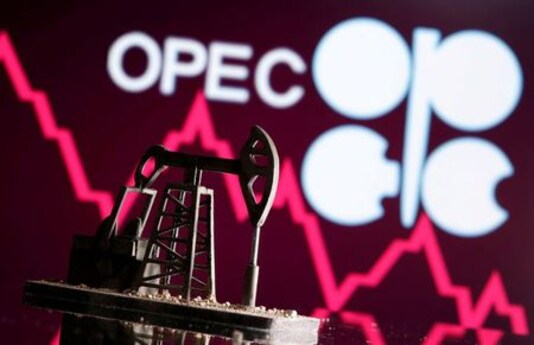
The American Petroleum Institute (API) reported on Tuesday a build in crude oil inventories of 7.544 million barrels for the week ending July 17. Bulls were disappointed with the news, as analysts had predicted an inventory draw of 1.950 million barrels. In the previous week, the API reported a major decrease in crude oil inventories of 8.322 million barrels, after analysts had predicted a much smaller draw. WTI was trading up on Tuesday afternoon prior to the API’s data release, with markets ignoring the uptick in the number of new coronavirus cases in the United States, instead focusing on the vaccine prospects and a successful European stimulus package that was passed. Prices had reached levels not seen since March, prior to the oil price war that Russia and Saudi Arabia waged on the world, and prior to the settling in of the pandemic in the world’s second-largest oil consumer—the United States. Oil production in the United States has now fallen from 13.1 million bpd on March 13 to 11 million bpd for July 10, according to the Energy Information Administration, for the fourth week in a row.  Production has rebounded somewhat from week ending June 12, which saw an average of just 10.5 million bpd produced. The API reported a draw of 2.019 million barrels of gasoline for week ending July 10—compared to last week’s 3.611-barrel draw. This week’s draw compares to analyst expectations for a 1.175-million-barrel draw for the week. Distillate inventories were down by 1.357 million barrels for the week, compared to last week’s 3.03-million-barrel build, while Cushing inventories saw an increase of 716,000 barrels. Nick Note: they forget to tell you about the demand destruction. Thats ok I’ll tell you what they forgot to tell you. See story Oil demand destruction

API reports more than 7 million barrels in U.S. crude inventories

The American Petroleum Institute reported late Tuesday that U.S. crude supplies rose by 7.5 million barrels for the week ended July 17. The API data  showed gasoline stockpiles fell by 2 million barrels, Nick Bit: a very small drop for 4th of July travel week while distillate inventories declined by nearly 1.4 million barrels. Crude stocks at the Cushing, Okla., storage hub, meanwhile, edged up by 716,000 barrels for the week

Baker Hughes: North America Could Fall Hard

Baker Hughes (BKR) reports Q2 earnings July 22nd. Analysts expect revenue of $4.8 billion and EPS of $0. The revenue estimate implies a double-digit percentage decline sequentially. Investors should focus on the following key items.

North America Could Fall Hard

The North America land drilling market had previously buoyed Baker Hughes, Halliburton (HAL) and Schlumberger (SLB). However, E&P in the region has been facing headwinds for the past 18 months, and pricing power has waned. Schlumberger and Halliburton have engaged in cost containment efforts to offset headwinds to their top lines. In Q1 2020, Baker Hughes generated revenue of $5.4 billion, down 15% Q/Q.

Baker Hughes Q1 2020 revenue. Source: Shock Exchange

Oilfield Services and Digital Solutions are short cycle businesses that could be a proxy for North America land drilling. They reported a combined $3.6 billion in revenue, down 8% sequentially. They represented about 67% of total revenue, making Baker Hughes highly-dependent on the region. Oilfield Services revenue was hampered by a decline in international pressure pumping, artificial lift and completions. Digital Solutions revenue declined due to headwinds from the coronavirus. It could fall further as the knock on effects of the coronavirus continue to linger. That said, oil prices fell to as low as $10 after the pandemic, but rebounded to over $40 after supply cuts from OPEC and Russia. Halliburton’s Q2 revenue from North America fell over 60% Y/Y. Baker Hughes’s revenue from short cycle businesses could free fall as well. Turbomachinery and Oilfield Equipment generated combined revenue of $1.8 billion, down 25% Q/Q. Turbomachinery was negatively affected by the disposition of certain business lines. Oilfield Equipment was hampered by lower volume for Subsea Production Systems and Flexible Pipe products. Oilfield Equipment orders fell over 55% sequentially, implying falling revenue in the future. With oil in the $40 range, deep water projects may not be economical. Oilfield Equipment could be the company’s weakest segment going forward. Sentiment for BKR could hinge on cost takeouts. Halliburton and Schlumberger have been more aggressive in cutting costs. In Q1 Baker Hughes incurred restructuring and impairment charges, including inventory impairments and separation charges of $1.5 billion. I anticipate more efforts to rightsize the business with sizable cuts to headcount and its facilities footprint in Oilfield Services and Oilfield equipment. Q1 gross profit was $755 million, down over 40% Q/Q. Gross margin was 14%, down over 600 basis points versus Q4. SG&A costs of $675 million were down 10% Q/Q, yet the decline was not enough to offset the loss of revenue. EBITDA of $435 million fell over 50% sequentially. EBITDA margin of 8% was down 600 basis points versus Q4. Cost cuts could help this quarter, but likely will be unable to offset the expected loss of scale. EBITDA margin for Baker Hughes trails that of Halliburton and Schlumberger who reported margins in the 17-18% range. There could be room for margin improvement over time. Oil services firms will need ample liquidity to survive current recessionary pressures. Baker Hughes has $3.0 billion in cash and over $4.0 billion in working capital. Free cash flow (“FCF”) was $160 million, up from an outflow of $440 million in the year-earlier period. This came despite $365 million in capital expenditures, up from $294 million in Q1 2019. I expect management to cut capital expenditures this quarter. The company must squirrel away as much capital as possible going forward. The last downturn in the oil patch caused some of the lesser-capitalized firms to go belly up. BKR has an enterprise value of $19 billion. It trades at 7x last 12 months (“LTM”) EBITDA, which I deem appropriate given headwinds in the oil patch. Its valuation could fluctuate with broader markets, yet investors should remain focused on earnings fundamentals. Baker Hughes’s financial results could remain dismal until the pandemic subsides. I rate BKR a hold for now. Nick Note: For the record they will not make it out of this……..

GOP House Leader Makes Dire Prediction For New Coronavirus Stimulus Bill

Americans are just days away from going over the economic cliff, and the president and Senate Republicans are attempting to sabotage any coronavirus relief package. Let’s start with the most indefensible position first. The number of deaths from the novel coronavirus surpassed 140,000 in the U.S. on Sunday morning according to Johns Hopkins data. The U.S. confirmed on Saturday more than 71,500 new cases in 24 hours — the second highest number to the record 75,600-plus set last Thursday. And yet, the Trump Death Cult is pushing to block new money for testing, tracing and CDC in upcoming coronavirus relief bill: The Trump administration is trying to block billions of dollars for states to conduct testing and contact tracing in the upcoming coronavirus relief bill, people involved in the talks said Saturday. The administration is also trying to block billions of dollars that GOP senators want to allocate for the Centers for Disease Control and Prevention, and billions more for the Pentagon and State Department to address the pandemic at home and abroad, the people said. The administration’s posture has angered some GOP senators, the officials said, and some lawmakers are trying to push back and ensure that the money stays in the bill. The officials, who spoke on condition of anonymity to reveal confidential deliberations, cautioned that the talks were fluid and the numbers were in flux. [T]he conflict between Trump administration officials and Senate Republicans on money for testing and other priorities is creating a major complication even before bipartisan negotiations get under way. One person involved in the talks said Senate Republicans were seeking to allocate $25 billion for states to conduct testing and contact tracing, but that certain administration officials want to zero out the testing and tracing money entirely. Some White House officials believe they have already approved billions of dollars in assistance for testing and that some of that money remains unspent. Trump and other White House officials have been pushing for states to own more of the responsibility for testing and have objected to creating national standards, at times seeking to minimize the federal government’s role. We all know from where this batshit crazy policy comes. Trump believes that if we don’t test, we don’t have COVID-19 cases. Close your eyes and pretend to make it go away. What this really means is that we are flying blind in an unchecked pandemic that is overwhelming our hospitals. Trump has crossed the line from criminal negligence into willful manslaughter. The next sticking point is Trump’s insistence on a payroll tax cut which takes money from payroll deductions for social security and medicare. Trump demands payroll tax cut in next Covid relief bill.  “President Donald Trump has signaled to Hill Republicans that he will not sign a new coronavirus stimulus package without the inclusion of a payroll tax cut, according to three sources close to the issue.” More than 32 million Americans are receiving some form of unemployment benefits. Over 17 million continue to claim traditional unemployment benefits. This number has dropped from its peak at 25 million in early May, but it remains at depression levels. Another roughly 15 million are on the rolls of other unemployment programs, including the Pandemic Unemployment Assistance (PUA) program. That’s 32 million unemployed Americans – which does not include many more Americans who have applied for unemployment but have not yet qualified – for whom a payroll tax deduction is meaningless. They are not receiving a paycheck. They need direct financial assistance to survive, to keep a roof over their head, and to feed their families.  Most of the expansion of benefits — applies only to benefit weeks that end “on or before July 31.” July 31 is a Friday.

On July 25 or 26, and millions of workers will see their incomes plunge 60 percent or more just a few days from now.

A new plan from Senate Republicans to award businesses, schools, and universities sweeping exemptions from lawsuits arising from inadequate coronavirus safeguards is putting Republicans and Democrats at loggerheads as Congress reconvenes next week to negotiate another relief package. The liability proposal, drafted by Majority Leader Mitch McConnell, R-Ky., and senior Republican John Cornyn of Texas, promises to shield employers when customers and workers are exposed to coronavirus by moving lawsuits to federal court and limiting legal liability to acts of “gross negligence or intentional misconduct,” according to a draft of the plan obtained by The Associated Press. McConnell has said for months that some form of liability shield will be in the next COVID response measure, telling an audience in Kentucky on Wednesday that he won’t send the next, and fifth, coronavirus response bill to the floor without it.

Nick Note: Trump is playing a a dangerous game. Its a complicated dynamic. Foster division among the masses. He has no choice but to play the hand he dealt himself. Their is no pandemic, its under control and its like the flu. He is cutting off all funding for testing and controlling the infection. he will politicize all  hospital admission and death rate data. Hoping to hide the crises. He is making demands on the next round of aid package’s he hopes the democrats will refuse. So he can blame them as the masses lose their unemployment checks, medical care, lose their homes and get thrown out on their asses on their rentals. On the other hand the Republicans under McConnel well know the polling numbers. So their best course of action is to accept the democrats will take control and make sure they inheret a big mess. Its a interesting game of chicken. The stakes could not be higher because we are in the middle of an life destroying, economy destroying plague. Add to that the coming social rebellion and riots and its back to the jungles for mankind.

Read on to see how all this breaks down

Continue reading “GOP House Leader Makes Dire Prediction For New Coronavirus Stimulus Bill”

Vaccine antibodies against Covid-19 could be lost in just three months

NEW YORK (CBSNewYork) — As we’ve said on many occasions, medical knowledge about the novel coronavirus and the COVID-19 disease it causes is a rapidly evolving science with new and sometimes contradictory studies coming out almost daily. There’s encouraging news about a British vaccine and a new study from Mt. Sinai that supports the vaccine report. Researchers are having promising results with an experimental vaccine being developed by the University of Oxford and the pharmaceutical company Astrazeneca. The study in the Lancet looked at more than 1,000 healthy adults and found the vaccine induced strong antibody and other immune responses. “What this vaccine does particularly well is trigger both arms of the immune system. So in addition to neutralizing antibodies, which other vaccines do, we also see a very strong T-Cell response,” said professor Adrian Hill, Director of the Jenner Institute at Oxford University. That means that both antibodies that can neutralize the COVID-19 virus were produced, as well as T-Cells, which are the primary killers of virus infected cells.

The response lasted at least two months after they were immunized.

In a separate study, researchers at New York’s Mt. Sinai found that more than 90% of infected individuals with mild to moderate COVID-19 make high levels of neutralizing antibodies against the coronavirus and that antibody levels remain high for at least three months.

While these findings will still have to be squared with previous contradictory studies, they are encouraging signs. Oxford and its pharma partner Astrazeneca are proceeding with 10,000 volunteer trails in the UK, South Africa and Brazil. Nick Note: Just when you though it was safe to go to the strip club and get a lap dance. They came along and broke my pole. I read the studies and i wondered why they are making such a big deal out of the T cells. That is a normal responce of all vaccines. The Tcells are the killer cells. And i found buried in the study two things. First in the middle of the study the control group had NO RESPONSE. Si they broke off a sub group and increased the dosage. OK i have seen that a lot. But then they mentioned that they could envision booster shots. WHAT THE FUCK? So then that was when i called my pole dancer friends and said i was sorry and asked if i could i cash in my lap dance tickets……. Here is the deal, I suspect they are burying the fact that immunity only lasts 2 to 3 months and the vaccine will not Not NOT work against mutant strains. So  i put away my video camera, took the Dom Perignon out of the fridge and put it back in the cellar. And told my latest girl friend  (who will love me forever) she could not come and i was not going to give her any money for her sick mother………