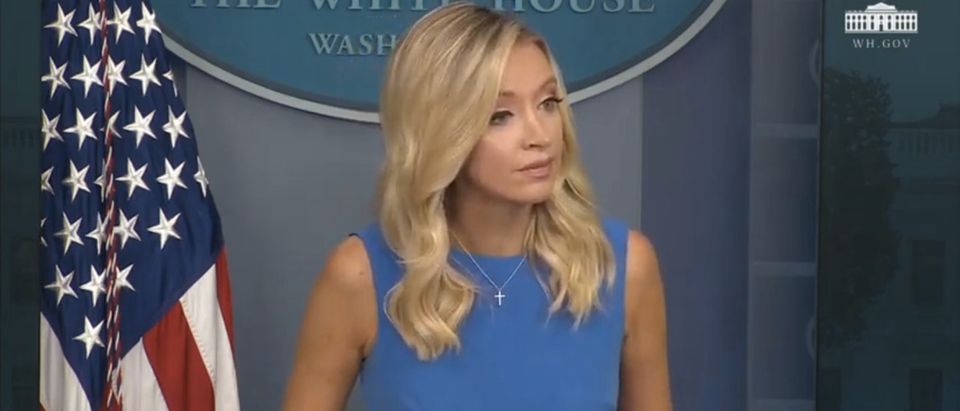
The Trump administration is instructing hospitals to bypass the Centers for Disease Control and Prevention (CDC) in reporting their COVID-19 data to the government each day, effective Wednesday. “As of July 15, 2020, hospitals should no longer report the Covid-19 information in this document to the National Healthcare Safety Network site,” the Department of Health and Human Services said in a document providing guidelines for hospitals on how to submit coronavirus data. The National Healthcare Safety Network (NHSN) site is managed by the CDC. The administration says that it’s changing the way data is reported because it’s trying to streamline the process, stating that there are “many separate” government entities asking for duplicate information. According to guidance issued by the White House Coronavirus Task Force, the federal government will use the data to calculate how resources, treatment and supplies are allocated. The daily data reporting it demands from hospitals will be “the only mechanism” used to make the government’s calculations. In the past it has made “one-time requests for data” for use in determining how treatments like Remdesivir should be distributed. In the document, HHS directs hospitals and health care providers to submit data about their handling of the pandemic every day — including information about patients, the number of beds and ventilators available, and staffing shortages — through a portal on the HHS website that was launched on April 10. “The completeness, accuracy, and timeliness of the data will inform the COVID-19 Task Force decisions on capacity and resource needs to ensure a fully coordinated effort across America,” the document says. Nick Note: Did you take your stupid pill today. Trump is taking control of the data so they can hide the hospitalizations and death rate. Like any dictator would do…….
Fauci calls White House efforts to undermine his credibility “bizarre”
EIA Petroleum Data for the week ending July 10, 2020

Chicago Mayor Warns He Put City In LOCKDOWN
Mayor Lori Lightfoot Warns City Might Have To Move Back To Phase 3 If COVID Cases Continue To Rise; ‘We Are On The Precipice
CHICAGO (CBS) — Comparing herself to a mother who won’t simply turn the car around if her kids are acting up, but one who will make them walk home, Mayor Lori Lightfoot on Wednesday warned the city is “dangerously close” to possibly going back to Phase 3 of reopening, following a recent rise in new COVID-19 cases, particularly among young people. “The last thing I want to do is have to take steps back. I certainly don’t want to be like other places in the country where we’re shutting down commerce and business,” she said. “If we continue to see this uptick in cases, we’re going to have no choice but to go back into Phase 3. That means shutting businesses down. That means imposing more restrictions on your mobility. No one wants to go back there, but we will have to go back there if people continue to ignore the public health guidance.”
Since June 15, nearly 30% of all new virus cases in Chicago are among people between the ages of 18 and 29, the mayor said.
“This should be all the proof that you need. If you are in the 18 to 29-year-old cohort, you are catching COVID-19, you are getting sick, and you’re not only putting yourself at risk, you’re putting every single person that you come into contact with at risk as well,” she said. The mayor has repeatedly warned that, if Chicago’s virus numbers take a turn for the worse, she won’t hesitate to reinstate stricter public health requirements. “Some of you have joked that I’m like the mom who will turn the car around when you’re acting up. No friends, it’s actually worse, I won’t just turn the car around, I’m going to shut it off, I’m going to kick you out, and I’m going to make you walk home. That’s who I am. That’s who I must be for you and everyone else in the city to make sure that we continue to be safe,” she said. “I don’t want to be that person if I don’t have to, but I will if you make me, and right now we are on the precipice. We are dangerously close to going back to a dangerous state of conditions.” Chicago Public Health Commissioner Dr. Allison Arwady said, while Chicago is averaging fewer than 200 new cases per day, she expects to climb above that threshold soon. “When we get back above 200, we’re back in a high incident state, and for me, that means we are back in a caution state. It does not equal an automatic rollback,” she said. However, if and when Chicago does climb back above that threshold, public health officials will look at likely “problem areas,” such as bars, and could order them to close if needed. Arwady said, if Chicago reaches an average of 400 cases per day, that would be equivalent to the levels seen in states included in the city’s travel quarantine mandate, and would indicate a need to go back to Phase 3 of the reopening plan. Nick Note: the major cities of America will soon be shutting down…. Again. they never should have been reopened……
Oxford COVID-19 vaccine showing progress
https://youtu.be/Qbw1rgNbtEQ
Experts believe that one of the biggest challenges with vaccines against the coronavirus species is the “potential for antibody-dependent enhancement of the disease”, which has been one reason for the lack of a vaccine against the 2003 SARS CoV strain.
Oxford’s COVID-19 vaccine that is backed by AstraZeneca is reportedly generating “the kind of antibody and T-cell (killer cell) response that the researchers would hope to see,” Robert Peston, ITV News’ political editor, wrote on Wednesday. “As I understand, not all of the many vaccines under development across the world increase both antibodies and T-cells. But the Oxford vaccine looks as though it has this twin effect,” Peston added. “The most important finding to me is the combination of considerable efficacy in terms of viral load and subsequent pneumonia, but no evidence of immune-enhanced disease, which has been a concern for vaccines in general, for example with vaccines against respiratory syncytial virus (RSV), and for SARS vaccines,” Prof Stephen Evans, Professor of Pharmacoepidemiology, London School of Hygiene and Tropical Medicine, said. Experts believe that one of the biggest challenges with vaccines against the coronavirus species is the “potential for antibody-dependent enhancement of the disease”, which has been one reason for the lack of a vaccine against the 2003 SARS CoV strain. Risk-on flows continue to dominate financial markets on Wednesday. As of writing, major equity indexes in Europe were up between 0.95% and 1.2% and the S&P 500 were gaining 0.8% on the day. Nick Note: As i have been warning you their will be a vaccines weather their is a vaccine or not. Excuse me if i do not buy into this shit. This is a dredged vaccine in development from the SARS epidemic. It did not work. Hope springs eternial and ends up hopeless…….
Banks Ready for Wave of Coronavirus Defaults
The largest U.S. banks signaled that the worst of the coronavirus recession is yet to come, opting to stow away tens of billions of dollars to prepare for an expected wave of loan losses. JPMorgan JPM 0.57% Chase & Co., Citigroup Inc. C -3.93% and Wells Fargo WFC -4.57% & Co. said Tuesday they took large hits to their second-quarter profits to collectively stockpile $28 billion to cover losses as consumers and businesses start to default on their loans.
The provisions amount to a sharp increase above what they put away in the first three months of the year, reflecting a shift in their assumptions about the length and severity of the pandemic’s economic toll.
JPMorgan, the largest U.S. bank by assets, said it put aside extra to prepare for an unemployment rate that remains at double digits well into next year and a slower recovery in gross domestic product than the bank’s economists assumed three months ago. “This is not a normal recession,” said James Dimon, JPMorgan’s chief executive. “The recessionary part of this you’re going to see down the road.” For years after the last financial crisis, banks made big profits lending to consumers and companies eager to take advantage of low interest rates. Heading into the current collapse, Americans had taken on record amounts of auto loans, credit-card debt and student loans. Corporate debt also reached record levels. After governments shut down a host of businesses to slow the spread of coronavirus, the outlook for that debt grew murkier. Bank executives said Tuesday they saw signs of a nascent economic recovery in May after states opened up. Now, a new spike in coronavirus cases that caused a wave of shutdowns has them preparing for an extended downturn.
“The pandemic has a grip on the economy, and it doesn’t seem likely to loosen until vaccines are widely available,” Citigroup Chief Executive Michael Corbat said.
JPMorgan set aside $10.47 billion to cover potential loan losses, cutting its profit in half. Wells Fargo posted its first quarterly loss in more than a decade and socked away $9.57 billion to prepare for a wave of loan defaults. Citigroup’s profit fell 73%, weighed down by the $7.9 billion the bank set aside for an expected increase in soured loans. Shares of JPMorgan rose 0.6%. Citigroup shares fell 3.9%, and Wells Fargo shares fell 4.6%. The economic collapse has been unusual in that banks have granted temporary pauses on payments for mortgages, auto loans and commercial loans. Also, the federal government has provided unprecedented stimulus to keep consumers afloat. Executives said Tuesday the requests for more assistance have tailed off in recent months. Credit-card customers who had requested help were largely returning to paying instead of seeking more relief. “It does appear the relief programs are working” Citigroup Chief Financial Officer Mark Mason told reporters. But as relief measures roll of, banks are expecting trouble ahead. All three banks added to their loan-loss reserves for both their commercial divisions and their consumer banks. All told, the three banks have stockpiled $83 billion for credit losses. Hard-hit industries like retail and hotels are already struggling financially, but executives said they now expect the downturn to hit a wide range of businesses.
“May and June will prove to be the easy months in terms of this recovery,” said Jennifer Piepszak, JPMorgan’s CFO. “Now we’re really hitting the moment of truth in the months ahead.” Additionally, banks expect higher losses in consumer mortgages when payment deferrals end and higher credit-card losses due to elevated unemployment. Even as the recession deepened in the second quarter, the S&P 500 rose 20%. In a sign of that rift, banks reported some of their best trading results in years. Trading revenue rose 79% at JPMorgan and 55% at Citigroup. Both banks did brisk business advising companies raising funds through debt and equity sales. Executives at JPMorgan and Citigroup cautioned that second-quarter market revenues were abnormally high and trading likely would fall back to earth in the second half of the year. So far, the pandemic has hit Wells Fargo the hardest. The bank, already struggling to dig out of a four-year-old fake-accounts scandal, had to manage the economic fallout while staying within strict regulatory confines. In addition to increasing its loan-loss provisions, it noted a recent rise in charge-offs tied to its oil-and-gas and commercial-real-estate portfolios.
“Our view of the length and severity of the economic downturn has deteriorated considerably,” said CEO Charles Scharf.
Boeing customers cancel 355 plane orders in H1 2020
Boeing Co. (NYSE: BA) reported Tuesday morning that it delivered a total of 20 new commercial jets in the second quarter of this year. For the year to date, Boeing has delivered 70 new airplanes. The grounding of the company’s best-selling 737 Max halted sales of the company’s most popular plane in March of last year. Customers took delivery of just seven of the company’s 787 Dreamliners in the second quarter, compared with 36 deliveries in the year-ago quarter. Deliveries of the 777 fell from 10 to six, and 767 deliveries dropped from 14 to just four. The decline in 777 and 787 deliveries is due largely to the COVID-19 pandemic that has all but stopped new deliveries from both Boeing and its chief rival, Airbus, as airline customers cancel or delay plans to upgrade their fleets. For the first half of the year, Boeing has received a net 784 cancellations, including 353 for the 737 Max. Orders for 12 of the company’s 777 jets have also been canceled, as have four orders for the 747 jumbo jet. On the plus side, Boeing has written nine new orders for the 767 and 17 new orders for the 787. More than half of the cancellations (439) are related to an accounting standard adopted in January 2018 known as ASC 606. The standard specifies criteria beyond a firm contract that must be met before a company can recognize revenue from its backlog. Boeing has commenced flight testing its 737 Max jets following changes to the aircraft’s flight control systems and software but there remain weeks (at least) of testing and reviews and approvals before the U.S. grounding of the plane could be lifted. It is also likely that other national civil aviation authorities will want to conduct their own testing and reviews before lifting grounding orders. While the COVID-19 outbreak has decimated near-term demand for any new Boeing (or Airbus) aircraft, Boeing needs to get the 737 Max back in the air as soon as possible. There may be no new orders for the plane for a while, but the company has more than 4,100 unfilled orders for the 737 Max. Building and delivering the 737 Max will get Boeing’s cash flow running again. The company also has some 400 of the planes parked around the country awaiting delivery to customers. When the grounding order is lifted, Boeing can begin delivering those planes and getting paid for them. Boeing stock traded up about 1.0% in the noon hour Tuesday, at $177.42 in a 52-week range of $89.00 to $391.00. The stock’s consensus 12-month price target is $177.80. Nick Note: as the plague spread and more and more people realize that the global spreading of the coronavirus was primarily on the aluminum petri dishes knows as a disease liner. And it has not stopped.
Hong Kong Adopts Its Strictest-Ever Virus Measures as City Reels
(Bloomberg) — Hong Kong implemented its strictest suite of social distancing measures yet as the Asian financial hub looks set to be the first in the region where a new outbreak surpasses previous waves in severity.
Bars, gyms and beaches will be closed, public gatherings limited to four people, and fines will be doled out to those refusing to wear masks on public transport as authorities try to slow a growing resurgence.
Officials said they detected 40 local cases on Tuesday, bringing the total outbreak to 224 people in around a week. The breadth of Hong Kong’s social distancing measures reflects the large proportion of cases of unknown origins, which grew to a record of 24 out of 40 local cases on Tuesday. Because officials cannot identify where the infections are centered, they can’t deploy less-disruptive targeted measures like in South Korea and Japan and have instead levied broad policies for the whole city. “The actual number of cases is quite high but more worrying is the proportion of unknown cases,” said Chuang Shuk-kwan, an official with the Department of Health, at a Tuesday briefing. “That means there are many unknown sources in the community that can spread easily.” Pedestrians wearing protective masks walk across a road in Hong Kong on July 10. The sweeping set of measures, announced by Chief Executive Carrie Lam on Monday night, illustrate how the second and third waves of the coronavirus pandemic around the world could be worse than the initial outbreak, requiring ever more painful shutdowns. Australia’s second-largest city Melbourne and the U.S. state of California have also moved to re-impose lockdown restrictions as new waves of infection surge.
© Bloomberg Virus Roars Back
For residents finding themselves back in crisis after a six-week stretch of normal life, the change is jarring. While the closures are for an initial period of seven days, officials said they may be extended if the outbreak does not slow. Dining-in may be barred completely next, after now being limited to between 5 a.m. and 6 p.m., reported local media outlet RTHK citing Secretary for Food and Health Sophia Chan. “I’m so depressed when I see the rising case numbers,” said Liu Jia, a 30-year-old investment banker. “I feel my career is stuck and I myself am also stuck physically in the city. Everything is back to the painful time we’ve been suffering months ago, and the entire year will be wasted.” The resurgence will likely stamp out the tentative green shoots that Hong Kong’s battered economy had been showing. With locals unable to travel out of the city this summer, the retail and hospitality sectors had been seeing signs of a recovery in demand before the latest flareup. “Hong Kong’s economy had just warmed up and now we have the third wave of outbreak,” said Francis Kwok, vice chairman of the Hong Kong Institute of Financial Analysts and Professional Commentators. “Working in the financial industry, the most vital thing for us is the economy so everyone can go to work and run business normally. The worsening outbreak will also affect the mood of the financial market.” The broad restrictions on businesses are a source of frustration, said Herbert Chow, chief executive officer of children’s clothing brand Chickeeduck Retail Hong Kong Ltd., who formerly owned an ice-skating rink in a shopping mall. The rink is being asked to close along with other leisure outlets like cinemas, although patrons are not in an enclosed space, he said. “After having to close for 40 days from March 28 to May 7, now we are being asked to close again,” Chow said. “The government uses a broad stroke policy and treats everybody in this one sector the same.” Nick Note: This is the second wave. And this will be the death of many business who begged, borrowed and stole to survive the first wave. Sonner or later everyone will get tired of giving them endless money, Restaurants, bars, sporting events, entertainment complexes, schools, universities and mass office death chambers will never be used again! Abandoned when people figure out they are places where you get the plague.
Oil Drops on Signs OPEC+ Preparing to Taper Production Cutbacks
(Bloomberg) — Oil edged lower ahead of an OPEC+ meeting this week at which the group may announce plans to start tapering historic production cuts even as the coronavirus surges unabated in many parts of the world. Futures in New York fell below $40 a barrel. The producer bloc will review the state of the market at an online meeting on Wednesday amid expectations it will soon begin unwinding the output curbs that have helped haul oil back from its plunge in April. Russia’s top oil companies are preparing to increase output next month in the absence of other guidance from the Energy Ministry, according to two people from the industry who spoke on condition of anonymity.
The increase in supply would come as the U.S. struggles to control the coronavirus outbreak, clouding the demand outlook. Similarly, in India, the world’s fastest growing energy consumer, more than 50,000 new cases were reported over the weekend.
“It seems like OPEC+ will stick with the plan of a bit more production in August,” said Bjarne Schieldrop, chief commodities analyst at SEB AB. “With record high inventories it is understandable that the market is not all that positive about an additional 2 million barrels a day or so of supply.” The Joint Ministerial Monitoring Committee, the panel that reviews OPEC+’s progress, will consider whether the alliance should keep 9.6 million barrels of daily output off the market for another month, or taper the cutback to 7.7 million barrels as originally planned. Members are leaning toward the latter option, according to several national delegates who asked not to be identified. Saudi Arabia, meanwhile, gave at least five Asian customers less August-loading crude than they had sought, said people with knowledge of the companies’ procurement. Six other Asian buyers received full allocations, while at least two Indian customers that sought fewer supplies than contracted got roughly what they asked for.“The speed of recovery of oil prices will be a function of how fast the global pandemic situation can be under control and how long OPEC+ will sustain production cuts,” Bank of China International analysts including Xiao Fu wrote in a note to clients. Nick Note: Everyone is making the same mistake. They are buying the epidemic is over. And soon their will be a vaccine. This is crazy shit. Here is a news flash their is no vaccine, NONE! their are many drug companies getting paid billions to pretend they MAY have a vaccine. The whole world is ignoring the reality of the plague that is engulfing the planet. And putting all its hope in a non existent vaccine.
US budget deficit jumps to $864B in June
WASHINGTON — The federal government incurred the biggest monthly budget deficit in history in June as spending on programs to combat the coronavirus recession exploded while millions of job losses cut into tax revenues. The Treasury Department reported Monday that the deficit hit $864 billion last month, an amount of red ink that surpasses most annual deficits in the nation’s history and is above the previous monthly deficit record of $738 billion in April. That amount was also tied to the trillions of dollars Congress has provided to cushion the impact of the widespread shutdowns that occurred in an effort to limit the spread of the viral pandemic. As stimulus spending has soared the budget deficit hit $3 trillion in the past 12 months through June, or 14 percent of gross domestic product. The Congressional Budget Office has projected the annual deficit could total $3.7 trillion in the fiscal year that ends Sept. 30. The June deficit was driven by various government relief programs, such as an additional $600 per week in expanded unemployment benefits and a Paycheck Protection Program that provided forgivable loans to businesses that could keep workers on their payrolls. The report showed that the cost of the Paycheck Protection Program in June was $511 billion, though that figure reflected a charge to the federal government for all bank loans under the program, before banks determine what businesses met the criteria for having their loans forgiven. Those requirements include spending at least 60 percent of the loan amount on worker pay with the other 40% going to overhead costs such as rent and utilities. Another reason for the surge in the June deficit was the federal government delaying tax payments until July 15 this year instead of June. Deficits could widen if Congress moves forward with another round of coronavirus relief legislation. Congress has authorized $3.3 trillion since March to combat the impact of shutdowns in the form of stimulus checks and emergency loans and grants to businesses and state and local governments. But many argue more is needed. In May the House passed another $3 trillion coronavirus relief bill, but the Senate has yet to discuss its own legislation. The spike in red ink has left some Republicans hesitant to pursue new relief legislation and to call for any new aid to be narrowly tailored to the hardest-hit industries. Fox News is told Republicans were aiming for a bill costing no more than $1 trillion. Sen. Majority Leader Mitch McConnell said if the Senate takes up another coronavirus relief bill, it will be after it returns to the Hill on July 20. Trump and McConnell aren’t ruling out another round of targeted, direct stimulus checks – especially for those making less than $40,000. The Trump administration has continued to advocate for one idea unpopular with both Republicans and Democrats: a cut in the payroll taxes employers pay on behalf of their workers. The federal government has levied such taxes on the wages of employees. Payroll taxes have financed Social Security and Medicare, which have accounted for nearly a quarter of all government revenue. Pruning the payroll tax cut could further explode the national debt, contributing hundreds of billions if not trillions of dollars of red ink – on top of the staggering spending OK’d by Congress this year alone. Nick Note: They have basically blown their bail out wad. If you do a back of the cereal box calculation you can see where they blew 10 trillion on the first partial shit down. Which went for nothing. They now have to shut down again. They can maybe throw another 3 trillion. Its a all or nothing deal. The great white hope is the phony baloney vaccines “amazing progress” they report on a daily bases. While ignoring daily record breaking infections, hospitalizations and deaths. They are basically betting the empire on a vaccine that they have been working in for 50 years. They refuse to shut it down while they still have a chance of stopping the raging epidemic. And to make matters worse they are going to turn the children of America into super spreaders by opening up the schools. Their will be no working vaccine… not now not ever. And for sure not soon enough to save the economy from the biggest wipe out ever. Be prepared for massive infections and death. Prepare your self for rationing. From food,to electricity, to water and consumiables. I am getting more and more reports of shortages. This will only get worse as time goes on.