United States President Donald Trump’s coronavirus test came back negative, his personal physician revealed on Saturday. Earlier in the day, the president confirmed he took the test and that he expected the results in a day or two. According to Conley, the test was performed Friday night and the president “remains symptom-free.” Trump hosted a delegation from Brazil at Mar-a-Lago last weekend, including Brazil’s President Jair Bolsonaro and his press secretary Fabio Wajngarten, the latter of whom was confirmed as infected with the coronavirus. Bolsonaro was first reported to be infected as well, however, he later rebuffed the claims on his Facebook page. Nick Note: This is PROOF the devil takes care of his own!
France announces lockdown as COVID-19 death toll rises by 12
No no say it ain’t so their goes the croissants
French Prime Minister Edouard Philippe said on Saturday that all cafes, restaurants, night clubs, cinemas and non-essential businesses in the country will be ordered to shut down as of midnight to help prevent the further spread of COVID-19. The number of new coronavirus deaths in France increased by 12 to 91 on Saturday, the country’s Ministry of Health revealed. Meanwhile, the number of new registered cases jumped by 838 to 4,499 over the past 24 hours. Earlier, the World Health Organization (WHO) said the coronavirus pandemic’s epicenter has shifted to Europe with the number of cases in Italy, France and Germany surging.
Army brought in to guard hospitals and supermarkets in UK fight against coronavirus
TROOPS ON THE STREETS
TROOPS could guard hospitals and supermarkets in drastic new measures set to be rolled out in a bid to tackle the coronavirus.It comes as the death toll in the UK soared to 21 and plans were announced to isolate people over the age of 70 for four months. Shoppers have stripped supermarket shelves of essentials including toilet paper and dried pasta as officials say they’ve moved into the second phase of plans to contain the deadly bug. As a result, it is understood the government will deploy the armed forces. The plans feature in a list of strict rules set to be revealed by Boris Johnson as the pandemi rages. As part of plans for a worst-case scenario situation, defence sources told The Mail on Sunday that Army units are stepping up their training for public order roles – including the guarding of hospitals and supermarkets. The source said officers from the Royal Logistics Corps will food convoys, while the Royal Army Medical Corps could build tented field hospitals next to care homes. Troops trained in chemical, biological and nuclear warfare will deep-clean empty public buildings in case they need to be turned in to hospitals or morgues. Under the new scheme, local councils would work with military liaison officers and essential staff including RAF Typhoon pilots will be quarantied at work so they don’t fall sick. Members of the Army’s police force, the Royal Military Police, will also work with constabularies across Britain. The virus is widespread in Europe, and while Italy remains in lockdown, France has tonight ordered restaurants and bars to shut. Flights were also turned away from Spain just 40 miles before landing. Britain’s decision not to lock down has been criticised by a group of 229 scientists from UK universities. In an open letter, they say the approach will “risk many more lives than necessary”. Nick Note: we are in partial quarantine country wide. Restaurants, bars and sporting events are all closed. It does not mean shit to me. We have been in self imposed quarantine for a month now. My millennial’s and generation Zeers are walking around here a little shell shocked. DAD how did you know… we are so sorry. Some of the VOLUNTARILY Quarantined staff are coming and telling me thankyou thanksyou. Get this some of their close friends they would have been hanging out with are sick with the contravirus and one is hospitalized!
THE MOST EXPENSIVE SPEECH EVER GIVEN
THIS ONE S PEACH CRASHED THE GLOBAL STOCK MARKET PANICKED INVESTORS AND COST THE WORLD COUNTLESS TRILLIONS
Trump in desperation announce a unprecedented travel ban on people traveling from 26 Europe counties. About the dumbest fucking thing ever done by a world leader. it caused panic the world over… why do it. In order to answer this question you have to understand the nature of the beast. Trump is totally inept and his research (rather then surrounding himself with experts, reading intelligence and economic reports) is calling fellow showman FOX news caster and pollsters for their moment to moment ratings of his presidency that is little more then a reality TV show based in Washington. Often episodes staged in the rose garden and oval office production sets
It was only the beginning of the week that the trump script writers realized that their might be a real problem in the spreading now official global pandemic.
As you know I have been screaming my warning for months and planning our trading the best i could. We even opened up the Pandemic Informer Web sight.
Trump banning travel from Europe and invoking the emergency power act. He is building his power base to be a dictator.
I knew this was a big deal from my Haiti experience fighting Cholera virus where people literately shit themselves to death.
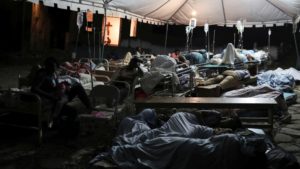 I learned how to decontaminate big spaces running HASP certified food production facilities (with testing labs and a clinic) in Central America. I learned more then i ever wanted to know about viruses like the Rhino and E.coli and how to disinfect massive production facilities employing thousands of people often sick.
Through the years i have had strong premonition that a Global Pandemic was a forgone conclusion. Between Cholera, Ecoli, SARS i realized it was only mater of time. I was in England when they culled all the chickens and Turkeys. I researched and planned for this day it seems like all my life. And I waited and watched……. Moved off the yacht, sold the mansionss AND got serious about the dog farm Rancho Perro. From food storage to medical equipment to water storage generators, solar and satellites, fences and cameras. I built steel barns, storage sheds (metal) cabins and shipping container homes. Made sure the vesicles were all 4 wheel drives (exceptions being the 57 Chevy and corvettes). I even built a Daca truck for those night time cross country excursions. i prepared day and night and even saved glass bottles, steel storage drums, 1 ton cube water containers, . To the laughter of family and friends… As far as wives/ girl Friends (they been gone thank God for over ten years) that did not want to live on a farm. I told them if they stayed they would take of the tin foil hat…….. Even my children regarded me as a nut case…. Not Any mores.
Ten years ago i wrote the reports on the Pandemic Informer web sight.
I closed offices all over the world and even have one blow up! I decided years ago that office were a function of a bygone era. I have been shopping on the internet and eBay as they became viable. I moved our enterprises into the virtual world as soon as the technology became available. The days of Malls, Grocery stores, Shopping centers, board meetings in person and offices are over. Restaurants, sports stadiums, bars strip clubs will go virtual.
We will come out of this with a much different world they you know today. Robots don’t get diseases. Doctor visits will be online with vitals taken by sensors in your smart watch. Surgery will be done by a expert surgeon across the world from you. Police will patrol the streets by drone and facial recondition cameras, embedded chip ID scanning sensors. It Ok they will not be in your hand or forehead! They are already embedded in your credit card, drivers license, passport and Groceries. You DNA will be your ID and they will sniff it out of the air.
All business will be online, Insurance, lawyers even the courts will be virtual. Their will be no physical banks or ATM machines. Money will be virtual. Loans and all banking will be online with you communicating with a Artificial intelligence virtual person. Paper currencies will mark you as a criminal and stacks of cash will be stored in warehouses of drug dealers collecting dust.
University’s, schools and classroom will all go virtual. .
Their will be no stoned bus drivers or truckers, buses and planes (half as many as we have now) without pilotless even cars will be driverless.
Your food and packages will be delivered by robuts. The great cities of the world will empty out. Either on foot or in a body bags.
Stocks post monster gains
Dow surges 9% adding nearly 2000 points as Trump declares coronavirus emergency
Wall Street stocks skyrocketed on Friday, recouping a chunk of Thursday’s steep losses in a monster rally as President Donald Trump officially declared a national emergency over the coronavirus outbreak, providing fearful investors with momentary comfort. Amid new infections and a rising death toll, the president outlined a broad, multi-pronged $50 billion effort designed stave off a pathogen that’s currently ravaging Italy and threatens to overwhelm Europe. In addition to student loan relief — and using the opportunity provided by low oil prices to “fill up” America’s strategic reserve — the initiative will loosen up regulations to allow hospitals to “do what they want” to combat the virus. “This will pass, this will pass through, and we will be even stronger for it,” Trump said. Friday’s rally — which saw benchmarks spike by over 9% — provided a brief respite from a bloody 3 week streak that culminated on Thursday, when the S&P 500 and Dow posted their biggest percentage-drop since 1987’s notorious “Black Monday.” The surge was Wall Street’s biggest since the 2008 crisis. The S&P 500 has gained or lost at least 4.89% every session this week, and plunged enough during the intraday session to trigger “circuit-breakers” to help prevent further extreme losses twice. Each of the three major indices entered a bear market this week, falling more than 20% from recent highs. Amid these concerns, the response from policymakers escalated throughout the week, with the Federal Reserve adding further stimulus on top of its half-point interest rate cut last week with the announcement of an additional injection of $1.5 trillion in liquidity operations, along with purchases of Treasury securities across the yield curve. Elsewhere, Trump announced a month-long travel ban on inbound travelers from Europe, and said he would offer billions worth of low-interest loans to small and mid-sized businesses getting hit by the coronavirus. Nick Note: Can i now say i told you so?
Stock Market Wipeout Is Over, The Bottom Is In
AREN’T YOU GLAD YOU PUSHED THE RESET BUTTON
Trump declares national emergency over coronavirus
a DICTATOR IS BORN
United States President Donald Trump declared a national emergency on Friday over the spread of the coronavirus, noting the move will make up to $50 billion available for the fight against the disease. Trump stressed today’s action also includes asking hospitals to activate “emergency preparedness plans” and providing the Department of Health and Human Services with the power to waive laws in order to give medical professionals flexibility in dealing with the virus. According to the US president, the country already made “tremendous” progress and will ultimately defeat COVID-19 as a result of his administration’s decisive actions. Trump pointed out the emergency declaration was necessary as some “old and obsolete” rules could not work under such “mass circumstances.” Nick Note: Finally Trump evokes the Stafford act. And the stock market rout is over!
Coronavirus vs. Constitution: What can government stop you from doing in a pandemic?
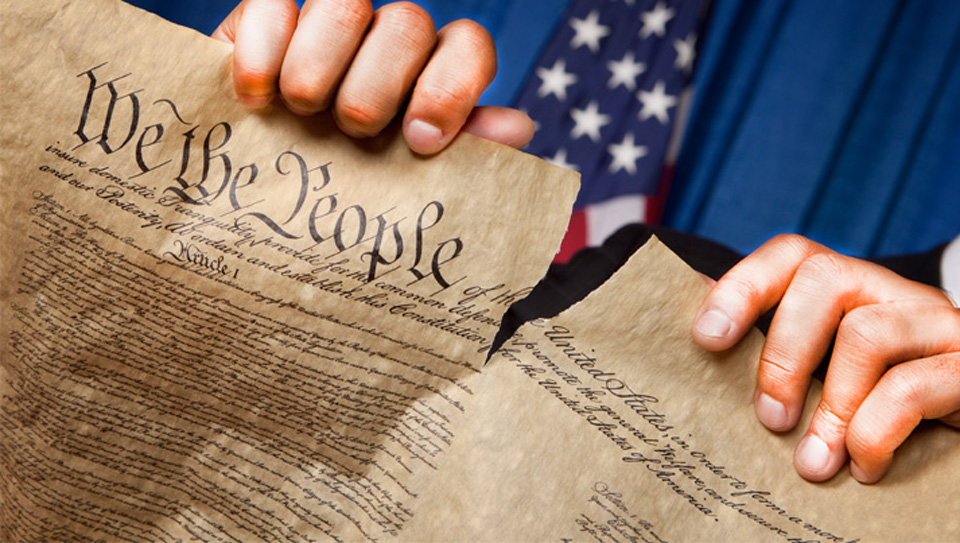
Public closures, a ban on gatherings, quarantine notices and orders for isolation have become increasingly common as the coronavirus continues to spread across the United States. Officials in Washington state and San Francisco are limiting the number of people allowed to attend public gatherings. The governor of California joined them on Thursday in urging the cancellation of all events with more than 250 people in attendance. The governor of Kentucky, a Bible belt state, has asked churches and other religious institutions to temporarily cancel services. But if it seems these actions are infringing on individual freedoms guaranteed by the U.S. Constitution, think again. Hodge is the director of the Center for Public Health Law and Policy at Arizona State University, an affiliate of the Network for Public Health Law. As the number of COVID-19 cases climbs, he said, the types of “aggressive measures” taking place in some parts of the country will be used elsewhere. As of Thursday, more than a dozen states from California to North Carolina have declared a state of emergency to try and stop the spread of the coronavirus. Hodge said those declarations help shape how public health officials can respond at the state and local level, enabling them to act fast while instituting forms of social distancing — “which is one of the only tools we have available to us” during a public health crisis like the coronavirus pandemic, he said. Officials typically have to go through legal processes to close an establishment or shut down public gatherings, Hodge said. But under a state of emergency, everything is expedited. “It’s not that we don’t have time for First Amendment interests, it’s that we must act fast,” he said. “What was opened today can be closed tomorrow.” That doesn’t mean communities in the U.S. will see the kind of large-scale lock-downs happening in Italy and China, Hodge added. But there are circumstances under which a voluntary recommendation can become involuntary. A man in Missouri left quarantine to attend a father-daughter dance at a nearby hotel, McClatchy reported, prompting county health officials to warn “he must remain in his home or they will issue a formal quarantine that will require him and the rest of his family to stay in their home by the force of law.” When someone opts to evade such recommendations, Hodge said, public health authorities can seek a court order mandating their compliance. “Some of those basic liberties are going to be truncated for a brief period,” he said. “Most Americans understand the need for that.” But these types of public closures and requests for self-quarantine aren’t without good reason — it’s “flattening the curve,” Vox reported. If officials don’t stop the rapid spread of coronavirus, or at least slow it down, epidemiologists have said the health care system could be “overwhelmed by a sudden explosion of illness that requires more people to be hospitalized than it can handle,” according to Vox. Still, these measures aren’t undertaken without due process. “The government does have sweeping powers to combat communicable disease but there are limits,” said Jay Stanley, a senior policy analyst at the American Civil Liberties Union. Stanley said officials have a set of guidelines to follow when it comes to making these decisions — it has to be overwhelmingly in the public interest, rooted in rational, scientific ends and done by the least intrusive means possible. There must also be a mechanism to challenge it. Officials can’t, for example, use COVID-19 as an excuse or pretext “to achieve illegitimate ends” like shutting down a protest or discriminating against certain groups, he said. Hodge said these types of measures aren’t designed to be punitive, they’re protective — and they don’t “trip any constitutional safeguards when done right.” He pointed to a case from the 1980s in West Virginia where a man who officials suspected had tuberculosis was involuntarily confined in quarantine. The man argued he was denied due process when the trial court delayed appointing him an attorney, and judges agreed. That, Hodge said, is an example of what not to do in a public health emergency. “There really are definitive checklists of things you have to show to utilize quarantine and isolation powers at the level we’re going to see,” he told McClatchy. But he said state and local health authorities know that — “this is not guesswork.” The coronavirus hasn’t caught the public health system off guard so much as prompted them to operate on a much larger scale than usual, Hodge said “It gets a lot easier when Americans act on their own volition and self-quarantine pursuant to public health directives,” he said. “Most Americans will respond that way.” The CDC has guidelines on legal authorities governing isolation and quarantine as well as the types of laws and regulations that come into play during a pandemic. Nick Note: That was the Doctoral Thesis version. The real world version is the police, army and CORRUPT authorities will not waste a Pandemic
NY Fed vows to pump in $1.5 trillion to fight coronavirus-linked ‘highly unusual disruptions’ on Wall Street
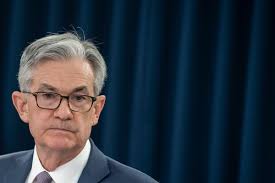
New York (CNN Business)The New York Federal Reserve is taking out the big guns to calm panicky financial markets.
The NY Fed announced plans Thursday to inject vast amounts of money into the financial system, totaling at least $1.5 trillion. And the Fed promised to start purchasing a range of Treasuries — a step that effectively marks a return to the 2008 crisis-era bond buying program known as quantitative easing, or QE.
The Fed said the dramatic moves will address “highly unusual disruptions” in the Treasury market linked to the coronavirus outbreak. This accelerates weeklong efforts by the NY Fed aimed at easing fears that companies will lose access to capital or that markets will become unhinged. “The Fed is all in. They’ve fired their nuclear weapon. and they did it because financial markets are seizing up,” said James Bianco, president of Bianco Research. “There is no liquidity in the markets. They are trying to unstick them.”
Not only did US stocks nosedive Thursday, but the ultra-safe government bond market malfunctioned. Even though Treasuries are supposed to be the safest assets on the planet, liquidity dried up in that market, setting off alarm bells on Wall Street.
“The market in a sense broke today. The Fed came out and fixed it,” said Peter Boockvar, chief investment officer at Bleakley Advisory Group.
Boockvar said there was a “blow out” in the gap between bid and offer in Treasuries, signaling a liquidity crunch in what is normally a very deep market. One way to look at it: The bond-trading engine seized up, and the Fed added oil to make it run smoothly again. The NY Fed said it would offer $500 billion in a three-month repo operation Thursday afternoon — and then will do the same thing the next day. Moreover, the Fed said it will offer a $500 billion one-month repo operation Friday and take additional steps as well. The NY Fed’s moves briefly improved the mood on Wall Street, lifting US stocks off their lows during an historic selloff. Markets are still are track for their worst week since 2008. “This is a full-blown crisis response operation, intended to make it abundantly clear that the Fed will not allow liquidity to dry up,” Ian Shepherdson, chief economist at Pantheon Macroeconomics, wrote in a Thursday note to clients. At the same time, the Fed is trying to ease concerns that banks won’t have enough cash to lend to jittery businesses. “This is to make sure banks don’t have any funding issues,” said Jeffrey Kleintop, chief global market strategist at Charles Schwab. “We’ve got enough to deal with, with a health crisis. We don’t want companies to feel like banks will pull back on their lines of credit and run into liquidity problems.”
Part of a larger scheme
The Fed has repeatedly ramped up its cash injections this week in an effort to keep funding markets operating smoothly despite the coronavirus fears. If those markets shut down, like they did in 2008, banks would stop lending to each other and cut off capital provided to Corporate America. In other words, a health crisis would turn into a credit one.
“The idea is to make sure banks maintain capital available for businesses. This isn’t a direct injection into those businesses but as close as the Fed can get,” said Kleintop. Critically, the Fed said it is no longer just buying short-term Treasuries known as T-bills. The statement said previously planned purchases of $60 billion of US debt will now take place “across a range of maturities,” roughly matching the composition of outstanding US Treasuries. That means the Fed will start buying longer-term debt, just like it did during QE1, QE2 and QE3. “QE4 is here,” Pantheon’s Shepherdson said. “This is a world away from the bill purchases, which effectively just allowed banks to swap bills for reserves at the Fed.” The NY Fed intervention began in the fall, when officials started conducting overnight repo operations aimed at easing stress in the overnight lending market. At the time, borrowing rates spiked in this critical part of the financial system that allows banks and other financial institutions to quickly and easily borrow. To ease the pressure, the Fed also began buying T-bills. Although many investors saw the moves as a stealth version of QE, the Fed denied this by pointing out that it was strictly focused on short-term debt. That is no longer the case given the changes announced Thursday. Nick Note: this is massive stimulation…. ITS A BIG DEAL!
Trump may sign disaster or emergency declaration Thursday Afternoon
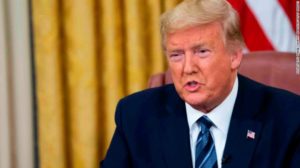
Washington (CNN)President Donald Trump has decided to use federal disaster powers to release more resources to combat the spread of coronavirus, people familiar with the decision said, and could declare a major disaster or emergency by Thursday afternoon. The formal declaration is going through White House legal review as officials navigate how broad it can be, the sources said.
Trump’s top economic adviser Larry Kudlow told Republicans the President could sign a disaster declaration under the Stafford Act on Thursday afternoon.
Aides have been weighing such a move for the past several days as a way to provide more resources for combating the coronavirus outbreak. States and White House consider disaster declaration to deal with coronavirus outbreak “We have things that I can do, we have very strong emergency powers under the Stafford Act,”
Trump told reporters in the Oval Office on Thursday. “I have it memorized, practically, as to the powers in that act. And if I need to do something, I’ll do it. I have the right to do a lot of things that people don’t even know about.”
But he stopped short of saying whether he planned to approve the new declaration later in the day.
“I don’t want to say that,” he said. The declaration would free up funding and allow the Federal Emergency Management Agency to head up certain aspects of the outbreak response. Earlier this week, Senate Minority Leader Chuck Schumer, in conjunction with Democratic Sens. Patty Murray of Washington state and Gary Peters of Michigan, sent a letter asking Trump to “immediately” consider disaster declaration requests for the coronavirus.
There are two types of declarations that a governor could request from the President — emergency declarations and major disaster declarations, both of which are authorized by the Stafford Act.
A declaration would put FEMA — the agency within the Department of Homeland Security that would be activated by a declaration — in a position to help provide additional supplies, assist with logistics like the transport of residents if needed, and put up temporary medical facilities. Nick Note: For sure he is going to do it…..