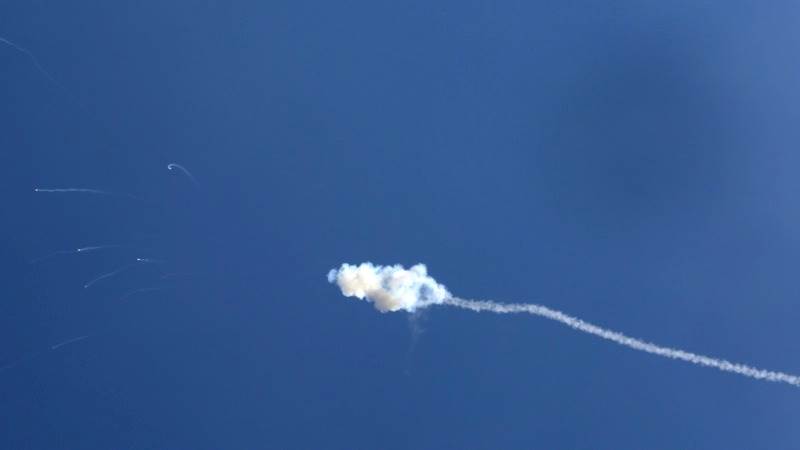
Rocket sirens went off in Tel Aviv and “all over” central Israel, the Israeli Defense Forces (IDF) said in a post on X, early Wednesday. The IDF Home Front Command told residents to enter bomb shelters, according to the Times of Israel. The Israeli Defense Forces (IDF) said on Wednesday it intercepted a surface-to-surface missile fired from Lebanon that triggered sirens in Tel Aviv and throughout central Israel earlier. Israel’s national emergency medical service, the Magen David Adom (MDA) said it hadn’t received any reports of injuries, according to the Times of Israel. The IDF Home Front Command made no changes in instructions for residents of central Israel after the interception.
Crude oil inventories in the United States fell by 4.339 million barrels for the week ending September 20, according to The American Petroleum Institute (API). Analysts had expected a drop, but a much smaller one at -1.1-million-barrels. So far this year, crude oil inventories are 15 million barrels under where they were at the start of the year, according to API data.On Tuesday, the Department of Energy (DoE) reported that crude oil inventories in the Strategic Petroleum Reserve (SPR) rose by 1.3 million barrels as of Sept 20. Inventories are now at 381.9 million barrels. The SPR is now up roughly 35 million from its multi-decade low last summer, although still down 253 million from when President Biden took office.
Oil prices rose on Wednesday ahead of the API data release after an announcement from China that it would employ a monetary stimulus to kick its economy into gear. Other catalysts helping to push prices up are the threat of supply disruptions in the United States as a result of the hurricane and continued fear over Middle Eastern tensions. Gasoline inventories also fell by a substantial amount this week, falling 3.438 million barrels, more than offsetting last week’s 2.34-million-barrel increase. As of last week, gasoline inventories are just below the five-year average for this time of year, according to the latest EIA data. Distillate inventories fell by 1.115 million barrels, compared to last week’s 2.3-million-barrel increase. Distillates were about 9% below the five-year average for the week ending September 13, the latest EIA data shows. Cushing inventories also were down, shrinking by 26,000 barrels, according to API data, on top of the 1.4-million-barrel draw of the previous week.
An Israeli airstrike on the southern suburbs of Beirut on Tuesday killed a Hezbollah commander who was a leading figure in its rocket division, two security sources said, as fears of a full-fledged war in the Middle East mounted. The sources identified the commander who was killed as Ibrahim Qubaisi. The attack, in which six people were killed, dealt another blow to the Iran-backed group which has faced a series of setbacks at the hands of Israel over the past week. The relentless pressure on Hezbollah has increased fears that nearly a year of conflict will explode into another all-out war and destabilise the Middle East, where a conflict between Israel and Hezbollah’s ally Hamas is already raging in Gaza. Israel struck the Hezbollah-controlled area of the Lebanese capital for a second consecutive day after mounting a new wave of airstrikes on targets in Lebanon. After nearly 12 months of war against the Palestinian militant group Hamas in Gaza on its southern border, Israel is shifting its focus to the northern frontier, where Hezbollah has been firing rockets into Israel in support of Hamas, which is also backed by Iran. The health ministry gave an initial toll of six dead and 15 wounded in the Beirut strike. The Israeli military carried out airstrikes against Hezbollah on Monday which Lebanese authorities said killed more than 500 people. The airstrike hit a building in the usually busy Ghobeiry neighbourhood in Beirut. One of the security sources shared a photo showing damage to the top floor of a five-story building ( NB Photo above). Israel’s military chief said earlier that attacks on Hezbollah would be accelerated. “The situation requires continued, intense action in all arenas,” said Military Chief of General Staff Herzi Halevi after holding a security assessment.
Lebanese authorities said 558 people had been killed, including 50 children and 94 women, in Israel’s airstrikes on Monday. A further 1,835 were wounded, they said, and tens of thousands more have fled for safety.
China’s central bank unveiled a broad package of monetary stimulus measures to revive the world’s second-largest economy, underscoring mounting alarm within Xi Jinping’s government over slowing growth and depressed investor confidence. People’s Bank of China governor Pan Gongsheng cut a key short-term interest rate and announced plans to reduce the amount of money banks must hold in reserve to the lowest level since at least 2018, appearing at a rare briefing alongside two of the country’s other top financial regulators in Beijing. That marked the first time reductions to both measures were revealed on the same day since at least 2015. Those moves were followed by a slew of other announcements that fueled gains in China’s beleaguered equity market. The central bank chief also unveiled a package to shore up the nation’s troubled property sector, including lowering borrowing costs on as much as $5.3 trillion in mortgages and easing rules for second-home purchases. For the nation’s stocks, Pan said the central bank will provide at least 800 billion yuan ($113 billion) of liquidity support, adding that officials were studying setting up a market stabilization fund. While several of the measures had been anticipated, the highly publicized rollout showed authorities are taking seriously warnings that China risks missing its growth target of around 5% this year. The policy barrage likely puts that goal back within reach, but doubts remain whether it was enough to break China’s longer-term deflationary pressure and entrenched real estate crisis. “It’s hard to say what silver bullet can help resolve everything,” said Ken Wong, Asian equity portfolio specialist at Eastspring Investments Hong Kong Ltd. “While it’s good to have monetary easing measures that are accommodative, more needs to be done in order to help solidify fourth quarter growth.” Policymakers in Beijing have been trying to revive the economy without resorting to the bazooka stimulus China deployed in previous downturns, but piecemeal efforts have been ineffective. Growth recently slowed to its worst pace in five quarters — a deterioration that’s testing the leadership’s tolerance for missing its high-profile annual target for the second time in three years. “The purpose of today’s briefing is to inject confidence into the market, judging by the fact that the authorities revealed measures in one go,” said Larry Hu, head of China economics at Macquarie Group Ltd. “The stimulus push will still need coordination from other policies — particularly follow-up policies from the fiscal side.”
What Bloomberg Economics Says:
This will be a day to remember for China’s monetary policy. The People’s Bank of China unleashed a barrage of measures, from cuts to interest rates and reserve requirements to making central bank funding available for investors to purchase stocks.
Each individual step on its own is significant. Delivering them all at once is highly unusual and speaks to the urgency felt in Beijing to head off deflationary risks and get growth on track for this year’s 5% target … We estimate the boost to 2024 growth to be around 0.2 ppt, with most of the impact falling in 2025.
Pan’s decisive display of ramped up monetary policy now sets the stage for the Finance Ministry to unveil its own bid to defend the growth target. A plunge in revenue from land sales has held back fiscal spending this year, crippling indebted local governments’ ability to invest in growth-boosting projects.
“It is too far from being a bazooka,” ANZ chief greater China economist Raymond Yeung said of the package. “We are not sure how much the mortgage rate cut will induce a property recovery.”
The central bank governor unveiled his big policy shift at his first high-profile press conference since March, appearing alongside securities regulator Wu Qing, and Li Yunze, head of the National Financial Regulatory Administration. The trio kicked off their first joint public briefing at 9 a.m. before China trading began, ensuring their roll out of steps to salvage investor sentiment and stem a selloff in equities had maximum impact on markets. Government briefings typically start later in the morning. Among their policies were new financial tools to expand liquidity for equities, which would help listed companies and major shareholders buy back shares and raise holdings. The PBOC chief also effectively mapped out monetary policy for the rest of the year, exemplifying his more transparent approach. Pan used a similar briefing in January to announce a RRR cut two weeks before it was effective, as authorities tried to halt a stock-market rout.
Oil futures rebounded on Tuesday after a period of volatility and uncertainty, Christopher Tahir, a Senior Market Strategist at Exness, said in a recent market analysis “The market has been under pressure for multiple weeks. However, changing conditions could help the market recover,” Tahir said in the analysis.
“Traders reacted to new monetary stimulus measures from China. The latter could help drive economic growth and oil consumption, potentially alleviating current demand concerns,” he added.
“This comes on top of the stimulus the Federal Reserve’s rate cut and expected monetary policy softening could provide to oil demand in the United States,” he continued. In the analysis, Tahir noted that
markets have also reacted to the increasing tensions in the Middle East “where risks of a larger conflict could potentially threaten oil supplies”.
“As a result, continuing confrontations in the region could push the market to the upside,” he said. The senior market strategist went on to state that “traders could look forward to the release of the U.S. crude oil inventory figures today and tomorrow to assess the health of the country’s oil demand”. “While the API figures are expected to show a drawdown, a surprise could fuel volatility on the market,” he warned. In a report on Tuesday, Bjarne Schieldrop, the Chief Commodities Analyst at Skandinaviska Enskilda Banken AB (SEB), said “Brent crude troughed out at $68.68 per barrel on 10 September and has recovered nicely since then”. “The stimulus is no big bazooka setting commodity prices on fire but rather aimed at carrying the Chinese economy to its target growth of five percent,” Schieldrop continued. Shieldrop warned in the report that speculators were net short Brent crude for a second week in a row as of Tuesday last week. “Since data started in 2011 they have never been net short before,” he highlighted in the report. “It’s an ultra-bearish positioning with investors convinced that there is more downside ahead. The oil market isn’t in surplus here and now. More like balanced,” he added. “Bets are that the market will be in surplus towards the end of Q4-24 and yet more in 2025 with weak demand growth and robust non-OPEC+ supply growth,” he went on to state. Schieldrop noted in the report that OPEC+ was quick to modify its planned 2.2 million barrel per day production increase when Brent crude passed $75 per barrel on its way down to $68.68 per barrel. “The implied information in that modification is that the group was ready to defend the oil price around $75 per barrel through modifications to its planned increase in supply,” he said in the report, but pointed out that “the modifications were minor”. “Rather than starting to lift production from October, the group will start lifting its production in December. Still by 2.2 million barrels per day and gradually over 12 months. That is way too much in our view. It needs to modify it further. Reduced further,” he added. Schieldrop warned in the report that the planned increase by OPEC+ is hanging over the market as a dark cloud. “If the group sticks to that plan then we’ll have a much lower oil price than $75 per barrel in 2025,” he said. “It probably shouldn’t increase its production by more than 0.7 million barrels per day over the 12 months from Dec-24. But the way forward to make the group modify its current plan is probably through price-pain. I.e. first the oil price moves down. Then OPEC+ modifies its plans,” he added. NN audio file:
The price of crude oil rose on Tuesday as the conflict between Israel and Hezbollah escalated further. Yesterday, Israeli military airstrikes killed almost 500 people in southern Lebanon. Mutual attacks continued today as the international community expressed concern about the growing possibility of an all-out war, with Iran warning of “irreversible consequences.” West Texas Intermediate (WTI) for deliveries in November 2024 added 1.52% at 4:11 am ET and sold for $71.41 per barrel. At the same time, Brent for November settlements increased by 1.26%, going for $74.87 per barrel. NN: Told you so….. Algo’s took the market down yesterday to force out the weak longs.
Iranian President Masoud Pezeshkian warned on Monday of “irreversible” consequences if the Israel-Hezbollah conflict broadens into a regional war. Speaking at the United Nations on Monday, Pezeshkian accused Israel of provoking Iran and the Middle East by intensifying strikes against Hezbollah in Lebanon. “We do not wish to be the cause of instability in the Middle East as its consequences would be irreversible,” he said. His remarks followed Israeli airstrikes on Hezbollah in Lebanon, with Israeli authorities warning about a special situation at the home front in the entire country that will last until at least September 30.
The last 48 hours has seen the most intense exchanges of fire between Israel and Hezbollah in almost a year of war in Gaza, as the Lebanese militant group fired projectiles deeper into Israeli territory than has previously been seen. On Saturday Israel pounded Hezbollah targets with nearly 300 strikes it what they described as preemptive action to thwart a planned attack. Hezbollah meanwhile has been launching a barrage of rockets and other projectiles at Israel in what it says is retaliation for Israeli attacks in Lebanon. Hezbollah – the Lebanon-based, Iran-backed militant group – has been left reeling after two days of blasts targeting pagers and walkie-talkies used by its members was followed by an Israeli strike on southern Beirut, which killed at least 45 people including a top commander and other senior operatives. On Tuesday and Wednesday, Lebanon was rocked by two similar, surprise attacks. On Tuesday afternoon, pagers exploded at the same time across several parts of Lebanon, including capital Beirut, and in several towns in the central Beqaa valley, strongholds for the Iran-backed militant group Hezbollah. Almost exactly 24 hours later, Lebanon was rocked by a second attack Wednesday, when walkie-talkies detonated in the suburbs of Beirut and in the south of the country. Lebanese health minister Firass Abiad put the death toll from both attacks at 39; 12 on Tuesday and 27 on Wednesday. The exploding devices attacks were followed by an Israeli strike on the Lebanese capital of Beirut on Friday, which killed at least 45 including senior Hezbollah commander Ibrahim Aqil, and levelled a multistory building in a densely populated neighborhood. The developments put the region on a knife edge, with Hezbollah targeting northern Israel with a series of rockets and missiles overnight on Saturday into Sunday, striking deeper into Israeli territory than they have done in other recent attacks. The attacks, Hezbollah said, were in response to repeated Israeli strikes in Lebanon that have led to the deaths of “many civilians.” Among the targets, Hezbollah said it hit an air base with Fadi 1 and Fadi 2 missiles, a longer-range weapon seemingly not used so far.
Most were intercepted but some fell, causing damage. The Israeli military reported impacts in Kiryat Bialik, Tsur Shalom and Moreshet near the port city of Haifa, around 40 km (25 miles) south of the border, marking one of the deepest direct hits by the Iran-backed group since the 2006 Israel-Lebanon war. Schools have closed in many northern areas of Israel, and gatherings have been restricted. Israel meanwhile fired nearly 300 projectiles into southern Lebanon on Saturday in what the military said was pre-emptive action against a planned Hezbollah attack. Israel continued its strikes into Sunday, with Lebanon’s official National News Agency (NNA) reporting two people were killed Sunday morning in southern Lebanon.
The intensity of attacks between Israel and Hezbollah seen over the past few days has been unprecedented, renewing fears of a wider war that could drag in the entire region, as well as Israel’s chief ally the United States.
Israeli President Israel Herzog told Sky News on Sunday said that Israel “is not interested to be at war with Lebanon.” He instead blamed Hezbollah for the military escalation between the two nations.
The Israeli Defense Forces (IDF) reported conducting around 800 strikes on Hezbollah targets in Lebanon during the whole of Monday, increasing the 300 counts published earlier. These strikes have been focused on eliminating Hezbollah’s military infrastructure, which includes rockets, missiles, drones, and launchers located in southern Lebanon and Beqaa, deep inside Lebanese territory, the IDF said. According to the IDF, these actions are intended to neutralize threats to Israeli civilians and significantly weaken Hezbollah’s operational capabilities. Earlier, Israeli Prime Minister Benjamin Netanyahu said that his government and army are accomplishing what he promised before regarding “changing the security balance, the balance of power in the north” with all the attacks on Lebanese territories that have left at least 274 dead, 1,024 injured.
Hezbollah says it struck Israeli army posts in north
Hezbollah announced on Monday it struck two Israel Defense Forces (IDF) military bases in the north of that country. One of those posts was identified as the IDF Artillery Corps facility in the Yoav barracks in northern Israel. Meanwhile, the IDF wrote on Telegram that it detected several rocket launches from Lebanon’s territories with some of them being intercepted and some crashing into an open area. The attacks followed Israel’s strikes on Lebanon’s territory in response to Hezbollah’s attacks on its own, which, in turn, came amid the former country’s conflict with Hamas.
Israel Defense Forces (IDF) revealed on Monday that over 300 Hezbollah targets have been attacked so far today and that IDF Chief of Staff Herzi Halevi has approved the attack on new Hezbollah targets in Lebanon. Earlier today, IDF announced on Telegram that it was attacking the southern area of Lebanon after the IDF spokesperson Daniel Hagari stated that the Israeli military plans to launch more “extensive” attacks on its Hezbollah targets in Lebanon. Various towns in southern Lebanon have been attacked, including the Toul region, Nabatieh district, Al-Maytam area and Jezzine area, the Lebanese National News Agency (NNA) reported. According to the reports, the attacks on the Toul region resulted in an unidentified number of people injured, and there were also injuries reported in the attacks on the towns of Kfarhatta, Babliyeh, Kawthariyeh al-Sayyad and al-Ghassaniyah, some of which included residential buildings being hit.
Israel warns civilians in southern Lebanon to evacuate ahead of ‘extensive strikes
JERUSALEM — Israel on Monday urged residents of southern Lebanon to evacuate from homes and other buildings where it claimed Hezbollah has stored weapons, saying the military would conduct “extensive strikes” against the militant group. It was the first warning of its kind in nearly a year of steadily escalating conflict and came after a particularly heavy exchange of fire on Sunday. Hezbollah launched around 150 rockets, missiles and drones into northern Israel in retaliation for strikes that killed a top commander and dozens of fighters. There was no sign of an immediate exodus from the villages of southern Lebanon, and the warning left open the possibility that some residents could live in or near targeted structures without knowing that they are risk. The increasing strikes and counterstrikes have raised fears of an all-out war, even as Israel is still battling Hamas in Gaza and trying to return scores of hostages taken in Hamas‘ Oct. 7 attack. Hezbollah has vowed to continue its strikes in solidarity with the Palestinians and Hamas, a fellow Iran-backed militant group. Israel says it is committed to returning calm to its northern border. An Israeli military official said Israel is focused on aerial operations and has no immediate plans for a ground operation. The official, speaking on condition of anonymity in keeping with regulations, said the strikes are aimed at curbing Hezbollah’s ability to launch more strikes into Israel. Lebanese media reported that residents received text messages urging them to move away from any building where Hezbollah stores arms until further notice. “If you are in a building housing weapons for Hezbollah, move away from the village until further notice,” the Arabic message reads, according to Lebanese media. Israel has accused Hezbollah of transforming entire communities in the south into militant bases, with hidden rocket launchers and other infrastructure. That could lead the Israeli military to wage an especially heavy bombing campaign, even if no ground forces move in. The military said it had targeted more than 150 militant sites early Monday. Residents of different villages in southern Lebanon posted photos on social media of airstrikes and large plumes of smoke. The state-run National News Agency also reported airstrikes on different areas. Israel has vowed to push Hezbollah back from the border so its citizens can return to their homes, saying it prefers to do so diplomatically but is willing to use force. Hezbollah has said it will keep up its attacks until there is a cease-fire in Gaza, but that appears increasingly elusive as the war nears its anniversary. NN: Sounds like war to me.