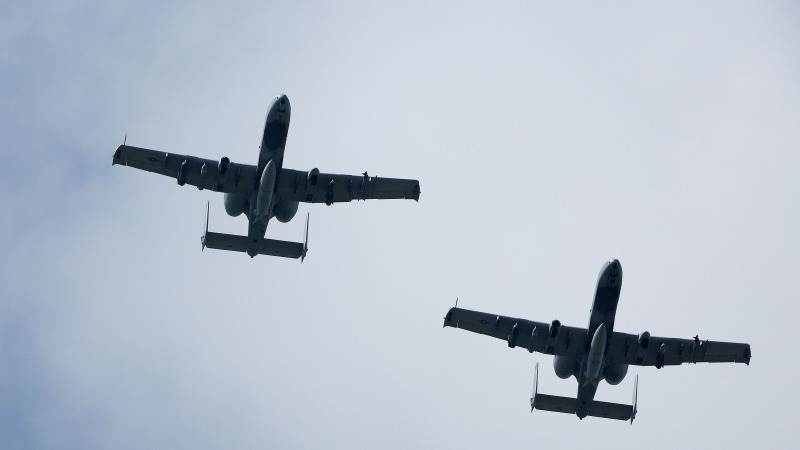
Blinken: Taking ceasefire deal should be a no-brainer for Hamas

United States Secretary of State Antony Blinken noted that Hamas should readily agree to a ceasefire deal with Israel, but he stressed uncertainty regarding the motives of the group’s leadership in the Gaza Strip.

During his late intervention at the McCain Institute’s Sedona Forum, Blinken stated that while Hamas claims to represent the Palestinian people, their hesitation to accept the ceasefire raises questions about their true intentions. “If it is true, then taking the ceasefire should be a no-brainer […] But maybe something else is going on, and we’ll have a better picture of that in the coming days,” he said referring to Hamas’ return to Cairo to negotiate. Earlier he said that Hamas negotiators with whom they have contact live outside Gaza, making agreements with those inside the Strip more difficult to achieve

Blinken: US does not have contact with Hamas in Gaza

United States Secretary of State Antony Blinken said mediators between Israel and Hamas have only engaged with the Hamas political wing, which operates outside Gaza.

“The ultimate decision-makers are the folks who are actually in Gaza itself with whom none of us have direct contact,” he said in a speech at the McCain Institute.

Blinken repeated the assertion that Hamas “is the only thing standing between the people of Gaza and a ceasefire.” He also reiterated that the US cannot support Israel’s ground operation in Rafah in the southern Gaza Strip as Israel has not provided a plan to protect civilians.

Oil Posts Largest Weekly Drop Since February

Oil posted its biggest weekly decline since February on signs of easing geopolitical risks in the Middle East, while traders continued to weigh the outlook for interest-rate cuts.  West Texas Intermediate settled near $78 a barrel, the lowest closing price since Mid-March. Hamas is studying a proposal for a temporary cease-fire with Israel and plans to send a delegation to Egypt to continue negotiations. The renewed chance of a pause in the war have decreased the geopolitical risk premium that was baked into crude prices for the past few months.  Other signs of softening have pervaded the oil market this week, beyond the 6.8% drop for headline prices. Gauges of the futures curve have weakened, indicating supplies are less tight, while options markets appear to have erased the war’s risk premium. Still, crude’s nine-day relative strength index has been trading in overbought territory, which could signal the selloff was overdone.  The result is that prices are down about 10% from a five-month high in mid-April, with the fallout from Iran’s unprecedented attack on Israel still limited and Washington pushing for an end to the conflict in Gaza. A surprise jump in US crude inventories Wednesday drove prices down 3.6% in a day, and there are concerns about demand in top importer China. The move lower has fueled speculation that OPEC+ will prolong output cuts, with almost 90% of traders and analysts surveyed by Bloomberg predicting the group will extend curbs when it meets June 1.  There’s some potential for disagreement at the gathering, after the United Arab Emirates’ main oil company said it had increased production capacity, which would bolster the key member’s case to pump more crude. NN: Unless their is a real peace deal  that dismantles the Hamas war machine further drop in oil prices will be temporary. Hamas will regroup and the rockets and attacks will start again.

Hamas hails Houthis’ ‘fourth stage of escalation’

Hamas movement hailed on Friday the Yemeni-based Houthi group’s new phase to intensify their offensive against vessels in the eastern Mediterranean Sea aimed to disrupt the supply routes of Israel and its allies.

“These brave and heroic positions represent the stance that all Arabs and Muslims should adopt and act upon. We, in the Palestinian resistance factions, send greetings to the Yemeni people in all their spectra and living factions and their support of the Palestinian cause,” Hamas posted on Telegram.

“We advise America to put pressure on ISRAEL to stop the GENOCIDE in Gaza because Yemen is preparing for a fourth round of military escalation,” Houthis Spokesperson Yahya Saree added. NN: Does this look like a real peace deal to you? Not really! This a ploy for Hamas survival. Allowing them to regroup and attack Israel again.

Israel reportedly not happy with Hamas’ negotiations stance………Hamas ‘determined’ to reach truce if demands met

Israel sought to temper optimism surrounding ceasefire negotiations with Hamas, the Times of Israel reported on Friday. “Even though the mediators are speaking optimistically, Israel has yet to hear that Hamas has agreed to retreat from its maximalist positions,” an unnamed Israeli senior official said. An earlier report quoted Israeli officials as claiming that Hamas is setting “harsh conditions” for the deal, although the group allegedly agreed to the first phase of the agreement without insisting that Israel end the conflict. Meanwhile, Hamas said it is “determined” to reach a ceasefire.

Hamas ‘determined’ to reach truce if demands met

Hamas stated on Friday through a Telegram post that both the movement and the resistance forces are “determined” to mature a ceasefire deal that meets the demands of the Palestinian people and emphasized that its delegation will travel to Cairo tomorrow with a “positive spirit” to “complete the discussions.”

“We are determined to reach an agreement that fulfills the demands of our people to stop the aggression, withdraw the occupation, return the displaced, begin reconstruction, and complete the prisoner deal,” the group added.

According to Israeli reports, the group might be open to accepting the first phase of the ceasefire agreement without demanding that Israel put an end to the war with “harsh conditions” for the truce.

US reportedly asked Qatar to expel Hamas if it rejects ceasefire deal

United States Secretary of State Antony Blinken (pictured) told Qatari Emir Mohammed bin Abdulrahman Al Thani that Qatar should expel Hamas if it continues to reject a ceasefire deal with Israel, the Washington Post reported. Hamas’s political leadership has been headquartered in Qatar since 2012, at the request of the United States. According to one anonymous diplomat familiar with the matter, Qatar has already told the Hamas leadership it should “devise a backup plan for residency should they need to leave.” However, another official said pressuring Hamas’s political arm will serve no purpose as “the guys making the decisions are in Gaza, and they don’t care where the political office is located.”

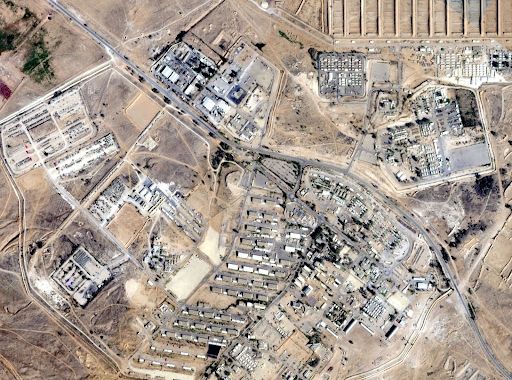
Israeli tanks are stationed outside Gaza border. Gives Hamas one week to agree hostage deal.

On the eastern part of the southern border of the Gaza Strip, located approximately 29 km from Khan Yunis city and 30 km from Rafah, analysis of satellite imagery shows a high density of military vehicles, with more than 700 military vehicles distributed in several locations within the base.
More than 700 military vehicles are distributed within the Tze’elim military base, approximately 29km (18 miles) from Khan Younis city and 30km (18.6 miles) from Rafah

Israel is determined to launch a ground offensive against Hamas in Rafah, Gaza’s southernmost town, a plan that has raised global alarm because of the potential for harm to more than a million Palestinian civilians sheltering there. Even as the U.S., Egypt and Qatar pushed for a cease-fire deal they hope would avert an assault on Rafah, Prime Minister Benjamin Netanyahu repeated on Tuesday that the military would move on the town “with or without a deal” to achieve its goal of destroying the Hamas militant group.

“We will enter Rafah because we have no other choice. We will destroy the Hamas battalions there, we will complete all the objectives of the war, including the return of all our hostages,” he said.

Israel has approved military plans for its offensive and has moved troops and tanks to southern Israel in apparent preparation — though it’s still unknown when or if it will happen.

About 1.4 million Palestinians — more than half of Gaza’s population — are jammed into the town and its surroundings. Most of them fled their homes elsewhere in the territory to escape Israel’s onslaught and now face another wrenching move, or the danger of facing the brunt of a new assault. They live in densely packed tent camps, overflowing U.N. shelters or crowded apartments, and are dependent on international aid for food, with sanitation systems and medical facilities infrastructure crippled.

WHY RAFAH IS SO CRITICAL

Since Israel declared war in response to Hamas’ deadly cross-border attack on Oct. 7, Netanyahu has said a central goal is to destroy its military capabilities.

Israel says Rafah is Hamas’ last major stronghold in the Gaza Strip, after operations elsewhere dismantled 18 out of the militant group’s 24 battalions, according to the military. But even in northern Gaza, the first target of the offensive, Hamas has regrouped in some areas and continued to launch attacks.

Israel says Hamas has four battalions in Rafah and that it must send in ground forces to topple them. Some senior militants could also be hiding in the city.

WHY THERE IS SO MUCH OPPOSITION TO ISRAEL’S PLAN

The U.S. has urged Israel not to carry out the operation without a “credible” plan to evacuate civilians. Egypt, a strategic partner of Israel, has said that an Israeli military seizure of the Gaza-Egypt border — which is supposed to be demilitarized — or any move to push Palestinians into Egypt would threaten its four-decade-old peace agreement with Israel.

Israel’s previous ground assaults, backed by devastating bombardment since October, leveled huge parts of northern Gaza and the southern city of Khan Younis and caused widespread civilian deaths, even after evacuation orders were given for those areas.

Israel’s military says it plans to direct the civilians in Rafah to “humanitarian islands” in central Gaza before the planned offensive. It says it has ordered thousands of tents to shelter people. But it hasn’t given details on its plan. It’s unclear if it’s logistically possible to move such a large population all at once without widespread suffering among a population already exhausted by multiple moves and months of bombardment.

Moreover, U.N. officials say an attack on Rafah will collapse the aid operation that is keeping the population across the Gaza Strip alive,. and potentially push Palestinians into greater starvation and mass death.

Some entry points have been opened in the north, and the U.S. has promised that a port to bring in supplies by sea will be ready in weeks. But the majority of food, medicine and other material enters Gaza from Egypt through Rafah or the nearby Kerem Shalom crossing — traffic that is likely to be impossible during an invasion.

The U.S. has said that Israel should use pinpoint operations against Hamas inside Rafah without a major ground assault.

After Netanyahu’s latest comments, U.S. National Security spokesperson John Kirby said, “We don’t want to see a major ground operation in Rafah. Certainly, we don’t want to see operations that haven’t factored in the safety, security of” those taking refuge in the town.

POLITICAL CALCULATIONS

The question of attacking Rafah has heavy political repercussions for Netanyahu. His government could be threatened with collapse if he doesn’t go through with it. Some of his ultranationalist and conservative religious governing partners could pull out of the coalition, if he signs onto a cease-fire deal that prevents an assault.

Critics of Netanyahu say that he’s more concerned with keeping his government intact and staying in power than national interest, an accusation he denies.

One of his coalition members, Finance Minister Bezalel Smotrich, said Tuesday that accepting a cease-fire deal and not carrying out a Rafah operation would amount to Israel “raising a white flag” and giving victory to Hamas.

On the other hand, Netanyahu risks increasing Israel’s international isolation — and alienating its top ally, the United States — if it does attack Rafah. His vocal refusals to be swayed by world pressure and his promises to launch the operation could be aimed at placating his political allies even as he considers a deal.

Or he could bet that international anger will remain largely rhetorical if he goes ahead with the attack. The Biden administration has used progressively tougher language to express concerns over Netanyahu’s conduct of the war, but it has also continued to provide weapons to Israel’s military and diplomatic support.

___

Follow AP’s coverage at https://apnews.com/hub/israel-hamas-war
OPEC+: Iraq, Kazakhstan to cut oil production

Iraq and Kazakhstan reached an agreement on Friday to cut oil production as part of the OPEC+ compensation cuts plan to stabilize global oil prices.

OPEC convened a workshop today to address oil overproduction issues and devise comprehensive compensation plans to make up for previous overages, according to an official OPEC press release. The push for production cut compliance comes as the price of Brent crude is trading down roughly $6 per barrel over the last 30 days. The workshop brought together technical experts from Iraq and Kazakhstan, along with industry professionals from secondary sources, and was prompted by the recent mandates outlined in the 35th OPEC and non-OPEC Ministerial Meeting held in June 2023, emphasizing the crucial adherence to production quotas and the principle of compensation. Per the directives of the 53rd Meeting of the Joint Ministerial Monitoring Committee (JMMC) held on April 3, 2024, countries with outstanding overproduced volumes were required to submit detailed compensation plans by April 30, 2024. Iraq and Kazakhstan were key participants in today’s workshop. Iraq reported overproduced volumes totaling approximately 602,000 bpd, while Kazakhstan accounted for 389,000 bpd in January, February, and March 2024. Both nations presented plans that would ensure full compensation of overproduced volumes by the end of the year. Additionally, any excess production in April 2024 will be accommodated within the respective compensation frameworks throughout the remainder of the year. This collaborative effort follows recent commitments made by Kazakhstan to compensate for January’s overproduction, aligning with the collective efforts of OPEC+ to maintain equilibrium in oil supply. The workshop builds upon previous initiatives aimed at enhancing compliance with production cuts and fostering transparency within the industry. As the global energy landscape continues to evolve, OPEC remains steadfast in its commitment to ensuring market stability and sustainable oil production practices. In February, OPEC’s second-largest producer, Iraq, said it was committed to its voluntary production cut that capped its oil production at no more than 4 million bpd. The bloc has been under increased pressure over this last month to showcase its ability to maintain the previously agreed-upon production cuts as oil prices have trailed off.

NN: OPEC will not tolerate oil in the seventies for long

Turkey CUTS trade with Israel over IDF’s bombing war in Gaza

  • Turkey supports a two-state solution and had worked on relations in recent years
  • But the conflict in Gaza continues to strain Israel’s relationships with neighbours

Turkey has suspended all trade with Israel over its ongoing offensive in Gaza as relations continue to sour between the two regional powers.

The Turkish Trade Ministry said exports and imports had abruptly ‘stopped’ on Thursday, and that the measures would remain until Israel allows what it deems ‘an uninterrupted and sufficient flow of humanitarian aid’ into the beleaguered Strip.

‘This is how a dictator behaves, disregarding the interests of the Turkish people and businessmen, and ignoring international trade agreements,’ Israel’s Foreign Minister Israel Katz snapped in a post on Twitter/X on Thursday. He said he had instructed the foreign ministry to seek out alternatives for trade with Turkey, including focusing on internal production as Israel’s local relationships are tested by its seven-month campaign in Gaza. Turkish officials added in their declaration that they would work with the relevant Palestinian authorities to ensure Palestinians are not affected by the suspension. Turkey and Israel had a trade volume of $6.8 billion in 2023. The two countries had finally normalised ties after years of tensions by appointing ambassadors in 2022. But the war in Gaza has seen relations spiral in recent months with President Erdogan calling Israel a ‘terror state’ and introducing trade restrictions expected to hurt Israel’s economy – a move matched in kind by Israel. In its statement today, the Turkish trade ministry described the step as the ‘second phase’ of measures against Israel, adding that the steps would remain in force until Israel ‘allows an uninterrupted and sufficient flow of humanitarian aid to Gaza.’ The move was met with furious backlash from Israel’s foreign minister, who accused Turkey of blocking Israeli imports and exports from Turkish ports earlier on Thursday.

Hamas’ Gaza Chief Lays Down ‘Specific’ Demands For Ceasefire | Talks Reaching Dead End

There is no clarity on a ceasefire deal between Israel & Hamas even amid hectic parleys. 

As diplomatic efforts intensify to broker a ceasefire between Israel and Hamas, the leader of the Gaza-based militant group, Yahya Sinwar, has outlined key demands that must be addressed before an agreement can be reached. According to reports from Channel 12 news, Sinwar’s demands are being discussed by Egyptian mediators with the assistance of the United States.  First and foremost, Sinwar is insisting on a guaranteed and unconditional end to the ongoing conflict. This demand, a consistent priority for Hamas, seeks to amend the proposed clause that calls for negotiations on a sustainable calm to begin after an initial 40-day truce phase. Instead, Sinwar is pushing for a written commitment ensuring an immediate cessation of hostilities, without any conditions attached. In addition, Sinwar opposes Israel’s proposal to prevent certain Palestinian security prisoners, particularly those involved in violent attacks, from returning to the West Bank. Instead, Israel would have the authority to send them to Gaza or into exile. Sinwar is challenging this provision and is seeking alternative arrangements for the handling of these prisoners.Furthermore, Sinwar seeks clarification on the materials that will be permitted for reconstruction efforts in Gaza.  This demand aims to ensure that Hamas can access resources necessary for rebuilding its military infrastructure, including tunnels and other defensive structures, according to experts.

US reportedly moves military aircraft from UAE to Qatar………… Houthis announce ‘fourth stage of escalation’.

The United States is moving military aircraft, including fighter jets and drones, from the United Arab Emirates to Qatar, the Wall Street Journal reported. The move is the result of the UAE’s decision not to allow the US to carry out air strikes on Yemen and Iraq from the Al Dhafra air base in Abu Dhabi, according to unnamed US officials. The US is allegedly transferring the equipment to Al Udeid air base in Qatar, where its use will not be restricted. The officials explained that the UAE “has grown increasingly nervous that it could be targeted by Iranian proxies in the region if it is seen to be publicly aiding US military operations.”

Houthis announce ‘fourth stage of escalation’

The Yemen-based Houthis declared on Friday the commencement of what they refer to as “the fourth stage of escalation.” This phase revolves around expanding the scope of their military operations to the Mediterranean Sea. Furthermore, the militia warned that they would impose sanctions on “all ships of companies linked to the occupation [Israel] ports from passing through our area of ​​operations, regardless of their destination,” if the Israeli military proceeds with their planned invasion of Rafah. “The Yemeni armed forces, based on the support of the beloved Yemeni people and all the free people of the nation, will not hesitate to prepare for broader and stronger stages of escalation until the aggression is stopped and the siege on the Palestinian people in the Gaza Strip is lifted,” the group added on Telegram.