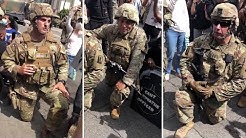
The D.C. National Guard confirmed Tuesday that multiple members have tested positive for coronavirus following their deployment to respond to protests around the White House in response to the police killing of George Floyd. A spokeswoman for the Guard told McClatchy that more than one positive case had been confirmed among Guard members, though she did not specify how many. “We can confirm that we have had COVID-19 positive tests with the DCNG,” said Air Force Lt. Col. Brooke Davis, the Guard’s spokeswoman. “The safety and security of our personnel is always a concern, especially in light of the COVID-19 era.” Those who have tested positive or who are at high risk for the disease will be held back and prevented from being released from their orders until the threat of contagion has passed, Davis continued. “All Guardsmen who are suspected to be at high risk of infection or have tested positive for COVID-19 during demobilization will not be released from Title 32 orders until risk of infection or illness has passed,” added Davis. “Members of the Air and Army National Guard with no, or low risk of exposure, who present symptoms of infection one to 14 days after release from orders will contact their unit,” she continued.
The news comes as health officials have warned that large public demonstrations like the ones held in D.C. in recent days carry the risk of further spreading coronavirus at a time when many states are beginning to reopen nonessential businesses.
“It is a difficult situation,” Anthony Fauci, the nation’s top infectious disease expert and a member of the White House coronavirus task force, said in an interview with WTOP. “We have the right to peaceably demonstrate, and the demonstrators are exercising that right … it’s important to exercise your constitutional rights to be able to demonstrate, but it’s a delicate balance, because the reasons for demonstrating are valid. And yet, the demonstration itself puts one at an additional risk.” Protests have occurred in the city for several days in response to Floyd’s death. A video of Floyd’s arrest showed a white officer, who has since been charged with second-degree murder and second-degree manslaughter, kneeling on his neck for nearly nine minutes. Nick Note: I do not want to say i told you so…. but i told you so. This is just the tip of the corono ice berg!
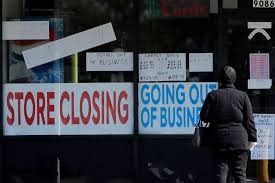
Layoffs in the United States fell in April, but remained the second highest on record, while job openings dropped, suggesting the labor market could take years to recover from the COVID-19 crisis despite a surprise rebound in employment in May. Layoffs in the United States fell in April, but remained the second highest on record, while job openings dropped, suggesting the labor market could take years to recover from the COVID-19 crisis despite a surprise rebound in employment in May. The Labor Department said on Tuesday in its monthly Job Openings and Labor Turnover Survey, or JOLTS, that layoffs and discharges dropped 3.8 million in April to 7.7 million. That was second highest level since the government started tracking the series in 2000. The layoffs and discharge rate fell to 5.9per cent in April from a record high 7.6per cent in March. The labor market was slammed by the closure of nonessential businesses in mid-March to slow the spread of COVID-19. Many establishments reopened in May, with the economy adding a stunning 2.509 million jobs last month after a record 20.7 million plunge in April, government data showed on Friday. Despite last month’s rebound in hiring, economists warn it could take even a decade for the labor market to recoup all the jobs lost during the COVID-19 recession. The National Bureau of Economic Research, the arbiter of U.S. recessions, declared on Monday that the economy slipped into recession in February. The NBER does not define a recession as two consecutive quarters of decline in real GDP as is the rule of thumb in many countries, instead it looks for a drop in economic activity, spread across the economy and lasting more than a few months. The government also reported that job openings, a measure of labor demand, declined 965,000 to 5.0 million on the last business day of April, the lowest since December 2014.The job openings rate dropped to 3.7per cent, the lowest since January 2017, from 3.8per cent in March. Vacancies peaked at 7.52 million in January 2019. Hiring tumbled 1.6 million to a record low 3.5 million in April. The hiring rate plunged to an all-time low of 2.7per cent from 3.4per cent in March. Nick Note: this is not what a recovery looks like.
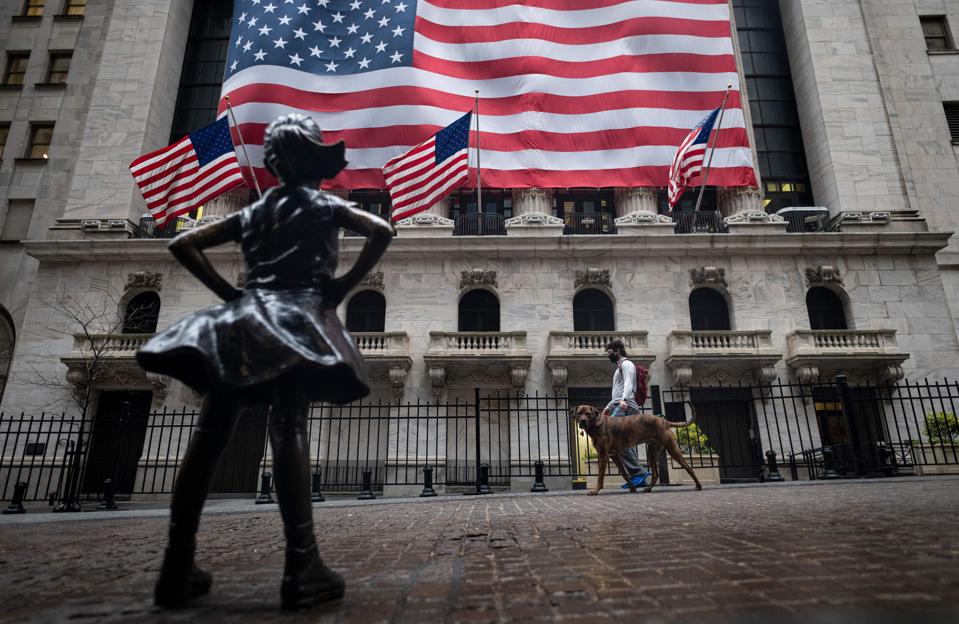
Major U.S. stock benchmarks finished Monday above, or near, their prior all-time closing highs, as lockdown measures eased in New York City and elsewhere, sparking optimism about the potential for economy recovery. The Dow Jones Industrial Average US:DJIA climbed 461.46 points, or 1.7%, to end at 27,572.44, its sixth straight gain. The S&P 500 US:SPX rose 38.46 points, or 1.2%, finishing at 3,232.39. The tech-heavy Nasdaq Composite Index US:COMP gained 110.66 points, or 1.1%, ending at 9,924.74, a new all-time closing record. The Dow on Monday finished 6.7% off its closing high in mid-February, while the S&P 500 ended only 4.5% shy of its highest close, according to Dow Jones Market Data. The Federal Reserve has been wildly successful in terms of keeping credit flowing during the pandemic, with major U.S. equity and debt benchmarks already recouping significant lost ground since the COVID-19 pandemic forced the nation into lockdown. The stock rally included not only high-flying technology companies that provided sought-after services during recent shutdowns, but also companies battered by low oil prices and the near halt in travel.
“I’m finding it exciting,” said Diane Jaffee, a senior portfolio manager at TCW, in a telephone interview with MarketWatch, adding that the breath of the recovery and recent sector rotation looks like it’s “not for a short term, but longer term.” Nick Bit: Bull fucking SHIT!
Investors also will keep an eye on what the central bank does next, with the Fed set to release its updated policy statement on Wednesday and its first set of economic projections since December. Investors aren’t expecting the Fed to pull in its backstops or to dial back rates, which currently stand at a range between 0% and 0.25%. But they will look for more clues from policy makers after Friday’s jobs report produced a stunning 2.5 million increase in payrolls in May, when economists had expected as many as 9 million jobs lost in the month, amid coronavirus-related closures. “Some policy makers will look at the results of recent progress and conclude that no more fiscal stimulus is needed,” said Kristina Hooper, Invesco’s chief global market strategist, in emailed commentary on Monday, while pointing to a classification error that made the unemployment rate look better than it actually was.
In other economic data, the National Bureau of Economic Research, the ultimate arbiter of the state of the U.S. economy, said the domestic economy officially entered recession in February, ending its longest period of expansion on record.
Despite civil unrest and rising Sino-American trade tensions, markets have been kept afloat and even made significant gains on the back of trillions of dollars in support from the U.S. government and the Fed, whose balance sheet has ballooned to $7.21 trillion from around $4 trillion in March. Investors also have been heartened by efforts to reopen the U.S. economy in the aftermath of pandemic-related closures. Reopening plans are in various stages in all 50 U.S. states. New York City, one of the regions hardest hit by coronavirus, launched the first phase of its reopening on Monday, including the restart of construction and limited retail operations. “From the market’s perspective, the economic impact of COVID is basically over. We still may see spikes in cases, but it will be difficult politically to shut down economies again,” said Bill Callahan, an investment strategist at Schroders, in an interview. Shares of oil and airline companies, industries that were both ravaged by lockdown measures instituted to stem the pandemic, outperformed the broader market on Monday. The U.S. Global Jets US:JETS, a fund that tracks commercial airline stocks, gained 9.2%.
Still, Arizona, Arkansas, California, Florida, North Carolina, Texas, Utah and other states are reporting an increase in the number of COVID-19 infections after having lifted some restrictions, the Wall Street Journal reported, even as the overall case tally is sliding in the U.S., per data compiled by Johns Hopkins University.
As of early Monday, there were more than 7 million confirmed cases of the deadly infection globally, with 1.9 million cases in the U.S., according to the data.
Nick Note: let me see if i get this. Unemployment over 20% when you uncook the books. GDP minus as in negative 10% these are historic highs. and the stock market as i predicted is at record highs. and NOW that is is at record highs everyone and their dog is buying. Infection rates are rising and the pandemic is not over. As is documented i had you buy at 2100 in the S+P500 I told you to buy every layer higher. I even published updated constantly a spread sheet telling you how to scale in. And I had you take profits at 3000 S&P500. so we bought the bottom and sold within 10% of the top, See i been at this for 40 years and i admit for the first 5 iI still had me head up my ass. And 40 years of trading has taught me no matter how many ASSHOLES tells you why this time it is different ITS NOT! One cardnial rule applies. When everyone is selling buy and when everyone else is buying sell. Now for a fact we bought when their was blood in the streets and every swing dick and big nippled titties were selling. AND we bought. Now that they are telling you how this time its different: ITS NOT! BUYING ON RECORD HIGHS BETTING ON MORE RECORD HIGHS NO MATTER HOW YOU SLICE AND DICE IT IS STILL BUYING WHEN EVERYONE ELSE IS BUYING AND WILL NEVER WORK!
for the record i am a enthusiastic seller. the recovery is bogus. 25% of businesses that have closed will never reopen and the virus will come back. and painting separation circles on the flOor is a sick joke……..
The fucks are making a asshole out of you again. its cheap to paint lines on the floor and hand out face masks most people do not even put on right. In order to get this to work it requires a major refit. that means 30 micron hepta filters with ultraviolet sterilization and Ozonening the systems in scheduled shutdowns. (guaranteed they are not going to do it. Elevators no matter what you do are death chambers. Sky scrappers need to be torn down. Multi family housing is impossible from the sewer systems to air circulation systems built from the 50″s. Sports arenas, theaters, malls and big boxstores can never be made safe. Airplanes, buses and subways are all tubular death devises. Ride share and taxis are impossible to sanitize. Its only as good as the last passenger. reality is disinfectant with bleach and alcohol and Ozone sterilization must be done after each user. Its just not economically feasible. Hotel rooms don’t make me laugh. They cannot get the piss, cum and sweat off the common surfaces. If you want to stop being a idiot take a UV light into your hotel room. Humansecretions are florescent. You will be shocked. the room glows! No my friends the world has changed forever.
Bottom line we are not out of the woods yet. Many states are reporting record infections and the hospitals are filling up fast. Texas and South Carolina were the first states to set the captives free and are now reporting record hospitalizations.
So excuse me i am not buying into this rally and i am going to short the shit out of stupidness. when everyone especially millennial’s are buying (in between apologizing to convicted Black drug dealers and assailants for being white privileged) I am selling. Are you going to let them fool you over and over again?
The stock market finished nearly 2% higher on Friday, despite one of the worst monthly jobs reports in history, as investors continued to look toward a reopening of the economy and bet that the worst of the economic impact from coronavirus has passed.
The market moved higher, despite over 20 million job losses in April.
The Dow Jones Industrial Average rose 1.9%, 450 points, on Friday, while the S&P 500 was up 1.7% and the Nasdaq 1.6%. Those gains came even amid a historically bad jobs report from the Labor Department, the worst since the 1929 Great Depression. Some 20.5 million jobs have been eliminated in April—that’s nearly every job created over the past decade, gone in a single month. The unemployment rate shot up to 14.7% as the economy ground to a halt due to coronavirus shutdowns. But neither figures were as bad as expected on Wall Street, however: Economists polled by Dow Jones expected 21.5 million jobs lost and an unemployment rate of 16%. Just two months ago, the unemployment rate was sitting at a 50-year low of 3.5%, after the United States had been adding jobs every month for nearly a decade. “In one month, we nearly wiped out all of the jobs created the previous 10 years, which puts in perspective just how devastating this pandemic has been,” according to Ryan Detrick, senior market strategist for LPL Financial. “Here’s the catch. As our country starts to open back up, many of those jobs will come back, potentially quickly.” “Perhaps the ‘best’ news in the report was that of the 23 million workers who were unemployed in April, about 18 million thought that this was short-term (presumably expecting to be brought back to work within six months),” says Nationwide Chief Economist David Berson. Stocks have rallied aggressively off their March lows as Wall Street becomes increasingly optimistic about a reopening of the economy. Despite dismal economic data and first quarter corporate earnings reports, stocks have looked beyond the near-term turmoil caused by coronavirus. The market has moved higher in recent weeks as several states—including Georgia, Florida, Texas and California—begin to reopen businesses and lift coronavirus lockdowns. The S&P 500 has bounced back more than 30% from its low in late March, now just 15% off a record high. The Nasdaq NDAQ is more than 35% off its lows and on Thursday moved into positive territory for the year.
AFter we raised holy hell on Friday the BLS in the night Saturday they admitted that the unemployment rate is edging up to 20%. Even higher then the great depression
When the U.S. government’s official jobs report for May came out on Friday, it included a note at the bottom saying there had been a major “error” indicating that the unemployment rate likely should be higher than the widely reported 13.3 percent rate.The special note said that if this “misclassification error” had not occurred, the “overall unemployment rate would have been about 3 percentage points higher than reported,” meaning the unemployment rate would be about 16.3 percent for May. But that would still be an improvement from an unemployment rate of about 19.7 percent for April, applying the same standards. The Bureau of Labor Statistics, the agency that puts out the monthly jobs reports, said it was working to fix the problem. “BLS and the Census Bureau are investigating why this misclassification error continues to occur and are taking additional steps to address the issue,” said a note at the bottom of the Bureau of Labor Statistics report.
Some took this as a sign that President Donald Trump or one of his staffers may have tinkered with the data to make it look better, especially since most forecasters predicted the unemployment rate would be close to 20 percent in May, up from 14.7 percent in April.
The BLS admitted that some people who should have been classified as “temporarily unemployed” during the shutdown were instead misclassified as employed but “absent” from work for “other reasons.” The “other reason” category is normally used for people on vacation, serving jury duty or taking leave to care for a child or relative. These are typically situations where the worker decides to take leave. But in this unusual pandemic circumstance, the “other reason” category was applied to some people staying at home and waiting to be called back. This problem started in March when there was a big jump in people claiming they were temporarily “absent” from work for “other reasons.” The BLS noticed this and flagged it right away. In March, the BLS said the unemployment rate likely should have been 5.4 percent, instead of the official 4.4 percent rate. In April, the BLS said the real unemployment rate was likely about 19.7 percent, not 14.7 percent.
The unemployment rate remains high – likely more than 16 percent – it has declined a little from April.
The unemployment rate comes from a survey where Census workers ask about 60,000 households questions about whether they are working or looking for a job the week of May 10 to 16. One of the first questions that gets asked is did the person do any work “for pay or profit?” There are then 45 pages of follow up questions that come after that. One of those questions asks if someone was “temporarily absent” from the job and why that absence occurred. One of the responses is “other.” The BLS instructed surveyors to try to figure out if someone was absent because of the pandemic and, if so, to classify them as on “temporary layoff,” meaning they would count in the unemployment data. Some people continued to insist they were just “absent” from work during the pandemic, and the BLS has a policy of not changing people’s answers once they are recorded. It’s how the BLS protects against bias or data manipulation.
Former staffers said it’s unusual that the BLS was not able to correct this problem faster.
“It’s surprising the BLS couldn’t come up with fixes to make this work in May,” said Erica Groshen, the former BLS commissioner under Obama.
Many economists wish people would focus on the fact that 21 million Americans are currently unemployed and over 2 million have permanently lost their jobs.
The situation remains dire, they say, even after a few jobs returned in May as the economy reopened. Nick Note: Despite the incredible spin and out and out fraudulent reports the facts are the facts and the economy is NOT NOT recovering. And i expect a second wave to send these people right back their sofas watching Netfelx.
WASHINGTON (AP) — Tensions between the White House and Pentagon have stretched to near a breaking point over President Donald Trump’s threat to use military force against street protests triggered by George Floyd’s death. Friction in this relationship, historically, is not unusual. But in recent days, and for the second time in Trump’s term, it has raised a prospect of high-level resignations and the risk of lasting damage to the military’s reputation. Calm may return, both in the crisis over Floyd’s death and in Pentagon leaders’ angst over Trump’s threats to use federal troops to put down protesters. But it could leave a residue of resentment and unease about this president’s approach to the military, whose leaders welcome his push for bigger budgets but chafe at being seen as political tools. The nub of the problem is that Trump sees no constraint on his authority to use what he calls the “unlimited power” of the military even against U.S. citizens if he believes it necessary. Military leaders generally take a far different view. They believe that active-duty troops, trained to hunt and kill an enemy, should be used to enforce the law only in the most extreme emergency, such as an attempted actual rebellion. That limit exists, they argue, to keep the public’s trust. Defense Secretary Mark Esper, a West Point graduate who served 10 years on active duty, argued against bringing federal troops into Washington. In a contentious Oval Office meeting with Trump and others on Monday, the president demanded 10,000 federal troops be sent to the capital city, according to a senior defense official who spoke on condition of anonymity to discuss internal deliberations. Esper then pushed for governors from several states to send National Guardsmen as a way of steering Trump away from a buildup of federal forces in Washington, the senior defense official said. Vincent K. Brooks, a recently retired Army four-star general, says the military’s “sacred trust” with the public has been breached by Trump’s threat to use federal troops for law enforcement in states where he deems a governor has not tough enough against protesters. “It is a trust that the military, especially the active-duty military — ‘the regulars’ — possessing great physical power and holding many levers that could end freedom in our society and could shut down our government, would never, never apply that power for domestic political purposes,” Brooks wrote in an essay for Harvard University’s Belfer Center, where he is a senior fellow. Esper has made known his regret at having accompanied Trump to a presidential photo opportunity in front of a church near the White House. He has said he did not see it coming — a blind spot that cost him in the eyes of critics who saw a supposedly apolitical Pentagon chief implicitly endorsing a political agenda. Esper two days later risked Trump’s ire when he stepped before reporters at the Pentagon to declare his opposition to Trump invoking the two-centuries-old Insurrection Act. That law allows a president to use the armed forces “as he considers necessary” when “unlawful obstructions … or rebellion against the authority of the United States” make it impractical to enforce U.S. laws in any state by normal means.
Esper said plainly that he saw no need for such an extreme measure, a clear counterpoint to Trump’s threat to use force. Almost immediately, word came from the White House that Trump was unhappy with his defense secretary.
This week, Mattis added weight to the worry that Trump is militarizing his response to the street protests in Washington and across the nation. Mattis wrote in an essay for The Atlantic that keeping public order in times of civil unrest is the duty of civilian state and local authorities who best understand their communities and are answerable to them.. “Militarizing our response, as we witnessed in Washington, D.C., sets up a conflict — a false conflict — between the military and civilian society,” Mattis wrote. The worry felt among Pentagon leaders is reflected in the Joint Chiefs chairman, Gen. Mark Milley, reaching out privately to members of Congress in recent days to discuss concerns about use of the military on American streets. Milley has been publicly quiet since he caused a stir by joining Esper on the walk with Trump across Lafayette Square last Monday. The optics were awkward. Police had forcibly pushed peaceful protesters out of the way just before Trump and his entourage strolled to St. John’s Church, where Trump held up a Bible. Esper made matters worse by saying, in a conference call earlier that day with governors, that they should use their National Guard troops to “dominate the battlespace,” a term widely interpreted by critics as suggesting street protesters should be treated like battlefield enemies. Esper said later it was a poor choice of words. “America is not a ‘battle space,’ former Defense Secretary William J. Perry said in a statement. “And the people he threatens to dominate are American citizens, not enemy combatants.” Nick Note: The alternatives are all bad. Trump wants to turn America into a police state and he may just get it done. More Coronavirus lock downs and riots are comming
‘Slide to illiberalism’: ex-general joins chorus of condemnation of Trump
John Allen warns that politicisation of the military could be the beginning of the end of ‘the American experiment’ The retired marine general who led the global coalition against Isis and commanded US forces in Afghanistan has warned that Donald Trump’s actions this week could start a US “ slide into illiberalism” and the beginning of the end of “the American experiment”. In denouncing the president for his response to the George Floyd protests, John Allen became the latest in a string of venerable military figures to have gone public over what they describe as the threat posed by Trump to the non-political nature of the armed forces, and more broadly to US democracy. Tensions over the role of the military in responding to the protests have also opened a rift between the president and his defence secretary, Mark Esper, who angered Trump on Wednesday by opposing the threatened use of the 1807 Insurrection Act to deploy troops on US streets. Allen, now president of the Brookings Institution, also focused his criticism on the president’s threat on Monday to deploy the US military against protesters, and his use of force against a peaceful demonstration outside the White House so that he could be photographed holding a Bible in front of a church.
“The slide of the United States into illiberalism may well have begun on 1 June 2020. Remember the date. It may well signal the beginning of the end of the American experiment,” Allen wrote on the Foreign Policy website.
His commentary followed a similarly stinging denunciation on Wednesday from Trump’s first defence secretary, James Mattis, who described the actions taken on Monday in front of the White House as an “abuse of executive authority” and suggested that Trump and other officials should be held to account for making “a mockery of our constitution”. Trump responded on Twitter by calling Mattis “the world’s most overrated General,” adding: “I didn’t like his leadership style or much else about him, and many others agree. Glad he is gone!” More than 17,000 members of the national guard, a part-time reserve force jointly controlled by the states and the federal government, have been deployed by 23 states to support law enforcement. But Trump has threatened to go further and invoke the Insurrection Act to deploy active-duty forces in US cities – against the wishes of the state authorities if necessary. A battalion from the elite 82nd Airborne Division, and two brigades of military police, were flown from their bases in North Carolina and New York to the Washington area at the beginning of the week, apparently to be on standby if the Insurrection Act was invoked. Esper broke with Trump on a policy issue for the first time on Wednesday, saying the situation did not merit the use of the act and ordering the 82nd Airborne back to their base in Fort Bragg. But after visiting the White House he reversed that order, though on Thursday there were reports once more that the troops would be leaving Washington. A White House spokesman, Hogan Gidley, said on Thursday “all options are on the table” in terms of the use of active duty troops. Uniformed military leaders in all the armed services have issued messages to their rank and file that, while not criticising the commander-in-chief directly, used a very different tone in discussing the situation from Trump’s insistence on “domination”. The officers emphasised the constitutional right to protest rather than the incidents of looting. “As members of the Joint Force – comprised of all races, colors, and creeds – you embody the ideals of our Constitution,” General Mark Milley, the chairman of the joint chiefs of staff, said, “Please remind all of our troops and leaders that we will uphold the values of our nation, and operate consistent with national laws and our own high standards of conduct at all times.” Trump frequently refers to “my generals” and “my military” but the statements by the service chiefs referred to the constitution, not the president. The armed forces are one of the most diverse major US institutions, and are roughly representative of the country’s ethnic makeup. Senior officers have been deeply concerned about racial polarisation spreading to the military if it is drawn into dealing with the unrest. Nick Note: You got the right wing crazies that want to turn America into a police state led by Trump. And you got the black radicals led by Faricon followers and Jessie Jackson that want to white people (privileged one and all) to write a 3 trillion dollar reparations checks to the 3rd generation of black slaves. All the fucks are crazy as hell. You are watching the end of America weather you can see it or not. I wish you all good luck! Better to be a slave in America then be a king in the Africian hell holes black run and administrated. And yes I know its not politically correct to mention the oppression, poverty and corruption of black run countries one and all. One thing the demonstrations (in the middle of a pandemic) prove is the stupidity of the millennials especially the white ones.
The coronavirus pandemic killed 749 people in the United States in the past 24 hours, according to figures released Saturday by Johns Hopkins University. The latest deaths bring the total in the United States to 109,791, and there have been more than 1.9 million cases, according to a real-time tally maintained by the Baltimore-based university at 8:30 pm (0030 GMT Sunday). Some 500,000 people have recovered from the disease. The United States has suffered by far the largest number of both COVID-19 deaths and infections. On a per capita basis, however, several European countries — including France, Italy and Spain — have a higher death toll. President Donald Trump said Friday that the United States was “largely through” the pandemic and renewed his call on governors to ease lockdown measures in their states. While the United States was suffering around 3,000 deaths a day in mid-April, that number has declined to around 1,000 deaths and 20,000 new cases a day at present. But health care professionals worry mass demonstrations against police brutality and racism taking place in cities across the US may lead to a new surge in infections in the coming weeks. Nick Note: Trump is right Floyd is looking down pleased. I believe he is looking up and ecstatic about the white people he will kill. Having the coronavirus which i believe contributed to his death. He can be pleased in the knowledge that the global protest in his name will bring the second wave of the coronavirus that will infect about a million more people and 100,000 more deaths.
The Organization of the Petroleum Exporting Countries (OPEC) and its allies OPEC+ agreed on Saturday to extend current oil production cuts by one month, until the end of July. During the meeting, OPEC and OPEC+ members agreed to extend unit July a record production cuts of 9.7 million barrels per day, which were agreed in April to help balance the global oil market hit by the pandemic. The initial agreement envisioned a gradual lowering of the cuts to 7.7 million barrels per day from July until the end of 2020, but during today’s meeting, it was agreed the future pace of cuts will be reviewed on monthly basis.Also, it was agreed that Iraq and Nigeria, which failed to meet their reduction quota compensate by making deeper cuts in the coming period. Nick Note: Did you see the pigs flying in formation. OPEC is fucked. Supplies will soon overwhelm demand and the predictable will happen. I can not wait for this party to be over!
The young man flanked the shattered entry of a ransacked CVS in Santa Monica, where people had swept the shelves clean of everything from diapers to detergent. The man, who did not cover his face, admitted he was a looter. He did not apologize.
“We’ve got no other way of showing people how angry we are,” he said. Out of the store ran another young man, this one holding a carton of eggs. He grabbed a friend and started scanning the street for targets: police cars. “We’re doing it because we can,” he said. Over in Van Nuys, a teenage boy standing outside a ravaged Skechers store held up a backpack. That was all he took. But it was enough, he said. “We are just trying to provide and take up the opportunity that we are getting right now. That’s all.” In the unprecedented reaction to the death of George Floyd at the hands of Minneapolis police officers, peaceful protest marches across Southern California in the last week have already dramatically changed the debate about police brutality and race relations. But the massive demonstrations have been accompanied by looting in some cities around the Southland. Authorities believe most of the thefts and vandalism came from people not directly connected to the protests who used the teeming crowds as cover to steal merchandise. Some of the looting appears to be organized, with groups driving around hitting multiple stores. For others, it was an outgrowth over the deep anger and frustration about the way blacks and others are mistreated, and they cited a host of other issues: President Trump, the privilege exposed in the college admissions scandal, and widening inequality. “If Donald Trump is saying shoot us tonight, that is not giving us no leeway,” said a teenager holding the stolen Skechers backpack Monday in Van Nuys. “That’s just making things worse. If that’s giving permission for the police to shoot children, innocent teenagers, things like that, that’s not right.” Times reporters interviewed people of different races and backgrounds who stole from stores over the last few days. The looters, unwilling to risk prosecution, declined to provide their names. Nick Note: This is a real problem Americans are not understanding. Blacks are 12% of the US population. A black male is most likely to be murdered by another black. Blacks are over 60% of the prison population. Not because they are black. The NON PC correct answer is they commits more crimes then other ethnic groups. The latest black “hero” was a convicted drug dealer with a rap sheet a mile long. And he did not want to go back to jail. I guess he has nothing to worry about now. I agree his summary execution was wrong. But he was higher then a kite, had the coronavirus and went ape shit wild when he was placed in the squad car. At the time neck restraint was allowed procedure. So the issue was he was restrained to long. The great plagues of Europe changed the social order. It will be no different with the plague we are facing today.