(Bloomberg) — A large bearish position in U.S. equities that’s been amassed by trend-following funds may prove vital to the next move for stocks, according to a strategist who’s been analyzing markets since the early 1990s. The S&P 500 Index is now trading within 50 points of its 200-day moving average, a metric that’s proved important when breached in the past for changes in positioning by commodity-trading advisers, known as CTAs, according to an analysis from James McCormick at NatWest Markets Plc. The firm’s signal, which tries to forecast changes in flows by replicating what a generic trend-following strategy would do, is near its most bearish level and positioning is at its biggest net short since 2016, he wrote in the report. “This level is certainly worth watching,” McCormick, the firm’s global head of desk strategy in London, wrote. Nick Note: DO NOT BE STUPID. We took profits really nice profits on ALL our stock market trades. We are getting ready to do it again. We want to BUY on the drops. It is time to accumulate positions. CTA stands for Clueless Trickster Asshole
Debt and coronavirus push Hertz into bankruptcy protection
Hertz Files For Bankruptcy After 16,000 Employees Were Let Go And CEO Made Over $9 Million
After 100 years in business, Hertz filed for bankruptcy on Friday, proving to be yet another casualty during Covid-19. The old-time entity now joins the likes of J.C. Penney, J. Crew, Neiman Marcus, Gold’s Gym, Pier 1 and the McClatchy newspaper chain—companies that have all sought bankruptcy protection in recent weeks. Hertz was just another victim of the pandemic, people will say. It’s easy to blame the company’s misfortunes, as well as the other corporate casualties, on the pandemic. The reality is a different story.
The failures of Hertz and the others have more to do with their own arrogant inertia and inability to recognize the fast-changing trends and a refusal to adapt their business models accordingly.
Back in the day, Avis was Hertz’s major rival. Avis branded itself as the scrappy underdog and adopted the advertising tagline, “We Try Harder.” It was meant to convey that the folks at Avis will do whatever it takes to make its customers happy. Hertz’s slogan should’ve been “We Didn’t Try Hard Enough.” The Wall Street Journal reported, “Hertz Global Holdings Inc., one of the nation’s largest car-rental companies, filed for bankruptcy protection Friday, saddled with about $19 billion in debt and nearly 700,000 vehicles that have been largely idled because of the coronavirus.” The company has lost money for the past four consecutive years, including $58 million in 2019.Back in March, responding to the deteriorating economic circumstances, Hertz laid off 12,000 workers and furloughed an additional 4,000 employees—25% of its workforce. Car rental companies are heavily dependent upon travel. People will rent cars for family vacation. A business person flying out to a client will go to a Hertz and rent a car for the duration of their visit. With air travel coming to a near halt, the need for car rentals has plummeted. It’s true that Covid-19 has had an impact on Hertz—as well as an array of other large and small companies—but it was suffering long before we even heard of the coronavirus. Hertz had to contend with tough competition in the car-rental space, in addition to the onslaught from Uber and Lyft. Customers preferred the ease of use with car-sharing apps. There wasn’t a need to take the time to fill out long and one-sided contracts, wait for your car then have to drive it yourself in an unfamiliar location. Compared to this experience, it’s much more convenient to open an app, request a ride and get whisked to your location. Some of Hertz’s problems have been self-inflicted. The company, which was founded in 1918, recently went through a number of restructures and four CEOs have gone through the turnstile. A private equity firm heaped a whole lot of debt on Hertz, which didn’t help matters. Hertz’s bankruptcy will have a big impact. It’s likely that there will be future layoffs, in addition to the 16,000 employees who have already lost their jobs or have been furloughed. It’s reasonable to believe that the hours of the remaining staff will be reduced and furloughed workers won’t be asked to return. Hertz bought and leased cars from General Motors and other carmakers. Now, it won’t be, which will hurt the automakers and all of their parts suppliers. Hertz will be forced to sell parts of its fleet of cars. This will put downward pressure on the used-car market. People who have considered selling their cars—to earn money because they may have lost their jobs—will not receive much for it, as there will now be an overabundance of used cars for sale. An unlikely group has also lost out due to Hertz’s bankruptcy filing. Robinhood, the trading app, had about 45,000 day traders holding stock in the company—most of whom presumably lost money while betting on the chance of a resuscitation for the car rental company. Creditors to the company will also lose out under the Chapter 11 restructuring and be forced to accept less repayments. Nick Note: I guess they did not try hard enough. Hear my words… This pandemic is far far far from over AND will come back bigger and badder then ever. The last time i bought a new car was 2008. And i bought 15 of them. They were combinations of H2 Hummers, Cadillac Escalade’s and Corvette’s. I kept the pick of the litter and passed the others on. When the dust settled i kept a number of vehicles for our group and they coast me NOTHING! This time i am gunning for Pick Up trucks, Escalades and the Big Chevy Suburbans and throw in a few corvettes. I am also hunting those retro classic cars with the big crate engines that fools spent 100k on. I will spend no more then 10 cents on the dollar……
Wall Street closes mixed as US sanctions Chinese entities
Wall Street spent Friday’s session making small moves ahead of a long holiday weekend. Investors were also reluctant to add to positions after the biggest weekly stock surge in weeks. Escalating tensions between the U.S. and China pushed investors further to the sidelines. On Friday, the U.S. Commerce Department said it was adding 33 Chinese entities to an economic blacklist for human rights violations and national security concerns. The Dow closed the day with a small loss, while the S&P 500 and the Nasdaq saw minor upticks. The market’s recent movements are like a tango, says Ed Cofrancesco, CEO, International Assets Advisory. “We’re going to take a couple of steps forward like we have in the last couple of weeks. But every time we take a couple of steps forward we’re going to take another step back. We don’t know what the unemployment looks like. We just don’t know what the recovery looks like. I think the market wants to be enthusiastic but there’s going to be a lot of caution and I think today’s market is a perfect example of that.” In corporate headlines: General Motors is scaling back plans for a full resumption of production at several plans due to supply shortages out of Mexico, a source familiar with the matter told Reuters. But in a positive sign, demand for large pickup trucks are outpacing other models in parts of the country less impacted by the coronavirus outbreak. U.S. markets will be closed Monday for Memorial Day, when trading resumes on Tuesday, part of the iconic New York Stock Exchange will be up and running for the first time since the floor was closed in March to prevent the spread of COVID-19. Nick Note: As you know we have had a great spring. Made a killing in oil and the stock market recovery. As you know we booked great profits in Stocks and Oil. More then doubling our money. Now as the patient hunters we are we are entering another position acquisition mode. I am hoping for a pull back in oil and stocks to buy into. And i expect a record breaking July and August as they set the captives free… to shop.
Trump administration discussed conducting first U.S. nuclear test in decades
WASHINGTON – The Trump administration has discussed whether to conduct the first U.S. nuclear test explosion since 1992 in a move that would have far-reaching consequences for relations with other nuclear powers and reverse a decades-long moratorium on such actions, said a senior administration official and two former officials familiar with the deliberations. The matter came up at a meeting of senior officials representing the top national security agencies last Friday, following accusations from administration officials that Russia and China are conducting low-yield nuclear tests – an assertion that has not been substantiated by publicly available evidence and that both countries have denied. A senior administration official, who like others spoke on the condition of anonymity to describe the sensitive nuclear discussions, said that demonstrating to Moscow and Beijing that the United States could “rapid test” could prove useful from a negotiating standpoint as Washington seeks a trilateral deal to regulate the arsenals of the biggest nuclear powers. The meeting did not conclude with any agreement to conduct a test, but a senior administration official said the proposal is “very much an ongoing conversation.” Another person familiar with the meeting, however, said a decision was ultimately made to take other measures in response to threats posed by Russia and China and avoid a resumption of testing.
During the meeting, serious disagreements emerged over the idea, in particular from the National Nuclear Security Administration, according to two people familiar with the discussions. The NNSA, an agency that ensures the safety of the nation’s stockpile of nuclear weapons, didn’t respond to a request for comment. The United States has not conducted a nuclear test explosion since September 1992, and nuclear nonproliferation advocates warned that doing so now could have destabilizing consequences. The United States remains the only country to have deployed a nuclear weapon during wartime, but since 1945 at least eight countries have collectively conducted about 2,000 nuclear tests, of which more than 1,000 were carried out by the United States. The environmental and health-related consequences of nuclear testing moved the process underground, eventually leading to near-global moratorium on testing in this century with the exception of North Korea. Concerns about the dangers of testing prompted more than 184 nations to sign the Comprehensive Nuclear-Test Ban Treaty, an agreement that will not enter into force until ratified by eight key states, including the United States. The United States in recent months has alleged Russia and China have violated the “zero yield” standard with extremely low-yield or underground tests, not the type of many-kiloton yield tests with mushroom clouds associated with the Cold War. Russia and China deny the allegation. Since establishing a moratorium on testing in the early 1990s, the United States has ensured that its nuclear weapons are ready to be deployed by conducting what are known as subcritical tests – or blasts that do not produce a nuclear chain reaction but can test components of a weapon. U.S. nuclear weapons facilities have also developed robust computer simulation technologies that allow for modeling of nuclear tests to ensure the arsenal is ready to deploy. Every year, top U.S. officials, including the heads of the national nuclear labs and the commander of U.S. Strategic Command, must certify the safety and reliability of the stockpile without testing. The Trump administration has said that, unlike Russia and China, it isn’t pursuing new nuclear weapons but reserves the right to do so if the two countries refuse to negotiate on their programs. Trump’s presidential envoy for arms control, Marshall Billingslea, warned that China is the “midst” of a major buildup of its nuclear arsenal and “intent on building up its nuclear forces and using those forces to try to intimidate the United States and our friends and allies.” One U.S. official said a nuclear test could help pressure the Chinese into joining a trilateral agreement with the U.S. and Russia, but some nonproliferation advocates say such a move is risky. Nick Note: A tough issue.You gotta test weapons systems. Lets not kid ourselves.. Its the global nuclear arsenals that keep free countries safe from the oppressive regimes like China, Russian, Iran and North Korea. Atheists fear death more then anything else. This is what what makes Iran so dangerous.. the 40 virgin concept. Nuclear systems are a nasty piece of kit. But of all weapons systems the dollar cost per destructive capacity make nuclear the cheapest weapons systems of all when you run a cost per kiloton equation. I am of the firm opinion that mathematical modes with out practical real world input can fool you. One of the big problems with the Treasury, Federal Reserve and Global central Banks is the over reliance on their mathematical models… Its just not as easy as the professor types would have you believe. GOD is NOT A MATHEMATICIAN!
Fortunes of US billionaires grew by $434B since coronavirus crisis
The combined fortunes of America’s billionaires ballooned by $434 billion during the coronavirus pandemic, even as millions of Americans lost their jobs, a new report says. That marked a 15 percent increase in the total net worth of the nation’s more than 600 billionaires between March 18 and May 19 as much of the country was locked down to stop the virus from spreading, according to the report from Americans for Tax Fairness and the Institute for Policy Studies, two left-leaning think tanks. “While millions risk their lives and livelihoods as first responders and front line workers, these billionaires benefit from an economy and tax system that is wired to funnel wealth to the top,” the Institute for Policy Studies’ Chuck Collins said in a Thursday statement. The surge in wealth came as more than 38 million people applied for unemployment benefits in nine weeks with widespread lockdown measures forcing businesses to close and lay off workers. The nation’s No. 1 and No. 3 billionaires — Amazon CEO Jeff Bezos and Facebook chief Mark Zuckerberg — added nearly nearly $60 billion to their fortunes over two months, representing about 14 percent of the total growth, according to the think tanks’ analysis of Forbes data. Both tech tycoons have benefitted from their companies’ soaring stock prices. Amazon shares rose 38 percent from March 18 to an all-time high of $2,525.45 on Thursday, while Facebook’s climbed 61.4 percent in that time to a high of $237.20. Other big winners include Jeff Bezos’s ex-wife, MacKenzie Bezos, whose fortune grew by about a third to $48 billion; financial media honcho and former presidential candidate Michael Bloomberg, who saw a 25.7 percent surge to $60.3 billion; and Tesla CEO Elon Musk with a 48 percent jump to $36.4 billion, according to the report.
Satellites and spacecraft malfunction as Earth’s magnetic field mysteriously weakens
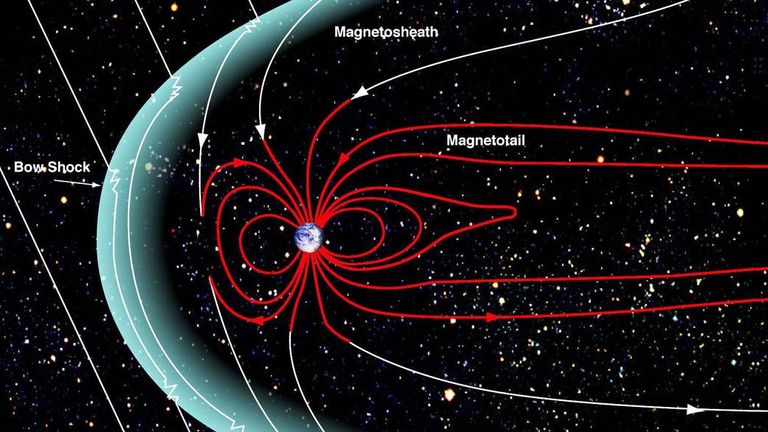
Scientists are finding that the weakening is causing technical problems for satellites, and seems to be growing in its effects.
Earth’s magnetic field, which is vital to protecting life on our planet from solar radiation, is mysteriously weakening. On average the planet’s magnetic field has lost almost 10% of its strength over the last two centuries, but there is a large localised region of weakness stretching from Africa to South America. Known as the South Atlantic Anomaly, the field strength in this area has rapidly shrunk over the past 50 years just as the area itself has grown and moved westward. Over the past five years a second centre of minimum intensity has developed southwest of Africa, which researchers believe indicates the anomaly could split into two separate cells. The anomaly is causing technical difficulties for satellites orbiting the Earth. European Space Agency (ESA) scientists from the Swarm Data, Innovation and Science Cluster (DISC) are using data from ESA’s Swarm satellite constellation to study the anomaly. Swarm satellites are designed to identify and precisely measure the different magnetic signals that make up Earth’s magnetic field. Dr Jurgen Matzka, from the German Research Centre for Geosciences, said: “The new, eastern minimum of the South Atlantic Anomaly has appeared over the last decade and in recent years is developing vigorously. “We are very lucky to have the Swarm satellites in orbit to investigate the development of the South Atlantic Anomaly. The challenge now is to understand the processes in Earth’s core driving these changes.” One speculation is that the weakening of the field is a sign that the Earth is heading for a pole reversal – in which the north and south magnetic poles flip. This flip doesn’t happen immediately, but instead would occur over the course of a couple of centuries during which there would be multiple north and south magnetic poles all around the globe. “Such events have occurred many times throughout the planet’s history,” said ESA, noting “we are long overdue by the average rate at which these reversals take place (roughly every 250,000 years)”. That said, the space agency also noted that the dip occurring in the South Atlantic was “well within what is considered normal levels of fluctuations”. For people on the surface the anomaly is unlikely to cause any alarm, but satellites and other spacecraft flying through the area are experiencing technical malfunctions. Because the magnetic field is weaker in the region, charged particles from the cosmos can penetrate through to the altitudes that low-Earth orbiting satellites fly at. “The mystery of the origin of the South Atlantic Anomaly has yet to be solved,” added ESA. “However, one thing is certain: magnetic field observations from Swarm are providing exciting new insights into the scarcely understood processes of Earth’s interior.” Nick Note: This is interesting. Lets watch it and see what comes of this.
China’s Hong Kong Crackdown Could Put Trump in an Unwelcome Spot
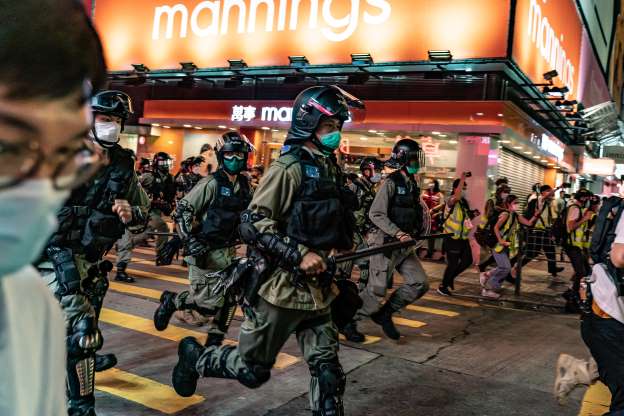
 WASHINGTON — China’s plans to impose sweeping new security powers over Hong Kong could inflict even more damage on already fraught relations between Washington and Beijing, and force President Trump into uncomfortable decisions about whether to maintain his self-described friendly ties with the Chinese president, Xi Jinping. The proposal announced in Beijing on Thursday provoked outrage in Congress, where bipartisan support grew quickly for new sanctions on Chinese officials and entities that Mr. Trump — who has shown limited interest in Hong Kong’s plight and a continued desire to carry out terms of a trade deal with Beijing — may not welcome. Giving the government broad new powers to crack down on pro-democracy activists could effectively end Hong Kong’s limited independence and crush a protest movement that has agitated for nearly a year against China’s authoritarian Communist Party. “This move by Beijing would rip away the remaining veneer of ‘one country, two systems.’ It would precipitate a crisis in U.S.-China relations,” said Evan Medeiros, a senior Asia director at the National Security Council under President Barack Obama and a professor at Georgetown University. “Nationalist voices in the U.S. and China would have a party with this; 2020 is beginning to feel more and more like 1948 when the first crises of the Cold War broke out over Berlin,” Mr. Medeiros said, predicting that the United States and China would probably impose sanctions or other punishments on each other. The Chinese government, which announced the move, is likely to put it in place by fiat during the National People’s Congress, which begins on Friday. How Mr. Trump will react is unclear. Leaving the White House for a trip to Michigan on Thursday, he told reporters that he did not know “what it is,” but added, “If it happens, we’ll address that issue very strongly.” The White House otherwise had no comment. But in recent months the Trump campaign has increasingly focused on its message of China as a villainous threat to American economic and security interests, while portraying Mr. Trump’s Democratic opponent, former Vice President Joseph R. Biden Jr., as too conciliatory toward Beijing. Mr. Trump has repeatedly muddied that message with his deferential tone toward Mr. Xi. “Any effort to impose national security legislation that does not reflect the will of the people of Hong Kong would be highly destabilizing, and would be met with strong condemnation from the United States and the international community,” Morgan Ortagus, a State Department spokeswoman, said in a statement on Thursday. “We urge Beijing to honor its commitments and obligations in the Sino-British Joint Declaration — including that Hong Kong will ‘enjoy a high degree of autonomy’ and that people of Hong Kong will enjoy human rights and fundamental freedoms — which are key to preserving Hong Kong’s special status in international affairs and, consistent with U.S. law, the United States’ current treatment of Hong Kong,” she said. Secretary of State Mike Pompeo has said the State Department has yet to issue to Congress a mandatory report examining the autonomous status of Hong Kong in order to gauge continuing actions from Beijing before coming to a conclusion. The department might recommend that the United States no longer give Hong Kong preferential treatment as a territory that has autonomy under China. By midday Thursday, Senators Patrick J. Toomey, Republican of Pennsylvania, and Chris Van Hollen, Democrat of Maryland, announced that they would propose legislation to impose sanctions on Chinese officials and entities that enforce the planned national security laws. The measure would also impose sanctions on banks that do business with entities deemed to violate the Basic Law, a legal document that is supposed to guarantee Hong Kong significant autonomy until 2047. “The communist regime in Beijing would like nothing more than to extinguish the autonomy of Hong Kong and the rights of its people,” Mr. Toomey said in a statement. “In many ways, Hong Kong is the canary in the coal mine for Asia. Beijing’s growing interference could have a chilling effect on other nations struggling for freedom in China’s shadow.” At the height of Mr. Trump’s trade negotiations with China in 2018 and 2019, the economy-centric view seemed to prevail and helped to explain Mr. Trump’s repeated fulsome praise of Mr. Xi as a “brilliant leader” and a “great man.” But the emergence of the coronavirus from Wuhan, and the Chinese government’s initial efforts to conceal it, enraged Mr. Trump, who saw his re-election imperiled as a result, and in recent weeks the hawkish camp has pressed the sinister theory, that the virus escaped from a Chinese lab. On Wednesday, the National Security Council released a White House strategy document detailing a “competitive” American approach devised in part to “to compel Beijing to cease or reduce actions harmful to the United States’ vital, national interests and those of our allies and partners.” The same day, the Trump administration angered Beijing by approving as much as $180 million in torpedo sales to Taiwan, whose de facto independence mainland China rejects but which the Trump administration strongly supports. Mr. Trump did not give any indication on Thursday how he will react to the congressional effort to impose sanctions. This time his conservative allies are more adamant than ever that Mr. Trump must not look the other way. “I think this has absolutely got to be a line in the sand,” said Stephen K. Bannon, a former Trump White House strategist who now devotes much of his time to rallying conservatives to fight China’s communist leadership. “The Trump White House, unfortunately, has little leverage and even less influence with the Xi administration at this point,” she added. “Relations between the United States and China are essentially in a free fall. Nick Note: This is a big deal. China knows exactly what its doing. And Trump does mot.
China’s regime pledges to clamp down on dissent in Hong Kong at National People’s Congress
China wants to pass laws that can prevent and punish subversion “or any acts that severely endanger national security”
A proposal to enact new Hong Kong security legislation was submitted to China’s rubber-stamp parliament on Friday, a move expected to fan fresh protests in the semi-autonomous city. The proposal, which has been condemned by the United States and Hong Kong pro-democracy figures as an assault on the city’s freedoms, was tabled on the opening day of the National People’s Congress. China will establish a “sound” legal system and enforcement mechanisms to ensure national security in Hong Kong and Macau, Chinese Premier Li Keqiang said on Friday in his annual report to parliament.
According to the legislation, China’s parliament empowers itself to set up the legal framework and implementation mechanism to prevent and punish subversion, terrorism, separatism and foreign interference, “or any acts that severely endanger national security”.
Hong Kong activists have called for a march today against China’s plans. A previous attempt to adopt similar legislation in 2003 was met with a protest that drew around half a million people onto the streets and was eventually shelved. Local pro-democracy lawmakers denounced the plans on Thursday night as “the end of Hong Kong”. The measures were tabled alongside a raft of policy announcements from Beijing about spending plans, the economy and its response to the coronavirus pandemic. Mr Li told the NPC that China had made “major strategic achievements” in its response to the outbreak. “At present, the epidemic has not yet come to an end, while the tasks we face in promoting development are immense,” he told thousands of delegate. It comes after Donald Trump, the US President, on Thursday accused Chinese president Xi Jinping of a campaign of “disinformation” that has helped spread Covid-19 around the world. China will severely punish the illegal hunting and trading of wild animals, it said in its government work report issued on Friday, as it tries to implement a ban imposed in January as a result of the coronavirus outbreak. The pandemic has been blamed on a seafood market in Wuhan that is believed to have sold wild animals such as bats and pangolins, and China has promised new legislation to make the ban permanent. Mr Li also announced that China has set a budget deficit target for this year of “at least” 3.6 per cent of gross domestic product (GDP), compared with the 2.8 per cent target set for 2019. Mr Li, who also said that defence spending will rise 6.6 per cent this year, refrained from setting a 2020 GDP growth target and pledged to step up spending and financing to support China’s economy. It marked the first time that China did not set a gross domestic product (GDP) goal since 1990 when the government started to publish such targets. The Chinese economy contracted 6.8 per cent in the first quarter from a year earlier, shrinking for the first time in decades, as the outbreak of the coronavirus paralysed production and hit spending. China will also encourage the people of Chinese-claimed Taiwan to join it in opposing Taiwan independence and in promoting China’s “reunification”, Mr Li Keqiang said. Taiwan’s government urged China on Friday not to lead Hong Kong into “bigger turmoil” due to wrong policy decisions. Taiwan’s Mainland Affairs Council said in a statement that China’s Communist Party has wrongly blamed external influences and Hong Kong independence “separatists” for the instability in the territory. Nick Note: This is SERIOUS and could lead to a wider confrontation between the US and China. In essence China is violating the 2 state (that shit never works) solution and imposing its will on Hong Kong. The Taiwanese should be shitting bricks!
Oil prices down 3% amid China’s economic worries
Prices of oil futures fell by 3% on Friday after China’s government failed to publish a gross domestic product (GDP) target for 2020 for the first time in 30 years, thus sparking fears that the country’s oil demand may suffer due to economic uncertainty. Beijing also announced a series of economic measures aimed to help fight the negative consequences of the COVID-19 pandemic on the national economy. Brent for July deliveries dipped 3.52% to go for $34.79 per barrel at 12:04 am ET, while West Texas Intermediate (WTI) for settlements in the same month dropped 5.57% to sell for $32.06 one minute later. China has abandoned its usual practice of setting a numerical target for economic growth this year due to the turmoil caused by the coronavirus pandemic, according to the text of Premier Li Keqiang’s annual policy address. Nick Note: this is a serious turn of events that warrants close monitoring. It begs the question what do they know they are not telling us…. again!
‘Default’: creditors reject Argentine debt restructing
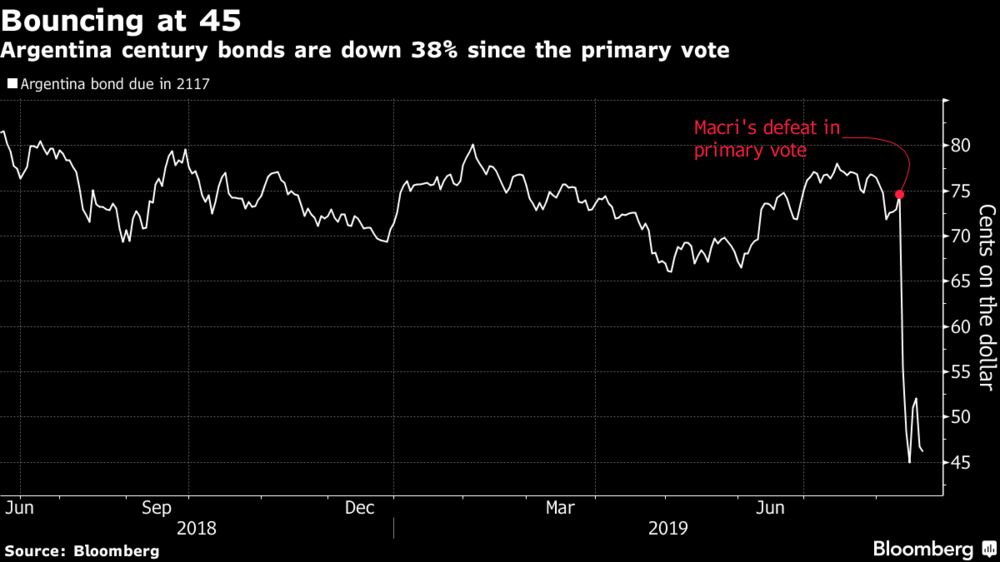
BUENOS AIRES (Reuters) – Bondholders rejected a debt restructuring proposal by Argentina’s Buenos Aires province and said the offer would likely lead to a default, adding tension to a larger debt crisis plaguing the South American country. The group of bondholders, which holds more than 40% of the province’s external debt, said in a statement the offer proposed by Buenos Aires was “not based on credible policy efforts or forecasts that bondholders can support.” “The terms of the offer do not reflect the province’s reasonable payment capacity and the offer will not lead to a consensual resolution,” the statement said. Buenos Aires is Argentina’s largest and wealthiest province.
“Rather, it will lead to a failed debt restructuring, likely default and a protracted period of uncertainty that will inhibit investment and economic recovery in the province,” it added.
The province’s proposal from last week, which is part of a $7.148 billion debt restructuring, included a three-year payment halt and large cut to interest payments. It amounted to around $5 billion in relief over the next decade. Buenos Aires faces a bond payment of around $200 million due on May 1, with a grace period of 10 days, said Matías Rajnerman, chief economist at Ecolatina consultancy. Failure to pay as of May 11, would therefore trigger a default. That would come just after holders of Argentina’s national debt are expected to accept or reject a proposal to restructure around $65 billion in foreign-law sovereign bonds. Those bondholders have also signaled they will likely reject it. “So the fate of the province is tied to the fate of the nation, in terms of debt restructuring,” Rajnerman said. The Buenos Aires proposal followed a structure similar to an offer to bondholders by Argentina’s government as the country seeks to avoid default during an economic crisis worsened by the coronavirus outbreak. Nick Note: Another wipe out for the fund retirement account masses. Fidelity and Blackrock hold most of this soon the worthless debt. The loses will be huge mostly for idiots chasing high yield. In those ha ha ha sold as safe “government security’s” accounts. The way they get 3% yield is by purchasing Argentinean and for that matter Venezuelan debt that yields double digits. Of course the day of reckoning comes for investors when the junk shit wipes out……. again.