Coronavirus spreads to S. America with first case in Brazil

More coronavirus new infections outside China than inside – WHO

Oil prices lowest finish in 2 weeks as COVID-19 outbreak rattles demand expectations

Oil prices remain under pressure, a day after a nearly 4% drop

Oil futures fell on Tuesday to mark their lowest finish in two weeks, as worries about the spread of COVID-19 outside China, and the impact on energy demand, sent prices down for a third straight session. There is “plenty of bearish sentiment still hanging over the market,” said Robbie Fraser, senior commodity analyst at Schneider Electric. “The spread of the COVID-19 virus continues to dominate market direction, overshadowing all over factors in the current environment,” he said in a daily note. “Particularly concerning of late is the virus’ spread outside of China, with confirmed cases in several key oil producing states including Oman, as well as a significant number of cases in Iran.” “Concerns over the rising number of COVID-19 cases outside China continues to weigh on sentiment, and market participants are likely to remain cautious until there is a sign of a peak” in cases outside of the country, said Warren Patterson, head of commodities strategy at ING, in a note. Nick Note: Hold the phone… the oil trade is a pandemic trade. people under quarantine consume less energy. Cities shut down see the roads empty out. And if they are not driving they are not consuming fuel….

WTI, the U.S. benchmark, dropped 3.7% on Monday, while Brent, the global benchmark, shed 3.8%, as investors fled assets perceived as risky, including equities, and piled into traditional havens like gold GCJ20, +0.08%  and U.S. Treasurys TMUBMUSD10Y, +1.29%. The move came after a jump in the number of cases outside China of the disease caused by the novel coronavirus that emerged in Wuhan, China, late last year.

Read: Coronavirus cases continue to grow in China, South Korea

Fears the coronavirus would dent demand for crude in China pressured oil prices earlier this year, pushing the commodity into a bear market. The spread of the disease outside of the country and fears it could have further implications for supply chains and the global economy have contributed to recent weakness, alongside uncertainty over the ability of the Organization of the Petroleum Exporting Countries, or OPEC, and its allies to respond with additional production cuts amid signs of strain between Saudi Arabia and Russia.

OPEC and its allies, known as OPEC+, will meet late next week to discuss demand and production levels.

“OPEC+ is showing no signs of agreement and, in our view, the outlook from their monitoring committee underestimates the drop in consumption and its duration,” said James Williams, energy economist at WTRG Economics, in a note issued Tuesday. “If there is not a substantial short term drop in production at the March meeting late next week, we are in for a significant drop in prices.”

Read: What a breakdown in the Said Arabia-Russia oil alliance would mean to the market

In other energy trading, March gasoline RBH20, -2.64%  fell 4.8% to $1.5324 gallon, while March heating oil HOH20, -2.65%  settled at $1.5685 a gallon, down 2.8%

March natural gas NGH20, +0.16%, which expires at Wednesday’s settlement, gained 1.1% to $1.847 per million British thermal units.

Weekly U.S. petroleum supply data will be released by the American Petroleum Institute late Tuesday. The Energy Information Administration will release government figures early Wednesday.

Analysts polled by S&P Global expect the EIA to report an increase of 2.8 million barrels, on average, for the week ended Feb. 21. Gasoline stockpiles are expected to post a fall of 1.9 million barrels, while distillate inventories are forecast to decline by 900,000 barrels.

Could the coronavirus pandemic be stopped? US warns of ‘severe’ disruptions

“Disruption to everyday life may be severe,” Nancy Messonnier, director of the Centers for Disease Control and Prevention’s National Center for Immunization and Respiratory Diseases, warned at a news conference Tuesday.

Schools could be closed, mass public gatherings suspended and businesses forced to have employees work remotely, she said. Messonnier said the coronavirus has caused sickness and death and sustained person-to-person transmission. That’s two of the three factors for a pandemic, she said. “As community spread is detected in more and more countries, the world moves closer to meeting the third criteria – worldwide spread of the new virus,” Messonnier said. Although the World Health Organization determined Monday that the term pandemic “did not fit the facts,” experts said it very soon could. Dennis Carroll, former director of the U.S. Agency for International Development’s Global Health Security and Development Unit, credited China’s “extraordinary control measures” with delaying the spread of the virus, but he said avoiding a pandemic is “very unlikely.” “The dramatic uptick of cases in South Korea, Iran and Italy are reflective of a self-sustaining spreading of the virus and a clear message that the horse is out of the barn,” Carroll, who leads the Global Virome Project science cooperative, told USA TODAY.  Melissa Nolan, a medical doctor and professor of epidemiology at the University of South Carolina’s Arnold School of Public Health, cited new clusters in Iran, which faces at least 95 cases and has had 16 deaths, and Italy, which is dealing with 322 cases.

“If we continue to see focalized local transmission in areas outside of China, the WHO will need to reconvene,” Nolan told USA TODAY on Tuesday. “We are very close to seeing this virus becoming a pandemic.”

Nolan said responses to the outbreaks in Iran and Italy could help health officials in other countries prepare their own medical and quarantine policies before an outbreak. That is crucial, said Robert Glatter, an emergency physician at New York’s Lenox Hill Hospital who fears the world is on the “cusp” of a pandemic.

“Trying to contain a disease which spreads like influenza, in this case COVID-19, is almost impossible,” he said. “We are talking about rapid-fire and sustained transmission.”

Beyond an epidemic, which involves a defined region, a pandemic has global impact. It can be a moving target – there is no threshold, such as number of deaths or infections. Nick Note: When medicine becomes politicized the system falls apart. Ask you doctor if your luck to have a competent one in this day and age. What you need to understand is the fact the world should have quarantined China 3 months ago. The WHO should have declared a pandemic two months ago. It is truly to late now. The only thing that can stop this right now is GOD. And sometimes these Flues go dominant. My bet is a global pandemic equivalent   to the 1918 flue. And this could turn into a plague.  Get the body bags ready.

Trump lashes out at liberal supreme court justices and demands recusals

Even as the US justice system faces a crisis of credibility because of the Trump administration’s handling of federal cases, Donald Trump has taken the unusual step of attacking two supreme court justices on Twitter and in remarks to the press. In a dissent last week, justice Sonia Sotomayor criticized the Trump administration’s frequent appeals to the supreme court to intervene in lower-court decisions, and the court’s willingness to side with such requests. On Twitter, responding to a segment on Fox News’s The Ingraham Angle, Trump unleashed a tirade against Sotomayor and Ruth Bader Ginsburg, who has criticized the president in the past. “This is a terrible thing to say,” Trump tweeted. “Trying to ‘shame’ some into voting her way? She never criticized Justice Ginsberg when she called me a ‘faker’. Both should recuse themselves on all Trump, or Trump related, matters! “While ‘elections have consequences’” – a reference to his two supreme court appointments since winning the White House, both reliable conservatives – “I only ask for fairness, especially when it comes to decisions made by the United States supreme court!” At a press conference in India on Tuesday, Trump repeated his complaint. “I just don’t know how they can not recuse themselves from anything having to do with Trump or Trump-related,” he said. “The right thing to do is that. “What Justice Sotomayor said … was really highly inappropriate and everybody agrees to that. Virtually everybody. I’ve seen papers on it, people cannot believe that she said it.” He said: “She’s trying to shame people with perhaps a different view into voting her way.” The attacks on two of the four women ever to serve on the supreme court, including its first Latina, landed as the lens tightens on the president’s interference in the courts system. This month, attorney general William Barr publicly criticized Trump’s tweeting on justice department matters and reportedly said he was considering quitting after Trump failed to heed his warning to stop. At the same time, more than 2,600 former US justice department officials called on Barr to step down for “doing the president’s personal bidding” in imposing a recommendation of a reduced sentence for Roger Stone, a longtime friend of the president. It would be exceptional for any supreme court justice to recuse themselves from all cases involving the White House. Sotomayor’s dissent was written in the style justices use after losing a divided ruling and did not mention Trump or accuse the courts of a pro-Trump bias. It depicted accurately how the Trump administration has asked the supreme court to intervene in cases playing out in lower courts at a higher rate than George W Bush and Barack Obama combined. “Claiming one emergency after another, the government has recently sought stays in an unprecedented number of cases, demanding immediate attention and consuming limited court resources in each,” Sotomayor wrote. “And with each successive application, of course, its cries of urgency ring increasingly hollow.” Sotomayor was critical of the court allowing this to happen, and wrote that such interventions usually fall in the Trump administration’s favor. The president’s call for Ginsburg to recuse appeared to stem from her criticism of him during the 2016 election. In July that year, Ginsburg said she could not “imagine what the country would be with Donald Trump as our president” and called him a “faker”. Ginsburg has said she regrets the comments, as “judges should avoid commenting on a candidate for public office” “In the future I will be more circumspect,”  she said. Nick Note: Heed my warning! Trump is out of control. You have seen the stock market biggest 2 day loss EVER. He has hitched his wagon to the stock market star. AND HE WILL NOT NOT BE REELECTED!! NOW hear me well. If this pandemic attacks America’s   health care system will fail. And urban ghetto dwellers and no medical insurance McDonald’s, Walmart and Amazon slaves think the emergency room is their doctors office. It will not take much for a TRUMP (who is about to realize the stock market that has had it biggest 2 day loss ever) will cost him the election. When Trump has his epiphany he will move to plan B. Declaring a nation Coronavirus emergency, martial law and mass detention. Under the emergency powers act he can suspend the constitution, close the House and senate and the supreme court. He   can use his extraordinary emergency  powers to call off the elections and in essence become a dictator.

U.S. health officials urge Americans to prepare for spread of coronavirus

https://youtu.be/PphsLY_8gJs

WASHINGTON/CHICAGO (Reuters) – The U.S. Centers for Disease Control and Prevention (CDC) on Tuesday alerted Americans to begin preparing for the spread of coronavirus in the United States after infections surfaced in several more countries.

The announcement signaled a change in tone for the Atlanta-based U.S. health agency, which had largely been focused on efforts to stop the virus from entering the country and quarantining individuals traveling from China. “The data over the past week about the spread in other countries has raised our level of concern and expectation that we are going to have community spread here,” Dr. Nancy Messonnier, the CDC’s head of respiratory diseases, told reporters on a conference call. What is not known, she said, is when it will arrive and how severe a U.S. outbreak might be. “Disruption to everyday life might be severe” and businesses, schools and families should begin having discussions about the possible impact from the spread of the virus, Messonnier cautioned. In a teleconference later on Tuesday, Dr. Anne Schuchat, the CDC’s principal deputy director, said that while the immediate risk in the United States was low, the current global situation suggested a pandemic was likely. “It’s not a question of if. It’s a question of when and how many people will be infected,” Schuchat said. Separately, U.S. Health and Human Services (HHS) Secretary Alex Azar told a Senate subcommittee there will likely be more cases in the United States, and he asked lawmakers to approve $2.5 billion in funding to fight the outbreak after proposing cuts to the department’s budget. “While the immediate risk to individual members of the American public remains low, there is now community transmission in a number of countries, including outside of Asia, which is deeply concerning,” Azar said, adding that recent outbreaks in Iran and Italy were particularly worrying. Believed to have originated from illegal wildlife sold in the Chinese city of Wuhan late last year, the new coronavirus has infected some 80,000 people and killed close to 2,700 in China. Although the World Health Organization says the epidemic has peaked in China, coronavirus cases have surfaced in about 30 other countries, with some three dozen deaths reported, according to a Reuters tally. Growing outbreaks in Iran, Italy and South Korea have raised concerns that coronavirus will surface in other nations and worsen in those that have already reported infections, further denting a global economy that had already been hit by a dependence on China. Global and U.S. stock markets fell sharply again on Tuesday, as investors feared the epidemic would further damage an already slowing world economy.[nL1N2AP0YR][nL1N2AP11A] The White House’s top economic adviser, Larry Kudlow, said the U.S. economy would be able to ride out any disruption from the global spread of coronavirus, adding that he did not expect the Federal Reserve to cut interest rates to blunt the disease’s economic impact. U.S. Senator Chuck Schumer, however, said Republican President Donald Trump and his administration had been caught “flat-footed” and lacked a comprehensive plan to deal with the coronavirus. He called for at least $3.1 billion in additional funding to fight it.

“The Trump administration has shown towering and dangerous incompetence when it comes to the coronavirus,” said Schumer, the Senate’s top Democrat. “Mr. President, you need to get your act together now. This is a crisis.”

Dr. Anthony Fauci, the head of the National Institute of Allergy and Infectious Diseases, said it would be at least a year before a coronavirus vaccine could be made available to the public.

But Fauci said testing Gilead Sciences’ (GILD.O) antiviral drug remdesivir for potential treatment of coronavirus could be done in a “reasonable amount of time.”

‘DEADLY CONSEQUENCES’

U.S. Secretary of State Mike Pompeo told reporters that Iran may have covered up information about the spread of coronavirus there, and he accused China of mishandling the epidemic through its “censorship” of media and medical professionals.

“The United States is deeply concerned by information indicating the Iranian regime may have suppressed vital details about the outbreak in that country,” Pompeo told reporters as Iran’s coronavirus death toll rose to 16.

“All nations, including Iran, should tell the truth about the coronavirus and cooperate with international aid organizations,” Pompeo said.

His remarks, coming less than two months after a short-lived U.S.-Iranian military clash and the signing of a U.S.-China trade deal, could inflame tensions with Tehran and Beijing.

Beijing last week revoked the credentials of three Wall Street Journal correspondents over a column China said was racist. The United States has said it was considering a range of responses to their expulsion.

“Expelling our journalists exposes once again the government’s issue that led to SARS and now the coronavirus: namely censorship. It can have deadly consequences,” Pompeo said, referring to the 2002-2003 outbreak of Severe Acute Respiratory Syndrome, which also emerged from China.

“If China permitted its own and foreign journalists and medical personnel to speak and investigate freely, Chinese officials and other nations would have been far better prepared to address the challenge” of coronavirus, he added.

Despite the coronavirus epidemic, Pompeo said the United States still planned to host a special meeting with the 10-member Association of Southeast Asian Nations (ASEAN) in Las Vegas in March.

Reporting by Julie Steenhuysen in Chicago, Humeyra Pamuk,

Italy struggles to contain coronavirus outbreak as cases spread south

https://youtu.be/VFfOif7k1to

Italy’s coronavirus outbreak spread south on Tuesday to Tuscany and Sicily, as the civil protection agency reported a surge in the number of infected people and Rome convened emergency talks. Prime Minister Giuseppe Conte has blamed poor management in a hospital in the country’s north for the outbreak, which has caused seven deaths in Italy so far and infected the largest number of people in Europe. Tuscany reported its first two cases, including one in the tourist destination of Florence, while Sicily recorded one: a tourist from the worst-hit Lombardy region, where 212 people have tested positive. The Liguria region, known as the Italian Riviera, also reported its first case, but cautioned that the definitive result for the 70-year old still needed to come from Italy’s infectious diseases institute. Health ministers from neighbouring countries were to meet in Rome as the number of confirmed infections jumped to 283, with over 50 new cases reported since Monday. News of the spike in cases came as a team from the World Health Organization in Rome said Italy had taken appropriate measures to curb the virus’s spread, with the focus on halting further person-to-person transmission. “The measures taken by the Italian government or the regional governments have been pretty strong and most likely should help in containing this virus as good as possible,” WHO spokesman Christian Lindmeier said. Lindmeier noted that based on current data, in the majority of cases – four out of every five – people experience mild or no symptoms. On Tuesday, several neighbouring countries reported their first confirmed infections. Croatia confirmed the first case in the Balkans region after a young man who recently returned from Italy – which lies across the Adriatic from Croatia – was found to have become infected. Switzerland reported its first confirmed case in the Italian-speaking Ticino canton, while Austria also saw its first two cases confirmed on Tuesday in the Tyrol province, which borders Italy. Austrian officials said one of the two patients was from Lombardy, but it was not yet clear how the person had contracted the virus. Meanwhile in the Canary Islands, hundreds of people were confined to their rooms in a Tenerife hotel after an Italian tourist was hospitalised with suspected coronavirus, health officials said. While no neighbouring country has closed its borders with Italy, several governments have announced additional measures for incoming travellers, in particular from the two northern regions of Lombardy and Veneto. They range from medical screening to special gates at airports and recommendations to self-isolate. Conte insisted however that Italy’s health protocols were “among the most rigorous” and warned it would be “unfair” for other countries to attempt to limit the movement of Italians, saying, “we wouldn’t be able to accept that.” He said it was safe for Italians to travel, both for them and for others. Wide-ranging measures to halt the spread of the virus have affected tens of millions of people in the north of Italy, with schools closed and cultural and sporting events cancelled. Several upcoming football matches in Italian Serie A and the Europa League will be played behind closed doors and production of the latest “Mission: Impossible” film starring Tom Cruise in Venice has also been stopped. The main centre of infection in Italy has been the town of Codogno, a town of some 15,000 people around 60 kilometres (35 miles) to the south of Milan. Codogno and several other towns in northern Italy have been put under isolation. A 38-year-old man, dubbed “Patient One” by Italian media, was admitted to hospital last Wednesday in Codogno, and it is thought a large number of the cases in the worst-hit region of Lombardy can be traced back to him. His heavily pregnant wife, several doctors, staff and patients at the hospital are thought to have caught the virus from him. Elsewhere in the country officials have also been recommending precautionary measures, even in areas without known infections. To avoid physical contact, bishops in the southern Calabria region have asked their worshippers not to make the sign of peace during mass, media reported. All seven of those who have died so far in Italy were either elderly or had pre-existing medical conditions.

(FRANCE 24 with AFP, REUTERS)

For the U.S., it’s not if but when, federal officials say.

The U.S. should prepare for community transmission of the COVID-19 coronavirus, CDC officials said on Tuesday.

“We expect to see community spread [of COVID-19] in this country. It’s not a question of ‘if’ anymore,” said Nancy Messonnier, MD, director of the CDC’s National Center for Immunization and Respiratory Diseases, on a media call. Currently, the U.S. has 14 COVID-19 cases that are travel-associated or in close contacts of travelers, and 43 cases from citizens brought home from the Diamond Princess cruise ship and Wuhan, China. But she cited the “rapidly evolving and expanding” situation, including the explosion of sustained person-to-person community spread in a variety of countries, including South Korea, Italy, Iran, Japan, Taiwan, Thailand, and Singapore. As the world inches closer to worldwide spread, and the final criterion of a pandemic, Messonnier acknowledged the previous strategy of containing the disease at the borders may no longer be enough to stop it. The strategy would then shift from a containment strategy to mitigation, she said. In the vein of “when, not if” the U.S. will experience community spread, she advised people to ask whether their providers have telemedicine capability, and said parents should consider “what to do about childcare” if schools are closed. Messonnier outlined community mitigation guidelines, based on those outlined for pandemic influenza a decade ago. These non-pharmaceutical interventions include personal practices, including covering coughs and washing hands, as well as community and environmental measures such as surface cleaning. Community measures are the most dire, and include social distancing, or limiting contact in face-to-face settings, employing such options as closing schools, telework or teleschool for children, and recommending that cities potentially “modify, postpone, or cancel mass gatherings.” This included a special advisory for the healthcare system: triaging patients, conducting patient visits via telemedicine, and delaying elective surgeries. Obviously, this would be based on the outbreak’s severity and breadth, but CDC called on a variety of industries, including the healthcare, education, and business sectors, to start preparing now because when the virus hits the community, it hits quite rapidly. “The disruption to everyday life may be severe, but these are things we need to start  thinking about right now,” Messonnier noted.She added that 12 state and local health departments currently have the diagnostic test for COVID-19, but the tests still come to CDC for confirmation. She anticipated commercial laboratories would be coming online with their own tests, as it becomes “more and more important clinicians have a full toolkit.” “We are working as fast as we can, and we understand the frustration of our partners within the healthcare sector,” Messonnier said. While the case definition of COVID-19 is still travel-associated, Messonnier said that may change based on information in other countries and when they had new information about case definitions, they would “publicize it broadly.”

She ended with the caveat that she’s not sure if community spread of COVID-19 will be mild or severe, but told a reporter it was better to be overprepared than underprepared.

“People are concerned about the situation. I would say rightfully so,” Messonnier said. “I’m concerned about the situation. CDC is concerned about the situation.” Nick Note: Listen to me they are clueless. prepare while this window of opportunity is still open. Stock up and prepare now.

Trump claims coronavirus is ‘going to go away’ despite mounting concerns

Washington (CNN)President Donald Trump on Tuesday predicted the coronavirus is “going to go away” despite warnings from Democrats that his White House is asleep amid cresting fears in Washington that the outbreak could spark a pandemic. The President maintained his sunny optimism about the virus that is showing signs of spreading around the world from its Chinese epicenter and is already having a huge impact on global commerce.   “I think that’s a problem that’s going to go away,” Trump said during a trip to India, expressing confidence that the epidemic will not seriously harm the global economy. But behind the scenes the President is less calm, and he is expressing frustration at some of the ways his administration is responding to the outbreak, sources familiar with the conversations told CNN. His mood reflects a growing realization among Trump’s staff that the coronavirus is going to pose a greater challenge than previously understood.

After weeks of telling Americans that China has a lid on the situation, the President will return from India amid growing concern in Washington over the virus and partisan criticism of his attitude.
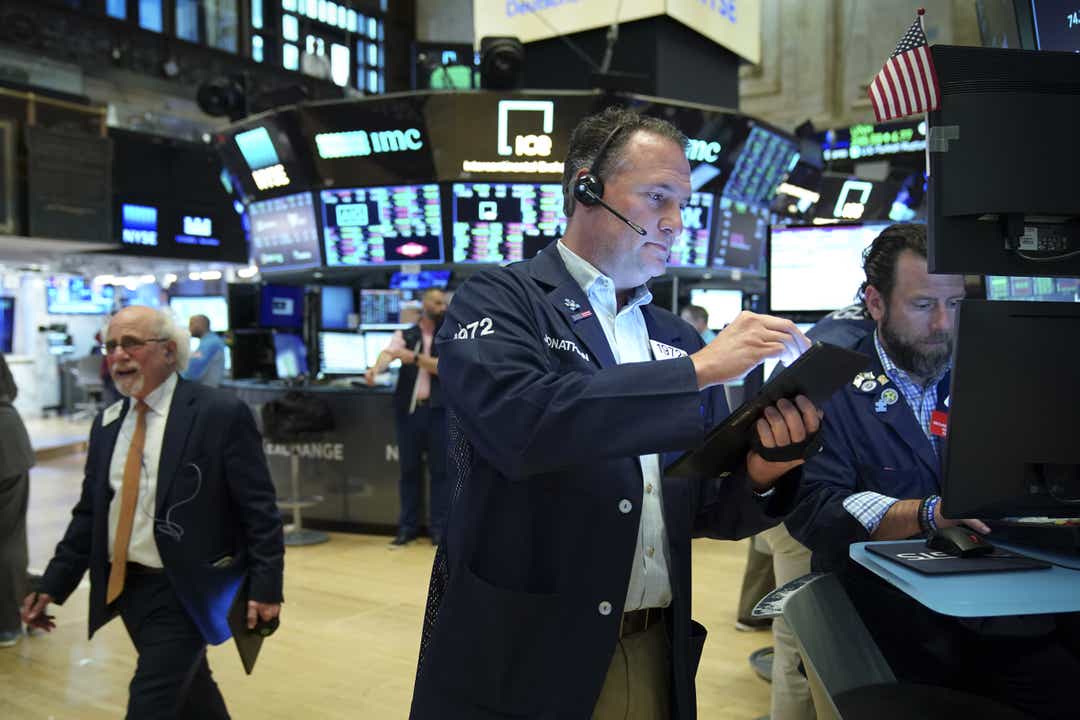
A panicked 1,000-point Wall Street sell-off, a building world supply-chain crunch and a looming hit to global growth together could pose peril for Trump by slowing the strong economy he plans to ride to reelection. But even more worryingly, the virus is spreading to Europe and the Middle East in a way that has experts warning it could soon become a full-blown pandemic. In such a scenario, the US could not expect to escape from a wave of infections and Trump would face a test of his leadership and capacity to bring a jumpy nation together. Trump acknowledged Monday’s Wall Street plunge, but noted futures were higher ahead of Tuesday’s market open in the United States and he said that his administration was putting “a lot of talent, brainpower” behind tackling the virus.
The President ticked though administration efforts to contain the virus, claiming the US had “essentially closed the borders.” “We’re watching very carefully,” Trump said. “We’re fortunate so far and we think it’s going to remain that way.”
But Democrats are now sounding the alarm, with Senate Minority Leader Chuck Schumer charging Monday that the President is “asleep at the wheel” as the threat builds. A serious outbreak in the US could put a health system already facing a tough flu season under severe pressure, posing an organizational challenge for an administration that habitually stokes chaos and sends mixed messages.

Even if worst-case scenarios don’t come to pass, Trump’s so far blasé approach to the virus, assuring Americans that Chinese President Xi Jinping is on top of the epidemic, does not seem sustainable for much longer.
The President has also confidently predicted that warming spring weather could snuff out coronavirus, despite no evidence that is the case.
Yet as disquiet mounted by the hour in Washington, Trump was still not showing much concern late Monday about a virus that has infected more than 80,000 people and killed at least 2,704 worldwide and has now popped up in South Korea, Iran, Italy, Afghanistan, Kuwait and elsewhere.
During a visit to India, the President sent a tweet suggesting all was well, and predicted the stock market would bounce back.
“The coronavirus is very much under control in the USA. We are in contact with everyone and all relevant countries. CDC & World Health have been working hard and very smart. Stock Market starting to look very good to me!” Trump tweeted. In a sign of increasing urgency, the administration gave senators a classified briefing on Tuesday morning about coronavirus contingency plans. Officials from the Department of Health and Human Services, the Department of Homeland Security, the Centers for Disease Control and Prevention, the National Institutes of Health and the State Department took part. Lawmakers leaving the briefing Tuesday said that officials told them that a vaccine is at least one year to 18 months away.
“The vaccine for the Coronavirus is moving more rapidly than any vaccine we have already tried to approve — but it will take a year or 18 months,” said retiring Republican Sen. Lamar Alexander, who chairs the Health, Education, Labor, and Pensions Committee.  Schumer had slammed Trump earlier Monday, saying the President was not taking the situation sufficiently seriously.
“All of the warning lights are flashing bright red. We are staring down a potential pandemic and the administration has no plan,” the New York Democrat warned.
“The Trump administration has been asleep at the wheel. President Trump, good morning, there is a pandemic of coronavirus. Where are you?”
After the administration’s funding request was unveiled, Schumer criticized it as “too little, too late. Nick Note:  You cold not ask for a worse leader. Trump is in denial. The Coronavirus will hit the US hard and their will be pandemonium.  You have no Leadership. YOU MUST TAKE MATTERS INTO YOUR OWN HANDS.

China’s car sales plunge 92% due to coronavirus

BEIJING — Retail sales of passenger cars in China crumbled 92% on an annual basis in the first 16 days of February, according to China Passenger Car Association (CPCA), as the coronavirus outbreak slammed the brakes on businesses across the country. China’s passenger vehicle sales recorded 4,909 units in the first 16 days, down from 59,930 vehicles in the same period a year earlier, data from CPCA showed, the first major figures to demonstrate just how hard the epidemic is hitting the world’s biggest auto market.

“Very few dealerships opened in the first weeks of February, and they have had very little customer traffic,” it said.

Mainland China recorded 889 new confirmed cases of coronavirus infection on Thursday. The death toll also rose by 118 to 2,236, mostly in the Hubei provincial capital of Wuhan where the outbreak began, and which remains under virtual lockdown. China’s auto market is likely to see sales slide more than 10% in the first half of the year due to the coronavirus epidemic, and around 5% for the whole year, provided the epidemic is effectively contained before April, the country’s top auto industry body, the China Association of Automobile Manufacturers (CAAM), told Reuters last week. To stabilize the market, where more than 25 million vehicles were sold last year, China’s commerce ministry said it will introduce more measures to boost auto consumption. Chinese automaker Geely has launched a service for customers to buy cars online and get them delivered directly to their homes, in a bid to drum up sales as the coronavirus outbreak prompts buyers to stay away from showrooms. Other carmakers like Tesla, BMW and Mercedes-Benz have also started to promote products heavily online in recent weeks as the health crisis escalated and authorities warned people to stay away from public places. Consumers can order and customize their cars on Geely’s website, it said in a statement. It will also offer test drives where potential consumers will be able to arrange a drive starting from their home address in coordination with local dealerships.

Fed’s Mester: Does not ‘at this time’ support cutting interest rates to spur a faster return of inflation to 2% goal

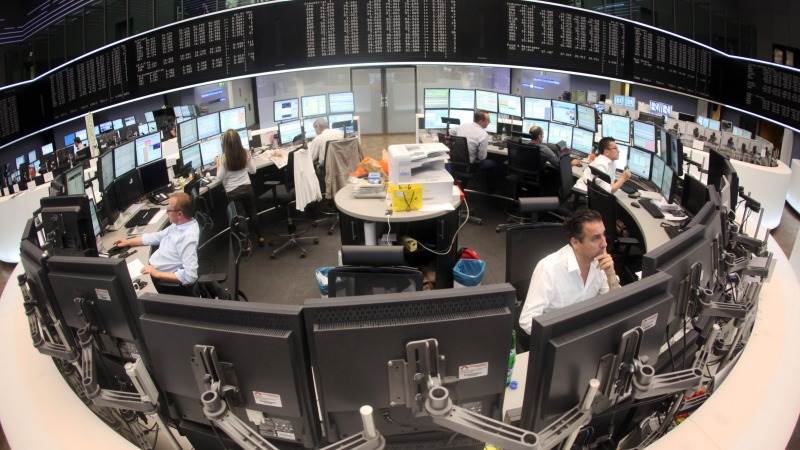
Cleveland Federal Reserve Bank President Loretta Mester said on Monday that the US economy should continue to perform well this year and monetary policy is currently well-positioned. “The economy has been performing well and I expect that to continue,” Mester said in prepared remarks to the National Association for Business Economics conference in Washington. She did, however, note that she has incorporated the potential impact of the coronavirus as a downside risk to her forecast this year, which is for U.S. economic growth around 2%, solid job market gains and low and stable inflation The US stock markets have hit a three-week low on worries the spread of the coronavirus to multiple countries outside China which could pose an escalating threat to global growth. Fed comments are welcomed as investors look for clarity.  “At this point, it is difficult to assess the magnitude of the economic effects, but this new source of uncertainty is something I will be carefully monitoring,” Mester said. “That echoed other Fed policymakers, who have so far stuck to the line that it is still too early to predict the economic impact on the US economy of the virus, while showing cautious optimism any effects would be temporary enough not to warrant a change in the path of monetary policy. Those hopes may not last. European shares suffered their biggest drop since mid-2016 on Monday and oil plunged almost 5% on the news of a jump in coronavirus cases in Italy, South Korea, Japan and Iran,” Reuters News warned.