WTI plunges 5% ahead of this week’s OPEC+ meeting

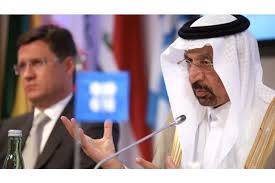
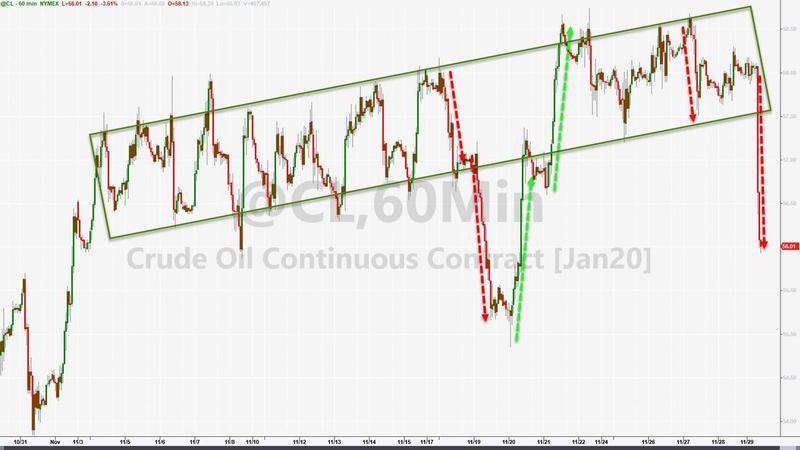
Oil extended losses on Friday with West Texas Intermediate (WTI) plummeting 5% ahead of OPEC+ meeting in Vienna. According to reports, the cartel and other major producers are expected to agree to prolong current output cuts. However, Russia’s Energy Minister Alexander Novak stressed that his country would prefer the decision on the potential extension of the cuts to be made closer to April as current cuts are set to expire in March 2020. Meanwhile, investors also digested Iraqi Prime Minister Adil Abdul Mahdi’s decision to step down, which some believe will lead to the end of protests in the Middle Eastern country. WTI for settlements in January plunged 5.09% to sell for $55.28 per barrel at 12:25 pm ET, while international benchmark Brent for January delivery dropped 2.18% to go for $62.48 per barrel at 12:31 pm ET.

Boris Johnson was personally warned about risks of freeing terrorists

Borris  said there was ‘no money’ to deradicalise them, ex-top prosecutor says

Damaging claim comes as solicitor for London Bridge attacker says he asked for help to turn away from terrorism – but was not given any

A former top prosecutor says he personally warned Boris Johnson about the risk posed by freeing terrorists who had not been deradicalised, but was told there was “no money”.

The hugely damaging claim came as the solicitor for the London Bridge attacker revealed he had asked for help to turn away from terrorism while in prison, but was not given any. As anger grew over the early release of Usman Khan, Jeremy Corbyn branded the attack he was able to carry out “a complete disaster”, saying: “There has got to be a very full investigation.” Visiting London Bridge, the prime minister attempted to deflect blame, saying: “I’ve argued that when people are sentenced to a certain number of years in prison they should serve every year of that sentence.” But the focus switched to efforts made to deradicalise prisoners when Nazir Afzal, the former chief prosecutor for North West England, intervened by revealing his private conversation with Mr Johnson. He said he had raised the problem of terrorists being released “whilst ostensibly rehabilitated but still radicalised” in many government meetings, before raising it with Mr Johnson in June 2016. “He asked me what keeps me awake at night and I told him it was this issue,” Mr Afzal said. “When he wanted to know what to do about it, I told him it was more resources for one-to-one deradicalisation.

“Back then, he hadn’t found the ‘money tree’ so he frustratingly said there was no money.” The atrocity committed by Khan – who killed two people, before being shot dead by police on Friday – has become a major general election controversy, with questions also asked about the apparent failure to monitor him.

Meanwhile, the Conservative campaign lead has been halved in just one week, putting the UK in “hung parliament territory”, an exclusive poll for The Independent showed. Further questions were raised when the Parole Board said it had no involvement when Khan left prison last December, saying he “appears to have been released automatically on licence”. Chris Phillips, a former head of the UK National Counter Terrorism Security Office, warned the criminal justice system was “playing Russian roulette” with the lives of the public.

Pointing out that the original trial judge “wanted this man in prison for a very very long time”, he described Khan’s release as “quite incredible”.

“What we have got to ask now is why is the criminal justice system allowing people like him to be back on the streets?” Nick Note: The civilized world has been sleeping since 911….. if the truth be known way before. The great world empires are crumbling because of the decadence, corruption and over leveraged financial system. Clinton, Bush I and Bush II, Mohammad Obama and now the biggest disaster of them all the colossal fuck up Trump refuses to see the threat never mind engage them. Allowing these fucks to acquire, territory,  rockets and nukes will bring  disaster and untold suffering  on America, England and Europe in that order…..

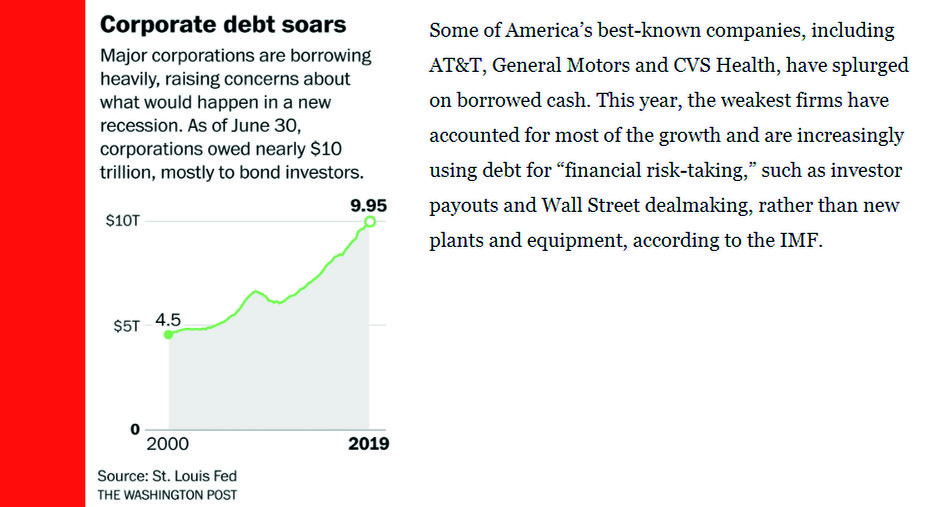
Corporate debt nears a record $10 trillion, and borrowing binge poses new risks

Little more than a decade after consumers binged on inexpensive mortgages that helped bring on a global financial crisis, a new debt surge – this time by major corporations – threatens to unleash fresh turmoil. A decade of historically low interest rates has allowed companies to sell record amounts of bonds to investors, sending total U.S. corporate debt to nearly $10 trillion, or a record 47% of the overall economy. In recent weeks, the Federal Reserve, the International Monetary Fund and major institutional investors such as BlackRock and American Funds all have sounded the alarm about the mounting corporate obligations. The danger isn’t immediate. But some regulators and investors say the borrowing has gone on too long and could send financial markets plunging when the next recession hits, dealing the real economy a blow at a time when it already would be wobbling. Some of America’s best-known companies, including AT&T, Ford Motor and CVS Health, have splurged on borrowed cash. This year, the weakest firms have accounted for most of the growth and are increasingly using debt for “financial risk-taking,” such as investor payouts and Wall Street dealmaking, rather than new plants and equipment, according to the IMF.

Amid the avalanche of debt, the sharp growth in lower-quality corporate bonds, just one notch above junk, represents a special concern. Investors hold nearly $4 trillion in these bonds, including $2.5 trillion from U.S. companies, according to the credit rating agency Standard & Poor’s.

Since Oct. 1, familiar names like Hasbro, Nordstrom, Marriott and Hyundai all have tapped investors for cash by selling near-junk bonds that S&P labels “BBB.” This low-quality corporate debt bulge, by itself, is unlikely to cause a recession, according to economists and investors. But it could make the next one much worse.

“We are sitting on the top of an unexploded bomb, and we really don’t know what will trigger the explosion,” said Emre Tiftik, a debt specialist at the Institute of International Finance, an industry association.

The United States is outperforming other advanced economies in Europe and Japan. But over the past four quarters, the economy grew at just a 2.1% annual rate, virtually unchanged from its 2.2% average since the recession ended in mid-2009. If downgrades occurred at the same rate as during the 2009 crisis, the volume of debt hitting the market could be well above the normal daily sales, the Bank of International Settlements in Basel, Switzerland, warned earlier this year. Last month, in its twice-yearly financial stability report, the Fed warned about the potential consequences of the market’s failure to police the rapid increase in risky corporate debt. During the 2009 crisis, “BBB-rated” companies – the lowest rung of investment-grade – faced borrowing costs almost 7 percentage points higher than higher-quality companies. Today, the difference or “spread” is just 1.4 percentage points. The risk of fire sales by institutional investors is real. Mutual funds have tripled their corporate bond holdings over the past decade. At $1.5 trillion, they now amount to about one-sixth of all corporate bonds on the market, according to the Fed. “It’s going to amplify everything,” said Krista Schwarz, a finance professor at the University of Pennsylvania’s Wharton School. “It’s going to make everything happen faster, larger, worse. The recession would just be that much deeper.”
U.S. crude output rises 66,000 bpd to record 12.5 mln bpd in Sept- EIA

U.S. crude oil production in September rose to a new record of 12.46 million barrels per day (bpd) from 12.397 million bpd in August, the U.S. government said in a monthly report on Friday. The United States has become the world’s largest oil producer as technological advances have increased production from shale formations. Oil output in Texas rose 72,000 bpd in September, while production in North Dakota and the Gulf of Mexico fell during the month. Production also climbed in Oklahoma and Alaska.  U.S. gasoline demand fell 652,000 bpd in the month to 9.2 million bpd. U.S. demand for distillate fuels, including diesel, fell 87,000 bpd to 3.9 million bpd, according to the report. Meanwhile, monthly gross natural gas production in the lower 48 U.S. states rose to an all-time high of 104.8 billion cubic feet per day (bcfd) in September from the prior record of 104.2 bcfd in August, according to the EIA’s 914 report. In Texas, the biggest gas producing state, output increased 1% to a fresh record high of 29 bcfd in September. In Pennsylvania, the second-biggest gas-producing state, output rose 0.1% to a record 19.24 bcfd in September from the prior all-time high of 19.22 bcfd in August.

Saudi Arabia signals it’s had enough of OPEC+ quota cheats

https://youtu.be/YEcLoRlIm-4

LONDON (Bloomberg) – For the last year, Saudi Arabia has largely turned a blind eye to cheaters within the OPEC+ alliance, cutting its own output more than agreed to offset over-production from the likes of Iraq and even Russia. Now, Riyadh’s had enough. Prince Abdulaziz bin Salman, who took over from Khalid Al-Falih in September, will likely use his first OPEC meeting as Saudi oil minister next week to signal OPEC’s dominant producer is no longer willing to compensate for other members’ non-compliance, according to people familiar with the kingdom’s thinking. OPEC meets in Vienna on Dec. 5, followed by the larger OPEC+ alliance, which includes Russia, the next day. “Saudi Arabia is taking a harder line than in the past,” said Amrita Sen, chief oil analyst at consultant Energy Aspects Ltd. in London. “Riyadh is making very clear that they don’t want to shoulder all the cuts alone.” The willingness to tolerate cheating was a key part of the “whatever it takes” policy to support oil prices that Al-Falih set out in late 2016, borrowing a line from central banker Mario Draghi. Al-Falih paid lip service to dealing with the cheating, trying to cajole OPEC+ nations to cut output as much as they had promised. But when his admonitions failed and oil prices faltered, endangering the initial public offering of state oil producer Saudi Aramco, he simply decided to bear the burden. Earlier this year, in an abrupt change to decades of Saudi oil policy, Riyadh cut production far below their agreed target.  Whether the new policy simply represents a shift in tone, or a more meaningful change isn’t yet clear. Saudi officials privately say Prince Abdulaziz will simply reiterate the decades-long Saudi mantra that everyone needs to contribute to make the production cuts successful. During the tenure of Ali Al-Naimi, oil minister from 1995 to 2016, Riyadh resolutely refused to cut its production deeper than it had agreed at OPEC meetings. The prince already made the point when he attended an OPEC+ committee meeting in Abu Dhabi in September. “Every country counts regardless of its size,” he said at the opening session of the meeting. The cheating has been widespread. Iraq, for example, should be pumping no more than 4.51 million barrels a day; but in some months it produced nearly 4.8 million barrels a day. Kazakhstan accepted a limit of 1.86 million barrels a day, however, it has produced closer to 1.95 million barrels. Nigeria agreed a quota of 1.68 million barrels a day, but has regularly pumped more than 1.8 million barrels a day. Russia has pumped more oil than allowed by the OPEC+ deal in eight months this year. It has complied with the agreement in only three months of this year — May, June and July — when disruption to the key Druzhba oil pipeline pushed production below its OPEC+ target. Al-Falih was forced to act partly because the kingdom needed a higher oil price to push ahead with the Aramco IPO. But Prince Abdulaziz probably won’t be so constrained once Aramco prices its share sale on Dec. 5, the same day as OPEC’s meeting. The policy of accommodating cheating has been costly for the kingdom. Riyadh was forced to reduce its own production as much as 700,000 barrels a day below its own OPEC+ quota to prevent oil prices from falling. In December 2018, Saudi Arabia agreed a production limit of 10.31 million barrels a day through this year. But it reduced production unilaterally earlier this year, reaching a low of 9.58 million barrels a day in July. As Saudi Arabia had to cut production deeper than others, it’s reaped fewer rewards from the recovery in oil prices. Russia, for example, is earning about $170 million a day more than it did in the final quarter of 2016 when the OPEC+ cuts were first agreed, according to the International Energy Agency. Saudi Arabia is earning just $125 million more. For OPEC watchers, the test of how far Saudi Arabia is ready to get tough with cheaters is whether the kingdom brings production back to its official OPEC+ quota of 10.31 million barrels a day and sustains it for several months. The production picture is clouded by the impact of the September attack against two key Saudi production facilities called Abqaiq and Khurais. The kingdom depleted its inventories in the days after the attack to sustain exports and Riyadh has subsequently lifted production to re-fill them. In November, the kingdom has pumped 10.23 million barrels a day, a slight reduction from October but significantly above the year-to-date average of 9.8 million, according to Vienna-based consultant JBC Energy GmbH.

Russia Wants To Renegotiate The OPEC+ Deal


Russian oil companies prefer to keep their production restriction quotas until March, when the current OPEC+ cuts expire, and discuss an extension then, signaling that Russian producers don’t want deeper cuts or any major changes to the pact at next week’s meeting. “We all proposed that we stay in the deal with the same quotas, and at the end of the first quarter we will meet and discuss,” Ravil Maganov, Vice President at the second-biggest Russian oil producer, Lukoil, said after a meeting with Energy Minister Alexander Novak on Thursday to discuss the Russian firms’ view on the OPEC+ deal. Last week, Lukoil’s chief executive Vagit Alekperov said that he expects the OPEC+ group to decide next March whether to roll over the production cuts through the rest of 2020. “It is going to be decided in March,” Alekperov said last week, as carried by Reuters, referring to the ongoing production cuts which OPEC and its Russia-led non-OPEC partners are implementing in a bid to rebalance the market and prop up oil prices. After the meeting with the Russian oil companies, minister Novak, in one of his typical ‘I’m-not-giving-away-anything’ statements, told reporters that Russia’s position going to the Vienna meeting next week “is still a secret.” But the market expects the OPEC+ coalition to come up with some sort of concrete decision next week—otherwise analysts expect a sell-off in oil. The Saudis are said to be pushing non-compliant OPEC members to fall in line and start keeping their respective quotas. The Russians have a grievance about the pact that they are likely to take up with their OPEC allies. Russia is expected to discuss with its OPEC partners the exclusion of gas condensate from its cap, as condensate isn’t exported, while it is included in Russia’s oil production statistics, Novak said last week. Speaking on Thursday, Novak said that Russia hasn’t asked OPEC+ yet to exclude gas condensate from the calculations. Russia tries to fully comply with the cuts, but it is unable to do it because of increased gas condensate production, the minister noted.

Finland, Belgium, Denmark, Netherlands, Norway, Sweden Join INSTEX Mechanism for Trade With Iran

Iran considers the European Instrument in Support of Trade Exchanges (INSTEX), a tool set up to help trade with Tehran under the US sanctions, to be weak, Iranian Deputy Foreign Minister Seyed Abbas Araghchi stated earlier in November, adding that the system has not been fully implemented so far. Finland, Belgium, Denmark, Netherlands, Norway, Sweden will join the INSTEX mechanism for trade with Iran, the Finnish Foreign Ministry said in a statement.

“In light of the continuous European support for the agreement and the ongoing efforts to implement the economic part of it and to facilitate legitimate trade between Europe and Iran, we are now in the process of becoming shareholders of the Instrument in Support of Trade Exchanges (INSTEX) subject to completion of national procedures”, the joint statement reads.

The INSTEX is a special purpose vehicle created by Germany, France, and Britain in February to help EU companies do business with Iran, bypassing US sanctions against the country. Following a meeting of the Joint Commission of the JCPOA in June, the mechanism became operational and available to all EU member states. The trade instrument in its initial stage only covers the supply of medicines, medical equipment, and agricultural products, but Tehran also seeks to export oil. In 2018, the United States abandoned its conciliatory policy on Iran, withdrawing from the Joint Comprehensive Plan of Action (JCPOA) and hitting Iran with sanctions. The European Union has been trying to preserve the JCPOA by various diplomatic means. The JCPOA was signed in 2015 by Iran, China, France, Germany, Russia, the United Kingdom, the United States, Germany, and the European Union. It required Iran to scale back its nuclear programme and severely downgrade its uranium reserves in exchange for sanctions relief. After the United States’ unilateral withdrawal from the pact in May 2018 and reintroduction of large-scale sanctions on Iran, Tehran began gradually abandoning its JCPOA obligations. In May of this year, Iran warned it would gradually abandon its nuclear commitments every 60 days.

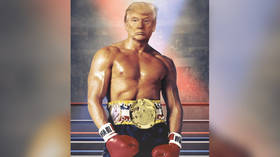
Trump tweets picture of his head on Rocky Balboa’s body

Trump tweets picture of his head on Rocky Balboa’s body, internet explodes in speculation

Nick Note: What a col president…. NOT! Try fucking idiot!!!

Morgan Stanley dismisses traders linked to concealment of  150 million-dollar loss: Bloomberg

(Reuters) – Morgan Stanley has fired or placed on leave at least four traders over alleged mismarking of securities that concealed losses of between $100 million and $140 million, Bloomberg reported on Thursday citing people familiar with the matter. The company is investigating the suspected mismarking that was linked to emerging-market currencies and the traders were based in London and New York, according to the report. A Morgan Stanley spokesman declined to comment on the report. The probe at the sixth largest U.S. bank relates to complex trading products including so-called FX options that give buyers the right to trade currencies at a set price in the future, according to Bloomberg.

Former Deutsche Bank Exec Connected to Trump Loans Dies by Suicide in Malibu

Thomas Bowers, who worked above Trump’s personal banker, was 55

A former Deutsche Bank executive who reportedly signed off on some of the institution’s unorthodox loans to Donald Trump killed himself in his Malibu home on November 19. Thomas Bowers, the onetime head of Deutsche Bank’s American wealth-management division, where he oversaw Trump’s private banker, committed suicide by hanging, according to Los Angeles County Medical Examiner-Coroner’s office. Bowers was 55.

Trump’s relationship with Deutsche Bank—which lent him around $2 billion after most other institutions had forsaken him for his history of defaults and bankruptcies—has come under investigation by two Congressional committees and the New York Attorney General, who are hoping the bank can shed light on Trump’s elusive finances, according to the New York Times. At one point, Bowers had a close connection to those finances.

Rosemary T. Vrablic, a managing director at Deutsche Bank who became Trump’s private banker in 2010 after being introduced by her client, Jared Kushner, reported directly to Bowers. Vrablic reportedly helped Trump secure loans from her bank, which Bowers approved—including more than $100 million to buy his Doral resort in Miami—even after Trump and Deutsche had to settle messy litigation over a Chicago loan that went bad.

“Rosemary is widely recognized as one of the top private bankers to the U.S. ultra high-net-worth community,” Bowers said in a press release when Deutsche Bank hired her in 2006.

Bowers hasn’t been employed by Deutsche since at least 2015, when he joined Starwood Capitol Group as COO, and was then appointed to the Board of Directors of Opus Bank in 2016.

Bowers isn’t the first Trump-connected Deutsche exec to commit suicide. In 2014, Deutsche derivatives analyst William S. Broeksmit, who reportedly had links to Trump and Russia, hung himself from a dog leash at his home in London.