Nasdaq 100 Climbs 2% as Yield Dip Boosts Stocks

(Bloomberg) — Tech companies led U.S. equity gains as a dip in Treasury yields provided a tailwind for stocks. Turkey’s markets tumbled after the central bank governor was ousted. The S&P 500 Index climbed, and the Nasdaq 100 added about 2%, as the 10-year U.S. Treasury yield fell from the highest levels in about 14 months, slipping below 1.70%. The bond market remains in focus this week amid a slate of auctions and moves by the Federal Reserve to let a key bank capital exemption lapse. chart: U.S. firms with dicey balance sheets eye best quarter versus those with strong ones © Bloomberg U.S. firms with dicey balance sheets eye best quarter versus those with strong ones

The dollar was little changed and oil fluctuated in the wake of its worst week since October. Small-cap shares underperformed. Last week’s Treasury selloff served as a stark reminder that investors remain concerned that a stronger economic recovery could fuel inflation, despite reassuring comments from policy makers. At the same time, traders are betting that growth will swell corporate profits as vaccines work to curb the global pandemic. “The rise in long-term yields has kind of affected every move we’ve seen in equity markets, from the big selloff in the higher growth stuff to the rotation into the more economically sensitive sectors,” said Ross Mayfield, investment strategy analyst at Baird. “Any time there is some rate stabilization, it’s kind of the spark for tech to capture a little bit of gains.” There’s no sign yet that faster economic growth will deliver unwanted inflation or a need to adjust monetary policy, Federal Reserve Bank of Richmond President Thomas Barkin said Monday. For unwanted inflation to take hold, expectations for price increases would have to really move and begin to get factored into business decisions and wage bargaining, he added. In European markets Monday, gains in tech were offset by declines in travel firms on the Stoxx 600 Index. Banks exposed to Turkey fell after President Recep Tayyip Erdogan moved to replace the country’s third central bank chief in less than two years, sparking a decline of 7% in the lira. Asian shares slipped.

These are some key events to watch this week:

Fed Chairman Jerome Powell and Treasury Secretary Janet Yellen are expected to make their first joint appearance before the U.S. House Financial Services committee to testify on Fed and Treasury pandemic policies Tuesday.The U.S. Treasury holds auctions of two-, five- and seven-year debt.EIA crude oil inventory report on Wednesday.On Friday, February U.S. personal income and spending data arrives.These are some of the main moves in financial markets:

Stocks

The S&P 500 Index increased 0.8% as of 12:56 p.m. New York time.The Stoxx Europe 600 Index rose 0.2%.The MSCI Asia Pacific Index fell 0.2%.The MSCI Emerging Market Index was little changed.

Currencies

The Bloomberg Dollar Spot Index slipped 0.1%.The euro strengthened 0.2% to $1.1932.The British pound fell 0.1% to $1.3859.The Japanese yen strengthened 0.2% to 108.72 per dollar.

Bonds

The yield on 10-year Treasuries fell four basis points to 1.68%.Germany’s 10-year yield declined two basis points to -0.31%.Britain’s 10-year yield decreased two basis points to 0.81%.

Commodities

West Texas Intermediate crude slipped 0.4% to $61.20 a barrel.Gold weakened 0.4% to $1,738.09 an ounce.
Exclusive: U.S. senators press Biden to set end date for gas-powered car sales

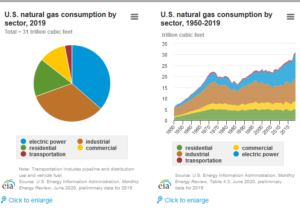
WASHINGTON (Reuters) – California’s two U.S. senators are urging President Joe Biden to set a firm date to phase-out gas-powered passenger vehicles as the White House grapples with how to rewrite vehicle emissions rules slashed under President Donald Trump. In an unreported letter going to Biden Monday, Democratic Senators Alex Padilla and Dianne Feinstein called on Biden “to follow California’s lead and set a date by which all new cars and passenger trucks sold be zero-emission vehicles.” They also urged Biden to restore California’s authority to set clean car standards. In September, California Governor Gavin Newsom signed an executive order directing the state’s air resources agency to require all new cars and passenger trucks sold in California to be zero-emission by 2035. Biden’s campaign in 2020 declined to endorse a specific date to end gas-powered vehicle sales, but he has vowed to dramatically boost electric vehicles and charging stations. In January, Biden said the administration would replace the federal government’s fleet of 650,000 vehicles “with clean electric vehicles made right here in America made by American workers.” The senators also say Biden should use a compromise deal that California struck with automakers including Ford Motor Co, Honda Motor, BMW AG and Volkswagen AG that falls between the Trump administration and Obama-era requirements. “We believe the national baseline should, at an absolute minimum, be built around the technical lead set by companies that voluntarily advanced their agreements with California,” Padilla, who replaced Vice President Kamala Harris in the Senate, and Feinstein wrote in the letter seen by Reuters. “California and other states need a strong federal partner.” Shortly after taking office, Biden ordered U.S. agencies to revisit fuel efficiency standards by July. The Trump administration in March 2020 finalized a rollback of fuel economy standards to require 1.5% annual increases in efficiency through 2026, well below the 5% yearly boosts in Obama-administration rules it discarded. Then President Donald Trump repeatedly targeted California, a Democratic bastion that tangled with Trump on multiple fronts during his tenure. The Center for Biological Diversity estimates the California deal improves fuel economy 3.7% year over year between 2022-2026. Biden also directed the Environmental Protection Agency and the National Highway Traffic Safety Administration by April to reconsider Trump’s 2019 decision to revoke California’s authority to set its own auto tailpipe emissions standards and require rising numbers of zero-emission vehicles. A White House spokesman declined to comment Sunday on the timing of any announcement on California’s vehicle authority. California’s vehicle emissions standards are followed by 13 other states and the District of Columbia accounting for more than 40% of the U.S. population. In January, General Motors said it aspires to end all gasoline passenger car and truck sales by 2035. Volvo, a unit of Zhejiang Geely Holding Group, said its entire car line-up will be fully electric by 2030 and Ford’s European lineup will also be fully electric by 2030. The Alliance for Automotive Innovation, a trade group representing major automakers, declined comment Sunday but last month backed nationwide rules to achieve vehicle emissions reductions roughly midway between the Trump and Obama standards. Nick Note: Dream dream dream. IF America went to the electric car. Generation capacity would have to be increased by 3 times. Now the next problem is the grid distribution system. As it exists now it cannot  provide that kind of power to the charge stations. It get worse. Most US houses are wired for single  phase 50 amps. In recent year they are wiring still singe phase but upped the service (to accommodate heat pumps and aircon) to only 100 amps. Reality is US households have more then one car,,,,, which the studies conveniently forget to calculate)  So that means 2 cars charging. If you do the math that would take 200 amp 3 phase service. So tell me who is going to pay the trillions it will take to fulfill this wet dream?  Here is the reality.. 50% of the houses in America are plumbed for natural gas. And nearly all cities. The US has a vast surplus of natural gas  it is the largest contributor to US energy needs. And sufficient supplies and infrastructure to meet demand for the next 100 years thanks to frack gas.. Natural gas cars pollute less then 10% of gasoline powered engines. And it  take a $2000 modification.  So why is America not going to a natural gas solitude that could be done for a few billion. Answer the grennis winnies are going to force a unworkable solution.

BioNTech founders Özlem Türeci und Uğur Şahin honored with Axel Springer Award

“It was very clear that there could be no better choice for the Axel Springer Award 2021 than the two founders of BioNTech,” said Mathias Döpfner, CEO of Axel Springer SE, at the start of the awards ceremony in the new Axel Springer building. Within just eleven months, Özlem Türeci and Uğur Şahin developed the world’s first vaccine against COVID-19 – giving millions of people back the hope of a free life. On Thursday evening, they were honored with the Axel Springer Award for their groundbreaking research, innovative strength and social responsibility. In her acceptance speech, Özlem Türeci said: “This award is a true honor for us, and it is a recognition of our work. However, it is also a recognition for all those who followed this call to action and made the impossible possible – to develop a COVID-19 vaccine in less than a year. (…) However, this award is not only about people. It also illustrates that science and the scientific community can truly make a difference. It also illustrates that joining forces is a tool, in particular if executed on every possible level with a sense of joint commitment and with a sense of urgency.”  

In an interview with Mathias Döpfner on stage, the two award winners, who see themselves as “innovators and problem solvers”, spoke about what drives them – and how they read about the cases in Wuhan at their breakfast table in January 2020 and decided to help. When asked how they stay so grounded despite of all their success, Uğur Şahin replied: “We focus on our work. We really love science. We really love working with scientists and trying to find out the truth and coming up with solutions.” In his laudatory speech the Austrian chancellor Sebastian Kurz described what makes BioNTech so special: “A committed team with world-leading know-how, and two founders who have put their whole heart in this effort and stayed humble in spite of all the success. In a world full of noise and speculation such an attitude is refreshing. And combined with the world-changing results it is extremely impressive.”  Surprise guest Hans Hengartner, Professor at the Medical Faculty of the University of Zurich and in the Department of Biology at ETH Zurich, who has been a long-time companion of the two laureates, said: “Having an impact on patient’s lives and public health is at the end the greatest gain and holy grail of science. Your dedication and your curiosity combined with the highest ethical standards, your modesty and gratitude make you outstanding scientific leaders.”  There were congratulatory messages to the award winners from many parts of the world:  Nick Note: how come the worlds great people are obscure. And Lady GAHGAH and other disgusting people are the heroes to our youths.  Pretty boys and pretty girls besides fucking a lot usually accomplish little in life. Notice how this couple have no children.. And billy bob and the trailer trash and the hood dwelers have many children who have never met their father……. We are breeding savages with low IQ’s. And the genies are not replacing themselves.


BioNTech founders predict end to lockdowns by fall

Ugur Sahin, whose firm developed one of the world’s first coronavirus vaccines, believes Europe and US will have the pandemic under control by the end of this summer. It comes amid criticism of the EU’s vaccination drive. Europe will be out of lockdown with the coronavirus pandemic under control by this autumn, the founder of Germany’s BioNTech said on Sunday. Ugur Sahin, whose company developed one of the first vaccines in the fight against COVID-19, told the Welt Am Sonntag newspaper that he believed the latest shutdowns would be the last. “In many European countries and the US, we will probably not need lockdowns by summer’s end,” he said. “There’ll be outbreaks, but they’ll be background noise. There’ll be mutations, but they won’t frighten us.” Sahin, who founded his firm with his wife Özlem Türeci, made his comments at a time when EU leaders are under fire for the bloc’s relatively slow vaccination drive, compared to countries such as the US, the UK and Israel. But he added the problems would prove temporary, insisting 70% of Germans should be vaccinated by the end of September. The husband-and-wife team have been awarded Germany’s Knight Commander’s Cross for their contribution to fighting the virus. Almost 9% of the German population had received at least one vaccine shot as of Saturday.  Meanwhile, Britain passed the half-way point with 50% of adults having received at least one dose. German Chancellor Angela Merkel is trying to find ways to speed up the country’s inoculation drive, refusing to rule out buying up Russia’s Sputnik V jab outside of the EU’s joint purchasing scheme. Merkel will hold talks with regional leaders on Monday to decide on whether to scrap plans to gradually reopen the economy as infection rates continue to rise. German authorities say the incidence level is above 100 cases per 100,000 population over a week. That is the threshold above which they say they must impose stricter distancing rules to stop the healthcare system from being overburdened. Bavaria’s conservative premier, Markus Soeder, a likely candidate to succeed Merkel as chancellor after the national election, told the Frankfurter Allgemeine newspaper that shutdown measures might need to stay in place for now. “A false move now risks turning this third wave (of the virus) into a permanent wave,” he said. “We have a tool: the emergency brake. It must be applied strictly.”  Nick Note: Great people doing great things. In the next 5 years many cancers and diseases will be cured by mRNA technology

Chicago suburb’s plan to pay Black residents reparations could be a national model

© Reuters/EILEEN MESLAR U.S. city poised to become the first to pay reparations to Black residents EVANSTON, Ill. (Reuters) – Decades ago, in the Chicago suburb of Evanston, Cordelia Clark ran a restaurant out of her kitchen and parked cabs for her taxi company in her backyard because Black residents were effectively barred from owning or renting storefronts in town. Now Evanston is poised to become the first U.S. city to offer reparation money to Black residents whose families suffered lasting damage from decades of discriminatory practices. “It’s about time that something has come from the hard work of African Americans in this city, proving that they should be treated as anyone else,” said Clark’s great-granddaughter, Delois Robinson, 58. Evanston’s initial approach to reparations is narrow and targeted. The city council, which has already committed $10 million over a decade to the effort, will vote on Monday to begin with a $400,000 round of payments. The first phase will provide $25,000 to a small number of eligible Black residents for home repairs, down payments or mortgage payments in a nod toward historically racist housing policies. In Congress, a bill that would establish a national reparations commission to study the issue has drawn around 170 co-sponsors in the House of Representatives, all Democrats. President Joe Biden has not endorsed the legislation but says he supports a study. Advocates plan to lobby the White House for executive action if the bill, as expected, fails to pass a divided Senate. Other cities, including Chicago; Providence, Rhode Island; Burlington, Vermont; Asheville, North Carolina; and Amherst, Massachusetts, have launched initiatives, though none has yet identified specific funding. California passed a bill modeled after the federal legislation, and lawmakers in New York and Maryland have introduced similar measures. Private institutions have also announced campaigns. The Jesuit order of Catholic priests last week pledged $100 million to benefit the descendants of the enslaved people it once owned. “Reparations is the public policy prescription that addresses – and redresses – systemic racism,” said Ron Daniels, who oversees the National African American Reparations Commission, which consulted with Evanston on its proposal. The practicality of implementing reparations programs, especially on a national scale, is still a matter of debate. Reuters/Ipsos polls taken in June 2020, at the height of racial justice protests, found only one in five respondents agreed the United States should pay damages to descendants of enslaved people. Some opponents ask whether taxpayers can afford to pay out what could be billions, or even trillions, of dollars. Others question how eligibility for such programs would be determined, whether by race, ancestry or evidence of discrimination. In Evanston, Black residents are eligible for the housing program if they, or their ancestors, lived in the city between 1919 and 1969 or if they can show they suffered housing discrimination due to the city’s policies. The recipients will be randomly selected if there are more applicants than available funds in the housing program.  Evanston, home to Northwestern University, lies between Chicago to its south and the wealthy North Shore suburbs along Lake Michigan. About 16% of its 75,000 residents are Black. As across the United States, Blacks in Evanston were subjected to “redlining,” a practice in which banks refused to make housing loans in predominantly Black neighborhoods. That kept Black residents from home ownership, a key source of wealth. The impact of historic and systemic discrimination on Evanston’s Black community persists. The Fifth Ward, where Robinson’s great-grandmother ran two businesses out of her home, is predominantly Black and struggling with inferior infrastructure. “We’re trying to catch up from hundreds of years of being suppressed, and its just hard to catch up without some assistance,” said Evanston resident and real estate agent Vanessa Johnson-McCoy, who is Black. The city’s campaign will draw from a new tax on legalized marijuana. Supporters say the funding mechanism is particularly apt, given how devastating the country’s criminalization of marijuana has been to Black communities. Evanston Rejects Racist Reparations, an opposition group, has noted that the initial payments will cover only 16 households. The group also opposes restricting that money to housing needs. “True reparations repair you – you get a chance to say what it is that repairs you,” said Rose Cannon, a member of the group, who is Black. National advocates say viewing reparations as only cash payments is far too reductive and that there is a need for policies that tackle the institutional racism that created the inequities in the first place. “These vestiges have to be addressed – or they will continue on into the future, no matter how many equity programs are in place,” said Kamm Howard, co-chair of the National Coalition of Blacks for Reparations in America, or N’COBRA. Even in cities facing limited resources, local governments can still make restitution by updating school curricula, improving business development, providing housing opportunities and offering apologies for past racism, Howard said. Evanston Alderman Robin Rue Simmons, who is Black, spearheaded her city’s initiative. She sees the upcoming payments as a critical first step. “This is about our humanity,” she said. “It’s overdue, and the time is now.”  Nick Note: I am arranging my DNA test now!

Miami Beach under state of emergency as Florida reaches 2M COVID cases

March 20 (UPI) — The city of Miami Beach declared a state of emergency Saturday over concern about spring break crowds spreading COVID-19 Saturday and the Idaho legislature moved to a recess due to an outbreak among lawmakers. Miami Beach Mayor Dan Gelber announced an 8 p.m. curfew for the South Beach entertainment district during a Saturday-afternoon news conference and said shore-bound traffic on the city’s causeways would be shuttered. Both measures will be in effect for at least 72 hours, but officials may extend the state of emergency. “As we hit the peak of the peak of spring break, we are quite simply overwhelmed,” City Manager Raul Aguila said, who also said that on Friday night “you couldn’t see pavement and you couldn’t see grass” due to crowding in the area. Nick Note: Its pretty apparent mankind cannot bunch up. These crowd events are where the spreading is originating from. Get vaccinated but do not let your guard down. Theaters, concerts, sporting events and crowds should be avoided. If you are in a mixed environment (vaccinated and unvaccinated) where your ugly mask. The good news is among family and friends who are vaccinated (and are not going to risky environments ) you are probably safe. We are watching the genetic mutations (variants) closely. So far none of them in wide circulation pose a significant threat to vaccinated individuals. That will change and we will have to get a booster shot. Think of it as the yearly flue vaccine….

Fed Will Need to Buy Bonds as Stimulus Boosts Yields, Dalio Says

The U.S. Federal Reserve will need to buy more bonds as an oversupply of Treasuries drives up yields, said Ray Dalio, founder of Bridgewater Associates. The recent fiscal stimulus announced by the Biden administration will result in more bond sales to finance the spending, worsening the “supply-demand problem for the bonds, which will exert upward pressure on rates,” Dalio said Saturday on a panel at the China Development Forum, an annual conference hosted by the Chinese government. That will “prompt the Federal Reserve to have to buy more, which will exhibit downward pressure on the dollar,” he said. Nick Note: The fed in not Not NOT going to raise rates. And their is no No NO inflation… Just the opposite we are in a massive deflation and the only way out is negative interest rates. So what is going on. Pretty simple we are being tortured by the hedge funds. Reality is massive buying of stocks and stock funds are occurring as we speak. And the Algo guys are just taking the market the opposite way. This squeeze will not last much longer….

Pelosi Kicks Off Infrastructure Debate, Teases ‘Big, Bold, and Transformational’ Package

House Speaker Nancy Pelosi (D-Calif.) said Friday she has directed key Democratic lawmakers to work with Republicans on drafting the next big legislative push from Congress—the much-anticipated infrastructure package. Pelosi said it would be “big, bold, and transformational” but it is also drawing scrutiny on how it will be paid for. Pelosi made the announcement in a statement infused with hope for bipartisanship, which fell short in the American Rescue Plan. Democrats passed the $1.9 trillion package along strictly partisan lines, with Republicans denouncing it as a “liberal wish-list” that was packed with non-pandemic related spending. “Building our transportation system has long been bipartisan,” Pelosi said. “It is our hope that spirit will prevail as we address other critical needs in energy and broadband, education and housing, water systems and other priorities.” Fresh off the American Rescue Plan clearing the Senate through a budget reconciliation process that let Democrats avoid having to get any Republican buy-in, Democrats are anxious to get some members of the GOP on board, both to satisfy optics and to avoid taking the drastic step of removing the filibuster.

A big question mark remains in how to pay for the massive boost in spending that the infrastructure package—which Pelosi called “bid, bold and transformational”—would surely entail. Concerns about the topline cost and competing visions for how to raise the money have prevented Congress from approving a big infrastructure package for more than a decade.

So far, Democrats have been careful to avoid putting a price tag on the initiative, which is rumored to be worth at least $2 trillion. Rep. John Garamendi (D-Calif.), in an interview with the Sacramento Bee, said that Biden is considering raising taxes as a way to pay for the infrastructure plan—including an excise tax on fuel, some form of a user fee for electric vehicles on highways, and a carbon tax. Garamendi did not provide specifics on taxes, nor on the overall cost of the package. “No price tag right now, because we’re going at this from the bottom up,” Garamendi told the outlet. “We’ll say, ‘what’s the cost of broadband, what’s the cost of repairing bridges?’ and go from there.” Pelosi, in her Friday statement, said she hoped the measures will address transportation as well as “other critical needs in energy and broadband, education and housing, water systems, and other priorities.” During his presidential campaign, Biden pledged to invest $2 trillion in fixing highways, bridges, and airports; building climate-resilient homes; wiring cities for broadband internet; and encouraging the manufacturing of fuel-efficient cars and installing electric vehicle charging stations. Nick Note: the infastructure rescue is in essence another happy check of 3 trillion dollars. They will get something through.

Money flows into U.S. equity funds climb to a five-week high: Lipper

March 19 (Reuters) – Investment flows into U.S. equity funds jumped to a five-week high in the week ended March 17, buoyed by optimism over a massive stimulus package and on expectations that the Federal Reserve’s monetary policy stance would remain dovish.

U.S. equity mutual funds pocketed a net inflow of $20.1 billion in the week, which marked a sixth straight week of net buying, data from Refinitiv Lipper showed.

The inflows were led by U.S. small cap funds and mid-cap funds, seeing net purchases of $3.6 billion and $2.1 billion respectively. On the other hand, large-cap funds had an inflow of just $251 million. Among sector funds, investors turned net buyers of tech funds this week, purchasing $832 million, as tech stocks appeared attractive at lower valuations after witnessing sharp selling in the prior weeks. Investors were sanguine ahead of a two-day Fed policy meeting at which the central bank signalled its intent to keep rates near zero until at least 2024, also predicting a fast economic recovery from the pandemic. However, U.S. stocks tumbled on Friday, with banks leading the way after the Fed let expire a temporary capital buffer relief put in place to ease a pandemic-driven stress in the funding mark. Meanwhile, investors bought $9.72 billion in U.S. bond funds in the week, compared with $1.32 billion in the preceding week. U.S. Taxable bond funds had an inflow of $7.9 billion, while U.S. municipal funds saw an inflow of $9.3 billion. Investors turned net buyers of U.S. High yield funds, buying $260 million, after dumping $5.5. billion in the last week. Nick Note:  First i heard dueling banjos and then a flash of light ripped across my computer. and then the CFD’s coming off a 12700 low and shooting up to the sky in my dream. I am sorry i could not help myself…. The idea of a bunch of normal folks screwing wall street city slickers investment funds in the ass overwhelmed me!

US economic recovery far from complete – Powell

Washington — The coronavirus pandemic inflicted a “cruel and uneven toll on lives and livelihoods” across the United States, head of the Federal Reserve Jerome Powell (pictured) told the Wall Street Journal on Friday. The official stated that the central bank and the government acted together to limit the long-term effects of the “unprecedented” downturn, with more than half of the initial job losses being recovered. The arrival of COVID-19 vaccines has also helped “brighten” the economic outlook, he added.

“But the recovery is far from complete, so at the Fed we will continue to provide the economy with the support that it needs for as long as it takes,” Powell concluded.

“The economic recovery remains uneven and far from complete, and the path ahead is highly uncertain,” Powell said in written testimony to the Senate Banking Committee. Powell’s comments are in contrast to the increasing optimism among many analysts that the economy will grow rapidly later this year. That outlook has also raised concerns about a potential surge in inflation and fueled a sharp increase in longer-term interest rates this year. Many economists say they think the Fed’s continued low rates, further government financial aid and progress in combating the viral pandemic could create a mini-economic boom as soon as this summer. “Mr. Powell presumably wants to try to persuade markets that a strengthening economy does not necessarily mean that rates have to rise,” Ian Shepherdson, chief economist with Pantheon Macroeconomics, told investors in a note. “Good luck with that when the post-Covid surge in activity become clear.” Financial markets fell modestly in morning trade, with the S&P 500 and Dow stock indexes both down less than 1% and the tech-heavy Nasdaq down 242 points, or 1.8%.Powell acknowledged the potential for a healthier economy. But he stressed the challenges caused by the pandemic, especially for unemployed Americans. Nick Note: do not let the hedge funds shit you. Rates are going no where and certainly not enough for the fed to take the pedal off the metal. Get ready for the next UP leg of the greatest bull market ever. Interest rates on the short side are as close to zero as you can get. And as long as you stay low, have a economic recover and happy checks out the ass. Its zoom zoom zoom. And you are going to love this next bit…. Stimulus is far from over…… Comrade!