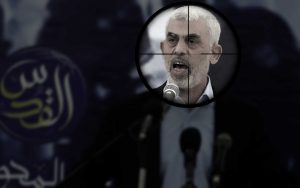
US Secretary of State Antony Blinken left the Middle East late on Tuesday having failed to secure a deal to halt fighting between Hamas and Israel, highlighting how the two sides remained sharply divided despite US officials’ insistence that an agreement was close. After a day spent meeting Egyptian and Qatari officials, Blinken reiterated that Israel had agreed to what the top US diplomat called a “bridging” agreement that would create space for the two sides to hammer out the details of a ceasefire introduced by President Joe Biden in May. Now it was Hamas’s turn, he said. “Time is of the essence,” Blinken told reporters on the airport tarmac in Doha, minutes before beginning the trip home to the US. “Israel has now accepted that proposal — I heard that directly from Prime Minister Netanyahu yesterday — and we hope and expect Hamas will do the same.” It was Blinken’s ninth trip to the region since the conflict began with Hamas’s 7 October attack on Israel, and the result was just the same: Israel and Hamas were unable to set aside their disagreements to halt the fighting. Stymied in the push for an enduring ceasefire, Blinken had come to the region this week with a more modest proposal aimed at building common ground and easing the violence.
He said Israel must preserve its “strategic security assets,” mentioning its seizure of the Philadelphi corridor and the Rafah border crossing with Egypt earlier in the war. That comment drew a rebuke from a senior State Department official, who told reporters travelling with Blinken that “maximalist” statements from the Israeli leader weren’t constructive.
Looming in the background is the threat of an attack from Iran, which has sworn to retaliate against Israel for the assassination of senior Hamas leader Ismail Haniyeh in Tehran late last month. Israel has declined to take responsibility for the attack.
Iran said its response to the alleged Israeli killing of a Hamas leader in Tehran could take a long time, signalling that the Islamic Republic would not rush the expected retaliation that had raised fears of a regional war in the Middle East. “Time is on our side and it’s possible that the waiting period for this response will be long,” Islamic Revolutionary Guard Corps spokesperson Ali Mohammad Naeini was cited as saying by Iranian state TV.
NN BlackMask Pod Cast:
long live the king