(Bloomberg) — The US and Iran remain at loggerheads over key details of an emerging deal to revive a landmark nuclear agreement and may need several weeks to resolve their differences, according to officials familiar with the talks. Expectations of an imminent breakthrough grew as Washington and Tehran responded to a “final” European Union proposal that would ease sanctions on Iran’s economy, including oil exports, in return for scaling back its advancing atomic program. One senior European official said the sides have never been closer to rebooting their 2015 accord, echoing comments by a top Biden administration adviser.
Yet two other officials with knowledge of the negotiations said clashes continue over international monitors’ investigation into the Islamic Republic’s past nuclear work, and economic indemnities demanded by Tehran if a future US government exits the agreement, as then-President Donald Trump did four years ago. All the officials asked not to be identified in exchange for discussing sensitive information.
The talks are being closely watched by oil and gas traders — and politicians facing a public backlash as high energy prices send inflation spiraling around the world. A deal could release millions of barrels of oil and refined products that Iran has stored since the Trump administration re-imposed US sanctions in 2018. NB: their really are not the millions of barre of crude oil sloshing around Iran. China has helped Iran out of that problem. BUY if we get a Iran deal the persecution could knock $10 off the oil price. That is why we are using a strategy that takes a deal that is not a done deal into account… See continuing trade updates for details NB:Their are several more documents and videos to be see after the “more” button. You will find this information particularity noteworthy if your in oil .
While parties to the talks haven’t publicly commented on the details of recent developments, there’s a sense that Tehran faces pressure to concede more ground. This month, it dropped a demand that the US remove elite Iranian forces from a list of foreign terrorist organizations. “The ball is in Iran’s court,” French President Emmanuel Macron said on Friday during a visit to Algeria. A White House National Security Council spokesperson acknowledged that gaps remain in the talks and said the US is continuing to negotiate. The spokesperson, who declined to comment further, said that Iranian centrifuges would be removed and that even if Iran abandoned the deal, it would need six months to pursue a nuclear weapon. Iran said Wednesday it was reviewing the US response to the EU plan and would comment once the assessment is complete. It gave no further details except to signal that the back-and-forth was likely to continue. The International Atomic Energy Agency, whose inspectors have been probing uranium traces detected at several undeclared sites for more than three years, holds two key meetings in September that will be attended by senior officials from all the parties to the original 2015 agreement: China, France, Germany, Iran, Russia, the UK and US. The NSC spokesperson said Iran needs to answer the IAEA’s questions and the US is unbending in its support of the agency’s independence. The IAEA investigation has emerged as a major point of contention and obstacle to progress in recent weeks. But the agency’s director general, Rafael Mariano Grossi, suggested this week during an interview on PBS that a resolution to the investigation is possible. “We are going to get there,” said the Argentine diplomat, adding that reviving the nuclear accord will allow IAEA monitors to resume expansive surveillance and snap inspections. Iran wants to see how the agency’s board of governors treats the probe at a week-long meeting convening Sept. 12 in Vienna. Officials said that while it’s unlikely the IAEA will completely drop it, investigators may be able to conclude their work within the framework of the nuclear deal. Iran responded to Trump’s exit by massively expanding its uranium enrichment, producing material just below the purity levels required for nuclear warheads. Tehran denies its atomic program is intended to produce weapons, but its advances alarmed regional rivals including
Even if Washington and Tehran agree to revive the accord, implementing it will be a challenge, according to the European official, implying that a full Iranian return to oil markets would take months.
That’s a problem for US officials walking a negotiating tightrope. Any additional concessions made to Iran raise the prospect of triggering a new review among skeptical bipartisan members of Congress. The issue has the potential to spill into US midterm elections in November, when the Biden administration risks losing control over the Senate, especially if a deal is yet to deliver cheaper gas for American consumers.
Israeli jets entered Iranian airspace | Lapid urges Biden to not sign nuclear deal
Israel, which opposes resurrecting a deal it says will eventually strengthen Tehran militarily. The US this week carried out airstrikes in eastern Syria against groups tied to Iran’s Islamic Revolutionary Guard Corps after rockets were fired at two bases where Americans are stationed. Iran is a key ally of Syrian President Bashar al-Assad. The Biden adminsitration denied that its strikes are linked to the talks. Regional attacks by Iran and its proxies have in the past escalated during periods of raised tensions over nuclear negotiations, though recent weeks have been relatively quiet.
Israel and the US are secretly preparing to attack the nuclear facilities in Iran
Intelligence agencies report during the past year Israel carried out a huge air maneuver in which fighter jets of all types participated • According to the reports the aircraft passed more than once within the range of the Russian and Iranian radars • Arab source: “The parties are preparing to strike at the Islamic Republic if the negotiations fail”
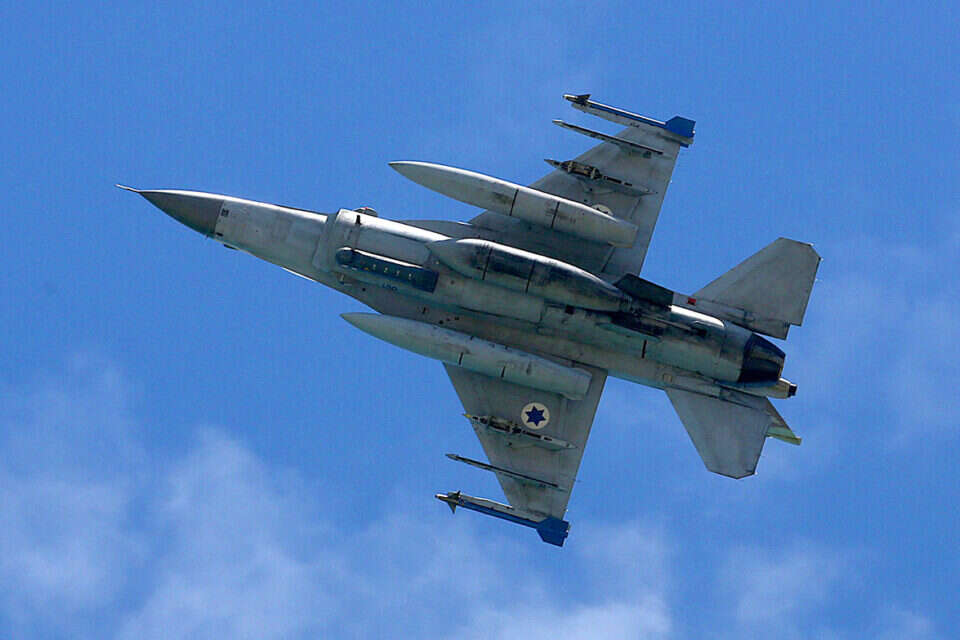
Israeli stealth planes passed through Iranian territory:
During the past year Israel allegedly carried out a huge air maneuver in which fighter jets of all types participated, including drones and refueling planes. According to the report, some of these maneuvers took place in the Mediterranean and elsewhere in the Middle East. Israeli stealth planes of the American F-35 type passed through Iranian airspace more than once in the last two months – and penetrated the range of Russian and Iranian radars.
Let’s recall that there has been tension between Iran and Saudi Arabia in recent years, partly due to Riyadh’s own fear of the nuclear program.
At the same time, it was reported that the Israeli Navy is expanding its establishment in the Red Sea on the one hand and off the coast of Lebanon on the other. A joint maneuver was mentioned for the armies of Israel, the United States and other countries in the Mediterranean Sea that practiced the protection of naval facilities. Israeli submarines are carrying out espionage and surveillance missions in the Red Sea for an Iranian spy ship called “Bashad” and other vessels. The US carried out a secret maneuver to attack Iran from the sea and the land. Last night (Tuesday) that Israel and the US carried out a secret maneuver in the Red Sea to attack Iran from the sea and land – and take over Iranian warships in the Persian Gulf. Israel confirms that the parties are preparing to harm Iran if the negotiations to return to the nuclear agreement fail, and that Israel will receive support for such an operation. Israel and the US are carrying out several joint maneuvers secretly and publicly, the purpose of which is to prepare for an attack on Iran’s nuclear facilities – when they are forced to do so. It can be concluded that a Israel attacks Iran’s nuclear program, will not be on It’s own. NN: An attacks is plausible and in advanced preparation stages. Israel will be up front and personal in said attack……. but with a little help from its friends…. With plausible deniability of course
Saudi answer to Iran: Pakistan may transfer ready-to-use atomic bombs
The secret nuclear deal between Riyadh and Islamabad: while the West fell asleep on guard, the kingdom secretly financed Pakistan’s nuclear program • If Tehran obtains the doomsday weapon – in Saudi Arabia they intend to “cash the check” and demand nuclear warheads from Pakistan • Former senior officials warn: despite the approach For Saudi Arabia – this is a dangerous scenario
Far outside the boundaries of media coverage, and outside the focus of attention of policy makers, who are preoccupied with Iran, a nuclear threat is developing closer to Israel’s borders: a series of former senior officials in the security establishment warn of the consequences of an unusual political alliance In the degree of closeness it expresses – between Saudi Arabia and Pakistan. According to the officials, in the event of an Iranian nuclear hack, Israel must prepare for a scenario in which Pakistan will transfer nuclear warheads to Saudi Arabia, or provide it with the knowledge and means necessary to create its own nuclear capability in a short time. The Saudi nuclear capability does not threaten Israel like that of Iran, but a scenario in which Saudi Arabia becomes a nuclear power carries significant dangers: first, it is an undemocratic country with the presence of elements with Islamist worldviews, and as such – its government may suddenly change and become hostile to Israel, As happened in the past in other countries in the region, such as Iran. Also, there is no guarantee that the interests of the current government in Riyadh will forever remain aligned with those of Israel. The third danger stems from the assumption that Saudi nuclearization will spur other countries in the region, such as Egypt, the United Arab Emirates and Turkey, to obtain a similar capability of their own, and the Middle East will become a nuclear gunpowder keg. Dr. Yoel Gozhansky, who is responsible for the Iran case at the former National Security Council, published an article in 2019 entitled: “Relationships between Saudi Arabia and Pakistan – the greater of the hidden than the visible”. This is the only academic article written in Hebrew in recent years on the relationship between the two countries, And this fact indicates the lack of attention to the issue in Israel. Gozhansky explains that the ties between the countries are extremely close, so much so that they were previously described as one of the closest relationships between countries in the world. At the base of this strategic alliance is a barter deal: Saudi Arabia finds in Pakistan – the second most populous Muslim country in the world, with 183 million Sunni Muslims – a counterweight to the influence of Shiite Iran. In return, impoverished Pakistan benefits from massive Saudi economic aid, and is given a central role in safeguarding Islam’s holy places and political influence in the Gulf.
The Saudi-funded development of the “Islamic bomb” on Pakistani soil allowed the Saudis to escape the international pressure of promoting a military nuclear program, and for the Pakistanis to gain deterrence against their great rival – India.
A complex and deep relationship “The relationship between Saudi Arabia and Pakistan is a significant strategic issue, which in Israel is not well known in depth,” said Dr. Guzhansky in a conversation with “Israel Hayom”. the years to stand by Saudi Arabia in the face of external threats. “Many Pakistanis work and live in Saudi Arabia, and the royal family has invested in the promotion of religion in Pakistan. The armies train together, and senior officials of the Pakistani army who retire are invited to Saudi Arabia, where they receive prestigious positions and live in luxury. It is a complex relationship, which has had some ups and downs – but it remains deep even today. “On this background, in the scenario of an Iranian hacking of the bomb, placing Pakistani nuclear weapons in Saudi Arabia or transferring nuclear warheads to Saudi Arabia are reasonable scenarios,” Guzhansky estimates. “These are not the only options, but Israel must prepare for them. We only look at Iran, and we miss significant things. Despite the political rapprochement, we must understand that not all of Saudi Arabia’s interests coincide with ours, and therefore the Saudi preoccupation with nuclear weapons should worry Israel.” Brigadier General (Res.) Prof. Jacob Nagel, who served as head of the National Security Council, confirms Guzhansky’s words: “Saudi Arabia probably did not invest in the Pakistani nuclear program for heaven’s sake. What the Saudis can do, if they want, is to pick up the phone to the Pakistanis And tell them: remember our generous financial help? It’s time to pay back.” However, while this option is probably available to the Saudis, they may prefer to use the Pakistanis to achieve “threshold state” status. “In light of the state of the discussions between the superpowers and Iran on returning to the nuclear agreement, which will undoubtedly bring Iran to the status of a threshold state, an extensive nuclear arms race is expected to arise in the Middle East. In such a situation, Saudi Arabia will be among the first countries to feel threatened by Iran, and it will not want to be left behind. Amidror, Brigadier General (ret.) Yossi Kupervaser, the former head of the research division at the AMN, believes that the Pakistanis may provide the Saudis with the “complete package” – warheads that are already mounted on missiles and ready for use.