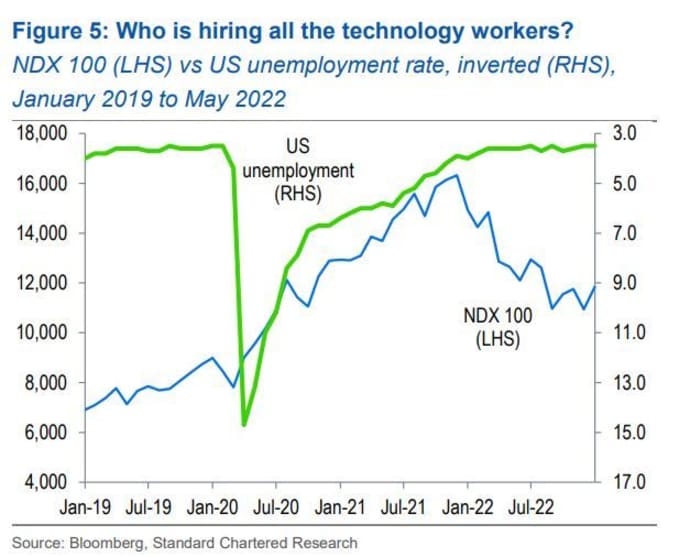
Investors have got the jitters as a big week unfolds — several central bank meetings including the Fed, earnings from Apple and Amazon.com, and jobs data. Yikes. The Fed and the stock market are set for a showdown this week. What’s at stake. Any investor out there who isn’t nervous, perhaps should recheck his gut, says Standard Chartered’s global head of research, Eric Robertsen. “We do not expect an extreme economic hard landing, but we think the proverbial Goldilocks scenario is too optimistic,” Robertsen told clients in a Sunday note, adding that they are “now turning cautious on risky assets.” Robertsen explains the two sides of an important market debate right now — the just-right Goldilocks crowd and the “recessionist” bears. The former is growing confident with their view that inflation and central bank tightening is nearing a peak and any recession will be “shallow and short-lived,” he explains. The reduction of that “central-bank driven left-side tail risk” matters more to markets than any slowdown, that side also says. “A central bank pause, declining inflation, and attractive yields and valuations will prompt investors to reduce their underweight exposure and increase their allocation to risky assets, the Goldilocks camp argues,” he said. He says the varied year-to-date performance across asset classes reveals 2022’s laggards are 2023’s outperformers so far. “This suggests that short-covering may be a significant contributor to performance so far, rather than overwhelming faith in the Goldilocks economy. “The outperforming sectors are distinctly pro-cyclical – which is surprising with recession themes all the rage,” he says, noting that “ominous message about the health of the labor market” from tech job cuts.
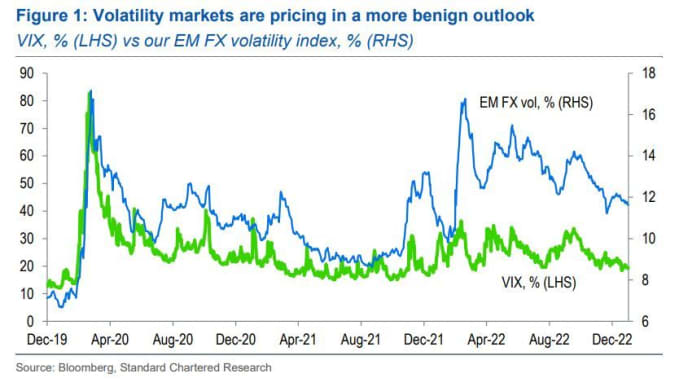
On the other side, the bears say investors are overstating a decline in volatility and understating economic risks, writes Robertsen, who is on board here, hence his caution on riskier assets. “Real-time indicators are showing a loss of economic momentum, while others – such as the U.S. labor market – have yet to reflect growing economic headwinds,” he said. “Underlying the bear case is the view that we have yet to feel the full cumulative impact of the most aggressive monetary tightening cycle in decades.”He says “volatility measures have fallen too far and the improvement in
risky assets is due for a pause,” adding that the catalyst could be any number of things: aggressive rate cuts priced into the U.S. money-market curve that will be unwound, a too-tight move from the European Central Bank or even an actual tightening from Bank of Japan, for example.
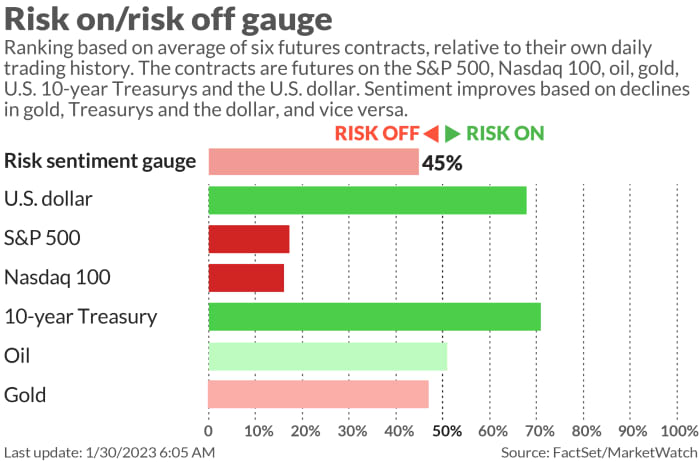
Risk assets may also struggle with the Fed’s message this week if it fails to reassure the rate-hiking cycle is complete, says Robertse,n who expects the central bank will push back on “aggressive easing priced into the money-market curve.”
NN: We are going to have to wait for the fat lady to sing.