Oil gained for a second straight session as technical levels exaggerated a rally on fresh tensions in the Middle East. “Crude is treading water as short-term fundamentals remain firm, with product tightness supporting crude demand while geopolitical headlines are mixed, with some concerns about potential Houthi attacks in the Red Sea driving modest caution,” said Rebecca Babin, a senior energy trader at CIBC Private Wealth Group. The number of tankers passing through the Bab el-Mandeb Strait has remained low after falling sharply in late 2023 amid Houthi attacks. Elsewhere, Iranian Foreign Minister Abbas Araghchi wrote in the Financial Times that Iran has “good reason” to doubt further dialogue with the US. Still, the market remains largely focused on supply-and-demand dynamics rather than geopolitics. Iran’s reluctance to close the Strait of Hormuz in response to US military strikes on its nuclear facilities raised investors’ confidence that energy infrastucture won’t be used as leverage in future military standoffs. At the same time, near-term demand in the US and China remains solid, while pockets of extreme tightness are emerging in the physical market.
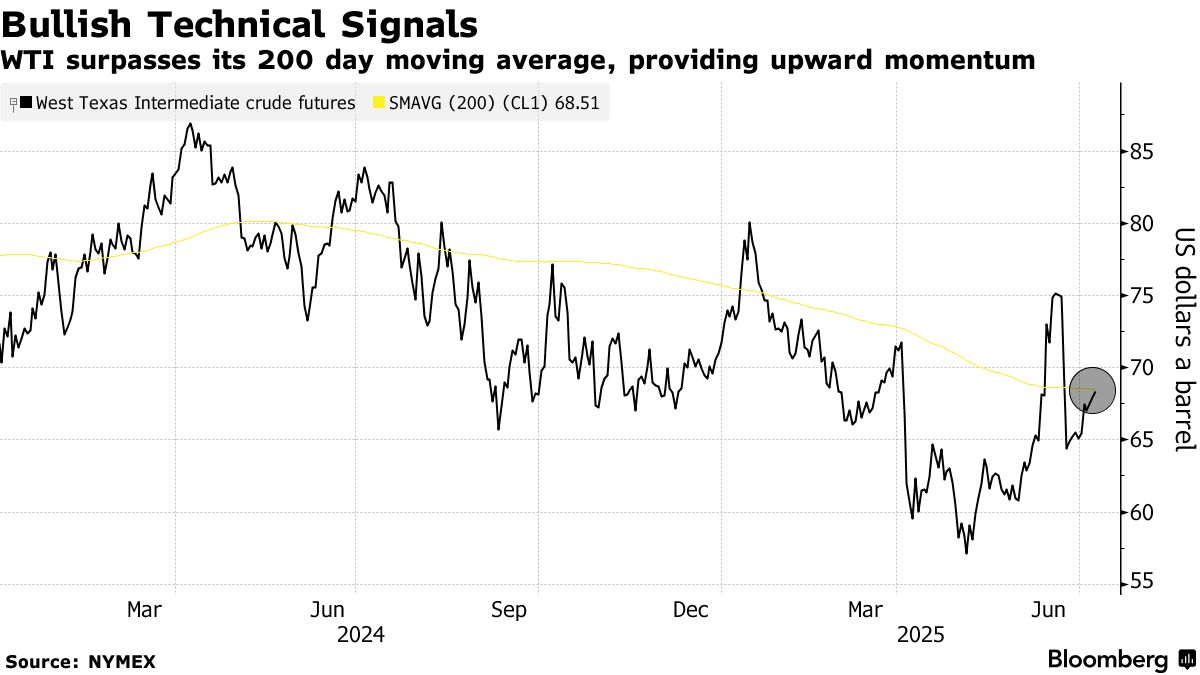
The rally was limited by the US unveiling a slew of letters warning key trading partners of high tariff rates, including 25% levies on goods from Japan and South Korea, muddling the long-term energy demand outlook for several major oil-consuming nations. US President Donald Trump said an Aug. 1 deadline was “not 100% firm” and signaled he might tweak rates further. Oil settled higher on Monday even after OPEC+ decided to increase production more rapidly than expected in August. Saudi Arabia raised the cost of crude for buyers in Asia by more than customers were expecting — a sign Riyadh is confident the market is strong enough to absorb extra supplies.
“The fundamental reality is that oil inventories remain low, and balances should tighten during the summer despite the OPEC+ increase,” Societe Generale SA said in a report. “The unwinding will show up in inventory levels, thus affecting prices and term structures, and the swoosh in the forward curve should eventually disappear.”
Never Mind:
Oil prices dip 2% with trade in focus
Crude oil prices slipped by more than 2% on Thursday after the newest tariffs imposed by United States President Donald Trump, including a 50% tariff on copper and a 50% trade duty on Brazilian exports. Investors also digested the latest World Oil Outlook 2050 report from the Organization of Petroleum Exporting Countries (OPEC), which saw an increasing demand in oil by year 2050, but cut its demand expectations for the next few years. West Texas Intermediate (WTI) for August’s deliveries dropped by 2.50% at 9:41 am ET, selling for $66.67 per barrel. Meanwhile, Brent for September’s settlements declined by 2.07% and went for $68.73 per barrel at 9:41 am ET.