- OPEC+ postponed its planned production increase, prioritizing price support over regaining market share.
- This decision caused a surge in oil prices, although some analysts believe the increase may not be sustainable.
- The long-term impact of OPEC+’s strategy remains uncertain, with analysts predicting a potential market surplus in 2025 if production cuts aren’t maintained.
Oil advanced after OPEC+ agreed to push back its December production increase by one month and tensions escalated again in the Middle East. Brent rose as much as 2% to more than $74 a barrel, while West Texas Intermediate climbed toward $71. The producer group had intended to begin returning 180,000 barrels a day from next month, but they will now keep supply restrained for the rest of the year. The group led by Saudi Arabia and Russia had intended to begin a series of monthly production increases by adding 180,000 barrels a day from December, but they will now keep supply restrained through that month, according to a statement posted on OPEC’s website on Sunday.
“Market conditions won out,” said Harry Tchilinguirian, head of oil research at Onyx Commodities Ltd. “OPEC+ showed it couldn’t ignore the current macroeconomic economic realities centered on China and Europe, which point to weaker oil demand growth.”
“For me, the impact is more important on sentiment than the numbers,” said Amrita Sen, director of research at consultant Energy Aspects Ltd. “The market has been incorrectly viewing OPEC+ as wanting to flood the market to regain market share,” but instead, their “primary focus remains keeping oil inventories under control.”
Meanwhile, Iran escalated its rhetoric against Israel with supreme leader Ayatollah Ali Khamenei warning of a “crushing response” in a speech on Saturday. The Wall Street Journal reported that Tehran told allies an attack would come after Tuesday’s US presidential vote but before January’s inauguration and wouldn’t be limited to missiles and drones, as two previous strikes were.
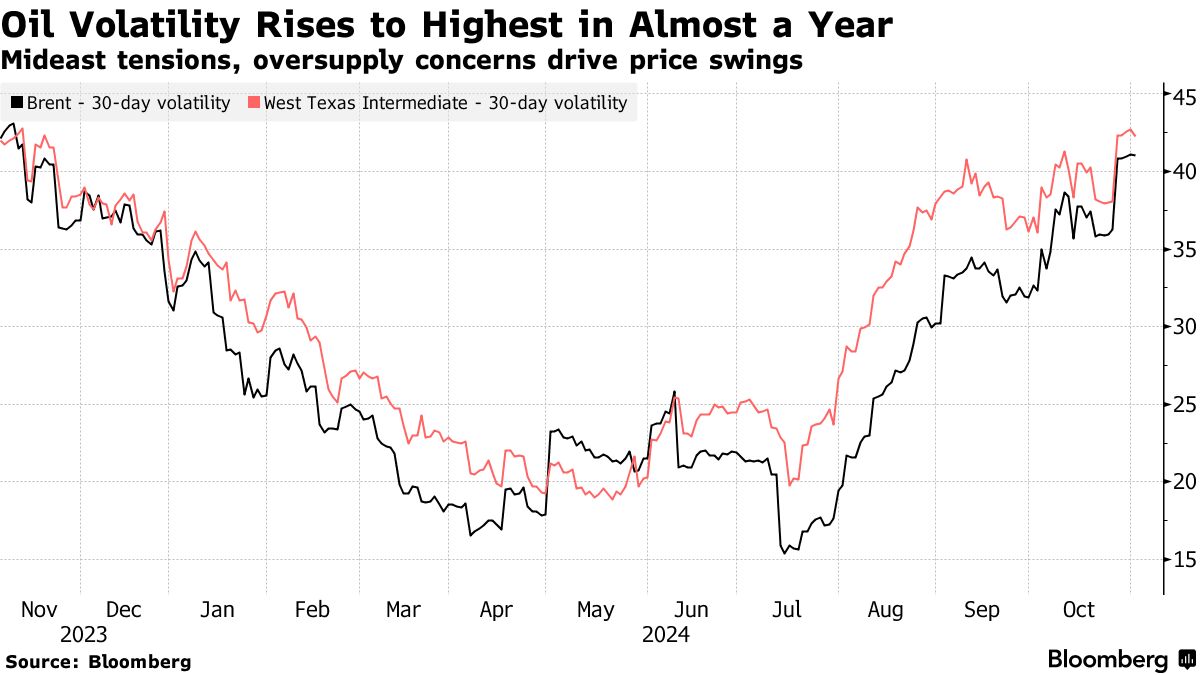
“Concerns that OPEC was poised to oversupply a fragile market have been weighing significantly on sentiment,” RBC Capital Markets LLC analysts including Helima Croft said in a Nov. 3 note. “A continuing cycle of retaliatory strikes between Israel and Iran raises the risk that oil facilities will be caught in the crosshairs.” Oil prices have become increasingly volatile, with concerns of an oversupply next year and lackluster demand in top importer China weighing against unrest in the Middle East, which supplies about a third of the world’s crude. While futures fell early last week after the strike by Israel on Iran avoided energy infrastructure, they later pared the decline on concerns the move lower was too strong. The oil market has a number of key events on the horizon this week, including the US election and a meeting of China’s top legislative body. Saudi Aramco is also scheduled to release its official prices for December, with the producer expected to lower its rates for Asia, according to a Bloomberg survey.
OPEC chief remains optimistic on global oil demand
Organization of the Petroleum Exporting Countries (OPEC) Secretary General Haitham al Ghais said Monday that the group’s demand is currently buoyant in both the short and long term. Speaking at ADIPEC in Abu Dabi, Al Ghais expressed optimism about the global situation and dismissed concerns about a rebound in demand. At the same time, Al Ghais highlighted the need for balanced, practical energy policies that address energy security and emissions goals. He stressed that collaboration between the Global North and South is essential, noting that “no one-size-fits-all solution” exists for global energy needs.
NN AUDIO FILE