Oil Rises as API Reports Moderate Draw In Crude Oil Inventories

Crude oil inventories in the United fell by 4.7 million barrels for the week ending December 6, according to The American Petroleum Institute (API). Analysts had expected a draw of 1.85 million barrels. For the week prior, the API reported a 499,000-barrel build in crude inventories. So far this year, crude oil inventories have fallen by roughly 8 million barrels since the beginning of the year, according to API data. On Tuesday, the Department of Energy (DoE) reported that crude oil inventories in the Strategic Petroleum Reserve (SPR) rose by 0.5 million barrels as of December 13. SPR inventories are now at 393 million barrels, a figure that is about 46 million above its multi-decade low last summer, yet still 242 million down from when President Biden took office.

At 4:44 am ET, Brent crude was at $73.31.  The U.S. benchmark WTI was trading at $70.61 not a very big move. With volume low because of the pending holidays its hard to get a read on the short term trend

Gasoline inventories rose this week by 2.4 million barrels after last week’s 2.852-million-barrel increase. As of last week, gasoline inventories are 4% below the five-year average for this time of year, according to the latest EIA data. Distillate inventories rose by 700,000 barrels, after last week’s 2.452-million-barrel increase. Distillate inventories were about 4% below the five-year average as of the week ending December 6, the latest EIA data shows. Cushing inventories—the benchmark crude stored and traded at the key delivery point for U.S. futures contracts in Cushing, Oklahoma—rose by 800,000 barrels, according to API data, after falling by 1.517 million barrels in the previous week.

Israel accuses Turkey of aiding ‘jihadists’ in Syria

Israel’s Foreign Ministry accused Turkey on Tuesday of backing “jihadist forces that operate in Syria” while rejecting the Turkish Foreign Ministry’s previous statements regarding Israeli involvement in the war-torn country. “Turkey has systematically encroached on Syrian territory, a process that began with military operations in 2016, 2018, and 2019, and continues to this day,” the ministry wrote in a statement on X. It also blasted Ankara for using its proxies to occupy Syrian territory. “The last country that can speak about occupation in Syria is Turkey, with 15% of Syria’s territory under the control of proxies operating under its patronage. There is no justification for the continuation of Turkish aggression and violence against Kurds in Syria,” the statement concluded. NN: Every time the Islamic savages have gone to war with Israel Jew bastards they have gotten their Mohammed asses kicked lost land and begged the UN to bail them out. Like my grandmother use to say the Jews are GODS chosen people. The only question is what are they chosen for?

Katz: Israel will have security control over Gaza

Israeli Defense Minister Israel Katz stated on Tuesday that following Hamas’ defeat, Israel intends to maintain “security control” over the Gaza Strip, ensuring “full freedom of action” in the territory. “We will not allow any terrorist organization against Israeli communities and Israeli citizens from Gaza. We will not allow a return to the reality before October 7th,” Katz wrote in a post on X. The defense minister previously noted that an agreement between Israel and Hamas is “possible” which could include the release of all the hostages from the Palestinian enclave.

US says it killed 12 ISIS operatives in Syria

The United States Central Command (CENTCOM) stated on Monday that it eliminated 12 “ISIS terrorists” in airstrikes conducted in Syria, which targeted “known ISIS camps and operatives.” “The strikes against the ISIS leaders, operatives, and camps were conducted as part of the ongoing mission to disrupt, degrade, and defeat ISIS, preventing the terrorist group from conducting external operations and to ensure that ISIS does not seek opportunities to reconstitute in central Syria,” CENTCOM said in a post on X, adding that there were no initial reports of casualties among civilians. The statement also noted that the airstrikes were conducted in “former Regime and Russian controlled areas” in Syria. Last Friday, United States Secretary of State Antony Blinken said that the US and Iraq are “determined” to prevent the resurgence of ISIS in Syria, following the toppling of former Syrian President Bashar al-Assad’s regime.

Israel fired 61 missiles across Syria…… Hezbollah lost Syria supply route after Assad’s fall, chief says

The Syrian Observatory for Human Rights (SOHR) said on Sunday that the Israeli military carried out a series of airstrikes in Syria, including near Damascus, Homs and Hama. The United Kingdom-based monitor said Israel launched 61 missiles, bringing the total number of strikes since the fall of Syrian President Bashar al-Assad to 446. Israel maintains the strikes are aimed at destroying military facilities and equipment belonging to Assad’s army or Iran to stop “extremists” from using it.

Hezbollah lost Syria supply route after Assad’s fall, chief says

Hezbollah’s Secretary General Naim Qassem stated on Saturday that the militant group lost its supply route through Syria following the collapse of President Bashar al-Assad and added that it would now seek alternative routes. “We hope that this new party in power will see Israel as an enemy and not normalize relations with it,” Qassem said in his first address since the rebel group in Syria toppled Assad’s regime, warning that Syria is facing a “dangerous expansionist enemy” following Israel’s capture of a buffer zone in the occupied Golan Heights.

Nuclear chief: Tehran won’t restrict IAEA’s access to nuclear sites…….Iran FM: Window for nuclear diplomacy still open

Mohammad Eslami, head of the Atomic Energy Organization of Iran, stated on Saturday that Tehran will not restrict the International Atomic Energy Agency (IAEA) from accessing and inspecting its nuclear sites. “We operate within the framework of safeguards, and the agency also acts according to regulations—no more, no less,” Iranian media quoted Eslami as saying. “When you engage in nuclear activities involving nuclear materials, scaling up operations naturally requires scaling up the level of inspections. This is normal,” he added. IAEA Director General Rafael Grossi recently reveal that Iran has consented to limit its uranium enrichment to 60%. In October, the agency reported that Iran’s stockpile of uranium enriched to this level had reached 182.3 kilograms, bringing it closer to the amount necessary to develop a nuclear weapon.

Iran FM: Window for nuclear diplomacy still open

Iranian Foreign Minister Abbas Araghchi said the window for nuclear diplomacy with the West is still open, “provided that there is a real will on the other side.” He said Iran is “fully prepared” for negotiations but that there is limited time for talks. His comments followed International Atomic Energy Agency (IAEA) Director General Rafael Grossi’s visit to Iran earlier this week. Araghchi conceded that the Joint Comprehensive Plan of Action (JCPOA), also known as the Iran nuclear deal, “cannot be revived in its existing form” but he said it can be used “as a reference and source, and we should definitely enter into negotiations to reach a possible agreement.” He added that Iran will adhere to the Non-Proliferation Treaty (NPT) and that it has “no problem” with cooperating with the IAEA if the agency is not “confrontational” toward Tehran.

Trump Orders Attack On Iranian Nuclear Sites, IDF To Assist U.S. Forces In Operation

Trump team eyes preemptive strikes on Islamic Republic’s nuclear sites

Ahead of his January 20 inauguration, President-elect Donald Trump is evaluating the possibility of preemptive strikes on Iran to stop its growing nuclear program, according to a Friday morning Wall Street Journal report. According to the WSJ, this move would mark a significant change from previously established US policy on diplomacy and sanctions when dealing with Tehran. The report outlines the Trump team’s evaluation of potential attacks on nuclear sites, indicating that members of the president-elect’s transition team are exploring this option. The same team is reportedly reviewing the aftermath of the fall of the Assad regime, determining the possibility of American forces in the region.

Transition team officials stated that the collapse of the Iranian axis and the sharp rise in enriched uranium pose significant risks and prompt critical questions about what factors could drive Iran’s rapid advancement, the WSJ added.

Two sources familiar with the matter told Reuters that Trump told Prime Minister Benjamin Netanyahu that he was concerned about Iran possibly going nuclear during his term and signaled that his team was examining military action that could prevent that. Trump would like to avoid the breakout of an additional war, particularly involving US forces. The report noted that launching an attack on Iran’s nuclear sites could put the US and Iran at risk of formal escalation.

nn blaskmask pod cast:

crippled  iran may go nuke… Trump has a plan

IDF discovers Hezbollah weapons despite ceasefire

The Israel Defense Forces (IDF) said Friday that despite the ongoing ceasefire, its 769th Brigade discovered a significant weapons cache, allegedly owned by Hezbollah, including Kornet missile launchers, AK-47 rifles, and anti-tank missiles hidden in mountainous terrain in southern Lebanon. The military said it continues targeting Hezbollah terror sites near the Israeli border. In addition, it also found a launch site used by Hezbollah to attack Israeli communities in the Upper Galilee. In another operation, RPG missiles and mortar shells were seized. The ceasefire reached by Hezbollah and Israel has been tense as it seems Israel is looking for justifications to continue carrying on military practices in the area.

Institutional traders are building long positions in crude oil

  • Kemp: institutional traders are building their positions in crude oil again.
  • Institutional traders also bought more oil in anticipation of the Trump presidency, which most seem to believe would involve a tightening of sanctions against Iran that would affect oil supply.
  • Some price forecasters are starting to revise their outlook for oil following OPEC’s decision to output.

OPEC+’s decision to delay a rollback of production cuts agreed last year has rekindled trader interest in the commodity with a view to a tighter supply picture in 2025. The latest news out of China could reinforce that interest, giving oil prices a chance to stage a last-minute recovery this year. OPEC+ agreed last week to postpone the start of bringing back production to the market to April 2025, with the full return to pre-agreement output levels seen no earlier than the start of 2027. The decision was prompted by stubbornly depressed prices, largely resulting from a trader perception of weak Chinese demand—and OPEC’s own outlook for global demand. This year, the cartel has revised its global oil demand projections five times, all downwards. The latest revision came just week, with OPEC revising its estimate by a sizable 210,000 barrels daily to 1.6 million bpd. For context, early in the year, OPEC expected global oil demand to grow by some 2.25 million bpd this year. Yet there are continued constraints on OPEC+ production, despite recovering output in Libya, and China’s latest import figures and news about a fresh package of stimulus being considered by Beijing to accelerate economic growth. Amid these developments, institutional traders are building their positions in crude oil again, energy market analyst John Kemp reported this week, citing hedge fund purchases totaling the equivalent of 29 million barrels of crude during the first week of December. The bulk of this, 26 million barrels, was in Brent crude, with the remainder in West Texas Intermediate. As a result, the total exposure of speculators to crude oil now stands at 157 million barrels, Kemp reported, which is the highest since early October. Traders’ renewed attraction to crude oil is hardly a surprise after months of price depression despite the OPEC+ cuts. The prolonged weakness of prices was repeatedly attributed to demand signals from China, with the overall perception being that the world’s largest importer has reached the end of its demand growth and from now on, the decline will be irreversible. This proved wrong last month, when Chinese crude oil imports reversed months of weakness to jump 14% over October levels, to 11.81 million barrels daily. The November figure will not be able to reverse the steady decline that China’s imports have demonstrated this year, which means the pressure on prices will remain for the rest of 2024, but the new year could bring changes, following Beijing’s clear intention to inject additional stimulus fuel into the economy to reach its growth targets. Yet institutional traders also bought more oil in anticipation of the Trump presidency, which most seem to believe would involve a tightening of sanctions against Iran that would affect oil supply, tightening the market further. Indeed, based on Trump’s track record with Iran, chances are that the new administration would seek to intensify the sanction pressure on Tehran, with the country’s oil industry the obvious target. In this context, some price forecasters are starting to revise their outlook for the commodity. Morgan Stanley recently updated its 2025 outlook for Brent, revising the price forecast higher on the grounds that the delay in OPEC+ supply cut unwinding would result in a smaller than previously expected global overhang. Citi, on the other hand, expects the overhang to be significant, to the tune of 800,000 bpd, which has given the bank reason to remain bearish on oil. The expectation of a supply overhang appears to be rather unanimous among analysts, with just a few suggesting the market could actually swing into a deficit in 2025 as demand surprises. It has already surprised, in fact. Although weaker than traders expected, China’s demand for oil remains on an upward trajectory—and that’s despite record-breaking EV sales that were supposed to sap that growth.

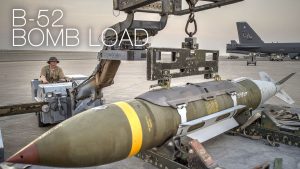
Trump’s team plans potential strikes on Iran

United States President-elect Donald Trump’s team is considering various options that could halt Iran’s nuclear program, including preventive airstrikes, The Wall Street Journal reported on Friday citing sources.

According to sources familiar with the subject, Trump’s advisers are worried that economic pressure on Tehran might not be a sufficient deterrent, and military actions could be necessary. Following the most recent events in Syria, certain members of Trump’s team started to review military operations against Iran’s nuclear facilities as an option more seriously.

Nevertheless, all discussions are currently in the early stages. One source mentioned that Trump recently told Israeli Prime Minister Benjamin Netanyahu he fears Iranians could produce a nuclear weapon “on his watch.”