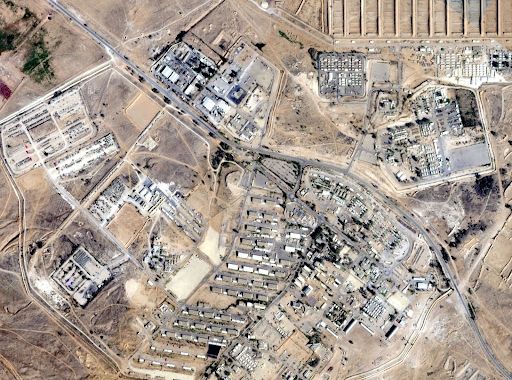
Mossad Chief David Barnea, Shin Bet Director Ronen Bar, and Israel Defense Forces (IDF) negotiator amid the conflict between the country and Hamas, Nitzan Alon, will travel to Cairo this weekend to discuss hostage release and exchange with the group, The Times of Israel reported on Friday, citing a source familiar with the matter. The date of the visit has not been specified, however, it was said it will likely be on Saturday. Earlier, Axios reported that United States Central Intelligence Agency (CIA) Director Bill Burns will go to Cairo to attend the negotiations between Israel and Hamas, held with the help of Egyptian and Qatari mediators.
Oil Prices Set for a Second Weekly Gain After Brent Breaks $91
Crude oil prices were on track to book their second weekly gain in a row, driven higher by geopolitics and supply concerns. Early on Friday morning, Brent was trading above $91 per barrel and West Texas Intermediate was closing in on $87 per barrel. The rally came amid reports that Russia may have temporarily lost as much as 15% of its refining capacity because of Ukrainian drone attacks and Iran vowed to exact revenge on Israel for the strike of its consulate in Damascus .“Oil prices look set for further upside in the short term as a more positive economic backdrop is joined by ongoing supply tightness and rising geopolitical risks,” analysts from ANZ said, as quoted by Reuters, revising their three-month price forecast for Brent crude to $95 per barrel. The wider Mideast tensions stemming from the Gaza war are probably at the highest in months,” Vandana Hari, founder of Vanda Insights, told Bloomberg. “Crude is reflecting that Mideast conflagration fear premium.” The latest from the Middle East is the news that the UAE is growing cold to Israel after several years of normalized relations. The reason for the change in attitude was the Israeli strike that killed seven aid workers in Gaza. Some reports said the Emirates were “outraged” with the event. Demand for oil, meanwhile, remains quite healthy, with the latest U.S. weekly inventory report revealing declines in both gasoline and middle distillate stocks. This demand is set to rise further, especially in middle distillates as the manufacturing industry in the country gathers momentum, Reuters’ market analyst John Kemp wrote in a recent column. While this is happening, OPEC+ reaffirmed its commitment to production limits at its latest meeting earlier this week. Even though there were overproducers again, prices rose after the meeting because the group signaled it was about to get those overproducers in line, demanding compensation for their excess production.
NN AUDIO FILE
Take A Dep Breath

Biden urges Netanyahu to reach ‘immediate ceasefire’
United States President Joe Biden called on Israeli Prime Minister Benjamin Netanyahu to conclude a deal on a ceasefire in the Gaza Strip “without delay” during their telephone conversation on Thursday. “Immediate ceasefire is essential to stabilize and improve the humanitarian situation and protect innocent civilians,” the White House shared in the statement citing the president’s remarks in the call with the Israeli prime minister. Biden stressed that attacks on “humanitarian workers” and “the overall humanitarian situation” are “unacceptable,” urging Israel to take “concrete” steps to address “civilian harm, humanitarian suffering,” and the “safety of aid workers.” The US president emphasized that Washington’s policy on Gaza would be contingent upon its evaluation of Israel’s prompt implementation of these measures.
U.S. Gasoline Prices Hit Highest Level in Six Months
Rising seasonal demand and higher crude oil prices have resulted in the highest average U.S. gasoline prices in nearly six months, with the national average at $3.58 per gallon as of April 4. The national average hit a new multi-month high on Thursday morning, rising to $3.58 per gallon, the highest since October 14, Patrick De Haan, head of petroleum analysis at GasBuddy, noted. The national average is now 7.2 cents per gallon higher than at this time last year, De Haan added. The current average price of a gallon of regular gasoline is some 20 cents higher than the $3.352 average one month ago, according to data from AAA. At this time last year, the national average price was at $3.507 per gallon. The rise in prices this week follows a week of barely changed prices. After climbing for four straight weeks, the national average was unchanged on Monday compared to a week ago at $3.51 per gallon, GasBuddy’s De Haan wrote earlier this week. “While we seem to be nearing a short-term peak, one word of caution for those in the Mid-Atlantic and Northeast: you haven’t yet finished the transition to summer gasoline, so you may experience some sticker shock in a few weeks,” the analyst said. This week, WTI Crude prices topped $85 per barrel amid signs of tightening global crude supply. Moreover, demand continued to rise with the warmer weather and the Easter weekend. The EIA’s weekly report on Wednesday showed a draw in gasoline stocks, implying stronger demand. Gasoline inventories shed 4.3 million barrels in the week to March 29, with production averaging 10 million bpd. These figures compared with an inventory build of 1.3 million barrels for the previous week, when production stood at an average of 9.2 million barrels daily. Friday U.S. gasoline demand surged some 8.3% from the previous Friday. Week-to-date (Sun-Fri), U.S. gasoline demand was 1.7% above the previous week and 3.5% above the four-week average for the same range, De Haan said this weekend. NN: THE last thing Biden needs is inflation driving voter sentiment.
Israel: New terror attacks, Ben-Gvir murder prevented
Israel’s security agency Shin Bet announced on Thursday it prevented a terrorist cell from conducting a series of terror attacks across the country and the West Bank and assassinating National Security Minister Itamar Ben-Gvir. Shin Bet said in a statement the cell comprised four Palestinians and seven Israeli Arabs, who planned to create a weapon manufacturing facility in the south of the country and then contact Hamas’s leaders in the Gaza Strip for financial and strategic backing. The sites they intended to attack included various Israel Defense Forces (IDF) posts, David Ben-Gurion Airport, and governmental institutions in Jerusalem. Shin Bet added the suspects will be prosecuted at the Beersheba District Court in southern Israel.
US forces intercept anti-ship Houthi missile
The United States Central Command (CENTCOM) stated that its forces intercepted one inbound anti-ship ballistic missile (ASBM) along with two unmanned aerial systems (UAS) launched by the Yemen-based Houthis toward the USS Gravely (pictured) in the Red Sea. Additionally, US forces neutralized a mobile surface-to-air missile system in a Houthi-controlled area of Yemen, CENTCOM stated on Thursday. There were no injuries or damage reported by US vessels.
NN AUDIO NOTE
HOW MANY TIMES ARE THEY GOING TO FUCK UP 
BofA Sees Summer Oil Price Peak at $95 Per Barrel
With Brent crude oil closing in on $90 per barrel on Wednesday, Bank of America energy analysts have boosted their price forecast for this year to average $86 per barrel and peak this summer at $95 per barrel.Citing an improving global economic outlook and tightening inventories, Bank of America is sees Brent crude averaging $86 per barrel, up from its earlier forecast of $80, and the U.S. crude oil benchmark, West Texas Intermediate (WTI), averaging $81 per barrel, up from its previous forecast of $75 per barrel. The predicted summer peak of $95 for Brent is hinged on expectations for a summer driving season against the backdrop of tighter-than-expected supply.
“Low inventories across the oil complex, OPEC+ output cuts, geopolitical tensions, and robust economic growth figures have flipped price trends and now point to a tighter-than-expected summer driving season, supporting firm backwardation in crude and products,” the bank said in a statement carried by the Oil Price Information Service (OPIS), run by Dow Jones & Co.
On the geopolitical front, BoA is focusing on rising tensions between the U.S. and Iran, Russia and Venezuela, as well as the ongoing Houthi attacks on the Red Sea shipping route and Ukrainian targeting of Russian refineries. On the U.S. domestic front, BoA is watching American shale production, which it says is slowing.
The bank also said that OPEC+ output cuts have prompted speculators to pour large amounts of investment dollars into oil.
In terms of global economic outlook, BoA said it expects stronger economic growth to buoy oil markets in the next two quarters of this year.
Also on Tuesday, speaking to Yahoo Finance, Rystad Energy SVP and Head of Global Oil Macro & North America Research Director Claudio Galimberti suggested that OPEC+ cuts and geopolitical tensions could lead to triple-digit oil prices as “OPEC cuts have created a huge deficit” while “demand remains strong.”
EIA: US crude inventories grow by 3.2 million barrels
Commercial crude oil inventories in the United States, which are not taking into account those in the Strategic Petroleum Reserve, increased by 3.2 million barrels to 451.4 million barrels in the week ending March 29, the Energy Information Administration (EIA) revealed in its report on Wednesday. The figure marked a larger-than-expected buildup. The country’s inventories now stand about 2% below the five-year average for this time of year. US crude oil refinery inputs averaged 15.9 million barrels per day for the corresponding timeframe, which is 35,000 barrels per day more than the previous week’s average. During the reported week, refineries operated at 88.6% of their operable capacity last week, while gasoline production accelerated, averaging 10 million barrels per day. Imports of crude oil in the country averaged 6.6 million barrels per day last week, down by 85,000 barrels per day. Total commercial petroleum inventories tumbled by 2.2 million barrels last week.
Russia’s Oil Exports By Sea Hit New 2024 Record
Russia’s crude oil exports by sea reached the highest point yet this year in the last week of March, as weather conditions at Russia’s Pacific Port improved. Bloomberg tanker tracking data shows that four-week average seaborne crude exports in the period to March 31 reached their highest level since November. Russia agreed to cut crude oil exports throughout the first quarter as part of its role in OPEC+, which has been trying to keep control of the oil market. Under the agreement, Russia agreed to cut 300,000 bpd of crude oil exports during the first quarter. Actual four-week average shipments for the period ending March 31 came in at 3.47 million bpd—about 16,000 bpd more than promised under the OPEC+ agreement. For the second quarter of this year, Russia has said it would now base its cuts on production rather than exports, which is more in line with the strategy employed by the rest of the OPEC+ members. The U.S. administration has long insisted that its sanctions against Russia—which limit seaborne crude shipments out of Russia—are working. But Russia’s crude oil revenues increased to $1.9 billion in the week ending March 31. That’s up from $1.75 billion in the week prior. Meanwhile, the four-week average income rose to $1.74 billion a week. Russia’s crude oil exports had been dampened somewhat after India’s refiners refused to accept delivery of 18 million barrels of crude oil due to sanctions relating to Russia’s state-run fleet owner Sovcomflot. But half of that crude oil—originally refused in India—has since made its way to China Meanwhile, U.S. sanctions do seem to be lifting freight costs for moving Russian crude oil, and are now 6-8% of the price of a barrel of crude. NN: At $90 oil the temptation to cheat is to great. Remember production cuts were agreed to when prices were $30 lower.
Gold hits new all-time high on Fed easing, geopolitical tensions
The prices of precious metals rose late Sunday, with gold hitting a fresh all-time high of $2,254.40. The surge follows data released on Friday, suggesting a cooling in the Fed’s preferred inflation measure in February, suggesting a potential reduction in borrowing costs within the year, despite the central bank’s overall cautious stance. So far this year, gold has outperformed many major commodities, rising more than 9% in the first quarter alone. Possible monetary easing by major central banks and ongoing tensions in regions such as the Middle East and Ukraine have contributed to gold’s status as a highly desired safe-haven asset.After reaching its intraday high, gold advanced by 0.80% at 8:35 pm ET to sell for $2,251.43 per ounce. Silver increased by 0.83% to $25.19 per ounce. Platinum went up by 0.33% to $913.86 per ounce. One minute later, palladium gained 0.22% to sell for $1,005.15 per ounce.
BLACKMASK pod cast
Home For Dirty Money