Tensions in the Middle Eastern shipping lanes continued to run high on Thursday amid reports of a hijacked oil tanker in the Gulf of Oman, which was boarded by masked individuals and forced to alter course toward Iran. The UK Marine Trade Operations (UKMTO) said on Thursday that it had received a report of a vessel being boarded by 4-5 armed unauthorized persons in an area east of Sohar, Oman. “Unauthorised boarders are reported to be wearing military style black uniforms with black masks,” the UKMTO said. The ship “has altered course towards Iranian territorial waters and communications with the vessel have been lost,” the UK authority said. According to TankerTrackers.com, the oil tanker “which the Iranians have boarded today in the Gulf of Oman is the ST NIKOLAS”, which is carrying Iraqi oil. Formerly known as the SUEZ RAJAN, the tanker was previously seized by the U.S. government after being found to transport a million barrels of Iranian oil in connection to a U.S. company, TankerTrackers.com noted. At the time of the incident, the vessel was traveling to the Turkish port of Aliaga after loading crude from the Iraqi Basrah Oil Terminal. A spokesperson for Empire Navigation, the company managing the St. Nikolas, told CNBC that it lost contact with the vessel on Thursday, but could not confirm an unauthorized boarding. It was not immediately clear who boarded the oil tanker, but the latest incident shows that tensions in the waters in the Middle East are escalating. Early on Thursday, oil prices rose by nearly 2% amid intensified attacks on commercial shipping in the Red Sea this week. On Wednesday, Israel stepped up its attacks on Gaza and the Yemeni Houthis carried out what UK Defence Secretary Grant Shapps called the largest attack in the area yet. Per media reports citing U.S. Central Command, the U.S. and UK forces in the Red Sea shot down 21 drones and missiles on Tuesday alone. NN: the shit is hitting the fan!
Middle East Escalation Pushes Oil Prices Higher
A fresh escalation of violence in the Middle East pushed oil prices higher early on Thursday, even after Wednesday’s session ended with losses for both WTI and Brent. Those losses were driven by an unexpected build in U.S. crude oil inventories and another round of substantial builds in fuel inventories. However, also on Wednesday Israel stepped up its attacks on Gaza and the Yemeni Houthis carried out what UK Defence Secretary Grant Shapps called the largest attack in the area yet. Per media reports citing U.S. Central Command, the U.S. and UK forces in the Red Sea shot down 21 drones and missiles on Tuesday. The Houthis’ military spokesman, Yahya Saree, said they had attacked a U.S. military ship because it was “providing support” to Israel. “Oil prices seem to be in a state of indecision this week, as market participants attempt to digest a confluence of factors,” IG analyst Yeap Jun Rong told Reuters. “It’s an uneven tug-of-war between a bearish global oil demand-supply outlook and a supportive, albeit fleeting, risk premium from the Red Sea attacks and tensions,” Vandana Hari from Vanda Insights told Bloomberg. “Sentiment appears more predisposed to panicky selling than protective buying.” The news outlet reported that the Houthi attacks had reduced the number of tankers passing through the Bab el-Mandeb strait off the coast of Yemen by a third. This must be a very recent development, however, since Reuters reported earlier this week that in December there was no palpable change in tanker movements in the area. “We haven’t really seen the interruption to tanker traffic that everyone was expecting,” Lloyd’s List shipping analyst Michelle Wiese Bockmann told Reuters. The Houthis have not targeted tankers so far. Yet the danger of this changing prompted some oil traders such as BP and Equinor to reroute their vessels away from the Red Sea.
UK investigates ship incident near Oman….. Shapps does not rule out attacking Houthis on land
United Kingdom Maritime Trade Operations (UKMTO) said on Thursday that it was notified of a ship incident near the coast of Oman. “UKMTO has received a report of an incident approximately 50NM [nautical miles] East of Sohar, Oman” the institution explained on its X account, adding that officials are currently inspecting the details surrounding the incident. Additionally, all the vessels were advised to navigate the area “with caution and report any suspicious activity to UKMTO.” Recently, Yemen’s Houthi rebels claimed launching an attack on a warship with the United States flag in the Red Sea.
UK: Armed people aboard ship near Oman
United Kingdom Maritime Trade Operations (UKMTO) reported on Thursday that between four to five armed people burst in aboard the vessel near the Oman coast. “Unauthorized boarders are reported to be wearing military style black uniforms with black masks,” the organization said on its official X account, adding that officials remain attentive to clarify details on the trespassing. Additionally, minutes earlier it was noted that communication with the vessel was interrupted after hearing “unknown voices over the phone along with the Masters’ voice.”
Shapps does not rule out attacking Houthis on land
British Defense Secretary Grant Shapps issued another warning on Wednesday to Houthis regarding their attacks on ships in the Red Sea. Earlier today, the United Kingdom and the United States repelled the “largest attack” by the Yemeni group in the area to date, which included drones and missiles. Shapps said that “enough is enough” and that these incidents “cannot continue,” refusing to rule out the possibility of launching strikes on Houthi targets on land. He repeated that there is “no doubt whatsoever that the Iranians are heavily behind” the Houthis, providing military equipment and funding as well as intelligence, surveillance and reconnaissance.
Oil Slides on Large Builds in Fuel Inventories
Crude oil prices moved lower today after the U.S. Energy Information Administration estimated a relatively moderate inventory build in crude all and also reported sizeable increases in fuels for the first week of 2024. In crude, the EIA reported an increase of 1.3 million barrels At 432.4 million barrels, inventories are about 2% below the five-year average for this time of the year. The weekly change compared with a decline of 5.5 million barrels for the last week of 2023. A day before the EIA report was released, the American Petroleum Institute estimated a larger than expected decline in inventories, prompting a gain for oil prices. The effect was reinforced by the EIA’s latest Short-Term Energy Outlook that projected oil demand will exceed supply by 120,000 bpd this year. In fuels, meanwhile, the authority reported inventory builds for the first week of January. In gasoline, the EIA estimated an inventory increase of 8 million barrels, which compared with a massive build of 10.9 million barrels for the final week of 2023. Gasoline production averaged 9.7 million barrels in the first week of January, which compared with 8.8 million bpd for the previous week. In middle distillates, the EIA estimated an inventory build of 6.5 million barrels for the first week of the new year. This compared with an increase of 10.1 million barrels for the final week of 2023. Middle distillate production averaged 5.2 million barrels daily, which compared with 5.1 million barrels daily for the previous week. Oil prices, meanwhile, remain stuck between oversupply perceptions and Middle Eastern supply disruption risk. Saudi Arabia’s announcement of deeper than expected price cuts for February cargos led to a surge in bearish sentiment but short bets were limited by caution with regard to the situation in the Red Sea. There, Houthi attacks on ships continue despite the ramped-up military presence of U.S. and UK forces. In the latest update from the region U.S. Central Command said it and UK forces had shot down more than 20 drones and missiles released by the Houthis.
Red Sea crisis could clobber the global economy
London CNN —
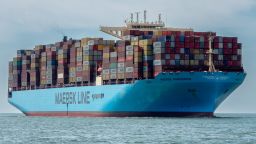
Attacks by Iran-backed militants in the Red Sea have effectively closed one of the world’s main trade routes to most container ships — vessels that carry everything from car parts to Crocs from one corner of the globe to another.
A prolonged closure of the waterway, which connects with the Suez Canal, could snarl global supply chains and drive up the prices of manufactured goods at a crucial moment in the battle to defeat inflation. The Suez Canal accounts for 10-15% of world trade, which includes oil exports, and for 30% of global container shipping volumes.
The Houthi militants, based in Yemen, say they are taking revenge for Israel’s war against Hamas in Gaza. The US military and its allies have beefed up maritime security but the attacks continue — 21 Houthi missiles and drones were shot down late Tuesday.
As the crisis persists, the stakes for the global economy are rising. Retailers are already warning of delays, and the cost of shipping goods is increasing.
In a biannual report released Tuesday, the World Bank warned that the disruption to key shipping routes was “eroding slack in supply networks and increasing the likelihood of inflationary bottlenecks.”
Six of the 10 biggest container shipping companies — namely Maersk, MSC, Hapag-Lloyd, CMA CGM, ZIM and ONE — are largely or completely avoiding the Red Sea because of the threat from the Houthi militants.
The danger to crew, cargo and vessels has forced carriers to reroute ships around the Cape of Good Hope in South Africa, resulting in delays of up to three weeks.
This has already significantly increased shipping costs, which could ultimately show up in consumer prices. “The longer the disruptions persist, the stronger the stagflationary effects for the global economy,” chief economist at Allianz, Mohamed A. El Erian, wrote last week on X, referring to a toxic combination of low or zero economic growth and high inflation.
If the Israel-Hamas war escalates into a wider regional conflict or the Houthis decide to redirect their attacks toward oil tankers and bulk carriers — which transport crucial raw materials such as iron ore, grain and timber — the consequences for the global economy would be altogether more severe.
“In a setting of escalating conflicts, energy supplies could also be substantially disrupted, leading to a spike in energy prices,” the World Bank report added. “This would have significant spillovers to other commodity prices.”
The threat to energy prices is the biggest risk, according to Capital Economics.
“While current shipping disruptions themselves are unlikely to disrupt the global trend of falling inflation, a marked escalation of the underlying military conflict could boost energy prices, which would be passed onto consumers,” Simon MacAdam and Lily Millard, economists at the consultancy, wrote in a note last week.
Oxford Economics also expects that inflation will continue easing but still sees an upside risk to prices. If container transport costs stay around their current levels — almost twice the level of early December — this might boost world inflation by about 0.6 percentage points, Ben May, director of global macroeconomic research at the firm, wrote in a note on January 4.
Delivery delays
Some European automakers have rerouted their shipments around the Cape of Good Hope. “This has entailed higher costs and delays of around two weeks,” said a spokesperson for the European Automobile Manufacturers’ Association.
And retailers such as Swedish furniture company Ikea have warned of shipment delays and possible shortages of certain products. Similarly, British clothing retailer Next said last week: “Difficulties with access to the Suez Canal, if they continue, are likely to cause some delays to stock deliveries in the early part of the year.”
Crocs (CROX) has likewise said items destined for Europe are taking two weeks longer than usual to arrive. The shoemaker does not expect a “material impact” on its business for now but told CNN it would “continue to monitor the situation closely.”
It’s not alone. Businesses around the world are on tenterhooks, hoping the disruption will end soon but beginning to dust off contingency plans last deployed during the pandemic if it doesn’t.
Abercrombie & Fitch (ANF) plans to use air freight wherever possible to avoid delays, according to an email to suppliers seen by Bloomberg. “We shift transportation modes and/or shipping lanes when warranted to maintain flow of goods,” a company spokesperson told CNN.

The situation could worsen in the coming weeks as shippers rush to get orders out of China before factories close for the country’s Lunar New Year holiday.
“The next five weeks leading to Chinese New Year on the 10th of February are going to be very difficult for shippers and for shipping,” Philip Damas, head of Drewry Supply Chain Advisors, said in recorded comments posted online Monday.
He noted, however, that excess shipping capacity more broadly meant spot rates — the price of one-off freight shipments as opposed to prices agreed in advance — “will decline again after Chinese New Year.”
‘Total crunch’
In addition to a surge in spot freight rates from the Red Sea attacks, carriers are tacking on emergency surcharges.
“All-in prices” of $5,000-$8,000 per container for major trade routes originating in Asia are 2.5 to 4 times the “normal levels” for this time of year, according to estimates by Judah Levine, head of research at logistics firm Freightos.
However, that is still 45%-75% below their “pandemic peak” in late 2021, Levine noted. Back then, soaring demand for goods from housebound consumers collided with supply bottlenecks, ranging from container shortages to port congestion.

The Suez Canal debacle adds to existing problems in shipping, with traffic through the vital Panama Canal already restricted because of a severe drought.
“For companies trying to move goods across the world you have a total crunch right now — you can’t rely on the Panama Canal (and) you can’t rely on the Suez Canal,” said Carolina Klint, chief commercial officer for Europe at Marsh McLennan, a professional services firm.
Some ocean carriers that ordinarily transit through the Panama Canal had rerouted to the Suez Canal before the attacks in the Red Sea escalated, according to logistics company C.H. Robinson.
Matthew Burgess, vice-president of global ocean services at the firm, said global shipping capacity would be constrained for a while yet. “There will be a shortage of Asia-to-Europe space for, at a minimum, the next eight weeks due to the additional time needed to use the Cape of Good Hope routing,” he told CNN.
“As we’ve seen with previous global shipping disruptions, shortages of empty equipment will likely be a fast follow, which further elevates delays because companies may need to wait two-three additional weeks for an empty container.”
At least for now, major ports in Europe and the United States — including the Port of Rotterdam, the Port of Los Angeles and the Port of New York and New Jersey — have seen limited impact from the Red Sea crisis. But they are on high alert for potential fallout.
“It is yet another disruption in the supply chain,” Gene Seroka, executive director of the Port of Los Angeles, told CNN. “This is not going away in three or four weeks.”
And even if the attacks stopped today, allowing most vessels to transit the Red Sea, the earlier impacts could still reverberate for some time to come, according to Burgess of C.H. Robinson. “The disruption and delays already in play will take a significant amount of time to resolve.”
EIA: US crude inventories up by 1.3 million barrels
Commercial crude oil inventories in the United States, not considering those in the Strategic Petroleum Reserve (SPR), increased by 1.3 million barrels to 432.4 million barrels in the week ending January 5, the Energy Information Administration (EIA) stated in its report published on Wednesday. Oil refinery inputs averaged 16.5 million barrels per day (bpd) during the week ending January 5, falling by 161,000 bpd compared to the previous week’s average. Refineries operated at 92.9% of their operable capacity. Gasoline production increased and averaged 9.7 million bpd. Crude oil imports decreased by 654,000 bpd week-on-week to average 6.2 million bpd. Total commercial petroleum inventories rose by 9.5 million barrels last week.
Houthis claim attack on US navy ship in Red Sea
Yemen’s Iran-backed Houthis claimed responsibility for a new assault on a ship in the Red Sea, this time on a United States vessel, allegedly transporting missiles and weapons to Israel, as reported by the group’s spokesperson, Yahya Saree, on Wednesday. “The naval forces, the missile force, and the unmanned air force of the Yemeni armed forces carried out a joint military operation with a large number of ballistic and naval missiles and drones, targeting an American ship that was providing support to the Zionist entity,” the statement reads. According to Saree, this operation was carried out as an initial retaliation for the attack suffered by the militia’s naval forces at the hands of the American forces on Sunday.
A US Navy destroyer has reportedly come under fire from Houthi rebels in Yemen, in the third such incident in a week.”The [USS] Mason once again appears to have come under attack in the Red Sea, again from coastal defence cruise missiles fired from the coast of Yemen,” Navy Admiral John Richardson, chief of naval operations, told reporters at an event in Baltimore, broadcaster NBC News said. Richardson said the ship had deployed countermeasures in the incident and had not been struck. The US launched retaliatory strikes against three radar stations in Houthi-controlled areas earlier this week after the ship was twice targeted by missiles apparently fired by the rebels. The bombardment was the first known to have been carried out by the US against Houthi targets in Yemen since Washington’s ally, Saudi Arabia, started an air campaign against the Iran-allied rebels in March 2015.
Red Sea Oil Transport Uninterrupted Despite Regional Unrest
Despite missile and drone attacks on container ships in the Red Sea from the Yemeni Houthis, tanker traffic remained stable in December, Reuters has reported, citing vessel tracking data. On a daily basis, the data showed there were 76 tankers carrying crude oil and fuels in the Red Sea. This, Reuters wrote, was just two tankers fewer than the average for November and three fewer than the average for the first eleven months of last year.
“We haven’t really seen the interruption to tanker traffic that everyone was expecting,” Lloyd’s List shipping analyst Michelle Wiese Bockmann told Reuters.
The Houthis, who control most of Yemen, launched a string of attacks on Israel-bound ships in the Red Sea in reaction to Israel’s bombing of Gaza. As a result, container shippers have diverted traffic to the Cape of Good Hope, which adds more than a week to the average journey from Asia to Europe and has sent freight rates skyrocketing. Some oil traders, notably BP and Equinor, have also diverted some tankers from the Bab-el Mandeb Strait and the Suez Canal to the Cape of Good Hope. These developments have boosted U.S. crude oil shipments to Europe as buyers consider U.S. oil safer and cheaper in the current circumstances. Initially, the Houthi attacks on ships in the Red Sea caused a spike in oil prices but it did not last, with prices retreating to around $70-$76 per barrel. However, a more serious disruption in the flow of oil from the Middle East could change this, Goldman Sachs said earlier this week. “The Red Sea is a transit route, and a prolonged disruption there, oil can be three or four dollars higher,” the head f the bank’s oil research unit, Daan Struyven, told CNBC.“However if you have a disruption in the Strait of Hormuz for a month, [oil] prices would rise by 20 percent and could even eventually double if the disruption there lasted for longer.”
US shoots down 24 Houthi projectiles… translation Iranian supplied rockets and drones….. Ministry: UK, US ships repel Houthi attack
The United States Navy successfully intercepted 24 Houthi missiles and drones launched from Yemen over the Red Sea, CNN reported, citing two US defense officials. The defense operation involved three destroyers as part of Operation Prosperity Guardian, a multinational effort comprising over 20 countries aimed at safeguarding shipping in the Red Sea. While details remain limited, it is unclear whether the missiles and drones were launched simultaneously.This marks one of the largest Houthi attacks in recent months, although there were no reported ship damages or injuries in the onslaught.
Ministry: UK, US ships repel Houthis attack
British Defense Ministry reported on Wednesday that its HMS Diamond ship, in conjunction with United States warships successfully thwarted “the largest attack by the Iranian-backed Houthis in the Red Sea to date,” which was reported hours earlier by the US Central Command (CENTCOM). The UK ministry said that its vessel destroyed several drones, with no injuries or damage reported to the infrastructure and the crew on board. Previously, CENTCOM said that “Houthis launched a complex attack of Iranian designed one-way attack UAVs [unmanned aerial vehicle] anti-ship cruise missiles, and an anti-ship ballistic missile from Houthi-controlled areas of Yemen into the Southern Red Sea,” making this the 26th assault on commercial shipping tracks in the Red Sea since November 19. NN: you got take the war to your enemy. Not hoping you can repel all their attacks.
API Reports Decrease in U.S. Crude Supplies…. Big Increase In Distillates
Crude oil inventories in the United States fell this week by 5.215 million barrels for the week ending January 5, according to The American Petroleum Institute (API), after analysts predicted a draw of 1.2 million barrels. The API reported a 7.418-million-barrel draw in crude inventories in the week prior. On Tuesday, the Department of Energy (DoE) reported that crude oil inventories in the Strategic Petroleum Reserve (SPR) rose by 0.6 million barrels. Inventories are now at 355 million barrels, with total purchases for the SPR totaling about 8 million barrels since the Biden Administration began its buyback program. Oil prices were trading up ahead of API data release. At 3:46 pm ET, Brent crude was trading up 1.71% at $77.42—a decrease of just over $1 per barrel compared to where it was this same time last week. The U.S. benchmark WTI was trading up on the day by 1.84%, at $72.07–a decrease of roughly $1 per barrel compared to this time last week. Gasoline inventories saw another large build this week, rising by 4.896 million barrels, after rising by 6.913-million barrels in the week prior. As of last week, gasoline inventories are now slightly above five-year average for this time of year, according to EIA data. Distillate inventories also rose this week, by 6.873 million barrels, after rising by 6.686 million barrels in the week prior. Distillates are roughly 6% below the five-year average. Cushing inventories fell by 625,000 barrels, after rising by 765,000 barrels in the previous week. NN: its very simple whats going on in two words…MILD WINTER. We are waiting for two things. Winter to kick in or the normal demand increase this spring. And the Hootie Fruties terrorists gone wild attacking every ship in sight.