Fed will raise rates more aggressively if needed, Powell says

WASHINGTON, March 22 (Reuters) – Federal Reserve Chair Jerome Powell on Wednesday said banking industry stress could trigger a credit crunch with “significant” implications for an economy that U.S. central bank officials projected will slow even more this year than previously thought. Banks either hit with sudden deposit outflows or worried about them may become steadily more reluctant to lend to businesses and households, a risk that prompted the U.S. central bank to reset its own expectations for monetary policy as it waits to see how far any contraction of credit may spread and how long it may last. “We’ll be looking to see … how serious is this and does it look like it’s going to be sustained,” Powell said at a news conference following the conclusion of the Fed’s latest policy meeting. “It could easily have a significant macroeconomic effect, and we would factor that into our policies.” The Fed’s policy-setting committee raised interest rates by another quarter of a percentage point in a unanimous decision on Wednesday, lifting its benchmark overnight interest rate to the 4.75%-5.00% range

Federal Reserve Chair Jerome Powell on Monday delivered his most muscular message to date on his battle with too-high inflation, saying the central bank must move “expeditiously” to raise rates and possibly “more aggressively” to keep an upward price spiral from getting entrenched.

Fed officials still feel that “some additional policy firming” may be needed, and they penciled in one more quarter-of-a-percentage-point rate increase by the end of the year. But the more conditional language, replacing a promise of “ongoing increases,” amounted to a seismic shift driven by the rapid failure this month of California-based Silicon Valley Bank (SIVB.O) and New York-based Signature Bank (SBNY.O), as well as the Swiss-engineered rescue of Credit Suisse. U.S. officials across several agencies have been coping with the fallout, debating what new rules or regulations might be needed and whether changes are needed to the U.S. deposit insurance program – a systemwide backstop that failed to stem a deposit run at SVB. The policy statement and Powell’s remarks to reporters also showed Fed officials’ rising attention to credit dynamics, something that could actually help them in the fight to tame inflation as long as any changes to the flow of loans does not become disorderly and that more bank failures are not in the offing. “Financial conditions seem to have tightened and probably by more than the traditional indexes say because … they don’t necessarily capture lending conditions,” Powell said. “The question for us is how significant will that be?” Powell on Wednesday repeatedly voiced confidence in the stability of the U.S. financial system, noting that “deposit flows in the banking system have stabilized over the last week,” and that SVB collapsed because “management failed badly,” not because of generic weaknesses in the banking sector.Still, the Fed chief said the collapse showed a breakdown of central bank supervision that needed to be fixed, and was being studied in a review due to be completed by May 1 under the direction of Michael Barr, the Fed’s vice chair for supervision. Yields on Treasury securities dropped following the release of the policy statement. The yield on the 2-year Treasury note , which is highly sensitive to Fed rate expectations, was down more than 21 basis points in the session. U.S. stocks, which initially surged after the release of the policy statement, fell through the afternoon, with the benchmark S&P 500 index (.SPX) closing 1.6% lower. The dollar (.DXY) weakened against a basket of major trading partner currencies.

Financial markets went a step further, betting that the Fed won’t raise rates any further from here and will be reducing them by this summer. “That’s not our baseline expectation,” Powell said in the news conference, adding that “the key is we have to have policies tight enough to bring inflation down to 2%,” whether that comes from a higher Fed policy rate or market conditions that tighten on their own.

BlackMask Pod Cast:

Further Bank Failures are in the Cards

FINMA: Credit Suisse AT1 bond write-off ‘contractual’

The Swiss Financial Market Supervisory Authority, FINMA, said on Thursday that

Additional Tier 1 (AT1) bonds issued by Credit Suisse could be wiped out by contract in case of a “viability event,” particularly if the bank receives government backing.

“As Credit Suisse received extraordinary liquidity assistance loans secured by a federal default guarantee on 19 March 2023, these contractual conditions were met for the AT1 instruments issued by the bank,” the regulator explained in a statement, adding that Tier 2 bonds will not be marked down.

The European Central Bank blasted the decision by the Swiss regulators that left bondholders unprotected in the acqusition deal that wrote down 16 billion Swiss francs of AT1 bonds to zero, and stressed that “Switzerland does not set standards in Europe.” NN: These assholes  have been given trillions of dollars of retirement savers money. And were paid millions to manage their funds. I met these assholes and they could not run a candy store. Their is nothing between their ears. Their main driver in life is the nerves that run through their pelvis. Now the hundred year even has started. And the first domino has fallen. And it reveals that these fucking assholes did not even bother to read the prospective. They did not even know if they had teir1 or teir2 bonds. Wanna hear the really good part. These instruments were created to provide bank capital an liquidity in a crises. Based on lessons (learned) after the 2009 wipe out. When i READ the perspective i laugh my ass off.  Simply more structured debt from hell to give the ILLUSION of security. As i have been warning you the fractional banking system is broken. The hundred year even is upon us. All institutions are Saddled with more debt than ever. Especially hidden debt that will never ever be paid back. The day of reckoning has started. Governments will socialize the markets both the capital and stock markets. And  you can imagine the hell and poverty that will create. The democratic free enterprise system has collapsed because of inbred corruption. And we are headed for the Chinese model and war and death and destruction. I can show you what to do. BlackMask Pod cast:

The ten commandments of finance
here are my top ten suggestions
  1. Get out of all debt
  2. leave a paper trail that makes sense. Two worlds you live in the seen and unseen.
  3. Dump all stocks and mutual funds
  4. Get out of ALL real estate unless its your abode
  5. Keep in the banking system only enough money to meet you cash flow short term transactions
  6. if you can find a little business that gives you CASH flow and something you can point to that would be smart. Get people you trust to run it for you
  7. Wealth should be stored  in US government treasuries
  8. For now short term treasuries under 1 year… preferably Tbills
  9. Do NOT NOT US government Bond Funds but the actual treasury in your name through treasury direct or at a broker segregated in your name
  10.  Speculating is more tricky then ever… Why do it? Because IFIFIFIFIf we get it right thousands can become millions

U.S. Oil Exports To Europe Hit Record High

  • U.S. oil exports to Europe hit a record high in March, averaging 2.1 million barrels per day so far this month.
  • The increase in U.S. exports has been driven by a wide WTI to Brent discount, which prompted spot deals for U.S. crude.
  • As U.S. refineries enter long periods of maintenance, U.S. domestic demand for oil could remain depressed and the discount from Brent could increase.

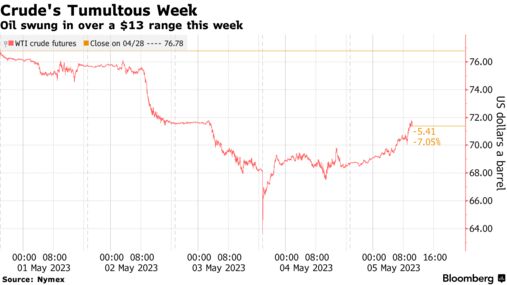
U.S. crude oil exports to Europe hit a record high in March, due to a wide WTI to Brent discount in January which prompted many spot deals for the cheaper U.S. crude, analysts and tanker-tracking firms told Reuters this week.   The U.S. has shipped so far in March a record 2.1 million barrels per day (bpd) on average of crude oil to Europe, according to estimates cited by Reuters.   In January, the discount of the U.S. benchmark, WTI Crude, to the international benchmark, Brent, widened to over $7 per barrel at the end of the month, as U.S. refineries processed lower volumes of crude after the Winter Storm Elliott at the end of December shut refineries on the U.S. Gulf Coast for several days. At the end of December 2022, as much as 1.5 million bpd of the U.S. Gulf Coast’s refining capacity was shut down due to the freezing temperatures. Refineries run by Motiva Enterprises, Marathon Petroleum, and TotalEnergies outside Houston were shut. Operations at other refineries in Texas, run by ExxonMobil, Valero Energy, and LyondellBasell, were also disrupted by the severe winter storm. As a result, demand for crude from U.S. refiners was lower in January, when the cargoes arriving in Europe in March were likely contracted.

Many refiners have also said they would enter longer periods of scheduled maintenance, further reducing domestic U.S. crude demand.

“Oil majors and independent refiners alike have warned of a heavy US maintenance period to start the year. For many refiners, H1 2023 is a chance to catch-up on much needed regular maintenance as numerous refiners deferred larger maintenance projects in recent years amidst the pandemic and record margins,” Wood Mackenzie said in a recent report. Some U.S. grades have seen their prices go up, due to the higher export demand. For example, the price of WTI Midland has jumped by almost 50% so far in 2023 compared to Q4 2022, while the price of WTI at East Houston has increased by around 30%, according to Reuters estimates. NN:  A oil shock is coming. Demand is building… Supplies are peeking and soon the refineries will switch back on and that sucking sound you will hear is oil tanks draining.

U.S. Gasoline Demand Soars To Highest In Months

Even before the arrival of summer driving season, gasoline demand climbed on Sunday and Monday compared to the four week average, Gas Buddy’s head of petroleum analysis Patrick DeHaan said on Tuesday. U.S. gasoline demand on Sunday and Monday was up 7% compared to the respective four week averages—and the highest level since the week of September 25, 2022, DeHaan said in a Tuesday tweet. On Monday, GasBuddy data showed that gas prices in the United States had fallen for the first time in two weeks to an average of $3.40 per gallon. On Tuesday, AAA showed the current average price for a gallon of gas in the United States at $3.436 per gallon—down from $3.443 per gallon on Monday and down from $3.466 a week ago. Despite the huge dropoff in crude oil prices, gasoline prices are still higher than they were a month ago, according to AAA data. “The broad concern over recent failures of the U.S. and global banking system has put enough downward pressure on oil prices that we saw a reprieve in rising gasoline prices in the national average last week. But, it may be temporary in nature, and is unlikely to be a long lasting trend,” Dr. Haan said in a Monday note. “While California and areas of the West Coast saw some moderation in price, supply challenges amidst the transition to summer gasoline have led to sharp price increases in Arizona, and other markets saw varying impacts at the gas pump over the last week. Should the outlook for the banking sector improve, we could again see gasoline prices race higher, while continued or additional distress could raise the possibility of a broader economic slowdown, keeping gasoline prices in check. Overall, there are a lot of possibilities.” NN: Wait and watch… Spin will not fuel your car. Nor windmills or solar farms. Its takes gasoline from oil wells. The latest banking crises has been put to bed. Their is no slow down in economic activity… yet…. That will be next years problem.

What slow down…. EU car registrations up 11.5% in February…… Eurozone construction output up 3.9% in January

New passenger car registrations rose 11.5% to 802,763 units in February in the European Union, as per a report released by the European Automobile Manufacturers’ Association (ACEA) on Tuesday. Registrations climbed for the seventh consecutive month.

“Most EU markets showed strong growth,” it was noted in the report, as Spain and Italy registered the biggest jumps, with the figures surging 19.2% and 17.4% respectively.

The number of battery electric and hybrid cars registered in the bloc was up in the reported month, with the former making up 12.1% of the market and the latter making up 25.5% of the market. Petrol was still “the top choice for newly-registered cars in the EU, with a market share of 36.9%.”

Eurozone construction output up 3.9% in January

Seasonally adjusted production in the construction sector in the euro area rose by 3.9% month-on-month in January, according to the report published by Eurostat on Tuesday. In the entire European Union, the figure was also up by 3.5%. On the yearly basis, the construction output gained 0.9% in the euro area, and 1.4% in the bloc. Building construction in the Eurozone jumped 4.2% compared to December, while civil engineering grew 3%. In comparison to January 2022, the building construction climbed 1.4%, while civil engineering fell 1.9%. In the EU, building construction increased by 3.6% and civil engineering by 2.3% on a monthly basis, while year-on-year the figures advanced by 1.5% and 0.5% respectively. The member states that saw the largest annual construction production increases in January were Slovenia with 26.7%, Slovakia with 14.7%, and Portugal with 6.3%. NN: This is not what a economic slow down looks like. More like a coming boom!

JPMorgan, BNP Quote Credit Suisse Bonds At a penny…. Bankers who own that shit book full price!!

Risky Credit Suisse Group AG bonds that are set to be written down to zero by regulators were being quoted at prices of a few cents on the dollar on Monday, according to people with knowledge of the matter.  Dealers including JPMorgan Chase & Co. and Morgan Stanley are willing to buy risky Credit Suisse debt known as additional tier 1 bonds, or AT1s, for somewhere around 2 cents on the dollar and sell somewhere around 5 cents as of early afternoon on Monday in New York, according to the people. The Swiss bank said on Sunday that the bonds would be written down to zero as a condition of the rescue of the bank.   Other banks, including BNP Paribas SA, BTIG, Jefferies Financial Group Inc., as well as JPMorgan and Morgan Stanley, are also getting involved, according to the people, who asked not to be identified discussing private trades. Goldman Sachs Group Inc. traders were preparing to take bids on claims against the bonds in messages circulated late Sunday, according to separate people with knowledge of the matter.  The AT1 securities haven’t yet been zeroed out by regulators because Credit Suisse’s emergency sale to UBS Group AG hasn’t yet closed. So for now the securities are still bonds, but dealers are crafting terms of trading that would turn the instruments into claims on Credit Suisse when the debt does get written down to zero, according to traders.   Any market participants who buy the securities are looking at whether the bonds may have value amid litigation

. Some investors believe if AT1s are being written down to zero, the bank’s equity should be as well. In this case, UBS agreed to buy the firm for around 3 billion francs in an all-share deal brokered by the Swiss government. 

“While the regulators clearly have the authority to wipe out the AT1s, there might be some hope that the deal will be modified to throw them a bone,” said portfolio manager Bill Zox at Brandywine Global Investment Management.

Credit Suisse’s bond documents specified that authorities have the authority to upend the usual rules of priority when imposing losses on investors, according to Bloomberg Intelligence. European Union and UK AT1s do not feature such language,

AT1 securities were introduced after the 2008 global financial crisis to help absorb losses if a bank starts to fail.  “Common equity instruments are the first ones to absorb losses, and only after their full use would Additional Tier 1 be required to be written down,” the European Central Bank underlined on Monday.

The ECB thus confirmed that holders of Common Equity Tier 1 (CET1) capital of a Eurozone bank in a crisis similar to what happened to Credit Suisse Group AG would suffer losses before AT1 bondholders do. However, Swiss authorities opted to write off Credit Suisse’s AT1 bonds valued at $17 billion, rendering them worthless and leaving AT1 bondholders without compensation in the UBS Group AG’s takeover of Credit Suiss. NN: If the assholes trading trillion of dollars would read the contract in the event of a back failure and take over by goverement siad govermen has the right to not pay AT1 BONDHOLDER FUCKED! YOU SHOULD KNOW IF YOU HAVE AT1 OR CE1 BONDS AND THE FACT IN A BANK FAILURE THEY CAN BE REDUCED TO ZERO! For a fact these shit heads at Black Rock and the like who have trillions of dollars of other peoples money and are paid million to manage this shit for a fact did not understand the risk as Credit Suiss  careened over the PAST YEAR to insolvency. They never read the contract. And did not note the default risk in the event of a bank meltdown. Because if they did their was plenty of time to dump them on the next dumber guy down the food chain.

And you wanna hear the really good part. I just checked  US financial institutions are still holding them on their books at full value. How do they pull this off. Because the Credit Suiss liquidation is not complete yet. And do you wanna hear the really really really good part. They have filed law suits to stall the liquidations to hold off the right downs eventually they must take.


BI wrote.


Saudi National Bank is losing $1.2 billion on its Credit Suisse stake

Saudi National Bank chairman Ammar Al Khudairy’s comments last week may end up being one of the most expensive answers delivered on television. On Sunday, UBS announced that it would take over its rival Credit Suisse for $3.2 billion, in a deal shepherded by Swiss regulators in order to head off financial panic. That’s significantly less than the $8 billion the bank was worth on market close Friday.

Saudi National Bank, Credit Suisse’s largest shareholder, will see the value of its stake, purchased for $1.5 billion in October, drop by $1.2 billion after the UBS deal, according to Bloomberg.

Comments from Ammar al Khudairy on Wednesday precipitated Credit Suisse’s crisis. When asked by a Bloomberg reporter whether the Saudi bank was willing to invest more money in Credit Suisse if it required more funds, al Khudairy bluntly responded “the answer is absolutely not,” citing regulatory reasons. see video above

“If we go above 10%, all new rules kick in,” said al Khudairy, explaining why the Saudi bank wouldn’t go beyond its current 9.9% stake. The comment spooked Credit Suisse investors and customers, who had already gone through years of bad news, including scandals, constant leadership changes, and billion dollar losses. Saudi National Bank itself became Credit Suisse’s largest shareholder as part of a $4.3 billion capital raise the Swiss lender held in 2022 ahead of a planned restructuring. Credit Suisse shares dropped by 24% the same day as Al Khudairy’s comments, and its bonds sank to distressed levels. By the day’s end, Credit Suisse announced it would borrow as much as $54 billion from the Swiss National Bank, the country’s central bank. Al Khudairy later tried to walk back his previous comments, saying that Credit Suisse had not asked for assistance, and that the panic his comments sparked was “unwarranted.” The Saudi National Bank chairman blamed the wider banking crisis, sparked by the failure of Silicon Valley Bank, for why investors jumped on his comments. “If you look at how the entire banking sector has dropped, unfortunately, a lot of people were just looking for excuses,” he told CNBC on Thursday. Yet he still refused to invest more money into Credit Suisse, again blaming regulations. Al Khudairy’s walk back ended up coming too late: While Credit Suisse shares recovered on Thursday following the lifeline from the Swiss central bank, depositors continued to pull their money from the bank, forcing the Swiss government to shepherd a rescue from fellow bank UBS. About a fifth of Credit Suisse’s stock was owned by investors from the Middle East, such as the 9.9% stake owned by Saudi National Bank, and the 6.8% stake owned by the Qatar Investment Authority.


But equity holders like Saudi National Bank are at least getting something in the UBS-Credit Suisse deal. Shareholders are getting one UBS share for every 22.48 shares of Credit Suisse, which UBS calculated was equal to around $0.82 per share. (Credit Suisse shares were trading at around $2 before the weekend)


Saudi National Bank and other Credit Suisse shareholders tried to offer $5 billion in new financing for the bank, in a deal that would have preserved the bank’s bonds, reports the Wall Street Journal. Swiss regulators rejected the offer.

Credit Suisse’s shareholders, like Saudi National Bank, are out of luck if they’re upset about the UBS rescue. The deal does not require approval by the shareholders of either UBS or Credit Suisse, thanks to regulatory changes from the Swiss government. NN: Just because you got more oil then most countries have water. And more money they dirt does not make you smart. What a fucking idiot. If they had agreed to a capital infusion this bank would have not failed.

ECB: CET1 first to absorb losses before writing AT1 down

“Common equity instruments are the first ones to absorb losses, and only after their full use would Additional Tier 1 be required to be written down,” the European Central Bank underlined on Monday. The ECB thus confirmed that holders of Common Equity Tier 1 (CET1) capital of a Eurozone bank in a crisis similar to what happened to Credit Suisse Group AG would suffer losses before AT1 bondholders d

Swiss authorities opted to write off Credit Suisse’s AT1 bonds valued at $17 billion, rendering them worthless and leaving AT1 bondholders without compensation in the UBS Group AG’s takeover of its rival. On the other hand, Credit Suisse’s shareholders will receive 3 billion Swiss francs as part of the agreement.

The controversial move caused commercial bank stock to drop earlier in the day across the Eurozone. In today’s statement, the ECB stressed that “the European banking sector is resilient, with robust levels of capital and liquidity” and that “additional Tier 1 is and will remain an important component of the capital structure of European banks.” NN: As part of its takeover of Credit Suisse, UBS is writing down $17 billion in so-called Additional Tier 1 bonds. These bonds were pioneered after the 2008 financial crisis, and are either written down or converted to equity if a bank’s capital buffers fall below a specified level. The $17 billion writedown is the largest in Europe’s AT1 market since its inception. Credit Suisse’s bondholders have been fucked they are losing everything while shareholders are still getting paid out.  Most people in the banks involved that i talked to did not even now what type of the banks debt instruments they held. Share holders are normally paid after CET1 and AT1 holders. I guess when your trying to figure out what sex you are today and fret over the climate change end of the world your banks capital instruments holdings are the least thing on your mind. Never mind the underwater Treasuries you bought when you though interest rates during a massive inflation and a much announces FED rate increase would stay at zero for ever.

Gold tops $2,000 for first time since March 2022

Spot gold went over the $2,000 per ounce mark on Monday for the first time in over 12 months as recession fears continued to grip global markets. Investors opted for the safety that the yellow metal provides even after several major central banks announced action to support global liquidity. Gold increased by 1.24% to $2,007.92 per ounce at 3:45 am ET today. Silver gained 0.14% and reached $22.57 per ounce at the same time. NN: Sell the fuck out of this stupidness… See Gold trade reco

UBS agrees to buy Credit Suisse for more than $2 billion, Financial Times reports….. They dodged another bullet for now!

It’s a DONE DEAL

March 19 (Reuters) – UBS (UBSG.S) has agreed to buy Swiss banking giant Credit Suisse (CSGN.S) after increasing its offer to more than $2 billion, the Financial Times reported on Sunday, as authorities bid to stave off turmoil when the markets reopen.Officials have been racing to rescue the 167-year-old bank, among the world’s largest wealth managers, after a brutal week that saw the second- and third-largest U.S. bank failures in history. As one of 30 global banks seen as systemically important, any deal for Credit Suisse could ripple through global financial markets. At least two major banks in Europe are examining scenarios of contagion possibly spreading in the region’s banking sector and looking to the Federal Reserve and the European Central Bank to step in with stronger signals of support, two senior executives with knowledge of the discussions told Reuters. A person with knowledge of the talks earlier told Reuters that UBS sought $6 billion from the Swiss government as part of a possible purchase of its rival. The guarantees would cover the cost of winding down parts of Credit Suisse and potential litigation charges. NN: As the markets digest this deal I believe the depression is now fears come out  of the oil markets.. They did the deal just in time for Sunday Dibber…… No need to be savages!