World’s Largest LNG Site Suffers Heavy Damages After Massive Explosion

Qatar’s Ras Laffan plant closed earlier this month after an Iranian drone attack, the first interruption to supply in three decades of operation. Now, after further hits — in retaliation for an Israeli strike on the vast South Pars fields on Wednesday — the wider complex has suffered what Qatar describes as extensive damage, potentially significantly delaying any return to normality. Neither the scale of destruction nor the extent of repair work required for resumption is clear. But every day the operation isn’t running, the energy strain on economies across the world increases. For emerging nations, vital growth markets for LNG, a second gas calamity in four years is already destroying industrial demand — perhaps irreparably. Three weeks of conflict in the Middle East have upended the entire energy supply chain. With the vital Strait of Hormuz all but closed, gasoline and jet fuel prices are surging, cooking gas shortages are triggering fistfights in India and farmers are fretting about diesel and fertilizer. But with virtually no spare capacity, no strategic reserves and no easy replacements, LNG may be one of the most acute pain points in an expanding crisis.The longer this continues, the only solution is for the world to use less gas — and that’s a major setback for a fuel promoted by the industry as a reliable and affordable bridge from dirty coal to full reliance on renewable power. Without gas, power plants curtail output, fertilizer and textile factories shut. The ripple effect from a long-term shock could be even more significant than the 2022 energy crisis, when Russia’s invasion of Ukraine forced dramatic changes in global gas flows. “We are now well on our way to a doomsday gas crisis scenario,” said Saul Kavonic, energy analyst at MST Marquee. “Even once the war ends, the disruption to LNG supply could last for months or even years — depending how long it takes to repair the damage.”

Qatar LNG Complex Destroyed In Second Strike In Two Days

QatarEnergy has reported more strikes on its LNG infrastructure in the early hours of Thursday, saying on X that “several of its Liquefied Natural Gas (LNG) facilities were the subject of missile attacks, causing sizeable fires and extensive further damage.” The company also said emergency response teams were on site to contain the damage. The latest escalation follows retaliatory strikes by Iran on Qatar and other neighbors after Israel launched missiles at Iranian gas processing infrastructure in the South Pars field, which Iran shares with Qatar. It is the biggest natural gas field in the world. The Wednesday exchange prompted President Trump to warn Iran not to retaliate further, saying Israel had “lashed out” but will not repeat the strikes if Iran stayed put. Saudi Arabia, which was among the legitimate retaliation targets announced by Iran on Wednesday, issued its own warning of possible retaliation. “This pressure from Iran will backfire politically and morally, and certainly we reserve the right to take military actions, if deemed necessary,” the kingdom’s Foreign Minister Prince Faisal bin Farhan told the media. The latest developments in gas markets are particularly bad news for European countries, which source most of their gas from abroad and are currently facing depleted storage and the need to buy a lot more gas than last year to replenish that storage.

NN: The Euro wind farm greeniewinnies fagot assholes woks have really screwed  royally and got their dicks broke this time. They got the vast gas deposits of the Netherlands, Germany and  the North sea are capped. So they were buying gas at ten times the price. Now their biggest supplier is off line. How stupid is that!


JP Morgan Flags Oil Price ‘Misalignment’


In an oil flash note  by Natasha Kaneva, J.P. Morgan’s head of global commodities strategy, analysts at the company, including Kaneva, flagged an oil price “misalignment”. The J.P. Morgan analysts outlined in this note that, “despite the scale of the disruption”, which they described as “arguably one of the largest exogenous supply shocks in recent history”, benchmark oil prices have “remained relatively contained, with Brent trading near $100 per barrel and WTI around $95”. The analysts stated that, at face value, this could be interpreted as market complacency. They added that a closer examination, however, “suggests a misalignment between benchmark pricing and the geography of the disruption”. “The key issue is that both Brent and WTI are Atlantic Basin benchmarks, while the current shock is concentrated in the Middle East,” the J.P. Morgan analysts said. “As such, these benchmarks are disproportionally influenced by regional fundamentals that remain comparatively loose,” they added. The analysts highlighted in the note that both the U.S. and Europe entered 2026 with comfortable commercial inventories, and said the broader Atlantic Basin remains relatively well supplied in the near term. “In addition, the anticipation – and soon a partial realization – of SPR [Strategic Petroleum Reserve] releases has further dampened prompt tightness in both Brent- and WTI-linked markets,” the analysts highlighted. “By contrast, Middle Eastern benchmarks such as Dubai and Oman provide a more accurate reflection of the physical dislocation,” they continued.

The analysts pointed out in the note that both Dubai and Oman cash prices were trading around $155 per barrel, “highlighting the severity of the shortage in barrels originating from the Gulf”.

“These benchmarks are directly exposed to export disruptions and therefore capture marginal scarcity more effectively than Atlantic-linked crudes,” they said. The analysts went on to state that the geography of trade amplifies this dynamic.  “Most crude shipments through the Strait of Hormuz are bound for Asia, with China, India, Japan, and South Korea as the principal buyers,” they noted. “As a result, the immediate physical shortfall is concentrated in Asian markets, where reliance on Gulf barrels is greatest. Early signs of demand destruction are emerging in Asia as product prices surge and spot barrels become prohibitively expensive,” they said. The J.P. Morgan analysts went on to warn that, “in this context, the apparent stability in Brent and WTI should not be taken as evidence of ample global supply”.

“If the Strait does not reopen, this divergence is unlikely to persist – Brent and WTI will ultimately reprice higher as Atlantic basin inventories are drawn down and the global market is forced to clear at a materially tighter supply level,” they continued.

According to Lloyd’s list, “Iran has attacked 16 tankers and other vessels in the Persian Gulf and Gulf of Oman since the war began on February 28”. “Most of these attacks were near the Strait of Hormuz (the Strait), through which roughly 20 percent each of global crude oil and seaborne gas flows,” the analysts added, noting that Iran has “vowed to keep the Strait effectively closed for the time being”. “Few ships are willing to risk traversing the narrow shipping lane until it is secure,” they said. “However, currently, there are no actionable plans for the U.S. and allied forces to escort commercial shipping, and their ability to entirely secure the Strait anytime soon appears unlikely,” they added.


IRGC issues evacuation notice for Gulf energy sites

Iran’s Islamic Revolutionary Guard Corps (IRGC) issued on Wednesday an evacuation notice for several oil facilities in Saudi Arabia, the United Arab Emirates (UAE) and Qatar.

The IRGC listed Samref Refinery and Jubail Petrochemical Complex in Saudi Arabia, Messieed Petrochemical Complex and Messieed Holding Company, together with Ras Laffan Refinery in Qatar, as well as Al-Hosn Gas Field in the UAE, declaring that energy sites now qualify as legitimate targets.

“Therefore, all citizens, residents, and employees are asked to leave these areas immediately and move to a safe distance without any delay,” it was stated in the notice after Iran’s media reported that natural gas and oil facilities at South Pars were targeted.

Brent up 4.5% on reports of strikes on Iran’s oil sites

Crude oil prices turned to gains on Wednesday, with Brent futures rising by more than 4.5% as traders digested the latest reports from the Iranian media, which claimed that the country’s Asaluyeh refinery and South Pars, Iran’s portion of the world’s largest gas field, came under attack earlier today, with several phases being hit and removed from the circuit at both sites.

Brent for deliveries in May jumped by 4.68% to $108.51 per barrel at 9:00 am ET. Meanwhile, West Texas Intermediate (WTI) for April’s settlements increased by 1.75% and went for $97.89 per barrel at 8:57 am ET.

NN: $150 oil here we come. As i told you sooner or later they would get around to seriously blasting the oil wells.

US warship carrying Marine ground troops tracked off Singapore

A US Navy warship carrying thousands of Marines and sailors is headed to the Middle East is nearing the Malacca Strait off Singapore as it makes its way to the region, maritime tracking data showed Tuesday. The amphibious assault ship USS Tripoli was approaching Singapore, at the southwestern edge of the South China Sea, Tuesday morning, according to AIS tracking data.  US Navy ships often move with AIS transponders turned off. Revealing their positions while transiting areas with heavy maritime traffic, like the waters around Singapore, enables safer operations. The Tripoli is carrying troops from the Okinawa-based 31st Marine Expeditionary Unit (MEU), a rapid-response force of 2,200 personnel, after the Pentagon ordered the unit to deploy, according to three officials familiar with the plans. Officials report the unit was being sent to the Middle East, without revealing exactly where it would be deployed or what it would be used for. An MEU consists of four elements: command, ground combat, air combat and logistics combat. MEUs typically have been used for missions like evacuations and amphibious operations that require ship-to-shore movements, like raids and assaults. They also have ground and aviation combat components, and some units are trained for special operations. Based in Sasebo, Japan, the Tripoli, almost 850 feet long and displacing 45,000 tons, is essentially a small aircraft carrier and carries F-35 stealth fighters and MV-22 Osprey transports as well as landing craft to move troops ashore. It is the lead ship in an amphibious ready group, which would normally include the amphibious transport docks USS New Orleans and USS San Diego.

NN: Watch, Iran is  about to lose its ability to export oil they. And they can’t make it on selling  Persian rugs.


Trump said to plan to seize oil site on Kharg Island

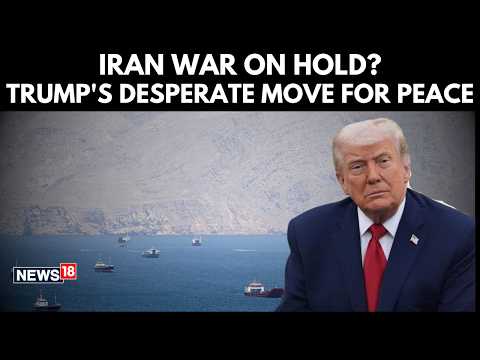
United States President Donald Trump is considering assembling a coalition of countries to unblock the Strait of Hormuz and potentially seize control of the oil hub on Iran’s Kharg Island, through which most of that country’s oil is exported, Axios reported. Earlier, Trump asked for help from other countries amid Iran’s blockade of the strait, but no other nation has yet agreed to offer assistance. On the other hand, a senior White House official stated the US leader made no decision regarding the island. Nevertheless, Trump declared that all military targets on Kharg Island were destroyed, and subsequently went on to remark that the US could bomb it again “just for fun,” whereas Tehran said the local oil facilities were not damaged.

NN: The world needs to wake up and stop Iran!

Trump warns of more strikes on Iran’s Kharg Island, pressures allies to secure oil chokepoint

U.S. President Donald Trump threatened more strikes on Iran’s main oil export hub Kharg Island and ​said he was not ready for a deal with Tehran to end the war which has shut off the vital Strait of Hormuz and caused chaos in global energy markets. With the U.S.-Israeli war ‌on Iran in its third week, Trump said U.S. strikes had “totally demolished” much of the island and warned of more, telling NBC News on Saturday, “We may hit it a few more times just for fun.” The comments marked a sharp escalation from Trump, who had previously said the U.S. was targeting only military sites on Kharg, and dealt a blow to diplomatic efforts to end a war that has spread across the Middle East and killed more than 2,000 people, most in Iran and Lebanon. Washington has brushed aside attempts by Middle Eastern allies ​to open talks, three sources told Reuters and Iran’s Revolutionary Guards said on Sunday they had fired more missiles at Israel and three U.S. bases in the region. Trump, who has made a series of varying ​demands, including a say in choosing Iran’s leader and an end to its nuclear and ballistic missile programmes, told NBC News that Tehran appeared ready to make a ⁠deal to end the fighting but that “the terms aren’t good enough yet”.
In his interview with NBC, Trump raised the possibility that Supreme Leader Mojtaba Khamenei may have been killed but Iranian Foreign Minister Abbas Araqchi said Khamenei was ​in full health and managing the situation. With no clear end in sight, Iran’s ability to choke off traffic through the Strait of Hormuz, the conduit for a fifth of global oil and liquefied ​natural gas, has emerged with increasing urgency as a decisive threat to the global economy. Although some Iranian vessels have continued to pass, the passage has been effectively closed for most of the world’s shipping since the United States and Israel attacked Iran on February 28 at the start of an intensive bombing campaign that has hit thousands of targets across the country. Khamenei, who succeeded as supreme leader after his father Ayatollah Ali Khamenei was killed on the first day of the attacks, has said the Strait of Hormuz should remain ​closed. The International Energy Agency said last week the closure of the narrow passage along Iran’s southern coast had triggered the largest disruption to global oil markets in history, and was expected to cut around 8% of global supplies in ​March. The global ship-refueling hub of Fujairah in the United Arab Emirates resumed oil-loading operations on Sunday, a Fujairah-based industry source said. With crude oil prices above $100 a barrel and expected to rise further next week, the issue has hung over Trump’s Republican Party, which faces ‌a major test ⁠at midterm elections in November. Trump himself has dismissed worries about spiking prices for American consumers, saying they will fall back quickly. But he has called on China, France, Japan, South Korea, Britain and others to send warships to the Strait of Hormuz to ensure shipping can pass. “The Countries of the World that receive Oil through the Hormuz Strait must take care of that passage, and we will help — A LOT!” Trump wrote in a social media post on Saturday. “The U.S. will also coordinate with those Countries so that everything goes quickly, smoothly, and well.” France is seeking to assemble a coalition to secure the strait once the security situation stabilizes, while Britain is discussing a range of options with ​allies to ensure the security of shipping, officials have ​said. But none of the countries mentioned gave any ⁠immediate indication of moving while fighting continued. Araqchi told his French counterpart that countries must refrain from anything that could escalate the conflict. He also said Iran would respond to any attack on its energy facilities. As the standoff continued, Iran’s Revolutionary Guards said it had fired more missile and drone barrages at targets in Israel ​and at U.S. military bases in the region, where Saudi Arabia said it had intercepted 10 attacks. Araqchi denied Iran was targeting civilian or residential areas in the Middle ​East and said it was ⁠ready to form a committee with its neighbours to investigate the responsibility for such strikes. Gulf countries have suffered damage to energy facilities and residential areas during the two-week war. A source briefed on Israel’s military strategy told Reuters that Israel had begun targeting roadblocks and bridges it believed Revolutionary Guards commanders were using. Iranian security forces detained dozens of people accused of sharing information with Israel, Iranian media reported. Israel’s Foreign Minister Gideon Saar rejected claims that Israel had told the United States it was running ⁠low on interceptors ​and dismissed a report that it could soon hold direct talks with Lebanon, where it has resumed its campaign against the Iranian-backed Hezbollah movement. In ​Iran, at least 15 people were killed when an airstrike hit a refrigerator and heater factory in the central Iranian city of Isfahan, the semi-official Fars news agency said on Saturday. The Revolutionary Guards promised further retaliation for workers killed in Iran’s industrial areas.
NN: We have yet to put a steak in this Evil monsters heart

Fifth wave of Iranian missiles fired at Israel

Iran launched another wave of missile attacks against Israel, for the fifth time during the night and early hours on Sunday, local time. Sirens were activated in southern Israel amid Iran’s latest attack. Concurrently, rockets from Lebanon triggered alarms in central parts of the country, presumably by Hezbollah. There were no immediate reports of casualties or material damage.

Analyst Warns of ‘Big, Big Risk’ for Oil Over Weekend

No one in their right mind would dare short oil 

SEB report  on Friday,   Skandinaviska Enskilda Banken AB (SEB) Chief Commodities Analyst Bjarne Schieldrop stated in a  adding that “oil is thus set to close the week at a very strong note today”.  Schieldrop warned in the report that the “big, big risk” for the weekend is that oil infrastructure could be damaged. “For example, Iran’s Kharg island which is Iran’s major oil export hub,” Schieldrop highlighted. “If damaged, we would have a longer lasting loss of supply stretching way beyond Trump’s announced ‘two more weeks’. It will make the spot price spike higher and it will lift the curve,” he added. “Brent crude 2027 swap would jump above $80 per barrel immediately. An attack on Kharg island would naturally lead Iran to strike back at other oil infrastructures in the Gulf,” he continued. “An attack on Kharg island would not just lead to a lasting outage of supply from Iran until it would be repaired. It would immediately endanger other oil infrastructure in the region as well and additional lasting loss of supply,” Schieldrop warned. In the report, Schieldrop highlighted that Brent crude gained 9.2 percent yesterday. “The trading range was limited to $95.2-101.85 per barrel, with a close at $100.46 per barrel … higher than the Monday close of $98.96 per barrel,” he said. “This morning Brent is up two percent to $102.4 per barrel and is trading at the highest intraday level since Monday when it high an intraday high of $119.5 per barrel,” he added.

In a BMI report  by the Fitch Group late Thursday, analysts at BMI, a unit of Fitch Solutions, noted that Brent crude oil prices have “fluctuated dramatically” since the start of the U.S.-Iran war on February 28, “ranging from around $75-120 per barrel during intraday trading”. “At the extreme, on March 9, the front-month contract swung by around $35 per barrel in a single day, illustrating the wide-ranging uncertainties investors now face,” the analysts added. “While prices will remain volatile, Brent appears to be settling into a new and higher trading range broadly aligned with our mid-case scenario for the market,” the analysts continued. “Transit through the Strait of Hormuz has slowed to a trickle and Iran continues to concentrate its attacks on regional oil and gas infrastructure and shipping in the Gulf,” they went on to state. In the report, the BMI analysts pointed out that oil markets are “habitually choppy” but warned we are now in a situation where an end of month price of $75 per barrel or $130 per barrel “are more or less equally plausible”. “Everything hinges on the conflict’s duration, and the messaging on this has been muddled,” the analysts said.

S&P Global team on Thursday, which was penned by Jim Burkhard – who heads S&P Global Energy crude oil research – and the S&P Global Energy Crude Oil Markets team, noted that S&P Global Energy has updated its base case outlook with the expectation for Dated Brent prices ranging between $70-$100 on a monthly average basis for the remainder of 2026. “This outlook assumes secure tanker flows via the Hormuz resume in coming weeks,” the analysis piece said. “However, the potential for exceptional volatility remains due to the uncertainty of the situation. If the Strait of Hormuz were to be closed for a couple of months (instead of weeks), crude oil prices would likely hit new record highs,” the piece warned.

NN: I am shooting for $150 Brent.