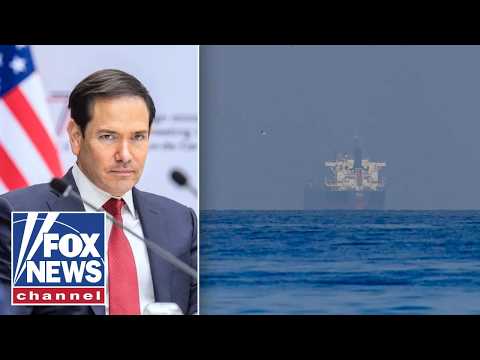
Trump: All military targets in Kharg Island obliterated

United States President Donald Trump claimed that “moments ago,” his country “obliterated” all military targets in Kharg Island, located in the Persian Gulf northwest of the Strait of Hormuz, which he described as “Iran’s crown jewel.” Writing on Truth Social, Trump insisted that “for reasons of decency,” he chose against striking the island’s oil infrastructure. Still, the president underscored that, if any party were to interfere in the US escorting fuel tankers through the Start of Hormuz, he would “immediately reconsider this decision.” Furthermore, Trump reiterated that Iran “will never have a nuclear weapon” and urged the Middle Eastern country to “lay down their arms, and save what’s left of their country, which isn’t much!” Moments earlier, Trump told the press that the US achieved “a lot of big hits” in Iran in the past 24 hours. Previously, Iran warned against attacks on its islands.

NN: This is a major escalation. Kharg Island is the sweet spot where 90% of Iran’s oil  is exported from. Control the island and you control Iran’s oil. I expect boots  on the ground as the  US takes the island

Pentagon may send more ships to Strait of Hormuz

The Pentagon is considering whether to deploy additional warships near the Strait of Hormuz to protect oil tankers from Iranian attacks, The Wall Street Journal reported on Friday, citing two US officials. According to the report, any actual escort mission would not begin until they consider that Tehran doesn’t pose a threat in the region, a process that could take a month or longer. This timeline stands even as US airstrikes continue targeting Iranian missiles and drones in the region. The media noted that roughly 20% of the world’s oil supply flows through the strategic waterway.

Healey: Iran likely mining Strait of Hormuz

British Defense Secretary John Healey said on Thursday that it is likely that Iran has planted mines in the Strait of Hormuz. He added that the United Kingdom has deployed autonomous mine-hunting systems in the region and that he is considering additional options to secure the area. However, he insisted that de-escalation is the fastest way to reopen the strait. “Recognizing the huge impact this potentially has on oil prices and the cost of living, there is an international imperative to try and see this resolved,” Healey said. However, he also warned that, if the Iran conflict worsens, “we have to be ready should evacuations be required.”

Khamenei: Strait of Hormuz should stay closed

Iran’s newly named Supreme Leader, Ayatollah Mojtaba Khamenei, said that the Strait of Hormuz must remain closed in his first message since becoming the country’s supreme leader. After days of suspense, we’ve finally heard from Iran’s new supreme leader – though we’re still yet to see him, likely because of security concerns or his injury in the opening salvo of the war. State TV had announced that the publication of the written message was imminent but it took over an hour for it to be released. It was read aloud by an anchor over a photograph of Mojtaba Khamenei next to a waving flag. The message itself was defiant: Iran will continue to attack the Gulf, keep the Strait of Hormuz closed and open unspecified “other fronts” if the war continues. 

NN: Its time for him to go see his virgins

Wright: US Navy still not ready to escort ships

United States Energy Secretary Chris Wright said on Thursday that the US Navy is not ready to escort tankers through the Strait of Hormuz, as it is focused on offensive operations. He said the military is “working on it” and predicted that it will likely be ready for escort missions by the end of the month. In an interview with CNBC, Wright insisted that the rising oil prices are “short-term pain for long-term gain” and that the campaign against Iran was a “must” due to Iran’s nuclear threat. Meanwhile, speaking to CNN, he said it is “unlikely” that crude will grow as high as $200 per barrel.

NN: Short Term pain as in $150 Brent!  Sounds good to me!!

IEA: Iran war caused biggest oil disruption ever…… Two oil tankers catch fire after strike off Iraq coast

The International Energy Agency (IEA) announced in its latest monthly oil report on Thursday that the ongoing conflict in the Middle East has created “the largest supply disruption in the history of the global oil market.” The agency now expects the oil supply growth in 2026 to reach an average of 1.1 million barrels per day (bpd), with global oil supply falling by eight million barrels per https://youtu.be/JdgJkdNWhNYday in March. The report noted that the crude and oil product flows through the Strait of Hormuz sank from around 20 million bpd before the conflict to “a trickle” currently, with the Gulf countries reducing their total oil output by at least 10 million bpd.

Two oil tankers catch fire after strike off Iraq coast

Two oil tankers caught fire after an attack in Iraq’s territorial waters. Flames spread across both vessels in the Persian Gulf as Iraqi authorities launched an emergency response, according to local media. Iranian media outlet Sabereen News said the vessels were burning about 22 miles (~35 kilometers) from Al-Faw Port, Iraq’s southernmost terminal. One tanker may be linked to the United States, while the other flew an Australian flag, Iraq’s Shafaq News reported, citing a source in Arab Republic security forces. That report also said preliminary information suggested Iran carried out the strike. It added that 25 crew members were evacuated from the scene.


IEA launches record 400 million-barrel oil release

The International Energy Agency (IEA) backed the release of 400 million barrels of oil from strategic reserves on Wednesday, taking the biggest emergency supply steps in its history as markets weighed the risk of disruption through the Strait of Hormuz .”The oil market challenges we are facing are unprecedented in scale, therefore I am very glad that IEA Member countries have responded with an emergency collective action of unprecedented size,” IEA Executive Director Fatih Birol . “Oil markets are global, so the response to major disruptions needs to be global too. Energy security is the founding mandate of the IEA, and I am pleased that IEA Members are showing strong solidarity in taking decisive action together.” The coordinated release is the sixth in the IEA’s history since its creation in 1974. The agency said its members hold more than 1.2 billion barrels in emergency reserves, alongside another 600 million barrels of industry stocks held under government obligation. Despite today’s step, the scale of the release is roughly equivalent to 20 days of oil flowing through Hormuz at about 20 million barrels a day, though some exports can still be rerouted through pipelines outside the strait.

NN: Its less then a months supplu from the Gulf… A cheap publicity stunt!

War In Iran Is Creating a Fertilizer Crisis Like Never Before

We all know that the war with Iran has sent oil prices spiking. But it’s also pushing up the cost of all sorts of chemicals, including fertilizers like urea, ammonia and other nitrogen products that are essential for food production. This is all happening at the worst possible time — just before the spring planting season, when fertilizer is most needed. And while farmers have seen higher spot prices for things like urea before, notably back in 2022, there are already signs that this crisis might be worse. So how is fertilizer actually made? And what do higher fertilizer costs mean for farmers and for food prices? On this episode we speak with Alexis Maxwell, senior analyst on Bloomberg Intelligence’s agriculture team.

NN: As i keep telling you no one expect refiners use crude oil. Its beyond a crude oil problem. Its the vast gulf states refiners that not only are not shipping but not producing.. Its the fact they are suffering severe damage due to constant drone attacks from their Islamic brother Iran

UK maritime agency reports ship hit near UAEUK reports second vessel struck in Strait of Hormuz…..

The United Kingdom Maritime Trade Operations (UKMTO) said a container ship reported damage after a “suspected but unknown projectile” struck the vessel about 25 nautical miles northwest of Ras Al Khaimah in the United Arab Emirates (UAE). “Extent of the damage is currently unknown but under investigation by the crew,” the UKMTO said. It added that all crew members are safe and accounted for. The maritime agency urged vessels moving through the area to “transit with caution and report any suspicious activity.”

UK reports second vessel struck in Strait of Hormuz

The United Kingdom Maritime Trade Operations (UKMTO) said on Wednesday that a second vessel has been struck in the Strait of Hormuz, causing a fire on board. The UKMTO noted the vessel was a cargo ship hit by an “unknown projectile” and that the crew were forced to evacuate and call for assistance. Earlier in the day, the agency noted that a container vessel reported damage after being struck by an unknown projectile, but stressed that all crew members were safe.