US Government to spend $35 billion to BAIL OUT Pension Fund…. its just the start

China, Saudi Arabia stress need for oil market stability

China and Saudi Arabia issued a joint statement on Friday following an official visit made by President Xi Jinping to Riyadh, stressing the importance of stability in the global oil markets and confirming deepening bilateral cooperation in this field. Commenting on the war in Ukraine, the two sides urged a peaceful solution to the conflict by reducing escalation in a way that contributes to restoring global security and stability. Beijing and Riyadh signed several cooperation agreements yesterday, including a deal under which tech giant Huawei will participate in building high-tech complexes in Saudi cities. China and Saudi Arabia agreed to expand crude oil trade as the world’s largest oil importer and the top global crude exporter upgraded their relations to a strategic partnership during the visit of Chinese President Xi Jinping in Riyadh. “China will increase communication and coordination with Saudi Arabia on energy policy, expand the scale of crude oil trade, enhance cooperation on exploration and development, and deliver on the Sino-Saudi Gulei Ethylene Complex Project and other large-scale energy cooperation projects,” China’s Xinhua news agency quoted Xi as saying. The Saudi Press Agency reported a joint statement at the end of the Saudi-Chinese summit, in which Xi met with King Salman and Crown Prince Mohammed bin Salman, “The two sides commended their oil trade volume and the great foundations of the cooperation due to the Kingdom’s ample oil resources and China’s broad markets.”  China and Saudi Arabia also agreed to explore joint investment opportunities in petrochemicals sector and boost cooperation in hydrogen, electricity, PV energy, wind energy, and other sources of renewable energy. China—a major customer of Saudi Arabian crude—and the Kingdom have deepened ties in recent years, including in the energy sector. In October, Saudi Arabia and China jointly stressed the importance of stable long-term crude supply to the market. Saudi Arabia’s Energy Minister, Prince Abdulaziz bin Salman, and Zhang Jianhua, the director of China’s National Energy Administration (NEA), have also agreed to continue cooperation in their efforts to keep the global crude oil market stable. Xi’s visit to Saudi Arabia at a time of major turmoil in the oil market and geopolitics with the Russian invasion of Ukraine signals China’s intention to increase its influence in the Middle East, where the U.S. was, until recently, the world superpower with the biggest influence. The Chinese president’s visit also suggests that Saudi Arabia considers its relationship with China one of strategic importance. While the Chinese and the Saudis are strengthening their relations, U.S.-Saudi relations are at a low point, especially after the U.S. Administration slammed in October Saudi Arabia and the OPEC+ group for what it described as a “short-sighted” and “misguided” decision to reduce their target oil production by 2 million barrels per day (bpd) as of November. NN: Ultimately OPEC will defend price….. We are at prices levels that start to shut down production.

Keystone Oil Pipeline Shut Down After 14,000-barrel oil spill…… Oil Prices On Course For A 10% Loss This Week

Dec 8 (Reuters) – Canada’s TC Energy shut its Keystone pipeline in the United States after more than 14,000 barrels of crude oil spilled into a creek in Kansas, making it one of the largest crude spills in the United States in nearly a decade. The cause of the leak, which occurred in Kansas about 20 miles (32 km) south of a key junction in Steele City, Nebraska, is unknown. It is the third spill of several thousand barrels of crude on the pipeline since it first opened in 2010.  “We have shut down the Keystone Pipeline System and mobilized people and equipment in response to a confirmed release of oil into a creek, approximately 20 miles (approx. 32 kilometers) south of Steele City, NE,” the company said in a statement. TC Energy had to proceed with an emergency shutdown, and the response was initiated late on Wednesday after alarms and a detected pressure drop in the system. “The affected segment has been isolated, and booms deployed to control downstream migration of the release,” the company said. “The system remains shutdown as our crews actively respond and work to contain and recover the oil,” it added.  TC Energy is notifying its customers of the situation and is actively cooperating with third parties to effectively respond to the incident. The company did not give a timeline or a date when oil flows would resume. The 2,687-mile Keystone Pipeline System plays a key role in connecting Alberta’s crude oil supplies to U.S. refining markets in Illinois, Oklahoma, and Texas, as well as connecting U.S. crude oil supplies from the Cushing, Oklahoma, hub to refining markets on the U.S. Gulf Coast through the Marketlink Pipeline System. The Keystone Pipeline, which carries around 600,000 barrels per day (bpd) of oil from Canada to the U.S. On Wednesday, the EIA reported a decline of 5.2 million barrels in U.S. crude inventories for the week to December 2. Yet, there were builds in the products category, with gasoline inventories up by 5.3 barrels in the week to December 2, and an inventory build of 6.2 million barrels in middle distillates, which include diesel. NN: Declining oil demand speculations was the order of the day. We decided to cash in our shorts on the spread trade and go neutral. See details in our trade reco section.

Oil Prices On Course For A 10% Loss This Week
  • Oil prices are set to book a significant loss this week, with WTI and Brent on track to post a 10% loss if Friday’s trade is in line with the rest of the week.
  • Demand concerns continue to trump bullish news in the oil market, with fears of a global recession being amplified by monetary policy tightening.
  • The price cap on Russian oil has so far had a limited effect on oil markets, leading traders to sell their positions.

Crude oil prices are about to book a week of sizeable losses, during which market movements erased all gains Brent and West Texas Intermediate had made since the start of the year. According to Bloomberg, the cumulative weekly loss for the benchmarks could reach 10 percent if today’s trade is in line with what we’ve seen so far this week, as demand concerns trumped the news of China reopening after massive Covid restrictions. At the same time, even though the price cap on Russian oil that G7 put into effect on December 5 was theoretically bullish for oil, traders figured out it was unlikely to have any immediate effect on physical oil supply and instead of buying began selling their positions. This could yet change once the dust from the cap’s implementation settles and the potential for supply disruption unfolds. For now, there have only been hints: Turkey’s new proof-of-insurance rules are one such hint, which has got some 20 million barrels of Kazakh crude stuck in the Turkish straits. At the same time, traders are sounding the alarm over confusion in the physical oil market where cargos have never been traded at fixed, unchangeable prices. Meanwhile, however, fears of a looming global recession fuel a bearish mood among traders, and this is getting reflected in prices. “Oil has been dragged lower by broader recession fears that accompany global monetary policy tightening,” Vishnu Varathan, the head of Asia economics and strategy at Mizuho Bank, told Bloomberg. “And given the lags in monetary policy, a ‘wall of tightening’ may hit the global economy yet.” The bearish factors are strong right now that even the news of the Keystone pipeline spill and consequent shutdown did not have any substantial effect on oil prices. “I would tend to think that, any minute here, you’re going to see a headline hit the tape that’s going to say that Keystone is going to be back sooner rather than later,” Bob Yawger, director of energy futures at Mizuho, told Reuters. NN: I still see oil as having more work to the downside. This is not a selling opportunity to buy some real cheap oil. If you close out the sell side on your spread in essence you are buying oil by keeping your buy side… That could be phenomenal.  if If IF we guess lucky….

Keystone oil tankers stuck in Turkish waters….. Oil Pipeline Shut Down After Leak In Nebraska

LONDON, Dec 8 (Reuters) – Turkey’s maritime authority said on Thursday it would continue to block the passage of oil tankers that don’t carry appropriate insurance letters, adding that insurance checks on ships in its waters were a “routine procedure”. Ships typically have protection & indemnity (P&I) insurance, which covers third party liability claims including environmental damage and injury. Separate hull and machinery (H&M) policies cover vessels against physical damage. Turkish authorities introduced new requirements, which came into effect at the beginning of December, in which every ship must have P&I insurance cover in place for all circumstances when sailing through Turkish waters or when calling at ports

NN: Their is about 200 million barrels sitting on ships. I guarantee you the oil will sooner or later make it to market…

China’s Trade Weakens to Worst Since Early 2020……China Nov passenger vehicle sales drop 9.5%, first fall in six months

  • Exports dropped 8.7% in November as global economy slows
  • Imports fell more than 10%, the worst result since May 2020

China’s trade plummeted in November to the lowest levels since the early days of the COVID-19 pandemic, according to official figures, underscoring the heavy economic toll of Beijing’s “zero COVID” policies. Imports fell 10.6 percent year-on-year while exports dropped 8.7 percent, Chinese customs data showed on Wednesday. The slump in trade marks the steepest decline in imports and exports, respectively, since May 2020 and February 2020. The weak figures come after China’s factory activity shrank for a second straight month in November as rising COVID cases prompted authorities to impose new restrictions in big cities including Shanghai, Beijing and Chengdu. China’s strategy of lockdowns, mass testing and border closures has upended supply chains and kept consumers at home, while fears of a recession in the United States and Europe have dampened overseas demand for Chinese products. China’s economy is expected to grow about 3 percent in 2022, which would be far below an earlier government target of about 5.5 percent and rank among the country’s worst performances in decades. Following rare anti-“zero-COVID” protests last month, Beijing has begun to downplay the severity of newer COVID variants and local authorities across China have loosened some restrictions. But analysts have cautioned that a quick reopening is unlikely given the country’s poor vaccine coverage among the elderly and lack of natural immunity. Beijing last week unveiled plans to vaccinate millions of Chinese in their 70s and 80s, in an apparent effort to tackle a key stumbling block to living with the virus. Only 40 percent of Chinese over 80 have received a third dose of vaccine, according to the National Health Commission – far fewer than in other countries.

China Nov passenger vehicle sales drop 9.5%, first fall in six months


SHANGHAI, Dec 8 (Reuters) – China’s passenger vehicle sales fell for the first time in six months in November and are expected to stay flat next year, an industry body said on Thursday, as demand weakens faster than expected, even as stringent COVID rules are eased. Vehicle sales last month fell 9.5% from a year earlier to 1.67 million units, the first decline since May, according to the China Passenger Car Association (CPCA). Many large cities imposed some form of lockdowns last month as COVID-19 cases rose. “The November sales were far worse than previous expectations,” Cui Dongshu, the CPCA’s secretary general, told an online briefing.

The current trend is unprecedented since the financial crisis in 2008,” he said, while adding that the significant change in China’s COVID policies in recent days means that the three-year pandemic is almost over, which should restore consumer confidence.

China has started easing anti-virus measures after public frustration boiled over late last month, sparking protests against COVID controls that were the biggest demonstration of public discontent since President Xi Jinping came to power in 2012. But analysts say economic activity will take some time to recover. The association said it expects passenger vehicle sales to reach 20.6 million units next year, flat from 2022, a forecast more optimistic than some street views. Analysts at China Merchants Bank International expect retail passenger vehicle sales in China, the world’s biggest car market, to drop 6% next year due to the expiry of a purchase-tax cut. Even with easing COVID restrictions, the sales outlook remains subdued as car makers grapple with rising inventories of unsold vehicles. After two more years of struggling under COVID, China’s working class people have seen their wealth and consumption power shrink, Cui said, adding that no sudden jump was expected in December car sales despite the relaxation of virus measures. One suggestion made by the association was to extend a purchase tax cut for small engine cars, due to expire at the end of this month, to at least June to help buffer the demand slump, he said. U.S. electric vehicle maker Tesla planned to cut December output of its Model Y at its Shanghai plant by more than 20% from the previous month, two people with knowledge of electric vehicle maker’s production plan said on Monday. A Tesla representative called it “false news” without elaborating. The company, whose Shanghai plant is grappling with elevated inventory levels, is offering a limited-time discount of 6,000 yuan ($859) to buyers in China on some models from Wednesday through to the end of 2022, in addition to a previously announced 4,000 yuan insurance subsidy and an up to 9% price cut in October. Tesla sold 100,291 China-made cars in November, including 37,798 for export, the CPCA said. Auto industry officials had expected consumers to rush to buy at the end of the year, before government subsidies and the purchase tax cut expire. But the incentives did little to boost vehicle sales in recent months, as many COVID restrictions remained in place. Foreign brands saw even sharper sale slumps in November, with Japanese brands the weakest among them, said Cui. November sales of Toyota Motor Corp (7203.T) in China fell 18.4% from a year ago, while Nissan Motor (7201.T) saw a 52.5% drop in its sales. NN: It is obvious China still suffers the economic consequences  of the COVID lockdowns. What you must understand is  this COVID season is different. Its a mutation that is more infectious but less deadly. Which means China will be opening up in the next 90 days. As is often the case they are opening up to soon. We shall see how this plays out.

A speedy reversal of China COVID-19 restrictions could cause 1 million winter deaths: report

Chinese authorities appeared to bend to the will of the people on Wednesday by easing some of the harshest COVID-19 restrictions, but a new study showed the high price the country will pay if it tries to reopen too fast. Asian macroeconomic advisory firm, Wigram Capital Advisors, is warning of a “winter wave” of COVID infections that could swamp the healthcare system, according to a report in the Financial Times, which reviewed the firm’s models. Wigram, which takes into account vaccinations and age data in its modellings that it has provided to governments throughout the pandemic, is predicting a death toll of 20,000 a day by mid-March in Beijing, Shanghai and Guangzhou, with daily hospitalizations peaking at 70,000.

The advisory firm is warning that the government has done nothing to prepare the country for a reopening that does not progress cautiously. That’s against the backdrop of a still-low vaccination rate for the elderly, a shortage of intensive care units and vaccines that lack the potency of western rivals.

In addition, the Lunar New Year holiday in January could prove a super spreader event for China, Wigram warned. “The risk is that they are underestimating just how much work — and cost — the rest of the world has done and borne to get to the point of living with Covid,” said Rodney Jones, principal at the firm. In a series of new measures, the National Health Commission on Wednesday announced that COVID-19 tests and proof of health on cellphones will now only be required for nurseries, facilities for the elderly and schools. Lockdowns will be limited to apartment floors and individual buildings, individuals can isolate at home, and schools without outbreaks have been ordered to reopen. The easing comes after recent protests across major cities and in some industrial areas, such as Zhengzhou, the home of one of Apple’s biggest iPhone manufacturer. An International Monetary Fund official said Tuesday that the country’s economic outlook has “darkened noticeably,” due in part to lockdowns. Wigram argued that a more controlled reopening of the economy through next August would see a daily death toll of only 4,000 and total hospitalizations peaking at 200,000, rather than 500,000 in a winter wave. While recent moves by the Chinese government to ease back on its strict COVID policies have given stocks a boost at times, the Hong Kong Hang Seng index tumbled 3.2% on Wednesday, after data showed China exports down 8.7% on the year in November, and imports falling 10.6%. Both numbers were much weaker than analysts expected, as the government’s zero-COVID policies have weighed on the economy. For analysts and markets, a new realization may be forming around the global growth engine that investors have been so eager to see reopen. “It doesn’t seem that long ago that markets were getting all excited over the prospect that China was looking at options to reopen its economy, and while we are seeing a more pragmatic approach any rebound in economic activity is likely to be muted at best,” said Michael Hewson, chief market analyst at CMC Markets, in a note to clients. And China likely has no choice but to continue forcing its cities into intermittent lockdowns at least until the government’s next plenary session of parliament in March and possibly the whole of 2023, predicted Stefan Koopman, senior macro strategist at Rabobank, in a note to clients. “There is a clear risk that more acute changes to China’s COVID policies would lead to chaos in the healthcare system, among others,” said Koopman. NN: China is flirting with a devastating spreading of the plague they created. Things fucked up when it escaped the bio-lab before they developed an effective vaccine. With a fast mutating virus an effective vaccine is essential to making sure the Frankenstein you creates does not come around and eat you. Chinese quarantine policy makes sense when you consider their vast underserved populations and their great fear of mutations. This relaxing of a very effective quarantine program is flirting with economic disaster. China is the worlds largest energy consumer and importer of fossil fuels. I expect this COVID season just getting started to further shut down their economy and to greasily reduce their oil imports.

Brent Oil Erases All 2022 Gains As It Dips Below $80…..Oil cap designed not to impact global price

Brent Oil Erases All 2022 Gains As It Dips Below $80
  • Brent lost nearly all of the gains it made in 2022, settling below $80 on Tuesday for the first time since early January.
  • The difference between the highest and lowest price at which Brent has traded is $62, the largest range since 2008.
  • The fall in oil prices has been driven by fears that demand will get crushed amid a global economic slowdown.

Brent Crude prices settled below $80 per barrel on Tuesday and continued to trade below that level early on Wednesday in Asian trade, erasing all the gains from 2022 as it plunged to the lowest level in a year. The last time Brent had settled below $80 per barrel was in early January this year, more than a month before the Russian invasion of Ukraine which roiled global energy markets and sent crude oil prices above $100 per barrel in the spring.

Early on Wednesday in Asian trade, Brent Crude traded at $78.00, down  by over 2%, and WTI Crude was trading below $73 per barrel

The range of highest and lowest trades of oil prices this year has been a massive $62, which is the biggest oil trading range in one year since the 2008 financial crisis. 

Although the EU embargo and the price cap on Russian crude came into effect earlier this week, the main headline in the oil and equity markets has been the general economic slowdown globally with gloomier predictions of the state of the economy in recent days. In addition, oil traders and speculators are fleeing the market at the end of the year amid high volatility and uncertainty. Moreover, the structure of the oil futures market is showing signs of sluggish global oil demand and sufficient supply. In Asian trade early on Wednesday, “There was no decisive upward momentum from bargain-hunting buying despite prices plunging to their levels lowest in a year after three consecutive sessions of a sharp sell-off,” Vanda Insights said. “The mood in the broader financial markets further soured after major Wall Street banks warned of rough economic headwinds at an industry conference on Tuesday.” Ed Moya, Senior Market Analyst at OANDA, said on Tuesday, “The crude demand outlook is getting crushed as we are in a slowdown basically across all the major economies. Supplies seem plentiful over the near-term and that has everyone hesitating on what was one of the easiest trades of the year.” NN:

Oil cap designed not to impact global price – US

The upper limit to the price of Russian oil set by the West is not expected to have a material impact on the global price and “that was by design,” United States National Economic Council Director Brian Deese claimed on Tuesday, noting that it seems the global market sees it the same way. However, he told reporters aboard Air Force One that the White House will continue to monitor developments that could arise as a consequence of the price cap decision, including the reported backlog of tankers in Turkey. Turning to the domestic labor market, Deese described it as “historically strong” and pointed out that it is “normalizing,” but also “generating” job opportunities in the process. NN: any oil cap is designed to affect supply AND of course supply affects price. For now the cap is to high and its bringing more supplies. As we speak the shadows fleet of over 100 grey market tankers are upping their insurance and the Russia oil will flow for now. Oversupply is the order of the day. Once they scratch their ass and understand the fuck up Europe and the US will modify the price caps and by late spring excess inventories will be bled off and it off to the races once again!!


Oil prices fall on economic fears, dollar strength……… G7 Price Cap Causes An Oil Tanker Traffic Jam In The Black Sea


LONDON, Dec 6 (Reuters) – Oil prices fell in a volatile market on Tuesday as the U.S. dollar stayed strong and economic uncertainty offset the bullish impact of a price cap placed on Russian oil and the prospects of a demand boost in China. Brent crude futures were down almost $4.00. West Texas Intermediate crude (WTI) fell over$3.00. Crude futures on Monday recorded their biggest daily drop in two weeks after U.S. services industry data indicated a strong U.S. economy and drove expectations of higher interest rates than recently forecast. The U.S. dollar index edged lower on Tuesday but was still buoyed by bets of higher interest rates, following the biggest rally in two weeks on Monday. A stronger greenback makes dollar-denominated oil more expensive for buyers holding other currencies, reducing demand for the commodity.

G7 Price Cap Causes An Oil Tanker Traffic Jam In The Black Sea

https://youtu.be/O8__0zEQ0EE

Many oil tankers have dropped anchor near the key Turkish straits connecting the Black Sea with the Mediterranean, waiting for clearance from Turkish authorities who now demand new proof of insurance cover for tankers as the EU embargo and the EU-G7 price cap on Russian crude came into effect.   Some 20 tankers, most carrying Kazakhstani – not Russian – crude were waiting offshore Turkey on Monday, the Financial Times reported, quoting shipbrokers, tanker-tracking services, and oil traders. Turkey now demands new proof of insurance cover for tankers passing through the Bosphorus and Dardanelles straits, the main waterways linking the Black Sea with the Mediterranean. Most of the oil now sitting on tankers off Turkey is from Kazakhstan, shipbrokers reported. Kazakhstan ships its crude from Russian ports on the Black Sea and oil from Kazakhstan is not subject to the EU embargo or price cap. According to the International Group of P&I Clubs, which provides protection and indemnity cover to about 90% of global shipping trade, the new Turkish request of proof goes “well beyond” the information that is usually necessary. While the demand from Turkey for proof of insurance could potentially create another bottleneck for global oil trade, the Turkish rules are not unreasonable, considering the aging tankers of the ‘dark fleet,’ which is now thought to be servicing a growing part of Russian crude flows. Russia and entities willing to capitalize on trade with Russian oil have amassed in recent months a ‘shadow fleet’ of possibly hundreds of tankers whose new owners are unknown or little known, analysts and ship brokers say. Russia, which has rejected the price cap and has said it would not sell its crude to countries that have joined the mechanism, is looking at various ways to circumvent the sanctions by using its own fleet and insurance and ships of owners that are less scrupulous than the major West-based tanker owners and charterers

Lower Oil Prices… China Enters Next Phase Of Covid Crisis

  • China’s zero-covid policy has had a very negative impact on oil demand in 2022.
  • Whether Chinese authorities relax covid measures or not, both steps carry huge political risk for China’s President Xi.
  • Softer economic growth in China and an evaporating  Ukraine war premium could result in further downside for crude. Since the late 1990s, China has been the big beast in the global oil markets, driving demand for oil and other commodities that it used to power double-digit economic growth every year for many years and then high single-figure growth for years after that. As late as 2017, China’s high rate of economic growth still allowed it to overtake the U.S. as the largest annual gross crude oil importer in the world.  Where it goes from here in terms of oil demand is a mater of COVID lockdowns. This policy – whether to stick to it or relax this policy further – carries huge risks for the country and for its leader, Xi Jinping, with whom the policy is personally associated. Whichever choice Xi makes, though, it is almost certain that it will result in an extended period of lower oil prices. This, although unwelcome for oil companies and net oil producing countries, will be extremely welcome for several major developed economies and their citizens who have seen high oil prices over the past few months play a key role in destroying their savings, their pensions, and their quality of life.  China’s zero-Covid policy is based on ultra-tight lockdowns that are introduced across entire areas, including major cities, immediately after a relatively miniscule number of Covid-19 cases are identified. December 2021 saw a refinement of the zero-Covid strategy into one incorporating the idea of ‘dynamic clearing’, which provided local governments more flexibility in imposing restrictions, allowing daily increases in symptomatic cases to be capped at around 200 on a national basis. On 11 November, the Chinese government unveiled 20 minor changes to the zero-Covid policy, including travellers from abroad requiring only one negative PCR test within 48 hours of boarding a flight to China instead of two. Another was that foreign travellers would only have to quarantine for eight days, rather than 10, and another was that inside China people considered ‘close contacts of close contacts’ of Covid-19 carriers would no longer need to quarantine. The new guidelines also forbade mass testing unless ‘it is unclear how infections are spreading’ in an area. Despite this slight relaxing of the rules, China’s President Xi is now facing a wave of public protests against the still-tight Covid-19-related restrictions across the country. President Xi is caught between the metaphorical rock and a hard place. On the one hand, if he sticks to anything close to zero-Covid restrictions – at this point, basically any meaningful restrictions at all – then China’s economic growth will continue to deteriorate. If he meaningfully loosens China’s Covid-19 control measures, then it is highly likely that vast numbers of China’s people will die, resulting in exactly the same appalling scenario that China would face if it stuck to tight control policies for Covid-19.  The reason why vast numbers of deaths would result from any meaningful lifting of Covid-19-related controls is that China still does not have an effective vaccine against the disease or any variant thereof, despite offers from all major vaccine-producing countries to make such supplies available to it. China also does not have an effective post-infection anti-viral, and it still refuses to buy in such supplies from foreign suppliers, again despite offers from several Western countries to make such anti-virals and post-infection treatments available to it. Because of China’s initial response to the outbreak of Covid-19 in 2019 – draconian lockdowns across all areas – the country still has vast numbers of its people without any vaccination against any variant of the disease, even China’s own vaccine (CoronaVac) and it has a critical shortage of intensive care units (ICUs). “There are 263 million people in China who are over the age of 60 and 35 million people over 80 and the susceptibility of the elderly to severe cases of Covid-19 is well known,” “Various studies put the number of ICUs per 100,000 people at between 3 and 6 in China – this compares with 2.3 in India and 34.7 in the U.S.,” . “What the national level analysis misses is the regional variation in ICU coverage: the majority of ICUs in China are in the wealthier eastern provinces, which tend to have higher vaccination rates and better demographics, and local estimates factoring in city-level demographics and medical capacity posit that the most vulnerable city. So, how bad could things become for China? Data from Hong Kong’s February 2022 outbreak is likely to offer the most relevant comparison, thinks Green. “Returning to China CDC [Center for Disease Control] micro-estimates of city-level healthcare provision, if we use the Hong Kong February 2022 outbreak as the baseline for community spread and severity of cases, it is estimated that just 7.3 percent of China’s population lives in cities with sufficient ICU capacity, with the other 92.7 percent living in areas where ICU resources would be completely overwhelmed by the epidemic,” he says. “The shock to a relatively unvaccinated population could be substantial: based on Hong Kong’s mortality rate, China could experience 50,000 deaths per day at the height of an uncontrolled outbreak,” he highlights. In economic terms, then: “In short, China remains well and truly stuck and we think real GDP, as measured by TS Lombard, this year will come in at 1.6 percent year-on-year,” concludes Green.    The removal of much of the economic potency behind China’s big bid in the global oil markets would mean a much softer true demand backdrop to oil prices going forward, particularly with any concomitant diminution in the Russia-Ukraine War premium. NN: They should not break out the Baijiu just yet and celebrate. In fact they may be making a BIG mistake. Without vaccinations and new infections doubling its not time to let your guard down. I expect a strong possibility of a bigger wave of infections and lockdowns coming.

US closes deep in red amid recession concerns

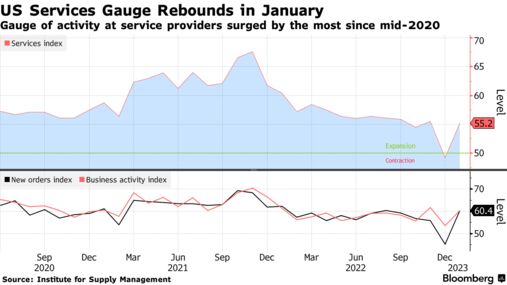
  • U.S. service sector activity picks up in November
  • Tesla cuts output plan for Shanghai plant for December-sources
  • All S&P 500 sectors decline, with energy stocks hit hard
  • Indexes down: Dow 1.4%, S&P 1.79%, Nasdaq 1.93%

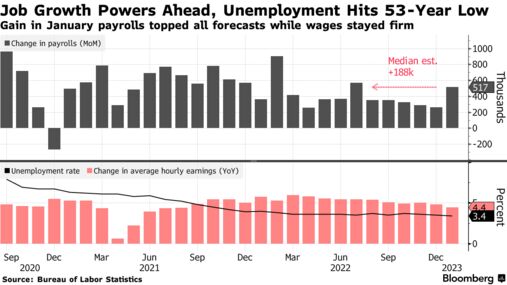
Major United States stock markets closed in the red territory on Monday as Fitch Ratings cut the 2023 world growth outlook due to intensified rate hikes from central banks. Traders also observed the latest ISM service sector data, which recorded further growth in November, sending the euro down by 0.44% against the dollar at 3:59 pm ET to sell for $1.04853. The Dow Jones plummeted 1.40% at the closing bell, shedding almost 500 points, as Salesforce sank 7.35% after announcing that Slack’s CEO will be leaving the company. The Nasdaq 100 plunged by 1.73%, with Tesla dropping 6.37% after denying plans to cut production in China. The S&P 500 decreased by 1.79%, as VF Corp. saw a sell-off of over 11.30% after downgrading its earnings prospects. The data came on the heels of a survey last week that showed stronger-than-expected job and wage growth in November, challenging hopes that the Fed might slow the pace and intensity of its rate hikes amid recent signs of ebbing inflation. “Today is a bit of a response to Friday, because that jobs report, showing the economy was not slowing down that much, was contrary to the message which (Chair Jerome) Powell had delivered on Wednesday afternoon,” said Bernard Drury, CEO of Drury Capital, referencing comments made by the head of the Federal Reserve saying it was time to slow the pace of coming interest rate hikes. “We’re back to inflation-fighting mode,” Drury added. Investors see an 89% chance that the U.S. central bank will increase interest rates by 50 basis points next week to 4.25%-4.50%, with the rates peaking at 4.984% in May 2023. The rate-setting Federal Open Market Committee meets on Dec. 13-14, the final meeting in a volatile year, which saw the central bank attempt to arrest a multi-decade rise in inflation with record interest rate hikes. The aggressive policy tightening has also triggered worries of an economic downturn, with JPMorgan, Citigroup and BlackRock among those that believe a recession is likely in 2023. In other economic data this week, investors will also monitor weekly jobless claims, producer prices and the University of Michigan’s consumer sentiment survey for more clues on the health of the U.S. economy. NN: I got PPI this week and CPI next week a day before the FED meets. These reports will help me get a bead of weather or not we get the Santa Clause rally and how big it could be.