Iraqi Foreign Minister Hoshyar Zebari briefly walked out Thursday of an Arab League ministerial meeting held in Libya to protest against Moammar Gadhafi’s declared support for Saddam Hussein loyalists, delegates said. They said Zebari stormed out after he told his Arab peers that his government was angry over public comments by Gadhafi pledging support to a group of Saddam loyalists he met in Libya earlier this week. The group included senior commanders of Iraq’s Saddam-era army and officials from his outlawed Baath Party. On Wednesday, Iraqi government spokesman Ali al-Dabbagh condemned Gadhafi’s Sunday meeting with the 29 Saddam loyalists, describing the move as “undiplomatic” and an “insult” to the people of Iraq. Iraq’s post-Saddam governments are particularly sensitive to any contacts between foreign governments and Saddam loyalists. It views such meetings as an attempt to undermine their legitimacy and casting doubt on the right of the country’s Shiite Muslim majority to be the country’s most dominant political group. The Saddam loyalists are almost exclusively from the rival Sunni branch of Islam. Zebari later rejoined the meeting following a mediation by the foreign ministers of Bahrain and Kuwait, according to the delegates. They had no details on the mediation. The annual Arab League summit and meetings held just before them are often plagued by no-shows — mostly because of personal disputes among leaders — and on-camera spats. The meeting that Zebari walked out on was trying to hammer out an agenda for the Arab summit scheduled for Saturday and which is expected to be dominated by the stalled Middle East peace process. In an opening statement, Libyan Foreign Minister Moussa Kosa blamed the deadlock on Israel’s “obstinacy” and the “bias” by the West against Arabs. The ministers agreed to recommend to their leaders fulfilling a request by the Palestinian Authority to raise funding for Palestinians living in east Jerusalem from $150 million to $500 million annually, according to Secretary General Amr Moussa afterwards. They will also recommend creating a new permanent Arab League commissioner position to follow the issue of Jerusalem. Earlier this month, Arab nations opened the door for Palestinian Authority President Mahmoud Abbas to enter four months of indirect, American-brokered peace talks with Israel. But they later threatened to withdraw support for the indirect talks because of recent Israeli announcements on plans for new building in Jerusalem. The summit’s agenda also deals with other Middle East issues such the West’s standoff with Iran over its nuclear program, the situation in Iraq and Sudan. The summit is likely to register a higher-than-usual no-shows by Arab leaders. EgyptianPresident Hosni Mubarak, recuperating from a gall bladder operation inGermany, will not go and is sending his prime minister in his place.Lebanon’s top leaders are staying away over a decades-old dispute withTripoli over the 1978 disappearance of a top Lebanese Shiite cleric who was last seen in Libya. Tripoli denies having any connection with the case. Instead Lebanon is sending its Arab League’s envoy to the March 27-28 summit. NN: This is part of the proxy wars betwenn the Shiite and Sunnis. Iran and Saudi Arabia are playing with fire. Sunnis and Shiite are dukeing it out or the vast oil reserves in Iraq and Libya. Before its over with they will got around to dronning the oil fields. What is dronning.. That is where in this case the oil fields will be attacked by a drone swarm. Virtually unstoppable.
Oil JUMPS 4% on supplies WORRIES
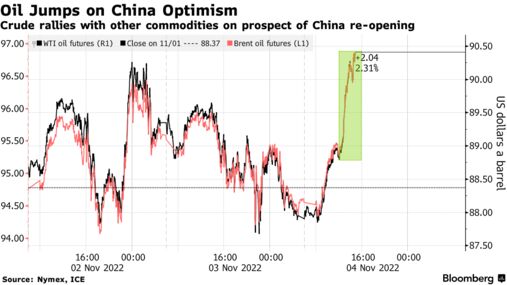
Crude futures soared 4% on Friday as fears of supply halts intensified. Russia has threatened to cut its energy supply to Europe if price caps on its oil and gas are introduced. Prices were also supported by OPEC+’s decision to cut output in October, as well as a decline in United States oil rigs And the Iranian nuclear deal put on hold as we will explain below. Brent for settlements in November surged 4.09% to sell for $92.79 per barrel at 2:19 pm ET and West Texas Intermediate (WTI) for settlements in October climbed 3.96% to go for $86.91 per barrel at 14:21 pm ET.
1. The Organization of the Petroleum Exporting Countries (OPEC) and its allies, a group known as OPEC+, will reduce output for October by 100,000 barrels per day (bpd), amounting to only 0.1 per cent of global demand, and also agreed they could meet any time to adjust production before the next scheduled meeting on October 5. “It’s the symbolic message the group wants to send to the markets more so than anything,” said Oanda analyst Craig Erlam, adding that the 100,000 bpd raise last month by OPEC+ was not seen as a big deal. “What we’ve probably seen from the markets was pricing in most of the worst-case scenario,” Erlam added. Top OPEC producer Saudi Arabia last month flagged the possibility of output cuts to address what it sees as exaggerated oil price declines. Russia, the world’s second-largest oil producer and a key OPEC+ member, does not support a production cut at this time and OPEC+ is likely to decide to keep output steady, the Wall Street Journal reported on Sunday, citing unnamed sources.
2, “The bigger picture is that OPEC+ is producing well below its output target and this looks unlikely to change given that Angola and Nigeria, in particular, appear unable to return to pre-pandemic levels of production,” Caroline Bain, chief commodities economist at Capital Economics, said.
3. Oil prices have fallen in the past three months from multi-year highs hit in March, pressured by concerns that interest rate increases and COVID-19 curbs in parts of China could slow global economic growth and dent oil demand. Lockdown measures in China’s southern technology hub of Shenzhen eased on Monday as new infections showed signs of stabilizing though the city remains on high vigilance.
4. Meanwhile, talks to revive the West’s 2015 nuclear deal with Iran, potentially providing a supply boost from Iranian crude’s returning to the market, have hit a new snag. The White House on Friday rejected Iran’s call for a deal to be linked with closure of investigations by the UN nuclear watchdog, a Western diplomat said.
5. Use of oil in power generation is also expected to pick up, analysts said, as Russia’s state-controlled Gazprom on Friday said it would stop pumping gas via the Nord Stream 1 pipeline due to a fault.
6. The International Energy Agency last month raised its oil demand forecast for the year, partly because it expects gas-to-oil switching in some countries due to record natural gas and electricity prices. NN: as you know we have a standing reco on a oil trade and we upped our anti Friday recommending traders not in the market to establish positions
IAEA sounds alarm as ZNPP loses offsite power
UN sounds gravest alarm yet on fighting around Ukraine nuclear plant
Shelling destroyed power infrastructure in the Ukrainian city of Enerhodar where staff operating the Russian-held Zaporizhzhia nuclear power plant live, posing a growing threat to the plant, the UN nuclear watchdog said on Friday. The plant’s offsite power lines, vital lines of defence against potential nuclear meltdown, have already been cut and the shelling at Enerhodar has caused a lasting blackout there. That has prompted Ukraine to say it may have to shut down the last operating reactor supplying power to Zaporizhzhia including the cooling systems for the plant’s nuclear fuel. “This is an unsustainable situation and is becoming increasingly precarious. Enerhodar has gone dark. The power plant has no offsite power. And we have seen that once infrastructure is repaired, it is damaged once again,” International Atomic Energy Agency chief Rafael Grossi said in a statement. Ukraine and Russia have blamed each other for shelling near Zaporizhzhia in southern Ukraine and within the perimeter of Europe’s biggest nuclear power plant, which has six reactors. “This is completely unacceptable. It cannot stand,” Grossi said. “I therefore urgently call for the immediate cessation of all shelling in the entire area. Only this will ensure the safety and security of operating staff and allow the durable restoration of power to Enerhodar and to the power plant.” Grossi this week called for the creation of a “nuclear safety and security protection zone” around Zaporizhzhia, repeating his call on Friday. Zaporizhzhia’s operator is not confident that off-site power can be restored and that is prompting it to consider shutting down the last operating reactor, Grossi said. “The entire power plant would then be fully reliant on emergency diesel generators for ensuring vital nuclear safety and security functions. And as a consequence, the operator would not be able to re-start the reactors unless offsite power was reliably re-established,” he added. Russia said it backed Grossi’s call. “We fully support the appeal and demand of the #IAEA Director General that shelling of the town of Enerhodar and the #ZNPP must stop immediately,” its ambassador to the IAEA Mikhail Ulyanov said on Twitter. NN: Russia is play a dangerous game here…. And its brilliant…. Nuclear blackmail. Just what the evil doctor ordered a meltdown of Europe’s biggest nuclear reactors….. Talk about a strategic distraction….. Even the threat gives Russia the upper hand, Will they play the meltdown card: YES if they fell they need to retaliate on the coming price caps on their oil and gas exports Europe is planning…..
Blinken: Iran’s latest response takes us backward
U.S. Secretary of State Antony Blinken insisted Friday that Iran’s latest proposal in the framework of negotiations to restore the nuclear deal “takes steps backwards” in returning to the pact. “We are not willing to accept an agreement that does not meet our basic requirements and continually tries to introduce extraneous demands that are not relevant to the agreement itself,” Blinken said when asked at a press conference at NATO headquarters. Without wanting to reveal more details, the head of U.S. diplomacy assured that positions had been brought closer in recent weeks with Tehran, but the most recent response to the final document proposed by the European Union, which is acting as mediator, means taking “steps backwards”. Blinken has pointed out that Washington will only reach an agreement if the terms mean an improvement for U.S. national security. “The president (Joe Biden) is focused on that, and what we’re seeing again is that we’re only taking steps backward and not forward,” he lamented. The European Union’s High Representative for Foreign Policy, Josep Borrell, already warned on Monday that Iran’s latest demand does not help to culminate the talks and in fact puts the process “at risk.” The EU-sponsored diplomatic process seeks to restore an agreement that, despite remaining in force, is badly damaged after the U.S. unilaterally withdrew during Donald Trump’s tenure, and Iran breached agreed limits on its nuclear activity. For the EU, the proposal put on the table by Borrell a month ago is a final document that the participants of the nuclear deal must subscribe to or reject, following a 16-month process of talks, mainly in Vienna, to get the United States to return to the Iranian nuclear deal. NN: the agreement from hell. If this goes through AND Irans nuclear program is not stopped millions of people will die from the weapons they are creating. This is all about oil. The lefties much rather buy oil from our enemies then develop domestic resources…. WHY? Because foreign sources are easiler to control. And their is little opposition to foreign oil… The Greeneeeweenis have a license to kill the domestic oil industries of the great democracies…..
European commission to propose price cap on Russian Gas
BRUSSELS, Sept 7 (Reuters) – The European Union’s executive proposed on Wednesday capping the price of Russian gas imports, among a series of emergency measures designed to limit consumers’ energy bills. European Commission President Ursula von der Leyen outlined five proposals she said could immediately affect “astronomical” prices. Energy ministers from the bloc’s 27 member states will discuss them on Friday.
1. PRICE CAP ON RUSSIAN GAS
Von der Leyen said Russia was weaponising energy markets to punish EU for Western sanctions imposed on Moscow over its invasion of Ukraine. “We must cut Russia’s revenues which Putin uses to finance this atrocious war against Ukraine,” she said. The EU executive is proposing a price cap on Russian gas, without specifying a figure. Hours earlier, Russian President Vladimir Putin threatened to halt all supplies if Europe took such a step. The Commission is also seeking to reduce gas prices from other suppliers, such as through coordinated EU negotiations.
2. REVENUE CAP FOR LOW-COST PRODUCERS
The Commission will propose a cap of 200 euros per megawatt hour on the price of electricity generated at low cost from renewables and low carbon sources, according to a draft document seen by Reuters. Von der Leyen said extra revenues made could be channelled by EU countries to support struggling households and businesses. “It is now time for consumers to benefit from the low costs of low carbon energy sources, like renewables,” she said.
3. ‘SOLIDARITY CONTRIBUTION’ FROM FOSSIL SECTOR FIRMS
The Commission has highlighted the extraordinarily large profits by companies in the oil, gas and coal sectors. EU countries would collect a ‘solidarity contribution’ to support vulnerable consumers or to accelerate a shift to green energy. The funds could, for example, help energy-intensive sectors such as fertiliser production.
4. LIQUIDITY FOR UTILITIES
Record-high prices are threatening energy suppliers with possible defaults. The volatility of gas prices has increased risk as a whole for market participants, leading to demands from banks or brokers for higher margins. Some of the suppliers have sought state guarantees to cover the margin calls and the EU executive wants to allow EU countries to provide them more rapidly. The Commission plans to discuss with regulators the possibility of accepting a wider range of assets as collateral and with futures exchange operators the possibility of “circuit breakers” to reduce intra-day price volatility.
5. REDUCING DEMAND
The Brussels-based Commission will propose binding targets for EU countries to reduce electricity use during peak hours. According to a Commission proposal, which has not been made public, EU countries would need to cut electricity use 10% per month compared with the same period in the last five years, and by an extra 5% during peak price periods. One path during peak demand could be an auction in which consumers submit bids on the financial compensation they would need to cut consumption, this being funded by national budgets. EU members would also identify means to decrease overall electricity consumption. NN: I guess their were no adults in the room. Cap prices and punish your supplier by forcing them to take lower prices….. And my favorite force people to freeze in their living rooms….
Putin Threatens To Halt All Gas To Europe If Prices Are Capped
The prices of oil futures increased on Friday, as traders showed concerns over the possible cuts in the global supply of crude as the Western countries continued to pressure Russia with sanctions. The energy crisis has been raging in Europe as a result of Russia’s decision to halt its gas supplies to the European Union. Moscow underlined that it will refuse to send its energy sources to the West should the latter impose a price limit. Russian President Vladimir Putin has threatened to retaliate against any move by the European Union to cap the price of Russian gas by halting flows completely and suggesting a deal allowing Ukrainian grain to be exported to world markets could be disrupted. Addressing an economic conference in the Russian Far East late on Wednesday, Putin referred to the EU’s proposed cap on Russian gas prices as “yet another stupidity, another non-market decision that has no future”. The Russian president said such a move by Europe could result in more price hikes. Putin also noted that Russian piped gas is “many times more competitive than the liquefied natural gas shipped across the ocean”, in reference to the higher price Europe is paying to stock up on American LNG as a replacement. He vowed to ignore “political decisions that contradict contracts”. “We won’t be supplying anything if it runs counter to our interests,” state-run Tass news agency reported him as saying. “Those who are imposing whatsoever on us are not in a position to tell us what they want. Let them think about it.” EU ministers are set to discuss gas cap measures on Friday. Putin also threatened to disrupt the UN-brokered deal that has seen Turkey mediate shipments of Ukrainian grain from Odesa to world markets via Istanbul, suggesting that only wealthy countries are receiving this grain. Ukraine and Russia cut a deal with Turkey and the UN in July in order to avert a global food crisis due to large volumes of Ukrainian grain blocked from leaving ports. Putin called the grain deal “another outrageous deceit” and vowed to “have a word with the Turkish President”, saying Russia and other poorer countries were not benefiting from the deal. The Russian president said that for the time being, Moscow would continue with the deal but suggested he would be looking for concessions. Oil prices rose on Friday as investors considered Russia’s threat to halt oil and gas exports to some buyers. U.S. crude advanced 1.2% to $84.53 a barrel while Brent crude surged 1.4% to $90.41 per barrel. NN: Putin is not fucking around here. And Europe is relying super heroes to bail them out. Oil Man cannot supply enough oil…. Soon they will scratch their asses and figure it out,
U.S. stock futures point to third day of gains ahead of next week’s inflation report
U.S. stock futures were pointing Friday to a third day of gains, as investors bet that tough talk from Federal Reserve officials now won’t prevent a pivot down the road.
- Futures on the Dow Jones Industrial Average YM00, 0.85% rose 228 points, or 0.7%, to 32089.
- Futures on the S&P 500 ES00, 0.92% gained 30.5 points, or 0.8%, to 4036.
- Futures on the Nasdaq 100 NQ00, 1.19% increased 118.25 points, or 1%, to 12516.
On Thursday, the Dow Jones Industrial Average DJIA, +0.61% rose 193 points, or 0.61%, to 31775, the S&P 500 SPX, +0.66% increased 26 points, or 0.66%, to 4006, and the Nasdaq Composite COMP, +0.60% gained 70 points, or 0.6%, to 11862. The S&P 500 has gained 2.5% over the last two sessions. Markets have absorbed two days of hawkish speeches from Federal Reserve officials, as well as 75-basis point rate hikes from the Bank of Canada and the European Central Bank. Some analysts have attributed the gains to a favorable technical picture. There also are expectations the Labor Department will report a month-on-month decline in consumer prices next week, as market-derived measures of inflation expectations also are falling. “We think this remains a setup where downside reads in inflation means Fed has less work to do,” said Tom Lee, head of research at Fundstrat, in a note to clients. A noon speech from Fed Gov. Christopher Waller, speaking in Austria, is the highlight of a quiet day on the U.S. economics calendar. At the same time, the quarterly flow of funds report from the Fed is due.
Euro leaps parity on ECB, world stocks hit one-week high
LONDON/SYDNEY, Sept 9 (Reuters) – The euro rose back above parity to a two-week high against the dollar on Friday following a large rate hike and hawkish comments from the European Central Bank, while a weaker dollar helped world stocks rise to a one-week high. The euro was plotting 1.5% gains for the week after the ECB raised rates by a record 75 basis points on Thursday and signalled further hikes to fight inflation, even as the bloc’s economy is likely heading for a winter recession. Meanwhile, Federal Reserve Chair Jerome Powell said on Thursday the bank is “strongly committed” to controlling inflation but hopes it can do this without the “very high social costs” involved in past inflation fights. “We have seen more hawkish comments out of central banks not only in the U.S. but globally – the Bank of England and the ECB,” said Matthias Scheiber, global head of portfolio management for multi-asset solutions at Allspring. “You can see it in short-term interest rates.” The euro jumped 1% to $1.0102 as Germany’s two-year bond yield leapt 9 basis points to 1.417%, hitting its highest since 2011 for a second day. “A further 75bp rate step is quite possible for the October (ECB) meeting, as inflation is likely to rise further for now,” Commerzbank analysts said in a note. The dollar stumbled 0.95% against a basket of major currencies. Sterling rose 1.1% against the dollar after Britain’s new leader, Liz Truss, on Thursday announced a cap on soaring consumer energy bills for two years to cushion the economic shock of the war in Ukraine. “There is still a lot of tightening to come, but I guess the Fed is getting closer to the top, so we will probably see some easing in the pace of hikes, if not in this month’s meeting, maybe in the subsequent meetings,” said Shane Oliver, head of investment strategy and chief economist at AMP Capital. NN:
N. Korea will never give up its nuclear weapons – Kim
SEOUL, South Korea (AP) — North Korean leader Kim Jong Un stressed his country will never abandon the nuclear weapons it needs to counter the United States, which he accused of pushing to weaken the North’s defenses and eventually collapse his government, state media said Friday.Kim made the comments during a speech Thursday at North Korea’s rubber-stamp parliament, where members passed legislation governing the use of nuclear weapons, which Kim described as a step to cement the country’s nuclear status and make clear such weapons will not be bargained. The law spells out conditions where North would be inclined to use its nuclear weapons, including when it determines that its leadership is facing an imminent “nuclear or non-nuclear attack by hostile forces.” The law requires North Korea’s military to “automatically” execute nuclear strikes against enemy forces, including their “starting point of provocation and the command,” if Pyongyang’s leadership comes under attack. The law also says North Korea could use nukes to prevent an unspecified “catastrophic crisis” to its government and people, a loose definition that experts say reflect an escalatory nuclear doctrine that could create greater concerns for neighbors. Kim has made increasingly provocative threats of nuclear conflict toward the United States and its allies in Asia, also warning that the North would proactively use its nuclear weapons when threatened. His latest comments underscored the growing animosity in the region as he accelerates the expansion of his nuclear weapons and missiles program. “The purpose of the United States is not only to remove our nuclear might itself, but eventually forcing us to surrender or weaken our rights to self-defense through giving up our nukes, so that they could collapse our government at any time,” Kim said in the speech published by the North’s official Korean Central News Agency.
“Let them sanction us for 100 days, 1,000 days, 10 years or 100 years,” Kim said. “We will never give up our rights to self-defense that preserves our country’s existence and the safety of our people just to temporarily ease the difficulties we are experiencing now.” The North Korean report about Kim’s speech came a day after South Korea extended its latest olive branch, proposing a meeting with North Korea to resume temporary reunions of aging relatives separated by the 1950-53 Korean War, which were last held in 2018. Kim was combative toward South Korea in Thursday’s speech and urged his country to expand the operational roles of its tactical nuclear weapons and accelerate their deployment to strengthen the country’s war deterrent. Those comments appeared to align with a ruling party decision in June to approve unspecified new operational duties for front-line troops, which analysts say likely include plans to deploy battlefield nuclear weapons targeting rival South Korea along their tense border. Cheong Seong Chang, a senior analyst at South Korea’s Sejong Institute, said Kim’s comments and the new North Korean law amount to a warning that it would launch immediate nuclear strikes on the United States and South Korea if they ever attempt to decapacitate Pyongyang’s leadership. Experts say Kim is also trying to strengthen his leverage by strengthening his cooperation with China and Russia in an emerging partnership aimed at undercutting U.S. influence. NN: Another fuck up of US leadership. They let Kim Yon Num Chucks get nukes. Shit the dumb fucks built for him the nuclear reactor he uses to get his weapons grade materials……. Their is no stopping him now short of all out nuclear war…. Which will come soon enough!
ECB poised for another big rate hike as inflation soars
FRANKFURT, Sept 8 (Reuters) – The European Central Bank will raise interest rates again on Thursday to fight runaway inflation and, with a big move and a record one under consideration, the only question is by how much. Concerned that sky-high inflation is getting increasingly entrenched, policymakers are scrambling to keep a lid on the bloc’s most damaging bout of price growth in nearly half a century as it eats up household savings and weighs on business output. Ultimately, the choice will be between a 50 and a 75 basis point increase in the zero percent deposit rate, with expectations now leaning towards a bigger increase but not with full conviction. The larger move would be the biggest ever increase of the ECB’s benchmark rate, but regardless of the outcome the bank’s direction of travel will be clear. More hikes are factored in for coming months as price pressures are consistently exceeding even the most pessimistic forecasts.

Buoyed by hawkish comments from conservative policymakers, markets now see a more than 80% chance of a 75 basis point hike. A slim majority of economists polled by Reuters are also predicting the larger increase. “With the hawks continuing to hold the upper hand, we think the ECB will deliver a 75 basis point increase,” BNP Paribas economist Paul Hollingsworth said. “We now expect a more front-loaded tightening cycle that takes the deposit rate up to a terminal rate of 2% by the end of the first quarter.” The decision also encapsulates a policy dilemma. Updates to ECB forecasts are certain to show sharply higher inflation but significantly weaker economic growth. Sky-high energy prices will sap purchasing power and almost certainly plunge the bloc into a recession that could be exacerbated by an aggressive ECB, especially with borrowing costs rising for governments as they try to help those most affected. A big hike after a decade of ultra-low rates also goes against the ECB’s guidance for gradualism and several policymakers, including board member Fabio Panetta and Greek central bank chief Yannis Stournaras, have made the case for a smaller move. Headline euro zone inflation is over 9% while its underlying rate is 4.3%, more than twice the ECB’s target, indicating that more and more of the energy-driven price pressures are seeping into the broader economy. The coming recession also makes the case for front-loading rate hikes as moving aggressively once the downturn takes hold will be difficult to communicate. NN: The ECB raised rates by a whopping 75 bases points today… Its biggest rate increase ever. I believe this could signal the start of a turn around in the Euro. The US Fed Reserve went first raising rates. And that forced capital into dollar assets. Now the the EU is catching up. i believe in time the Euro will return to previous levels against the dollar