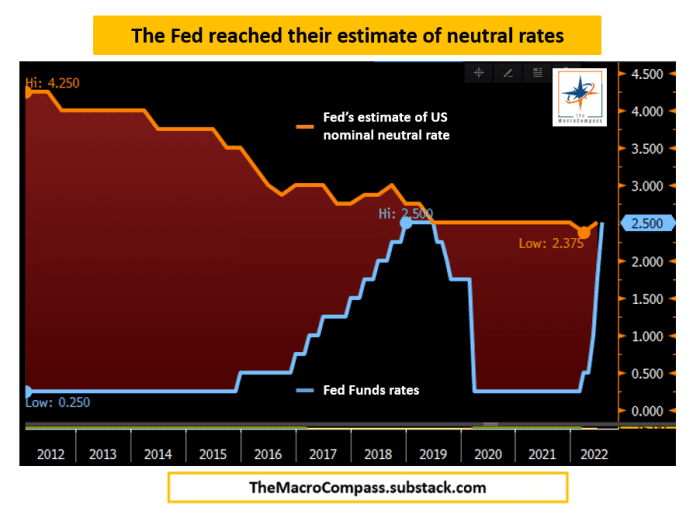
Following the U.S. Fed’s biggest rate hike since 1994 on Wednesday, which brought oil prices down 1%, central banks across Europe on Thursday raised interest rates by record amounts in an effort to rein in inflation as energy prices soar. The biggest shocks came from the Swiss National Bank and the National Bank of Hungary. The Swiss National Bank made its first interest rate hike since 2007, increasing rates by 50 basis points, from -0.75% to -0.25%, sending the Swiss franc surging higher. “We came to a conclusion that it is now better to increase interest rates by 50 basis points and not by 25 points in order to make an initial first step, in order to really also signal that we are fighting inflation so that it will also, over the medium-term, be in the range of price stability,” CNBC quoted the bank as saying. In Hungary, the central bank raised its one-week deposit rate by 50 basis points, catching the market by surprise. The Bank of England also raised rates for the fifth time on Thursday, increasing them by 25 basis points to 1.25%, noting that the bank would “take the actions necessary to return inflation to the 2% target sustainably in the medium term”, CNBC reported. On Wednesday, the European Central Bank paved the way for rate hikes in July and September. “We are in a new era for central banks, where lowering inflation is their only objective, even at the expense of financial stability and growth,” George Lagarias, Chief Economist at Mazars Wealth Management said, as reported by Reuters. Inflation across Europe has been caused by soaring oil and gas prices, which surged another 24% on Thursday after Russia further curbed gas flows to the European Union through the Nord Stream 1 pipeline, citing technical issues. NN: What we have/are seeing is central bank panic. With the world currency markets crashing to the dollar and global bond markets wiping out they had to do something. They responded with a coordinated round of central bank raising interest rates. They also back door intervened to stop the Pound and Euro from crashing further. We can see they are in crises mode. They have signaled their panic. That is why the DOW lost over 700 points and the NASDAQ1100 DROPPED CLOSE TO 500 POINTS. Which means we expect soon to see reports of the start of a global recession. And the stock market plunge is far from over
Huge sell-off rocks Treasury markets, yield curve inverts
June 13 (Reuters) – U.S. two-year Treasury yields rose above 10-year borrowing costs on Monday – the so-called curve inversion that often heralds economic recession – on expectations interest rates may rise faster and further than anticipated. Fears the U.S. Federal Reserve could opt for an even larger rate hike than anticipated this week to contain inflation sent two-year yields to their highest levels since 2007. But a view is also playing out that aggressive rate hikes may tip the economy into recession. The gap between two and 10-year Treasury yields fell to as low as minus 2 basis points (bps), before rising back to around five bps, Tradeweb prices showed . The curve had inverted two months ago for the first time since 2019 before normalising. An inversion of this part of the yield curve is viewed by many analysts as a reliable signal that recession could come in the next year or two.The move follows inversions on Friday in the three-year/10-year and five-year/30-year portions of the Treasury curve, after data showed U.S. inflation continued to accelerate in May , .

Two-year Treasury yields rose to a 15-year high around 3.25% before easing to 3.19%, while 10-year yields touched the same level, the highest since 2018 . Friday’s data showed the largest annual U.S. inflation increase in nearly 40-1/2 years, dashing hopes the Federal Reserve might pause its interest rate hike campaign in September. Many reckon the central bank may actually need to up the pace of tightening. Barclays analysts said they now expected a 75 bps move from the Fed on Wednesday rather than the 50 bps which has been baked in. Money markets are now pricing a cumulative 175 bps in hikes by September and also see a 20% chance of a 75 bps move this week, which if implemented would be the biggest single-meeting hike since 1994 . UBS strategist Rohan Khanna said hawkish European Central Bank communication alongside the inflation print “have completely shattered this idea that the Fed may not deliver 75 bps or that other central banks will move in a gradual pace”. “The whole idea went out the drain … that’s when you get turbo-charged flattening of yield curves. It is just a realisation that peak inflation in the U.S. is not behind us, and unless we are told so, maybe peak hawkishness from the Fed is also not behind us,” Khanna added. Meanwhile bets on the U.S. terminal rate – where the Fed funds rate may peak this cycle – are shifting. On Monday, they priced rates to approach 4% in mid-2023, up almost one percentage point since end-May .
Deutsche Bank said it now saw rates peaking at 4.125% in mid-2023.
Some Fedwatchers are sceptical the Fed will move faster with rate hikes. Pictet Wealth Management’s senior economist Thomas Costerg noted, for instance, that most inflation drivers such as food and fuel remain outside central bankers’ control. “Over the summer, they will be aware of growth data and housing which is starting to look more wobbly,” Costerg said. “I doubt they will do 75 bps … 50 bps is already a big step for them.” The sell-off in Treasuries has set other markets on edge, sending German 10-year yields to the highest since 2014 and knocking S&P 500 futures 2.5% lower. NN: Obviousley the FED is not done. BUT these markets swing are a dog and pony show. We trade not what was, not even what is….. BUT what will be. And 6 months from now Fed Fends will be close to 5% and our beloved 30 years strips now trading at 3.30%, under the ten year at 3.45%. Meaning the yield curve is inverted…. That will not last long. And it predicts a 30 year strip at 4.5 to 5%. Oh baby baby come to daddy!
S&P 500 ends in a bear market
US Inflation Quickens to 40-Year High, Pressuring Fed and Biden
US inflation accelerated to a fresh 40-year high in May, a sign that price pressures are becoming entrenched in the economy. That will likely push the Federal Reserve to extend an aggressive series of interest-rate hikes and adds to political problems for the White House and Democrats.
NB: Observe in the above chart hpw the core rate, the more imprtant indicator, has already peeked. The consumer price index increased 8.6% from a year earlier in a broad-based advance, Labor Department data showed Friday. The widely followed inflation gauge rose 1% from a month earlier, topping all estimates. Shelter, food and gas were the largest contributors. The so-called core CPI, which strips out the more volatile food and energy components, rose 0.6% from the prior month and 6% from a year ago. The figures dash any hope that inflation had already peaked and was starting to ebb. Record gasoline prices, paired with unrelenting food and shelter costs, are adding strain to Americans’ cost of living, suggesting the Fed will have to pump the brakes on the economy even harder. That raises the risk of a recession, which some economists already saw as likely next year. “There’s little respite from four-decade high inflation until energy and food costs simmer down and excess demand pressures abate in response to tighter monetary policy,” Sal Guatieri, senior economist at BMO Capital Markets, said in a note. “The Fed might still raise policy rates ‘just’ 50 bps next week, but it could easily ratchet up the pace beyond then if inflation keeps surprising to the high side.” Two-year Treasury yields jumped, stocks opened lower and the dollar rose. Traders fully priced in 50-basis-point rate hikes over the Fed’s next three policy meetings in June, July and September. In May, prices for necessities continued to rise at double-digit paces. Energy prices climbed 34.6% from a year earlier, the most since 2005, including a nearly 49% jump in gasoline costs. Gas prices so far in June have climbed to new highs, signaling more upward pressure in coming CPI reports and therefore keeping the Fed in the hot seat. “With the next CPI report likely tracking at about the same monthly pace, the chance for a new peak in year-over-year inflation is high. That will likely keep the Fed on a trajectory of 50-basis-point hikes beyond July, even though the economy is cooling.” Grocery prices rose 11.9% annually, the most since 1979, while electricity increased 12%, the most since August 2006. Rent of primary of residence climbed 5.2% from a year earlier, the most since 1987. There are growing risks that price pressures in those categories will continue to build. Russia’s ongoing war in Ukraine, as well as stepped-up related sanctions; potential port disruption due to the upcoming West Coast dockworker contract expiration; Covid-related lockdowns in China and drought and could all contribute to higher prices for food and energy. “Tighter monetary policy will not help much with surging global commodity prices or structural changes in the way people spend and live in the post-pandemic economy,” Wells Fargo & Co. economists Sarah House and Michael Pugliese said in a note. That likely spells further trouble for President Joe Biden, whose approval ratings have sunk to new lows ahead of midterm elections later this year. While the job market remains a bright spot, decades-high inflation is crippling confidence among the American people and largely outpacing wage gains.
Inflation-adjusted average hourly earnings fell 3% in May from a year earlier, the biggest drop since April 2021 and the 14th straight decline, separate data showed Friday. NB: so much for wage push inflation. Another sign that the inflation fire storm is burning itself out.
That’s killing consumer sentiment, which plunged in early June to the lowest on record, and inflation expectations moved higher, according to data from the University of Michigan released after the CPI. Furniture, including bedding, was one of the few categories to post a monthly decline. Prices for goods such as apparel, meanwhile, continued to climb, contributing to the stronger-than-forecast core figures. Before the report, economists had already revised up their estimates for year-over-year inflation through the third quarter of 2023, according to the latest Bloomberg survey. Airfares rose 12.6% in May, a slight moderation from the prior month but still up the most on an annual basis since 1980. Prices for hotel stays, meanwhile, were up 22.2% year-over-year. Rising demand for travel and entertainment this summer, particularly among wealthier households who have the savings to support discretionary spending, as well as tight labor market conditions will likely maintain upward pressure on services inflation in the coming months. So far, consumer spending has held firm in the face of inflation, supported by savings and credit cards. Some economists fear that the Fed will go too far in tightening policy, risking weaker spending. Shelter costs — which are the biggest services’ component and make up about a third of the overall CPI index — rose 0.6% from April, the most since 2004, and 5.5% from last year, the most since 1991. Economists don’t expect housing inflation to peak until later this year, suggesting further increases in these categories. Used car prices, which had been cooling in recent months, advanced 1.8% in May, the most this year. New-vehicle prices climbed 1%. NN: I expec ta velocity breakdown to new lows as panic sets in the stock market. I am hoping for a panic. If i can seance the bottom i plan to tack profits on our shorts and add to the long side of the trade. I expect a significant bounce. I am not declaration a end to the bear market. But i do see key reversal to the upside coming. This is nothing more then guessing…….. I am sure we will lose our ass as expected.
US Inflation Quickens to 40-Year High, Pressuring Fed and Biden
Why do smart people like being alone? There are several reasons why highly intelligent people prefer to be alone. Based on their habits, personality traits, and characteristics, it seems as though some individuals were born to be alone. In fact, studies suggest that the happier you are with less social interaction, the higher your IQ is. Of course, just because you like to be alone doesn’t automatically mean you’re highly intelligent. Having a high IQ doesn’t mean that you are anti-social and completely avoid people. Similarly, if you like to hang out with friends doesn’t mean you have low intelligence. Nevertheless, these are interesting findings to consider.
Inflation has PEEKED big bounce in STOCK markets coming
The Labor Department’s latest summary of the Consumer Price Index, released on Friday, shows that price increases accelerated again during May, with the “all items index” increasing 8.6% from one year ago, and a 1% increase month-over-month. That follows a one-month reprieve in April, when the CPI numbers were up 8.3%, giving some people hope that inflation had peaked. NB: Look carefully at the chart of the 12 month percentage change below. That little hook at the end could be worth millions to us. It is my belief inflation has peeked.. And its not just the chart

The 8.6% increase is the highest since 1981, and was higher than expected. The “core CPI,” which excludes food and energy prices, increased 6%, which was also more than expected, and many of the broader price increases were due to the continuous upward march of food, gas, and shelter costs. Shelter costs, for instance, are up 5.5% year-over-year, gasoline costs (of all types) are up 48.7% year-over-year, and food prices increased 10.1% since last May—and were up 1.2% since April. Other notable price increases from the latest CPI Index include an increase of 12.6% for airline fares, and a 2.9% increase in dairy products year-over-year.
Most of what the FED measures in terms of inflation are survey-based, observable inflation measures. The bond market presents an alternative gauges of inflation in what are known as market-based inflation measures. Real rates are a better approximation for financial conditions, and they allow for easier historical comparisons across time periods 
Look at the chart above. It shows inflation starting to peek at the begining of the month. The numbers have donw nothing but improve since then. This is a reliable to use the bond markets as a inflation indicator. As you can see rated that were negative have now turned positive. And if we add the fact that after this chart was generated the 10 year yield soared above 3%. We can look directly at the US Treasury for nominal interest rates, ten year US Treasury filtered for inflation. Provide us a “insiders” view into how economic expectations are filtering through into bond markets. This chart is at the end of May. As we speak the 30 year long bond is trading over 3.25 %. As you can see interest rates are already pricing in the 3 or 4 more FED coming 50 bases point increases. The market and the FED always get it wrong inflation is peeking. This is further indicated by by the supply chain tracker chart below. Please note they will over tighten….. This is not your typical inflation inflation. That is why the algoes AI assholes and doctoral pompous pricks and the clueless FED are having so much trouble figuring it out. The Russian invasion and stupid sanctions on Russian oil and gas created artificial shortages….. Easy to back away from. Supply chain disruptions caused prices to soar. And now the supply chains is OVERSUPPLYED. Want proof just go to the big box stores and see the deflationary in nature massive discounts.

Today’s inflation — which is running at the fastest pace since 1982 — boils down to a simple supply chain mismatch. Economic reopening saw Americans rush back to their normal spending habits armed with pent-up demand and stimulus dollars. But while shoppers’ demand rebounded almost immediately, companies were caught somewhat flat-footed. Product shortages quickly emerged and the imbalance between supply and demand contributed to historically elevated inflation. The supply side of the equation now seems to be steadily healing. Various indicators of supply-chain strain eased further in May after seemingly peaking in March, according to a new index created by Oxford Economics.See chart below. Logistics stress is now the lowest its been since the start of the year, and the trend suggests improvement is accelerating as the broader economy nears a full recovery. Lower stress means more supplies and in fact distribution channels are becoming over supply. Supply above demand means prices will now come down. It will take a few months for the traditional gauges to pick this up.
Oxford Economics
The number of cargo ships waiting to unload in the ports of Los Angeles and Long Beach, California fell for a fourth straight month in May. Inventories rose, helping close the supply-demand gap as Americans’ spending held strong. Prices for goods and services continued to climb, but at a slower pace than the month prior. The Freights Baltic Index, which tracks rates for 40-foot shipping containers, fell to $7,370 for the week that ended June 3. That’s the lowest reading since July 2021 and down from the September high of $11,100. Another driver of inflation that is abating. See chart below
The steady decline in shipping rates offers an even rosier picture of the supply chain’s recovery. The latest declines are among the largest since rates peaked in the fall of 2022. Lower shipping rates help ease inflationary pressures throughout the economy, as elevated prices in the logistics sector lead to higher input costs for all kinds of manufacturers and services. In conclusion: I expect downward pressure on the stock market to continue. I am looking for a further velocity breakdown to the down side. It could come any time as the market believes inflation will run out of control and throw in the towel. This is close most all analysts are extremely negative.That is a wrong assessment. Inflation is peeking and soon will be seen the the CPI and PPI topping. These are lagging indicators. When we see capitulation we will buy back our shorts and add to the long side looking for a relief rally. If we get it right we will sell out long positions. Its going to be a rough and dangerous ride. And i can be full of shit and we we will lose our collective asses…..
xxxx
Dollar rises as hot U.S. inflation data seen keeping Fed hawkish
NEW YORK, June 10 (Reuters) – The dollar climbed to a near four-week high against a basket of currencies on Friday, after data showed U.S. consumer prices accelerated in May, strengthening expectations the Federal Reserve may have to continue with interest rate hikes through September to combat inflation. In the 12 months through May, the CPI increased 8.6% after rising 8.3% in April. Economists had hoped that the annual CPI rate peaked in April. The inflation report was published ahead of an anticipated second 50 basis points rate hike from the Fed next Wednesday. The U.S. central bank is expected to raise its policy interest rate by an additional half a percentage point in July. It has hiked the overnight rate by 75 basis points since March. “Inflation is now at a 40-year high with little evidence that it has peaked,” said John Doyle, vice president of dealing and trading at Monex USA. “Stocks are extending losses on the expectation the Fed could find the scope to speed up rate hikes. The greenback is gaining on policy divergence and risk-off trading,” Doyle said. The U.S. Dollar Currency Index , which tracks the greenback against six other major currencies, was 0.8% higher at 104.16, its highest since May 17, and within sight of 105.01, the two-decade high touched in mid-May. For the week, the index was up nearly 2%, its best weekly performance in 6 weeks. The dollar was up 0.79% against the Swiss franc at 0.9881 francs after the U.S. Treasury Department on Friday said Switzerland continued to exceed its thresholds for possible currency manipulation under a 2015 U.S. trade law, but refrained from branding it a currency manipulator. With the U.S. inflation data knocking investors’ risk appetite, the risk-sensitive Australian dollar reversed direction to trade down 0.58% on the day. Sterling fell 1.5% to $1.2315 and was set for a second consecutive week of declines as Britain’s gloomy economic outlook left investors on edge. NN: We bought more Pounds and Euro’s on Fridays close. The US is seeing higher inflation and the Fed is moving faster at raising rates then the EU or England. We believe Pounds and Euro’s at these levels are a great bargain. I am prepared to look stupid on this trade for a year. By that time oil disruptions will ease (prices will peek) as the world will stop pounding its dick in the sand. They will find some excuse to left sanctions on Russia and the Ukraine will resort back to its historic servitude to the Kremlin. Supply lines will be restored and demand destruction and central banks interest rates will catch up with inflation. And that means these currency valuations visa vi the dollar will return to historic levels.
Wall Street plunges at close after inflation hits 40-year high
Major stock markets in the United States plunged at the closing session on Friday, ending the week’s trading in the red territory after recording steep losses throughout the session. Inflation in the US has reached a four-decade record-high, while the report on the consumer sentiment index revealed a decrease of 41.3% year-over-year. Meanwhile, the country’s fiscal deficit was reduced to $66 billion in May. The Federal Reserve will unveil its decision on further interest rate hikes in the coming week, with a 75 basis point increase possible. The Dow Jones Industrial Average closed the trading session, sinking 2.73% or 881 points. Dow Inc. pulled the index down nosediving 6.06%. The Nasdaq 100 decreased by 3.56% or 436 points with Docu Sign Inc. as its worst performer losing 24.53%. The S&P 500 plummeted by 2.91% at the closing bell, with Caesars Entertainment tumbling 9.29%.
US consumer confidence at record low in June
Consumer Sentiment Index in the United States decreased 14% on a monthly basis to 50.2 points in June, landing at a record low, according to a preliminary report published by the University of Michigan on Friday. The index plummeted 41.3% year-over-year. The Current Economic Conditions Index fell by 12.5% month-on-month and nosedived 37.5% compared to June 2021. Meanwhile, the Index of Consumer Expectations was down 15.2% from the previous month and dropped 44% on an annual basis. “Forty-six percent of consumers attributed their negative views to inflation, up from 38% in May; this share has only been exceeded once since 1981, during the Great Recession. Overall, gasoline prices weighed heavily on consumers, which was no surprise given the 65 cent increase in national gas prices from last month (AAA),” Surveys of Consumers Chief Economist Richard Curtin wrote in the report. NN: more doo due
Dow futures drop 600 points after hotter-than-expected 8.6% May CPI jump
U.S. stock-index futures extended a fall Friday after an eagerly awaited inflation reading came in much hotter than expected, indicating the Federal Reserve will need to keep pressing hard on the brakes to get surging price pressures under control.
- S&P 500 futures ES00, -1.65% fell 1.5% to 3,957.
- Dow Jones Industrial Average futures YM00, -1.45% dropped 409 points, or 1.3%, to 31,827.
- Nasdaq-100 futures ES00, -1.65% were down 1.7% at 12.096.75. All three indexes booked their worst daily percentage drops since May 18, according to FactSet data.
The May consumer price index showed a monthly rise of 1%, The year-over-year rate rose 8.6%, topping the 40-year high of 8.5% seen in March.
The so-called core rate of inflation, which omits food and energy, rose by 0.6%, a tick higher than expected. The increase in the core rate over the past year slowed to 6% from 6.2%. The Fed views the core rate as a more accurate measure of price trends, but surging food and gasoline costs are fueling a public and political outcry over inflation. U.S. stocks tracked European equities lower earlier on Thursday after the European Central Bank announced that its first interest-rate hike in more than a decade will take place next month, with another likely in September, in a bid to get surging inflation under control. The central bank also said it would halt its asset buying program next month. European stocks resumed declines on Friday, with the Stoxx Europe 600 index SXXP, -1.95% down 1.8%. The U.S. inflation data comes as a Federal Reserve policy meeting looms for next week. The Bank of England, the Swiss National Bank and the Bank of Japan will also holding meetings next week. NN: The economy is in deep doo due