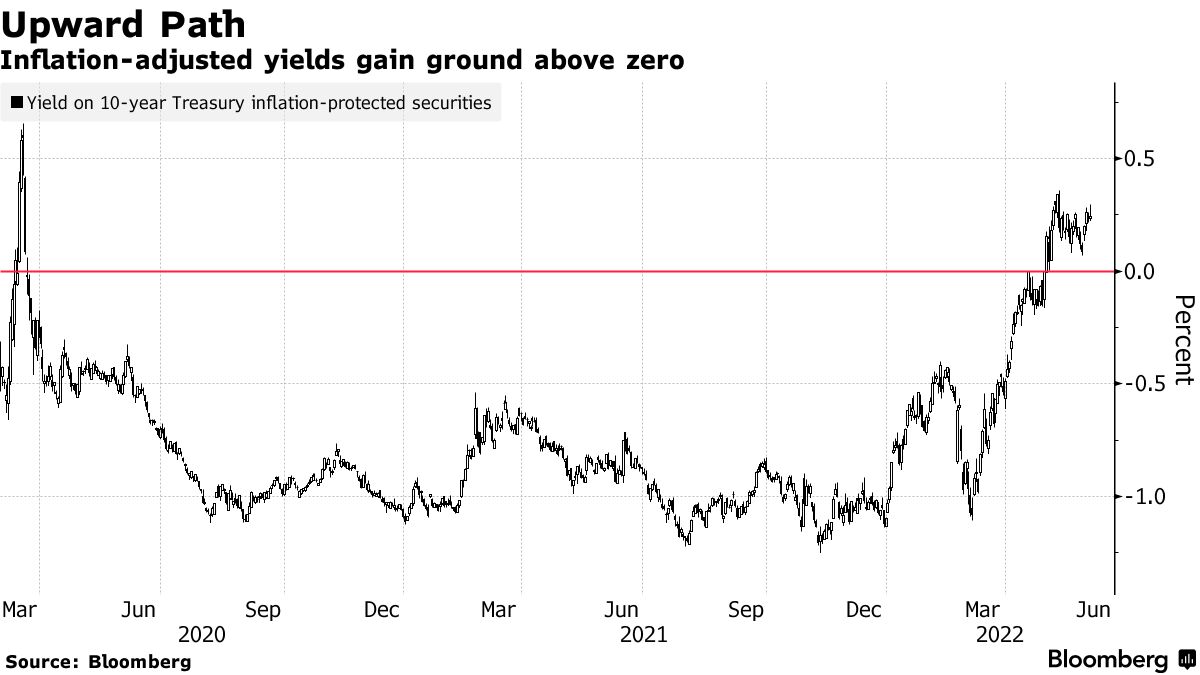
(Reuters) – Two ex-Federal Reserve officials, now freed from having to set economic policy and be accountable for it, are warning the U.S. central bank will have to raise interest rates more than expected and the outcome could well be a recession – cautions neither voiced before leaving their posts a few months ago. The remarks this week from the Fed’s two most recent vice chairs – Richard Clarida, who until January served as one of Chair Jerome Powell’s top lieutenants for monetary policy formation and Randal Quarles, who oversaw banking regulation to the end of last year – rank among a small chorus of other former U.S. central bankers now offering up critiques of where Fed policy stands and is headed. Clarida, now returned to academia as an economics professor at Columbia University, said on Friday the Fed will need to raise interest rates well into “restrictive territory” to slow economic growth and curb inflation. Quarles, who has returned to the Utah-based investment firm he co-founded, chimed in earlier in the week that a recession was now “likely.” The dour views from the ranks of former officials come just as Powell has ramped up the central bank’s battle with inflation by raising interest rates a half percentage point and all but promising two more such rate hikes by July. The pace of policy tightening is designed to get overnight borrowing costs “expeditiously” to a neutral range of 2.25%-2.5% and in position to rise further if needed. Powell said he saw a “plausible path” to cooling inflation without creating an economic downturn. Clarida, speaking Friday to a conference at Stanford University’s Hoover Institution, said the Fed will need to raise rates to “at least” 3.5% if not higher to bring inflation back down to its 2% goal. “The Fed has the tools to meet this challenge, officials understand the stakes, and are determined to succeed,” said Clarida, whose role at the Fed gave him huge influence over policy but constrained him from departing in public much if at all from Powell’s view. “But the Fed’s instruments are blunt, the mission is complex, and difficult trade-offs lie ahead.” Quarles, who while at the Fed was more overtly hawkish than Clarida, was even sharper-tongued this week. “We would have been better served to start getting on top of it in September,” he told the Banking With Interest podcast, blaming the delay at least in part on President Joe Biden delaying until November the decision to renominate Powell for a second term as Fed chief. Even if Fed hikes in 50 basis point increments, it won’t get to neutral till September, says Jefferies’ Now with inflation pressure intense, unemployment low, and demand far outpacing supply, the effect of rapid rate hikes “is likely to be a recession,” said Quarles, a Donald Trump appointee who left his post in December when he did not get Biden’s nod for a second term. Neither he nor Clarida, also a Trump appointee, called for sharp rate hikes before leaving the Fed. Bill Dudley, who ran the New York Fed until 2018, also says the Fed has been late to raise rates and that a recession will result. Powell, for his part, has acknowledged that engineering a soft landing for the economy will be challenging and that the higher borrowing costs that lie ahead will cause “some pain” for Americans already struggling with higher prices. “But, you know, the big pain is in not dealing … with inflation, and allowing it to become entrenched,” he said Wednesday. On Friday, Clarida said that as early as last summer he saw that inflation risks were “skewed decidedly to the upside.” If inflation, now at 6.6% by the Fed’s yardstick, is a year from now still running at 3%, “simple and compelling” arithmetic by a widely cited policy guide known as the “Taylor rule” means rates will need to rise to 4%, he said. Powell has said he does not expect inflation to drop that fast, though rising rates should start to bring it down later this year. A “softish” landing will “not be easy, he said, but the economy is “very strong and well positioned to handle tighter monetary policy.” A Friday report showing U.S. job growth increased more than expected in April and the unemployment rate held steady at 3.6% provided some fresh evidence for that view. NN: What got little publicity was the fact the home survey is starting to pick up job loses. And the best leading indicator of them all small business hiring turned negative… This party is OVER. YES THEIR WILL BE MASSIVE RATE INCREASES AND A FULL BLOWN DEPRESSION
N. Korea fires missile into Japan Sea – S. Korea military
© Provided by Metro People at Seoul Railway Station watch news coverage of the suspected launch (Picture: AP)
© Provided by Metro Kim Jong-un has vowed to develop nuclear forces ‘at the fastest possible speed’ (Picture: AP) Responding to the launch, Japanese Prime Minister Fumio Kishida ordered officials to prepare for all ‘unforeseeable situations’ and secure the safety of aircraft and ships.
This morning marked the latest in a flurry in similar developments in North Korea.
Just last week, South Korea and Japan confirmed another ballistic missile had been recorded heading towards the sea.
The suspected launch was reportedly fired from near Pyongyang
It marked the country’s 14th round of weapons firing this year.
North Korea has been building up its nuclear weapon programme for months, amid the backdrop of the Russian war with Ukraine.
Experts say the sheer speed of testing activity is aimed at the United States, in response to the country’s sanctions placed on North Korea.
There is also worrying signs the military could be restoring tunnels at a nuclear testing ground in possible preparations for another explosive test.
Satellite images revealed the construction of buildings, movement of lumber and an increase in equipment outside a new entrance at the site. Meanwhile, on Tuesday, South Korean President-elect Yoon Suk Yeol will be inaugurated for a single five-year term. He has promised to boost Seoul’s missile capability and solidify its military alliance with Washington to better cope with increasing North Korean nuclear threats. US President Joe Biden is set to visit South Korea to meet with Suk Yeol on May 21. NN: The great equalizer…… It first dawned on me when Argentina sunk the HMS Sheffield with a French made Exocet missile shortly after the outbreak of the Falklands war in 1982. The only thing that saved the Brits from a TOTAL humiliating defeat was the US riding to her rescue. The technology is now much further advanced. It is the equalizer. Small piss ant countries like Iran and N.Korea are feared because of their missiles that have global reach. Even Russia, with an economy smaller then Italy’s, is a world super power with advanced Hyper unstoppable rockets. The equalizer is the rocket technology. In bible Prophecy, if you believe that sort of thing, talks about it. Psalms 7:13: He has prepared his deadly weapons; he makes ready his flaming arrows.
Distillite stockpiles in the US keep dropping

The European Union has been unable to agree on a comprehensive oil embargo on Russian crude, hindered by internal disagreements on the timeline of the phasing out. Should the draft see adoption, we might be in for another supply squeeze as OPEC+ has clearly indicated it values consistency over abrupt moves. Should the United States push forward with its NOPEC bill, the willingness of the oil group to satiate global demand might fall even further. In a meeting that lasted only 13 minutes, OPEC+ countries have agreed to increase their June 2022 production target by 432,000 b/d, avoiding any talk about sanctions on Russia and indicating global supply/demand picture is more or less balanced. Despite Germany coming to embrace a Russian oil embargo, the European Union has still been unable to agree on a phase-out of Russian crude imports as most dependent countries like Hungary or Slovakia keep on asking for exemptions. A US Senate committee passed the NOPEC bill that was presented with bipartisan support, potentially revoking the sovereign immunity protecting OPEC countries and Middle Eastern NOCs from lawsuits, as high gasoline prices and inflation compel US lawmakers to take more aggressive action. The Indian government defended its continued purchases of Russian crude, having bought more crude in April 2022 than over the totality of 2021, saying they were a part of a wider strategy to diversify away from the Middle East and keep fuel prices at bay. NN: the oil complex is in complete confusion. No one knows how to price future barrels. Their are a lot of pieces in play. The short term price action is very uncertain. Our read in the mid term is much higher prices…BUT sanctions, the war and China lock downs are all opposing forces.
Brent Crude Hits $113 As Oil Rallies
- Oil prices were set for a second consecutive weekly gain.
- Brent tops $113 per barrel in early trading on Friday morning.
- Some EU members are pushing against a full embargo on Russian oil.
Oil prices were set for a second consecutive weekly increase early on Friday, as the EU’s proposal to ban imports of all Russian crude and oil products by the end of the year trumped market concerns about slowing Chinese oil demand amid the harshest COVID restrictions since the initial wave of the pandemic. Putting up in Asian trading overnight, WTI Crude was topping $110 per barrel and Brent Crude was over $113 a barrel (as of 7:50 a.m. EST), with both benchmarks pushed higher by several pieces of bullish news this week. The European Commission on Wednesday officially proposed a full ban on Russian crude and oil product imports by the end of the year.
“Let us be clear: it will not be easy. Some Member States are strongly dependent on Russian oil. But we simply have to work on it. We now propose a ban on Russian oil. This will be a complete import ban on all Russian oil, seaborne and pipeline, crude and refined,” European Commission President Ursula von der Leyen said at the European Parliament.
Some EU members, most notably Hungary, are pushing against a full embargo on Russian oil, and talks among member states continue as they look to reach a consensus since the Commission’s proposal requires the approval of all 27 EU countries. On Thursday, OPEC+ ended one of its shortest meetings on record with no changes to its production plan, aiming to boost crude oil production in June by 432,000 barrels per day (bpd), in a move widely expected by the market. While OPEC+ is sticking to its policy of modest monthly increases, many of its members are not pumping to their quotas and the group overall is estimated to be around 1.5 million bpd below its quota. “Lagging production is unlikely to change anytime soon, particularly given the weaker demand for Russian oil, which will eventually lead to output decreasing,” ING strategists Warren Patterson and Wenyu Yao said on Friday, commenting on the OPEC+ meeting and expected production from the alliance going forward. NN: The oil market is a very volatile dangerous market. Manipulated, political, and confused…… I like it like that. We had some lucky guesses in oil this past week in our unit trust……. Please note prices are in Euro’s. In an abundance of caution we placed 1/3 of available funds with broker. Average unit at broker was 110K we got lucky and made after commission to the broker 22K. I want to apologize for doing so poorboy……. Ill try harder…….. Please note with typical future margins and concentration rules these trades would not have been possible at US exchanges…. I thank GOD every day for swap instruments……. Odds our we will wipe out the account.……… Just like in futures 80% of people who trade swaps get their asses reamed……. That means 20% make all the money……. After all it is a minority business.. And their is no affirmative action…….. Pure unbridled capitalism that the lefties are trying to destroy…. After all swaps are illegal for US individuals to trade directly…… Land of the free, home of the brave…… sorry to say not anymore!!!!!!!
US nonfarm payrolls up 428,000 in April
The U.S. added a solid 428,000 new jobs in April, but an acute labor shortage showed little improvement last month and threatens to add to the highest inflation in 40 years. The unemployment rate was unchanged at 3.6%, the government said Friday, just a few ticks above a 54-year low. The size of the labor force, meanwhile, shrank in April for the first time in seven months in a sign of how difficult it is for companies to find workers. As a result, the so-called rate of participation in the labor market dropped to 62.2% from 62.4%, leaving it more than a full percentage point below pre-pandemic levels. The April employment report won’t have any sway on the Federal Reserve’s plan to raise interest rates sharply this year. The central bank lifted rates on Wednesday for the second time since March as part of an effort to contain the worst outbreak of U.S. inflation since the early 1980s. Although one of the Fed’s two mandates is to foster a strong jobs market, the bank is worried that a persistent labor shortage will drive up wages too much and add to intense inflationary pressures already squeezing the economy.
The cost of living has jumped 8.5% in the past year, marking the biggest increase since 1982.
Wages are also climbing rapidly, but not quite as fast. Hourly pay rose sharply again in April and put the increase in the past 12 months at 5.5% — also the biggest gain since the early 1980s.
Oil prices rise as supply concerns persist
https://youtu.be/lzDPwUtk1lU
Oil prices climbed for a third session in a row today, shrugging off concerns about global economic growth as impending European Union sanctions on Russian oil raised the prospect of tighter supply. Brent futures rose $2.08, or 1.88%, to $112.98 per barrel this morning, while US West Texas Intermediate (WTI) crude climbed $2, or 1.85%, to $110.26 a barrel. Brent and WTI are on track to rise for a second week in a row, buoyed by the EU’s proposal to phase out supplies of Russian crude oil in six months and refined products by the end of 2022. It would also ban all shipping and insurance services for transporting Russian oil. The EU is tweaking its sanctions plan in a bid to win over reluctant states, three EU sources told Reuters today. “The looming EU embargo on Russian oil has the makings of an acute supply squeeze. In any case, OPEC+ is in no mood to help out, even as rallying energy prices spur harmful levels of inflation,” PVM analyst Stephen Brennock said.
However, analysts expect the group’s actual production rise to be much smaller as a result of capacity constraints. “There is zero chance of certain members filling that quota as production challenges impact Nigeria and other African members,” said Jeffrey Halley, senior market analyst Asia Pacific at OANDA. A US Senate panel has advanced a bill that could expose OPEC+ to lawsuits for collusion on boosting oil prices. Investors are also eyeing higher demand from the US this autumn as Washington unveiled plans to buy 60 million barrels of crude for its emergency stockpiles. Demand concerns on signs of a weakening global economy capped the price rise. The Bank of England warned this week that Britain risks a double-whammy of a recession and inflation above 10% as it raised interest rates to their highest since 2009, hiking by a quarter of a percentage point to 1%. Strict Covid-19 curbs in China are also creating headwinds in the second quarter for the world’s second-largest economy. NN: Oil could well DOUBLE in price from here. It is not going to be a cake walk. More like a discotheque in a mine field… With the DJ shooting at you…..
U.S. fuel prices surge faster than crude as exports tighten market
NEW YORK (Reuters) – U.S. fuel prices have surged faster than crude oil prices in the last month, as the United States has shipped more refined products abroad to supply European markets following Russia’s invasion of Ukraine.
Traders say the world’s stockpiles of fuel are not likely to increase quickly as big producers like OPEC, are increasing production slowly. The tightness in fuel markets is more alarming, they say, because it shows refiners are having trouble meeting demand even as more crude becomes available through big reserve releases.
“Things are really tight with diesel and world demand,” said Aaron Milford, chief executive of Magellan Midstream Partners, in an earnings call on Thursday.
Global stockpiles of crude, gasoline, and other fuels are dwindling as demand has rebounded to pre-pandemic levels.
Supplies tightened further following the invasion of Ukraine and subsequent sanctions on Russia from the United States and allies. Washington has released millions of barrels from U.S. strategic reserves, helping control the price of crude. But inventories of products are still falling. Since the invasion of Ukraine on Feb. 24, U.S. crude futures have risen nearly 17%, Refinitiv Eikon data shows, while U.S. gasoline futures have jumped over 30% and U.S. heating oil futures, a proxy for diesel, have gained by 40%. “Generally at this time of year, products lead crude, but in this case the spread is much larger than normal. It’s a sign the product market is screaming to refiners, ‘Get to work, we need more supply’,” said Phil Flynn, senior analyst at Price Futures Group.
Inventories are particularly tight for distillates at 105 million barrels, lowest since April 2008, according to the U.S. Energy Information Administration.
Commercial U.S. crude stocks are up since late February due to releases from U.S. reserves. U.S. refined product exports have averaged 6.3 million barrels per day (bpd) in the past four weeks, nearly the fastest rate of export in U.S. history. U.S. crude price rises have been limited by worries about energy demand during China’s prolonged COVID-19 lockdowns. The U.S. crude discount to global benchmark Brent has narrowed to minus-$2.15 a barrel last week, smallest since November, before widening again. A narrower discount makes U.S. crude less appealing on foreign markets. Traders say lower refining capacity, particularly on the East Coast, has tightened products markets, raising premiums on jet fuel and diesel. East Coast distillate inventories are at a record low. “We really don’t have the capacity to (export more) while at the same time not affect the domestic market,” said Robert Yawger, executive director of energy futures at Mizuho. “We have increased some refinery utilization but a lot of that increase is going to the eurozone and not to New Jersey.” NN: their is not enough energy to go around… In what ever form you chose to use. This is especially true but not limited to fossil fuels. So what do the anti oil lefties in America do… Why they export those scarce resources to their lefty anti fossil fuel friends in Europe…. Which means your are subsidizing oil and refined products and natural gas sales to Europe……. You got fucked again. But you have not begun to see the fucking like you will get at $10 a gallon gasoline and .40 cents a kilowatt electricity……….
Covid Killed One Out of Every 500 People, WHO Report Shows……. Omicron as severe as other COVID variants -large U.S. study
The COVID-19 death toll probably climbed to almost 15 million in its first two years — about one out of every 500 people globally — according to a new World Health Organization estimate. The figure, far higher than the official numbers for 2020 and 2021, includes deaths directly due to COVID infection and those indirectly caused by pandemic disruptions, the Geneva-based health agency said Thursday. The WHO’s new estimate is more than twice the figures from individual governments’ reports showing about 6.2 million COVID deaths. “These sobering data not only point to the impact of the pandemic but also to the need for all countries to invest in more resilient health systems that can sustain essential health services during crises,” WHO Director-General Tedros Adhanom Ghebreyesus said in a statement. The toll was found by calculating the difference between all deaths that occurred and those that would have been expected to occur under normal circumstances. More than one-third of the additional 9 million deaths are estimated to have occurred in India, which has disputed the WHO’s new figure and delayed the release of the report, according to the New York Times. Narendra Modi’s government has stood by its own count of 523,900 deaths. The estimate is lower than one from the Institute for Health Metrics and Evaluation at the University of Washington, which calculated in March that the pandemic had killed 18.2 million people, calling it the biggest “mortality shock” since the Spanish flu. Deaths from the 1918-1919 outbreak have been estimated as high as 50 million, according to the U.S. Centers for Disease Control and Prevention. Of the total, 9.5 million pandemic deaths were estimated to be directly caused by COVID infections, according to the WHO report. Ten countries, including Brazil, Egypt, India, the U.S. and Russia, accounted for 68% of the excess fatalities. About 70 countries don’t record causes of death among their populations. The number of deaths was most likely to be 14.9 million, the WHO said, though it could have been as low as 13.3 million or as high as 16.6 million. Many deaths occurred as the pandemic overwhelmed health systems, hampering access to treatment for other health conditions, the report said. Men accounted for 57% for the deaths, and most were among people over 60. “Measurement of excess mortality is an essential component to understand the impact of the pandemic,” Samira Asma, assistant director for data, analytics and delivery at the WHO, said in the statement. “Because of limited investments in data systems in many countries, the true extent of excess mortality often remains hidden.” India provided estimates for 2020 deaths in recent days and the WHO is continuing consultations with the government on the matter, Asma said. The WHO plans to update its estimate as more data emerge and the next update will include more Indian data, she said. COVID surpassed tuberculosis as the biggest infectious-disease killer in the world. The lung illness killed 1.5 million people in 2020, according to the WHO. Seasonal flu kills from 290,000 to 650,000 people each year, according to the agency.
Omicron as severe as other COVID variants -large U.S. study
(Reuters) – The Omicron variant of the SARS-CoV2 virus is intrinsically as severe as previous variants, according to a preprint version of a large U.S. study that counters assumptions in other studies that it was more transmissible but less severe.The findings, which estimated Omicron’s severity after accounting for the impact of vaccines, should reinforce the importance of inoculations and booster shots, experts said. Vaccines helped keep hospitalizations and deaths relatively low during the Omicron surge compared with previous variants. The study, which is undergoing peer review at Nature Portfolio, was posted on Research Square on May 2. The authors, from Massachusetts General Hospital, Minerva University and Harvard Medical School, declined to comment until peer review is completed.
“We found that the risks of hospitalization and mortality were nearly identical”
between the Omicron era and times in the past two years when different variants were dominant, the researchers said in their report. The new study, based on records of 130,000 COVID patients in Massachusetts, is unique and “pretty strong,” said Dr. Arjun Venkatesh of Yale School of Medicine and the Yale Center for Outcomes Research and Evaluation, who was not involved in the research.
NN: Spread you cheeks and get ready for blue sky blown up your ass by pipeline. Sorry to inform you we have documented the under reporting of this killer plague that has not gone away. I have mountains of CDC report quoting the CDC that the variants are mild and now as deadly as the first wave. wrong Wrong WRONG. Get your booster shot, Vitamin up, mask up and get ready for the deadliest wave yet this fall.
OPEC Agrees To Boost Production By 432,000 Bpd In June
- OPEC+ agreed to leave its production plan unchanged. As expecded
- Very short virtual meeting ends with modest 432,000 bpd production quote increase for June.
- Currently, OPEC+ is producing around 1.5 million bpd below its quota.
The OPEC+ group agreed on Thursday to leave its production plan unchanged, aiming to boost crude oil production in June by 432,000 barrels per day (bpd), in a move widely expected by the market. Following a very short virtual meeting, the OPEC+ ministers decided to keep the production plan as-is, continuing the modest monthly increases in nominal production. This was the third OPEC+ meeting since one of the key members of the alliance, Russia, invaded Ukraine. For a third consecutive month, OPEC’s press release on the record short meeting read that “it was noted that continuing oil market fundamentals and the consensus on the outlook pointed to a balanced market”. The meeting “further noted the continuing effects of geopolitical factors and issues related to the ongoing pandemic”, OPEC said. The action of the OPEC+ group, or rather, the inaction, could be justified this time, due to persistent market concerns about slowing oil demand in China, on the one hand, and the possibility that losses of Russian supply would only pile up from now on, on the other hand. Oil prices will remain elevated in the coming months as current supply losses from Russia at around 1 million bpd could double this month, BP’s chief executive Bernard Looney told CNBC earlier this week. Moreover, the European Commission on Wednesday officially proposed a full ban on Russian crude and oil product imports by the end of the year. While OPEC+ is sticking to its policy of modest monthly increases, many of its members are not pumping to their quotas and the group overall is around 1.5 million bpd below its quota. Per today’s decision and the production table OPEC provided, OPEC+ will have a quota of 42.558 million bdp for June. Saudi Arabia and Russia, the leaders of the OPEC and non-OPEC groups in the pact, will each have a quota of 10.663 million bpd. NN: OPEC+ is not stupid. If you want to see stupid tune in any day to any one of 100 EU ministers pontificating their liberal lefty idiotic greeneenieewinnieee wet dreams. And view the destruction. If OPEC increases production by 10% the oil market would be adequately supplied. Oil would plunge to $ 50 a barrell. So a 10% increase in production nets them a 50% decrease in price. Why would they kill the golden goose. Butchering golden gooses is the domain of current leadership in the democracies of the world.. After all they would not want the great spirit roaming the great planes of America to trip over a oil pipeline…. Hand me my tom tom.
Russia’s Oil Output Is Plummeting, And It May Never Recover
Russian oil production is falling. In March, it shed half a million bpd, which by the end of April reached a full 1 million bpd, according to BP’s CEO, Bernard Looney. And this may well grow to 2 million bpd this month. These barrels may not be returning to the market any time soon. As the European Union targeted a barrage of sanctions on Moscow, oil was excluded as a direct target but financial and maritime sanctions affected the industry. Now, the EU is proposing a full oil embargo, save for a handful of member states too dependent on Russian oil to comply, and this will mean a further loss of barrels at a time when the global oil market is already stretched thin. “We could potentially see the loss of more than 7 million barrels per day (bpd) of Russian oil and other liquids exports, resulting from current and future sanctions or other voluntary actions,” the secretary-general of OPEC, Mohammed Barkindo, told the European Union last month. This does not appear to have made any lasting impression on the decision-makers in Brussels, who are moving full steam ahead with the oil embargo. Meanwhile, alternative suppliers would struggle to fill the void left by Russian oil. Russia expects it could lose some 17% of its pre-war oil production this year, Reuters reported last month, citing a document from the country’s economy ministry. The report noted this would be the biggest production drop since the 1990s—a tumultuous time for Russia following the breakup of the Soviet Union. That would be close to 2 million bpd—a figure similar to Looney’s forecast and also to a forecast made by Rystad Energy about lost Russian oil production between 2021 and 2030. If the Rystad projections are right, the fallout from the EU oil embargo would be limited and most Russian production will simply be redirected as it already is. If, however, production declines more, this could see international prices spike much higher. When European buyers started refusing to accept Russian oil cargoes, those cargoes had to return home to be stored somewhere. According to local reports, however, storage space is limited, and this has probably forced the idling of some wells, which if idled, can see their ability to produce in the future affected. But there is also danger ahead for Russia’s future production. This may also not materialize as previously planned because of the exit of Big Oil majors from the country, Dan Dicker, host of The Energy Word, told Yahoo Finance earlier this week. Their exit, combined with financial sanctions on Russian banks, will make developing new resources in eastern Siberia more challenging. Meanwhile, OPEC is producing less, rather than more, oil, and U.S. producers are under fire from legislators for alleged profiteering from the oil price rally and struggling with shortages of materials, equipment, and workforce. U.S. oil production will rise by only 800,000 bpd this year, according to the Energy Information Administration’s latest Short-Term Energy Outlook. That’s not good news for America’s European partners. It’s not good news for Americans, either, because it means prices will likely remain high. Except for OPEC and the United States, there are few producers large enough to spare oil for Europe, if any. Brazil is expanding its oil production but its total stands at around 3 million bpd, which is what the EU was importing from Russia before the war in Ukraine began. That leaves the Central Asian producers, who are parties to the OPEC+ agreement and firmly within the Russian sphere of influence, too. What all this means is that with the loss of 2 million bpd of Russian production, a lot of the world is in for prolonged oil price pain, which means all-price pain as well. The beneficiaries are China and India, who are buying Russian crude at a discount, with no logical reason for them to stop, despite threats from Washington. But Russia’s oil production could still fall by more than 2 million bpd. “Europe’s dependence on Russian energy has been a deliberate and decades-long and mutually beneficial relationship. In this early phase of sanctions and embargoes, Russia will benefit as higher prices mean tax revenues are significantly higher than in recent years,” said Daria Melnik, senior analyst at Rystad Energy.“Pivoting exports to Asia will take time and massive infrastructure investments that in the medium term will see Russia’s production and revenues drop precipitously,” she added. With most producers constrained in their capacity to boost production fast, should this scenario play out, oil could become a lot more expensive with little in the way of downside pressure. NN: thier is NO replacement for Russian oil. By summer Russian oil deliveries will fall by 7 million Bpd. Their is no replacement. Actions by the EU are the same clueless assholes who shut down nuclear reactors, fracking in Europe, pipelines, thermal coal and North Sea production. It will take years to reverse these stupid decisions. Unfortunately the world does not have years. They have created a crises that did not have to happen. A manmade energy crises that will cause enormous destruction of economies and peoples lives…..